Archeologists Discover an Atlantis-Like Metropolis at the Bottom of a Lake

Plato’s legend of Atlantis has come to life once again, with archaeologists from the Russian Academy of Sciences having just discovered “traces of a submerged city” destroyed by a devastating 15th-century earthquake underneath Kyrgyzstan’s Lake Issyk Kul, the eighth deepest lake in the world.

The city at the flooded Toru-Aygyr complex, which lies near the lake’s northwest point, has now been excavated by the explorers, who surveyed four underwater zones at shallow depths ranging from 3 to 13 feet around the lake’s shoreline.

There, they found a wealth of everyday items that painted the picture of a once-thriving metropolis or “large commercial agglomeration.” Discoveries included multiple fired brick structures (one contained a millstone, which was used to crush and grind grain), caved-in stone structures and wooden beams.

In one of the zones, archaeologists also believe they’ve found what was once a public building that could have served as a mosque, bathhouse or school, also called a “madressa.”

In the three others, remnants of some kind of burial ground, a 13th-century Muslim necropolis — a large cemetery typically belonging to an ancient city — and mudbrick structures in round and rectangular shapes were also discovered.

Facebook is no longer censoring us! Please “like” us at Facebook [here]

YouTube is still censoring, but you can help us defeat that by subscribing [here]

(Read more from “Archeologists Discover an Atlantis-Like Metropolis at the Bottom of a Lake” HERE)

Photo credit: Russian Academy of Sciences

Rich ‘Sniper Tourists’ Allegedly Paid $90K to Shoot Civilians — Including Kids — During ‘Human Safari’ Trips to Sarajevo, Wild Claims Allege

Wealthy “sniper tourists” allegedly paid upward of $90,000 to shoot people during “human safari” trips to Sarajevo in the 1990s — with an extra fee to kill children, according to wild claims being probed by Italian prosecutors.

The investigation was sparked after an Italian writer alleged he had uncovered evidence that wealthy gun enthusiasts — dubbed “sniper tourists” — would pay Bosnian Serb forces for the chance to gun down residents at random during the four-year siege of the city, the Guardian reported.

More than 10,000 were killed in Sarajevo by snipers and shelling between 1992 and 1996 during the Balkan Wars.

“There were Germans, French, English … people from all Western countries who paid large sums of money to be taken there to shoot civilians,” said Ezio Gavazzeni, the investigative writer.

“There were no political or religious motivations. They were rich people who went there for fun and personal satisfaction. We are talking about people who love guns who perhaps go to shooting ranges or on safari in Africa.” (Read more from “Rich ‘Sniper Tourists’ Allegedly Paid $90K to Shoot Civilians — Including Kids — During ‘Human Safari’ Trips to Sarajevo, Wild Claims Allege” HERE)

Heart Health Tends to Slip at This Age — It’s a Lot Younger Than You’d Think

. . .Research shows most people’s cardiovascular health starts to decline before they’re even old enough to vote — yet few young Americans recognize the warning signs.

That means millions are missing a critical window to take action and protect themselves from heart disease, the leading cause of death in the US.

The condition is on the rise among adults under 40, with rates more than doubling since 2010.

But the problem often starts much earlier. By age 17, most people’s heart health scores — which consider lifestyle factors like diet and exercise, as well as clinical measures such as blood pressure and weight — have already begun to slip.

“I frequently care for people in their early 20s who are entering adulthood and are already facing serious cardiovascular risk factors such as elevated blood pressure, high blood sugar or a body mass index in the obesity range,” Dr. Jewel Scott, a primary care nurse practitioner, wrote in The Conversation. (Read more from “Heart Health Tends to Slip at This Age — It’s a Lot Younger Than You’d Think” HERE)

Photo credit: Flickr

‘Alien’ DNA Found Inside Humans — It Was Inserted Into Our Genes, Bonkers New Study Claims

. . .Just in case the idea of aliens walking around in human skin suits wasn’t frightening enough. An outlandish study asserts that aliens might have abducted us and inserted genes into human DNA, with the fallout affecting potentially millions of people.

“Humanity may be undergoing genetic transformation,” lead researcher Dr. Max Rempel, the founder and CEO of the DNA Resonance Research Foundation, told the Daily Mail of the study, which has yet to be peer-reviewed.

Rempel came to this far-fetched-seeming conclusion by analyzing DNA from both regular people and those who have claimed to have been abducted by aliens. This comes following a spike in UFO sightings over the last year, making many fear that we are on the verge of some not-so-friendly close encounters.

The scientist specifically analyzed 581 complete families from the 1,000 Genomes Project, discovering ‘large sequences’ of DNA in 11 families that didn’t appear to correspond to either family.

These genetic aberrations entailed a bundle of 348 non-parental genetic variants. As the subjects were born before 1990, this ruled out human gene-editing technologies like CRISPR, which only emerged in 2013. (Read more from “‘Alien’ DNA Found Inside Humans — It Was Inserted Into Our Genes, Bonkers New Study Claims” HERE)

Photo. credit: Flickr

Treasure Hunters Find $1 Million in Coins From 1715 Shipwreck

A shipwreck salvage company has struck gold.

The 1715 Fleet Queens Jewels, LLC—which specializes in salvaging the remains of a 1715 shipwreck off the Florida coastline—said its divers discovered over 1,000 gold and silver coins. And the, well, treasure trove of 18th century items are valued at $1 million.

“This discovery is not only about the treasure itself, but the stories it tells,” the company’s director of operations Sal Guttuso said in a statement. “Each coin is a piece of history, a tangible link to the people who lived, worked, and sailed during the Golden Age of the Spanish Empire.”

He continued, “Finding 1,000 of them in a single recovery is both rare and extraordinary.”

The coins—known as pieces of eight—were minted in Spanish colonies in Mexico, Peru and Bolivia, according to the company. The salvager said visible dates and mint marks are still visible on many of the coins, were being transported to back Spain when it got caught up in a hurricane. (Read more from “Treasure Hunters Find $1 Million in Coins From 1715 Shipwreck” HERE)

Photo credit: Flickr

Huge Space Bubble Called the ‘Heliosphere’ Allows Life to Exist on Earth, and We Know Very Little About It

An extraordinary structure called the “heliosphere” envelops our entire solar system in a protective bubble. NASA’s new mission, IMAP, will get close enough to the Sun to investigate how the heliosphere works.

Inflated by the Sun, the heliosphere shields Earth and our planetary neighbors from deadly cosmic radiation that travels at the speed of light, allowing life on this beautiful blue marble to survive and thrive.

The Sun is constantly emitting bursts of charged particles – protons, electrons, and ions – at speeds of more than a million miles per hour.

This colossal stream, which is referred to as the solar wind, fills out the heliosphere and sets it ballooning billions of miles outward.

Earth has its own protection too – our magnetic field – but that only covers our planet. For everything else in the solar system, the heliosphere takes on the heavy lifting. (Read more from “Huge Space Bubble Called the ‘Heliosphere’ Allows Life to Exist on Earth, and We Know Very Little About It” HERE)

Cancer Vaccine Shows Breakthrough Promise in Preventing Recurrence of Disease

A groundbreaking cancer vaccine has shown encouraging results in preventing deadly recurrences of pancreatic and colorectal tumors, according to new research led in part by UCLA Health Jonsson Comprehensive Cancer Center.

The experimental vaccine, known as ELI-002 2P, was tested in a phase 1 clinical trial involving 25 patients who had recently undergone surgery to remove pancreatic or colorectal tumors. All of the participants showed “minimal residual disease,” meaning small traces of cancer DNA remained—putting them at extremely high risk of relapse.

Pancreatic cancer recurrence rates are notoriously grim, with more than 80% of patients seeing their disease return after surgery—nearly half within the first year. Colorectal cancer recurrence is also high, affecting 30% to 50% of patients, usually within the first two years.

The vaccine targets KRAS mutations, which drive over 90% of pancreatic cancers and about half of colorectal cancers. Delivered through a series of injections designed to trigger an immune response in the lymph nodes, the vaccine worked as intended for most patients:

21 out of 25 patients developed KRAS-specific T cells, showing their immune systems were actively fighting tumor-linked mutations.

Patients with stronger immune responses had significantly longer relapse-free survival compared to those with weaker responses.

For six patients (three pancreatic, three colorectal), the vaccine appeared to completely eliminate all disease biomarkers.

Nearly 20 months after treatment, the majority of patients with the strongest immune responses remained cancer-free.

“This is an exciting advance for patients with KRAS-driven cancers, particularly pancreatic cancer, where recurrence after standard treatment is almost a given and effective therapies are limited,” said Dr. Zev Wainberg, professor of medicine at the David Geffen School of Medicine at UCLA and the trial’s lead author.

“We observed that patients who developed strong immune responses to the vaccine remained disease-free and survived for much longer than expected.”

Beyond KRAS, the vaccine also sparked responses to additional tumor mutations in 67% of patients, suggesting the therapy could help suppress broader cancer growth.

The findings, published in Nature Medicine, represent a potential turning point in how doctors approach two of the most aggressive and deadly cancers. Larger clinical trials are already being planned to further test the vaccine’s effectiveness.

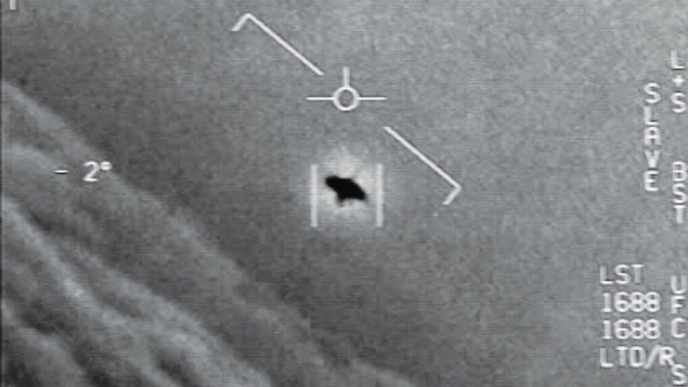
Harvard Scientist Warns Mystery Halloween Comet Could Be Alien Probe

A prominent Harvard astrophysicist is urging world leaders to treat a recently discovered interstellar object as a matter of global priority, warning that time may be running short to prepare for potential contact with extraterrestrial technology.

Professor Avi Loeb, known for his outspoken views on UFOs and space anomalies, has raised alarms over comet 31/ATLAS — an unusual celestial body spotted in June that will pass near Earth on October 31. Loeb believes the object’s unusual characteristics warrant serious investigation and international coordination.

“This is the kind of thing that should be discussed at the highest levels,” Loeb said in a recent interview. “We make policies for threats like asteroids, climate change, and AI — but alien technology is rarely even on the agenda.”

Astronomers have noted that 31/ATLAS is larger than typical comets and appears to emit a light ahead of it rather than the usual glowing tail trailing behind. This anomaly has fueled speculation that the object may not be a standard comet at all, but potentially an artificial craft.

Loeb emphasized that if the object is confirmed to be alien in origin, its approach could have far-reaching consequences. “The response depends entirely on its nature and intent,” he explained. “It’s like having an unexpected visitor in your backyard — you need to figure out why they’re there before deciding how to respond.”

As Halloween draws closer and 31/ATLAS continues its approach, Loeb is calling for an international framework to handle potential first contact scenarios — a step he says humanity should take before it’s too late.

Photo credit: Flickr

Bill Gates–Funded Startup Rolls Out Carbon-Based ‘Fake Butter’

A lab-grown butter alternative backed by billionaire philanthropist Bill Gates is igniting controversy among consumers, industry groups, and lawmakers.

The product, made by California-based company Savor, is described by the startup as “butter made from carbon.”

Social media posts have amplified concerns. One widely shared message alleged that the Food and Drug Administration (FDA) approved the product without independent safety testing, instead relying on company-provided data. Critics also claim the spread is already being used in restaurants and bakeries without clear labeling for customers.

In June, the American Butter Association (ABA) formally urged the FDA to act against butter alternatives that, they argue, blur the lines between plant-based spreads and traditional dairy butter. In a June 25 letter to Dr. Claudine Kavanaugh, director of the FDA’s Office of Nutrition and Food Labeling, the ABA warned that products like Savor’s — along with similar plant-based spreads — are often marketed in ways that could mislead shoppers.

The ABA noted that under U.S. law, “butter” has had a strict definition since 1906: it must be made from milk or cream from a cow. The group pointed to certain products on the market labeled “dairy-free butter” that feature traditional dairy imagery, such as barns and butter pats, while also including small-print disclosures that they are “79% plant-based oil spreads.”

“Using the label of ‘dairy free’ raises many concerns,” the ABA wrote. “Not only does it fool consumers into believing that a dairy-free version of butter could exist, but it also creates the impression that the product meets established butter standards when it does not.”

The association argues that such marketing not only conflicts with FDA labeling regulations but also sidesteps federal standards designed to protect consumers from deceptive branding. They contend that these products are essentially vegetable oil spreads — similar to margarine — but are being positioned to take advantage of the premium reputation of real dairy butter.

For now, the FDA has not publicly announced any enforcement actions related to the Savor product or others like it.

Photo credit: Flickr

Airbnb Busted After Host Uses AI Images to Pin $7K in Fake Damages on Guest

A London academic is speaking out after narrowly avoiding a $7,000 bill from Airbnb — the result of a host allegedly using AI-generated photos to falsely accuse her of causing major property damage.

The guest had rented a one-bedroom Manhattan apartment for a long-term stay but left early due to safety concerns about the neighborhood. Not long after her departure, the host filed a damage claim for nearly $16,000, submitting photos of cracked furniture, stained bedding, and broken appliances — including a robot vacuum and air conditioner — as alleged evidence.

But something didn’t add up.

Upon examining the photos, the guest — who maintains she left the unit in good condition — noticed visual discrepancies that hinted the images were either heavily altered or entirely fabricated using AI tools. Despite her objections and willingness to provide eyewitness testimony, Airbnb initially sided with the host and demanded she pay $7,000 in damages.

It wasn’t until The Guardian began investigating the case that Airbnb changed course.

After media scrutiny, Airbnb issued a full apology, refunded the guest $5,700 for the entire cost of her stay, and removed a retaliatory negative review the host had left on her profile. The host, identified as a “superhost” on the platform, did not respond to inquiries and has since received a warning from Airbnb. The company admitted it could not verify the authenticity of the photos he submitted.

Airbnb now says it is reviewing its internal claims process. The company acknowledged the growing challenge of AI-manipulated images being used fraudulently and emphasized its commitment to fair resolutions for both hosts and guests.