Dementia’s Shadow Economic Crisis

As researchers look for hopeful clues from the past as to why dementia was not as prevalent or costly decades ago, the truth today is that the country is in the midst of an “epidemic of dementia.” Few Americans perceive how widespread it is because it begins on a micro level — family to family. Without an effective means to connect shared experiences, families are unable advocate and influence critical changes at both the state and national level. Some in the media write about dementia’s prevalence. Few detail its far-reaching, financial impact. Economists track the instability of the macro-economy while woefully unaware of the shadow economic crisis that is deepening from town-to-town and state-to-state across America that rocks the foundations of families..

A tsunami of health care debt is welling to a point where it will undermine the national economy. Families are already caught in the undertow. Forbes Contributor, Todd Hixon, warns: “If the trends of the last 20 years continue, health care spending will eat up U.S. GDP in our children’s lifetimes.”

It is far more complicated than economic charts reveal. Lost amid high demands for a “cure” for dementia and Alzheimer’s are the hard realities of the high costs for the “care” that is required until a cure is found. Nationwide, unexpected needs of loved ones suffering from gradual to severe to debilitating memory loss have families emotionally and financially torn. The wealthy have a financial cushion. The poor have a government safety net that financially covers their needs. The middle-class is left adrift to fend for itself. Anger builds at a government spending large in Washington using American’s tax dollars to become the world’s caretaker while abandoning its own people in need. As the economic and health crisis worsens, America’s middle-class is forced to financially support burgeoning groups of global dependents who leave their countries to seek America’s health care and welfare dollars at a time when American families do not have or receive enough money to care for their own.

The article “Scamming Alzheimer’s” (Restoring Liberty – Jan 5, 2016) reveals that, “Many forms of dementia are today claiming more people than at any time in the history of the disease.” Studies show that one form of dementia, Alzheimer’s, alone increased 68% over ten years while, according to the U.S. Census, the elder population only increased by 15.1%.”

It is established fact that most patients with memory related brain diseases require long-term, high-skilled and supervised attention at substantial costs. Slammed the hardest, middle-income wage-earners insist that nobody in Washington understands the urgency of how tough it has become for them and their families as this unexpected health care crisis drains incomes and savings.

Economists warn that so goes the middle-class, so goes the country. The question is: How goes the middle-class in today’s economy as it faces this mounting, financial headwind?

· America’s shrinking middle-class is now “in the minority for the first time ever” according to Pew Research Center.

· The average worker’s wages have remained flat or down for ten years.

· Fewer Americans are working since 1977 while “the percentage of adult Americans actively looking for a job stands at 62.6 percent, the lowest level in nearly four decades.”

· The number of Americans in poverty continues to grow.

· Single female heads of households are significantly poorer and face greater challenges providing aid to an elderly parent or grandparent that is in need of care.

“Hand-to-mouth nation: Roughly 40 percent of US households live paycheck to paycheck but two thirds of these families are not considered poor by economic definitions.” — My Budget 360

The struggle becomes can adult-children sock a few dollars away for the long-term care of an aging parent, apply it towards their teen’s college fund, or save for their own retirement and potential future illness and care needs. The demand for dollars exceeds the supply.

Many Americans do not know that neither Medicare nor Medicaid help foot the bill for skilled, ongoing long-term care except under the most dire of circumstances. Once financially depleted and living at the poverty level, only then can an individual or their family seek government dollars to help pay for continuing long-term care. Stringent Medicaid qualifications require that an individual be legally poor as well as mentally or physically incapacitated.

Americans remain on borrowed time with a shrinking workforce that is kowtowed to ever-increasing government spending and decades of waste by this and former administrations. In the face of long-term care for their loved ones, inflation, mounting taxation, unemployment and underemployment have placed a rising burden of debt on multiple generations. Despite the ballyhoo about wealthy seniors, the reality is, the majority of our elders and their families have small nest eggs, if any, in the way of savings.

The rapid increase in dementia and other brain diseases is occurring at a time when middle-income American’s discretionary spending is being tapped out. For growing numbers of families nationwide, long-term health care costs, both inside and outside of the home, are unsustainable:

“On average, nursing home costs would consume 246 percent of the median annual household income of older adults. Home care generally is more affordable than nursing home care, allowing consumers to stretch their dollars further. But at an average of 84 percent of median income, the typical older family cannot sustain these costs for long periods. This finding has profound implications for the entire LTSS system [Long-Term Services and Supports]. States have limited ability to control the costs of care for those who pay privately.” — Raising Expectations, 2014

The cost of long-term, skilled nursing care for people with dementia and Alzheimer’s averages $5000 a month which equals $60,000 a year. The latest data from Social Security reports that 51% of working Americans now make less than $30,000 a year. Bankruptcy looms for households nationwide as economists warn that the American consumer is already on the edge. The NY Federal Reserve’s Consumer Expectations Survey reports that “household income expectations have fallen.” Spending growth expectations have plunged to record lows.

Discretionary income that would otherwise go towards purchases in the marketplace, entertainment, travel, charities or into investments is being diverted into the massive care system. Large and small businesses are denied additional consumer dollars that might have otherwise come their way. As a result, a deepening economic crisis is taking root.

The bottom line. America’s ability to provide for American families and their elderly loves ones is threatened by a shrinking tax base and a government that increasingly funds and prioritizes global need. America must provide care and protection for its own, in particular for those unable to care for themselves. It is inherent upon members of Congress, State Legislators and economists to factor this shadow economic crisis into the nation’s current and future planning. It is incumbent upon American families to demand it.

________________________________

Sharon Sebastian, author of the book, “AGING: WARNING– Navigating Life’s Medical, Mental & Financial Minefields,” is a columnist, commentator, and contributor in print and on nationwide broadcasts on topics ranging from healthcare, culture, religion, and politics to domestic and global policy. Sebastian’s political and cultural analyses are published nationally and internationally. Website: www.AgingWarning.com

Follow Joe Miller on Twitter HERE and Facebook HERE.

Why Dementia Rates May Be Slowing Down

The older we get, the more memories we lose and the more scrambled some of our thoughts become. Some experts believe that such decline in our cognitive abilities is unavoidable if we live long enough.

But in a study published in the New England Journal of Medicine, researchers question that theory. Working with data from the long-running Framingham Heart Study—which began in the 1940s and continues to follow the original group, as well as their children and their children’s children—scientists say that rates of dementia may actually be decreasing rather than climbing. Dementia refers to the overall drop in cognitive function and encompasses a number of disorders, including Alzheimer’s . . .

That makes sense, say Seshadri, since dementia is connected to problems in circulation, and the Framingham Heart Study looks at risk factors for heart disease, which include circulation-related factors such as blood pressure and stroke.

It’s possible that lifestyle factors such as physical activity and diet, as well as taking care of heart disease risk factors like hypertension, may all contribute to preventing dementia. Stroke is also a big risk factor for dementia, and keeping the circulatory system and heart healthy can lower stroke risk as well. Understanding that lifestyle factors may play a role in preventing dementia could be critical in reversing the upward curve of dementia rates that most studies are predicting in coming years. The World Health Organization says that 47.5 million people currently live with dementia, and by 2050, 135.5 million could suffer from its effects. (Read more from “Why Dementia Rates May Be Slowing Down” HERE)

Follow Joe Miller on Twitter HERE and Facebook HERE.

Biohackers Implant Computers, Earbuds and Antennas in Their Bodies

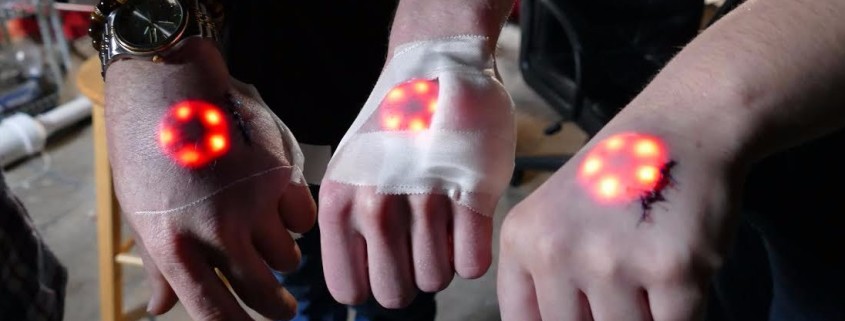
Photo Credit: Ryan O’Shea/Grindhouse WetwareBody implants are a staple of science fiction. They turn members of futuristic societies into super-humans, making them stronger, smarter and more capable than an average person . . .

As amazing as body implants sound, though, how close are we normal humans to getting one of those? In other words, are contemporary science, medicine and technology advanced enough to allow us to seamlessly meld with the technology and actually improve our lives? Keep reading to find out.

We’ll start by introducing Northstar, a subdermal LED sensor that lights up when it’s in the vicinity of a magnet. It can be used to detect the magnetic north and act as a compass. Implanting such a basic device may sound like a silly and needlessly dangerous procedure to go through, but these biohackers did it anyway . . .

If you think having LEDs in your forearm is silly, you may like this better: an antenna implanted in the skull. In 2004, Neil Harbisson had the device implanted in his cranium in an effort to fight color blindness. A camera at the far end of the device records whatever he is seeing and converts the image color data into a series of sound waves, which he has memorized. Instead of seeing various hues, he “hears” them with the help of a camera he calls Eyeborg. (Read more from “Biohackers Implant Computers, Earbuds and Antennas in Their Bodies” HERE)

Follow Joe Miller on Twitter HERE and Facebook HERE.

US Intelligence Chief: We Might Use the Internet of Things to Spy on You

The US intelligence chief has acknowledged for the first time that agencies might use a new generation of smart household devices to increase their surveillance capabilities.

As increasing numbers of devices connect to the internet and to one another, the so-called internet of things promises consumers increased convenience – the remotely operated thermostat from Google-owned Nest is a leading example. But as home computing migrates away from the laptop, the tablet and the smartphone, experts warn that the security features on the coming wave of automobiles, dishwashers and alarm systems lag far behind.

In an appearance at a Washington thinktank last month, the director of the National Security Agency, Adm Michael Rogers, said that it was time to consider making the home devices “more defensible”, but did not address the opportunities that increased numbers and even categories of connected devices provide to his surveillance agency.

However, James Clapper, the US director of national intelligence, was more direct in testimony submitted to the Senate on Tuesday as part of an assessment of threats facing the United States. (Read more from “US Intelligence Chief: We Might Use the Internet of Things to Spy on You” HERE)

Follow Joe Miller on Twitter HERE and Facebook HERE.

Hawaii’s Big Island Declares Emergency Over Dengue Fever Infections

The mayor of Hawaii’s Big Island declared a state of emergency on Monday to deal with a growing outbreak of dengue fever, spread by infected mosquitoes, with 250 cases confirmed over the past four months.

As a result of Hawaii County Mayor Billy Kenoi’s order people on the Big Island will be allowed to resume disposing of old tires in landfills, since tires which are left lying around are a known breeding spot for mosquitoes.

There have been 250 confirmed cases of dengue fever on the island since Oct. 29, making it the largest outbreak in the state since the 1940s, according to the mayor’s declaration and Hawaii health officials . . .

Hawaii Governor David Ige said in a statement he supported the efforts on the Big Island but would not issue a statewide emergency declaration unless the outbreak spread to other islands or expanded to include other diseases, such as the Zika virus. (Read more from “Hawaii’s Big Island Declares Emergency Over Dengue Fever Infections” HERE)

Follow Joe Miller on Twitter HERE and Facebook HERE.

18 Things Only Left-Handed People Understand

Did you know that lefties typically have better hearing than righties? Or that presidents are more likely to be left-handed? Both true. But chances are you’re more familiar with the less exciting side effects of being a southpaw. Case in point: the nickname southpaw. Here, 18 things only left-handed people understand.

Follow Joe Miller on Twitter HERE and Facebook HERE.

This Fruit May Help Detect, Cure Skin Cancer

The black spots on old banana peels may unlock a faster, easier diagnosis of human skin cancer, boosting survival chances, scientists said Monday.

When bananas ripen, their skin is covered in small, round black spots caused by an enzyme known as tyrosinase.

The same enzyme is present in human skin, and in greater quantities in people suffering from melanoma — a potentially deadly form of skin cancer.

A team of scientists used this observed commonality to build a cancer scanner, which they then refined and tested at length on banana peels before moving on to human tissue.

First, researchers at the Laboratory of Physical and Analytical Electrochemistry in Switzerland concluded that the enzyme is a reliable marker of melanoma growth. (Read more from “This Fruit May Help Detect, Cure Skin Cancer” HERE)

Follow Joe Miller on Twitter HERE and Facebook HERE.

The Untold Problems of Cheap Gasoline

When most people see cheap prices at the gas pump, they only think of how it benefits their wallet. Full Measure correspondent Scott Thuman notes gas prices are the lowest since 2009, but there’s a price to pay for saving at the pump.

“Gas prices in the U.S. are averaging $1.80 a gallon, more than a dollar less from the peak last year,” says Thuman. “In many American households, cheaper gas goes a long way toward balancing the family budget; but for hundreds of thousands of families tied to the industry, they’re paying a high price for low-cost oil.”

The gauges at the gas pump are spinning lower and lower. Current prices are under $2 a gallon in most states. The jaw-dropping cheap prices even became a major bragging point in President Obama’s recent state of the union address. “Gas under two bucks a gallon ain’t bad either,” the president quipped . . .

The current oil bust is rattling stock markets around the world. U.S. stocks produced their weakest start in January since 2009. Patron says cheap oil could also impact the banking sector; and that, too, is contributing to a jittery stock market.

“Particularly the independent companies that are active in the U.S shale,” said Patron, “that borrowed heavily to finance their production. Prices have dropped, revenue has dropped, and so they could default on these loans. If that happens, banks could be left with billions of dollars of bad loans. The bond holders could lose their investment; and this increases the risks associated with investing and markets at a time when there’s already heightened concern about China.” (Read more from “The Untold Problems of Cheap Gasoline” HERE)

Follow Joe Miller on Twitter HERE and Facebook HERE.

FDA and the Spread of Brain Diseases

The U.S. Food and Drug Administration (FDA), charged with the mandate to protect the public’s food supply, openly admits its liability in the deaths of Americans, mostly in the form of heart attacks. That is far from the full story. What the giant government agency hides is its culpability in the recent rise in brain diseases that continue to claim both memory and lives.

A broad alert from the FDA should read:

· Research links processed foods to a proliferation of deadly brain diseases such as dementia and Alzheimer’s.

· Studies reveal a food ingredient is connected to memory loss that impacts learning acuity in schoolchildren and lessened productivity in the workplace among adults.

The FDA concedes that under its watch it has allowed so-called “Frankenstein oils” to permeate Americans’ processed food supply. On public record, the FDA states that partially hydrogenated oils (and their derivatives, trans fats), have caused thousands of heart attacks and deaths annually. The FDA would like it to be old news, swept under the rug. What the FDA hopes to bury from public knowledge is that the “killer oils” have proven to be more deadly than disclosed.

The bad oils that have been fed to Americans for over five decades have now been linked to the increase in deadly brain diseases. In an official release, the FDA admits that the laboratory-engineered oils cause “memory loss” without telling the full story to the American public of a scientific link to long-term, physical damage to the brains of people of all ages. The FDA’s admittance of wrongdoing evades full disclosure. The agency remains conspicuously mute on the recent scientific link of the oils to the sudden increase of incurable brain diseases. An early symptom, of which, is memory loss.

Among the scientists interviewed in the newly released book, “AGING: WARNING – Navigating Life’s Medical, Mental & Financial Minefields,” Dr. Beatrice A. Golomb, a renowned researcher at the University of California, San Diego, provides insight:

Q. Are “partially hydrogenated oils” and their derivatives, trans fats, toxic?
A. If “toxic” is defined by the ability to confer harm, then yes, overwhelmingly evidence indicates that trans fats/partially hydrogenated oils are “toxic”.

Q. These oils are notorious in scientific circles for being bad for the body; what is the mental impact?
A. The brain has a few important functions. One is regulation of mood. One is regulation of behavior (e.g. to control irritability/aggression). One is regulation of cognition [ability to think]. Our data have found trans fat [partially hydrogenated oil] consumption to be adversely linked to each of the three.

Q. Does this loss of memory indicate loss of brain cells?
A. Evidence shows that trans fats increase inflammation (brain inflammation is bad for memory) and increase oxidative stress, the kind of damage that antioxidants protect against – which is bad for memory – it can kill cells, and it can impair cell energy which can kill cells. But these effects can also impair function without killing cells.

Q. How does memory loss in young, working Americans, due to their consumption of these fats, [partially hydrogenated oils] impact their lives?
A. That was not an aspect of our study. But certainly, less favorable memory function is expected to translate to less favorable performance in school and in the workplace. Less favorable performance can constrain career choices, affect job performance, and thus influence career trajectories.

Q. What is the value, if any, for using industrially-fabricated oils in our processed food supply?
A. I used to tell my patients that trans fats improve the shelf life of the food, but reduce the shelf life of the person.

Of critical note is that the deadly oils will remain in the American processed food supply until mid-2018. An excerpt from the aforementioned book, provides further details on how these oils are linked to the build-up of a sticky and deadly protein scientifically known as beta-amyloids. Beta-amyloids wreak havoc as they flow through the cardiovascular system to the brain and eventually attack brain cells:

“A build-up in the brain and blood vessels of a protein plaque called beta-amyloids may be spurred or exacerbated by a build-up of bad cholesterol. Bad cholesterol is accelerated by – how does the FDA put it – by an ‘industrially produced’ food ingredient that the FDA allows to permeate the food supply. Converted in laboratories, they are known as partially hydrogenated oils or PHOs. When deadly beta-amyloids attack and disintegrate brain cells, ‘memory loss’ first occurs, then overtime, oxygen flow is diminished, limbs become incapacitated, bodily functions shutdown and eventually death occurs.”

It is the classic description of death due to most forms of dementia, including Alzheimer’s.

Though brain diseases have existed over time, the documented increase per capita in memory related disorders has sounded alarms. Research points the finger at the very ingredients that, for decades, have permeated processed foods: partially hydrogenated oils. These oils have long been banned in other nations from Europe to Asia. Yet, the FDA looked the other way as major processed food manufacturers glutted the American food supply with the “killer oils.”

An outcry by health advocates forced the FDA to announce a total ban of the oils effective as of June 18, 2018. Until mid-2018, buyer beware. The “phantom oils” remain in a vast array of processed foods as an active ingredient that is being fed daily to American families.

Though a staggering 1 in 3 seniors reportedly dies with dementia, the loss of mental capacity, whether dementia or Alzheimer’s, does not automatically occur with aging according to experts.

“Alzheimer’s [dementia] is not a normal part of aging.” — Alzheimer’s Association.

If not age, researchers queried, what is mentally derailing increasing numbers of people? It is jokingly said when a person’s body goes physically or mentally awry: “Was it something I ate?”

Diseases are caused by either genetics or the environment. According to the Alzheimer’s Association, family-inherited, early-onset Alzheimer’s Disease accounts for less than 5% of Alzheimer’s cases worldwide. Based on those extremely low statistics, researchers zeroed in on an environmental cause. In their sights are industrially-modified oils.

For almost twenty years, food activists voiced alarms that the laboratory-contrived oils remain stuck in arteries and veins far longer than oils from natural food sources. Under assault, the FDA has begrudgingly initiated a ban to slowly withdraw from processed foods the numerous forms of the oils that still saturate the marketplace. While not identified as the cause of Alzheimer’s, partially hydrogenated oils are linked to the acceleration of the build-up of the cell and nerve killing, sticky proteins — beta-amyloids — that turn into plaque and clog the brain. Beta-amyloids are the hallmarks of Alzheimer disease. Findings of top scientists are detailed in the book.

As a government agency, the FDA fails to “use reasonable care” on behalf of the American people. For decades, its inactions resulted in deaths and mental and bodily harm to millions. By law, the inactions by the FDA would be categorized as “depraved indifference” or “gross negligence.” At minimum, it is a “reckless disregard” for human life.

The damage imposed by the FDA proves costly, especially for middle-income families. The rapid increase in dementia and other brain diseases is occurring at a time when middle-income American’s discretionary spending is being tapped out. For growing numbers of families nationwide, long-term health care costs, both inside and outside of the home, are unsustainable.

The FDA functions under outdated laws that give wide leeway to corporate food giants. Charged with overseeing the overseer, it is Congress that must act to plug the loopholes:

“Corporations that are supposed to be regulated by the U.S. Food and Drug Administration may also be aided and abetted by the FDA as food corporations are allowed to ‘self-regulate’. The FDA allows major processed food manufacturers to designate their products as being ‘Generally Recognized As Safe.’ It is known by the acronym GRAS. Under the practice of GRAS, the FDA depends on the processed food industry to be its own overseer, its own inspector. Essentially, what that means is that the processed food industry is on the ‘honor system’. It is eerily akin to the tobacco industry when cigarettes were once promoted as being good for your health.”

In addition to PHOs that are consumed daily, the U.S. FDA allows other ingredients and toxins into the American food supply that are banned in other parts of the globe. Processed food manufacturers continue to pack the processed food supply with chemically manipulated ingredients that negatively impact young and old alike.

Taste biotechnology companies today have chemicals aimed at binding artificial flavors to taste bud “receptor cells” on the tongue. They are meant to ‘manipulate and trick’ the mind as substitutes or catalysts for heightened sugar, salt or other flavor sensations. With more patents in the pipeline, competition to stimulate your taste buds through both chemical and natural ingredient-alterations is expected to be fierce.

Will taste bud modifiers that reportedly “trick the mind” have a damaging impact on the developing systems of the very young and the fragile systems of aging Americans? Will the FDA do sufficient testing to determine if mind-altering chemicals will have a long-term, negative impact on consumers’ health regardless of age? If the past indicates the future, the FDA may again remain on the periphery as processed food companies continue to spoon-feed chemically-modified food and drink to unsuspecting consumers.

The charge against the FDA is malfeasance against the American public. As one major toxin is slow-walked out of the processed food supply, a stream of new, laboratory-engineered chemicals and toxins are set to permeate the marketplace. Why is the FDA loath to alert U.S. families that many of the chemicals and ingredients found in the food on their dinner tables, in children’s school menus, in fast foods, on grocery shelves, and in hospitals and nursing homes — are banned elsewhere around the world?”

Recent findings of the damaging impact of lab-modified partially hydrogenated oils come decades too late for the afflicted, dying, and loved ones lost to brain and heart diseases. Instead of a full explanation of the harm done and harm still to come, the FDA’s message remains: “Sorry about that memory loss and all of those heart attacks.” Having admitted guilt without consequence, it remains business as usual as the FDA continues to bow to corporations’ profits over citizens’ health. The determining question is — do Americans care?

________________________________

Sharon Sebastian, author of the book, “AGING: WARNING– Navigating Life’s Medical, Mental & Financial Minefields,” is a columnist, commentator, and contributor in print and on nationwide broadcasts on topics ranging from healthcare, culture, religion, and politics to domestic and global policy. Sebastian’s political and cultural analyses are published nationally and internationally. Website: www.AgingWarning.com

Follow Joe Miller on Twitter HERE and Facebook HERE.
Blood Test to Spot Five Deadly Cancers Could Prevent Thousands of Deaths

A simple blood test which detects five of the most deadly types of cancer is being developed by scientists.

Researchers at the National Human Genome Research Institute in the US have discovered that when breast, bowel, lung, womb or stomach cancer is present in the body, one particular gene changes its chemical signature.

The scientists think that change occurs when the body starts to lose the fight against the disease.

British charities said it could work like a ‘warning klaxon,’ sounding the alarm that cancer is present, at a time when treatments are likely to be most effective.

The crucial signature was linked to a gene called ZNF154. Researchers found that when a tumour was present, the gene showed increased signs of ‘methylation’ – a biological process which tells genes to switch to the ‘off’ position. (Read more from “Blood Test to Spot Five Deadly Cancers Could Prevent Thousands of Deaths” HERE)

Follow Joe Miller on Twitter HERE and Facebook HERE.