Europe’s Childless Leaders Sleepwalking the West to Disaster

There have never been so many childless politicians leading Europe as today. They are modern, open minded and multicultural. They know that “everything finishes with them.” In the short term, being childless is a relief since it means no spending for families, no sacrifices and that no one complains about the future consequences. As in a research report financed by the European Union: “No kids, no problem!”

Being a mother or a father, however, means that you have a very real stake in the future of the country you lead. Europe’s most important leaders leave no children behind.

Europe’s most important leaders are all childless: German Chancellor Angela Merkel, Dutch Prime Minister Mark Rutte and the French presidential hopeful Emmanuel Macron. The list continues with Swedish Prime Minister Stefan Löfven, Luxembourg’s Prime Minister Xavier Bettel and Scottish First Minister Nicola Sturgeon.

Europe Is Committing Suicide

As Europe’s leaders have no children, they seem have no reason to worry about the future of their continent. German philosopher Rüdiger Safranski wrote:

[F]or the childless, thinking in terms of the generations to come loses relevance. Therefore, they behave more and more as if they were the last and see themselves as standing at the end of the chain.

(For more from the author of “Europe’s Childless Leaders Sleepwalking the West to Disaster” please click HERE)

Follow Joe Miller on Twitter HERE and Facebook HERE.

US Military Member Killed in Somalia, 1st Death Since 1993

A U.S. service member has been killed in Somalia during an operation against the extremist group al-Shabab — the first U.S. combat death there in more than two decades — as the United States steps up its fight against the al-Qaida-linked organization in a country that remains largely chaos.

“We do not believe there has been a case where a U.S. service member has been killed in combat action in Somalia since the incident there in 1993,” U.S. Africa Command spokesman Patrick Barnes said Friday. The United States pulled out of Somalia after that incident in which two helicopters were shot down in the capital, Mogadishu, and bodies of Americans were dragged through the streets.

In a statement, the U.S. Africa Command said the service member was killed Thursday during the operation near Barii, about 40 miles (64 kilometers) west of Mogadishu. The Pentagon said two other service members were wounded. (Read more from “US Military Member Killed in Somalia, 1st Death Since 1993” HERE)

Follow Joe Miller on Twitter HERE and Facebook HERE.
North Korea Accuses US, south Korea of Assassination Attempt

North Korea on Friday accused the U.S. and South Korean spy agencies of an unsuccessful assassination attempt on leader Kim Jong Un involving biochemical weapons.

In a statement carried on state media, North Korea’s Ministry of State Security said it will “ferret out and mercilessly destroy” the “terrorists” in the CIA and South Korean intelligence agency responsible for targeting its supreme leadership.

North Korea frequently lambasts the United States and South Korea, but its accusation Friday was unusual in its detail. (Read more from “North Korea Accuses US, south Korea of Assassination Attempt” HERE)

Follow Joe Miller on Twitter HERE and Facebook HERE.
Trump’s First International Trip Shows Middle East a Priority

President Donald Trump could be indicating his highest international priority in traveling to the Middle East ahead of European summits later this month, experts say, while also honoring three of the world’s major religions.

Trump will travel to Saudi Arabia, then to Israel, and finally to Italy to visit the Vatican in Rome. This will be his first international trip as president.

The president announced the travel to centers of three major religions–Islam, Judaism, and Christianity–during a National Day of Prayer event Thursday in the Rose Garden of the White House.

The trip comes ahead news came ahead of already-scheduled travel to Brussels for the NATO summit May 25 and a Group of Seven, or G7, gathering May 27 in Sicily.

Trump’s travel plans are a good sign to American allies following President Barack Obama’s two terms, said Mike Makovsky, a former Pentagon official who is now the president of the Jewish Institute for National Security of America.

“President Trump has had this image of a great disruptor, but this shows he is a great restorer of our ties with our traditional allies,” Makovsky told The Daily Signal. “This is an important message after eight years of Obama. It reverberates globally by reassuring our traditional allies, who realize this is a good signal.”

Even with other problems abroad such as North Korea, the Trump administration is focusing much attention on the Middle East with challenges including the Islamic State terrorist army, the civil war in Syria, an emboldened Iran, and unstable countries such as Iraq and Libya.

“The Middle East is a big problem and he wants to do something to address it,” said Richard Benedetto, an adjunct professor in American University’s government department, adding:

It’s significant that Saudi Arabia is the first stop. They have been our second-closest ally [after Israel] in the Middle East and our closest Arab ally. Each president–Bill Clinton, George W. Bush, Barack Obama–has worked closely with the Saudis.

While in Saudi Arabia, Trump is scheduled to meet with leaders of the five other countries of the Gulf Cooperation Council, a political and economic alliance of Arab nations. They are Bahrain, Kuwait, Oman, Qatar, and the United Arab Emirates.

“He recognizes the importance of bringing all of our partners together, and certainly looking for ways that we can combat some of the greatest threats to all of the world,” White House spokeswoman Sarah Huckabee Sanders said of the president at a press briefing Thursday. “And that’s going to take some buy-in and some of the people in the Middle East taking a larger stake in that process, and I think that’s a big part of what we’re going to see on that trip.”

America needs the participation of four key countries for a coalition to help stabilize the Middle East and combat the Islamic State—Egypt, Israel, Jordan, and Saudi Arabia—said James Carafano, vice president for national security and foreign policy studies at The Heritage Foundation.

Trump already has visited with the leaders of Egypt, Israel, and Jordan at the White House. He is going to Saudi Arabia. He will handle the Middle East differently than his immediate predecessors, Obama and Bush, Carafano said.

“This trip will have a specific operational component, it’s not just for balance or checking off boxes,” Carafano told The Daily Signal, adding:

He wants to re-engage with the Middle East, not as Bush did in a muscular way, and obviously not in a lead-from-behind Obama way. Unlike Europe, with the Middle East, everything is bilateral. Relationships are important.

Trump met earlier in the past week with Palestinian Authority President Mahmoud Abbas, and frequently has talked about the Middle East peace process. However, showing commitment to a peace deal is as much strategy as it is a goal, Carafano said, explaining that it’s an important way to get Arab allies on board for other U.S. national security priorities.

The third destination, a visit with Pope Francis at the Vatican, might be a harmonious way to check a box after going to the holy cities of Islam and Judaism, Carafano said.

Still, considering the rhetorical clash the pope and Trump had during the 2016 campaign over immigration, Benedetto said, their meeting will have symbolic importance.

“Americans have always seen the pope as a world spiritual leader,” Benedetto said. “Trump’s executive order seemed to be a way of showing he cares for people of faith, and this meeting could show that moral leadership is important to him.”

Trump signed an executive order on religious freedom Thursday that directed the Internal Revenue Service not to target political speech by leaders of churches and other houses of worship. It also eased Obamacare-related regulatory burdens on religious organizations.

Bridging the gap could be worthwhile, said Craig Shirley, a presidential historian whose most recent book is “Reagan Rising: The Decisive Years, 1976 to 1980.”

President Ronald Reagan’s relationship with Pope John Paul II was “world altering” in ending the Cold War, Shirley said.

“I don’t know if we could see that here without a strategic alignment against Islamic terrorism, as there was against Soviet communism,” Shirley told The Daily Signal. “Being from Poland, Pope John Paul II saw Soviet communism first hand. Pope Francis hasn’t directly experienced Islamic terrorism.” (For more from the author of “Trump’s First International Trip Shows Middle East a Priority” please click HERE)

Follow Joe Miller on Twitter HERE and Facebook HERE.

New Strategy Needed to Confront Islamist Threats in War of Ideas

Coming into office, President Donald Trump declared defeating and destroying ISIS to be his foreign policy top priority.

In contrast with the Obama administration, he had no hesitation defining precisely the root of the threat: Islamist terrorism—not vaguely phrased “violent extremism,” “workplace violence,” or “manmade contingencies.”

This definition of the threat also needs to come with a far more concise strategy to combat it. The shorthand for the Obama strategy was “CVE,” or “Countering Violent Extremism.”

Like the evasive title, this program failed. The United States continues to face terror attacks from radicalized individuals, such as last year’s Orlando nightclub massacre.

In a recent article for The National Interest, “Top 10 Ways to Make the War on the ‘War of Ideas,’” The Heritage Foundation’s James Carafano writes that “the new team in Washington needs to right-size the effort, making it complimentary with effective counterterrorism measures and U.S. strategy overseas.”

Carafano’s 10 points are:

1. Helping Americans understand the changing nature of the war. This could potentially occur through the creation of a 9/11-style commission to define the threat for this new era.

2. Do not allow efforts to be captured by ulterior motives. This happens when the perpetrators of violence are excused as victims, and therefore not to blame.

3. Focus on Islamist threats. The Islamist threat is a very specific and anti-democratic threat that cannot be countered with a generic counterterrorism approach.

4. Limit domestic programs and keep them modest in character. Overly broad programs to counter radicalization have failed in the past. For instance, one FBI anti-terror program in 2012 identified the real terror threat as right-wing terrorism, not Islamism.

5. Focus domestic programs on counterterrorism. Identify and hone in on individuals that pose potential threats, and prevent those individuals from successfully striking. Most domestic terrorists have been on law enforcement’s radar screen prior to attacking.

6. Make domestic programs bottom-up. Equip local communities and law enforcement to confront terrorism, instead of hoping that the federal government can handle the terror threat all by itself.

7. Emphasize support to the field in overseas programs. Again, local officials and political leaders will be far better equipped than central authorities to deal with radicalization on the ground in trouble spots.

8. End handouts that don’t deliver. No more government-funded conferences and meetings for ineffective NGOs, such as George Soros’ Open Society Foundations.

9. Avoid obsessing over social media. Social media is not itself the root cause of terror attacks. Social media is a contributing factor in radicalization that is most effective where there is already a local network to carry out attacks.

10. Drop the label. The Obama administration’s “Countering Violent Extremism” label is too vague. Islamist extremism represents a well-defined threat that we need to fight in the name of all that human decency and liberal democracy stand for.

An 11th point that should be added is the importance of information and communication in defeating the enemy.

For that, the United States government has powerful tools—in particular, the civilian entities of U.S. International Broadcasting under the Broadcasting Board of Governors.

These broadcasters are legitimate and important tools of U.S. foreign policy, and have been ever since they were created in World War II.

The U.S. government has devoted millions of dollars over the last 15 years toward expanding these broadcast services to the Middle East and Afghanistan, with varying degrees of success.

Networks that came from these efforts include the Middle East Broadcasting Network (which consists of Radio Sawa and Al Hurra Television), Voice of America’s Persian News Network, Radio Free Afghanistan, and Radio Farda (for Iran) produced by Radio Liberty in Munich.

The Trump team must now create a comprehensive broadcasting strategy to reach and inform audiences who are trapped behind enemy lines, often by autocratic Islamist regimes. This should become part of a clear, focused, and revitalized counterterrorism strategy. (For more from the author of “New Strategy Needed to Confront Islamist Threats in War of Ideas” please click HERE)

Follow Joe Miller on Twitter HERE and Facebook HERE.
Netanyahu: Abbas Lied to President Trump

Israeli Prime Minister Benjamin Netanyahu called out Palestinian Authority chairman Mahmoud Abbas for lying to President Donald Trump during their meeting Wednesday.

The leader of the anti-Semitic Palestinian Authority came to the United States as President Trump seeks a peace agreement between Israel and Palestine.

“I want to see peace with Israel and the Palestinians,” Trump told Reuters last week. “There is no reason there’s not peace between Israel and the Palestinians — none whatsoever.”

During a joint press conference with the president, Abbas expressed a desire for peace and claimed that Palestinian children are brought up in a “culture of peace.”

“Mr. President, I affirm to you that we are raising our youth, our children, our grandchildren on a culture of peace,” Abbas told Trump. “And we are endeavoring to bring about security, freedom and peace for our children to live like the other children in the world, along with the Israeli children in peace, freedom and security.”

Prime Minister Netanyahu called out Abbas’ egregious lie.

“I heard President Abbas yesterday say that they teach, Palestinians teach their children peace. That’s unfortunately not true,” Netanyahu said Thursday. “They name their schools after mass murderers of Israelis and they pay terrorists.”

President Trump is mistaken if he believes Abbas is genuinely interested in finding peace. The Palestinian leader has a series of ties to terrorist organizations and has previously motivated his people to commit acts of violence against the Israeli people.

Despite Abbas’ history as a bad actor, PM Netanyahu reserves hope that peace can be achieved.

“But I hope that it’s possible to achieve a change and to pursue a genuine peace. This is something Israel is always ready for. I’m always ready for genuine peace,” Netanyahu said.

President Trump has previously criticized the Palestinian authority for teaching their children hate “from a very young age.”

(For more from the author of “Netanyahu: Abbas Lied to President Trump” please click HERE)

Follow Joe Miller on Twitter HERE and Facebook HERE.

Catholic Hospitals in Belgium Now Provide Euthanasia as an Option for Those With ‘Hopeless Suffering’

Psychiatric patients in Catholic-run Belgium hospitals will now be given the option to die.

The Belgian branch of the Catholic religious order the Brothers of Charity said on their website that they take patients’ requests to die seriously. Those with “hopeless suffering” are now allowed to die upon request. They will make sure the patient is killed only if they don’t have a “reasonable” prospect of treating them.

The chairman of the hospital’s board told a Belgian news source that allowing people to choose to die is consistent with their criteria for treatment. Now they are making it available as an option. The “inviolability of life” is not an absolute, he said.

The order runs 13 psychiatric clinics in Belgium. Previously, its hospitals had sent people who wanted to die to other hospitals. It began treating the mentally ill in 1815.

A Real Tragedy

The head of Brothers of Charity “strongly opposes” the practice. Speaking to MercatorNet, Brother René Stockman called the decision “a real tragedy.” The order had resisted the push by the Belgian government and medical establishment for widely available euthanasia. Now, he said, the order’s opponents are saying “that finally the group of the Brothers of Charity capitulated and came into their camp.”

Catholic theologian Fr. Thomas Petri told LifeSiteNews he wasn’t surprised. Euthanasia, he said, “is not only an offense against the Gospel of Jesus Christ, but an offense against life itself.”

Petri said the board of Brothers of Charity insist they are both pro-life and pro-euthanasia. The contradiction is irrational. “In the United States, such persons are normally encouraged to seek psychiatric care.”

The order began its work with the mentally ill by “breaking of the shackles used to restrain the mentally ill in the crypts of Gerard the Devil’s Castle in Ghent,” according to its website. Then, they freed them. Now they’ll help them die. (For more from the author of “Catholic Hospitals in Belgium Now Provide Euthanasia as an Option for Those With ‘Hopeless Suffering'” please click HERE)

Follow Joe Miller on Twitter HERE and Facebook HERE.

U.S. General Confirms: Special Operations Teams Will Be Sent to Take out North Korean Nuke Sites

With China issuing a final warning to North Korea earlier today, and U.S. President Donald Trump keeping all options on the table as he prepares a response to continued North Korean military posturing and rhetoric, Army General Raymond A. Thomas confirmed in sworn testimony to a Congressional subcommittee that special operations teams will be utilized as part of any conflict with the rogue state and would likely be sent in to secure and/or destroy North Korean nuclear facilities in the event of war:

Army Gen. Raymond A. Thomas stated in testimony to a House subcommittee that Army, Navy, and Air Force commandos are based both permanently and in rotations on the Korean peninsula in case conflict breaks out.

The special operations training and preparation is a warfighting priority, Thomas said in prepared testimony. There are currently around 8,000 special operations troops deployed in more than 80 countries.

“We are actively pursuing a training path to ensure readiness for the entire range of contingency operations in which [special operations forces], to include our exquisite [countering weapons of mass destruction] capabilities, may play a critical role,” he told the subcommittee on emerging threats.

“We are looking comprehensively at our force structure and capabilities on the peninsula and across the region to maximize our support to U.S. [Pacific Command] and [U.S. Forces Korea]. This is my warfighting priority for planning and support.”

Special forces troops would be responsible for locating and destroying North Korean nuclear weapons and missile delivery systems, such as mobile missiles. They also would seek to prevent the movement of the weapons out of the country during a conflict.

Special operations missions are said by military experts to include intelligence gathering on the location of nuclear and chemical weapons sites for targeting by bombers. They also are likely to include direct action assaults on facilities to sabotage the weapons, or to prevent the weapons from being stolen, or set off at the sites by the North Koreans.

Source: Free Beacon

In earlier reports it was noted that SEALs and other commandos could be used in a first strike to decapitate North Korean leadership at the onset of any military engagement.

The President deployed high-altitude surveillance drones over North Korea earlier this week in a bid to gather intelligence about the secretive country’s nuclear and military capabilities ahead of any military action . . .

The world appears to be moving towards war at a feverish pace. (For more from the author of “U.S. General Confirms: Special Operations Teams Will Be Sent to Take out North Korean Nuke Sites” please click HERE)

Follow Joe Miller on Twitter HERE and Facebook HERE.
CIA Confirmed Russians’ Role in Shooting of Pope John Paul II, Reagan Biographer Writes

Contrary to what “pragmatists” in U.S. government agencies concluded, top officials with the Soviet Union were behind the 1981 assassination attempt on Pope John Paul II, a biographer of Ronald Reagan told The Daily Signal in an exclusive interview.

Paul Kengor, a Grove City College political science professor and author, has acquired what he calls never-before-seen information about the Reagan administration’s “supersecret investigation” into the shooting and wounding of the pope.

The information details the role of the Soviet GRU, the Russians’ brutal foreign military intelligence unit, and KGB spy agency head Yuri Andropov in the attempt on John Paul II’s life, Kengor said.

President Reagan and his CIA chief, William Casey, had suspected from the outset that the Soviets had a hand in the shooting of John Paul II on May 13, 1981, in St. Peter’s Square in Rome, he said.

But their suspicions weren’t confirmed until after Casey organized his own secret probe spearheaded by two female researchers, according to Kengor’s just-released book, A Pope and a President: John Paul II, Ronald Reagan, and the Extraordinary Untold Story of the 20th Century.

“Their suspicions ran completely contrary to the establishmentarians in the institutional CIA, at the State Department, and among the White House pragmatists,” Kengor told The Daily Signal. “That being the reality, Casey, I learned, actually ordered a truly supersecret investigation into the shooting, researched by two impressive women in their 30s and 40s, known only to a handful of agency people.”

A Turk named Mehmet Ali Agca, 23, fired four bullets from a handgun at John Paul II, two of which struck him, as the pontiff entered the square. An Italian court eventually sentenced Agca, an escaped murderer, to life in prison. John Paul later forgave Agca, and Prime Minister Carlo Ciampi pardoned him at the pope’s request, deporting him to Turkey in 2000.

The final report of the Casey-ordered investigation never was released, and Kengor says he is not sure where it is. The author did suggest that someone in the Trump administration, including perhaps the president, could ask that the report be released.

Kengor said he believes he may have learned the names of the two female CIA employees. He emailed one, he said, but did not receive a response.

One source told the college professor that the report was “the most secretive thing I’ve ever seen,” Kengor said, declining to name the source.

“We had to practically remove the eyeballs of those who read it,” the source told him. “That report was the blockbuster of the 20th century.”

But even without the actual report in hand, Kengor said, he learned its major findings.

“I did get the results of the investigation, the background, the thinking of Reagan and Casey,” he said in an email to The Daily Signal. “I even pinpointed the date/time that I believe Casey briefed Reagan on the conclusions: May 16, 1985, 11:02-11:17 a.m. I have the president’s daily schedule from that day.”

Both Reagan, who died in 2004, and John Paul II, who died in 2005, decided it would be best not to disclose the findings at the time, Kengor said.

The pope was concerned about starting World War III and “shrewdly figured that people would rightly blame Moscow anyway,” he said.

Reagan was asked several times about a possible Soviet role in the shooting, but was “very careful not to say what was truly on his mind,” Kengor said. “This is an impressive act of diplomacy by Reagan.”

Putin and the Missing Report

So why hasn’t the report of the “supersecret investigation” been released?

Kengor has one possible explanation.

“The current head of Russia, Vladimir Putin, was in the KGB at this exact time,” he said, adding:

But I have to be very clear, I doubt very much that Putin knew anything or was involved. He wasn’t high-ranking enough. This was, as William Safire put it, ‘the crime of the century,’ and a tiny few Russian officials were permitted to know. It was actually the GRU that organized the assassination attempt.

That was the big finding in the Casey investigation, given that everyone else had been looking for, but couldn’t find, KGB fingerprints. That said, the GRU organized the shooting with Yuri Andropov’s direct order, blessing, and enthusiasm at the KGB. Andropov, as head of the KGB, was Vladimir Putin’s boss.

Since coming to power in 2000, Putin has been a “major protector of the GRU and KGB,” Kengor said. “Maybe that’s why this Cold War report still hasn’t been disclosed by Washington. Maybe Washington has heretofore feared offending Putin and hurting U.S.-Russian relations.”

“I wonder,” he added, “if our new president would have any such fears?” (For more from the author of “CIA Confirmed Russians’ Role in Shooting of Pope John Paul II, Reagan Biographer Writes” please click HERE)

Follow Joe Miller on Twitter HERE and Facebook HERE.

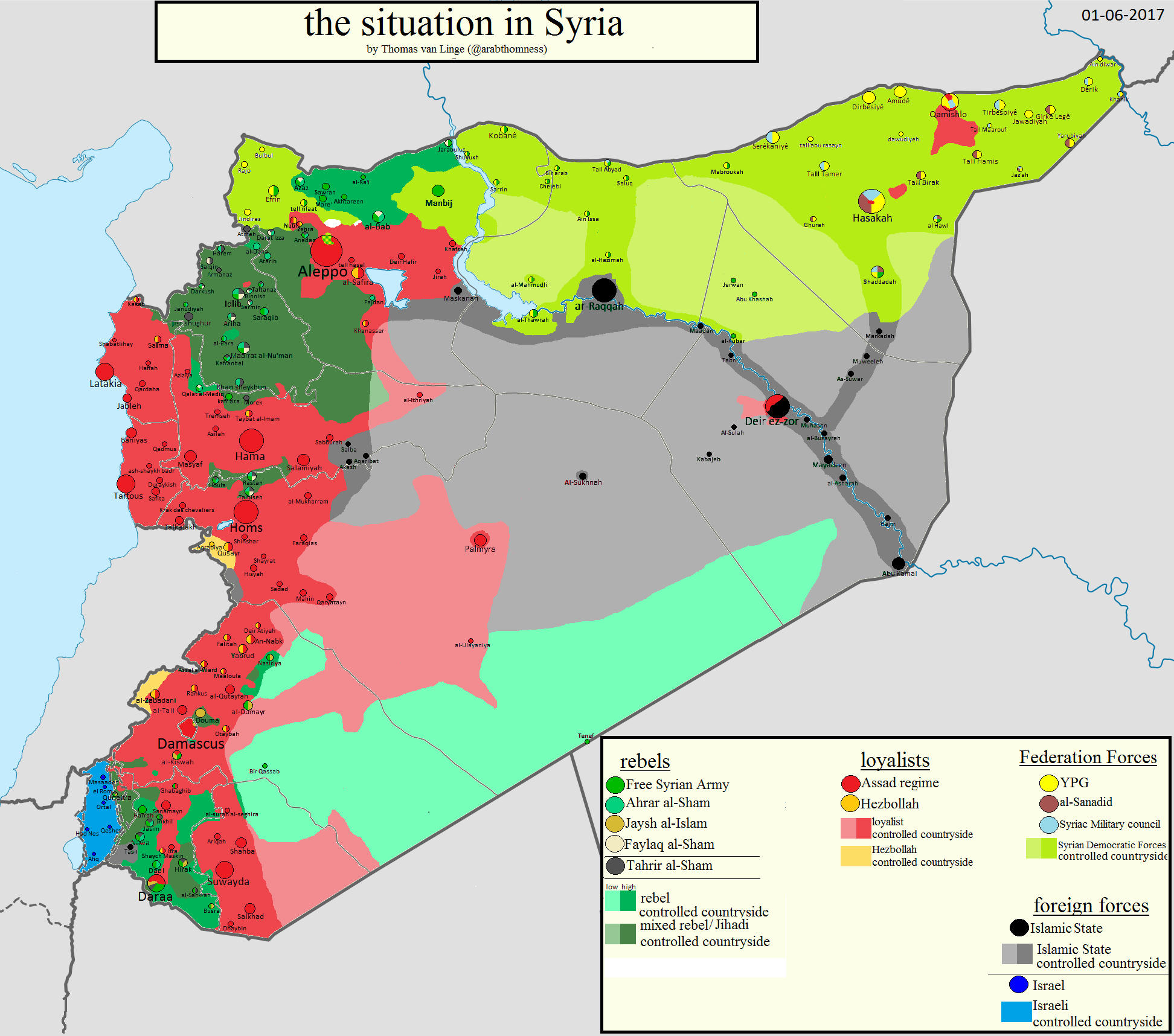
Trump Saves US-Allied Syrian Christians From Turkish Invasion

We complain when politicians do the wrong thing, or when they fail to do what is needed. It’s important as well to thank them when they make the right decision. President Trump and his advisors were right to step in forcefully and protect America’s allies from an unprovoked Turkish attack last week. It was just, humane and very much in America’s interests.

As Stream readers know, I called for the U.S. to act. More important than that, I prayed. So did thousands of Christians across the Federation of Northern Syria. It seems that our prayers were answered. Thank you, Mr. President. Christian voters in America will not forget this decision.

Turkey’s Act of War

I’ll never forget the moment I heard the news: Turkey was sending troops and tanks across the Syrian border to attack the U.S.-backed Syrian Democratic Forces. I was in the European Parliament (EP). In fact, Turkey was on the agenda there. We discussed the plight of persecuted Christians and Yazidis in Syria and Iraq. In meetings throughout the day, we looked for ways to help the hunted peoples of those countries work together.

The Turkish army has been shelling civilian and military targets in the U.S.-allied Federation of Northern Syria for two long years. There is no legitimate military reason for this violence. Turkey simply wants to gain control over a region in Syria larger than Lebanon. And it wants to snuff out autonomy for the Kurdish people, whom it persecutes at home. Turkey claims this is a war against “terrorism.”

What was new and frightening was Turkey’s use of ground troops and tanks. That was a major escalation — an act of war. Syria’s Christians feared that the Turks would next attack the Khabour Valley, which Christian militias with Kurdish help liberated from ISIS in 2015, in a desperate fight against genocide. The Khabour Valley is still scarred by these battles and still needs to be rebuilt. Instead, Syrians feared they would need to defend it against the large and powerful Turkish army.

There was fighting on the ground between the U.S.-backed Syrian Democratic Forces (SDF) and NATO member Turkey. The smaller but dedicated SDF beat the Turks back across the border, and destroyed several Turkish tanks. More Turkish army units started amassing along the border.

Praying for Relief

Back in Brussels we tried to process all this news, to find out if Syrian Christian friends had died amidst the fighting. We made calls, blasted out messages, and offered what help we could. We saw all the patient work of building a tolerant, free region inside tortured Syria about to be crushed beneath the treads of Turkey’s invading tanks. Then we looked one another in the eyes. There was nothing more we could do. So instead we tried something that doesn’t often happen inside the European Parliament. We prayed.

Meanwhile, the courageous leaders of the Federation of Northern Syria were fighting for their lives — on the battlefield and in the media. Their executive body called on the U.S.-led anti-ISIS coalition to establish a no-fly zone. The goal? To stop the Turks or Assad’s regime from bombing Christian, Kurdish and Yezidi towns. The SDF echoed this call. Our Kurdish friends launched a media campaign #NoFlyZone4Rojava (yes even in Syria you have hashtag campaigns).

The U.S. couldn’t be happy about this blatant attack on its allies. Turkey even stated bluntly that it aimed to continue its attacks until it destroyed the YPG. It claimed that this Kurdish militia is an equal threat to ISIS, and demanded that the U.S. follow its lead. It is amazing, but the Turkish leadership seems to believe its own propaganda.

The U.S. State Department and the Pentagon acted admirably. They made it very clear that they would not end their cooperation with the SDF. They stated openly that the SDF was the partner of U.S. forces in Syria. Behind the scenes, they doubtless pressed Turkey to stop its attack. But the bloodshed continued. The Turks bombed civilian targets, killing religious and ethnic minorities who had never harmed anyone — just as ISIS does.

U.S. Troops to the Rescue

The longer the attacks continued, the more I worried that the people of Northern Syria would stop trusting America, their ally. That’s trust the U.S. will need in order to win the war against ISIS without a costly, Iraq-style occupation — which surely President Trump doesn’t want.

No one in Northern Syria will trust the Turks. Turkey cannot guarantee stability or safety for vulnerable minorities. In fact, it is hunting them. The sight of Turkish troops destroying the villages which the SDF had conquered back from ISIS led many to fear that the U.S. had sold them out to Turkey.

So you can imagine how great my relief was when I saw this video: of U.S. armored vehicles together with SDF forces moving to the Turkish-Syrian border. Later on I saw footage showing how the U.S. forces were being deployed along this border. The Syrian Christian Sutoro police force posted pictures of U.S. troops in the Christian town of Derik, whose outskirts Turkey had bombed. The U.S. put its brave troops as a shield between Turkey and the Federation. This seemed to be a direct consequence of a decision of President Trump to give the U.S. military command much more flexibility in Syria and Iraq. It’s a very wise strategy. It keeps U.S. leverage strong, instead of handing the region over to the untrustworthy Turkish regime.

Say No to President Erdogan

Just one caveat: broken trust is not easily rebuilt. The great worry among Christians and other vulnerable minorities communities in Northern Syria and Sinjar (Iraq) is the upcoming meeting between President Trump and President Erdogan of Turkey on May 16. It is crystal clear that Erdogan will demand that the U.S. end its support for the SDF and allow Turkey to kill off the Kurdish YPG.

That would be a disaster. Not just for Christians, Yazidis, and Kurds, but for America. Handing Turkey control of the region and letting it hunt down Kurdish freedom fighters will effectively end the war against ISIS. Instead of Kurds, Arabs, Christians, and (supposedly) Turks fighting ISIS, they will be at war with each other. In fact, Turkey would simply be at war with the local population of Northern Syria. Even local Arab tribes will fight the Turks. The number of Arabs in the YPG and YPJ has grown considerably. They will take revenge if their sons and daughters are killed by Turkish forces. If such a chaos ensues, ISIS will be off the hook. It will keep control of a large region in Syria, allowing it to make a big comeback

A war between the SDF and Turkey in Northern Syria would be the death knell for Syria’s Christians and Iraq’s Yazidis. If ISIS stays in place, the last few Christians left in Iraq will flee, and end up in refugee camps. Another ancient Christian community will be snuffed out forever.

Legacy of Peace and Freedom: Trump’s Opportunity

To safeguard the future of Syria’s Christians, President Trump needs to stay the course. Keep supporting the freedom-loving, multi-religious and multi-ethnic SDF. He should also start providing arms to the Syriac Military Council, the Christian self-defense militia that is part of the SDF. In Iraq, Yazidis and Christians deserve self-government and the means to defend themselves.

Syria is in ruins, but it still has embers of hope. One of the most hopeful things is President Trump’s fresh approach to the region. If he backs a decentralized peace plan, he has a unique opportunity to leave behind him a presidential legacy: peace and freedom for the most vulnerable minorities on earth, who will be loyal American allies. (For more from the author of “Trump Saves US-Allied Syrian Christians From Turkish Invasion” please click HERE)

Follow Joe Miller on Twitter HERE and Facebook HERE.