CIA Confirmed Russians’ Role in Shooting of Pope John Paul II, Reagan Biographer Writes

Contrary to what “pragmatists” in U.S. government agencies concluded, top officials with the Soviet Union were behind the 1981 assassination attempt on Pope John Paul II, a biographer of Ronald Reagan told The Daily Signal in an exclusive interview.

Paul Kengor, a Grove City College political science professor and author, has acquired what he calls never-before-seen information about the Reagan administration’s “supersecret investigation” into the shooting and wounding of the pope.

The information details the role of the Soviet GRU, the Russians’ brutal foreign military intelligence unit, and KGB spy agency head Yuri Andropov in the attempt on John Paul II’s life, Kengor said.

President Reagan and his CIA chief, William Casey, had suspected from the outset that the Soviets had a hand in the shooting of John Paul II on May 13, 1981, in St. Peter’s Square in Rome, he said.

But their suspicions weren’t confirmed until after Casey organized his own secret probe spearheaded by two female researchers, according to Kengor’s just-released book, A Pope and a President: John Paul II, Ronald Reagan, and the Extraordinary Untold Story of the 20th Century.

“Their suspicions ran completely contrary to the establishmentarians in the institutional CIA, at the State Department, and among the White House pragmatists,” Kengor told The Daily Signal. “That being the reality, Casey, I learned, actually ordered a truly supersecret investigation into the shooting, researched by two impressive women in their 30s and 40s, known only to a handful of agency people.”

A Turk named Mehmet Ali Agca, 23, fired four bullets from a handgun at John Paul II, two of which struck him, as the pontiff entered the square. An Italian court eventually sentenced Agca, an escaped murderer, to life in prison. John Paul later forgave Agca, and Prime Minister Carlo Ciampi pardoned him at the pope’s request, deporting him to Turkey in 2000.

The final report of the Casey-ordered investigation never was released, and Kengor says he is not sure where it is. The author did suggest that someone in the Trump administration, including perhaps the president, could ask that the report be released.

Kengor said he believes he may have learned the names of the two female CIA employees. He emailed one, he said, but did not receive a response.

One source told the college professor that the report was “the most secretive thing I’ve ever seen,” Kengor said, declining to name the source.

“We had to practically remove the eyeballs of those who read it,” the source told him. “That report was the blockbuster of the 20th century.”

But even without the actual report in hand, Kengor said, he learned its major findings.

“I did get the results of the investigation, the background, the thinking of Reagan and Casey,” he said in an email to The Daily Signal. “I even pinpointed the date/time that I believe Casey briefed Reagan on the conclusions: May 16, 1985, 11:02-11:17 a.m. I have the president’s daily schedule from that day.”

Both Reagan, who died in 2004, and John Paul II, who died in 2005, decided it would be best not to disclose the findings at the time, Kengor said.

The pope was concerned about starting World War III and “shrewdly figured that people would rightly blame Moscow anyway,” he said.

Reagan was asked several times about a possible Soviet role in the shooting, but was “very careful not to say what was truly on his mind,” Kengor said. “This is an impressive act of diplomacy by Reagan.”

Putin and the Missing Report

So why hasn’t the report of the “supersecret investigation” been released?

Kengor has one possible explanation.

“The current head of Russia, Vladimir Putin, was in the KGB at this exact time,” he said, adding:

But I have to be very clear, I doubt very much that Putin knew anything or was involved. He wasn’t high-ranking enough. This was, as William Safire put it, ‘the crime of the century,’ and a tiny few Russian officials were permitted to know. It was actually the GRU that organized the assassination attempt.

That was the big finding in the Casey investigation, given that everyone else had been looking for, but couldn’t find, KGB fingerprints. That said, the GRU organized the shooting with Yuri Andropov’s direct order, blessing, and enthusiasm at the KGB. Andropov, as head of the KGB, was Vladimir Putin’s boss.

Since coming to power in 2000, Putin has been a “major protector of the GRU and KGB,” Kengor said. “Maybe that’s why this Cold War report still hasn’t been disclosed by Washington. Maybe Washington has heretofore feared offending Putin and hurting U.S.-Russian relations.”

“I wonder,” he added, “if our new president would have any such fears?” (For more from the author of “CIA Confirmed Russians’ Role in Shooting of Pope John Paul II, Reagan Biographer Writes” please click HERE)

Follow Joe Miller on Twitter HERE and Facebook HERE.

Trump Saves US-Allied Syrian Christians From Turkish Invasion

We complain when politicians do the wrong thing, or when they fail to do what is needed. It’s important as well to thank them when they make the right decision. President Trump and his advisors were right to step in forcefully and protect America’s allies from an unprovoked Turkish attack last week. It was just, humane and very much in America’s interests.

As Stream readers know, I called for the U.S. to act. More important than that, I prayed. So did thousands of Christians across the Federation of Northern Syria. It seems that our prayers were answered. Thank you, Mr. President. Christian voters in America will not forget this decision.

Turkey’s Act of War

I’ll never forget the moment I heard the news: Turkey was sending troops and tanks across the Syrian border to attack the U.S.-backed Syrian Democratic Forces. I was in the European Parliament (EP). In fact, Turkey was on the agenda there. We discussed the plight of persecuted Christians and Yazidis in Syria and Iraq. In meetings throughout the day, we looked for ways to help the hunted peoples of those countries work together.

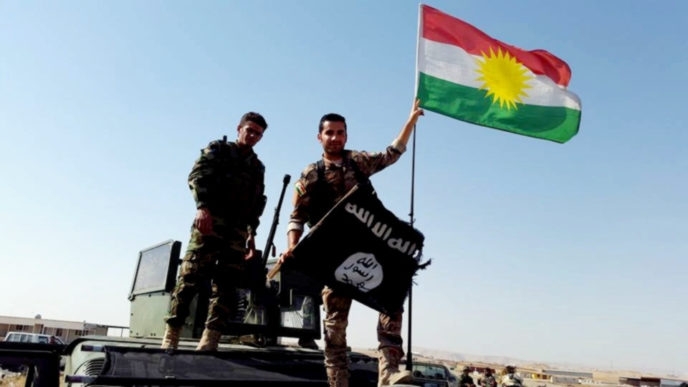
The Turkish army has been shelling civilian and military targets in the U.S.-allied Federation of Northern Syria for two long years. There is no legitimate military reason for this violence. Turkey simply wants to gain control over a region in Syria larger than Lebanon. And it wants to snuff out autonomy for the Kurdish people, whom it persecutes at home. Turkey claims this is a war against “terrorism.”

What was new and frightening was Turkey’s use of ground troops and tanks. That was a major escalation — an act of war. Syria’s Christians feared that the Turks would next attack the Khabour Valley, which Christian militias with Kurdish help liberated from ISIS in 2015, in a desperate fight against genocide. The Khabour Valley is still scarred by these battles and still needs to be rebuilt. Instead, Syrians feared they would need to defend it against the large and powerful Turkish army.

There was fighting on the ground between the U.S.-backed Syrian Democratic Forces (SDF) and NATO member Turkey. The smaller but dedicated SDF beat the Turks back across the border, and destroyed several Turkish tanks. More Turkish army units started amassing along the border.

Praying for Relief

Back in Brussels we tried to process all this news, to find out if Syrian Christian friends had died amidst the fighting. We made calls, blasted out messages, and offered what help we could. We saw all the patient work of building a tolerant, free region inside tortured Syria about to be crushed beneath the treads of Turkey’s invading tanks. Then we looked one another in the eyes. There was nothing more we could do. So instead we tried something that doesn’t often happen inside the European Parliament. We prayed.

Meanwhile, the courageous leaders of the Federation of Northern Syria were fighting for their lives — on the battlefield and in the media. Their executive body called on the U.S.-led anti-ISIS coalition to establish a no-fly zone. The goal? To stop the Turks or Assad’s regime from bombing Christian, Kurdish and Yezidi towns. The SDF echoed this call. Our Kurdish friends launched a media campaign #NoFlyZone4Rojava (yes even in Syria you have hashtag campaigns).

The U.S. couldn’t be happy about this blatant attack on its allies. Turkey even stated bluntly that it aimed to continue its attacks until it destroyed the YPG. It claimed that this Kurdish militia is an equal threat to ISIS, and demanded that the U.S. follow its lead. It is amazing, but the Turkish leadership seems to believe its own propaganda.

The U.S. State Department and the Pentagon acted admirably. They made it very clear that they would not end their cooperation with the SDF. They stated openly that the SDF was the partner of U.S. forces in Syria. Behind the scenes, they doubtless pressed Turkey to stop its attack. But the bloodshed continued. The Turks bombed civilian targets, killing religious and ethnic minorities who had never harmed anyone — just as ISIS does.

U.S. Troops to the Rescue

The longer the attacks continued, the more I worried that the people of Northern Syria would stop trusting America, their ally. That’s trust the U.S. will need in order to win the war against ISIS without a costly, Iraq-style occupation — which surely President Trump doesn’t want.

No one in Northern Syria will trust the Turks. Turkey cannot guarantee stability or safety for vulnerable minorities. In fact, it is hunting them. The sight of Turkish troops destroying the villages which the SDF had conquered back from ISIS led many to fear that the U.S. had sold them out to Turkey.

So you can imagine how great my relief was when I saw this video: of U.S. armored vehicles together with SDF forces moving to the Turkish-Syrian border. Later on I saw footage showing how the U.S. forces were being deployed along this border. The Syrian Christian Sutoro police force posted pictures of U.S. troops in the Christian town of Derik, whose outskirts Turkey had bombed. The U.S. put its brave troops as a shield between Turkey and the Federation. This seemed to be a direct consequence of a decision of President Trump to give the U.S. military command much more flexibility in Syria and Iraq. It’s a very wise strategy. It keeps U.S. leverage strong, instead of handing the region over to the untrustworthy Turkish regime.

Say No to President Erdogan

Just one caveat: broken trust is not easily rebuilt. The great worry among Christians and other vulnerable minorities communities in Northern Syria and Sinjar (Iraq) is the upcoming meeting between President Trump and President Erdogan of Turkey on May 16. It is crystal clear that Erdogan will demand that the U.S. end its support for the SDF and allow Turkey to kill off the Kurdish YPG.

That would be a disaster. Not just for Christians, Yazidis, and Kurds, but for America. Handing Turkey control of the region and letting it hunt down Kurdish freedom fighters will effectively end the war against ISIS. Instead of Kurds, Arabs, Christians, and (supposedly) Turks fighting ISIS, they will be at war with each other. In fact, Turkey would simply be at war with the local population of Northern Syria. Even local Arab tribes will fight the Turks. The number of Arabs in the YPG and YPJ has grown considerably. They will take revenge if their sons and daughters are killed by Turkish forces. If such a chaos ensues, ISIS will be off the hook. It will keep control of a large region in Syria, allowing it to make a big comeback

A war between the SDF and Turkey in Northern Syria would be the death knell for Syria’s Christians and Iraq’s Yazidis. If ISIS stays in place, the last few Christians left in Iraq will flee, and end up in refugee camps. Another ancient Christian community will be snuffed out forever.

Legacy of Peace and Freedom: Trump’s Opportunity

To safeguard the future of Syria’s Christians, President Trump needs to stay the course. Keep supporting the freedom-loving, multi-religious and multi-ethnic SDF. He should also start providing arms to the Syriac Military Council, the Christian self-defense militia that is part of the SDF. In Iraq, Yazidis and Christians deserve self-government and the means to defend themselves.

Syria is in ruins, but it still has embers of hope. One of the most hopeful things is President Trump’s fresh approach to the region. If he backs a decentralized peace plan, he has a unique opportunity to leave behind him a presidential legacy: peace and freedom for the most vulnerable minorities on earth, who will be loyal American allies. (For more from the author of “Trump Saves US-Allied Syrian Christians From Turkish Invasion” please click HERE)

Follow Joe Miller on Twitter HERE and Facebook HERE.

What’s at Stake in Trump Meeting With Palestinian Leader

President Donald Trump will meet with the leader of the Palestinian Authority this week, ahead of his first trip to Israel expected later this month.

Palestinian Authority President Mahmoud Abbas will visit the White House Wednesday, with a U.S. president that seems decidedly pro-Israel, while also genuinely interested in a Middle East peace deal.

“The president’s ultimate goal is to establish peace in the region and so I think that’s obviously the goal and the discussion he’s going to have with the head of the Palestinian Authority,” White House press secretary Sean Spicer told The Daily Signal during the White House press briefing on Monday.

“That’s going to be a relationship he’s going to continue to work on and build with the ultimate goal that there is peace in that region between Israel and the Palestinian Authority,” Spicer added.

Still, considering the political problems Abbas is facing among his own people, experts have a mixed view on whether the visit will have any significance.

As a candidate, Trump pledged to relocate the Israeli Embassy from Tel Aviv to Jerusalem, a move that could spark rage among Palestinians.

The Daily Signal asked Monday if Trump will talk about moving the embassy during his Wednesday meeting with Abbas.

“That is still being discussed by staff,” Spicer told The Daily Signal.

In an interview last week, Trump told Reuters, “ask me in a month on that,” about moving the embassy to Jerusalem.

“I want to see peace with Israel and the Palestinians,” the president added. “There is no reason there’s not peace between Israel and the Palestinians—none whatsoever.”

The meeting presents a major opportunity for Abbas, said Robert Danin, a senior fellow for Middle East studies at the Council on Foreign Relations.

“President Trump is not interested in peace process or in negotiations for negotiations’ sake. He is interested in a deal,” Danin told The Daily Signal in a phone interview. “There are a lot of questions about Abbas and his political standing. He has to convince the president that he can close the deal. It’s a big challenge, but it’s also a tremendous opportunity.”

Trump met with Israeli Prime Minister Benjamin Netanyahu in February. During a joint press conference with the two leaders, Trump predicted a “bigger and better” Middle East peace deal than anyone expects. He asked Israel to hold back on settlements, and said he is open to a two-state solution or one-state solution, whichever is more likely to bring peace.

Trump has said that his son-in-law and senior adviser, Jared Kushner, would be in charge of reaching a peace deal.

Danin added that Trump could be in a stronger position than previous presidents, and could even put pressure on Israel that President Barack Obama couldn’t.

“The people of Israel believe Trump is on their side,” Danin said. “President Trump doesn’t believe settlements and settlers are bad guys. He believes the settlements are part of the answer, but he hasn’t demonized the settlers as President Obama did. They believe he wants to move the embassy to Jerusalem, no matter what he does.”

At this stage, Abbas has little influence as a leader, said Jim Phillips, a senior research fellow for Middle Eastern affairs with The Heritage Foundation.

“I think the Abbas visit will yield little results. Abbas is unwilling and unable to reach a comprehensive peace agreement with Israel on acceptable terms,” Phillips told The Daily Signal.

Abbas, 82, is facing a tough political climate at home. Though his term was supposed to expire in 2009, he remained in power without an election nor designated successor. His party, Fatah, is also divided.

“He has no control over Hamas, which is virulently opposed to Israel’s existence, let alone negotiations, and it would torpedo any final accord he would sign,” Phillips said. “Even many of his own supporters within Fatah have abandoned him. He is yesterday’s man and is increasingly irrelevant to what happens tomorrow.”

Trump did the right thing in reaching out to Abbas for a meeting, said Clare Lopez, vice president for research and analysis at the Center for Security Policy, a conservative foreign policy think tank in the District of Columbia. However, she said no one should expect a breakthrough on a peace deal.

“I’m not exactly sure why the U.S. keeps trying. Every time, the Palestinians were offered a deal, a good deal, under President [Bill] Clinton, under President [George W.] Bush, they walked away,” Lopez told The Daily Signal. “Whether it’s Hamas in Gaza or Fatah in the West Bank, this is Islam, it’s not political.”

Lopez said that any Palestinian leader who wanted to recognize Israel’s right to exist would be marginalized, accused of apostasy, and likely to face threats to his life. (For more from the author of “What’s at Stake in Trump Meeting With Palestinian Leader” please click HERE)

Follow Joe Miller on Twitter HERE and Facebook HERE.
North Korea Just Threatened to Sink US Nuclear Submarine

North Korea, feeling pressure of encroaching American and allied vessels, has now threatened to make a ghost ship of a U.S. nuclear submarine — but the warning might not be hyperbolic rhetoric.

“The moment the USS Michigan tries to budge even a little, it will be doomed to face the miserable fate of becoming an underwater ghost without being able to come to the surface,” railed propagandistic North Korean outlet, Uriminzokkiri, quoted by the Independent.

The urgent fielding of the nuclear submarine in the waters off the Korean Peninsula, timed to coincide with the deployment of the super aircraft carrier strike group, is intended to further intensify military threats toward our republic.

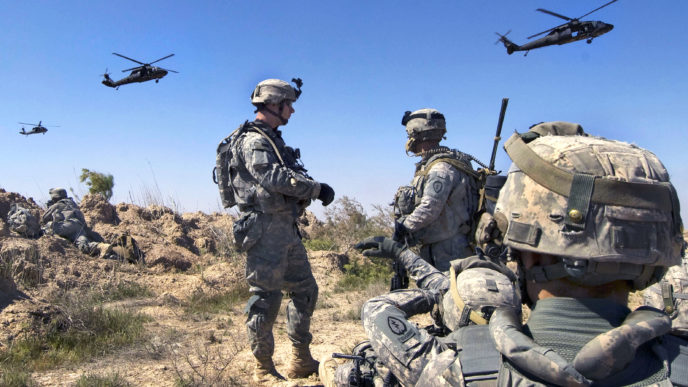
Announced as a routine, scheduled training exercise with ally, South Korea, President Trump sent an ‘armada’ of U.S. vessels to the waters off the Korean peninsula, which now includes the nuclear-powered U.S.S. Michigan and the U.S.S. Carl Vinson aircraft carrier group — which, as Bloomberg reports, are also accompanied by the “destroyers USS Wayne E. Meyer and USS Michael Murphy and the Ticonderoga-class guided-missile cruiser USS Lake Champlain.”

All of this firepower, whatever the guise under which they arrived near Pyongyang’s doorstep, has been characterized by the North as “intimidation and blackmail,” particularly given Trump’s pugnacious assertions he would not allow secretive regime to develop nuclear missiles capable of striking the U.S. mainland.

Both Japan and South Korea, traditional U.S. allies in the region, continue with other allied nations to coordinate in hopes of lessening the chance Kim Jong-un would act aggressively amid stifling tensions, as Uriminzokkiri stated outright, “whether it’s a nuclear aircraft carrier or a nuclear submarine, they will be turned into a mass of scrap metal in front of our invincible military power centred on the self-defence nuclear deterrence.”

Trump recently stumped South Korea by calling for Seoul to pay up to $1 billion for its use of the THAAD missile defense system along its border with the North; but national security adviser H.R. McMaster has since insisted to his South Korean counterpart, Kim Kwan-jin, the U.S. would ensure its ally’s safety.

As the U.S. armada began arriving for exercises, Pyongyang test fired another ballistic missile, and although Washington reported that firing a failure — the missile ostensibly disintegrated just minutes after launch, its pieces landing in the Sea of Japan — the cloistered nation continued threats like the aforementioned.

China, North Korea’s strongest ally, has urged Pyongyang to employ discretion and caution in engaging the U.S., warning any sudden moves like firing upon the American fleet would bring the region into full-scale military conflict.

Asked about the latest test and for a general message on the topic of North Korea, Trump ominously stated, without elaborating further,

You’ll soon find out, won’t you?

Of course, with nationalist and military propaganda thoroughly inundating any discussion of the situation, a realistic picture of what could happen if and when rhetoric turns kinetic has been difficult to discern.

Reports such as those from the U.S. Naval Institute claim superiority in firepower, both defensive and offensive, should Pyongyang follow through with increasingly belligerent threats — but some analyses caution the Vinson group and accompanying ships might be capable of the destruction officials have championed.

Bloomberg, for instance, headlined an article, “Trump ‘Armada’ Sent to Deter Kim Can’t Shoot Down His Missiles,” on Tuesday — the same day the Michigan arrived in the South Korean port city of Busan to join the others.

Noted Bloomberg of the Vinson group and armada,

They aren’t equipped with the version of the Aegis surveillance system made by Lockheed Martin Corp. that can track long-range ballistic missiles or Raytheon Co.’s SM-3 interceptors that are capable of bringing down medium and longer-range ballistic missiles.

Nor are the modern Japanese Navy destroyers JS Samidare and JS Ashigara that joined the Vinson group for exercises equipped for missile defense detection or intercepts, a Japanese Navy spokesman confirmed. And the three South Korean ‘Sejong the Great’-class destroyers currently in operation don’t have ballistic missile defense capability, Tom Callender, a naval forces analyst with the Washington-based Heritage Foundation, said in an interview.

Further, although the Terminal High Altitude Area Defense (THAAD) system has been placed around 35 miles from the Korean demilitarized zone, its hardware is not yet fully operational — leaving South Korea vulnerable even as its neighbor to the North specifically takes issue with that defense.

Pentagon spokesman Navy Commander Gary Ross refused to answer specifics on U.S. weapons defense capabilities, he emphasized for Bloomberg, “no single capability defends against all threats. Rather it is the employment of integrated, multi-layered land and sea-based systems that provide missile defense” — for the U.S. and its allies.

“We have ballistic missile ships in the Sea of Japan, in the East Sea, that are capable of defending against ballistic missile attacks,” Navy Admiral Harry Harris, the head of U.S. forces in Korea and the Pacific, asserted Wednesday to the House Armed Services Committee.

He added of ships escorting the Vinson group that defense of the armada would not be a question, stating,

If it flies, it will die, if it’s flying against the Carl Vinson strike group.

Defense analyst David Wright with the Union of Concerned Scientists explained that, even if Aegis-equipped vessels were present in the waters near North Korea and Japan, the U.S. would not be capable of striking down another ICBM immediately after it was launched.

“There is a misconception that if it was close enough,” a U.S. Navy BMD vessel “could shoot a missile down during boost phase. But it doesn’t have that capability,” Wright said. “During boost phase the missile is an accelerating target, and Aegis doesn’t have the maneuverability to home in on such a target.

“Similarly, it would not be able to shoot down shorter-range missiles, like the Musudan, during boost phase. You might be able to shoot it down after boost phase, but by that time North Korea would be able to get information about the most critical part of the trajectory, so that strategy is unlikely to slow” Kim’s ardent quest to develop missiles.

No matter how stridently Trump feels toward quashing North Korea’s nuclear weapons hopes, any designs the U.S. might have to depose the Kim regime will not likely see success — even if physically successful.

Business Insider pointed out, the secretive nation still considers itself under the rule of ‘forever leader,’ Kim II Sung, who died in 1994 — and North Koreans vociferously support longstanding goals of nuclear aggression against the world. (For more from the author of “North Korea Just Threatened to Sink US Nuclear Submarine” please click HERE)

Follow Joe Miller on Twitter HERE and Facebook HERE.

Russian Rallies Urge Putin Not to Run Again; Dozens Arrested

Under the slogan “I’m fed up,” demonstrators urging Vladimir Putin not to run for a fourth term rallied in cities across Russia on Saturday. Dozens were arrested in St. Petersburg and elsewhere.

The centerpiece rally in Moscow went peacefully, despite being unsanctioned by authorities. Several hundred people rallied in a park then moved to the nearby presidential administration building to present letters telling Putin to stand down from running in 2018.

But in St. Petersburg, Associated Press journalists saw dozens arrested. The OVD-Info group that monitors political repression relayed reports of more arrests in several cities, including 20 in Tula and 14 in Kemerovo. (Read more from “Russian Rallies Urge Putin Not to Run Again; Dozens Arrested” HERE)

Follow Joe Miller on Twitter HERE and Facebook HERE.

Meet the Men Vying to Become Iran’s Next President

Around 1,600 people filed to run for president of Iran and challenge Hassan Rouhani, who is seeking a second four-year term. Only six of them have been allowed on the ballot for election day.

The role of president of Iran varies. Some see him as no more than a figurehead, while others see him as the bridge between the supreme leader (Ayatollah Ali Khamenei) and the people living under his rule.

In post-1979 Islamist Iran, the supreme leader maintains unchecked veto power over all of the nation’s affairs, and dominates foreign policy matters. Still, the president has considerable influence over domestic affairs.

It also must be noted that Iranians who seek the nation’s highest elected office must first be vetted by the 12-man, unelected Guardian Council, which is primarily made up of individuals appointed by the supreme leader. This year, the Guardian Council has granted only six individuals (denying requests from about 1,600 other aspiring candidates) clearance to run for president. All 137 women who registered to run were disqualified (the council has never cleared a woman to run for president)

The mainstream media in America often position some of these individuals as “reformists” and others as “hardliners,” but this distinction is misleading at best. All of the candidates not only have to be personally approved by the nation’s theocratic body, they are also positioning their platform as the best way to advance the interests of a caliphatist regime hell-bent on disrupting global order. With that in mind, here’s a look at the six candidates in Iran’s presidential “election.”

HASSAN ROUHANI:

Hailed as a “moderate” by The New York Times, the incumbent president helped Iran set the prestigious world record for most executions per capita.

Rouhani is known to use more pragmatic language than his predecessor Mahmoud Ahmadinejad, who infamously promised to “wipe Israel off the map.” Still, Rouhani is a Holocaust-denier who encourages terrorist groups like Hamas and Hezbollah to export Iran’s brand of Islamic totalitarianism throughout the region.

Rouhani played a key role in garnering international support for the Iran nuclear deal between Tehran and the P5+1 world powers (United States, United Kingdom, China, France, Germany, Russia). The deal gave Iran a major cash windfall and allowed for the regime to continue to finance its terrorist proxies in the Middle East.

Several analysts believe Rouhani has a good chance at reelection, as polls indicate that a large percentage of Iranians view him somewhat favorably.

EBRAHIM RAISI:

Portrayed in international media as the hardline option to Rouhani, Raisi is the main threat to unseat Rouhani. Raisi is also rumored as a potential successor to Supreme Leader Ali Khamenei (who is in his late 70s and suffering from several ailments). A Shiite cleric, Raisi wears a black turban, indicating that he is a descendant of Islam’s founder, Muhammad.

As part of his foreign policy platform, Raisi said he would consider engaging in diplomatic relations with every country “except the occupying regime of Israel.”

Raisi’s radicalism is exemplified by his views on the 2009 “Green Movement” protests that saw thousands of Iranians march into the streets to demand reform. The regime viciously cracked down on the protests, killing dozens of innocents (with estimates as high as 150), wounding hundreds more, and arresting thousands of dissenters.

Describing the protests as “sedition,” Raisi commented in 2014: “The Islamic System has treated the heads of the sedition with mercy. Those who sympathize with the heads of sedition must know that the great nation of Iran will never forgive this great injustice.”

Additionally, Raisi served on Iran’s 1988 “Death Commission,” which was responsible for exterminating thousands of political prisoners.

Khamenei recently appointed him to serve as the leader of Iran’s largest foundation. It is an extremely prominent post given that the endowment has an estimated value of around $15 billion, according to the Washington Post.

MOHAMMAD BAGHER GHALIBAF:

The current mayor of Tehran, Ghalibaf is the former commander of Iran’s Islamic Revolutionary Guard Corps’ (IRGC) Air Force. He was a distant runner-up to Rouhani in the 2013 election.

Ghalibaf, who has spearheaded efforts to revitalize and modernize Tehran infrastructure, is known for his iron-fisted methods.

He has boasted about personally engaging in violence to repress student protests. Ghalibaf once said of one such student protest that occurred in 1999:

“Photographs of me are available showing me on back of a motor bike … beating them [the protestors] with wooden stick … I was among those carrying out beatings on the street level and I am proud of that. I didn’t care I was a high ranking commander.”

MOSTAFA MIRSALIM:

The 70-year-old is Iran’s former minister of culture and Islamic guidance. Mirsalim has criticized the Iran nuclear deal as an objection to Rouhani’s leadership, saying the deal did not do enough to boost the Iranian economy. His statement comes as recent polls show that economic woes remain the most important issue to Iranians. One such poll showed 42 percent of respondents stating unemployment is the most pressing matter in Iran.
From 1981 to 1989, Mirsalim served as an advisor to the supreme leader.

ESHAQ JAHANGIRI:

Rouhani’s vice president has made it clear that he is not a serious contender. He initially registered to run for election as concerns floated around regarding whether Rouhani would be disqualified by the Guardian Council. Jahangiri is running to “stand by Rouhani and complement him.” He is almost certainly going to drop out of the race so as not to split votes with the man he serves under.

MOSTAFA HASHEMI TABA:

Like Jahangiri, he is expected to soon throw his full weight behind Rouhani’s candidacy. Hashemi Taba once served as Iran’s vice president and also headed the country’s Olympic committee. He ran for president in 2001, but came in dead last of the 10 approved candidates, accumulating only 0.1 percent of the vote.

WHAT’S NEXT?

Iranians will head to the ballots on May 19. Local elections will occur on the same day to decide members of city and town councils. Parliamentary elections, however, do not happen on the same day as the presidential election. Iran’s last parliamentary elections were in early 2016 and are held every four years.

Depending on the year, reported turnout varies from around 51 percent to 85 percent, according to the BBC.

On numerous occasions, watchdog groups have called into question Iran’s elections as free and fair. In 2009, the regime allegedly rigged ballots in favor of former President Mahmoud Ahmadinejad. (For more from the author of “Meet the Men Vying to Become Iran’s Next President” please click HERE)

Follow Joe Miller on Twitter HERE and Facebook HERE.

Let Slip the Hogs of War — Wild Pigs Thwart ISIS Ambush, Kill 3 Militants

Three Islamic State fighters were mauled to death by a pack of wild boar, reports U.K.’s The Times. Another 5 militants were also injured in the attack.

The men were said to be taking cover in a field as they set up an ambush for local tribesmen, local leaders said.

“It is likely their movement disturbed a herd of wild pigs, which inhabit the area as well as the nearby cornfields,” Sheikh Anwar al-Assi, a chief of the local Ubaid tribe and supervisor of anti-ISIS forces, told the Times. “The area is dense with reeds, which are good for hiding in.” (Read more from “Let Slip the Hogs of War — Wild Pigs Thwart ISIS Ambush, Kill 3 Militants” HERE)

Follow Joe Miller on Twitter HERE and Facebook HERE.

Tillerson Says China Asked North Korea to Stop Nuclear Tests

U.S. Secretary of State Rex Tillerson said Thursday that China has threatened to impose sanctions on North Korea if it conducts further nuclear tests.

“We know that China is in communications with the regime in Pyongyang,” Tillerson said on Fox News Channel. “They confirmed to us that they had requested the regime conduct no further nuclear test.”

Tillerson said China also told the U.S. that it had informed North Korea “that if they did conduct further nuclear tests, China would be taking sanctions actions on their own.” (Read more from “Tillerson Says China Asked North Korea to Stop Nuclear Tests” HERE)

Follow Joe Miller on Twitter HERE and Facebook HERE.

Turkey Bombs Syrian Christians. Will Trump Act to Protect Them?

Yesterday I woke up early, checked my phone and immediately all indicators went red (so to speak). I got the news that Turkey had bombed the area around a Christian town in North-East Syria and hit Bara, a Yazidi town in Sinjar, Iraq. All of this happened under the pretext of “fighting terrorists.”

Today I heard even more unsettling news: Turkey has launched ground attacks against the U.S.-allied Kurdish fighters who man the front lines against ISIS, alongside Syrian Christians. Those courageous Christians defending their families are hoping that the Trump administration halts these attacks. They are a blatant attempt to rebuke U.S. influence in the region. Emboldened by his win in a power-grabbing referendum, Turkish President Tayyip Erdoğan has decided to slap Uncle Sam in the face.

What Syrian Christians fear most is a Turkish ground attack on their heartland, the Khabour Valley. If that happens, they will pull back from fighting ISIS to defend themselves against Turkey, a member of NATO.

A Slap in the Face for America

I quickly got confirmation from both Syrian Christians and Yazidis that the air attack had indeed occurred. In total, 26 airstrikes were carried out. The Turks hit many civilians and SDF defense forces — allies of the United States. There was a total of 20 casualties near Derik. A media center and small headquarters of the Kurdish YPG were hit. The Kurdish YPG is part of the U.S.-backed Syrian Democratic Forces, along with the Christian Syriac Military Council, Arabs and others.

In Iraq, the airstrikes hit the Yazidi defense forces (YBŞ), who lost two fighters, while three civilians were wounded. Five Kurdish Peshmerga were killed as well. All these groups have been cooperating with the U.S. in fighting ISIS and protecting religious freedom.

Of course this is a nerve-wracking experience for the people of Derik. This Christian town is a nice place that had so far escaped the damage of war. When you stand on the roof of one of these houses you can see the Turkish mountains looming over the flat countryside of North-East Syria. There is a very nice hotel that kept going despite the war. Derik is an example of Christian resilience in the face of civil war and ISIS.

Turkey bombed it.

ISIS is far away from Derik. It never even got close to it. There was no legitimate reason whatsoever for such an aggressive act against these people.

Bombing the Hunted Yazidis

Even worse is the attack on the persecuted Yazidis. I have read reports today that these displaced people, who lost everything due to ISIS, could see the bomb blasts from their tents. A harrowing experience for a people that just survived a genocide.

Both the Syrian Christians and the Yazidis quickly released their statements this morning. The media already picked up what happened and reported the Kurdish casualties. Lost in the media reports was a crucial fact: This was a direct attack by a NATO member on a Christian town in Syria.

How will the U.S. respond? Feeling betrayed, members of the Syrian Christian, Kurdish and Yazidi communities wondered if the U.S. had sold them out. Was Trump eager to please the Turkish government? My personal take is that the U.S. was at first not aware of the intentions of the Turkish jets. The Americans were caught by surprise. This seems the most logical explanation: These strikes also posed a direct threat to U.S. forces in Northern Syria.

Punishing Trump for Mentioning the Armenian Genocide

One explanation swirling around is that these strikes were an attack in response to President Trump’s commemoration on April 24th of the Armenian/Assyrian genocide committed by the Ottoman empire and its “Young Turks.” If so, Turkey proved that it wants to continue that genocide.

On the same day as the attack, commanders of the U.S. forces based in Northern Syria inspected the consequences of the airstrikes together with SDF commanders. Furthermore, the State Department and Pentagon both described the United States as “deeply concerned” by the strikes. They said that their objections were raised directly with the Turkish government. They warned that Turkey’s targeting of Kurdish groups could distract from the common campaign to defeat ISIS.

However the core question is: What solid assurances will President Trump give to the victims of this bombing? Will he make it starkly clear to Turkey that it may not bomb Christian towns in Syria and Yazidi villages in Iraq? That this is really over?

The U.S. Must Arm the Victims, Its Natural Allies

One crucial way to end the suffering of these peoples is to arm them properly and to empower them politically. The Yazidis of Sinjar want all Kurdish forces to leave Sinjar. They wish to run their own defense forces and to achieve autonomy within Iraq and the Iraqi Constitution. This would also clear the way for autonomy for the Syriac-Assyrian Christians of Nineveh Plain in Iraq. That would take away any pretext for Turkey to attack the Yazidis ever again.

In Syria, the Trump Administration should make the logical choice to arm the Syrian Christians. Their Syriac Military Council is a real force fighting ISIS — independent of Assad. As I’ve written here before, there is no good reason why Christian forces are singled out and denied the weapons the U.S. gives to their Arab allies. Giving the Christians weapons for self-defense would send a powerful signal to Turkey that attacks on helpless religious minorities are a “red line” the U.S. won’t let Turkey cross.

Finally, President Trump should give much more attention to the Federation of Northern Syria, where religious freedom prevails. Indeed, as John Zmirak and Jason Jones wrote, the Federation should serve as the model for a new, federated Syria. To this end, the Trump Administration should declare publicly that no force will be allowed to attack SDF-controlled areas. He should declare it a “no-fly zone,” off limits to Turkey or Assad’s air force. Russia would raise no objections.

President Trump needs the cooperation of Syria’s Christians and Yazidis to end this war the right way: leaving behind religious freedom for all. He should not allow Turkey to blast that opportunity into rubble. (For more from the author of “Turkey Bombs Syrian Christians. Will Trump Act to Protect Them?” please click HERE)

Follow Joe Miller on Twitter HERE and Facebook HERE.
Migrant Crimes up 52 Percent in Germany

Migrant crime “increased disproportionately” in Germany in 2016, according to a report released Monday by the Interior Ministry.

The number of migrant criminal suspects increased by 52.7 percent from 2015 to 2016. Migrants account for 8.6 percent of all crime suspects in Germany — up from 5.7 percent in 2015.

Politically or ideologically motivated crimes by foreigners went up by 66.5 percent, with 3,372 cases throughout the year.

“There is nothing there to sugarcoat,” Federal Minister of the Interior Thomas de Maiziere said of the statistics, according to Deutsche Welle. “There is an overall rise in disrespect, violence, and hate.”

Germany suffered a series of jihadi attacks in 2016 — including the truck massacre at a Christmas market in Berlin. Crimes motivated by Islam increased by 13.7 percent last year. (Read more from “Migrant Crimes up 52 Percent in Germany” HERE)

Follow Joe Miller on Twitter HERE and Facebook HERE.