Political and Economic Chaos in Brazil Highlights Need for Reforms

There is not much good news coming out of Brazil these days.

Political corruption scandals continue to rock the country, and the political instability has caused the nation’s stock market to crash.

Judge Sergio Moro, who presides over the biggest corruption scandal of them all (dubbed Operation Car Wash), has become something of a folk hero to the millions of Brazilians who are eager to see an end to the cronyism and corruption that has dogged the country for decades, both in the public and private sectors.

Brazil’s current center-right president, Michel Temer, who succeeded former President Dilma Rousseff after her impeachment and removal from office last year, is now facing calls for impeachment himself amid allegations of corruption.

But surely another big reason why Brazilian leftists are trying to remove Temer is that he is pushing two big efforts to reform their costly statist programs.

As the Financial Times reports, “Brazil has 17,000 unions compared with 168 in the U.K. and 100 in Argentina, a country known for its contentious labor relations.”

Brazil’s labor law, which dates from 1943, makes it too easy for workers to sue their employers. It increases the cost of doing business, hurting Brazil’s ranking in worldwide investment climate studies such as the World Bank’s “Doing Business” survey.

Temer is also pushing for reforms to change the country’s fiscally unsustainable pension system, which currently gives everyone the right to retire in their early to mid-50s and provides luxurious defined benefits packages for public sector retirees.

Temer’s proposed revisions will raise the minimum retirement age to 65 for men and 62 for women—much closer to the average in member countries of the Organization for Economic Cooperation and Development. The U.S. retirement age, by comparison, is 67.

The fact that many politicians in Brazil across the spectrum have been touched by corruption allegations does not alter the fact that the country must reform its economy.

The sad news for Brazilians is that these corruption scandals could have been anticipated—maybe even avoided.

Brazil’s scores in the annual Heritage Foundation Index of Economic Freedom deteriorated for years during the long rule of former leftist-populist Presidents Dilma Rousseff and “Lula” da Silva.

So, even if Temer is forced out, his successor will still have to confront these enormous problems—and somehow solve them. (For more from the author of “Political and Economic Chaos in Brazil Highlights Need for Reforms” please click HERE)

Follow Joe Miller on Twitter HERE and Facebook HERE.

The Jihad Playbook: Why Terrorists Attack Children

The attack in Manchester, England, that has so far killed at least 19 and wounded at least 50 is ghastly. That it targeted children is as unforgivable as it is consistent with the jihadist playbook.

Conservative Review’s Jordan Schachtel has the full story from Monday night, and details are still coming out at the time of this writing.

Among of the bigger observations that has been made about this attack, however, is that it was waged against young adults, teenagers, and children attending a pop concert.

“All acts of terrorism are cowardly attacks on innocent people,” Prime Minister Teresa May said in a statement, “but this attack stands out for its appalling, sickening cowardice, deliberately targeting innocent, defenceless children and young people who should have been enjoying one of the most memorable nights of their lives.”

One such victim – eight-year-old Saffie-Rose Roussos – was confirmed dead by the Telegraph Tuesday afternoon.

During a Facebook live broadcast this morning, a viewer asked why terrorists would do such a thing. This is a more detailed response to that question.

Targeting the innocent is common; sadly, perhaps even commonplace by now. Targeting innocent youth brings the horror of the attack to a whole new level. But horror is the whole point, and it goes back decades. One only has to understand the playbook.

ISIS, its followers, and its sympathizers are ideological adherents to the jihadist tactical theories of Abu Bakr Naji. If you want to understand most of the political Left in America, you should start by reading Saul Alinsky’s “Rules for Radicals.” If you want to understand how Islamist terrorist operate, you should start with Naji’s “The Mastery of Savagery.”

In his book, the 20th-century Islamist theorist says that societies and nations of infidels should be brought to submission to Allah by a three-phase plan of savagery

These phases, as explained by Trump advisor Dr. Sebastian Gorka in 2015, are:

Vexation.

Spread savagery.

Administer savagery.

A talk Gorka gave at the Heritage Foundation in 2015 further illuminates how this strategy works. Here’s a synopsis of the lecture from the Institute of World Politics:

Phase 1, “vexation,” is comprised of operations to distract and exhaust the infidel enemy and his allies. It puts emphasis on smaller dramatic operations (as opposed to dramatic transnational attacks) and is used to prepare fighting units for phase 2. Phase 2, as Dr. Gorka explained, is the “spread savagery” stage, which ISIS has already begun. In this phase, leaders of the insurgency coordinate unconventional warfare to “dislodge” nations from local control. Phase 3, “administer savagery/consolidate/expand,” is designed to out-govern the government. In this phase, the leaders stabilize held areas, unite the population as a fighting community, and implement sharia law and government as a means to establish a base-state. This base-state is a new type of hybrid caliphate used to attack and expand into neighboring countries.

This is the big picture that it is so important to keep in mind when it comes to these sorts of terror attacks. It’s vexing enough for people in the West to worry whether a small explosion will make their trip to the market a fatal one. It’s more vexing when those same kinds of attacks become a monthly occurrence. And it’s even more vexing when those attacks are focused on a society’s children.

The bloodier and more horrific, the better. If ISIS is indeed responsible for this attack, as it has claimed, this is completely consistent with its tactics.

In short, that the Manchester bombing was aimed at killing children is shocking and barbaric indeed, but barbaric – for jihadists – is just part of the playbook. (For more from the author of “The Jihad Playbook: Why Terrorists Attack Children” please click HERE)

Follow Joe Miller on Twitter HERE and Facebook HERE.
Tillerson Says Tel Aviv Is ‘Home of Judaism.’ It’s Not

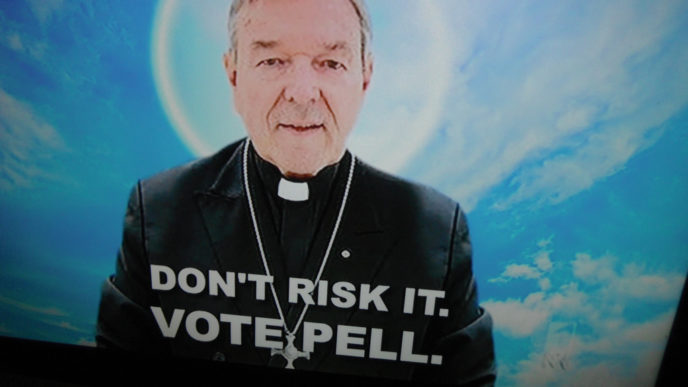
Before his plane even touched down in Israel Monday, Secretary of State Rex Tillerson managed to insult the people of Israel — and Jews worldwide — by referring to Tel Aviv as the “home of Judaism.”

On the flight from Saudi Arabia to Israel, during a Q & A session with reporters, Tillerson commented: “On to the second stop, Tel Aviv, home of Judaism.”

Tel Aviv is not the home of Judaism. Though a popular tourist destination and the centerpiece of Israel’s bustling entrepreneurial environment, Tel Aviv does not have the religious significance that Jerusalem has. Jerusalem is home to the holiest sites in Judaism.

Tillerson had no government experience before becoming secretary of state, and his lack of basic knowledge on geopolitical issues has acted as a detriment to the Trump administration’s foreign policy.

During his conversation with reporters, Tillerson, refused to recognize that the holiest site in Jerusalem is part of Israel. The Western Wall is “in Jerusalem,” Tillerson told reporters, stating the obvious geographic fact, but refusing to note Israel’s sovereignty over it.

The secretary of state has been perhaps the most hostile Trump cabinet member to the Jewish state.

Last week, Tillerson appeared to renege on the administration’s campaign promise to move the American embassy in Israel from Tel Aviv to Jerusalem. Instead of recognizing Israel’s sovereign capital, Tillerson used the embassy dilemma as a bargaining chip for a future “peace initiative” with the Palestinians.

“Well, the president, I think rightly, has taken a very deliberative approach to understanding the issue itself, listening to input from all interested parties in the region, and understanding, in the context of a peace initiative, what impact would such a move have,” Tillerson said on NBC’s “Meet The Press” last week.

His hostile comments generated a response from Israeli Prime Minister Netanyahu, who reminded the world that Jerusalem is indeed Israel’s capital, and that not recognizing it empowers radical extremists.

During the NBC interview, Tillerson referred to a nonexistent “Palestine,” instead of correctly stating that there are Palestinian territories — not an independent state of Palestine.

Tillerson’s State Department refuses to even recognize that Israel has a claim to Jerusalem, its capital city.

“Since 1948, every administration has taken the official position that no state has sovereignty over the city of Jerusalem. The status of Jerusalem is an issue that should be resolved in final status negotiations between the Israelis and Palestinians,” a State Department official told Conservative Review last week.

Secretary of State Tillerson is reportedly part of a contingent that is advising President Trump not to move the American embassy in Israel from Tel Aviv to Jerusalem. The former oil executive is very friendly with the Arab regimes in the Middle East, particularly the autocracies in Saudi Arabia and Qatar. (For more from the author of “Tillerson Says Tel Aviv Is ‘Home of Judaism.’ It’s Not” HERE)

Follow Joe Miller on Twitter HERE and Facebook HERE.

Trump Says He Didn’t Mention Israel in Meeting With Russians

President Donald Trump on Monday defended himself against allegations he divulged classified information in a recent meeting with Russian diplomats, saying alongside Israeli Prime Minister Benjamin Netanyahu that he never identified Israel in his Oval Office conversation.

At the end of his appearance with Netanyahu, Trump said that he “never mentioned the word or the name Israel” in his conversation with Russia’s foreign minister and ambassador. “So you have another story wrong,” he said.

Various reports, quoting anonymous officials, have said Trump did share classified information with Russian diplomats about the threat posed by the Islamic State group, and several have said that information came from Israeli intelligence. But news accounts have not accused Trump of naming Israel as a source of the information. (Read more from “Trump Says He Didn’t Mention Israel in Meeting With Russians” HERE)

Follow Joe Miller on Twitter HERE and Facebook HERE.

North Korea Says It’s Ready to Deploy, Mass-Produce New Missile

North Korea says it’s ready to deploy and start mass-producing a new medium-range missile capable of reaching Japan and major U.S. military bases there following a test launch it claims confirmed the missile’s combat readiness and is an “answer” to U.S. President Donald Trump’s policies.

The solid-fuel Pukguksong-2 missile flew about 500 kilometers (310 miles) and reached a height of 560 kilometers (350 miles) Sunday before plunging into the Pacific Ocean. North Korea’s media said more missiles will be launched in the future . . .

North Korean leader Kim Jong Un ordered the launch and watched from an observation post, state media reported Monday. The Korea Central News Agency said the test verified technical aspects of the weapon system and examined its “adaptability under various battle conditions” before it is deployed to military units. (Read more from “North Korea Says It’s Ready to Deploy, Mass-Produce New Missile” HERE)

Follow Joe Miller on Twitter HERE and Facebook HERE.
Trump Signals a Reset Between Israel and US

It’s time to patch up America’s second “special relationship” after eight years of frayed feelings between the United States and Israel.

That’s the message President Donald Trump is sending in his early-presidency trip to Israel and unprecedented visit to the Western Wall in Jerusalem.

Trump said of his Monday visit to the Western Wall, a first for sitting American presidents, that the visit was potentially a path to a “deeper” friendship with Israel.

Conflicts over policy and philosophy strained the relations between former President Barack Obama and Israeli Prime Minister Bibi Netanyahu and led to distrust between the two countries.

By going out of his way to entreat with Israel, Trump is at least signaling that a reset is in store.

Israel plays an essential role in American foreign policy—and not only in the Middle East. The war against radical Islamists has global implications in which the two countries have overlapping interests.

America’s Other ‘Special Relationship’

It is almost taken for granted today that Israel has been such a reliable foreign policy partner. This was only due to the careful diplomacy and alignment of key national and cultural interests between the two countries.

The nature of this partnership in many ways mirrors the so-called “special relationship” between Great Britain and the United States.

However, it is important to remember that before World War II, the U.S. and U.K. spent a century as mortal enemies and had deep reasons to distrust one another.

World War I pushed the U.S. and U.K. closer together after a century of suspicion and hostility. The fires of World War II and the Herculean efforts of British Prime Minister Winston Churchill sealed a the long-term collaboration between the countries—an example of the importance of wise statesmanship from American and British leaders.

It is important for American leaders to recognize and cultivate just such a relationship with Israel.

While the United States has always been supportive of Israel’s nationhood since 1948, the two countries were not always so intertwined. The complex nature of the Cold War in the Middle East occasionally put the U.S. and Israel at odds.

U.S.-Israel ties grew closer after Israel defeated a coalition of Arab states backed by the Soviet Union in the Yom Kippur War and the country proved itself to be a valuable Cold War ally.

The wisdom of this cooperation is even more apparent after the rise of radical Islamist sentiment that became a cornerstone aspect of American foreign policy after the terrorist attack on 9/11.

Israel was in a prime position to help combat this pernicious ideology, which has strong ties in the Middle East.

Countering Iran and Syria

Trump addressed a few major issues of immediate concern to the U.S. during his visit to Israel.

Of course, the thorn of the Islamic State, also known as ISIS, and other radical, subnational Islamist groups in the region remain high on the U.S. agenda, and Israel is a key partner in destroying these factions.

But the national threats of Syria and Iran, which have acted recalcitrantly toward the West and are well-known funders of terrorist groups, are of particular concern and also require close cooperation with Israel.

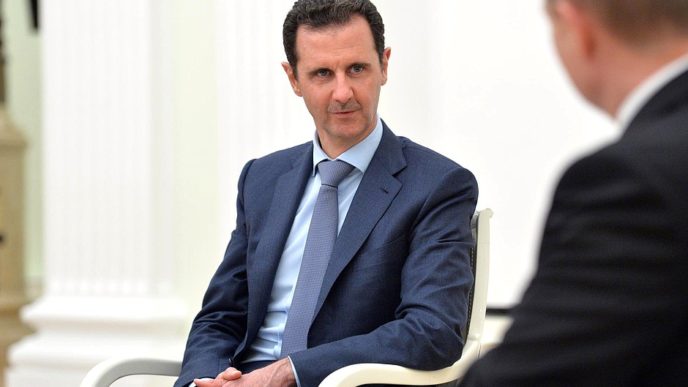
Trump has already shown that he is willing to make limited strikes in Syria to enforce the red line on chemical weapons. This action was strongly supported by Israel, and was seen as a rebuke to both Bashar Assad’s regime in Syria and also Iran.

On Monday, Trump sent a strong message to Iran that its terror funding and nuclear ambitions would not be tolerated.

As Middle East expert Jim Phillips argued in a recent Heritage Foundation report, “Iran remains the chief long-term regional threat to the U.S. and Israel.”

Trump has not yet followed through on his promise to tear up the Obama administration’s 2015 nuclear deal with Iran, pending a formal policy review of whether the nuclear deal advances vital American national interests.

Nevertheless, Trump said in a speech that Iran was guilty of “deadly funding, training, and equipping of terrorists and militias,” and that it acted inappropriately after the deal took place.

As Phillips noted, it is vitally important to either change the terms of this treaty or step away from it entirely to stem Iran’s “continued support for terrorism, expanding ballistic missile program, and deepening military intervention in Syria.”

Israel is among the most important counterweights to this hostile regime in the Middle East, especially in upholding economic sanctions and controlling arms flowing to and from Iran.

The ‘Ultimate Deal’

Trump made numerous commitments regarding Israel during the campaign.

Currently, his promise to officially recognize Jerusalem as Israel’s capital and move an American embassy there has failed to materialize. This remains a thorny issue for the Palestinians in particular. It would also create a challenge for Trump’s desire to broker the “ultimate deal” between Israel and the Palestinians.

Trump has expressed a desire to create some kind of lasting solution for the Israeli-Palestinian conflict, an issue that has become a white whale for American presidents from Jimmy Carter to Obama.

All of these attempts have failed to achieve any kind of lasting peace, and some have exacerbated the conflict.

A more realistic approach would be to seek an interim agreement to make incremental progress on addressing Israeli security concerns and facilitating Palestinian economic development, which would help restore mutual trust and create a more supportive environment for later addressing touchy final status issues.

Sticking points like the “right of return” for Palestinians, the status of Jerusalem, the future of Israeli settlements, and the redrawing of borders are unlikely to be resolved anytime soon, given the glaring lack of trust and wide gaps in the negotiating positions of Israel and the Palestinian Authority. (For more from the author of “Trump Signals a Reset Between Israel and US” please click HERE)

Follow Joe Miller on Twitter HERE and Facebook HERE.

Manchester Explosion: UK Has Been Targeted by Terrorists ‘Time and Time Again’

At least 19 people were killed and at least 50 injured in a suspected suicide bomb explosion Monday night at an arena in Manchester, England, where U.S. pop singer Ariana Grande was performing a concert.

Police said they were treating the explosion just outside the arena as a terror incident until they “know otherwise.”

Robin Simcox, a terrorism and national security expert at The Heritage Foundation, said the United Kingdom has been a target of Islamist terrorists “time and time again.”

“While the perpetrator of this attack is not yet clear, the U.K. has been targeted by Islamist terrorists time and again,” Simcox told The Daily Signal. “Manchester itself was targeted by Islamist terrorists on multiple occasions in the past, including by al-Qaeda.”

“Even though the U.K. has world class security services,” Simcox added, “this is a numbers game—and the amount of terror suspects in the U.K. is so high that it is impossible for authorities to be able to keep track of everyone that is of concern.”

The explosion occurred about 10:35 p.m. local time outside the Manchester Arena as people were exiting after the concert. The arena has the capacity to seat 21,000 people.

Videos shared online shows concertgoers, many of them children, adolescents, or teens, frantically fleeing a chaotic scene.

Some used Twitter to desperately search for loved ones who had attended the concert.

Andy James, an eyewitness who attended the 23-year-old singer’s concert in Manchester, told CNN the boom felt like it “rattled in my chest.” After the explosion, he said, there was “a stampede of people.”

Chris Pawley, another eyewitness, told Fox News the explosion occurred in an area just outside the arena where parents were waiting to pick up their “young children and teenagers.”

European Parliament member Nigel Farage said that if the explosion is confirmed as an act of terror, it will be a “new low” for terrorists.

“The direct attack on children … marks a new low in all forms of terrorism,” Farage said on Fox News.

A publicist for Ariana Grande told The New York Times during the initial confusion that the American singer and actress was “OK.”

TMZ later reported Grande to be “in hysterics” over the carnage, and Sky News reported her world tour had been suspended. Grande tweeted:

Her “Dangerous Woman” tour, which kicked off Feb. 3 in Phoneix, had been scheduled to take the singer to London for concerts Thursday and Friday, followed by cities in Belgium, Poland, and Germany.

The explosion coincided with President Donald Trump’s visit to the Middle East, where on Sunday in Saudi Arabia he urged Arab leaders to step up the fight to “drive out” Islamist terrorists and extremists. Trump was briefed on the explosion in Manchester, according to NBC News.

(For more from the author of “Manchester Explosion: UK Has Been Targeted by Terrorists ‘Time and Time Again'” please click HERE)

Follow Joe Miller on Twitter HERE and Facebook HERE.

After Sweden Drops Charges, What’s Next for Julian Assange?

WikiLeaks founder, Julian Assange, will not quit releasing pertinent information, even after Sweden announced it’s dropping the rape allegations against him. Assange, the biggest enemy of the state, issued a defiant statement after Sweden dropped the charges. He won’t be kowtowing to the political elites, though; in fact, just the opposite.

Julian Assange had previously expressed concern that he could end up being extradited and face the death penalty in the United States because he continues to reveal government “secrets” through his website, WikiLeaks. On Friday afternoon, Assange appeared on a balcony at the Ecuadorian embassy and described the dropped charges as “an important victory.” But he’s not going to stop releasing the information about the government’s wrongdoings, and that has become a thorn in the side of the political elites.

“Today is an important victory for me and the UN human rights system, but by no means erases seven years of detention without charge…while my children grew up. That is not something I can forgive or forget,” Assange told journalists from a balcony at the Ecuadorian embassy where he has lived for the last five years. Marianne Ny, Sweden’s director of public prosecutions, earlier said the investigation was dropped because Sweden had “exhausted the possibilities” for investigating the allegations against Assange. –Newsweek

It is also becoming more clear as to why the Trump administration now loathes Assange as much as the political left does. No one, Assange included, is supposed to release information showing that the government is not the benevolent magical unicorn partisan politics pretends that it is. Adding fuel to the fire of truth in his statement Friday, Assange said he would continue to release even more of US government’s classified information, regardless of the reports last month that said U.S. officials were preparing charges for Assange’s arrest.

The UK has said it will arrest me regardless. Now the U.S. CIA director [Mike] Pompeo and the U.S. attorney general [Jeff Sessions] have said that I and other WikiLeaks staff have no rights and that my arrest and the arrest of other staff is a priority. That is not acceptable … Our publications are proceeding at speed and that speed in relation to [recent high-profile leaks about the CIA] is accelerating.

Basically, Assange is saying that he has no intentions of stopping the flow of information to his website. Instead, he’s going to speed up the rate he releases the damaging information because of governments’ insistence on continuing to threaten him for the crime of publishing their hard-to-swallow truths.

In the meantime, Ecuador is offering Assange asylum. Guillaume Long, Ecuador’s foreign minister, pledged to help Assange Friday. “Given that the European arrest warrant no longer holds, Ecuador will now be intensifying its diplomatic efforts with the UK so Julian Assange gains safe passage [to] Ecuador,” said Long.

Julian Assange, and other whistleblowers, such as Chelsea Manning and Edward Snowden, are the only chance we have at regaining a little bit of the truth the governments of the world insist on hiding from us. Some of the information is hard to hear, but wouldn’t you rather know the truth about the government, or do you prefer to be coddled with the lies the political elite think you’re too stupid to understand?

The insistence that Assange is bad and Manning is a traitor resonate only in the minds of those so entrenched in their worship of the government that there is nothing the ruling elites could do to them to warrant a change of heart. The fact remains, that Assange is releasing relevant information proving that the government is the largest corporate gang of criminal masterminds on Earth. And, unfortunately, that truth is just too hard to hear for most voters. (For more from the author of “After Sweden Drops Charges, What’s Next for Julian Assange?” please click HERE)

Follow Joe Miller on Twitter HERE and Facebook HERE.

Iran Re-Elects Rouhani as President

Iranian President Hassan Rouhani won a second term in office on Friday, securing about 57 percent of the votes cast in Iran’s carefully vetted and stage-managed presidential election.

Rouhani, a pragmatic hardliner often mistakenly described as a “moderate” by western media, outpolled a field of rival candidates that included Ebrahim Raisi, an ultra-hardline protégé of Ayatollah Ali Khamenei, Iran’s Supreme Leader.

The election will change little in Iran. In Iran’s theocratic political system, elections advance the interests of mullahcracy, not democracy.

Iran’s clerical rulers claim legitimacy by purporting to be carrying out the will of God, not the will of the people.

Unlike in the U.S., Iran’s president is a political figurehead with very limited powers and responsibilities.

Iran’s Supreme leader is the ultimate arbiter of the important issues, particularly those the United States is most concerned about: Iran’s nuclear program, its ballistic missile force, its export of terrorism, and its efforts to export its revolution to Bahrain, Iraq, Lebanon, Saudi Arabia, Yemen and other places.

As the leader of Iran’s Islamic revolution, the Supreme Leader controls the Islamic Revolutionary Guard Corps?the cutting edge of the regime?which suppresses political opposition, protects the regime at home and abroad, controls Iran’s ballistic missile force as well as covert nuclear efforts, and orchestrates Iran’s support for terrorist groups.

Iran’s theocratic dictatorship has constructed a façade of democracy to mask the fact that real power always has been wielded by unelected clerical leaders. It is the ayatollahs, after all, who approve which candidates are allowed to run for president.

This year, more than 1,600 male candidates announced plans to run for the presidency (women cannot run), but only six were approved by the Guardian Council, an Orwellian body that certifies that candidates reliably support the radical goals of Iran’s Islamic revolution.

The political process amounts to more of a selection than an election. The political campaign provides something of a barometer for measuring popular opinion, but it is still a small, self-perpetuating clerical elite that makes the critical decisions.

This year’s campaign focused primarily on economic issues. Many Iranians were disappointed when the lifting of economic sanctions as part of the 2015 nuclear deal did not trickle down to improve their lives—something Rouhani had promised.

This didn’t happen, in part was because Iran’s biggest trade deals were designed to benefit state-controlled industries and firms affiliated with the Revolutionary Guards, who control a large chunk of the Iranian economy.

Moreover, low oil prices have depressed Iran’s oil export revenues, which are the backbone of its economy.

The regime has exacerbated the situation by funneling many of the economic dividends provided by sanctions relief into a military buildup and an increasingly costly military intervention in Syria to prop up the brutal Assad regime.

Rouhani has little control over those decisions, which are made by Ayatollah Khamenei.

In reality, Iran’s election on Friday was a charade. All it did was re-select Rouhani as president—a president in name only.

Under Iran’s revolutionary political system, Ayatollah Khamenei, the leader of the revolution, greatly outranks the leader of the Iranian state.

Khamenei, who has ruled Iran since 1989, reportedly has suffered from prostate cancer in recent years. The selection of his successor will have a greater impact on Iran’s future than the selection of any president. (For more from the author of “Iran Re-Elects Rouhani as President” please click HERE)

Follow Joe Miller on Twitter HERE and Facebook HERE.

US Officials Criticize Turkey After Erdogan’s Security Forces’ Violent Attack on DC Protesters

U.S. officials strongly criticized the Turkish government after video appeared to show its president’s security forces pushing past police and violently breaking up a protest outside their diplomatic residence in Washington.

Attacking the small group of protesters with their fists and feet, men in dark suits and others were recorded repeatedly kicking one woman as she lay curled on a sidewalk. Another wrenches a woman’s neck and throws her to the ground. A man with a bullhorn is repeatedly kicked in the face. In all, nine people were hurt.

The clash happened at the Turkish ambassador’s residence Tuesday as President Recep Tayyip Erdogan arrived after a White House meeting with President Donald Trump. Video shows people pushing past police to confront a small group of protesters across the street in Sheridan Circle. (For more from the author of “US Officials Criticize Turkey After Erdogan’s Security Forces’ Violent Attack on DC Protesters” please click HERE)

Follow Joe Miller on Twitter HERE and Facebook HERE.