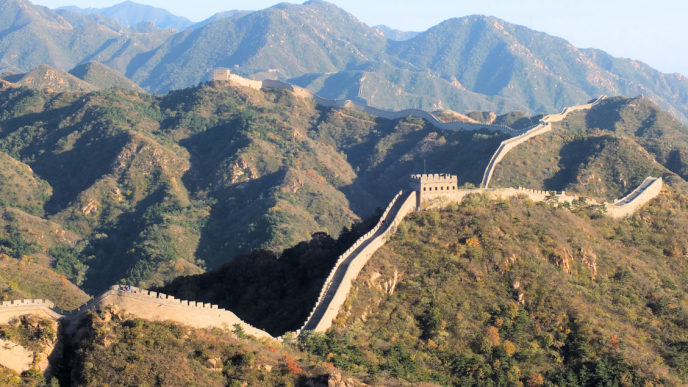
Tensions Rising With China After Near Collision

To say the bilateral relationship between the United States and the People’s Republic of China is ‘complex’ might just be the ultimate of understatements.

Consider the facts: Beijing and Washington enjoy rich historic and cultural ties that date back generations. Over 300,000 Chinese students today attend American universities, only adding to the richness and cultural diversity of these important institutions. And most important of all, the U.S.-China bilateral trade relationship is worth over $591 Billion and rising.

Bearing in mind how much both sides gain from a productive and strong partnership, many in Washington—and certainly many around the world—hoped that strong ties would serve as a springboard towards Beijing’s “peaceful rise.”

Indeed, China’s economy is now the second largest by measure of gross domestic product (ranked number one if you consider purchasing power parity) and has only fueled hopes of Beijing becoming what is popularly termed a “responsible stakeholder”—that China, with a ‘stake’ in the stability of the international system thanks to strong global economic ties, would follow widely accepted international relations norms and practices.

Cooperation on areas of shared and mutual interest would be emphasized with a clear hope any areas of competition—with a clear understanding that there would be competition in multiple domains—would not derail or weaken what had been accomplished.

Sadly, such hopes have not transcended into reality.

Unfortunately for the United States and its allies in Asia, it seems Beijing has decided to undertake a very different direction in its foreign policy and security goals over the last several years—one that very well undermines the very peace and security Asia has known for decades, the very bedrock of the region’s awe inspiring economic transformation.

In what can only be described as an arch of instability stretching North from the Japanese-administered Senkaku Islands all the way to the very southern edges of the South China Sea and now moving west to what is commonly referred to the Second Island Chain, Beijing has decided that an aggressive policy of slowly but surely weakening the status quo serves its interests.

And Chinese actions clearly demonstrate the above approach. In just the last several years (and far from a comprehensive list), Beijing has sought to enforce lines drawn over vast expanses of the South China Sea along with building islands in this hotly contested area, declared an Air-Defense Identification Zone in the East China Sea without any prior warning along with booting regional allies like the Philippines out of disputed reefs far closer to the Philippines than China.

The goal, many would argue, is to dominate Asia, but more importantly, displace the United States as the preeminent power in the region.

In fact, it now seems America, along with its allies and partners, are slowly moving towards a much more intense security competition with China in the months and years to come, the consequences of which cannot be simply swept aside—especially considering Washington and Beijing both have nuclear weapons.

Sadly, recent headlines only prove Beijing’s aggressive actions throughout the region could spark a superpower clash that has not been seen in decades.

On Tuesday, a U.S. EP-3 Orion aircraft flying in international airspace over the South China Sea was approached by two Chinese advanced J-11 fighter jets.

While close monitoring of a military aircraft or naval vessel in international space is certainly a standard practice this interaction was anything but normal. Chinese aviators came within 50 feet of the U.S. plane, prompting the pilot to descend several thousand feet out of safety considerations.

Sound familiar? It should, as China has utilized this playbook before.

In 2014, a Chinese fighter jet came dangerously close to a P-8 U.S. surveillance plane and preformed a barrel roll over it. According to reports, “the Chinese J-11 fighter passed the P-8 Poseidon at 90 degrees, with its belly toward the U.S. aircraft to show off its weapons.”

Thankfully, recent incidents like the ones described above have not led to any injuries or deaths—but that has not always been the case.

Back in 2001, an American EP-3 aircraft collided with a Chinese J-8 fighter jet. The pilot of the J-8 was killed while the U.S. aircraft was forced to undertake an emergency landing in China on Hainan Island. A tense standoff ensued. Thankfully the U.S. crew was released weeks later.

When one considers carefully incidents like the above combined with Beijing’s clear attempts to alter the status quo, it is vital that Washington respond accordingly to not only reinforce America’s commitment to the region but demonstrate clear American leadership.

There are two clear ways to ensure China understands American resolve despite its constant testing of the international order in Asia.

First, Washington must ensure and forge deeper relations with other nations in East Asia—especially important allies. As explained in The Heritage Foundation’s recent Solutions 2016 report:

The U.S. has five treaty allies in the Asia–Pacific region (Japan, South Korea, the Philippines, Australia, and Thailand). The U.S. should be unequivocal in its commitment to mutual defense under these treaties. The U.S. should engage these and other, non-ally nations in the region so that they do not perceive China as the sole game in town.

Also, considering that China is using military instruments of power to push back against America’s place in the region, maintaining a strong U.S. military presence is vital—in fact, it should be strengthened:

U.S. Navy and Coast Guard shipbuilding and modernization programs should be fully funded. The U.S. should also invest in long-range power projection systems (such as unmanned aerial vehicles, bombers, and nuclear attack submarines) and other systems that would counter efforts to deny U.S. forces access to the region or interfere with the freedom of the seas. In addition, the U.S. should maintain robust bases in the region to support U.S. forces.

Clearly the above only serves as a down payment in what can only be part of a comprehensive strategy to ensure China’s rise does not become Asia’s nightmare.

It is clear that only Washington has the power to balance Beijing and keep its increasing assertiveness in check. While America will certainly work with China in areas of cooperation which are certainly vast, Beijing must know Washington will resist any attempts to alter the status-quo while preserving the peace, security and freedom of the Asia-Pacific region. (For more from the author of “Tensions Rising With China After Near Collision” please click HERE)

Follow Joe Miller on Twitter HERE and Facebook HERE.
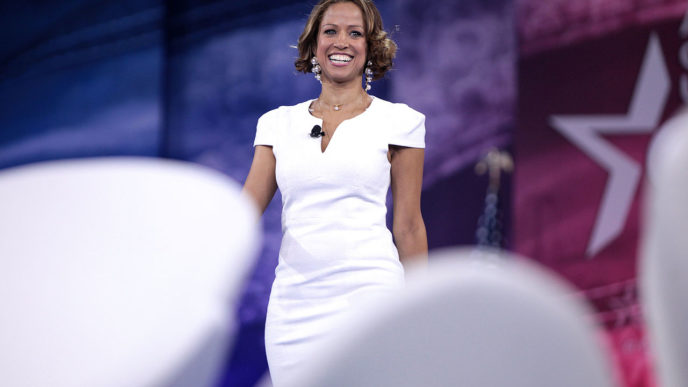
Stacey Dash Shares Picture of Herself and Trump That Is Generating Buzz

Actress and Fox News contributor Stacey Dash posted a picture of herself with Donald Trump on Friday, and it is generating a lot of interest online.

The picture–posted to Twitter, Facebook, and Instagram–appears to have been taken at the National Rifle Association’s annual convention, which is taking place in Louisville, Ky., Friday through Sunday.

In the post, Dash announces her endorsement of Trump, as did the NRA on Friday.

Dash has had complimentary things to say about Trump during various appearances as a co-host on Fox News’ Outnumbered during the campaign season.

She also defended him in a blog post in March after violent protesters caused the candidate to cancel a Chicago campaign rally. “There’s a lot of talk about Donald Trump being violent, condoning it, or at least inciting it,” Dash wrote. But, she said, “he’s not violent, he’s just ‘street.’”

“But there is something about growing up in New York, a certain toughness instilled, a certain level of ‘street’ that can’t be ignored,” she added. “That’s why Americans LOVE him. They are tired of being pushed around. They want someone who will not put up with non-sense.”

Dash has a book coming out June 6 chronicling her political journey, entitled, There Goes My Social Life: From Clueless to Conservative. (Her breakthrough film role was in the 1995 comedy “Clueless.”)

She told Western Journalism that she hopes her book will be a vehicle to help people discover that they are conservatives too. She believes there are many currently disenfranchised people who, when presented with the facts, will have that epiphany.

“They are for the Second Amendment, they just don’t know it. They are constitutionalists, they just don’t know it. They are capitalists, they just don’t know it. Those are all conservative principles, they just don’t know it,” Dash said. (For more from the author of “Stacey Dash Shares Picture of Herself and Trump That Is Generating Buzz” please click HERE)

Follow Joe Miller on Twitter HERE and Facebook HERE.

Gowdy Makes a Second Endorsement — ‘I’m Going to Support the Jury’

House Select Committee on Benghazi Chairman Rep. Trey Gowdy, R-S.C., has boarded the Trump train.

“I endorse Donald Trump,” Gowdy told MSNBC’s Chuck Todd on Meet the Press Friday.

“I was a Rubio guy, and if Marco had won I would have expected the Cruz supporters and the Kasich supports and the Trump supporters to support my guy,” he said. “My guy lost. When the jury speaks, I’m going to support the jury.”

Gowdy had previously said he would support the eventual GOP nominee, but never mentioned Trump specifically.

When he was pressed about his change in attitude regarding Trump, Gowdy said, “I actually didn’t think I was that hesitant.”

He then reiterated his support for Trump.

“I was a Rubio guy and Marco lost, but I will enthusiastically support the Republican nominee,” he said.

Gowdy also elaborated about the current happenings on the Benghazi committee, which is investigating the 2012 attacks on the U.S. diplomatic compound in Benghazi, Libya.

He said that the report of his committee would be issued before this summer’s political convent?ons. Democrats have attacked the committee, saying the panel’s more than two years of investigations are politically motivated and timed to impact Clinton’s chances in the election. Gowdy has denied this accusation and blamed federal agencies for their slow responses to requests for information. (For more from the author of “Gowdy Makes a Second Endorsement — ‘I’m Going to Support the Jury'” please click HERE)

Follow Joe Miller on Twitter HERE and Facebook HERE.

China Denies Shipping Marinated Human Flesh in Cans to Be Sold as FOOD in Africa

China has strenuously denied reports that it’s routinely canning human flesh and selling it as food to African nations.

A top official has dismissed reports in Zambia which queried the provenance of some ‘meat products’ being shipped from China to the African continent.

In the media reports, an unnamed Zambian woman living in China reportedly issued warnings to Africans not to eat corned beef.

She claimed that dead human bodies were being collected and marinated before being canned and labelled as corned beef for human consumption .

But the statement, issued by the Chinese Ambassador to Zambia, Yang Youming, blames people spreading “malicious” rumours. (Read more from “China Denies Shipping Marinated Human Flesh in Cans to Be Sold as FOOD in Africa” HERE)

Follow Joe Miller on Twitter HERE and Facebook HERE.
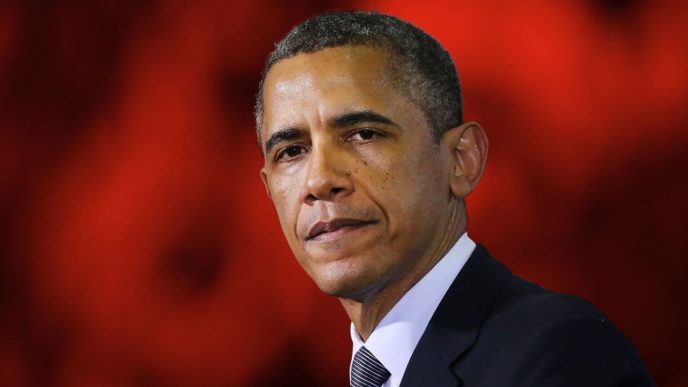
House Rejects Amendment That Would Have Curtailed Religious Freedom

On Thursday, the House of Representatives voted to reject the Maloney Amendment. The Maloney Amendment would have ratified President Barack Obama’s executive order barring federal contractors from what it describes as “discrimination” on the basis of sexual orientation and gender identity in their private employment policies.

And, of course, “discrimination” on the basis of gender identity can be something as simple as having a bathroom policy based on biological sex, not gender identity, as we learned last week from Obama’s transgender directives. And “discrimination” on the basis of sexual orientation can be something as reasonable as an adoption agency preferring married moms and dads for orphans than other arrangements.

Employers should respect the intrinsic dignity of all of their employees, but as I explained in greater detail at The Daily Signal two years ago, Obama’s executive order undermines our nation’s commitment to pluralism and religious liberty. So a vote for the Maloney Amendment is a vote to support Obama’s radical agenda.

Obama’s executive order, like the Maloney Amendment, does not contain any religious liberty protections—though it does leave in place an older federal regulation that permits religious organizations that favor employment of co-religionists to continue such practices. But there is no protection for organizations that hire based on mission—not on affiliation—to continue to do so. This in effect excludes taxpayers who hold conscientious beliefs about sexuality that run counter to Obama’s from being eligible for federal contracts funded with their own tax dollars.

The Obama executive order, and attempts to codify it through the Maloney Amendment, are problematic for four reasons, but there is at least one thing that can be done in response.

1. Obama’s order and the Maloney Amendment undermines our nation’s commitment to reasonable pluralism and reasonable diversity, as it disregards the consciences and liberties of people of goodwill who happen not to share the government’s opinions about issues of sexuality. All Americans should be free to contract with the government without penalty because of their reasonable beliefs about morally contentious issues. The federal government should not use the tax code and government contracting to reshape civil society about controversial moral issues that have nothing to do with the federal contract at stake.

2. Obama’s order and the Maloney Amendment treat conscientious judgments about behavior as if they were invidious acts of discrimination akin to racism or sexism. But sexual orientation and gender identity are not like race. Indeed, sexual orientation and gender identity are unclear, ambiguous terms. They can refer to voluntary behaviors as well as thoughts and inclinations, and it is reasonable for employers to make distinctions based on actions. By contrast, “race” and “sex” clearly refer to traits, and in the overwhelming majority of cases, these traits (unlike voluntary behaviors) do not affect fitness for any job.

3. Obama’s executive order and the Maloney Amendment also do not contain any Bona Fide Occupational Qualification (BFOQ) exemption. BFOQs allow employers to make employment decisions so long as those decisions are honestly related to job qualifications. For example, Title VII of the Civil Rights Act contains a BFOQ that allows employers to take sex into account: permitting hiring only female camp counselors at an all-girls sleep-away summer camp, which might otherwise seem to be “sex discrimination.”

4. Obama’s executive order and the Maloney Amendment are unnecessary. Voluntary market forces are already eliminating true discrimination, as making employment decisions based on non-relevant factors hurts one’s ability to compete. But the federal government should not penalize those contractors that do conscientiously judge sexual orientation or gender identity to be relevant to their mission and purpose.

In response to this executive order, Congress has an opportunity to protect religious liberty and the rights of conscience. Policy should prohibit the government from discriminating against any individual or group, whether nonprofit or for-profit, based on their beliefs that marriage is the union of a man and woman or that sexual relations are reserved for marriage. The government should be prohibited from discriminating against such groups or individuals in tax policy, employment, licensing, accreditation, or contracting. This is the policy approach proposed in both the Russell Amendment and the First Amendment Defense Act.

Protecting religious liberty and the rights of conscience fosters a more diverse civil sphere. Indeed, tolerance is essential to promoting peaceful coexistence even amid disagreement. (For more from the author of “House Rejects Amendment That Would Have Curtailed Religious Freedom” please click HERE)

Follow Joe Miller on Twitter HERE and Facebook HERE.
Facebook, Your Friends, or You? Who Actually Is in Control of What You See on Facebook?

A number of conservative news websites – including Restoring Liberty – contend that Facebook is censoring their stories. While difficult to prove, there have been several recent studies suggesting that Facebook is indeed biased through either its algorithm controlling users’ news feeds or through deliberate action. This is particularly disturbing as increasing numbers of Americans – and people across the world – now use Facebook as their primary news source.

In an astonishing smoking-gun-story earlier this month, Gizmodo uncovered reports that Facebook used journalists to help shape the “trending” section of their website to specifically prevent conservative stories from making it to that prominent location. Not only did Facebook prevent trending conservative stories from making the prominent list, but it also added non-trending leftist stories to the list!

Facebook misleadingly suggests that its trending section is based only on personal interest and what is currently popular on Facebook. What’s conveniently omitted is the subjective human influence on what ultimately makes the list. While Facebook contends it has strict policies in place to prevent bias, there’s little question that it has failed in avoiding human interference. It also raises the question whether other sections of Facebook have been shaped with “help” from human touch to prevent conservative stories from getting fair coverage.

Outside of the trending news section, there are many other examples of Facebook censoring information. In one recent example, Facebook was caught deleting and preventing posts about another social media website (tsu.co) which it alleged was spam. Facebook obviously saw a competitive threat from tsu.co, a platform that gives an astonishing 90% of ad profits back to users. In another example, Facebook blocked conservative Professor Carol Swain’s Facebook account for “abusive content” only to reinstate it once the censoring was made known by breitbart.com.

Another troubling example of Facebook’s political bias is the case of Syrians who had pages removed by Facebook from their account, causing them to lose many pictures and other documentation of war crimes. But sometimes the bias is more explicit. At a recent UN event, German Chancellor Merkel was overheard asking CEO Zuckerberg how Facebook was doing on suppressing “racist” posts against the recent influx of refugees.

Some victims of Facebook censoring are fighting back. For instance, an Israeli group (NGO Shurat HaDin, also known as the Israeli Law Center) created an experiment to test the theory that Facebook is prejudiced against Israel. The ingenious, simple experiment was done by creating two Facebook pages similar in so-called “hate content,” with one against Israel and the other against Palestine. Users then reported both pages to Facebook as violating the social media giant’s hate speech standards. Within one day of reporting the page against Palestine, it was removed from Facebook. However, the other page against Israel received a reply back that it was not in violation of Facebook’s standards. Only after the Israeli NGO had made a video exposing Facebook’s double standard was the page against Israel removed.

Perhaps even more troubling is the suppression of news articles based on Facebook’s algorithm for individual users. This algorithm relies on a number of factors including “silent lurking” on Facebook pages, other websites the user visits, and – disturbingly – text that a user types into Facebook but doesn’t actually post. Recently, Facebook also included 5 new reaction emojis to their like button for U.S. users. As expected, this change will supply even more data to Facebook for its news feed algorithm. Facebook claims it’s using these numerous data points to tailor posts to what individual users want to read. Unfortunately, such a tailored news feeds mean users may not be given the option to read stories that might challenge their belief system, like conservative articles that tend to conflict with the main stream media.

Ironically, one of Facebook’s internal studies, looking at the types of news an ideologically defined user viewed, reflected this. What was discovered was that Facebook’s algorithm suppressed fewer liberal news stories a conservative would see than conservative news stories a liberal would see. Moreover, Facebook’s analysis reflected that conservative users would click on a liberal news story in their news feed almost a third more often than liberals would click on conservative stories in their feeds.

Additionally, Facebook’s study found that liberal users were generally connected to fewer friends who shared conservative stories than conservatives were connected to liberal friends sharing liberal stories. This factor, uninfluenced by Facebook’s biased algorithm, is apparently caused by the fact that liberals block, unfriend, or hide users with posts they disagree with far more frequently than conservatives. Contrary to conventional wisdom, conservatives tend to be more open-minded than liberals – at least on Facebook.

Because liberal Facebook users are more close-minded than conservatives, they report conservative posts as offensive at a more frequent rate, thus suppressing those posts on Facebook. This is yet another factor creating an anti-conservative bias on Facebook.

So what’s the answer Facebook bias? The good news is that YOU have control. NEVER use your Facebook feed as your exclusive news source. Instead, either go directly to the Facebook page you are following, or visit the websites of conservative publishers themselves. Yes, this involves an extra step. But it’s imperative that we stay at least a step ahead of the leftists who are attempting to transform our nation and world.

Follow Joe Miller on Twitter HERE and Facebook HERE.

UPDATE: College Boots Ex-Delta Force Hero After Complaint From LGBT Activists

Gen. Boykin will not be returning to the classroom this fall. That’s because he tells me he’s been fired.

The man who was one of the original members of Delta Force and once commanded all of the U.S. Army’s Green Berets – the man who served his nation with honor and distinction for more than 36 years – was ousted because of political correctness.

In March, Gen. Boykin delivered a speech to conservatives and he referenced the national uproar over transgendered people using the ladies room.

He cracked a joke: “The first man who goes into the restroom with my daughter will not have to worry about surgery” . . .

Boykin, who also serves as an executive vice president of the Family Research Council, tells me as many as 150 activists signed a letter written to the college [Hampden-Sydney College] demanding that he be fired. (Read more from “College Boots Ex-Delta Force Hero After Complaint From LGBT Activists” HERE)

______________________________

UPDATE: College Reverses Decision

[T]he college [has] reversed its decision and offered the retired general a one-year contract.

“Hampden-Sydney College is a fine school with a proud history of young men who have led our country, and I am honored to be a part of shaping the next generation of leaders,” Boykin told me. “I would like to thank the leadership of Hampden-Sydney College for the courage they have demonstrated in reversing their decision and allowing me to remain a part of the Hampden-Sydney community.”

The LGBT activists had wanted Hampden-Sydney to fire Boykin over a joke he made to a gathering of conservatives. They accused him of advocating for violence against gays and transgender people. (Read more from this story HERE)

Follow Joe Miller on Twitter HERE and Facebook HERE.
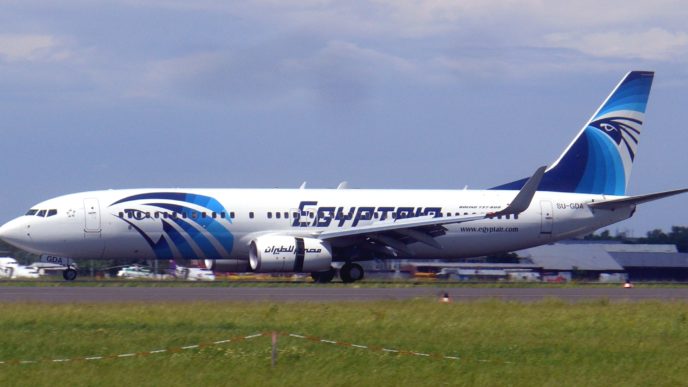
EgyptAir Crash Has Markings of Muslim Brotherhood Operation

By Leo Hohmann. The fate of EgyptAir Flight MS-804 has once again thrown the media spotlight on Paris, France, where the plane took off for Cairo before going down over the Mediterranean Sea.

The airliner, only 13 years old, was cruising at high altitude in good weather conditions when it suddenly went down. There was no call of distress.

While much of the media has focused on Paris as the location where a terrorist could have loaded a bomb onto the plane, an expert of Egyptian politics and the Muslim Brotherhood says look again at Cairo . . .

It only sat on the ground in Paris for an hour, said Dr. Mark Christian, founder and president of the Global Faith Institute, an Omaha-Nebraska-based think tank that focuses on Islamic terrorism.

Christian, who grew up in Egypt the son of a Muslim Brotherhood member and became a child imam by the age of 14, says the Brotherhood has the most to gain from a terror attack on EgyptAir and has been active in a string of terror attacks recently in the country. (Read more from “EgyptAir Crash Has Markings of Muslim Brotherhood Operation” HERE)

__________________________________________

EgyptAir Flight 804: Airline Official Says Debris Not From Plane

By Michael Pearson, Faith Karimi, Ian Lee and Steve Almasy. The search for EgyptAir Flight 804 is continuing after reports that the plane’s wreckage had been found turned out to be false.

When searchers got close to debris found in the Mediterranean Sea they realized it didn’t come from the missing airliner, EgyptAir’s Vice Chairman Ahmed Adel told CNN.

The Airbus A320, which had 66 people on board, disappeared early Thursday as it flew from Paris to Cairo. Earlier, Adel told CNN’s Christiane Amanpour that the plane’s wreckage had been found.

“We stand corrected on finding the wreckage because what we identified is not a part of our plane. So the search and rescue is still going on,” Adel told CNN’s “The Lead with Jake Tapper.” (Read more from “EgyptAir Flight 804: Airline Official Says Debris Not From Plane” HERE)

Follow Joe Miller on Twitter HERE and Facebook HERE.
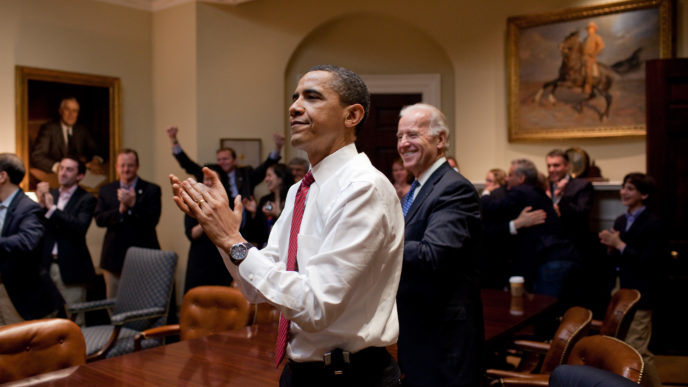
Why Obamacare Customers in Some States Might See Higher Rates in 2017

As insurance companies begin submitting their rates for health care coverage next year, consumers are seeing changes in the number of insurers selling plans on Obamacare’s exchanges.

And in some places, fewer choices on the exchanges can mean higher premiums.

So far, three states—Alabama, Alaska, and Wyoming—have just one insurer selling coverage on their Obamacare exchanges. And in Kansas, Insurance Commissioner Ken Selzer has been talking with carriers to convince them to sell coverage in his state. If Selzer isn’t successful in bringing other insurers on to the exchange in his state, Blue Cross and Blue Shield of Kansas will be the only option for consumers there.

Since Obamacare took effect in 2013, a number of studies have documented a decline in the number of insurers selling coverage on the exchanges.

A March report from The Heritage Foundation found that from 2015 to 2016, the number of insurers participating in Obamacare’s exchanges fell from 307 to 287. Additionally, prior to the Affordable Care Act’s rollout in 2013, 395 insurers sold individual-market coverage. In 2014, the number of insurance companies selling coverage on the exchanges fell to 253.

When comparing the number of insurers selling plans on the exchanges from 2015 to 2016, 22 states and the District of Columbia saw a decline in the number of carriers selling exchange coverage from 2015 to 2016, according to the report.

Just 10 states, meanwhile, have more insurers on the exchanges.

Additionally, a study conducted by the Kaiser Family Foundation found that more than 650 counties nationwide will have one insurance company on the exchanges next year. In states using the federal exchange, HealthCare.gov, 40 percent of counties will see just one or two insurers.

A Provider Monopoly

Insurer companies are in the midst of deciding whether to continue offering coverage on Obamacare’s exchanges, and some big players like Humana and UnitedHealthcare have already announced decisions to pull out of some exchanges.

These changes now have health policy experts warning that such a decline in insurer participation on Obamacare’s exchanges could impact how much consumers pay and how much providers charge.

“The focus has been on rural areas where you already have less insurer competition and are getting down to one or two [carriers],” Ed Haislmaier, a senior fellow in health policy at The Heritage Foundation, told The Daily Signal. “I think the effect, paradoxically, is somewhat less. The real issue isn’t the number of insurers. It’s the number of providers.”

In rural areas where there may be only one provider such as a hospital and two or three insurers, the provider could charge what it wants, causing insurers to post similar rates, he said.

“The competition issue in rural areas is more driven by provider monopolies than it is by insurers,” Haislmaier said.

Caroline Pearson, senior vice president of policy at Avalere Health, agreed that in rural areas, specifically, higher premiums from insurers can be tied to increased rates from providers.

“The two are sort of linked,” she told The Daily Signal. “The way that insurers have brought premiums down in some markets is by designing narrower networks where they’re including only a subset of providers with better negotiated rates.”

“In rural areas, there’s a dearth of providers,” she continued. “Plans are beholden to the physicians there, and they don’t have the leverage to drive rates down. I think the monopoly of providers is limiting plans’ ability to keep premiums low.”

Pearson said that though competition has “been effective” at lowering the cost of premiums, consumers can expect to see across-the-board rate increases for a variety of reasons and not just in areas where there is little to no choice of insurer on the exchange.

“People in the exchanges are sicker than insurers were expecting them to be, so it’s costing more to cover them,” she said. “Additionally, the fact that two of the risk mitigation programs [risk corridor and reinsurance] go away in 2017 will also increase rates. Those are the two primary drivers.”

A ‘Guiding Principle’

In a study from the American Journal of Health Economics released last year, Massachusetts Institute of Technology economist Jonathan Gruber and the study’s authors warned that a decline in competition among insurers leads to an increase in premium prices.

Using UnitedHealthcare’s decision not to sell insurance on Obamacare’s exchanges in 2014 as an indicator of how premium prices changed, the study’s authors found that had UnitedHealth decided to enter all markets, the cost for the second-lowest silver premium would’ve decreased by 5.4 percent.

The government calculates subsidies based on the cost of the second-lowest silver plan.

Additionally, had insurers sold coverage in all areas on the state’s exchange, the cost of premiums would’ve declined by 11.1 percent.

Gruber and the study’s authors further found that areas where Obamacare’s co-ops, or consumer operated and oriented plans, sold coverage had lower premiums than those that did not.

The co-ops launched in 26 states with $2.4 billion in startup and solvency loans from the Centers for Medicare and Medicaid Services and were intended to boost competition and choice in areas where few existed.

However, since their roll out in 2013, 12 of the 23 co-ops have since closed their doors.

In a speech before a joint session of Congress in September 2009, President Barack Obama warned about how decreased competition among insurers can impact consumers.

“My guiding principle is, and always has been, that consumers do better when there is choice and competition. That’s how the market works,” Obama told lawmakers. “Unfortunately, in 34 states, 75 percent of the insurance market is controlled by five or fewer companies. In Alabama, almost 90 percent is controlled by just one company. And without competition, the price of insurance goes up and quality goes down.”

While consumes in Alabama, Alaska and Wyoming will have just one insurer to select coverage from during next year’s open enrollment period, states have yet to encounter a situation where no insurer will sell on the exchange.

In 2013, before Obamacare’s launch, 34 counties in Mississippi were almost left with no carrier selling on its exchange, according to Vox. However, Humana decided to offer coverage to consumers in those 34 counties—albeit at a price, as premiums in the state were among the highest in the country.

“With only one plan, [insurers] certainly have pricing flexibility to make it work for them financially,” John McDonough, a professor of public health at Harvard University told Vox.

Having no insurers selling on an exchange doesn’t mean a consumer will go without coverage, Haislmaier said. Instead, carriers can and do sell plans off of the exchange.

In Mississippi and South Dakota, for example, Blue Cross and Blue Shield carriers are the largest insurers in those states. Neither, though, sell coverage on the exchanges.

“The key thing here is whether there’s an insurer willing to sell on the exchange,” Haislmaier said. “That’s important because that doesn’t necessarily mean there may not be coverage available off the exchange. But those with subsidies will be affected because they then have to pay full price.” (For more from the author of “Why Obamacare Customers in Some States Might See Higher Rates in 2017” please click HERE)

Follow Joe Miller on Twitter HERE and Facebook HERE.
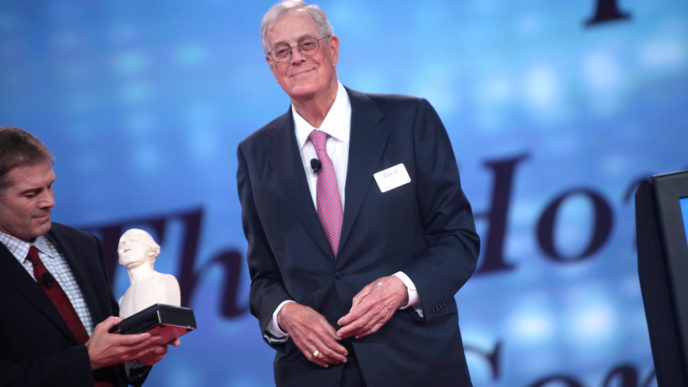
Businessman David Koch Reportedly Earmarks Millions for November Election

If original reports from an insider campaign source are accurate, Gary Johnson, presidential candidate for the Libertarian Party, could be getting a major boost to his campaign.

According to Daily Caller, a source in Johnson’s campaign reports billionaire David Koch is willing to pledge “tens of millions of dollars” to Johnson’s campaign, if he receives the Libertarian Party nomination.

The nomination will be made later in May at the Libertarian National Convention to be held in Orlando.

Should Johnson be selected, it will be his second consecutive presidential nomination.

A source closely connected with Koch reportedly did not deny the pledge existed.

In an update to the original article, TheDC reports a Koch spokesperson denied the claim.

“Reports that David Koch has pledged his support to Gary Johnson- or any candidate running for president for that matter- are untrue,” the spokesperson said.

However, an individual within the leadership of the Libertarian Party spoke to Daily Caller Thursday and said the support is still on track.

This source said, “In the event that a Johnson/[Bill]Weld ticket emerges from the convention, a pathway is in place for significant funding from Koch, [Steve]Wynn and other large donors.”

A representative for Koch held to the statement that Koch is not “supporting any third party presidential candidate.”

When Ron Neilson, campaign manager for Johnson was contacted by phone on Tuesday morning, he told Daily Caller that donor commitments would not be confirmed publicly prior to the convention. He went on to ask TheDC for their source.

Chairman of the Nevada Libertarian Party Brett H. Pojunis said, “People are upset and are looking for an alternative to the broken two party system.”

He added, “If the Libertarian candidate is successful raising money, the media will have a hard time ignoring that candidate. Especially with a public hungry for an alternative to to of the most polarizing figures in American political history.” (For more from the author of “Businessman David Koch Reportedly Earmarks Millions for November Election” please click HERE)

Follow Joe Miller on Twitter HERE and Facebook HERE.