Putin’s Three Demands for Ukraine Peace Revealed After Alaska Summit With Trump: Report

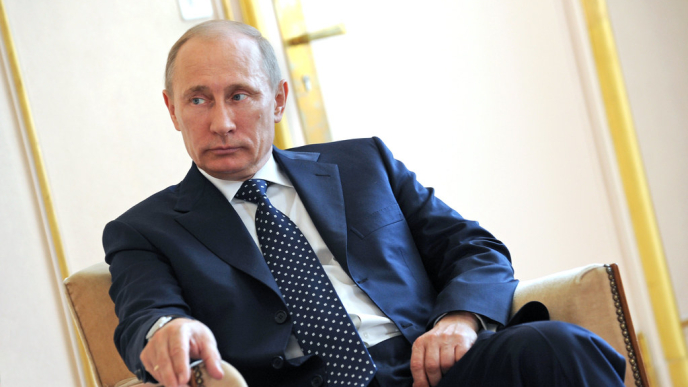
Russian President Vladimir Putin has laid out three conditions he says are necessary to achieve peace in Ukraine, according to a new report.

Putin, who met with Donald Trump two weeks ago in Alaska for a high-stakes summit, is demanding that Ukraine surrender control of the remaining parts of the Donbas region, abandon its bid to join NATO, and accept strict neutrality that bars Western forces from setting foot in the war-torn country, three sources familiar with Kremlin thinking told Reuters.

The reported proposal marks a scaling back from Moscow’s earlier demands. In June 2024, Russia insisted Kyiv give up four provinces: Donetsk and Luhansk in the east, along with Kherson and Zaporizhzhia in the south. Now, according to Russian sources, Putin is seeking only the full Donbas in exchange for halting operations in Kherson and Zaporizhzhia.

Russia currently controls about 88% of the Donbas, as well as 73% of Zaporizhzhia and Kherson, according to U.S. intelligence estimates and open-source data. Moscow has also signaled it could return small parts of the Kharkiv, Sumy, and Dnipropetrovsk regions as part of a potential settlement.

Still, Putin remains firm on his two other core demands: that Ukraine’s NATO ambitions, written into its constitution, be abandoned, and that Western militaries not be allowed to deploy in Ukraine under any peacekeeping mandate.

“Putin is ready for peace — for compromise,” one Russian source told Reuters. “That is the message that was conveyed to Trump.”Ukrainian President Volodymyr Zelensky has repeatedly rejected any deal that involves ceding internationally recognized Ukrainian territory to Russia. On Thursday, he stressed the Donbas region is essential to his country’s survival.

“If we’re talking about simply withdrawing from the east, we cannot do that,” Zelensky said. “It is a matter of our country’s survival, involving the strongest defensive lines.”

He also argued that Ukraine’s NATO aspirations are a sovereign matter and should not be dictated by Moscow.

For now, no direct talks between Putin and Zelensky are scheduled. Russian Foreign Minister Sergey Lavrov told NBC News that “the agenda is not ready at all” for such a summit.

“President Putin said clearly that he is ready to meet provided this meeting is really going to have an agenda, presidential agenda,” Lavrov said, accusing Kyiv of stalling.

Meanwhile, Trump has applied pressure from the sidelines, warning of “massive” sanctions and tariffs if Putin and Zelensky fail to move toward negotiations.

“I’ll see whose fault it is,” Trump said Friday. “If there are reasons why, I would understand that. I know exactly what I’m doing. We’re going to see whether or not they have a meeting — that will be interesting to see.”

Zelensky has said he is ready to meet Putin but accused the Kremlin leader of blocking progress.

Photo credit: Flickr

Trump’s Tariffs Ruled Illegal in Stunning Blow to President’s Agenda

A federal appeals court delivered a major setback to President Donald Trump’s trade agenda Friday, ruling that the sweeping tariffs he imposed earlier this year are illegal under U.S. law.

In a 3–0 decision, the U.S. Court of Appeals for the Federal Circuit found that the International Emergency Economic Powers Act (IEEPA) — the statute Trump cited to justify his global tariff program — does not grant the president authority to unilaterally impose such broad duties.

The ruling affirmed an earlier decision from the Court of International Trade, which struck down Trump’s executive orders in May. However, the appeals court paused its judgment until October 14 to allow the administration time to seek Supreme Court review.

“This is a significant constitutional question about the limits of presidential power,” said Georgetown University law professor Michael Ramsey. “The courts are signaling that trade policy — especially blanket tariffs — belongs to Congress, not the White House.”

Trump made tariffs a centerpiece of his second term after declaring a national emergency at the southern border on January 20. By April, he rolled out a sweeping tariff regime that reshaped U.S. trade relations with dozens of countries.

The measures included:

“Reciprocal tariffs”: a 10% baseline duty on nearly all imports, with higher surcharges for countries like China, India, and Canada.

Drug-related tariffs: 25% duties on Mexico and Canada and up to 20% on China, justified as part of the fight against fentanyl and cross-border trafficking.

Industry-specific tariffs: a 25% “fentanyl tariff” on Chinese pharmaceutical imports, a 100% duty on foreign films, and doubled steel and aluminum tariffs (from 25% to 50%).

Automobile duties: a 25% tariff on imported cars.

De minimis repeal: ending the exemption for low-value international packages, meaning even small online purchases from abroad now face tariffs.

At their peak, tariffs on Chinese goods climbed to 145% before a temporary July truce lowered rates to 30%. Canada, Mexico, and India were also hit with duties ranging from 25% to 50%.

The tariff blitz sparked immediate backlash. A coalition of small businesses and 12 states filed suit earlier this year, arguing that Trump’s actions were unconstitutional and exceeded his statutory authority.

Small manufacturers, retailers, and farm exporters said the tariffs increased costs, strained supply chains, and invited retaliatory measures from key trading partners. China and Canada both responded with their own counter-duties, escalating trade tensions.

“We’ve been left in a state of uncertainty for months,” said David Brown, who runs a small auto-parts importing business in North Carolina. “Now at least we know the courts are siding with the rule of law instead of executive overreach.”

The White House has not yet issued an official response, but senior officials are widely expected to appeal to the Supreme Court before the October deadline. If the high court agrees to hear the case, it could set up a defining legal battle over the scope of presidential authority in trade policy.

The ruling also reopens debate on Congress’s role in shaping tariffs and trade. While the Constitution grants Congress the power to regulate commerce with foreign nations, presidents of both parties have increasingly tested the boundaries of executive authority in the trade arena.

For now, businesses, consumers, and America’s trading partners are left waiting to see whether Trump’s tariffs — a cornerstone of his “America First” agenda — will survive judicial scrutiny.

Photo credit: Gage Skidmore via Flickr

Pete Hegseth Fires Director of Defense Intelligence Agency After Iran Strike Report

Defense Secretary Pete Hegseth has removed the director of the Defense Intelligence Agency (DIA), Air Force Lt. Gen. Jeffrey A. Kruse, following the release of a preliminary assessment regarding U.S. strikes on Iran in June, according to multiple reports.

The New York Times reported that both a senior defense official and a senator confirmed Kruse’s dismissal, making him the second top military intelligence leader to be ousted since President Donald Trump returned to office in January. Earlier this year, Gen. Timothy D. Haugh, head of the National Security Agency, was forced out after complaints raised by a right-wing commentator.

Kruse, a veteran intelligence officer, had been serving as director of the DIA since 2023. His removal was described by officials as stemming from a “loss of confidence,” though it was not immediately clear whether he would be reassigned within the Air Force. Two congressional officials told the Times that lawmakers were formally notified of the decision.

Sen. Mark Warner (D-VA), chairman of the Senate Intelligence Committee, sharply criticized the move, saying it highlighted what he called the Trump administration’s “dangerous habit of treating intelligence as a loyalty test rather than a safeguard for our country.”

The Washington Post also confirmed Kruse’s firing, citing two people familiar with the matter. They reported that officials did not immediately provide a reason beyond the stated “loss of confidence.”

Kruse’s dismissal came in the wake of a DIA preliminary report assessing the impact of U.S. military strikes on three Iranian nuclear facilities in June. The assessment reportedly caused friction within the administration, though the precise contents of the report have not been made public.

The firing underscores growing tension between the Pentagon’s intelligence community and the Trump administration.

Photo credit: Gage Skidmore via Flickr

Three States Face Loss of Federal Funding Over Trump Trucking Mandate

Transportation Secretary Sean Duffy on Tuesday warned California, New Mexico, and Washington that they have 30 days to comply with federal English proficiency rules for truck drivers or risk losing millions in federal funding.

The announcement follows a Department of Transportation investigation into an August 12 crash on the Florida Turnpike in which three people were killed. Authorities said the driver, Harjinder Singh, an illegal immigrant, caused the crash after making an illegal U-turn. Singh had been granted a commercial driver’s license in both California and Washington. New Mexico law enforcement also failed to administer an English proficiency test when Singh was stopped for speeding in July, investigators found.

“We at DOT and Federal Motor Carriers, we are not going to tolerate states that don’t comply with the rules that come from this department,” Duffy said at a press conference. “We are going to give these states 30 days to come into compliance with truck drivers speaking proficiently the English language, or we’re going to look at the federal funding that they receive under the Motor Carriers Safety Assistance Program.”

Under the mandate, California could lose $30 million, Washington $10 million, and New Mexico $7 million in funding if they fail to enforce the standards. The English proficiency rule was announced in May by the Trump administration and took effect at the end of June.

“When we did that, there was a lot of press that complained to us that we were being unfair to people, that we were being mean to people,” Duffy said. “And what we said was, ‘no, this is a safety issue.’ Making sure drivers of very heavy, 80,000-pound rigs can speak the language is truly a critical safety issue.”

A Federal Motor Carrier Safety Administration review found that between June 25 and August 21, California allowed at least 23 drivers with documented English proficiency violations in other states to continue driving. Washington allowed six such drivers to remain on the road, while New Mexico allowed seven.

Duffy said additional enforcement measures would be considered if the states fail to comply within the 30-day deadline.

Photo credit: Flickr

Young Woman’s Life Cut Short After Hospital Visit for Routine Procedure

A 22-year-old law graduate recently died after suffering a rare but catastrophic allergic reaction during a routine CT scan, shining a spotlight on the risks of a procedure millions undergo every year.

Letícia Paul, who had recently earned her law degree and was pursuing postgraduate studies in real estate and business law, went into anaphylactic shock moments after receiving an iodinated contrast dye, Jam Press reported.

The incident occurred at Hospital Regional Alto Vale in Rio do Sul, in Santa Catarina, Brazil.

Doctors intubated the young woman and placed her under intensive care, but she died on Aug. 20, less than 24 hours later.

Paul had originally visited the hospital for a scan linked to her history of kidney stones. (Read more from “Young Woman’s Life Cut Short After Hospital Visit for Routine Procedure” HERE)

Photo credit: Flickr

Report: Walz Denied Catholic Schools’ Security Funding Despite $17 Billion Surplus

Minnesota Gov. Tim Walz (D) declined requests from Catholic leaders for small-scale security funding for nonpublic schools, despite a record $17.6 billion budget surplus and the approval of similar grants for public schools, according to a report by the National Catholic Register.

The Minnesota Catholic Conference — which represents the state’s six dioceses — sent letters to Walz in both 2022 and 2023 requesting that Catholic and other nonpublic schools be included in state-funded school security programs. The group cited ongoing concerns over school shootings, referencing the March 2023 Covenant School massacre in Nashville, where six people were killed by Audrey Hale, a 28-year-old who identified as transgender.

“There are approximately 72,000 students enrolled in Independent, Catholic, Jewish, Christian, and Muslim nonpublic schools in our state,” the Catholic Conference wrote in a 2023 letter. “The exclusion of one sector of schools … is a discriminatory act against our students.”

The organization asked Walz to expand eligibility for the proposed $50 million Building and Cyber Security Grant Program, which was included in his budget recommendation but applied only to public schools. Since 2020, nonpublic schools have lobbied to join Minnesota’s Safe Schools Program, which provides state aid for emergency response training, security upgrades, mental health services, and other resources. Currently, the program does not cover nonpublic schools, charter schools, or intermediate school districts.

The Catholic Conference also noted that in 2022, when a bill to provide $44 per student in security aid to all schools stalled, Minnesota’s bishops urged Walz to call a special session to approve the expansion. Despite bipartisan support in the legislature — including from several members of Walz’s own Democrat-Farmer-Labor Party — no special session was called.

Meanwhile, in 2023 Walz approved state funding for a “trans refuge” law designed to protect individuals seeking gender-related medical treatments in Minnesota, according to advocacy group OutFront Minnesota.

Photo credit: Gage Skidmore via Flickr

Epstein’s Secret “Birthday Book” Set to Expose Trump Note

The estate of Jeffrey Epstein has agreed to turn over a 2003 “birthday book” containing messages from high-profile individuals—including a reportedly explicit note from Donald Trump—as part of the House Oversight Committee’s expanding investigation, Rep. Robert Garcia (D-Calif.) confirmed Friday on MSNBC.

A subpoena issued by the committee’s Republican chairman, Rep. James Comer (R-Ky.), tasks Epstein’s estate with delivering all entries from the leather-bound album assembled by Ghislaine Maxwell for Epstein’s 50th birthday, as well as any associated documents such as client lists, financial records, and his will—all by September 8.

“The estate is actually going to now get us that book and a bunch of other documents that they have that’s actually not been reported yet,” Garcia said. “We’re gonna get those documents, as we understand it now, on Sept. 8. And so that will continue our investigation.”

The committee also seeks additional information from the Department of Justice after an unsigned memo indicated that no “client list” exists. Investigators view the birthday book as potentially critical evidence in uncovering Epstein’s network and how the case was managed by federal authorities.

The “birthday book” was first publicized in July 2025 when The Wall Street Journal reported that Trump’s message, reportedly illustrated and framed by the outline of a naked woman, closed with the line: “Happy Birthday—and may every day be another wonderful secret.” Trump has categorically denied authoring the note and has filed a $10 billion defamation lawsuit against the Journal and its parent company

Ghislaine Maxwell confirmed in DOJ interview transcripts that she assembled the book but could not recall who contributed to it.

The probe has intensified in recent months following an unsigned joint memo by the Justice Department and FBI announcing they would not release additional Epstein files. The decision triggered anger among Trump’s supporters and even criticism from within his own administration. On the campaign trail, Trump accused the government of concealing aspects of the Epstein case and promised transparency, though his critics argue little has been delivered.

Meanwhile, the scandal continues to entangle high-profile figures abroad. Emails reveal that Britain’s Prince Andrew stayed in contact with Epstein years longer than he previously admitted, even after Virginia Giuffre publicly accused both men of sex trafficking in 2015. In one email exchange from late 2015, Epstein told his longtime associate, former Israeli Prime Minister Ehud Barak, that the Duke of York was the source of information about a potential business venture in China.

The correspondence casts further doubt on Andrew’s claim in his infamous BBC Newsnight interview that he last saw Epstein in December 2010. Records now suggest he maintained ties with Epstein well into 2015, including discussions of business opportunities and personal meetings.

Epstein and Barak had jointly invested millions in a security start-up, Reporty Homeland Security, and were exploring new ventures in Asia. In one striking email, Epstein wrote of “Weathy [sic] Chines [sic] looking for to start personel [sic] protection co in Beijing,” adding ominously that “kidnapping has begun.” Barak pressed back, asking Epstein where he obtained the information.

The revelations underscore the global breadth of Epstein’s influence and the expanding scope of the congressional inquiry. With the “birthday book” and new records set to be delivered by September 8, lawmakers say they are determined to uncover the full extent of Epstein’s network, and to ensure that the voices of survivors remain central to the investigation.

Downed Ukrainian Drone Sparks Massive Forest Fires Miles From Putin’s Mysterious $1.5B Black Sea Palace

Ukrainian drone strikes sparked massive forest fires that came within miles of Russian leader Vladimir Putin’s opulent mansion along the Black Sea, known as “Putin’s Palace.”

As many as 100 emergency crews battled the fiery scene, which was triggered by falling debris from a Ukrainian drone downed by Moscow defenses, local Russian authorities said.

The flames spread just six miles from Putin’s sprawling 190,000-square-foot compound at Cape Idokopas, near the resort town of Gelendzhik, located not far from Crimea, according to reports from authorities.

But an independent Russian investigative outlet, IStories, placed the Thursday blaze even closer to the Russian strongman’s palatial villa, saying the fire broke out just two miles from the palace.

No injuries or deaths were reported, though local emergency services said 23 vacationers were cut off from evacuation routes by the smoke and had to be brought to safety by boat. (Read more from “Downed Ukrainian Drone Sparks Massive Forest Fires Miles From Putin’s Mysterious $1.5B Black Sea Palace” HERE)

Photo credit: Flickr

Violence Is The Logical And Desired Outcome Of Leftists’ Trans Victim Narrative

The horrific Annunciation Catholic School shooting in Minneapolis, Minnesota, became the latest act of violence perpetrated by an individual claiming to be transgender. The FBI confirmed the “shooter has been identified as Robin Westman, a male born as Robert Westman.” Victimhood narratives always end in violence, making grievance politics a precursor to atrocities ranging from mass shootings to genocide.

The left sells this oppressor/oppressed narrative to its constituents — including and especially the so-called trans community, but this community stands out for one important reason: they are uniquely prone to irrational behavior as gender dysphoria is a mental disorder.

Imagine if the leftist press relentlessly pushed a narrative telling schizophrenics that their very existence is being threatened by an evil cabal of conservatives plotting to destroy them. Imagine if once impartial but now ideologically corrupt medical institutions reinforced that messaging. People with schizophrenia would be far more likely to commit acts of violence against their “oppressors.” It doesn’t take much clairvoyance to predict that sequence of events.

It would be unthinkable to exploit schizophrenics by affirming their delusions, granting them elevated status in society, and giving them carte blanche to behave however they like, and yet this is precisely what the left is doing with gender dysphoria. Increasingly bizarre activism on behalf of the “trans community” is characterized as the noble pursuit of “rights” intended to untangle victims caught in the diabolical web of an evil cis mafia conspiring against them. (Read more from “Violence Is The Logical And Desired Outcome Of Leftists’ Trans Victim Narrative” HERE)

Report Warns of Looming Collapse in Iran Amid Mounting Executions and Nuclear Ambitions

The Islamic Republic of Iran is facing an existential crisis that could spiral into civil war if not managed properly, according to a new report released this week by the UK-based Henry Jackson Society.

The report comes as the United Nations accuses Tehran of executing nearly 900 people in 2025 alone, describing the surge in executions as a “tool of intimidation” against dissent. The sheer scale of repression, combined with economic discontent and rising opposition movements, has fueled speculation that the regime’s grip on power may soon weaken.

“If the Islamic Republic falls, there is a danger that regime collapse could lead to a vacuum of governance that is accompanied by civil war,” the report warns. “This is an outcome that must be avoided at all costs for the Iranian people, and every step must therefore be made to ensure that any transition is quick and painless.”

The findings stress that Iran’s ruling clerical elite remains firmly committed to the 1979 revolution and its ideological mission, which includes “reconstituting its nuclear program and exporting terrorism both regionally and internationally.” These ambitions, the report argues, make the regime an enduring threat not just to its own people but also to Western security.

Targeted airstrikes by Israel, reportedly carried out with U.S. support in June, damaged Iranian nuclear sites and temporarily set back Tehran’s program.

“This offers a greater prospect of galvanizing the Iranian opposition if there is a plan for the day after as opposed to a vacuum of governance,” the report concludes. “And in so doing, it contains the best prescription for both resolving the threat the Iranian regime poses to the international community, and to its own people.”

The analysis comes at a time when economic hardship, protests, and international isolation have pushed Tehran into one of its most fragile moments in decades—raising the question of whether Iran is on the verge of transformation, or turmoil.