Obama and Israel, From 2008 to 2016: A Story of Betrayal and Reversal

In June, 2008, presidential candidate Barack Obama gave a stirring speech to AIPAC, making strong commitments to the Jewish people and Israel. In December, 2016, President Obama’s Secretary of State John Kerry delivered an important policy speech that directly contradicted some of candidate Obama’s words. The contrast is striking, unnerving, and downright hypocritical.

To be fair, there is some consistency between the speeches, as both advocate a two-state solution, among other parallels. And on a certain level, President Obama has kept some of the commitments he made to Israel, including massive defense contracts and military aid. And it is true that, until last week, Obama had not allowed the UN Security Council to pass any anti-Israel resolutions.

Still, reading Obama’s 2008 speech in light of the last 8 years is a real shocker. Consider the following.

In 2008, candidate Obama pledged:

As president, I will work to help Israel achieve the goal of two states, a Jewish state of Israel and a Palestinian state, living side by side in peace and security. And I won’t wait until the waning days of my presidency. I will take an active role, and make a personal commitment to do all I can to advance the cause of peace from the start of my administration.

Ironically, he has done the opposite, not only failing to move the peace process forward but rather, in “the waning days of [his] presidency,” taking aggressive steps to undermine the peace process and to betray Israel. (It’s even possible that before the transfer of power, he will lash out at Israel once more.)

Dividing Jerusalem

In 2008, Obama declared that, “Jerusalem will remain the capital of Israel, and it must remain undivided.”

This week, John Kerry declared that a peace agreement would “provide an agreed resolution for Jerusalem as the internationally recognized capital of the two states, and protect and assure freedom of access to the holy sites consistent with the established status quo.”

He added, “Most acknowledge that Jerusalem should not be divided again like it was in 1967, and we believe that.” But, he continued, “At the same time, there is broad recognition that there will be no peace agreement without reconciling the basic aspirations of both sides to have capitals there.”

Well, here’s a note from Jerusalem to our Secretary of State and President: You cannot have it both ways. Either Jerusalem is the undivided capital of Israel or it is the divided capital of Israel and Palestine. And if Jerusalem is to be the undivided capital of Israel, then Mr. Kerry has no reason to protest strongly the relocation of our embassy to Jerusalem, which he did this week as well.

Joel Pollack also points out that “through the Obama administration’s acceptance of UN Security Council Resolution 2334 last Friday,” America now “regards the Israel presence in East Jerusalem as ‘settlements’ that are in ‘flagrant violation of international law.’” This means that, “Effectively, the Obama administration has allowed the Palestinians to claim East Jerusalem as their own, with the option of negotiating that claim away. The starting point of negotiations is now a division of Jerusalem ‘like it was in 1967.’”

Dealing with Iran, Endangering Israel

Getting back to 2008, while pledging to work diplomatically with Iran rather than militarily against Iran, candidate Obama was very clear about the danger Iran presented, stating, “There is no greater threat to Israel — or to the peace and stability of the region — than Iran.”

He continued:

The Iranian regime supports violent extremists and challenges us across the region. It pursues a nuclear capability that could spark a dangerous arms race and raise the prospect of a transfer of nuclear know-how to terrorists. Its president denies the Holocaust and threatens to wipe Israel off the map. The danger from Iran is grave, it is real, and my goal will be to eliminate this threat.

I doubt that anyone listening to his speech in 2008 would have imagined that he would end up striking such a disastrous deal with Iran, one that not only rewarded the Iranians with billions of dollars, some of which would be used to fund terrorism — Kerry himself admitted to this explicitly — but one which also gave them a clear path to nuclear development in the coming years. Is this not the height of betrayal?

But there’s more. In 2008, then Senator Obama said:

I have long understood Israel’s quest for peace and need for security. But never more so than during my travels there two years ago. Flying in an [Israeli Defense Forces] helicopter, I saw a narrow and beautiful strip of land nestled against the Mediterranean. On the ground, I met a family who saw their house destroyed by a Katyusha rocket. I spoke to Israeli troops who faced daily threats as they maintained security near the blue line. I talked to people who wanted nothing more simple, or elusive, than a secure future for their children.

Yet in 2011, President Obama briefly suggested that Israel return to its totally indefensible pre-1967 borders, which would reduce this “narrow and beautiful strip of land” to as few as 9 miles wide, thereby committing national suicide. And in 2015, it was reported that “President Barack Obama is considering agreeing to a United Nations Security Council resolution ‘embodying the principles of a two-state solution that would be based on the pre-1967 lines between Israel and the West Bank and Gaza Strip and mutually agreed swaps,’ a senior administration official has told the New York Times.”

Will something like this be the last element in the president’s parting shots against Israel?

Obama Teams with Palestinians for the Anti-Israel UN Security Resolution

Making things even worse is the very strong evidence that the Obama administration worked directly with Palestinian leadership to craft and advance the recent UN Security Council resolution, despite the administration’s denials. Evidence includes: 1) discussion months in advance by political pundits that this was one of the options being discussed by the administration (how did they know this?); 2) Prime Minister Netanyahu stating unequivocally that America was behind the resolution, which he would hardly do without “rather ironclad information”; and 3) an Egyptian paper releasing transcripts of a purported meeting between Kerry and Palestinian officials from early December, planning out the strategy.

This is just part of what makes President Obama’s final actions so shameful and why Rabbi Shmuley Boteach was right to say that has Obama “demonized Israel little by little.”

So much for the man who said in 2008 that he spoke “as a true friend of Israel,” explaining, “And I know that when I visit with AIPAC, I am among friends. Good friends. Friends who share my strong commitment to make sure that the bond between the United States and Israel is unbreakable today, tomorrow and forever.”

As the old saying goes, with friends like these, who needs enemies? (For more from the author of “Obama and Israel, From 2008 to 2016: A Story of Betrayal and Reversal” please click HERE)

Follow Joe Miller on Twitter HERE and Facebook HERE.

10 Absolutely Reprehensible Salon Pieces From 2016 That Will Make Your Blood Boil

You know Salon – the raging liberal online magazine that represents everything that is wrong with Leftist media. Salon is notorious for its sensational, controversial, and downright bizarre headlines. The outlet is best known for normalizing pedophilia, glorifying abortion, entertaining whiners, and most of all … hating on conservatives.

Though there are many (everyone has their favorite), here are 10 of the most atrocious Salon pieces of 2016.

1. “I’m not a monster”: A pedophile on attraction, love and a life of loneliness

A logical follow-up to the sympathetic 2012 piece, “Meet pedophiles who mean well.” We’d rather not.

2. TV’s 10 best abortion moments of 2016

This one earned the hearty approval of abortion giant Planned Parenthood:

#upsideof2016 People talking about abortion on prime time tv and helping reduce stigma. https://t.co/qKkcnPgt9w

— Planned Parenthood (@PPIAction) December 19, 2016

3. Born of slavery, the Electoral College could stand against racism in 2016 — and stop Donald Trump

Did the Electoral College take a stand against racism? If by “stand against racism” you mean “stand against flyover country,” then no, no they did not.

4. GOP’s next battle against gay rights: Proposed First Amendment Defense Act will use “religious freedom” to legalize discrimination

Translation: “Liberty-loving conservatives will use the ‘Constitution’ to inform legislation.”

5. Lena Dunham will destroy Donald Trump: Millennials are now the largest generation, and their power is enormous

How’s that millennial thing working for you, Dunham? Maybe that “enormous” power will serve you and your fellow snowflakes better in Canada.

6. Women divorce better than men: They’re happier, more confident and less likely to self-destruct

Women have progressed past feeling human emotions. Yay, feminism.

7. Hate crimes against Muslims have risen, even as hate crimes against everyone else have declined

Do you mean to tell us that hate crimes against police have declined as well? The Left has a pretty interesting understanding of “hate.” And reality.

8. MLK was a disruptor: How Black Lives Matter carries on Martin Luther King’s legacy of effective activism

That time Salon compared MLK to BLM and we lol’ed.

9. Hillary Clinton, don’t even think of dumping Huma Abedin

Clinton supporters reached a new low with the hagiography of Huma. The strange irony of supposedly pro-women, pro-tolerance liberals supporting an individual with ties to anti-women, pro-Sharia law organizations and values.

10. Hideous, disgusting racists: Let’s call Donald Trump and his supporters exactly what they are

Let’s call the Left exactly what they are: Hypocrites. Fear-mongers. And sore losers. Sticks and stones… (For more from the author of “10 Absolutely Reprehensible Salon Pieces From 2016 That Will Make Your Blood Boil” please click HERE)

Follow Joe Miller on Twitter HERE and Facebook HERE.

Trying to Get Fit for the New Year? Meet the Man With Down Syndrome Who Will Inspire You

James Fitzgerald is an inspiration for others.

The 37-year-old from Utah is a Gold’s Gym fitness instructor for those with special needs — like himself. You see, James has Down syndrome.

“One thing I like about this class is it makes my heart work faster,” James told KSL. “I like to do weights and cardio and mix up the workout.”

James’ younger brother Evan described for KSL how James got into fitness, back when he weighed 200 pounds. “His health was compromised,” Evan said. “He’s a short dude, so a little bit of weight gain is a big deal.”

James assists Evan in teaching a class at Gold’s Gym. Those who take part in the class, including James’ “sweetheart” Lisa Wilson, love it.

“They’re all so happy, and they just love being able to come here and be able to improve,” Kyle Scoville of Gold’s Gym said. James has been an employee at the Ogden gym for eight years, working on the maintenance team. He is a stellar employee, having earned the Gold’s Gym’s Legacy Award, given to the “most inspirational employee” out of 700 Gold’s Gyms worldwide.

“A Gold’s Gym could have anywhere from 50 to 200 employees, so multiply that by 700, I mean, that’s huge. He inspires people,” Scoville said. People at the gym frequently come up to James and tell him how awesome he is.

“I think he loves that,” brother Evan said. “I think the Down syndrome thing, people expect less when really he can be as much as he wants to be.”

People certainly do, especially those in the abortion-on-demand crowd. On the 2016 campaign trail, Hillary Clinton stumped in opposition to an Indiana bill that sought to ban the abortion of children with fetal abnormalities (like Down syndrome).

According to a study reported by the Lozier Institute, abortions of prenatal children diagnosed with Down syndrome may have reduced the community by as much as 30 percent. Do these children deserve to die? Is the burden of caring for them too great? Is their quality of life so poor that it is a life not worth living?

That doesn’t seem so, for James Fitzgerald. (For more from the author of “Trying to Get Fit for the New Year? Meet the Man With Down Syndrome Who Will Inspire You” please click HERE)

Follow Joe Miller on Twitter HERE and Facebook HERE.

7 Times 2016 Politics Made Us Laugh Instead of Cry

The 2016 presidential election proved to be a comedic gold mine, complete with … let’s say colorful candidates, goofy gaffes, and our dear friend Twitter. Whether it was a great year for politics or not is up for debate. But if there’s one thing most people can agree on, it’s that after a year like 2016, we all deserve a good laugh.

Here are seven of 2016’s best moments in political comedy:

7. “What If CNN Fact-Checked Hillary and Obama Like They Do for Trump?”

Back in August, Heat Street created a “What If CNN Fact-Checked Hillary and Obama Like They Do for Trump?” spoof. The clip highlights CNN’s liberal bias and their obsession for fact-checking Trump in their chyrons. It’s deliciously vindicating, and yes, quite funny:

6. That time Anthony Weiner threatened to run for mayor of NYC

One of the most unintentionally hilarious moments in political comedy occurred over the summer, when former New York Congressman Anthony Weiner told a reporter that if Donald Trump Jr. were to run for New York City mayor, he would “come out of retirement just to beat him like a rented mule” in the mayoral race.

Twitter had fun with that one, and Donald Trump Jr. was king for a day.

5. SNL’s Hillary & Bernie Cold Open

“Saturday Night Live” produced plenty of funny (and not-so-funny) political sketches during election season, including “Bern Your Enthusiasm” and Hillary Clinton’s coopted campaign ad. But the show’s spring finale featured what has to be the best cold open to come out of the presidential primaries.

In the funny-because-it’s-true category, a very uptight but gleeful Hillary Clinton (Kate McKinnon) admits to a depressed Bernie Sanders (Larry David) at a bar that the DNC “rigged” the election in her favor. The two even toast to former DNC Chair Debbie Wasserman Schultz, the one person Sanders diehards detest more than Clinton:

4. Hillary’s Got Talent!

Hillary Clinton’s over-the-top reaction to the confetti at the Democratic National Convention gave everyone a good laugh. But YouTube comedy channel “Super Deluxe” managed to kick it up a notch with a comedic magic trick known as “context.”

The result: “Hillary’s Got Talent.” God bless the internet.

3. Jay Leno tags in

Comedy veteran Jay Leno wins the prize for best bipartisan roast of 2016. In a special Halloween appearance on “The Tonight Show Starring Jimmy Fallon,” Leno made comedy great again by seizing all of the material that too many comedians were too afraid to touch. And everyone loved it.

2. Hillary goes “Between Two Ferns with Zach Galifianakis”

Hillary Clinton’s appearance on “Between Two Ferns with Zach Galifianakis” ended up being one of the most substantive political sketches of the 2016 election. Galifianakis employed his typical awkward interrogation tactics, asking HRC questions about her shifting views on Obama’s Trans-Pacific Partnership trade deal, her … consistent fashion taste, and, of course, the email scandal.

It’s unclear how much of the interview was genuine and how much of it was pre-planned, but it was cringingly awkward and memorable nonetheless:

1. Jimmy Fallon’s spot-on Trump impressions

You’ve seen them, and you know you want to see them again. There were the 2015 classics, like “Donald” interviewing Donald, and “Donald’s” phone call with Hillary Clinton. But Fallon’s Super Tuesday spoof — complete with a life-size cardboard cutout of New Jersey Gov. Chris Christie after he endorsed Trump — was just genius. Fallon proved that orange is the new black.

Thanks for the laughs (and tears), 2016! (For more from the author of “7 Times 2016 Politics Made Us Laugh Instead of Cry” please click HERE)

Follow Joe Miller on Twitter HERE and Facebook HERE.

Out of Control: Obama Seizes yet Another 1.65 Million Acres of American Land for the Feds

In a bold rebuke of Utah’s entire congressional delegation, President Obama seized nearly 1.35 million acres of land in southeastern Utah to create the Bears Ears Monument in San Juan County, Utah, this week. Obama also claimed 300,000 acres in Clark County, Nev., as the Gold Butte National Monument.

For months, Senator Mike Lee, R-Utah (A, 100%), and Congressmen Jason Chaffetz, R-Utah (C, 76%) and Rob Bishop, R-Utah (D, 65%) were vocal in their opposition to President Obama unilaterally designating over a million acres of their state’s land as a national monument, without any input from any elected officials.

“He’s doing this despite open opposition from every elected official from San Juan County … and with the open opposition of all six members of Utah’s congressional delegation, and with the open opposition of every statewide elected official in the state of Utah,” Senator Lee said on Facebook Live shortly after President Obama’s announcement.

Rep. Chaffetz pointed out that the White House announcement of the Bears Ears land grab unwittingly showcases a picture of Arches National Park, which is a completely separate area.

The combined seizure of 1.65 million acres in Utah and Nevada this week means that President Obama has seized 553 million acres under the 1906 Antiquities Act. But Obama has seized more land and water than any other American president for the federal government — ever.

Sen. Lee, Rep. Chaffetz, and Rep. Bishop are vowing to fight Obama’s Bears Ears National Monument designation in Congress and with the Trump administration next year.

“If there’s one thing we learned about the 2016 election cycle, it’s that the American people are tired of having things simply dictated to them from people in Washington, D.C.,” said Sen. Lee on Wednesday, stating the top-down government control over the American people is nothing less than “chilling.” (For more from the author of “Out of Control: Obama Seizes yet Another 1.65 Million Acres of American Land for the Feds” please click HERE)

Follow Joe Miller on Twitter HERE and Facebook HERE.
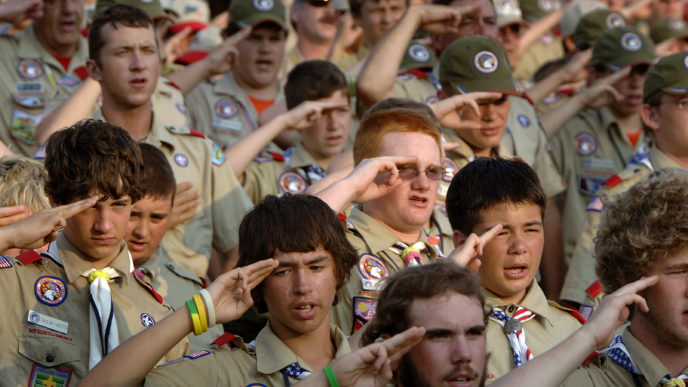
Cub Scouts Facing Transgender Crisis

The Cub Scouts are facing a transgender controversy after an eight-year-old born a girl but who identifies as a boy was asked to leave a New Jersey pack.

Several readers alerted me to this story from Secaucus, New Jersey. Before I get into the heart of the issue, I want to explain why I have chosen not to identify the parent or the child.

I find it reprehensible a grown woman would parade her child in front of the national media to advance some sort of cultural agenda. This parent is sacrificing her child’s privacy and innocence for 15 minutes of fame. And I refuse to give the woman the satisfaction of reading her name in print.

The eight-year-old, who had been a member of the scouting group for about a month, was kicked out of Cub Scout Pack 87 because she is transgender. Local news accounts indicate an unknown number of parents were upset their sons were in a scouting group with a girl who identifies as a boy . . .

But the Boy Scouts of America defended the child’s ouster, pointing out to the newspaper the “child does not meet the requirements to participate in this program.” “Gender identity isn’t related to sexual orientation,” BSA spokesperson Effie Delimarkos told the New York Daily News. (Read more from “Cub Scouts Facing Transgender Crisis” HERE)

Follow Joe Miller on Twitter HERE and Facebook HERE.

Looking Back: A Snapshot of Religious Liberty in 2016

It’s been a difficult year for religious freedom in America, but the future holds “huge windows of opportunity,” says Kelly Shackelford, constitutional attorney and president of the non-profit religious liberty law firm First Liberty Institute.

Shackelford spoke with The Stream regarding the state of religious freedom in 2016, and what Americans need to watch out for in the future.

“The biggest danger area is religious liberty in the workplace,” Shackelford said, citing people like lay-minister Eric Walsh, bakers Aaron and Melissa Klein, and Marine Monifa Sterling (whose case has been appealed to the U.S. Supreme Court) as examples of people who have lost their jobs because of their religious beliefs.

“It is very dangerous if religious freedom is banned from the place people spend most of their waking hours,” Shackelford said. “If people are forced to choose between feeding their family and religious freedom, religious freedom could disappear.”

Crack Down on Religious Expression

2016 saw an “increase in attacks on religious liberty,” Shackelford said. He said that one incident that “stands out” is the case of Oscar Rodriguez, an Air Force veteran who was physically removed from a colleague’s retirement ceremony because he was giving a flag-folding speech that included the word “God.”

“It was a first, with uniformed military laying hands on a citizen because he mentioned God,” Shackelford said.

While the assault on Rodriguez’s free religious expression was physical and blatant, others were more subtle.

In September, the U.S. Commission on Civil Rights issued a report that called religious freedom a code word for intolerance. Martin Castro, author of the 307-page report entitled Peaceful Coexistence: Reconciling Nondiscrimination Principles with Civil Liberties, wrote:

The phrases “religious liberty” and “religious freedom” will stand for nothing except hypocrisy so long as they remain code words for discrimination, intolerance, racism, sexism, homophobia, Islamophobia, Christian supremacy or any form of intolerance.

As Stream senior editor Tom Gilson wrote in a response:

He’s [Castro’s] pronouncing conservative Christian doctrine wrong. That’s not his job. Apparently he doesn’t know that the First Amendment was written to prevent governmental officials from giving one religious doctrine preference over another.

Some states implemented policies aligning with Castro’s logic, passing so-called anti-discrimination regulations that mandating how businesses, including churches, can use their facilities or talk about gender. In effect, laws like these could result in punishment for religious groups and churches who adhere to a biblical understanding of gender and sexuality.

Churches in Iowa and Michigan pushed back.

Both First Liberty Institute and Alliance Defending Freedom (ADF), another non-profit legal group, represented churches in Iowa that challenged a policy published by the state’s Civil Rights Commission, which defined churches as places of public accommodation, making them subject to the Commission’s rules regarding the use of bathroom facilities and speech regarding gender.

ADF also helped a church in Michigan challenge a law that would have potentially jailed pastors who spoke against same-sex marriage.

Both the Iowa Commission and Michigan backed off of or altered the regulations after legal action from First liberty and ADF.

Several religious groups and faith-based non-profits also faced a dilemma under Obamacare’s Health and Human Services (HHS) mandate, which requires employers to cover contraceptives for their employees.

While the Supreme Court case Burwell v. Hobby Lobby settled the issue in favor of faith-based for-profit businesses in 2014, religious non-profit groups fought the mandate in 2016.

A group of nuns called the Little Sisters of the Poor became the face of the battle, leading the non-profit fight against the HHS mandate in the Supreme Court case Zubik v. Burwell.

While the Supreme Court didn’t explicitly rule in the nuns’ favor, it also declined to rule against them, instead sending the case back to lower courts to be worked out between the opposing parties.

Election 2016

Religious liberty became a hot issue for both sides during the election season. President-elect Donald Trump frequently advocated the repeal of the Johnson Amendment of 1954 that prevents pastors from endorsing political candidates.

Democratic nominee Hillary Clinton repeatedly criticized Trump for his 2015 statement proposing a ban on all Muslim immigrants, which at the time also drew heavy criticism from Republicans, including now-Vice President-elect Mike Pence.

Trump’s team has since clarified his official position and denied that Trump would support an immigration ban based solely on someone’s religious beliefs; rather advocating for “extreme vetting” and a potential ban on immigration from certain countries where terrorist activity is high.

The Republican and Democratic platforms differed starkly when it came to religious liberty, as Stream contributor Maggie Gallagher reported in August, writing that “the Republican platform promises a strong, deep, philosophically grounded promise to protect and defend religious liberty.”

“This is about as strong (on religious liberty) as the Democrats promise to be,” Gallagher wrote of the Democratic platform, quoting from it: “We support a progressive vision of religious freedom that respects pluralism and rejects the misuse of religion to discriminate.”

Stream contributor and professor George Yancey suggested in November after the election that Progressives’ hostility to the religious liberty of Christians is one reason so many conservatives voted for Trump, despite other misgivings about his candidacy.

Michael Wear, a Christian and former Obama White House staffer, suggested something similar in an interview with The Atlantic published Thursday entitled “Democrats Have a Religion Problem.” Wear said of Democrats, “It doesn’t help you win elections if you’re openly disdainful toward the driving force in many Americans’ lives.”

The election results leave Shackelford optimistic about the future of religious freedom. “I see huge windows of opportunity to advance religious freedom under the new administration,” he said. “There should be a big change in the hundreds of judges appointed being more favorable to religious freedom and the Constitution.” (For more from the author of “Looking Back: A Snapshot of Religious Liberty in 2016” please click HERE)

Follow Joe Miller on Twitter HERE and Facebook HERE.

Catholic Groups Sue Obama Administration Over ‘Transgender Mandate’

Two Catholic groups have sued the Obama administration to halt a mandate requiring them to perform abortions and gender identity surgeries or provide insurance that will pay for them.

In a lawsuit filed on December 28, the Catholic Benefits Association (CBA) and the Catholic Diocese of Fargo say Obama administration’s regulations violate their groups’ religious beliefs. They also say the rules express a political agenda, not sound science.

“For decades, Congress and the courts have understood the term ‘sex’ in federal law to mean biological sex – male and female,” Archbishop William Lori, chairman of the Catholic Benefits Association, said in a press statement. “By redefining ‘sex’ to mean both ‘gender identity’ and ‘termination of pregnancy,’ the Obama administration is not only trying to sidestep Congress and impose radical new healthcare mandates on hospitals and employers, it is creating a moral problem for Catholic employers that must be addressed.”

The “Transgender Mandate”

The CBA and the diocese are not the first organizations to file a lawsuit against the mandate. Earlier this year, five states (Kansas, Kentucky, Nebraska, Texas and Wisconsin) and multiple Christian-based groups sued the federal government over the “transgender mandate.”

The mandate is based upon the same section of the Affordable Care Act that the administration insists requires even religious institutions to provide insurance covering contraceptives, sterilization and abortifacients. That mandate has twice gone to the U.S. Supreme Court, where it lost once and was sent back to lower courts.

According to the lawsuit, provided to The Stream, the Department of Health & Human Services’s regulation is an “expansive interpretation” of one section of the Affordable Care Act. The HHS used “a little-remarked-upon section of the ACA that prohibits discrimination ‘on the basis of sex’” to create “a mandate that coerces” Catholic institutions to perform or pay for sex-change surgery and abortions.

The regulation says (see page 31387 in the Federal Register) that “the term ‘on the basis of sex’ includes, but is not limited to, discrimination on the basis of pregnancy, false pregnancy, termination of pregnancy, or recovery therefrom, childbirth or related medical conditions, sex stereotyping, and gender identity.”

HHS justified its interpretation by appeal to Title IX regulations, rulings by the Supreme Court and other courts, and previous decisions by federal agencies. According to the National Center for Transgender Equality, which praised the regulations, this wording “make illegal the practice of categorically excluding all gender transition-related health care from coverage.” It will apply to companies that have a federal contract or receive federal funds, including Catholic hospitals and ministries.

What CBA Wants

In a press call, CBA’s general counsel Martin Nussbaum told The Stream and other outlets that CBA objects to the mandate for many legal and constitutional reasons. In its press release, the CBA claimed the government was violating the Administrative Procedure Act, the Religious Freedom Restoration Act and other federal laws, as well as the First Amendment.

In a follow-up email, Nussbaum told The Stream that the CBA has asked for “injunctive relief,” asking to court to tell the HHS to stop trying to force groups to accept the mandate. The CBA has also asked for “declaratory relief,” a judgment that the agency has no legal basis to enforce the mandate. The goal is making sure its members can “conduct their ministries and work consistent with their religious beliefs.”

Legal Complexities

CBA CEO Douglas Wilson accused the regulations of harming patients instead of helping them. The mandate is “shoddy science,” he said. “HHS’s own experts agree that these procedures can harm patients with gender dysphoria in ways that are often irreversible.”

Nussbaum told The Stream that the mandate is in effect even after President Barack Obama leaves office on January 20. “The orders, regulations and opinions issued by DOE, HHS and EEOC under this administration continue in force when a new president takes office.

Unfortunately, “Some of these have now morphed into judicial and quasi-judicial decisions that are either binding or persuasive precedents.” The new administration cannot undo those decisions by itself. Such actions from a Trump administration “would be a help,” Nussbaum admitted.

“For many CBA members, [judicial] relief would protect them from potentially fatal enforcement actions,” concluded Nussbaum, who in a press statement also accused the Obama administration of engaging in a “continued assault on religious freedom.” (For more from the author of “Catholic Groups Sue Obama Administration Over ‘Transgender Mandate'” please click HERE)

Follow Joe Miller on Twitter HERE and Facebook HERE.

Election Ushers in Batch of States Preparing for Right-To-Work Laws

Not only did the 2016 election bring the country a new president, but Nov. 8 also ushered in the right political environment for a batch of states to pass right-to-work bills.

Twenty-six states have right-to-work laws on the books, and labor experts are expecting lawmakers in at least three more—Kentucky, Missouri, and New Hampshire—to pass bills giving workers the power to choose whether they want to join a union or pay union dues.

“2016 was sort of the tipping-point year for right to work,” Ben Wilterdink, director of the commerce, insurance, and economic development task force at the American Legislative Exchange Council, or ALEC, told The Daily Signal.

“We just got 26 states signed on, and that was the tipping point, and we’ve crossed that threshold,” he continued. “2017 is now going to be the year of right to work.”

In Kentucky, Missouri, and New Hampshire, last month’s election resulted in a flip in party leadership in either governors’ mansions or state legislatures, which put previously defeated right-to-work legislation back on the table.

The issue pits the business community against labor unions, and has proved to be a contentious one for both parties.

Proponents of right-to-work laws argue that they force unions to become more accountable to their members and make states more attractive to companies looking to move.

But unions fiercely oppose right-to-work legislation and say that not only do such laws harm union membership, but they also lead to decreased wages and benefits.

Still, labor experts say they believe that the political landscapes in Kentucky, Missouri, and New Hampshire have created a prime opportunity for right-to-work laws to pass in each of those states.

“The world changed in November of 2016, and advocates of labor reform and for worker freedom are emboldened,” Vincent Vernuccio, director of labor policy at the Mackinac Center in Michigan, told The Daily Signal. “While you’ve seen the fire of worker freedom spreading brightly across the country, it’s now raging thanks to the November election.”

Kentucky

According to Dave Adkisson, president of the Kentucky Chamber of Commerce, right to work has been a priority of the business community in the Bluegrass State for at least 30 years.

Republicans in the state Senate have pursued right-to-work legislation in the past, but the bills died in the state House of Representatives, which was controlled by Democrats.

But last month, Kentucky voters gave Republicans control of the state House for the first time in more than 90 years.

Now, with a GOP trifecta in the state Senate, state House, and the governor’s mansion—Gov. Matt Bevin, a Republican, was elected to a four-year term in 2015—Adkisson said business leaders are “almost to the point of [being] giddy.”

“One of the key elements of the labor argument is that right to work doesn’t matter to business, that they choose locations for other reasons,” Adkisson told The Daily Signal. “I can assure you that business leaders consider right to work as a major signal about whether a state is pro-business or not.”

Adkisson said international firms will typically hire consultants to help determine where in the U.S. they should move, and many of those consultants will “start their search only considering right-to-work states.”

For Kentucky, that ultimately meant losing out on economic development opportunities.

“Companies are not going to relocate to a place where they don’t think they can get a workforce, but invariably in that top list of factors is right to work,” Adkisson said. “You want to at least make the long list to be considered.”

Until recently, business leaders, particularly those in Louisville, were more “fatalistic” about right to work not passing Kentucky’s state Legislature.

But when Indiana—Kentucky’s neighbor to the north—passed a right-to-work law in 2012, “that suddenly got the attention of Louisville,” Adkisson said, in part because Indiana appeared “more pro-business.”

“It’s just a general issue of competitiveness,” he said.

Kentucky state legislators will meet for a shortened session, just 30 days, in January, so they have a tight timeline to pass right-to-work legislation.

Bevin said in September he wanted to see the state Legislature tackle right to work next year, but in an interview with the Paducah Sun earlier this month, he said he would allow the Legislature to decide how to address a bevy of issues they’ll face next year.

“I know people want to see right to work addressed, they want prevailing wage addressed, they want school choice addressed, they want tort reform addressed, they want tax reform addressed, they want pension reform addressed,” he said.

Still, labor experts say they are hopeful.

“Kentucky has demonstrated that the state is ready,” Jonathan Williams, vice president of the Center for State Fiscal Reform at ALEC, told The Daily Signal. “I’d expect it within the first half of the year.”

Missouri

While the success of right to work in Kentucky hinged on the makeup of the state Legislature, it was the election of Republican gubernatorial candidate Eric Greitens in Missouri that bolstered Republicans’ attempts to pass right-to-work laws in the Show-Me State.

Greitens, who defeated Democratic nominee Chris Koster last month, has stressed his support for right-to-work laws.

“I support it because it would stop companies and union bosses from taking a cut of your paycheck to support their political organization,” Greitens said of right to work on his campaign website. “It’s just common sense. That money is your money—and you should decide how you want to spend it.”

Republicans have a supermajority in the state House of Representatives and the state Senate, and already, GOP state lawmakers in both chambers have prefiled right-to-work bills for the 2017 legislative session.

“It’s going to be a race to see who is state 27, 28, and 29,” Vernuccio said.

New Hampshire

Williams, of ALEC, said Kentucky and Missouri are the “low-hanging fruit” for right-to-work proponents.

Though he and other labor experts are hopeful New Hampshire will join their ranks next year, New Hampshire is “somewhat on the bubble,” he said.

Republicans will control the state Legislature and the governor’s mansion in the Granite State after voters elected Republican Chris Sununu governor in November.

Sununu supports right to work and said earlier this month he’s “fairly” confident state lawmakers will pass right-to-work legislation next year.

“I’ve talked to businesses outside of this state that have clearly brought it up to me, so there’s no doubt by passing right to work, it will open up new economic opportunities for the state of New Hampshire,” he said in an interview with the New Hampshire Union Leader.

Still, the governor-elect encouraged state lawmakers to “be good listeners on both sides of the aisle.”

State lawmakers in the New Hampshire House passed a right-to-work bill last year, but it didn’t make it out of the Senate.

Though Republicans control the state government, Williams said there has been resistance among the GOP’s ranks.

Additionally, Democratic state Sen. Lou D’Allesandro of Manchester told the Union Leader opponents of right to work “have a good chance to stop it.”

Also at issue in New Hampshire is the dearth of other right-to-work states in the New England region.

Kentucky and Missouri are surrounded by states with right-to-work laws on the books, so they compete with others for business opportunities.

For New Hampshire, which would be the first in the region to become right to work, that competition doesn’t exist.

“There’s less pressure on them to get this across the finish line,” Wilterdink said.

Still, Williams said success in New Hampshire would be a “symbolic victory for conservatives.”

“If you saw the first state in New England become a right-to-work state—it’s been a tough region for conservatives to crack,” he said. “It would embolden right-of-center officials to push harder.”

Growing Momentum

Labor experts are confident that by the end of 2017, the number of right-to-work states will hover around 30.

Though they’re certain Kentucky and Missouri, at a minimum, will pass right-to-work laws, Wilterdink said lawmakers in three more states—Delaware, Pennsylvania, and New Mexico—will at least consider bills to make right to work a reality.

“We’re seeing a lot of movement and a lot of pressure, especially as businesses look at other states, especially as more and more states become right to work,” Wilterdink said. “States and their citizens are realizing they’re missing out.”

Republicans in Pennsylvania introduced right-to-work bills in the past, without success.

Earlier this year, New Mexico Gov. Susana Martinez committed to including right to work on her agenda for the 2016 legislative session.

Right-to-work bills have also been introduced in the Delaware General Assembly, but they were ultimately blocked by Democrats who control both chambers.

“This is a jobs bill in the states,” Williams said. “As more and more legislators are elected and looking for ways to make their states more competitive in growing jobs, we’ve continued to see businesses move from one state to another with better climates. This is one of the best things states can do.” (For more from the author of “Election Ushers in Batch of States Preparing for Right-To-Work Laws” please click HERE)

Follow Joe Miller on Twitter HERE and Facebook HERE.

The Founders Anticipated ‘Fake News.’ Here’s What They Did About It.

Following the presidential election, numerous stories surfaced about how “fake news” influenced the results. This prompted a reaction from the media and a concerted effort by the social media giant Facebook to crack down on the phenomenon—announcing that it would in part by using liberal fact-checkers to distinguish the “real” from the “fake” news.

The truth is that while the American media landscape has been in a constant state of change over two centuries, the spread of hyperpartisan, scurrilous, and even phony news stories has been more common than uncommon throughout the history of the republic.

Ultimately, despite the increasingly Wild West state of journalism, Americans have been better at finding the truth than less free societies.

The media response frames the fake news issue as nearly the single greatest threat to democracy in our time. But despite the worries that surround an uptick in fraudulent news, the phenomenon is nothing new, nor does it particularly portend dark times in America’s future.

The overreaction in response, potentially damaging both the right to free speech and a culture that supports it, may be more dangerous to a free society.

‘Dupes of Pretended Patriots’

The idea that the press could try to deceive rather than enlighten readers was not lost on the Founders. In the years before and after the American Revolution there was an explosion of printing presses throughout the Western world as improved printing technology was becoming widely available.

Journalists and pamphleteers were certainly vital to spreading the ideas of American rebellion against the English—names like Thomas Paine and Samuel Adams were nearly synonymous with the American Revolution, and they certainly weren’t alone. Though propaganda and distortion of the news were common as well.

After America gained independence, there were still huge numbers of scribblers writing about news and politics with varying levels of credibility and accuracy.

When the framers of the Constitution met to discuss the construction of the new government at the Constitutional Convention in 1787, freedom of the press and what it would mean for the future of the country was certainly on their minds.

Many Founders fretted about what the proliferation of false or destructive notions would mean for the idea of democracy and a society of mass political participation.

Massachusetts delegate Elbridge Gerry lamented how the people in his home state were being led astray by false stories from malcontents and manipulators.

“The people do not want [lack] virtue, but are the dupes of pretended patriots,” Gerry said. “In Massachusetts it had been fully confirmed by experience, that they are daily misled into the most baneful measures and opinions, by the false reports circulated by designing men, and which no one on the spot can refute.”

So what did the Founders do to stop this problem? They created a system of government that would allow room for democracy, yet checked its vices: through institutions like Congress, the constitutional amendment process, and division of power between branches of government as well as the states and federal government. Not to mention the Electoral College, which the modern left now decries as unfair and undemocratic.

Unfortunately, some of these checks have been eroded over time and continue to be undermined. For instance, the 17th Amendment forced states to elect senators through a popular vote rather than have the state legislature choose a representative, which has reduced the power of the states in the American system.

And in some states, like California, the requirement to pass a constitutional amendment is simply 50 percent of the vote plus one, yet again increasing the chance that a temporary excitement of the populace can lead to rapid, negative changes in governance.

The weakening of the structural checks on democracy has been the greater threat of fake news’ proliferation than nonsense peddlers themselves.

Tocqueville on the ‘Liberty of the Press’

It was not only the Founders who understood the trade-offs between a free press and misleading news. Alexis de Tocqueville, the famed French observer of American life, wrote about the freedom of the press in his 1835 book “Democracy in America.”

Tocqueville noted that when he arrived in the U.S., the very first newspaper article he read was an overheated piece accusing then-President Andrew Jackson of being a “heartless despot, solely occupied with the preservation of his own authority” and a “gamester” who ruled by corruption. This type of account was not unusual.

The years following the founding saw a booming and free-wheeling publishing industry, unimpeded by the licensing and restrictions common in other countries. Freedom allowed newspapers to proliferate throughout the United States in a highly decentralized way.

And in early American history, most newspapers were expressly partisan or outright controlled by individual politicians. They often aggressively attacked and made outrageous comments about political opponents.

Yet Tocqueville wrote that despite the general vehemence of the press, America was further from actual violence and political revolution than other societies that tightly controlled information.

While recognizing the occasional problems of an unimpeded fourth estate, Tocqueville wrote that “in order to enjoy the inestimable benefits that the liberty of the press ensures, it is necessary to submit to the inevitable evils that it creates.”

An attempt to submit “false” news and opinions through an official fact-checker would likely only elevate and perhaps justify a false opinion in the minds of the people, according to Tocqueville.

He continued to write that expecting to have the good of a free press without the bad has been “one of those illusions which commonly mislead nations in their times of sickness when, tired with faction and exhausted by effort, they attempt to make hostile opinions and contrary principles coexist upon the same soil.”

Americans were so used to being bombarded with opinions and information from a diverse media, Tocqueville wrote, that they were less likely to react to falsehoods and outrageous opinions.

Fake News existed in that time as well as ours, but it did little to outright convince people to change their views. This continues to be the case today.

Tocqueville concluded of a free press:

When the right of every citizen to a share in the government of society is acknowledged, everyone must be presumed to be able to choose between the various opinions of his contemporaries and to appreciate the different facts from which inferences may be drawn. The sovereignty of the people and the liberty of the press may therefore be regarded as correlative, just as the censorship of the press and universal suffrage are two things which are irreconcilably opposed and which cannot long be retained among the institutions of the same people.

The visiting Frenchman understood what Americans have almost always believed. Occasional false news stories cannot destroy a society fitted for liberty, but extreme efforts to contain them will.

The Search for Truth

The reality is, barriers to prevent modern Americans from receiving “fake news” are unlikely to succeed in a free society where a mass of information is readily available.

The internet, and a lack of trust in the legacy media, has allowed numerous new media publications to find success. It has again radically decentralized the way Americans get their information.

These legacy media organizations are attempting to reign in the chaos with new gimmicks like fact-checkers, but ultimately their influence and credibility are fading in the minds of Americans as fewer people trust or desire to read those sources.

This isn’t an anomaly in American life—it has been the norm. We must trust and maintain the mediating constitutional system the Founders created along the judgment of the American people.

The freedom of the press, enshrined in the First Amendment and tempered by institutions designed to slow governmental change and thwart temporary excitements of opinion, created a nation incredibly free, yet robust enough to withstand potential large-scale errors in judgment.

The Founders understood that the good would outweigh the bad with a free press, and no court could justly measure the rightness or wrongness of news and public opinion. They realized that without allowing the press to operate freely and leaving the people as its ultimate tribunal, America would never truly be a land of liberty.

Fake or biased news was the willingly paid price of an open society, and the winnowing process of the American system ultimately leads the country toward the truth. (For more from the author of “The Founders Anticipated ‘Fake News.’ Here’s What They Did About It.” please click HERE)

Follow Joe Miller on Twitter HERE and Facebook HERE.