
What If the Government Actually Banned Coal, Oil, and Natural Gas?

Xiuhtezcatl Martinez is not your typical teenager.

The 16-year-old hip-hop artist and global warming activist with the nonprofit Earth Guardians has been dubbed the “anti-Bieber.” He “rallies supporters of every age and creed through school presentations, his unique brand of eco hip-hop, and heartfelt speeches,” according to the Natural Resources Defense Council.

Xiuhtezcatl, from Boulder, Colorado, also is petitioning the presidential candidates to implement policies eliminating the use of all fossil fuels in America by 2026. He challenges them to “be the leader [his] generation demands.”

But what would happen if politicians actually cut off all use of so-called fossil fuels—including coal, natural gas, and petroleum—in the next 10 years, as this idealistic teenager exhorts the next president to do?

What if the government implemented policies, mandates, and taxes to restrict Americans’ energy choices artificially?

Conventional fuels, in many respects, are the backbone of the American way of life. Artificially eliminating them would have an enormously negative impact.

It’s fairly common knowledge that Americans use coal and natural gas to power homes, vehicles, businesses, schools, and hospitals. In fact, the United States gets 81 percent of all its energy from oil, coal, and natural gas.

What’s less known is that conventional fuels go beyond providing energy for Americans. Petroleum and natural gas are used to make thousands of everyday items—aspirin, toothpaste, sunglasses, shoes, tires, shag rugs, and tennis balls, to name a few.

In fact, roughly 20 percent of oil refined in the U.S. is used for plastics, chemicals, and rubber products. Indeed, America relies on natural gas and oil for a vast variety of uses.

Ultimately, policies that prohibit the use of conventional fuels would impede these lesser known but no less valuable uses.

What’s more, the push to eliminate conventional fuels ignores the fact that these fuels, especially natural gas, are efficient, abundant, and environmentally sound sources of energy. There will be no shortage of these resources anytime soon, and more are being found all the time, thanks to advances in technology.

Even if these resources were to run out soon, prices would reflect that and markets would shift to finding innovative alternatives borne out of necessity rather than arbitrary restrictions that keep resources in the ground.

And as producers of electricity, both coal and natural gas have higher efficiency rates—the “capacity factor”—than other energy sources such as wind and solar. Oil-based gasoline is 33 percent more powerful than ethanol.

Policies to eliminate conventional fuels also would put a lot of folks out of work.

Roughly 538,000 Americans work in the oil and natural gas industry. Around 75,000 work in the coal industry. Millions more have jobs that are supported by these industries. Nearly every product and service made in America at some point relied on conventional energy sources.

Americans not only would face significant lifestyle changes, many would lose their entire livelihoods. It’s not just the American way of life that would be lost, either—fossil fuels have raised people around the world out of poverty and into healthier, safer lives.

The kicker is, while forgoing all of these benefits, policies forbidding the use of conventional energy wouldn’t have the impact on global warming that Xiuhtezcatl Martinez hopes for. If the U.S. eliminated all carbon dioxide emissions, only 0.137 degree Celsius would be averted by the year 2100.

Arbitrarily banning all conventional fuels isn’t the answer. Young or old, Americans should be wary as their government considers such drastic, harmful policies. (For more from the author of “What If the Government Actually Banned Coal, Oil, and Natural Gas?” please click HERE)

Follow Joe Miller on Twitter HERE and Facebook HERE.

How Putin Hoodwinked the Political Right

It’s easy to see why Vladimir Putin has emerged as the lodestar of certain elements of the political right across the West. Russia’s president poses as the champion of nationalism vs. rampant transnationalism, of Christianity vs. secularism, and of European identity in general.

These are battles that set conservatives’ teeth on edge. The political left in the West has for decades been relentless in its support for global governance, for limiting Christianity’s moral imprint on policymaking, and for stigmatizing the West in general.

But conservatives can certainly find a better champion for these causes than the former KGB agent who publicly pines for the supranational Soviet Union, presides over a society replete with social ills, and does not miss an opportunity to promote Russia not as a Western power but as an Asian one.

It is an astonishing trifecta that Putin has worked very hard to accomplish.

On transnationalism, for example, Putin has posed as an enthusiastic supporter of the United Kingdom leaving that most dysfunctional of supranational organizations, the European Union. “No one likes to feed and subsidize weaker countries and be a caretaker all the time,” Interfax quoted Putin as saying.

On Christianity, when Metropolitan Hilarion of the Russian Orthodox Church pleaded with Putin to become the defender of the Christian faith around the world, Putin reassured him that “you needn’t have any doubt that that’s the way it will be,” according to Russia’s Interfax.

With religion, Putin is relying on more than his own propaganda. Since the 1500s, Russia has put forward the vague notion that it is the “Third Rome”—the rightful successor to Rome and Byzantium as the center of Christianity. The claim was supposedly first made by the monk Filofei of the Pskov-Eliazarov monastery in two epistles which, unsurprisingly for Russia, have gone missing.

Fast forward five centuries, and Putin’s vow to Hilarion was enthusiastically endorsed by Washington evangelical outlet Christian Post, which explained that “Putin has long been a supporter of Christianity and Christian values within Russia.”

When visiting Hungary’s Prime Minister Victor Orban this year, Putin praised his anti-immigrant positions by stating that what Orban was doing was “to defend European identity.” That, he said according to a translation by RT, “is likable to us.”

Small wonder perhaps that Europe’s right-wing leaders are smitten with Putin, seeing in him the leader who will defend Europe from the spiritual decadence they accuse the United States of spreading. The leader of France’s anti-immigrant National Front, Marine Le Pen, recently said of Putin that “we are defending common values … the Christian heritage of European civilization.”

Even Putin’s main protégé in the Mideast, the Syrian dictator Bashar Assad, says piously that “Vladimir Putin is the sole defender of Christian civilization one can rely on.”

At home, Putin uses this international support to show his conservative bona fides. “We know that there are more and more people in the world who support our position on defending traditional values that have made up the spiritual and moral foundation of civilization in every nation for thousands of years: the values of traditional families, real human life, including religious life, not just material existence but also spirituality,” he told the federal assembly in 2013. “Of course, this is a conservative position.”

When it suits him.

As the Tory policy adviser Peter Franklin puts it, “If Putin wants to be seen as a defender of ‘traditional values’ and ‘spirituality,’ then why the diplomatic coziness with the likes of China, Cuba, and North Korea? There’s nothing spiritual about a communist dictatorship.” Or the butcher Assad, for that matter.

“The whole thing is a joke,” said David Kramer, a Russian expert who served as former assistant secretary of state for democracy, human rights and labor. “The only thing that matters to Putin is staying in power.”

Putin in fact seems more of the school of Kremlin leaders who feel more the gravitational pull of the other half of Russia’s identity—the Asian part, like Joe Stalin telling a Japanese diplomat once, “Russia is an Asiatic country, and I am myself an Asiatic.”

Thus Putin has pursued a “Eurasian Union” that brings together European former Soviet republics such as Belarus and Armenia with non-European ones such as Kazakstan, Kyrgyzstan, and Tajikistan. It’s been envisioned as a customs union, but Putin has more grandiose plans. “We suggest a powerful supranational association capable of becoming one of the poles in the modern world,” he wrote in 2011.

The union has foundered, but that has only made Putin reach further east. Last month he actually proposed to Beijing to expand the Eurasian Union by including China, India, Iran, and Pakistan.

Even the Putin-controlled RBTH observed five years ago that “he seems more comfortable at Shanghai Cooperation Organization and BRICS meetings than he is at the G8. ‘The West treats us like we just came down from the trees,’ Putin once remarked.”

At home, Putin presides over a nation that is hardly puritanical. Russia has the world’s highest divorce rate, the highest rate of injecting drug users, and one of the highest rates of alcoholism in Europe, while abortions last year reached almost a million. Unsurprisingly, Russia population has declined under Putin.

Observers point out that the support Putin receives from some quarters may have less to do with policy than with the fact he finances many of these parties. In France, Le Pen’s Front National has received at least 40 million euros from Russian-controlled banks. According to a paper, far-right parties from Hungary to Bulgaria to Austria all receive funding from Putin-controlled entities.

Equally, it comes in handy that Russian disinformation campaigns have succeeded in spreading Moscow’s propaganda throughout the West, through such outlets as RT. (For more from the author of “How Putin Hoodwinked the Political Right” please click HERE)

Follow Joe Miller on Twitter HERE and Facebook HERE.

Hillary Was a Corporate Lawyer. A Children’s Advocate? Yes, but…

Speakers at the Democratic National Convention have spent the better part of the last week crowing about Hillary Clinton’s career in law, ostensibly the story of a journeyman advocate organizing for children.

“It was at the Children’s Defense Fund that I met Hillary,” said incoming Democratic National Committee chair Donna Brazile. “Steel in her spine, Hillary didn’t want to talk about anything other than how to make children’s lives better.”

New York Sen. Kirsten Gillibrand was similarly effusive in her praise of Clinton’s career at the bar in the service of the marginalized. “We have a responsibility to one another,” she said. “It’s about who we are as a nation. It’s why after law school, she could have gone to a fancy law firm, but she chose to work at the Children’s Defense Fund, where she advocated for children with disabilities.”

The reality of Mrs. Clinton’s law career is more complicated.

Before graduating from Yale Law School in 1973, Mrs. Clinton moved in various legal circles of the New Left, often donating spare time to radical causes. She spent the summer of 1971 in California as a summer associate at Treuhaft, Walker, and Bernstein, an Oakland based firm founded by members of the American Communist Party. The firm represented Vietnam protestors at the University of California at Berkley as well as the Black Panther Party, a black power militant group.

On taking her J.D. in 1973, she sat for the D.C. and Arkansas bar exams, marking a fairly prosaic start to her career as a legal practitioner. Clinton failed the D.C. bar exam, an experience Pulitzer Prize-winning journalist Carl Bernstein characterized as a spectacular flameout in his 2007 biography of the Democratic presidential nominee.

“Of 817 applicants, 551 of her peers had passed, most from law schools less prestigious than Yale,” he said of the experience, noting that the D.C. bar was “hardly one of the toughest in the nation.”

She settled in Fayetteville, Arkansas in 1974, becoming one of the first female members of the faculty at University of Arkansas Law School. She gave classes in criminal law and helped establish a legal aid clinic that would lead her to one of her most notorious clients. During the course of her time on the law faculty, Mrs. Clinton staged a successful defense of 41-year-old Thomas Alfred Taylor, an Arkansas man accused of the rape of a 12-year-old girl.

Mrs. Clinton later discussed the case candidly on an audio recording first uncovered by the Washington Free Beacon’s Alana Goodman, telling a journalist named Roy Reed that she harbored little doubt as to his guilt. Still, she helped Taylor duck a harsh sentence.

“Oh he plea bargained,” she told Roy with a brief spout of laughter. “Got him off with time served in the county jail, he’d been in the county jail about two months.”

Simultaneous to Bill Clinton’s election as Arkansas Attorney General in 1977, Mrs. Clinton accepted an offer to join Rose Law Firm a white-shoe Little Rock practice with an august reputation throughout the south. Though she continued to publish about children’s issues in academic journals during this period, her legal work was dedicated almost exclusively to intellectual property and patent infringement law. She was the first woman who made full partner at the firm.

Rose Law grew in stature during Clinton’s tenure, taking on corporate clients and commercial interests with state business. The firm represented Walmart, whose corporate headquarters are in Bentonville, Ark., and TCBY, a major frozen yogurt franchise based in Little Rock.

Mrs. Clinton joined both corporate boards in the mid 1980s. With Mrs. Clinton on the firm masthead, Rose lawyers enjoyed unprecedented access to state legislators and regulators, a major selling point to out-of-state businesses attempting to navigate Arkansas’s regulatory regime. Firm partner William H. Kennedy III characterized Clinton as the firm’s “rainmaker,” in 1992.

The firm’s billable hours soared in the 1980s, due in no small measure to Clinton’s influence in her husband’s state house. Federal filings obtained by the New York Times indicate firm partners collected some of the highest billables in the state. Nor was her leverage exclusive to private practice — former Bill Clinton aides say Mrs. Clinton was regularly in the governor’s confidence when selecting appointees for the state bench.

Stature and scrutiny grew in equal measure for Mrs. Clinton, such that her time with the firm found itself on the business end of federal investigation during the 1992 presidential campaign, sprawling into a full-fledged congressional probe that engulfed her husband’s first term as president.

Though Mr. Clinton’s financial ties to the toxic Whitewater Development Corporation were themselves the subject of protracted inquiry, federal investigators determined that Rose Law’s role in brokering transactions were intended to deceive federal investigators.

Mrs. Clinton billed 60 hours over a year and a half on the case, which included at least a dozen meetings with one Seth Ward, an individual who federal regulators said facilitated illegal straw purchases. Missing records corroborating the billings and the meetings under subpoena for two years were later recovered in Mrs. Clinton’s book room in the White House residence.

Mrs. Clinton did in fact give time to pro bono representation at Rose Law. She was frequently granted leave from the firm to coordinate state initiatives, including a task force on rural poverty and the Arkansas Educational Standards Committee, leading a lengthy but ultimately successful fight against state-mandated standards, testing and class sizes.

While in Arkansas she also cofounded Arkansas Advocates for Children and Families, a Children’s Defense Fund aligned group, and served in the Carter administration as chair of the Legal Services Corporation, all accomplishments for which the future presidential nominee was rained with accolades.

Nevertheless, discussion of her decades old ties to the South’s most prestigious firms, her corporate clients and the blemishes on her pro bono record have been conspicuously absent in a year dominated by anti-establishment rage. (For more from the author of “Hillary Was a Corporate Lawyer. A Children’s Advocate? Yes, but…” please click HERE)

Follow Joe Miller on Twitter HERE and Facebook HERE.

INSANE Court Nixes NC Voter ID Law, Smears Every Thinking Person as Racist

Here we go again: I sound like a broken record by now, but yet another court has thrown out a voter ID law. Last week, the Fifth Circuit gutted Texas’s voter ID law under the ludicrous notion that it discriminates against minorities. Today, the Fourth Circuit overturned North Carolina’s voter ID law and went a step further than the Fifth Circuit, asserting that the law was “passed with racially discriminatory intent.” In addition, they tossed out state laws limiting early voting, same-day registration, out-of-precinct voting, and preregistration—all Democrat election “innovations” that are fraught with fraud and manifestly against our founding concept of Election Day.

As I noted last week, states have full authority over the methods and processes of conducting elections, while the federal courts have no power in that realm.

This ruling comes on the heels of the Fourth Circuit mandating transgender bathrooms and remaking North Carolina’s election maps in middle of the campaign season after millions of dollars and hours logged by volunteers had been spent campaigning in the districts drawn by the duly elected state legislature.

In N.C. State Conference of the NAACP v. Patrick McCrory, Judges Diana Motz, James Wynn, and Henry Floyd invalidated the laws clamping down on non-traditional methods of voting, while the latter two (over the dissent of Motz) agreed to strike down the revised photo ID law as well. We have reached a point in time when all the circuits have codified the entire Democrat Party racial agenda into the Fourteenth Amendment, Civil Rights Act, and Voting Right Act, to the extent that even the most basic laws protecting the franchise of the entire citizenry are thrown out by the courts. The judges openly said that because these laws would result in less Democrat votes, and because most African-Americans vote Democrat, these laws are discriminatory. This ruling comes just a week after a federal judge in Michigan mandated that the state must offer a box on the ballot for straight-ticket voting denoting the Democratic candidates so African-Americans can identify them. This is insane!

This ruling overturns a 485-page district judge’s opinion, which upheld the state laws with unassailable facts and impressive scholarship. The Left will always find a judge at any level willing to enshrine their policies. Conservatives have to win every case, they only have to win once and the law is permanently changed.

As a result of this ruling, one week of early voting and preregistration for 16 and 17-year-olds will be forced upon North Carolina. Practices that our founders would likely have ruled unconstitutional are now being mandated by the courts. The Constitution is unconstitutional.

It has gotten so bad that we can’t even get a circuit split on most issues to even afford the eminent tribunal – the Supreme Court – to render its edict on society. Remember, even the most sacred conscience rights of the Little Sisters of the Poor and similar religious institutions just barely got one circuit to uphold the most foundational of inalienable rights after over a dozen circuits ruled against them. The Supreme Court couldn’t even agree to uphold this sacred right and remanded it back to the lower courts.

There is simply no point to winning elections anymore – on a state or federal level – unless Congress strips the courts of their illegal power grab, and to a certain extent, states begin saying no. The unelected judges are essentially ruling our Constitution and the preamble of the Declaration’s dictate for popular sovereignty – unconstitutional. Disenfranchising the citizenry is something that even King George never did to the colonies in their respective state legislative elections. It makes no sense that the unelected judiciary, especially the lower courts – which themselves are a complete creation of Congress – have such authority.

As Conservative Review’s very own Editor in Chief, Mark Levin, observed over a decade ago in his book, Men in Black, “judges are appointed for life because they are not politicians. And because they’re not politicians, they’re not directly accountable to the people and are not subject to elections.”

Not only will court interference render elections meaningless in terms of pursuing conservative policies, we won’t even have the ability to win elections anymore thanks to the Judiciary’s block and tackle strategy in securing the Democrat voter fraud scheme.

Once again, I urge everyone to pick up a copy of Stolen Sovereignty: How to Stop Unelected Judges from Transforming America. We can’t afford another 50 years of wringing our hands over the courts and merely hoping to change the irremediably broken profession by “appointing better judges.” It will take years before we could even make a dent in the circuits, and as I plan to demonstrate next week, there are a dozen other reasons why this won’t work in the short term and long term.

The legal profession has declared war on the very foundation of our democratic republic and state sovereignty. It’s time to respond in kind. (For more from the author of “INSANE Court Nixes NC Voter ID Law, Smears Every Thinking Person as Racist” please click HERE)

Watch a recent interview with the author below:

Follow Joe Miller on Twitter HERE and Facebook HERE.
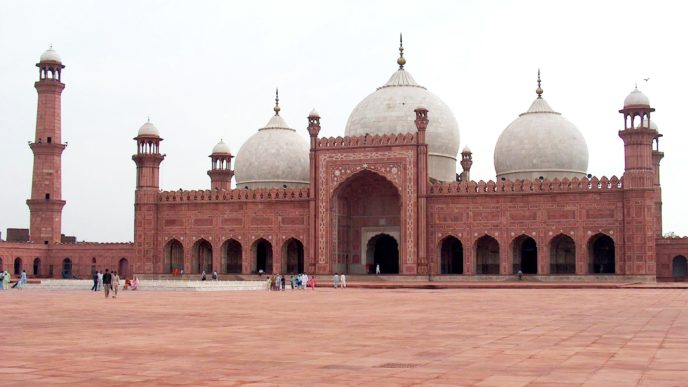
French Prime Minister Plans Ban on Foreign Funding for Mosques

The French government is considering banning the foreign financing of mosques as it reshapes its counter-extremism strategy following a fresh wave of terror attacks.

Manuel Valls, the Prime Minister, told Le Monde the prohibition would be for an indefinite period but gave no further detail on the policy.

“There needs to be a thorough review to form a new relationship with French Islam,” he added.

“We live in a changed era and we must change our behaviour. This is a revolution in our security culture…the fight against radicalisation will be the task of a generation.”

Following the murder of a priest by teenage Isis supporters at a church in Normandy and the Nice attack, Mr Valls said France was “at war” and predicted further atrocities. (Read more from “French Prime Minister Plans Ban on Foreign Funding for Mosques” HERE)

Follow Joe Miller on Twitter HERE and Facebook HERE.

Cops Report Krispy Kreme Doughnut Glaze Is Meth, Orlando Man Says

Krispy Kreme doughnuts are addicting, but eating them isn’t illegal – is it?

No, but an Orlando man said he was arrested because officers mistook glaze from the doughnuts for drugs during a traffic stop.

Orlando police officers stopped Daniel Rushing, 64, for going 42 in a 30-mile-an-hour zone in December. Earlier, the officers observed Rushing go into a store twice without making purchases and became suspicious . . .

“I observed in plain view a rock like substance on the floor board where his feet were,” the officer wrote. “I recognized, through my eleven years of training and experience as a law enforcement officer, the substance to be some sort of narcotic.”

“I kept telling them, ‘That’s … glaze from a doughnut. … They tried to say it was crack cocaine at first, then they said, ‘No, it’s meth, crystal meth,’” [Daniel Rushing] told the Sentinel. (Read more from “Cops Report Krispy Kreme Doughnut Glaze Is Meth, Orlando Man Says” HERE)

Follow Joe Miller on Twitter HERE and Facebook HERE.

Study: The Most Generous Cities All Have This One Thing in Common

In the most generous cities in America, most adults donate overwhelmingly through local churches, according to a new study.

Churchgoing Americans are among the most generous people in the world, and cities with the highest percentage of people who give to charities are also the cities who give most often to churches, a new report from Barna Group finds.

Barna, a research group that focuses “on the intersection of faith and culture,” found the most generous cities by looking at the percentage of adults who make charitable donations on a regular basis.

Ninety-two percent of adults regularly donate to charitable organizations in El Paso, Texas and the nearby Las Cruces, New Mexico. About 74 percent of those who donate regularly give through local churches and religious institutions, Barna found.

The study also shows that the most generous cities are not necessarily the most well-off or economically “upscale.” Barna defines upscale as the percentage of adults with income greater than $75,000 per year, and downscale as adults with household income of less than $20,000 per year. (Read more from “Study: The Most Generous Cities All Have This One Thing in Common” HERE)

Follow Joe Miller on Twitter HERE and Facebook HERE.

Chelsea Clinton’s Dud Speech Full of Gargantuan Contorted Garbage

Chelsea Clinton introduced her mother, Hillary, and just before she walked out on stage, a video of “Hillary Clinton’s life” played. Both instances were an attempt to humanize Hillary, a woman who’s often seen as dry, boring, cold and off-putting. Distraction as a technique is as old as politics itself. Not only did this attempt fail, it shows how desperate Democrats are to keep voter’s focus off her record as a Senator and Secretary of State, and on her charming husband, motherly warmth and grandmotherly affections.

Chelsea Clinton

Following an evening of rousing speeches, including General John Allen and a pep talk by singer Katy Perry, Chelsea Clinton had the honor of introducing her mother. The final speech on the final night of the convention is the grand finale — the epic moment everyone is there for — no doubt she was tasked with continuing to build the momentum. Unfortunately, Chelsea’s delivery was rigid, dry, boring and predicable. Her tone sounded flat, her stories, one-dimensional and unmoving.

Had this been Chelsea’s first time giving such a speech to such a large audience, a pass might be in order. But Chelsea has literally been immersed in the realm of politics for so long, she undoubtedly is either completely jaded and this speech was a farce — or she actually believes this is real. Either way, she’s had many years to practice and has yet to learn how to give a rousing speech — the one comfort is perhaps she will take last night as a sign and go into a career other than politics.

Chelsea’s speech, as is often common with personal friends or relatives of the politician in the current spotlight, was meant to humanize Hillary Clinton, both because that makes the most obvious sense, as Chelsea is her daughter, and also because it couldn’t hurt. Not only were Chelsea’s attempts to humanize Hillary sparse and superficial — either in light of or regardless of, it’s clear this was an attempt to distract from Hillary’s actual political record, previous fundraising, and general liberal stance on major issues.

Who Is Hillary Clinton?

Anyone running for President should have their character, politics, record, behavior scrutinized. At a convention, the candidate and team get to project these things for targeted voters. In her speech, Chelsea described Hillary as her “wonderful, thoughtful, hilarious mother” and said one of her earliest, most fond memories was of her mother reading Goodnight Moon, a book nearly everyone recognizes. Also, doesn’t the thought of a younger Hillary Clinton reading a book to a much-younger-looking daughter conjure up warm fuzzies? Of course. That’s the idea.

Chelsea continued to describe her mother as loving, doting, consistent and a fighter. “Every single memory I have of my mom… is that regardless of what was happening in her life she was always always there for me. Every softball game, every piano recital…” She continued to paint an idyllic childhood: Sundays in church and time at the local library. “Whenever my mom was away for work, which thankfully didn’t happen very often, she would leave notes for me to open every day,” she said describing one note about the Eiffel Tower, when Hillary went to France to learn about their education system. “I treasure each and every one of those notes,” she said.

Chelsea transitioned to mentioning her parents’ political careers, but even those were painted with a broad stroke — “education, healthcare… were… what was keeping them up at night.” She quoted Hillary, “Public service is about service — “even if her fight for universal healthcare left her exhausted. Chelsea said when people ask her how her mom keeps going she responds. “She never, ever forgets who she’s’ fighting for.”

These anecdotes are not only vague and hardly even heart-warming, it’s a long-winded way of saying very little. Unlike, perhaps, Donald Trump, it’s not vague because we don’t know much about the type of President he’d be, it’s vague because with hefty careers both as a Senator and Secretary of State, we know exactly what type of President Hillary will be. Needless to say, it will have nothing to do with “public service” or Goodnight Moon.

Clinton’s record

While it’s not wrong to want to elect a president voters can rally behind, feel connected to or “believe in,” such things do not always contribute to a person actually being a good president. They are, basically, worthless when it comes to the role of Commander in Chief. Chelsea essentially told voters tonight: My Mom was around occasionally; she was a good person — vote for her.

This droll attempt to make Hillary the flaming liberal who, together with her husband, have earned $132 million in speaking fees since 2001, a nice Grandma who likes to Facetime with her grandkids and just wants to be a public servant is such a gargantuan, contorted, ball of outright lies, it’s hard to believe Democrats say these things, let alone actually believe them. While the former seems so disingenuous, it’s hard to take seriously, I fear the latter may actually be the reality, and thus much more alarming.

As nice as Chelsea might be, and as wonderful as a Grandmother Hillary might be, rather than take the anecdotal (if banal) word of a daughter who’s been living in a political bubble since birth, it might be wiser to look at why the convention so desperately tried to make Hillary look like “A Nice Grandma Who Wants To Serve.” Hillary’s as good at being liberal as she is at Facetiming her Grandkids. She was the 11th most liberal senator before she took on her role as Secretary of State which landed her smack in the middle of an FBI investigation even bigger than the Benghazi disaster. Hillary’s human, and that’s just fine, but that doesn’t make her fit to be President, regardless of how many nice words Chelsea says about her. (For more from the author of “Chelsea Clinton’s Dud Speech Full of Gargantuan Contorted Garbage” please click HERE)

Follow Joe Miller on Twitter HERE and Facebook HERE.
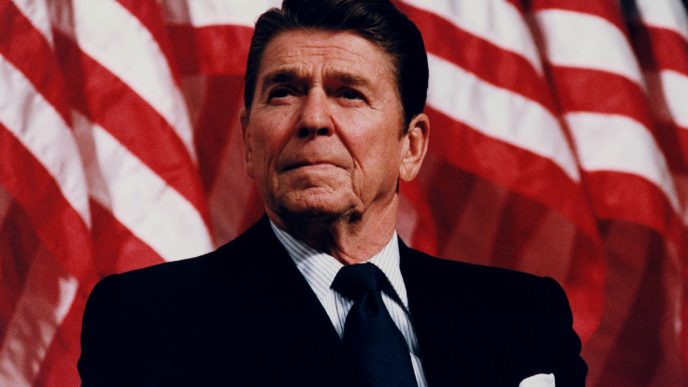
3 Things Reagan Said About Trade That Apply Today

Ronald Reagan was an advocate of free trade throughout his presidency. But just like today, many Americans in the 1980s opposed free trade and pushed for measures that would keep the nation out of the global economy.

Fortunately, Reagan argued persuasively in support of trade, and his success led to rapid growth in the U.S. economy.

He knew that protectionist policies might benefit some industries, but they hurt others.

When the government gets involved in trade, special interests get a chance to game the system. These groups excel at making it hard to tell how their policies harm Americans.

In his 1987 economic report, Reagan explained how protectionism hurts consumers:

Whatever the motive, protection in any form redistributes income and wealth. And because the redistributive effects are usually not readily apparent, special interest groups sometimes favor and governments often choose these methods over other more visible and much less costly forms of subsidy. Protection raises the price of imports and domestically produced import-competing products.

Reagan realized that history provides many examples of the damage unfree trade policies can do.

Speaking to the nation in the summer of 1983, he reminded Americans that the United States has gone down the road of protectionism before—with disastrous results. He said:

One economic lesson of the 1930s is protectionism increases international tensions. We bought less from our trading partners, but then they bought less from us. Economic growth dried up. World trade contracted by over 60 percent, and we had the Great Depression. Young Americans soon followed the American flag into World War II.

Free trade has the opposite effect, which Reagan knew well. Speaking at a reception in Tokyo on Nov. 10, 1983, he succinctly summarized his philosophy on trade, stating:

The message I want to leave with everyone here tonight is simple. It’s a lesson history has taught us again and again. Protectionism hurts everyone, but free trade benefits all.

Ronald Reagan was right about trade, and the exceptional economic growth during his presidency provides proof.

Research conducted by The Heritage Foundation shows a clear correlation between low trade barriers and economic prosperity. Today, we must remember that free trade leads to more prosperity for all, while protectionism hurts American consumers and producers. (For more from the author of “3 Things Reagan Said About Trade That Apply Today” please click HERE)

Follow Joe Miller on Twitter HERE and Facebook HERE.

Don’t Bring Empty Bottles Into Michigan, You Might Go to Jail

Founding Father James Madison wrote in the Federalist Papers that “It will be of little avail to the people, that the laws are made by men of their own choice, if the laws be so voluminous that they cannot be read, or so incoherent that they cannot be understood.”

The phenomenon of overcriminalization puts all Americans at risk of being jailed for seemingly innocuous activities.

Around 10 p.m. on April 27, a Michigan state trooper pulled over Brian Everidge for a speeding violation, looked into Everidge’s rental truck, and discovered some unusual cargo that led to a felony prosecution against the Michigan resident.

Everidge was hauling over 10,000 beverage containers from Lexington, Kentucky, to exchange the containers for a bottle refund, although he didn’t tell the trooper where. Michigan provides a bottle refund, but it also makes it a felony to return bottles from out of state—a clear example of overcriminalization.

Michigan law states that if one returns or attempts to return a bottle or can that “the person knows or should know was not purchased in [Michigan] as a filled returnable container” or “did not have a deposit paid for it at the time of purchase,” he is subject to a civil or criminal penalty that increases in severity depending on how many containers are involved.

If you attempt to cash in on 10,000 or more out-of-state containers, like Everidge allegedly did, it’s a felony, and could lead to up to five years in prison and a $5,000 fine.

Everidge’s lawyer, Marcus Wilcox, says the state “caught him too early,” that Everidge hadn’t violated the law when he was pulled over on the highway with his cargo of bottles and cans.

Using language that only a lawyer could love, or perhaps even understand, Wilcox argues that Evenridge “attempted to attempt to return the bottles,” and that “this statute doesn’t fit” the circumstances. According to the trooper, Everidge “indicated during the traffic stop that he picked up the cans from Lexington, Kentucky,” and that “his intent was to return them,” but he “didn’t say where he was going to return them.”

While this defense may be a hard sell should the case go to trial, it may be even harder for state officials to explain why this conduct should be a crime in the first place.

In 1976, Michigan lawmakers wanted to promote recycling, so they enacted a law to require anyone in the state who sells beverages “in a beverage container” to pay 10 cents to whoever “returns” a beverage container “whether or not the person is the original customer of that dealer, and whether or not the container was sold by that dealer.”

At 10 cents a bottle, Michigan boasts the highest refund in the country, compared to the 2-5 cent rate available in most state refund systems. The state estimates that it has also lost $10 to $13 million annually due to people hauling out-of-state containers into Michigan to cash in on the refund.

To stem losses while maintaining state recycling incentives, Michigan lawmakers passed a law that required container manufacturers to put a unique mark on “Michigan cans and bottles,” and to sell those containers only in Michigan or other states with similar container refund systems.

Michigan also offered in-state dealers $5,000 to help pay for bottle counting machines with scanning technology to reject unmarked containers, but many businesses refused to upgrade their machinery. In 2012, the 6th U.S. Circuit Court of Appeals struck down Michigan’s bottle marking law as an unconstitutional burden on interstate commerce. Bill Nichols, who runs a market in Michigan 3 miles from Indiana (which offers no refund), said the technology was “not ‘100 percent fool-proof’” anyway, and he regularly “kicks out” Indianans toting “garbage bags full of cans,” seeking a refund.

Michigan has an interest in protecting its environment and shielding state coffers from nonresidents looking to take advantage of the state refund system, but criminal law and penalties are no better of a solution to their problem than the invalidated state bottle-marking law, or Nichols’ option (Michigan law also makes it a crime for state dealers to accept out-of-state bottles, so Nichols is right to turn away the can-hauling Indianans).

The felony bottle law illustrates the phenomenon of overcriminalization, the “overuse and misuse of the criminal law and penalties” to solve problems better addressed through the civil justice system.

It may be reasonable to assume that taking advantage of a state bottle refund system is illegal. It would also be reasonable to think that Michigan could adequately punish and deter Everidge’s conduct with, for example, a civil fine equal to or greater than the $1,000 he would have made off his 10,000 bottles had he actually returned them to a store in Michigan. But few would believe that such conduct rises to the level of the seriously morally blameworthy acts that deserves a criminal sanction—much less a five-year prison sentence.

That reflects what is “perhaps the most fundamental problem caused by overcriminalization,” as legal expert John Malcolm, director of The Heritage Foundation’s Meese Center, testified before the House Judiciary Committee, “the fact that the average person no longer has fair notice of what the criminal code makes an offense.” (For more from the author of “Don’t Bring Empty Bottles Into Michigan, You Might Go to Jail” please click HERE)

Follow Joe Miller on Twitter HERE and Facebook HERE.