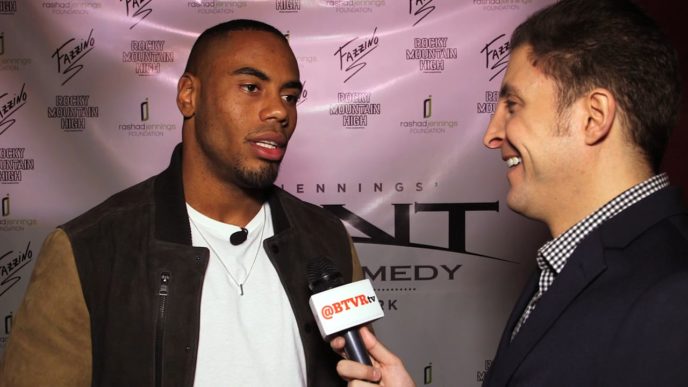
By Melanie Hunter. In a commencement speech at Liberty University, a private Christian university in Lynchburg, Va., New York Giants running back Rashad Jennings said Saturday that the “moral landscape of this world is quickly declining” and graduates will be “tested to have patience with Christ-like tolerance.”
Jennings said graduates are entering a different world than he did when he received his degree at Liberty.
“The moral landscape of this world is quickly declining. Throughout life, you will be tested to hold your biblical truth. You will be tested to have patience with Christ-like tolerance, and you will be tested to hold your spiritual fortitude and your convictions by the remembrance that it is by and for a Holy God that you stand or fall, and he can make you stand,” Jennings said.
The best is yet to come for Liberty graduates, but to experience the best days, “you must realize and remind yourself of the vital importance of walking by faith, for if you try to navigate this life by mere human sight, you will miss out on the many ways that God is seeking to lavish grace upon you,”
“Yet keep in mind that faith does not come without cost. In fact, the first three letters of the word faith are the exact same first three letters of another word that you will not be able to avoid. That word is failure,” Jennings said. (Read more from “NY Giants’ Rashad Jennings: ‘The Moral Landscape of This World Is Quickly Declining'” HERE)
_____________________________________
Vatican Cardinal Rebukes ‘Demonic’ Attacks on Family at Washington Breakfast
By Claire Chretien. Cardinal Robert Sarah slammed gender ideology, same-sex “marriage,” and transgender bathroom policies at the National Catholic Prayer Breakfast on Tuesday, describing them all as demonic attacks on humanity.
Sarah, the prefect for the Congregation of Divine Worship and the Sacraments, was the keynote speaker at the annual prayer breakfast, where he joined Speaker of the House Paul Ryan and Sister Constance Veit, the director of communications for the Little Sisters of the Poor. Numerous Catholic bishops and members of Congress, including Apostolic Nuncio Archbishop Carlo Maria Vigano, were in attendance.
“The battle to preserve the roots of mankind is perhaps the greatest challenge our world has faced since its origins,” Sarah told the crowd of nearly a thousand people. Catholics should follow the “courageous” example of St. John the Baptist, a martyr for the sanctity of marriage, Sarah said.
“Do not be afraid to proclaim the truth with love, especially about marriage according to God’s plans,” said Sarah. “In the words of St. Catherine of Siena, ‘proclaim the truth and do not be silent through fear.’”
Sarah blasted gender ideology as “ideological colonization” and lamented the “insidious” dismantling of religious freedom in the United States. (Read more from “Vatican Cardinal Rebukes ‘Demonic’ Attacks on Family at Washington Breakfast” HERE)
https://joemiller.us/wp-content/uploads/546351753_1280x720.jpg7201280Joe Millerhttps://joemiller.us/wp-content/uploads/logotext.pngJoe Miller2016-05-18 01:31:572016-05-18 01:31:57NY Giants’ Rashad Jennings: ‘The Moral Landscape of This World Is Quickly Declining’ [+video]
The U.S. military seems to be breaking. Senior military leaders have made dire statements before Congress, and story after story is revealing the potentially deadly challenges facing our men and women in uniform.
As Congress considers the annual defense authorization bill, here are six clear, real-world examples of why Congress needs to use the defense bill to start rebuilding the U.S. military.
1. The Marine Corps is pulling parts off of museum planes to keep their F-18s flying. Even with that drastic action, only about 30 percent of their F-18s are ready to fly. Not only that, but instead of getting 25 or 30 hours a month in the cockpit, Marine Corps pilots are getting as little as four hours per month of flying time.
2. Only one-third of Army brigades are ready for combat. The Army has now fallen to the smallest level since before World War II, while the top Army general says that the Army would face “high military risk” if it were to fight a serious war.
3. The Air Force is cannibalizing parts from some F-16’s to keep other F-16’s flying and is pulling parts off museum planes to keep their B-1 bombers flying. And half of Air Force squadrons are not prepared for serious combat.
4. The Navy keeps extending deployments of its ships, but still doesn’t have enough to meet demand. While the Navy needs about 350 ships, today it only has 273.
6. The Air Force’s B-52 bombers are an average of 53 years old. Most Americans would not want to drive across the country in a 53-year-old car, let alone go to combat in a 53-year-old airplane.
These six facts show the consequences of cutting the national defense budget by 25 percent over the last five years.
At the same time, threats are growing. Russia has invaded Ukraine and threatens more. China is building illegal islands. Iran is pursuing a nuclear weapon and North Korea already has one. And we also face the real threat of terrorism and the growing threat of cyberattacks.
The bottom line is that Congress needs to start rebuilding the U.S. military. We can’t let this go much further. (For more from the author of “6 Facts Highlight Why We Need to Rebuild Our Military” please click HERE)
https://joemiller.us/wp-content/uploads/6910298803_22025b0c3c_b.jpg6801024Joe Millerhttps://joemiller.us/wp-content/uploads/logotext.pngJoe Miller2016-05-18 01:10:552016-05-18 01:10:556 Facts Highlight Why We Need to Rebuild Our Military
The Obama administration’s bathroom directive, ordering local school districts to allow transgender students to use the restrooms of their choice, has caught congressional Republicans off guard.
The response has been a mix of pessimism, frustration, and a call for the states to defy the directive at the local level.
Sen. James Lankford, R-Okla., ventured into the fray Tuesday with a strongly worded letter to Department of Education Secretary John King Jr. Lankford wrote that the department’s directive “conflates an individual’s gender identity with the widely accepted and longstanding understanding of sex without support in Title IX.”
The new guidelines, released Friday by the U.S. Departments of Justice and Education, instruct local schools to extend Title IX protections, which prohibit sex-based discrimination, to transgender students.
The Oklahoma senator slammed King for advancing “substantive and binding regulatory policies” that didn’t go through the regular rule-making process or through an act of Congress.
Sen. Mike Lee, R-Utah, decried the directive and told The Daily Signal that “Obama has again abused his executive authority to disrupt the lives of millions of Americans.”
The bathroom directive, Lee said, underscores the need for reforms that “would defang the Department of Education.” But an aide to the senator noted that there were “no immediate plans” to advance reform.
Republican leadership has not tangled with the administration over the issue directly. Instead, House Speaker Paul Ryan, R-Wis., has maintained that states, not the federal government, should take point in crafting policies that best address the issue at the local level.
A Ryan aide told The Daily Signal that the speaker “believes this is a state and local issue and the federal government should respect that.” When asked if Ryan planned to offer a rebuttal, the aide predicted the speaker would let any legislative fix work its way through the committee process.
Ryan’s counterpart in the Senate, Majority Leader Mitch McConnell, R-Ky., has remained quiet on the issue and didn’t respond to The Daily Signal’s request for comment.
1. Push States to Ignore Obama’s Directive
Rep. Mark Meadows, R-N.C., advised states and local school districts “to just disregard the president’s directive.”
“It’s not a rule,” the Freedom Caucus board member told The Daily Signal. The administration “hasn’t gone through the rule-making process because it’d have to come through our [congressional] oversight. You would actually have to change a rule for it to have the effect of law.”
Many conservatives in both the House and the Senate see the bathroom battle as a conflict best suited to the terrain at the state level. Asked what recourse public schools have now, Rep. Mick Mulvaney, R-S.C., said he couldn’t “imagine what it is.”
“I would love to see some local school districts, mine included, just say ‘No, we’re not going to do it,’” Mulvaney, who is also a Freedom Caucus board member, said. “If that means having to figure out how to do without federal funds, then God bless them. You have to fight at some point and Congress is not showing the ability to fight back during this administration.”
While President Barack Obama’s directive does not carry the force of law, it’s been widely received as a veiled threat to local districts: comply or lose federal funds.
2. Clarify What Title IX Means
Heritage Foundation scholar Ryan Anderson explained that Congress could clarify federal law to stop what he considers “the Obama administration’s unlawful rewriting of Title IX.”
That would require the legislature, he said, to “reaffirm that ‘sex’ does not mean ‘gender-identity’ in statutes passed decades ago.”
3. A Voucher System
But there is some discussion in conservative circles about a potential fix—albeit a long-term one.
Rep. Cynthia Lummis, R-Wyo., imagines a voucher system specifically for families who have concerns with social issues.
“For any school that accepts federal funds, and the strings that come attached,” Lummis told The Daily Signal, “the families who send their children to those public schools should be able to receive a voucher to go to the school of their choice if any matter of social mores is inconsistent with their realm.”
The Wyoming lawmaker aims, she said, to introduce the plan as a standalone measure and gauge how much bipartisan support it attracts this year. As a standalone bill, that plan faces an uphill trek to passage in the current political climate.
What’s Next
Mulvaney interprets Republican leadership’s silence as a reluctance to challenge Obama on the issue through the legislative process. That would require tying a bill to a must-pass piece of legislation, Mulvaney said, and risking a government shutdown.
“We all know that there’s too many Republicans who just abhor the thought of any discussion of a shutdown during an election year,” he said, “so we won’t fight.” (For more from the author of “3 Ways Conservative Lawmakers Could Respond to Obama’s Bathroom Directive” please click HERE)
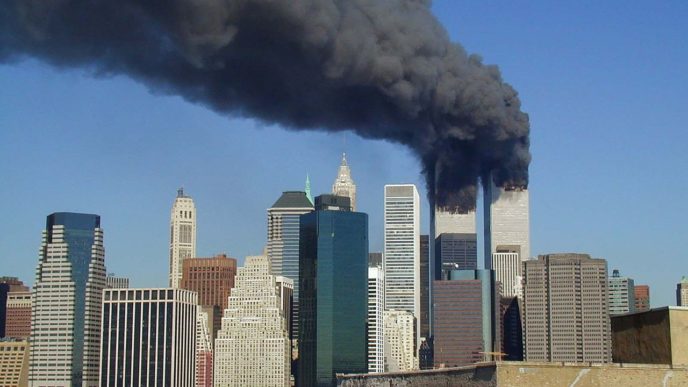
The possibility of families of the victims of the 9/11 terrorist attacks being allowed to sue the Saudi Arabian government may become reality.
Fox News reported Tuesday that legislation making the lawsuits possible has been approved by the Senate.
The Obama administration is threatening to veto the proposed bill.
The Justice Against Sponsors of Terrorism Act was approved by senators on both sides of the aisle.
Senators John Cornyn, R-Texas, and Charles Schumer, D-N.Y., are urging the House to approve the bill.
Should the bill be passed, the government of Saudi Arabia says it will respond by extracting billions of dollars from the U.S economy.
Cornyn says the legislation will not damage the relationship between the United States and Saudi Arabia. “It’s up to the House.” he said.
The bill, if passed, will allow family members of 9/11 victims to sue the Saudi government in U.S. court for any part they played in the attacks. Terrorists launched attacks in Washington, D.C, New York and Pennsylvania, killing thousands.
A statement from a group of family members of the victims said the bill, “reaffirms the commonsense principle that no person, entity or government enjoys blanket immunity from legal responsibility for participation in a terrorist attack that takes lives or causes injury inside the United States of America.”
Although both sides of the Senate have approved the legislation, White House Press Secretary Josh Earnest has said, “It’s difficult to imagine the president signing this legislation.”
He went on to say the legislation would have “unwanted consequences” and it would “change longstanding international law regarding sovereign immunity and the president continues to harbor serious concerns this legislation would make the U.S. vulnerable in other court systems around the world.”
Sen. John McCain, R-Ariz., voiced concerns that passing the bill would alienate Saudi Arabia, while undermining an already strained relationship between the U.S. and its ally in the Middle East. (For more from the author of “Family Members of 9/11 Victims May Finally Be Able to Seek Justice” please click HERE)
https://joemiller.us/wp-content/uploads/1280px-WTC_smoking_on_9-11.jpeg9601280Joe Millerhttps://joemiller.us/wp-content/uploads/logotext.pngJoe Miller2016-05-18 00:32:382016-05-18 00:39:37Family Members of 9/11 Victims May Finally Be Able to Seek Justice
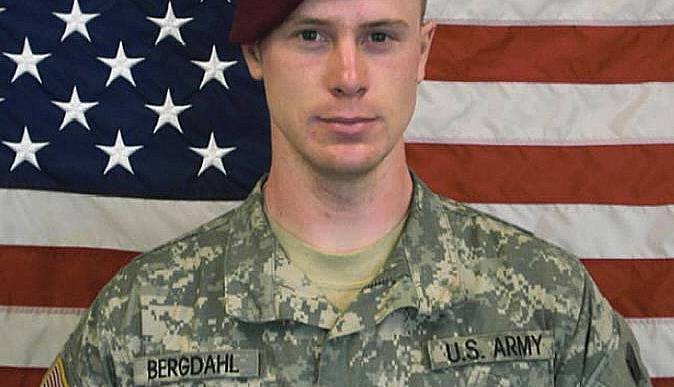
Army Sgt. Bowe Bergdahl will have to wait until February to learn the outcome of his court-martial proceedings.
Emery Delesio of the Associated Press wrote, “A military judge decided Tuesday to delay Bergdahl’s trial from August until February to provide time for resolving disputes over the defense team’s access to classified documents.”
Army Sgt. Bowe Bergdahl returning to court ahead of a court-martial on charges including desertion in Afghanistan. https://t.co/G6kl0dzAaZ
CNN reported earlier this month that Bergdahl’s defense team had been denied access to nearly 300,000 classified documents and had only received 1 percent of the documents requested. The defense claims it needs the documents in order to prepare a proper defense of their client.
Bergdahl walked away from his post in 2009 and spent five years as a prisoner of the Taliban. Several members of Bergdahl’s company were killed in an effort to locate the soldier.
Later, the Obama administration was accused of breaking the law when it traded five GITMO detainees for Bergdahl in a highly controversial prisoner swap.
The Obama administration celebrated Bergdahl’s homecoming and he appeared to be hailed as a hero. As Western Journalism reported, several fellow soldiers broke their silence and told their side of the story, which painted Bergdahl as less of a hero and more as a traitor. The Army agreed and decided to court-martial Bergdahl on charges of desertion and misbehavior before the enemy.
Bergdahl is on administrative duty while awaiting his court-martial proceedings, now set to take place next year. According to Sgt. Maj. Matt Howard, Bergdahl is doing “a lot of administrative work that needs to be done. Paperwork, moving stuff from place to place, things like that.” His safety is also being closely guarded as threats against his life are being taken seriously.
The judge in the case, Col. Jeffrey Nance, also granted the right of media organizations to hire a court stenographer to record the proceedings and told the prosecuting attorney they have one week to give reporters access to court documents.
Bergdahl's trial is being delayed until 2017. Apparently court-martials for Rose Garden honorees in an election year aren't very popular.
The implications of Bergdahl’s court-martial being delayed means either Hillary Clinton, Bernie Sanders or Donald Trump will presumably be the commander-in-chief at the time of his court-martial proceedings. The date change also, as a result, allows President Obama to exit office without any further discussions of Bergdahl’s controversial prisoner exchange, treatment he received after his release, and subsequent military decision to pursue court-martial. (For more from the author of “Military Judge Makes Key Decision in Bowe Bergdahl Case” please click HERE)
https://joemiller.us/wp-content/uploads/USA_PFC_BoweBergdahl_ACU_Cropped.png608674Joe Millerhttps://joemiller.us/wp-content/uploads/logotext.pngJoe Miller2016-05-18 00:11:122016-05-18 00:11:12Military Judge Makes Key Decision in Bowe Bergdahl Case
Now that the crowded 2016 field of mostly GOP beta males is tripping all over themselves to genuflect to their vanquisher Donald Trump – and what an embarrassment to the cause of manhood they are – all eyes are on Ted Cruz.
Will he, too, bend at the knee to Trump’s chocolate bunny?
Or will Cruz continue on the righteously ornery path that has taken him from political nobody to conservative superstar in only four years?
For now, Cruz is playing it smart. There’s no point in showing your hand if you’re Cruz, because right now there is no pressure on you. You’re no longer a candidate, and it is always the candidate’s obligation to woo the voters, not the voters’ task to contort their souls into pretzels on behalf of the candidate. That means the onus is on Trump, not Cruz, to unify.
If you’re gonna play the game, boy, you gotta learn to play it right. You gotta know when to hold em and know when to fold em.
But at some point in the coming weeks and months there will be a cash call, and I hope the man I’m proud to call a friend, and whose courage of conviction I admire, has the political savvy to realize that what may seem like a tough call for him really isn’t a tough call at all. Once you remove the peer pressure and group think, which Cruz has already made a career out of defying, and plan out the long-term consequences.
If I was in Cruz’s inner circle at this moment, here are the seven things I’d be telling him:
1. There is more at stake for you in this decision than anyone else.
With the possible exception of Scott Walker, who will rightfully be given a chance to resurrect himself because of his record in Wisconsin, none of the 16 GOP candidates not named Trump have a guaranteed political future except Cruz and Fiorina. For they are the only two non-Trump candidates who definitely ended the race with more political capital than what they started with.
Furthermore, this election cycle painfully revealed the paucity of principled conservative leaders to rally and inspire us. Therefore, Cruz owes it to both the people who gave him his political capital, as well as conservatism, to not be pennywise and pound foolish here. The list of people waiting in the wings should he sell his birthright tomorrow for a pot of stew today isn’t long or credible, thus Cruz blowing his political capital has far-reaching implications for millions of patriots in desperate need of leadership.
2. This is not 1976, and you’re not Reagan.
As a first-born son of the Reagan Revolution, Cruz was fond of comparing 2016 to 1980. Clearly that’s not the case—2016 turned out to be 1789 instead. Now he should resist the temptation to cast this as 1976 and himself in the Reagan role. See that as giving an impassioned speech at the convention that sets him up for the future, all the while claiming to be the loyal soldier for the good of the party in the meantime.
The reality is the only people who care about the good of the party are the folks Trump conquered, and don’t forget that before Trump arrived they hated Cruz the most. Once Trump is gone, Cruz will return as public enemy number one to these people. Cruz should learn from what happened with Trump in this campaign: you don’t endear yourself to foes you’ll have to destroy later. Besides, anyone who would consider voting for Cruz four years from now is more interested in a fighter than a unifier anyway.
3. Remember one of the 10 Commandments of Political Warfare: Don’t ever betray your base.
The only Republican with a future, whose base is likely to be disappointed if he kneels before Zod, is Cruz, for obvious reasons. Many of those people consider themselves “principle before party voters,” and they took Trump’s dirt bag attacks on Cruz’s family almost as personally as Cruz did. Cruz voters will be among the last to hold the line on #NeverTrump, and a chunk of them will never give up the ship. If Cruz endorses Trump he risks splitting his future base like no one else does. The dumbest thing to do when you have the biggest base heading into the future is to split it.
4. This is a rare opportunity in politics when the morally righteous thing to do is also the most politically expedient.
It’s rare in politics to be politically rewarded for doing the most principled thing, but that is the case here for Cruz. And it will be much easier for him to win over people mad at him for not “unifying” later than it would be to reunify his base if he were to endorse. Look at all the voters who don’t care Trump is a progressive and a Hillary donor. Look at all the other candidates groveling before the same Trump they once insulted. These are soulless people that will come to your beck and call in the future if you’re winning. But Cruz’s odds of winning diminish if he splits his base.
5. You will tarnish your brand, at least to some degree, because all the reasons to endorse Trump tarnish it.
How do you credibly endorse someone you called a “pathological liar” for the highest office in all the land after writing a book called “A Time for Truth”? How do you endorse a guy for president who dishonored your wife, called you a whoremonger, and claimed your dad was a presidential assassin? That’s pretty much the most beta thing ever. I’m going to point this out now as a friend, in the hopes that our enemies in the D.C. Cartel and media may not have to do it later.
6. You will open the door to being out-flanked as the insurgent once again in your next presidential run, as you were in this one.
The biggest reason Cruz could not beat Trump is that Trump out-flanked him as the insurgent candidate (and yes, the media had a lot to do with that but not everything). If Cruz endorses Trump, he risks this happening to him again in the future. Except in 2020 it won’t be another megalomaniac celebrity candidacy if Trump loses, but a new hotness like fellow Senator Ben Sasse.
Sasse has been AWOL near as I can tell on pretty much every major fight since he got to the Senate, but he clearly sees an opportunity with #NeverTrump and is wisely exploiting it. By the way, that’s not a criticism but a compliment. The GOP needs more politicians who see morally righteous causes as political opportunities, not fewer. Sasse also comes from a neighboring state to first-in-the-nation Iowa, and has already given a major political speech here in my backyard, so you can see him working.
In 2020, Sasse will have even more Senate experience than Cruz ran with in 2016, and he won’t have the stench of Trump on him. Freeing him up to go after a sizable bloc of primary voters that should be Cruz’s, unless he opens the door for a Sasse type later by endorsing Trump now. If Cruz does, someone like a Sasse could turn around and do to Cruz in Iowa four years from now what Cruz did to past caucus champions Mike Huckabee and Rick Santorum in 2016.
7. You literally gain nothing from this politically and it’s a one-sided waste of political capital.
Look at all the others who have assumed the position for Trump, and what have they gained politically for it? Answer: zilch. And at the cost of their integrities to boot. They now owe all their futures to Trump winning in November, and won’t have one if he loses.
Don’t be that guy.
Whatever you may think Trump will promise or hint at now, you know he won’t deliver later, but just mount Cruz’s scalp on the wall as another trophy. Like President Trump is going to spend one day fighting tooth-and-nail to confirm “Lyin Ted” to the U.S. Supreme Court. Come on, man.
On the other hand, the fertile political ground is the yet politically untapped #NeverTrump real estate. Cruz can have that all too himself, and it’s got long-term prospects. If Trump loses in November, Cruz becomes the immediate frontrunner in 2020. And if Trump wins, Cruz becomes the face of the principled opposition to what would likely be the most feckless presidency in the history of the republic.
Cruz learned early on there is hefty ROI potential on remaining principled in an era of cowards and charlatans. Now is the time for him to stay that course. (For more from the author of “Seven Reasons Cruz’s Tough Call on Trump Really Isn’t a Tough Call at All” please click HERE)
https://joemiller.us/wp-content/uploads/6236460239_9c01ab4f52_b.jpg6831024Joe Millerhttps://joemiller.us/wp-content/uploads/logotext.pngJoe Miller2016-05-17 02:16:232016-05-17 02:16:23Seven Reasons Cruz’s Tough Call on Trump Really Isn’t a Tough Call at All
The cool kids in public policy circles these days are all about “criminal justice reform.” Their most immediate cause célèbre is the passage of the Sentencing Reform and Corrections Act of 2015 (S.2123). While we’ve covered this issue from many angles in the past, I felt a need to summarize the basic problems with its entire premise, as well as the specific legislation that, barring an outcry from the public, will come to the House and Senate floors this spring.
Astoundingly, some Republicans are trying to make the case that this is really part of a conservative agenda. Here is a list of talking points from their playbook to allure conservatives into supporting this bill and the broader effort in regards to criminal justice “reform.”
Myth # 1: The Prison population keeps growing even though crime is declining.
Fact:
The D.C. intelligentsia argues our criminal justice system is in dire need of reform. But ask anyone outside the beltway, and they’ll give you a different definition of “broken.” Many Americans would agree that current laws are too lenient on criminals and disregard the victim all too often. It was the tough reforms put into place during the Reagan years and in the ‘90s that produced the sharpest decline in violent crime on record. Those reforms, coupled with more aggressive policing, led to the only positive social trend in public policy in recent memory. That trend is now being reversed precisely as incarceration rates decline and Obama and his allies ratchet up the war against law enforcement. While correlation doesn’t necessarily prove causation, the correlation is indeed striking, and in conjunction with the defanging of local police departments, the release of tens of thousands of federal prisoners can only result in exacerbating this negative trajectory.
The sentencing aspect of our criminal justice system is not broken. What is broken is the legal profession that exploits existing loopholes to plead down a number of serious charges and endanger society. Add in the revolving door and recidivism of criminals, especially for juveniles who all too often receive a slap on the wrist, and you get a criminal justice system that is more lenient on criminals than it should be. There are major issues with the collapse of the civil society, but incarceration didn’t precipitate that societal collapse; it is merely a reflection of the collapse. There are countless violent criminals who are not in prison thanks to the legal profession.
Let’s examine history: Violent crime began exploding in the ‘60s, rising from 161 violent crimes per 100,000 people in 1960 to 597 in 1980. It was around this time that the prison population began rising sharply, but mainly on a state level. The federal mandatory minimum laws pushed by President Reagan were implemented in 1984 and 1986. There is always a lag time between the rise in incarceration and the drop in crime, but the correlation is striking. Violent crime kept rising for another decade, topping out at 758 in 1991 before the fever finally broke. But the years of tougher sentencing finally paid off. Crime dropped like a rock for two decades and stood at 376 per 100,000 people in 2014. While that is a dramatic drop, it is still historically high and has not erased the full growth in crime that began in 1960. But the important question is where the trajectory is headed. While crime has consistently dropped through 2014, there are signs of a turnaround. At the same time, incarceration peaked about eight years ago and has steadily gone down both on a state and federal level.
Also, further portending a downward trajectory of incarceration in the coming years, according to the Transactional Records Access Clearinghouse (TRAC), federal prosecutions have dropped 25.4 percent from November 2010 through November 2015.
Hence, the pattern is continuing. The spike in crime precipitated the rise in incarceration, which helped decrease crime. Now that the prison population is decreasing, with another 46,000 federal inmates (one-fourth of the entire federal prison population) and countless state inmates slated for early release over the next year or two, it would not be surprising if we experience another era of rising crime. Either way, the notion that we could just revert to pre-1980 incarceration levels without first healing our broken and violent society is plain suicide.
Myth # 2: There are millions of people incarcerated in American prisons for no good reason.
Fact:
While there are approximately 1.5 million people incarcerated in American jails, prisons, and other institutions, only 195,900 are federal inmates (a ten-year low). And only 159,000 in the federal system are housed in actual prisons. The rest are in privately managed facilities, home confinement, short-term detention, long-term boarders, residential reentry centers, pre-trial/pre-sentence holding, etc. At least 25% of the federal prison population is comprised of illegal aliens and possibly more who are noncitizens. We should save money by releasing those criminals and deporting them. It is extremely misleading to conflate state numbers when promoting federal legislation dealing with the federal criminal code and the federal prison population. Moreover, as this is being written the Justice Department is already in the process of releasing over 46,000 federal prisoners in one of the largest prison releases in American history, even without this legislation. This comes on the heels of several waves of releases since 2007, which has engendered a steady drop in the federal prison population.
Incidentally, the two decade-long drop in violent crime is showing signs of reversing as jailbreak initiatives succeed throughout the country. In the nation’s 25 largest cities, the murder rate jumped 14.6% in 2015, which is the largest single-year spike since 1960, according to the left-leaning Marshall Project.
That Republicans would be promoting legislation to release many of the remaining 150,000 of the most hardened federal criminals by using the talking point of mass incarceration is dishonest, illogical, and irresponsible.
And as for the 1.3 million in state and local prisons, only 15.7 percent have been convicted on drug charges and 75% of those are for trafficking, not possession. Thus, just 3.6 percent of the total state prison population is comprised of individuals convicted for simple drug possession.
Further, the entire notion of focusing on the prison population instead of protecting society and decreasing crime is inherently a far left principle. Sure, we have a lot of people in prison, but there are even more criminals left on the streets. That is because we have systemic social problems in this country. As Heather MacDonald noted last year in her testimony before the Senate Judiciary Committee, “the U.S. homicide rate is seven times higher than the combined rate of 21 Western nations plus Japan.” This needs to be dealt with at the systemic level instead of treating the symptom by letting everyone out of jail and endangering the public.
Myth # 3: Incarceration costs so much money and criminal justice “reform” will save billions.
Reality:
While incarceration costs have grown with the increase in the prison population (which is already on a downward trajectory), how much money have we saved as a society from the massive decrease in violent crime corresponding with the same time period? Jeffrey L. Sedgwick, former Director of the Bureau of Justice Statistics, wrote in the Washington Post in 2008:
The cost of new crimes goes beyond prisons. The most conservative estimate for the cost of violent and property crimes in the United States is $17 billion a year — and that’s just direct, immediate cost. This leaves out such costs as crime victims’ struggle to be made whole.
In April, during National Crime Victims’ Rights Week, the Senate passed a resolution including this very finding from Sedgwick. Even CBO admitted that an earlier version of the bill would have increased the deficit on net by $1 billion.
Just look at the effects of California’s Proposition 47, which reduced penalties retroactively for drug and property crimes and led to the release of 30,000 criminals. According to a new report, California wound up spending $2.2 billion more on prison costs per year. At the same time, violent crime spiked by 12.9 percent and property crime rose by 9.2 percent in California’s largest cities. Shoplifting is now rampant in the Golden State. And remember, state convicts are on average not as violent as those sitting in federal prisons.
The reality is that the recidivism of criminals not only costs human lives; its fiscal costs outweigh the price tag of incarceration: In the 2011 case, Brown v. Plata, the Supreme Court upheld an activist lower-court mandate that California reduce its inmate population to alleviate overcrowding. Justice Samuel Alito dissented due in part to public-safety concerns, citing a prisoner-release program carried out in Philadelphia in the 1990s.
Although efforts were made to release only those prisoners who were least likely to commit violent crimes, that attempt was spectacularly unsuccessful. During an 18-month period, the Philadelphia police rearrested thousands of these prisoners for committing 9,732 new crimes. Those defendants were charged with 79 murders, 90 rapes, 1,113 assaults, 959 robberies, 701 burglaries, and 2,748 thefts, not to mention thousands of drug offenses. [Brown, (Alito, J., dissenting, slip op. at 14)]
Myth # 4: This bill will only release low level, non-violent drug offenders.
Fact:
This is one of the biggest falsities of the leniency industrial complex (as Sen. Grassley used to refer to them before he became one of them). This bill will retroactively release thousands of hardened criminals, many of whom are illegal aliens. In fact, it doesn’t address simple possessions at all. Those in the soft-on-crime caucus are dishonestly conflating state reform efforts dealing with simple marijuana possession with high-level federal offenses. They want to give the impression that there are thousands of people rotting in federal prison for simply smoking a joint. These politicians are well aware of the fact that those serving time in federal prison on drug offenses are either illegal aliens or big time traffickers of large quantities of dangerous drugs, including cocaine, meth, and heroin.
Consider the following:
According to data from the U.S. Sentencing Commission, as of March 2016, there were 514 federal inmates serving a sentence for “simple possession,” of which 95.5% are non-citizens — meaning only 24 U.S. citizens are serving federal sentences for simple possession, and many, if not all, likely involved more serious charges that were pled down.96.7% of all “simple possession” defendants were sentenced in the southwest border districts — virtually all in Arizona. No mandatory minimum penalty applied in any of these cases, and the median sentence was 6 months. The median weight of the drugs involved in the border district cases was 21,700 grams, or approximately 48 pounds. This demonstrates that these individuals were not simple possessors or users, but rather traffickers convicted of lesser charges. Even on a state level, as noted above, drug possession accounts for only 3.6% of state prisoners in light of recent efforts to go soft on drug possession on multiple fronts.
Only 17 possession cases were sentenced in non-border districts; of those, a mandatory minimum penalty applied in only 8 cases, and the median sentence was 24 months.
In FY 2015, 52.7 percent of those sentenced for federal crimes were Hispanics, even though blacks account for 52% of violent crime in the country. This indicates that much of the problem with the federal prison system is related to immigration.
Many of those convicted on drug charges have plead down to lesser charges but have been involved in violent crime. There is a reason increased incarceration has contributed to at least 25% of the two-decade long reduction in crime. A relatively small population of criminals commit most of the crimes and by locking them up for drug trafficking, these same individuals predisposed to commit violent crimes were taken off the streets.
Under current law, there is a “safety valve” that has allowed 80,000 convicted drug offenders to escape the mandatory minimums. In FY 2014, 28.5% of all drug trafficking offenders escaped the mandatory minimum via the safety valve. This is why the length of time for drug sentencing is already shrinking across the board. Those remaining in federal prison today under the mandatory sentencing guidelines are undoubtedly hard-core criminals with longer rap sheets.
According to a report released last year by the Bureau of Justice Statistics, 76.9% of drug offenders who were released from prison in 30 states from 2005-2010 were arrested again within five years. One can only imagine the effect of releasing felons from federal prison who are, on average, more violent than those in state prisons.
Myth # 5: We have a big government culture of over-criminalization that threatens liberty.
Fact:
Absolutely. There are plenty of frivolous regulatory crimes on the books. And none of that is addressed in this legislation or in any of the ongoing “bipartisan” negotiations. This is all about promoting the ACLU’s agenda for hardened criminals. As it relates to our culture of violent crime, witnessed by the recent spike in crime across the nation, we do not do enough to combat it. Ordered liberty is built upon government doing a few things well, one of which is law enforcement. Returning to pre-Reagan crime levels where people are restricted in their movements and activities due to the paralysis we are now seeing in places like Baltimore, represents the highest level of tyranny. Crime, lawlessness, and fiscal dependency policies undermine liberty in the inner cities, not sentencing and incarceration.
Myth # 6: Drug laws disproportionately hurt blacks.
Fact:
The number of blacks serving in prison for drug trafficking is as disproportionately high to the white population as it is for other violent crimes. The reality is that predominantly black inner cities are riddled with violent crime and drugs and are merely one symptom of the problem. Once again, the goal here should be to address the root cause of the problem instead of treating the symptom.
Even if you release all drug offenders in state prisons, the percentage blacks comprise of the prison population would decrease from 37.5% to 37%. According to IBD’s analysis of the BJS statistics, “Blacks under 18 account for just 23% of the nation’s drug offenses, but a shocking 52% of all violent crime — including 51% of murders, 69% of robberies, 34% of rapes and 43% of aggravated assaults.”
Moreover, the trajectory of incarceration by race is headed in the other direction. According to Professor Keith Humphreys, since 2000 the imprisonment rate for black females has dropped by 47 percent while the rate among white women has increased by 56%. Incarceration of black males has declined by 22% over the same time.
Besides, focusing on outcomes as opposed to equality of actions and opportunity should be a nonstarter with conservatives and libertarians. The sad reality is that drugs and incarceration are symptoms of the violent crime problem we have in this country, and in the black community in particular. Black victims will be the most harmed by the dismantling of more aggressive policing, tougher sentencing, and more incarceration.
One of the more attractive libertarian arguments is that the federal government shouldn’t be involved in criminalizing drugs and should devolve it to the states. We can have that debate, but that is neither the discussion of this bill nor the broader effort it belies. This bill keeps the feds involved in all aspects of drug laws; it merely lets those who have already been convicted out of jail without devolving responsibility to the states. The goal of this bill is not to prospectively clean up the federal criminal code but to focus singularly on reducing prison population retroactively at any cost.
Meanwhile, Congress is completely ignoring Obama’s violation of federalism by ignoring his racist investigations of local police departments. In fact, Congress has given Obama’s federal power grab tailwinds by creating a $50 million slush fund for the DOJ to help defang the police with a carrot and stick approach to hands-off policing. The pending legislation is full of social engineering interventions at the federal level encouraging states to decrease their prison population across the board.
Myth # 8: We don’t need mandatory sentencing to get criminals to cooperate.
Fact:
During the hearing on this bill last year, a number of the Democrat and Republican proponents suggested that there are other ways to pressure criminals from cooperating with authorities other than mandatory minimums. But once again, this is all rooted in their unflinching trust in liberal judges. There is simply no way to deter criminals without mandating a floor for sentencing that cannot be manipulated by the legal profession.
Republican supporters of this bill willfully ignore the lessons of the ‘60s and ‘70s with liberal judges.
Myth # 9: This bill doesn’t repeal mandatory minimums, it just gives more discretion to judges
Fact:
Sections 102 and 103 repeal the mandatory minimums by expanding the current statutory safety valve and creating an entire new one for judges to use. As if this weren’t enough, both sections include a “judicial waiver.” So if a defendant’s criminal history is so serious that he is excluded from even the now massively expanded safety valves, the judge can disregard his criminal history if the judge believes thinks it “overrepresents the seriousness” of his past crimes. This argument is reminiscent of those proponents of amnesty who would extol the virtues of illegal immigration and amnesty, then proceed to passionately deny their bill was indeed a form of amnesty. It also mirrors the framework of the Gang of Eight bill, wherein every seemingly strict rule and requirement was followed by a broad grant of discretion to the Secretary of Homeland Security to waive it. By definition, a mandatory minimum supersedes liberal discretion of a judge. By no longer making it mandatory for a number of categories, there is no enforcement mechanism. Sure, a judge could theoretically still issue the same sentence, but that is no longer a mandate. Republican supporters of this bill willfully ignore the lessons of the ‘60s and ‘70s with liberal judges.
Myth # 10: The war on drugs failed and is stupid, so as long as this is about drug sentencing, I don’t care.
Reality: This is where understanding of the broad politics behind this effort and where it is headed is just as important as examining the first piece of legislation. Much like with immigration, the lead messaging from the Alinsky left revolves around an area of broad consensus. The lead messaging ship in the amnesty armada was, “Do you want to deport valedictorians attending Ivy League schools?” In this case, the first bill is messaged as tearing down “draconian” drug sentences. But if you look broadly at where the left is headed with this effort, and yes, it is the Left steering this ship – not conservatives and libertarians – they seek to dismantle the entire tough on crime regime that has led to the miraculous decline in crime. From the Justice Department’s plan to ban the use of the word “felon” to Obama’s effort to block inquiries into ALL criminal records for job applications and rentals of private landlords, the sentencing bill is merely the down payment on going soft on all areas of law enforcement.
Anyone who thinks this will end with drug laws is not paying attention to the players on the field. And ultimately, this is about getting felons to vote and creating a permanent Democrat majority, which will make it impossible to implement any other libertarian priority.
What should scare people the most is that S. 2123 and its House companions are just a down payment on dismantling law and order in this country – the first ship out to sea. And it is the least offensive version of what we might expect to come. Just like with immigration, they introduce their agenda with many tough-sounding caveats and talking points: amnesty will only apply to those as pure as the wind-driven snow, they will have to pay taxes, learn English, assimilate, etc. Likewise, in this case they are beginning with messaging pertaining to so-called nonviolent drug offenders. But once these policies are operational and the general sense of liberalization reigns supreme in the courts, this will open the floodgates for the much broader ACLU agenda.
With the tide of crime rising throughout this country, isn’t it time to ask: Where is the safety valve for law abiding Americans from this broader effort to coddle criminals? (For more from the author of “BUSTED: The 10 Most Dangerous Myths About Criminal Justice Reform” please click HERE)
https://joemiller.us/wp-content/uploads/8581420679_2e095b7922_o.jpg28484288Joe Millerhttps://joemiller.us/wp-content/uploads/logotext.pngJoe Miller2016-05-17 02:12:202016-05-17 04:14:55BUSTED: The 10 Most Dangerous Myths About Criminal Justice Reform
Self-made millionaire Isabella Barrett enjoys splashing the cash on designer shoes and expensive labels – despite being just nine years old . . .
Isabella became a millionaire at just six years old after launching her own clothing and jewellery line . . .
Isabella’s mum, Susanna, said: “As far as what she’s worth tangible you know, it would probably be equal to several million dollars . . .
“So she is the major stakeholder in ‘Glitzy Girl’, which was our first company that came out. The second company was ‘Bound By the Crown Couture'” . . .
Now the The fashion-obsessed young socialite has over 1.6 million online followers and considers herself a successful businesswoman in her own right. (Read more from “Girl Is Multi-Millionaire at Age 9” HERE)
https://joemiller.us/wp-content/uploads/17123251389_9f5db13fec_o.jpg21543351Joe Millerhttps://joemiller.us/wp-content/uploads/logotext.pngJoe Miller2016-05-17 01:57:222016-05-17 01:57:22Girl Is Multi-Millionaire at Age 9
A senior Iranian military commander claimed that U.S. officials are quietly encouraging the Islamic Republic to keep its illicit ballistic missile tests a secret so as not to raise concerns in the region, according to Persian language comments.
Amir Ali Hajizadeh, commander of the Iranian Revolutionary Guard Corps’ Aerospace and Missile Force, said in recent remarks that the Obama administration does not want Iran to publicize its ongoing missile tests, which have raised questions about the Islamic Republic’s commitment to last summer’s comprehensive nuclear agreement.
“At this time, the Americans are telling [us]: ‘Don’t talk about missile affairs, and if you conduct a test or maneuver, don’t mention it,’” Hajizadeh was quoted as saying during a recent Persian-language speech that was translated by the Middle East Media Research Institute.
“If we agree to this, they will advance another step, and say: ‘Don’t conduct [a missile test] at this time, and also don’t do it in the Persian Gulf region.’ After that, they will tell us: ‘Why do you need your missiles to have a range of 2,000 km [anyway?]?’ Hajizadeh reportedly said . . .
“After that, they will tell [us]: ‘Next, we will check whether your missiles can really carry nuclear weapons. Bring us the details [of the missiles].’ After that, they will say: ‘We need to set up cameras.’ And, finally, they will say: ‘Either saw [the missiles up into pieces] or, like [Libyan dictator Mu’ammar] Gadhafi, load them onto a ship and hand [them] over to us.’” he said. (Read more from “Iran: U.S. Encouraging Islamic Republic to Keep Illicit Missile Tests Secret” HERE)
On the first Sunday morning political talk shows since the Facebook trending topics scandal broke, the major network Sunday shows and CNN’s State of the Union (with NBC’s Meet the Press preempted for a Barclay’s Premiere League game) failed to cover or debate this reported suppression of conservative stories by the social media behemoth.
Meanwhile, both of the news media-centric shows (CNN’s Reliable Sources and FNC’s MediaBuzz) devoted segments to the scandal that the tech site Gizmodo exposed on Monday morning.
Reliable Sources host Brian Stelter reserved a full segment to discuss what he deemed was something that “should alarm and impact everyone in media, despite your political persuasion” since, in his mind, Facebook has become “the most powerful name in news.”
As for why, he explained it’s “[n]ot because Facebook does any actual reporting, it doesn’t, but because it is the single biggest social network on the planet, growing bigger every day” and “where hundreds of millions of people see lots of links to news.”
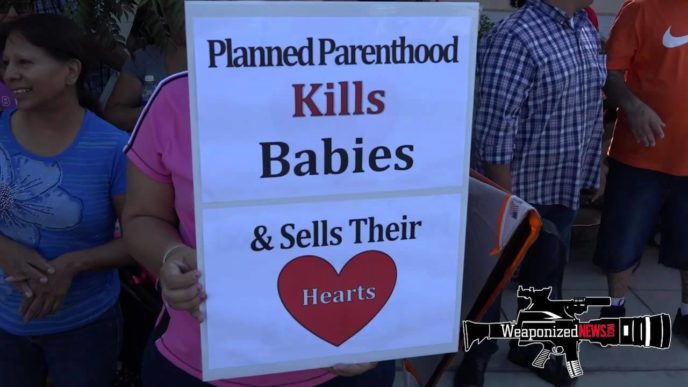
Stelter noted the pushback from Facebook and particularly a post from founder and CEO Mark Zuckerberg from late Thursday night before welcoming on Kelly McBride of the Ponyter Institute and The Federalist senior editor Mollie Hemingway (who was given the inaugural Noel Sheppard Media Blogger of the Year Award last year). (Read more from “Facebook Censored Videos Exposing Planned Parenthood Sales of Body Parts in Trending Topics” HERE)
https://joemiller.us/wp-content/uploads/maxresdefault-52.jpg7201280Joe Millerhttps://joemiller.us/wp-content/uploads/logotext.pngJoe Miller2016-05-17 01:30:552016-05-17 01:30:55Facebook Censored Videos Exposing Planned Parenthood Sales of Body Parts in Trending Topics