Obama Changes His Stance on US-UK Relationship After Brexit Vote

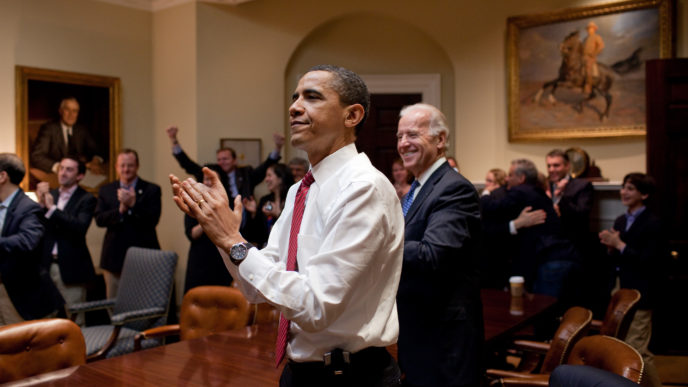
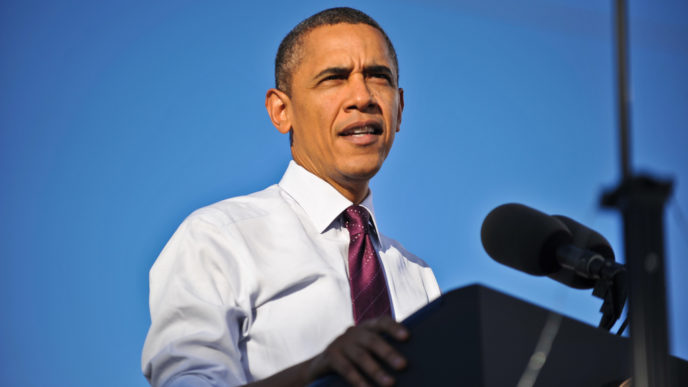
After telling the people of Britain in April that everything might change if Britain left the European Union, President Barack Obama said Friday that the United Kingdom’s vote to leave the EU will not impact the “special relationship” between the United States and Britain.

“The people of the United Kingdom have spoken, and we respect their decision,” Obama said in a statement. “The special relationship between the United States and the United Kingdom is enduring, and the United Kingdom’s membership in NATO remains a vital cornerstone of U.S. foreign, security and economic policy.”

Friday’s conciliatory words were a far cry from those Obama delivered in April during a visit to Britain he urged voters there to remain in the EU.

“I think it’s fair to say that maybe some point down the line there might be a U.K.-U.S. trade agreement, but it’s not going to happen any time soon because our focus is in negotiating with a big bloc, the European Union, to get a trade agreement done,” Obama said then.

“The UK is going to be in the back of the queue,” he said.

On Friday, Republican presidential candidate Donald Trump suggested that Obama’s support of the EU might have contributed to the voters’ decision to leave the EU. Democratic president candidate Hillary Clinton had also supported Britain remaining in the EU.

On Friday, Obama said that the United States will maintain good working relationships with Britain and the EU.

“The United Kingdom and the European Union will remain indispensable partners of the United States even as they begin negotiating their ongoing relationship to ensure continued stability, security and prosperity for Europe, Great Britain and Northern Ireland, and the world,” he said. (For more from the author of “Obama Changes His Stance on US-UK Relationship After Brexit Vote” please click HERE)

Follow Joe Miller on Twitter HERE and Facebook HERE.

This State Becomes the First to Require All Gun Owners Be Entered Into Federal Database

Hawaii became the first state in the nation to enact legislation requiring gun owners to be entered into an FBI database.

The measure, signed into law on Friday by Democratic Gov. David Ige, will automatically notify police if an island resident is arrested anywhere in the country through what is known as the “Rap Back” system.

Fox News reports that the database is already in place in the FBI and used to keep track of people in “positions of trust” such as schoolteachers or bus drivers. Hawaii becomes the first state to use the system to keep track of all gun owners.

Critics says that gun owners should not have to be entered into a database simply for exercising their constitutional right to bear arms.

The National Rifle Association and the Hawaii Rifle Association opposed the legislation.

“This is an extremely dangerous bill. Exercising a constitutional right is not inherently suspicious,” Amy Hunter of the National Rifle Association said in May. “Hawaii will now be treating firearms as suspect and subject to constant monitoring.”

“I don’t like the idea of us being entered into a database. It basically tells us that they know where the guns are, they can go grab them” Jerry Ilo, a firearm and hunting instructor for the state, told the Associated Press last month. “We get the feeling that Big Brother is watching us.”

The law was one of three gun control measures Ige signed on Friday. State law now also bars those convicted of stalking or sexual assault from gun ownership and gives the police the authority to seize firearms from any deemed disqualified due to mental illness.

State Sen. Will Espero, the Democrat who introduced the FBI database registration requirement for gun owners, hopes it will be a model for other states. (For more from the author of “This State Becomes the First to Require All Gun Owners Be Entered Into Federal Database” please click HERE)

Follow Joe Miller on Twitter HERE and Facebook HERE.

How Immigration Fueled the Brexit Result

The vote by Britons on Thursday to leave the European Union doubled as a referendum on how the country views the issue of immigration.

With immigration at an all-time high in Britain, voters concerned about related issues such as economic uncertainty and sovereignty decided to shed their national identity by voting to upend 43 years of life inside the European Union.

The tension over immigration is similar to what’s playing out in the United States, but different in an important way, in that Britain, as a European Union member, has no control of its borders.

That’s because as long as Britain is in the European Union, it has to allow anyone from the 28-member bloc to live and work there.

According to experts, Britain has experienced the changing face of immigration over the years.

Stephen Booth, the co-director of Open Europe, a nonpartisan think tank based in London and Brussels, said that of the roughly 5 million net immigrants to the United Kingdom between 1990 and 2014, over three-quarters came from outside Europe.

But immigration from the European Union now makes up nearly half of the United Kingdom’s net inflow, Booth said. The combination of European Union expansion in 2004 and 2007—which brought in poorer countries like Bulgaria, Romania, and Poland—and the Eurozone economic crisis has influenced substantial internal immigration to Britain and its relatively strong economy.

Proponents of immigration say it has grown the British economy, increased tax revenue, and attracted skilled workers. But critics say immigration has overwhelmed Britain’s public resources, and changed Britain’s culture and values.

“The evidence is that immigration does not have huge economic effects either way,” Booth said in a response to emailed questions from The Daily Signal. “There has been major changes to some areas of the country which are not used to immigration—new shops, languages, etc. Some people view this positively, others feel threatened by the change.”

“EU migrants make a fiscal contribution to the U.K., but the public is concerned that investment in public services, housing, and infrastructure has not kept pace and in some local areas integration is a challenge,” Booth added. “There is a particular concern about low-skilled migration, which can hold down wages for the lowest paid and increase competition for low-paid jobs.”

Yet Booth said policy changes such as the relaxation of restrictions on non-European migration in the late 1990s, and European Union expansion, were not preceded by appropriate public debate and that it is “not unreasonable” for Britons to clamor for greater control over who enters the country.

“[This is] particularly true when the government has promised to reduce numbers,” Booth said. “There is a feeling that politicians have promised something but are not delivering.”

Booth and other experts predict that Britain, split from the European Union and its ethos of free movement, will pursue a more selective immigration policy geared toward attracting skilled migration, based on the needs of the country.

“A ‘Brexit’ will result in a more global-based immigration policy attracting the best talent from around the world,” said Nile Gardiner, the director of The Heritage Foundation’s Margaret Thatcher Center for Freedom.

“This is not about isolation,” Gardiner told The Daily Signal. “It’s about creating a better system for the British economy.”

Booth and Gardiner recommend Britain adopt a policy emulating the point-based systems used in Canada and Australia.

Under this model, an immigrant is “scored” or valued based on skills and qualifications to contribute to the economy. Those who reach a certain threshold would be eligible for a visa.

The government would prioritize industries and employers with skills shortages.

Booth argues this method is more nuanced than it seems, though.

“There is likely to be a continued need for migrant labour to fill low-skilled jobs,” Booth said. “Therefore, the U.K. would also need a mechanism to fill low-skilled jobs or meet labour shortages where employers have recently relied on EU migrants.”

In addition, the result of Thursday’s referendum won’t bring instant change—on immigration or anything else.

The process of breaking apart begins when the government acts on a provision known as Article 50, which sets a two-year deadline for negotiating the departure.

Gardiner contends that Britain will struggle even more to contain immigration during the two-year negotiating period, since people will seek to cross its borders while they still can. Britain cannot legally deny migrants entry before the withdrawal formally takes place.

“There is a big fear factor here,” Gardiner said. “You will see a lot of Europeans moving to Britain in that period. I’m not sure there’s anything you can do to stop that.”

Both experts note that whether Britain is separate from the European Union or a part of it, the country will continue to feel the impact of immigration.

“Despite public pressure to reduce migration, there are several reasons why net immigration is unlikely to reduce much,” Booth said.

“[That’s because] of the effects of globalization on migration flows, which the U.K. is not alone in experiencing, and the likelihood of some constraints on U.K. immigration policy under a new arrangement with the EU.” (For more from the author of “How Immigration Fueled the Brexit Result” please click HERE)

Follow Joe Miller on Twitter HERE and Facebook HERE.

Iran’s Unfriendly Skies

With the blessing of the Obama administration, Boeing Co. has negotiated the sale of a fleet of new jets to the world’s foremost state sponsor of terrorism.

The $17.6 billion deal between the aviation giant and the Islamic Republic of Iran was made possible by the lifting of economic sanctions against Tehran in January. It is a reckless piece of business that Congress must address.

Under terms of the memorandum of agreement, Boeing reportedly will supply 80 planes—including intercontinental jumbo jets—to state-owned Iran Air.

The carrier, according to the U.S. Department of Treasury, has been routinely commandeered by the Islamic Revolutionary Guard Corps and Iran’s Ministry of Defense and Armed Forces Logistics to transport rockets, missiles, and other military equipment, including materials and technologies with ballistic missile applications.

Iran Air flights have also transported military components to Syria (another state sponsor of terrorism).

None of which concerns President Barack Obama, evidently. His nuclear deal with the ayatollahs, including $150 billion in sequestered funds, specifically lifted restrictions on the sale of commercial aircraft. Indeed, enabling Iran to modernize its timeworn fleet was “essential” to striking agreement with Tehran to (supposedly) restrict its nuclear operations in return for easing economic sanctions, according to Boeing executives.

To complete the sale, Boeing still must obtain an export license from the U.S. Department of Treasury’s Office of Foreign Asset Control. Should a U.S. bank or investment firm wish to finance the purchase, it, too, would have to obtain a license from the Office of Foreign Asset Control. (Officials of the U.S. Export-Import Bank have said the bank charter prohibits financing for Iran, but they aren’t the most credible bunch.)

This “licensing” procedure seems downright silly considering that Iran has been designated for years by the U.S. Department of State as “the leading state sponsor of terrorism globally.” As noted in the 2015 edition of the Country Reports on Terrorism, “Iran continues to provide support to Hizballah, Palestinian terrorist groups in Gaza, and various groups in Iraq and throughout the Middle East.”

There is little reason to think that U.S. engagement with Iran is now moderating the regime, according to James Phillips, The Heritage Foundation’s senior research fellow for Middle Eastern affairs. Despite the agreement, he reports, the Islamic Revolutionary Guard Corps has repeatedly challenged U.S. naval forces in the Persian Gulf.

For example, the Guard Corps vessels launched rockets within 1,500 yards of the carrier Harry S. Truman near the Strait of Hormuz in late December, and in January flew drones over U.S. warships and detained and humiliated 10 American sailors. In March, the Guard Corps launched a series of missiles, including two that were emblazoned with the message “Israel must be wiped out” in Hebrew.

To their credit, Reps. Jeb Hensarling, R-Texas, and Peter Roskam, R-Ill., aren’t quite as trusting of Iran as the Obama administration. In a June 16 letter to Boeing CEO Dennis Muilenburg, the lawmakers said they “strongly oppose the potential sale of militarily-fungible products to terrorism’s central supplier,” and sought assurances that the company would repossess or remotely disable aircraft if Iran violated the nuclear deal.

Meanwhile, Roskam has introduced the No Dollars for Ayatollahs Act, which would impose an excise tax of 100 percent on any transaction that involves Iran conducting a financial transaction in U.S. currency.

According to Roskam, “It’s tragic to watch such an iconic American company make such a terribly short-sighted decision. If Boeing goes through with this deal, the company will forever be associated with Iran’s chief export: radical Islamic terrorism.”

In addition, Rep. Charles Boustany, R-La., has introduced the Preventing Investment in Terrorist Regimes Act, which would deny U.S. tax credit to Boeing for the foreign taxes it would pay on the income derived from the Iranian deal.

Both measures are co-sponsored by all six subcommittee chairs of the House Ways and Means Committee. But whether either measure would prove effective in halting the sale, using the tax code to steer the actions of a multinational corporation is a lousy way to set policy.

Besides, Boeing generated more than $96 billion in revenue last year, and its market cap exceeds $86 billion. It also paid a lot of money to lobby in favor of the nuclear deal, including hiring Thomas Pickering, a former ambassador to Israel and the United Nations, to testify before Congress, write letters to high-level officials, and submit op-eds in support of lifting the sanctions. All of which is perfectly acceptable—except that he systematically failed to disclose his relationship with Boeing.

Boeing executives say the proposed sale is necessary to remain competitive against Airbus, the European aviation manufacturer that has struck a $27 billion deal with Iran for 118 planes. But that’s the same lame argument Boeing made in lobbying for reauthorization of the Export-Import Bank—from which Boeing was the top beneficiary of export subsidies.

The fact is, projected demand for commercial planes is forecast to rise for years to come, and both manufacturers are carrying huge backlogs that will take years to fulfill.

Rather than tweak the tax code, Congress should, at the very least, explicitly prohibit financing from the Export-Import Bank for the sale of Boeing planes (or any other product) to Iran.

Additional actions are needed as well. The administration has already increased the risk of yet more death and destruction by the terrorist state. Lawmakers should ensure that Boeing and other U.S. companies don’t become tools of Tehran. (For more from the author of “Iran’s Unfriendly Skies” please click HERE)

Follow Joe Miller on Twitter HERE and Facebook HERE.
LET (BRITISH) FREEDOM RING: UK Gives Middle Finger to the Elites, Exits European Union

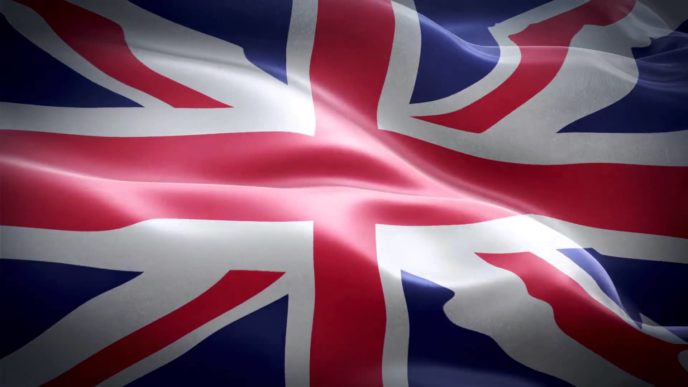
By BBC. Prime Minister David Cameron is to step down by October after the UK voted to leave the European Union.

Speaking outside 10 Downing Street, he said he would attempt to “steady the ship” over the coming weeks and months but that “fresh leadership” was needed.

The PM had urged the country to vote Remain but was defeated by 52% to 48% despite London, Scotland and Northern Ireland backing staying in.

UKIP leader Nigel Farage hailed it as the UK’s “independence day”.

The pound fell to its lowest level against the dollar since 1985 as the markets reacted to the results. (Read more from “Let (British) Freedom Ring: UK Gives Middle Finger to the Elites, Exits European Union” HERE)

___________________________________

Brexit Upends Global Markets as Stocks, Pound Plunge; Yen Soars

By James Regan and Stephen Kirkland. Global markets buckled as Britain’s vote to leave the European Union drove the pound to the lowest in more than 30 years and European banks to their steepest losses on record.

“It’s scary, and I’ve never seen anything like it,” said James Butterfill, 41, head of research and investments at ETF Securities in London. “A lot of people were caught out, and many investors will lose a lot of money.”

Sterling slid by the most on record and European stocks headed for the biggest drop since 2008 as trading soared. The yen strengthened past 100 per dollar for the first time since 2013, gold rose the most in more than seven years and benchmark Treasury yields had their biggest drop since 2009.

The victory for the “Leave” campaign prompted Prime Minister David Cameron to resign. The outcome stunned many investors who’d put wagers on riskier assets over the past week as bookmakers’ odds suggested the chance of a so-called Brexit was less than one in four. (Read more from “Brexit Upends Global Markets as Stocks, Pound Plunge; Yen Soars” HERE)

___________________________________

Britain Has Voted to Leave the EU – What Happens Next?

By Patrick Wintour. The UK’s historic decision to end its 43-year love-hate relationship with the European Union represents a turning point in British history to rank alongside the two world wars of the 20th century.

On the assumption there is no turning back, or collective buyer’s remorse, Britain will live with the political, constitutional, diplomatic and economic consequences for a decade or more . . .

So what happens next? . . .

The scale of the destruction wrought by independence day is such that one of the last redoubts of the establishment left standing – the civil service led by the cabinet secretary Sir Jeremy Heywood – will now take centre stage.

It will be his task, in conjunction with the governor of the Bank of England, Mark Carney, and David Cameron acting as a caretaker prime minister to bring a semblance of shape to the chaos that is likely to ensue. (Read more from “Britain Has Voted to Leave the EU – What Happens Next?” please click HERE)

Follow Joe Miller on Twitter HERE and Facebook HERE.

SMOKING GUN: Hillary Did Not Turn Over Email Showing She Hid Information

Hillary Clinton did not turn over an important email about the problems caused by her use of a private email server for classified information.

Clinton sent an email to her deputy chief of staff stating that she did not want some of her emails to be “accessible,” presumably to Congress or to the State Department itself. That email helped form the basis of a scathing inspector general report that found Clinton violated rules.

Now, we know that Clinton did not hand over that email to State Department investigators, proving that Clinton violated her sworn statement that she handed over all of her emails. Her inability to hand over this email could also provide more evidence that she violated the Espionage Act by allowing national defense information to be “lost, stolen, abstracted, or destroyed” through gross negligence.

“While this exchange was not part of the approximately 55,000 pages provided to the State Department by former Secretary Clinton, the exchange was included within the set of documents Ms. Abedin provided the department in response to our March 2015 request,” said State Department spokesman John Kirby in a statement to the Associated Press. (Read more from “SMOKING GUN: Hillary Did Not Turn Over Email Showing She Hid Information” HERE)

Follow Joe Miller on Twitter HERE and Facebook HERE.
Organization Seeks to Run Third Party Candidate for Unsatisfied Voters

Many Americans are unsatisfied with the choice between Donald Trump and Hillary Clinton as the United States’ 45th president. The organization Better For America was launched June 14 with just such Americans in mind and is planning running an independent candidate for president.

The group is made up of religious leaders and political operatives and is currently choosing a candidate to run. According to The Federalist, the organization’s chief strategist has confirmed that three names have committed to run if they are chosen.

Better For America’s website states that their mission is “to get a credible candidate on the ballot who can win both red AND blue states, presenting the nation with a third party option who changes the historically bad choice we’re facing this fall.”

No independent candidate has won an Electoral College vote since George Wallace in 1968. The Federalist reported:

Even Ross Perot, who netted nearly 20 percent in the 1992 election, failed to win a single state. So what makes Better For America believe this year can be different? The short answer is the unfavorable ratings of both Clinton and Trump.

Better For America’s launch corresponds with new polls showing Trump’s popularity decline. According to CBS News, polls this week showed Clinton up by between four and nine points. Trump is also falling behind in several swing states.

John Kingston III, a former Republican delegate and the founder and chair of Better For America, wrote an opinion piece for CNN about his decision to decline to be a delegate to the Republican National Convention.

“I could not support a candidate like Donald Trump, whose behavior disqualifies him to be a PTA member, let alone president,” Kingston wrote.

Kingston reached out to colleagues and friends who felt the same way. Better For America was born from a “remarkable grassroots coalition of lawyers, pollsters, ballot access professionals and others who shared the belief that something had to be done.”

Trump has also struggled to raise funds for his campaign, which has raised $3.1 million in private donations, while Clinton’s has pulled in approximately $26 million. CBS News reports that the super PACs supporting the candidates also had a large gap: the biggest pro-Trump group had $500,000, while the main pro-Clinton group had $52 million at the end of May.

Trump blamed some of these financial difficulties on the lack of support he is receiving from the Republican Party, Los Angeles Times reported. Although he feels Clinton is receiving more support from her party, he said he feels confident he can fund himself.

“I have a lot of cash; I may do it in the general election,” Trump said. “But it would be nice to have some help from the party.”

But Better For America “is not an attempt to undermine Trump,” according to The Federalist. Better For America plans to win.

Kingston pointed to the polling done by Data Targeting, Inc. on the viability of a third-party candidate, which suggests that 65 percent of respondents would be willing to support a candidate besides Trump or Clinton. The research also found that 90 percent of millennials wanted to see a third party candidate on the ballot.

A possible third party candidate is Libertarian Gary Johnson, though current support for him is quite modest. A CNN poll showed Johnson with 9 percent support nationwide. Jill Stein, the likely Green Party nominee, has 7 percent support.

CNN held a live town hall event Wednesday night with Johnson and his running mate Bill Weld. “The two-party system is a two-party dinosaur, and they’re about to come in contact with the comet here,” Johnson told CNN’s Chris Cuomo. (For more from the author of “Organization Seeks to Run Third Party Candidate for Unsatisfied Voters” please click HERE)

Follow Joe Miller on Twitter HERE and Facebook HERE.

Obama Releases Bin Laden’s Bodyguard From Gitmo

The Obama administration released Guantanamo Bay detainee Abdel Malik Ahmed Abdel Wahab despite a review board’s recommendation that he remain in United States custody.

Wahab was reportedly a bodyguard to Al Qaida leader Usama bin Laden and had a relationship with the former head of Al Qaida’s global operations, Nasir al Wuhayshi. The review board feared Wahab would return to the battlefield after spending his time in Afghanistan with bin Laden, “fighting on the frontlines, [his] possible selection for a hijacking plot, and significant training.”

U.S. authorities concluded that he continued lying to his interrogators as late as 2008, insisting he traveled to Afghanistan to “teach the Koran.” A leaked U.S. military report assessed all of Wahab’s statements “to be false” and found he was employing evasion strategies used by other trained terrorists.

The report further noted Wahab’s “ties to a relative who is a possible extremist, raises concerns about his susceptibility to re-engagement.” While Wahab is being released to Montenegro his future incarceration is no longer at the discretion of the United States government. Guantanamo Bay detainees have returned to the battlefield in the past, setting a troubling precedent.

In 2007 the U.S. released Taliban commander Abdul Qayyum Zakir from Guantanamo Bay to the government of Afghanistan. Zakir was subsequently released from Afghan prison for no apparent reason whatsoever and returned to the Afghan battlefield as a senior commander.

Zakir has since spent his time in Afghanistan masterminding plots to kill US soldiers in southern Helmand province, and reportedly makes millions of dollars in the illicit opium trade. Zakir is currently spearheading the successful Taliban advance against the Afghan National Security Forces in Helmand province, pacified by U.S. troops as late as 2012.

Despite significant ties to known high profile terrorists Wahab will be granted asylum in Montenegro for “re-socialization” and “a return to his family.” When Montenegro accepted another Yemeni detainee in January 2016 it specified the detainee would not required to remain in the country but would “eventually be free to choose the country they want to live in.” (For more from the author of “Obama Releases Bin Laden’s Bodyguard From Gitmo” please click HERE)

Follow Joe Miller on Twitter HERE and Facebook HERE.

Pregnancy Center’s Pro-Life Message Will Not Be Silenced in Indiana

An Indiana pregnancy center won a victory for the pro-life message Wednesday when the 7th Circuit Court of Appeals ruled the Fort Wayne city-bus system “unfairly censored” its pro-life ads.

LifeNews reports, that the Alliance Defending Freedom, which represented the pregnancy center—Women’s Health Link—celebrated the decision.

“A government shouldn’t be censoring ads from a group like Women’s Health Link when it is running nearly identical ads from other groups, such as The United Way. The 7th Circuit’s decision rightly understands that the First Amendment protects freedom of speech for all people, regardless of their political, moral, or religious views,” said ADF Senior Counsel Kevin Theriot, who argued before the 7th Circuit earlier this month. “The city of Fort Wayne’s bus system has a responsibility, like all other government entities, to ensure equal access to community advertising forums that it creates.”

Womens Health Link Ad

Conservative Review’s Nate Madden reported on ADF’s lawsuit earlier this June.

According to the complaint from ADF, Citilink — Fort Wayne’s bus system — ran afoul of the First Amendment in its dealings with Women’s Health Link when it refused to ruse a series of ads “due to Plaintiff’s life-affirming viewpoint regarding the promotion of public health, association with a pro-life group, and alleged discussion of ‘controversial issues’ on its website, which constitutes unlawful viewpoint discrimination.”

The 7th Circuit’s ruling overturned a previous ruling from the U.S. District Court that sided with Citilink.

According to the ADF, the decision recognized that Women’s Health Link’s ad “complies fully with the conditions set forth in Citilink’s rules,” and found that the ad “is a public service announcement that does not so much as hint at advocating or endorsing any political, moral, or religious position… Yet the district judge granted summary judgment in favor of Citilink. He shouldn’t have.”

Women’s Health Link provides pregnant women with alternatives to abortion through counseling and material support. (For more from the author of “Pregnancy Center’s Pro-Life Message Will Not Be Silenced in Indiana” please click HERE)

Follow Joe Miller on Twitter HERE and Facebook HERE.
What’s the Real Reason Americans Hate Obamacare?

University professors, existing as they do in the rarified air of academia, tend to be too clever for their own good. They look for complicated explanations when simple ones would do perfectly well.

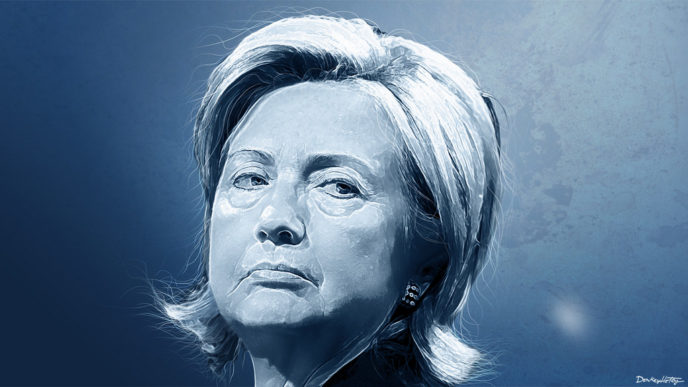
Case in point: professors Lawrence Jacobs and Suzanne Mettler recently coauthored a slightly befuddled sounding op-ed, in which they fret over the continued unpopularity of the Affordable Care Act, better known as ObamaCare. When a policy delivers benefits, they argue, it should be popular. So why do people continue to hate ObamaCare?

According the Kaiser Family Foundation, only 38 percent of Americans approve of the health care law, yet 49 percent disapprove. While there has been some fluctuation within the last year, the favorability gap has persisted over the last three years or so. In fact, the only tie when a majority of Americans consistently approved of the law was in 2010, before the actual effects of the government’s health care takeover could be felt.

To you and me, the reason for this widespread dissatisfaction is obvious, but not to Jacobs and Mettler, who conclude with obvious frustration that the real culprit is “partisanship.”

“Prevailing attitudes of distrust in government, strong partisanship and ingrained attitudes — not features of the law itself — are perpetuating the public’s negative opinion. The ACA remains highly politicized, to say the least. Republicans in the House have voted to delay, defund or repeal the law some 60 times, and its very nickname — ObamaCare — primes us to think of the ACA through a political lens.”

That’s right, gang. It’s those evil Republicans, poisoning our minds against Dear Leader’s health care law. Oh, if only we sheep weren’t so easily led astray by Fox News telling us what to think. Thank heavens for academics, selflessly leading us out of the darkness of our ignorance.

What never seems to occur to these people is that maybe Americans don’t like the law because it has made health care in America measurably worse. Deductibles for the least expensive ObamaCare plans have more than doubled since last year, and are now approaching $7,000 for an individual, an outrageous figure that few will be able to afford, much less the least fortunate, the very people the law was supposedly designed to help.

But even if you do manage to overcome the deductible hurdle, you’re not out of the woods, as many doctors and hospitals are now refusing to accept ObamaCare exchange plans, due to their low reimbursement rate. At the same time, health savings accounts, one of the few ways still possible of increasing price transparency and reducing medical costs, are being boxed out of the ObamaCare marketplace, and more than half of the co-ops created under the law have now gone out of business. Finally, United Healthcare Group, one of the nation’s largest insurance providers, is abandoning ObamaCare plans as unprofitable.

In short, everywhere you look, ObamaCare is reducing access to health care, not expanding it. Defenders of the Affordable Care Act keep boasting about how many more people are “covered” than before, but coverage itself means nothing if you can’t afford the deductible, and if your doctor won’t accept your coverage.

It’s insulting to imply that Americans are insensitive to these problems, incapable of feeling the pain that comes from mandatory reduced access to health care, and incapable of forming informed political opinions based on these observations. I shouldn’t have to point out that people dislike a bad policy because it is bad, but in today’s world of over-analysis and eagerness to ignore obvious truths, apparently such demonstrations are necessary.

Then again, when you consider that ObamaCare, like all big government programs, was passed by people who regard consumers as incapable of tending to their own well-being, and who need to be cared for by a paternalistic state, I suppose it isn’t all that surprising after all. (For more from the author of “What’s the Real Reason Americans Hate Obamacare?” please click HERE)

Follow Joe Miller on Twitter HERE and Facebook HERE.