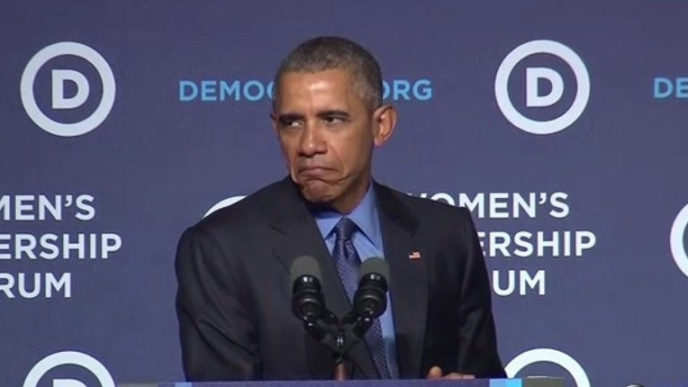
#DALLAS: 6 Alinsky Rules That Explain Obama’s Words and Deeds

In spite of the media’s conspicuous silence on the matter, it is no secret that Saul Alinsky’s manual for “community organizers”—Rules for Radicals—exerted an immeasurable influence over the world’s most well recognized community organizer, President Barack Obama. Thus, to understand why Obama does what he does, we need to be familiar with the vision that Alinsky delineated in his book.

Below are six ideas, six “rules,” that the Godfather of community organizing packs between the covers of Rules, ideas that Obama’s imbibed hook, line, and sinker.

(1). Politics is all about power relations, but to advance one’s power, one must couch one’s positions in the language of morality.

Community organizers are “political realists” who “see the world as it is: an arena of power politics moved primarily by perceived immediate self-interests, where morality is rhetorical rationale for expedient action and self-interest” (12).

(2). There are only three kinds of people in the world: rich and powerful oppressors, the poor and disenfranchised oppressed, and the middle-class whose apathy perpetuates the status quo.

“The world as it is” is a rather simple world. From this perspective, the world consists of but three kinds of people: “the Haves, the Have-Nots, and the Have-a-Little, Want Mores.” The Haves, possessing, as they do, all of “the power, money, food, security, and luxury,” resist the “change” necessary to relieve the Have-Nots of the “poverty, rotten housing, disease, ignorance, political impotence, and despair” from which they suffer (18).

The Have-a-Little, Want Mores comprise what we call “the middle class.” While Alinsky believes that this group “is the genesis of creativity,” (19) he also claims that it supplies the world with its “Do-Nothings.” The Do-Nothings are those who “profess a commitment to social change for ideals of justice, equality, and opportunity, and then abstain from and discourage all effective action for change [.]” Alinsky remarks that in spite of their reputable appearances, the Do-Nothings are actually “invidious” (20).

This being so, they are as resistant to change as are the Haves.

(3). Change is brought about through relentless agitation and “trouble making” of a kind that radically disrupts society as it is.

Since both the middle and upper classes have none of the organizer’s passion for radical change, he must do his best to “stir up dissatisfaction and discontent [.]” He must “agitate to the point of conflict.” The organizer “dramatizes…injustices” and engages in “‘trouble making’ by stirring up” just those “angers, frustrations, and resentments” (117) that will eventuate in the “disorganization of the old and organization of the new” (116 emphasis original). He is determined to give rise to as much “confusion” and “fear” as possible (127).

(4). There can be no conversation between the organizer and his opponents. The latter must be depicted as being evil.

If his compulsion to “agitate” makes it sound as if the organizer is disinclined to converse with those with whom he disagrees, that is because, well, he is. Alinsky is blunt on this point: “You don’t communicate with anyone purely on the rational facts or ethics of an issue” (89). It is true that “moral rationalization is indispensable,” (43) that the organizer must “clothe” one’s goals and strategies with “moral arguments” (36). But there can be no conversation with one’s opponents, for to converse with them is to humanize them.

The organizer’s objective is to demonize those who stand in the way of his designs for change.

The reason for this is simple: “Men will act when they are convinced that their cause is 100 per cent on the side of the angels and that the opposition [is] 100 per cent on the side of the devil.” The organizer “knows that there can be no action until issues are polarized to this degree” (78).

Elaborating on this theme, Alinsky asserts that in “charging that so-and-so is a racist bastard and then diluting” this “with qualifying remarks such as ‘He is a good churchgoing man, generous to charity, and a good husband,’” one convicts oneself of “political idiocy” (134). The winning strategy is to “pick the target, freeze it, personalize it, and polarize it” (130 emphases original).

(5). The organizer can never focus on just a single issue. He must move inexhaustibly from one issue to the next.

The organizer “must develop multiple issues,” (76) for “multiple issues mean constant action and life” (78). Alinsky explains: “A single issue is a fatal strait jacket that…drastically limits” the organizer’s “appeal,” but “multiple issues…draw in…many potential members essential to the building of a broad, mass-based organization” (120). The only “way to keep the action going” is by “constantly cutting new issues as the action continues, so that by the time the enthusiasm and the emotions for one issue have started to de-escalate, a new issue” has emerged “with a consequent revival” (161).

(6). Taunt one’s opponents to the point that they label you a “dangerous enemy” of “the establishment.”

Finally, in order “to put the organizer on the side of the people, to identify him with the Have-Nots,” it is imperative that he “maneuver and bait the establishment so that it will publicly attack him as a ‘dangerous enemy’” (100).

Just because Barack Obama has left behind the low-income Chicago communities in which he once agitated doesn’t mean that he left behind the skills as a community agitator that he learned from Saul Alinsky. Rather, he now regards the country as his community to organize as he sees fit.

Obama not infrequently invokes American ideals, even while he conspires to “fundamentally transform” America.

In spite of what he says, Obama does not want national unity. There can be no unity with a people who one wants to fundamentally transform.

The President regularly speaks and acts as if there is perpetual class warfare being waged by “the Haves” on “the Have Nots.” Indeed, this is what he wants for Americans to believe. It is this desire on his part that accounts for why he spares no occasion to demonize both “the richest one percent” who he accuses of refusing to pay “their fair share,” as well as those Republicans who threaten to impede his plans to raise taxes.

Again, Obama does not want unity. He wants division.

Obama constantly moves from one divisive issue to the next, from Obamacare to gun-control, from amnesty for illegal immigrants to support for “same-sex marriage.” We see now why this is so.

Obama does not want unity. He wants to keep the country as polarized and disoriented as possible.

To know why Obama speaks and acts as he does, we need to know about Saul Alinsky’s Rules for Radicals. (For more from the author of “#DALLAS: 6 Alinsky Rules That Explain Obama’s Words and Deeds” please click HERE)

Follow Joe Miller on Twitter HERE and Facebook HERE.
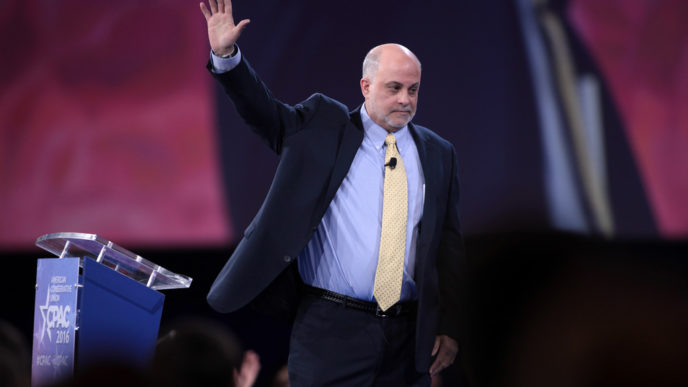
MARK LEVIN: Obama Is The “Anti-Lincoln”

On Friday’s radio program, Conservative Review Editor-in-Chief Mark Levin addressed the assassination of police officers in Dallas Thursday evening.

“I think the police in this country are under attack,” Levin said.

Levin talked about President Obama, the “little man with a massive ego,” noting that the United States is more divided today than when Obama assumed office eight years ago, calling him the “anti-Lincoln.”

He described how the Left in this country thrives on dividing the American people and using our divisions to maintain power. “Our country is dying,” Levin said. “Our country is dying because the politicians and the government are killing it.”

“The lies that are told by this president to promote racism, and to anger people and yes this is inciting … well what is it? If it’s not to incite violence, then why say it?” (For more from the author of “MARK LEVIN: Obama Is The “Anti-Lincoln” please click HERE)

Follow Joe Miller on Twitter HERE and Facebook HERE.

WATCH: A Police Officer Saved This Man’s Life During Dallas Ambush

While details are still unfolding regarding Thursday night’s horrific attack on Dallas law enforcement, Lynn Mays explains how a heroic officer saved his life while his own life was under attack.

After rapid fire shots went off, Mays recalls, “One police officer that was standing there pushed me out of the way because it was coming our direction … next thing you know we hear ‘officer down.'”

The ambush left five Dallas police officers dead and seven injured, becoming the deadliest single incident for U.S. law enforcement since September 11, 2001, according to CNN.

A suspect who died after a shootout with police also reportedly said he wanted to kill white people — especially white police officers — in response to the recent police shootings in Minnesota and Louisiana.

Two of the attackers were snipers who fired “ambush-style” from high up in a building, according to local authorities . . .

The ambush happened as peaceful protests were taking place in Dallas and was likely planned in advance to some degree. (For more from the author of “WATCH: A Police Officer Saved This Man’s Life During Dallas Ambush” please click HERE)

Follow Joe Miller on Twitter HERE and Facebook HERE.

Ex Cop: Quit Targeting My Brothers in Blue

Everything seems to be upside down right now. After decades of far-Left division politics, culture wars, and disingenuous attempts to portray honest political disagreements as moral failings on the part of conservatives, it appears as if the ideological civil war the radical far-Left has always wanted has hit our streets with a fury. As a former police officer and a federal agent, I cannot recall a time where the good guys, our cops, have become the subject of such hatred by radical activists. And yesterday’s horrific murders of the heroic Dallas police officers is just another manifestation of the far-Left’s unending war on America, and her values.

Unlike the broad-based swipes the radical far-Left often takes at conservatives, I will not blame the Democrats for this. I’m sure there are many people of genuinely good faith within the Democrat party who love our country and simply feel that the path to a better tomorrow is best walked down using a different legislative agenda. But, it’s undeniable that a large swath of the modern progressive movement is driven by an anti-American ideology hell-bent on destroying our culture, our values, our standing in the world, and any institution reflecting the principles of American power and law and order.

The harsh rhetoric directed at our police officers is a reflection of this war on law and order, and our institutions, and the tragic body count is adding up. Whether it was the two NYPD police officers brutally murdered in broad daylight by a killer self-described as being motivated by the Black Lives Matter movement, or the Dallas murderer who claimed that he wanted to “kill white people” and cops, it’s clear that the violent, toxic, far-Left rhetoric is bringing the war to our streets.

How much more blood needs to flow, and how many more kids need to salute the coffins of their dead police officer parents before these far-Left propagandists self-reflect on the damaged they’ve caused? It’s time for ALL Americans, regardless of their personal politics, to stand united in ostracizing the dividers among us. The greatest country on Earth will collapse from within if we insist on maintaining the current ideological Tower of Babel being shoved down our throats by radicals who have committed themselves to a political ends regardless of the means. (For more from the author of “Ex Cop: Quit Targeting My Brothers in Blue” please click HERE)

Follow Joe Miller on Twitter HERE and Facebook HERE.
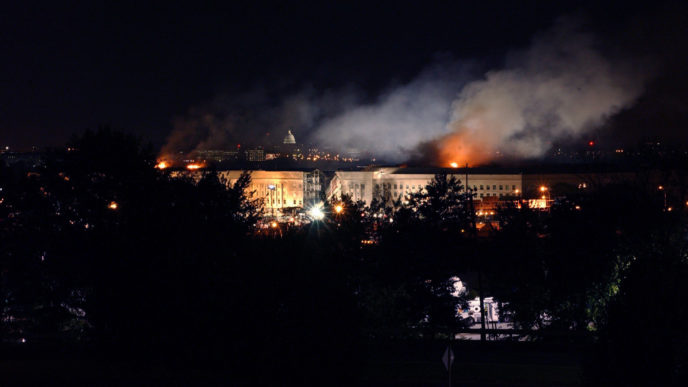
How to Turn Countering Violent Extremism Into Combating Islamist Terrorism

In the aftermath of Orlando, many in Congress are rightly looking for ways to deal with the problem of homegrown Islamist terrorists in the U.S. After all, of the 86 Islamist terrorist attacks and plots aimed at the U.S. homeland since 9/11, 75 involved individuals who radicalized while in the U.S.

The Senate held a hearing last week on the topic of Islamist terrorism, the Obama administration’s refusal to state the nature of the threat, and the focus of countering violent extremism (CVE) efforts. While CVE is a term that started as a way to avoid using the term Islamist terrorism, it is now part of the regular lexicon of the U.S. government and others around the world.

On the whole, CVE programs face significant challenges and have so far failed to achieve their objectives. To revamp counter radicalization efforts, there are several things we should not do.

Do Not Allow Counter Radicalization Efforts to Be Captured by Ulterior Motivations. There are well-organized Islamist groups trying to enter the system in order to shut down conversation about the ideological and theological roots of terrorism and make it all about grievances, root causes, and U.S. foreign policy. This was the case in the U.K., with such groups—even Muslim Brotherhood front groups—being funded by the state. There are many self-appointed “community leaders” desperate for government contracts and patronage who, in reality, represent no one but themselves, accurately labeled “pretenders” by one study. Furthermore, measuring the effectiveness of counter radicalization initiatives is extremely difficult. So if any kind of counter radicalization initiative is to be attempted, then advisers must be carefully vetted. That does not mean that any adviser or partner has to be a government stooge or cheerleader for U.S. foreign policy, it just means there has to be a basic adherence to American principles and a belief in democracy, equality, tolerance, freedom of speech, and the rule of law.

Do Not Avoid Hard Truths. Furthermore, what we do not need is a counter radicalization program full of garbled and obfuscatory language defining the nature of our ideological adversary. This obsession with whitewashing the theological aspects of Islamist terrorism—as one of us recently wrote in National Review—is counter-productive. Claiming that religion has no role in Islamist terrorism may be less offensive to some Muslim sensibilities, but that is by no means the case across the board. For example, the Quilliam Foundation’s Maajid Nawaz recently wrote the following:

Many on the liberal left…took to limiting the problem to “violent extremism” only, using nauseating and insipid phrases such as “al-Qaeda-inspired extremism” to refer to what was clearly an ideology. No, it was not al-Qaeda that “inspired extremism”; it was extremism that inspired al-Qaeda.

Vague platitudes that this has nothing to do with Islam are as unhelpful as saying that this is what Islam is all about. Extremism certainly has something to do with Islam.… The task ahead of us is to name this ideology, isolate it and then discredit it while supporting those who seek to reform Islam today.

This administration’s insistence that Islam has nothing to do with Islamist terrorism makes it seem deluded at best and dishonest at worst.

Do Not Lose Focus of the Main Threat. There will be a temptation for the government—in the pursuit of equality—to say that we can only deal with Islamism if we deal with the threat of the far-right and other terrorist groups. This presents a false choice. Of course there are other terrorist threats that must be vigorously addressed, but there is not a one-size-fits-all approach to every ideology, and the greatest threat posed to national security is from Islamist terrorists. Indeed, despite sloppy rhetoric, it is apparent from the placement of CVE programs in Minneapolis, Los Angeles, Boston, Houston, and other cities that primacy of the Islamist threat is at least somewhat understood in practice. So what could be useful is a counter radicalization strategy with limited scope that recognizes (among other factors) the ideological and theological aspects of this conflict and defines the adversary as being Islamist in nature.

For this to work the U.S. must focus on the real threat from Islamist terrorism. Generic counter radicalization programs make no sense. Islamist terrorism is the only form of terrorist threat today that rises to the level of a national security threat. Any program, if truly needed, should be limited to Islamist-related terrorist activity and focused on diminishing the threat of terrorist activity as defined by statute (as opposed to any other form of public activity or expression). Such programs should be focused to deal with particular threats as opposed to a general information campaign with appropriate review and sunset provisions to ensure the programs are used only as long as they effectively support law enforcement activity and are needed.

A limited and focused strategy to open up lines of dialogue between local Muslim communities, local government, and the police, or offers pathways for those heading down a violent path—especially the young—to speak to those who may be able to dissuade them could be effective and certainly worth the effort. Unfortunately, CVE in its current form is not that approach.

At present, the administration has not devoted sufficient attention to such issues. It should begin immediately. (For more from the author of “How to Turn Countering Violent Extremism Into Combating Islamist Terrorism” please click HERE)

Follow Joe Miller on Twitter HERE and Facebook HERE.

Before Shooting, Dallas Police Department Known for Community Outreach

The police department that became the victim of the deadliest attack on American law enforcement officers since 9/11 is known for its innovative, community-focused approach to the job of protecting the public, and enforcing the law.

The killing Thursday night of five police officers in Dallas, and the police shootings in Louisiana and Minnesota earlier this week, has renewed focus on the tensions between law enforcement and the communities they serve.

While the events of the past week have marred the progress made by police departments nationwide with issues related to relationship-building, transparency about officer use of force incidents, and training in de-escalation techniques, law enforcement experts say it would be wrong to withdraw from those efforts after tragedy strikes.

“I would say that being a nice person, being a nice police department, and a community engagement-focused police department is no guarantee against the possibility that a crazed lunatic will take advantage of a known large-scale event and take out a larger number of cops,” Jim Bueermann, president of the Police Foundation in Washington, D.C., said.

“I would caution people in connecting those dots between community policing and this man’s actions. His actions are the manifestation of evil and have nothing to do with the good work the people of the Dallas Police Department are engaged in,” Bueermann told The Daily Signal in an interview.

According to news reports, a man identified as Micah Johnson, 25, shot and killed five police officers, and injured seven others, in downtown Dallas on Thursday night.

Johnson, a military veteran who is black, said his goal was to kill white police officers. He was killed by police.

The officers who were shot were working patrols at a peaceful protest against the fatal shootings by police officers of black men earlier this week in Minnesota and Louisiana.

Both of those prior shootings were captured on video and broadcast on social media, prompting protests across the U.S.

Leading Reformer

The issue of police violence has roiled the nation since the fatal officer shooting two years ago of a black teenager in Ferguson, Mo., and led to a movement for law enforcement to adopt reforms to foster relationships with their communities.

The Dallas Police Department is known to be at the forefront of those efforts.

Mayor Mike Rawlings told reporters on Friday morning that Dallas this year has the fewest police officer-related shootings of “any large city in America.”

Dallas Police Chief David Brown has credited a focus on de-escalation and community policing for leading to a drop in excessive force complaints against officers.

Officers who work for Brown have to participate in deadly force training every two months. Last year, meanwhile, officers were issued body cameras to record interactions with civilians.

In a move to be transparent, the Dallas Police Department publishes on its website the number of officer-involved shooting incidents every year since 2003. The department also identifies the locations of such incidents, the outcome, and the names of the officers.

At the same time as these reforms, according to The Washington Post, crime in Dallas has also fallen, with murders in the city hitting a 50-year low in 2014.

Many of the reforms implemented in Dallas were embraced by a White House task force created by President Barack Obama two years ago that convened police officers, community leaders, and activists to identify best practices for law enforcement.

‘Keep a Steady Course’

Ron Hosko, a former assistant director of the FBI who has been critical of Obama’s handling of police-involved shootings, says Dallas and other reform-minded departments should double down on those efforts in the face of adversity.

“Once they get past the pain of losing brothers, friends, colleagues, and partners, the department itself has to realize that this was a one-off event that doesn’t tend to happen around our country,” Hosko told The Daily Signal. “I think they will look at it rationally and realize they have been making steps in the right direction. It’s not the time to say we need to hunker down and be more offensive than defensive, and increase the risk to every one of these officers.”

“All of the indicators are good,” Hosko added. “It will be important for them to just keep a steady course.”

Hosko said that a department that communicates with citizens, and has their trust, can better work together to combat bad actors from carrying out violence.

“The best way to prevent these incidents is through community engagement and partners, with people in the crowd saying this guy on the fringe is on the edge and losing his mind, and get someone to pick up his phone and say something,” Hosko said. “You do that by building relationships.”

Ronal Serpas, who was superintendent of the New Orleans Police Department from 2010 to 2014, says that even though the ties between community and police didn’t stop the Dallas killer, it would be unfair to connect the city’s policies to what happened.

“The information we have is that the sniper specifically said he had a hatred of white police officers and his efforts to kill those people is based on his individual hatred,” said Serpas, who is now a professor at Loyola University New Orleans and the co-chair of the national group Law Enforcement Leaders to Reduce Crime and Incarceration.

“That’s a bit different than the community and police department working together, solving crimes together, working through strategies on quality of life issues, and then having someone from that community do this,” Serpas told The Daily Signal. “This incident does not necessarily represent anything other than what it is.”

Still, Serpas and the other law enforcement experts acknowledge that it will be difficult for officers to carry on with their duty during demonstrations that will inevitably happen in the future.

Bueermann suggests Dallas’ officers submit to what they know best.

“Chief Brown is a very smart police leader, and I’m sure when the moment is right he will deliver a message to his officers of the reality that the overwhelming number of people they interact with in Dallas support them and won’t do them harm,” Bueermann said. “There may be tension there, but even in that tension, you will find people desirous of good, respectful police and an appreciation for the good work good cops are doing to keeps those communities safe.” (For more from the author of “Before Shooting, Dallas Police Department Known for Community Outreach” please click HERE)

Follow Joe Miller on Twitter HERE and Facebook HERE.
House Committee OKs Bill Letting the FBI Use Rapid DNA Profiling

A DNA evidence bill that would let police in the field, not just technicians in an accredited lab, quickly test the genetic material of suspects has advanced to the House floor.

The measure centers around a relatively new screening instrument the size of a printer, called Rapid DNA.

The idea behind the technology is to swiftly clear innocents, detain criminals and free up technicians to clear rape kit backlogs, among other things, say Judiciary Committee members who advanced the bill.

Currently, only DNA swabs analyzed in a crime lab, a process that can take many weeks, are permitted to be run against the FBI’s central DNA database for matches.

The bipartisan House Rapid DNA Act, which the Senate unanimously approved in June, would authorize a cheek swab processed by the automated tool to be uploaded into the database, named CODIS. (Read more from “House Committee OKs Bill Letting the FBI Use Rapid DNA Profiling” HERE)

Follow Joe Miller on Twitter HERE and Facebook HERE.

Seoul Says N. Korea Test-Fires Submarine-Launched Missile

South Korea said that North Korea on Saturday test-fired what appeared to be a submarine-launched ballistic missile off its eastern coast.

The missile was fired from a location near the North Korean coastal town of Sinpo, where analysts have previously detected efforts by the North to develop submarine-launched ballistic missile systems, said an official from Seoul’s Defense Ministry, who didn’t want to be named, citing office rules. He couldn’t immediately confirm how far the missile traveled and where it landed.

North Korea’s acquiring the ability to launch missiles from submarines would be an alarming development for rivals and neighbors because missiles from submerged vessels are harder to detect in advance. While security experts say it’s unlikely that North Korea possesses an operational submarine capable of firing missiles, they acknowledge that the North is making progress on such technology. (Read more from “Seoul Says N. Korea Test-Fires Submarine-Launched Missile” HERE)

Follow Joe Miller on Twitter HERE and Facebook HERE.
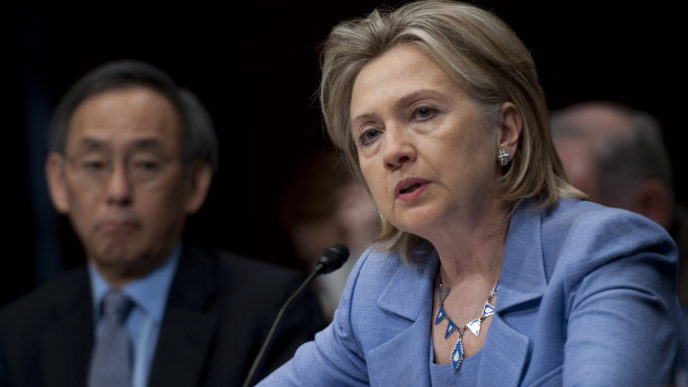
State Department Reopens Clinton Emails Probe

The State Department is reopening an internal investigation of possible mishandling of classified information by Hillary Clinton and top aides, officials told The Associated Press on Thursday.

Although the former secretary of state’s closest confidants have left the agency, they could still face punishment. The most serious is the loss of security clearances, which could complicate her aides’ hopes of securing top positions on her national security team if she becomes president.

The State Department started its review in January after declaring 22 emails from Clinton’s private server to be “top secret.” It was suspended in April so as not to interfere with the FBI’s inquiry. State Department spokesman John Kirby said the probe is restarting after the Justice Department’s announcement Wednesday that it won’t bring any criminal charges. (Read more from “State Department Reopens Clinton Emails Probe” HERE)

Follow Joe Miller on Twitter HERE and Facebook HERE.

7 Key Takeaways From FBI Director’s Hearing on Clinton Email Use

FBI Director James Comey appeared before the House Oversight and Government Reform Committee on Thursday to further detail the FBI’s yearlong investigation into former Secretary of State Hillary Clinton’s use of a private email server and handling of classified information while she was secretary of state.

Chairman Jason Chaffetz, R-Utah, hastily scheduled the hearing just two days after Comey announced the findings of his agency’s investigation into Clinton and recommended that no criminal charges be filed against her.

Although the FBI ultimately concluded Clinton’s handling of classified information did not warrant criminal charges, Comey criticized her Tuesday for being “extremely careless” in setting up a server in the basement of her New York home and using a private email address.

A spokesman for Clinton said that she was happy the investigation is over.

“We are pleased that the career officials handling this case have determined that no further action by the [Justice] Department is appropriate,” Brian Fallon said in a statement to Politico. “As the secretary has long said, it was a mistake to use her personal email and she would not do it again. We are glad that this matter is now resolved.”

The FBI’s findings contradicted some of what Clinton has said publicly and to members of Congress regarding her private server and handling of classified information.

Those conclusions left many Republican lawmakers wondering how Comey and the FBI ultimately came to the decision not to recommend criminal charges and ultimately prompted Thursday’s hearing.

Rep. Elijah Cummings, D-Md., said Comey was given a “thankless” task in investigating Clinton.

“No matter what recommendation you made, you were sure to be criticized,” Cummings said. “In a sense, Mr. Director, you are on trial.”

Here are seven of the key takeaways from Comey’s appearance before the Oversight Committee:

1) Comey says there is no basis that Clinton lied to the FBI.

Nearly one year ago, on July 25, Clinton told reporters at a press conference that she was “confident” she “never sent or received any information that was classified at the time it was sent or received.”

However, during its investigation, the FBI concluded that 110 emails in 52 email chains Clinton returned to the State Department contained classified information when they were sent or received. Eight of those communications contained “top secret” information, 37 received “secret information,” and the rest contained “confidential information,” the FBI said.

Of those emails, a “very small number” had markings identifying them as classified.

During the hearing, Chaffetz questioned whether Clinton lied to the FBI during a three-hour interview that took place Saturday. Though Clinton told the public she never sent or received classified information, Comey said she didn’t lie to the FBI.

“We have no basis to conclude she lied to the FBI,” Comey said Thursday.

2) Chaffetz plans to file a referral to the FBI to look into whether she lied to Congress under oath.

While questioning Comey on Clinton’s statements regarding her handling of classified information, Chaffetz asked Comey if the FBI looked into whether the former secretary of state lied under oath about receiving and sending classified information.

During an October hearing before the House Select Committee on Benghazi, Rep. Jim Jordan, R-Ohio, asked Clinton about classified information sent in emails stored on her server.

“There was nothing marked classified on my emails, either sent or received,” Clinton told Jordan during the hearing.

Comey told Chaffetz that, although he was aware of Clinton’s exchange with Jordan, the FBI hadn’t investigated whether she lied under oath because the agency never received a referral to do so from Congress.

Chaffetz confirmed the committee would send a referral to the FBI to probe Clinton’s testimony.

3) Comey says Clinton’s case is very different from that involving David Petraeus.

Since the FBI’s announcement, many have been pointing to an investigation into former CIA Director David Petraeus’s handling of classified information in comparison with the FBI’s handling of the Clinton matter. Petraeus pled guilty to a misdemeanor charge after disclosing classified information to his biographer Paula Broadwell.

Cummings, the committee’s ranking member, urged Comey to point out the similarities or differences between Petraeus’s and Clinton’s cases.

“He was caught on audio tape telling [Broadwell], and I quote, ‘I mean, they are highly classified,’” Cummings said.

Comey, though, said the case involving Petraeus “illustrates perfectly the kinds of cases the Department of Justice is willing to prosecute.”

“Clearly intentional conduct. Knew what he was doing was violation of the law,” Comey said of the former CIA director. “Huge amounts of information. If you couldn’t prove he knew it, raises the inference [that] he did it and effort to obstruct justice. That combination of things makes it worthy of a prosecution. A misdemeanor prosecution, but a prosecution nonetheless.”

4) There is no transcript or recording of Clinton’s meeting with the FBI on Saturday, and she wasn’t placed under oath.

Clinton met with the FBI for a three-hour interview Saturday, which Comey said was the agency’s last step before concluding its investigation.

During his testimony before the Oversight Committee today, Comey said he wasn’t involved in Clinton’s interview and admitted there was no transcript or recording of the meeting. Furthermore, Comey said Clinton was not put under oath during her interview with the FBI.

However, Comey stressed that it is still a crime to lie to federal agents.

5) Comey said Clinton isn’t sophisticated in her knowledge of classification systems.

Many of the Republicans questioning Comey wondered how Clinton, whose résumé includes first lady, U.S. senator from New York, and secretary of state, would not understand the government’s classification requirements.

“Is it your statement, then, before this committee that Secretary Clinton should have known not to send classified information and yet she did?” Rep. Tim Walberg, R-Mich., asked Comey.

“Certainly she should have known not to send classified information,” Comey said. “As I said, that’s the definition of negligent. I think she was extremely careless. I have to think she was negligent. That I could establish. What we can’t establish is that she acted with the necessary criminal intent.”

Included in three of the emails found on Clinton’s server were paragraphs marked with a “(c),” indicating that the information referenced was to be treated as classified.

Much of that classified information originated from Clinton’s aides, but was included in emails the former secretary of state sent and received.

Comey said he would have assumed that any “reasonable” person would have known the importance of those markings. However, Comey later concluded he wasn’t sure “whether she was actually sophisticated enough to understand what a ‘c’ in parentheses means.”

“One of the things I’ve learned is that the secretary may not be as sophisticated as people would assume,” Comey said.

He further noted that Clinton didn’t have a computer in her office at the State Department.

6) Clinton gave people without security clearances access to classified information.

Comey told lawmakers Thursday that Clinton’s personal server set-up exposed people without security clearances to classified information.

“Did Hillary Clinton give non-cleared people access to classified information?” Chaffetz asked.

“Yes,” Comey replied.

Though the FBI director could not say exactly how many “non-cleared” people had access to that classified information, Comey did estimate it was between two and 10.

Both Chaffetz and Jordan questioned whether Clinton’s lawyers had security clearances and were exposed to that classified information when they were sorting through the emails that would later be turned over to the State Department.

Though Comey said Clinton’s lawyers were among those who were “non-cleared” and accessed classified information, Fallon, spokesman for Clinton, tweeted that the lawyers who sifted through the former secretary of state’s emails had Top Secret-level clearance.

7) Comey contradicted a number of statements Clinton made to reporters and Congress regarding the use of her private email server.

During his line of questioning, Rep. Trey Gowdy, R-S.C., asked Comey to respond to a number of comments Clinton made over the course of the past year regarding her handling of classified information, some of which he said were found to be untrue throughout the course of the FBI’s investigation.

Comey first confirmed there was information marked classified found on Clinton’s server, despite her reassurances she neither sent nor received any information marked classified.

The FBI director then said that Clinton did, indeed, email classified material, though she in the past said she never did.

Gowdy then asked Comey if Clinton only used one device, as she said she did, to which Comey said she used multiple devices during her tenure as secretary of state.

Gowdy also questioned whether Clinton returned all work-related emails to the State Department. Thousands, Comey said, were not returned and were later recovered by the FBI.

Others were deleted, and traces of work-related emails were found “on devices or in slack space,” Comey said.

“Whether they were deleted or whether when a server changed out something happened to them, there is no doubt that the work-related emails were removed electronically from the email system,” he said. (For more from the author of “7 Key Takeaways From FBI Director’s Hearing on Clinton Email Use” please click HERE)

Follow Joe Miller on Twitter HERE and Facebook HERE.