Facebook Users OBLITERATE the FBI’s Ratings Following Hillary Decision

Negative ratings of the Federal Bureau of Investigation have surged on Facebook as American’s look for ways to register their displeasure after the Bureau let Hillary Clinton get away with endangering national security.

Mike Gay of FTR Radio was the first to notice the surge in Facebook negative ratings of the FBI.

Gay told Conservative Review that when he first checked yesterday, there were about 10,000 one star ratings of the bureau. When he posted on Facebook there were 46,000. Four hours after his post, at the time of this publication the one star ratings had jumped by another 2,000 to 48,000.

You can see the current count by visiting the Bureau’s Facebook page.

Here are some of the most recent reviews:

A lot of people just left the definition of 18 U.S.C. Section 793(h):

It’s evident the decision to place Hillary Clinton above the law has not gone over well. Is the FBI the latest institution of government to lose the trust of the American people? If Facebook ratings are any indication, it seems so. (For more from the author of “Facebook Users OBLITERATE the FBI’s Ratings Following Hillary Decision” please click HERE)

Follow Joe Miller on Twitter HERE and Facebook HERE.

Experts Doubt Obama’s Final Troop Cut in Afghanistan Helps His Successor

President Barack Obama said he won’t withdraw nearly half the remaining U.S. troops in Afghanistan, much less completely withdraw as he originally intended, so the next president will have a stronger hand in a country where American forces have battled the Taliban and al-Qaeda for nearly 15 years.

“Today’s decision best positions my successor to make future decisions about our presence in Afghanistan,” Obama said Wednesday at the White House, announcing he will withdraw 1,400 troops rather than 4,300 troops.

In January, the next U.S. president will assume the most solemn responsibility of the commander-in-chief, the security of the United States, and the safety of the American people. The decision I’m making today ensures that my successor has a solid foundation for continued progress in Afghanistan as well as the flexibility to address the threat of terrorism as it evolves.

Obama announced that at the end of his presidency, on Jan. 20, the U.S. will have 8,400 troops in Afghanistan, down from the current 9,800.

He previously planned to cut troop levels to 5,500 before leaving office. And earlier, he said he would withdraw nearly all U.S. troops.

In June, four former U.S. ambassadors asked Obama in a letter to leave the count at 9,800 troops, arguing 5,500 was insufficient.

The Heritage Foundation previously called for Obama to maintain the troop levels and announce those plans before the NATO Summit, to be held this weekend in Warsaw, as a way to encourage allied countries to maintain a presence.

Obama’s decision could have been worse, but this reduction doesn’t exactly strengthen the next president, James Carafano, vice president for foreign and defense policy studies at The Heritage Foundation, said.

“There are already too few forces to defend the ones they have, but I’m more comfortable with 8,000 [troops] than I am 5,000. We need 10,000 to 15,000,” Carafano told The Daily Signal in a phone interview. “This will at least provide room for the next president to make decisions on Afghanistan. This is not a strategy, but it allows him to leave office without another complete and utter failure.”

Afghanistan is still a mess, said Bill Roggio, a senior fellow at the Foundation for Defense of Democracies and editor of The Long War Journal.

“If the next president is interested in improving the situation, this could put more options on the table, but nothing in Afghanistan is sufficient at this point,” Roggio told The Daily Signal in a phone interview. He said:

The Taliban is still going toe-to-toe with Afghan forces. So, for the next president, this prolongs an Afghan policy that is already on life support. But 5,000 [troops] would have left the next president with almost no options.

What the Obama administration calls major combat operations in Afghanistan ended in 2014, but the U.S.-led coalition has remained to train and advise Afghan forces to combat the Taliban and al-Qaeda. Obama noted the 15th anniversary of the 9/11 terrorist attack is approaching, and that 2,200 Americans soldiers have died in Afghanistan.

“As president and commander-in-chief, I’ve made it clear that I will not allow Afghanistan to be used as safe haven for terrorists,” Obama said during his remarks.

Obama initially proposed to withdraw nearly all troops from Afghanistan by the end of his second term. However, last September, Taliban forces captured Kunduz, the first time the terror group had captured a major city since 2001.

After Kunduz, Obama decided to keep 5,500 U.S. troops in the country when he departs office. But, Obama said Wednesday, after consulting with generals and Defense Secretary Ash Carter, he instead will maintain a larger military presence.

The decision makes little sense and might have been guided by politics, said Thomas Donnelly, resident fellow in security studies at the American Enterprise Institute.

“To go from 9,800 to 8,400 is a cut that makes no sense politically, strategically, or militarily,” Donnelly told The Daily Signal in a phone interview. “He may be trying to split the difference between those in his [political] base who want us out entirely and those saying we don’t have enough.”

Donnelly said he doesn’t believe Obama did any favors for the next president.

“It is better than it might have been otherwise, but even 9,800 is barely adequate,” Donnelly said. “This is still a mess for the next president, but it could have been a bigger mess otherwise.” (For more from the author of “Experts Doubt Obama’s Final Troop Cut in Afghanistan Helps His Successor” please click HERE)

Follow Joe Miller on Twitter HERE and Facebook HERE.

Pastor Says State Law Threatens His Right to Teach the Bible in His Church

An Iowa pastor, saying the government needs to stop “meddling in religious affairs,” is at odds with the state over a law focused on sexual orientation and gender identity that he says hinders his First Amendment right to teach on matters of sexuality.

“The state of Iowa is not the self-appointed pope of all churches,” Cary Gordon, pastor of Cornerstone World Outreach, a nondenominational church with around 900 members in Sioux City, Iowa, told The Daily Signal.

An Iowa Civil Rights Commission brochure on sexual orientation and gender identity says churches are places of public accommodation and generally are not exempt from the law, according to First Liberty Institute, a legal organization that defends religious freedom and represents Gordon’s church.

The brochure says the Iowa Civil Rights Act, Iowa Code Chapter 216, “was expanded to add sexual orientation and gender identity to the list of protected classes.” The change took effect in July 2007.

“It is now illegal in Iowa to discriminate against a person because of his/her sexual orientation or gender identity,” the brochure says.

Gordon told The Daily Signal:

As it reads, according to their interpretation of the Iowa code, if you discuss anything out of the Scripture that relates to sexuality or marriage … you’re not in compliance with the law and you can be sort of treated like a criminal.

Gordon, senior pastor of his church for over 21 years, said his greatest concern with the issue is the “flagrant disrespect for the First Amendment of the Constitution, where the state retains the power to correct or control what I say and teach out of the Bible.”

“It’s fundamentally wrong and I can’t comply with that,” Gordon added. “I’ve taken an oath to the Lord Jesus Christ, and I obey the Bible above all men. … I have to obey God, and that puts me in a precarious position.”

The state Civil Rights Commission’s brochure “also indicates that the government has the authority to force churches to allow men in women’s restrooms,” First Liberty Institute says in a case summary.

“The Iowa Civil Rights Commission has not made any changes in its interpretation of the law, nor does it intend to ignore the exemption for religious institutions when applicable,” Kristin Johnson, the commission’s executive director, wrote in an email to The Daily Signal. Johnson wrote:

The Iowa Civil Rights Commission enforces Chapter 216 of the Iowa Code, which in part prohibits discrimination by public accommodations. The code also provides for an exemption for ‘Any bona fide religious institution with respect to any qualifications the institution may impose based on religion, sexual orientation, or gender identity when such qualifications are related to a bona fide religious purpose.’ This law was enacted in 2007 and has been consistently enforced, and the exemption consistently applied, since its enactment.

First Liberty Institute’s letter requests that the civil rights panel publically acknowledge that Gordon’s church will be exempt from enforcement action.

“I would hate to see a day when a pastor for doing his duties is arrested or something and taken to jail,” Gordon said, adding:

What we’re facing right now is quite literally a pastor being drug into court and having to spend a lot of church money to defend himself for doing something that pastors have been doing faithfully for hundreds of years and that’s teaching orthodox, Christian doctrine.

“I think this is really important that we stay true to our founding principles,” he said.

A federal lawsuit was filed July 4 on behalf of Fort Des Moines Church of Christ in Des Moines, Iowa, against members of the state Civil Rights Commission over concerns similar to those expressed by Cornerstone World Outreach.

Gordon, the father of three girls and two boys, said the state doesn’t “have any right to tell us what to teach or how to teach it or how to apply our beliefs in real life.”

“The state needs to stay out of our business,” he said.

Over the long term, the pastor said, this issue should affect all Christians:

The Bible teaches us to be modest and it teaches us certain roles that are honorable and beautiful about both sexes, male and female. You have to try to survive in a world that seems more and more hostile to what you believe whether you’re at church or at the shopping center.

Chelsey Youman, chief of staff and counsel for First Liberty Institute, told The Daily Signal it is hoping to avoid litigation.

“We … wanted to give the state commission a chance to do the right thing here,” Youman said.

The Iowa Civil Rights Commission has by 10 a.m. Aug. 5 to respond.

“We think it’s an absolute wake-up call to churches across America that we’re now having a state government say what you can and cannot say about your own doctrinal beliefs within the confines of your church, let alone having to open your facilities up in a way that is against your doctrine,” Youman said. (For more from the author of “Pastor Says State Law Threatens His Right to Teach the Bible in His Church” please click HERE)

Follow Joe Miller on Twitter HERE and Facebook HERE.
The Most Breathtaking and Frightening Fix in American History

Yesterday we witnessed a most frightening manifestation of the corruption of our political system. Doubly frightening because of what it augurs for all our futures if Hillary Clinton should prevail in the November elections. At the center of this corruption – but hardly alone – are the criminal Clintons – the Bonnie and Clyde of American politics – and their Democratic Party allies; but we should not fail to mention also the Republican enablers who would rather fight each other and appease their adversaries than win the political wars.

We knew they could fix the Department of Justice; we suspected they could fix the FBI. What we didn’t know was that the fixes would be this transparent: the secret meeting with a chief culprit and the DOJ head; the next day announcement by Justice that the Clinton bribery investigations would be postponed until well after the election; the suspiciously brief FBI interrogation of the former Secretary of State who during her entire tenure had recklessly breached national security protocols, deleted 30,000 emails; burned her government schedules; put top secret information onto a hackable server in violation of federal law; and topping it all the failure of the FBI director after enumerating her reckless acts to recommend a prosecution – all within a single week, and just in time for the Democrats’ nominating convention. It was, all in all, the most breathtaking fix in American history.

And it wasn’t ordinary criminal corruption. It was corruption affecting the nation’s security by individuals and a regime that have turned the Middle East over to the Islamic terrorists; that have enabled America’s chief enemy in the region, Iran, to become its dominant power; that allowed the Saudis, deeply implicated in the attacks of 9/11, to cover their crimes and spread Islamic hate doctrines into the United States; it was about selling our foreign policy to the high bidders at home and abroad, and about making America vulnerable to our enemies.

What can be done? First of all it’s a matter of deciding who you believe – the political elites who are telling you everything is normal, or your lying eyes? The political system is corrupt and cannot clean its own house. What is needed is an outside political force that will begin the job by putting the interests of our country first again. Call it what you will – nationalism or common sense – it is the most pressing need for the country now. Such a force would have to find its support outside Washington. Call that what you will – populism or democracy – no reforming leader can be elected without it. No political leader can begin to accomplish this task, without the support of ordinary Americans registered at the ballot box. (For more from the author of “The Most Breathtaking and Frightening Fix in American History.” please click HERE)

Follow Joe Miller on Twitter HERE and Facebook HERE.
The Explanation Americans Deserve From FBI on Clinton’s Server Use

“I am confident that I never sent or received any information that was classified at the time it was sent and received.” That is what former Secretary of State Hillary Clinton told reporters last July.

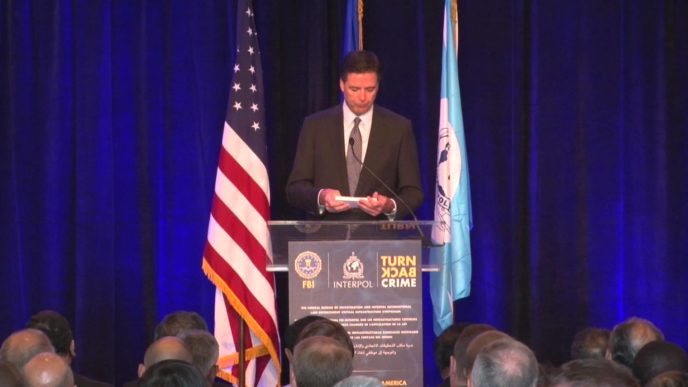
At least we now know that was not true. In announcing that the FBI would be recommending to the higher-ups at the Department of Justice that no charges be filed against Clinton, Director James Comey stated:

From the group of 30,000 emails returned to the State Department [by Clinton], 110 emails in 52 email chains have been determined by the owning agency to contain classified information at the time they were sent or received. … With respect to the thousands of emails we found that were not among those produced to State, agencies have concluded that three of those were classified at the time they were sent or received …

Eight of these communications contained “top secret” information, and 37 contained “secret” information, while the remainder contained “confidential” information.

While stating that the bureau’s investigation did not uncover evidence of intentional mishandling of classified information or of disloyalty or an attempt to obstruct justice, Comey’s remarks reflected the FBI’s conclusions that Clinton’s conduct was hardly in keeping with her previous statement that she took “classified information very seriously.”

Comey reiterated:

Although we did not find clear evidence that Secretary Clinton or her colleagues intended to violate laws governing the handling of classified information, there is evidence that they were extremely careless in their handling of very sensitive, highly classified information.

For example, seven email chains concern matters that were classified at the Top Secret/Special Access Program level when they were sent and received. These chains involved Secretary Clinton both sending emails about those matters and receiving emails from others about the same matters. There is evidence to support a conclusion that any reasonable person in Secretary Clinton’s position, or in the position of those government employees with whom she was corresponding about these matters, should have known that an unclassified system was no place for that conversation. …

None of these emails should have been on any kind of unclassified system, but their presence is especially concerning because all of these emails were housed on unclassified personal servers not even supported by full-time security staff, like those found at Departments and Agencies of the U.S. Government—or even with a commercial service like Gmail.

… Only a very small number of the emails containing classified information bore markings indicating the presence of classified information. But even if information is not marked “classified” in an email, participants who know or should know that the subject matter is classified are still obligated to protect it.

Just how careless was Clinton in the handling of our nation’s secrets (and those of our allies to which she was privy)?

While Comey stated that the FBI did not uncover direct evidence that Clinton’s personal accounts were successfully hacked by hostile actors, he was quick to add that “given the nature of the system and of the actors potentially involved, … we would be unlikely to see such direct evidence” and that the FBI did uncover evidence “that hostile actors gained access to the private commercial email accounts of people with whom Secretary Clinton was in regular contact from her personal account.”

Moreover, the FBI found that Clinton “also used her personal email extensively while outside the United States, including sending and receiving work-related emails in the territory of sophisticated adversaries.”

Comey added, “Given that combination of factors, we assess it is possible that hostile actors gained access to Secretary Clinton’s personal email account.”

According to Comey, the FBI failed to uncover evidence that Clinton intentionally divulged classified information (which might otherwise have supported charges under 18 U.S.C. § 798), that she intentionally removed and retained classified information without authorization (which might otherwise have supported a charge under 18 U.S.C. § 1924—the charge to which Gen. David Petraeus pled guilty), or that she lied about it to federal investigators (which might otherwise have supported a charge under 18 U.S.C. § 1001).

However, the facts, as outlined by Comey, could possibly support a charge under 18 U.S.C. § 793, which, among other things, makes it a federal crime, punishable by up to 10 years’ imprisonment, for an official who has been entrusted with classified information relating to the national defense to “permit … the same to be removed from its proper place of custody or delivered to anyone in violation of his trust, or to be lost, stolen, abstracted, or destroyed” through the exercise of gross negligence.

By Clinton’s own account, she used personal emails as a matter of “convenience;” on the issue of whether that was grossly negligent or not, Comey was strangely silent.

This appears to end the matter, at least so far as the ongoing criminal investigation is concerned. Since the matter will likely not be decided in a court of law, it will now be up to the court of public opinion.

As a preface to his remarks, Comey stated, “I am going to include more detail about our process than I ordinarily would, because I think the American people deserve those details in a case of intense public interest.” A laudable sentiment, to be sure, but one which fell a bit short on its promise. Regardless of the outcome, the public deserved an explanation as to whether the FBI considered charging Clinton with gross negligence in the handling of classified information, and if not, why not. (For more from the author of “The Explanation Americans Deserve From FBI on Clinton’s Server Use” please click HERE)

Follow Joe Miller on Twitter HERE and Facebook HERE.

China Says Wants Peace After Paper Warns on South China Sea Clash

China’s government sought to downplay fears of conflict in the South China Sea after an influential state-run newspaper said on Tuesday that Beijing should prepare for military confrontation.

Editorials in the Global Times newspaper ahead of a July 12 international court ruling on competing claims in the South China Sea by China and the Philippines said the dispute had already been complicated by U.S. intervention.

It faced further escalation due to the threat posed by The Hague-based tribunal to China’s sovereignty, the paper said.

“Washington has deployed two carrier battle groups around the South China Sea, and it wants to send a signal by flexing its muscles: As the biggest powerhouse in the region, it awaits China’s obedience,” the Global Times said.

The paper said China should speed up development of its military deterrence. While it could not keep up with the United States in the short-term, “it should be able to let the U.S. pay a cost it cannot stand if it intervenes in the South China Sea dispute by force,” the paper said. (Read more from “China Says Wants Peace After Paper Warns on South China Sea Clash” HERE)

Follow Joe Miller on Twitter HERE and Facebook HERE.
Syrian Refugees Admitted to U.S. More Than Doubled in June; Only 3 per 1000 Were Christian

The “surge” of Syrian refugee admissions first announced by the State Department last spring hit a new peak during June – 2,381 refugees, or more than double the number permitted to resettle in the United States in May.

Of them, eight (0.3 percent) are Christians and 2,364 (99.2 percent) are Sunni Muslims. The remainder comprise eight other Muslims, and one refugee giving no religious affiliation, according to State Department Refugee Processing Center data.

In comparison, 1,069 Syrian refugees were admitted during May, of whom two were Christians and 1,060 were Sunnis. The other seven were other Muslims.

With the more than doubling of the number of admissions between May and June, the administration now looks, after a sluggish start, to be on track to meet President Obama’s target of 10,000 Syrian refugee admissions during fiscal year 2016.

As of the end of June – and the number did not change on Friday, July 1 – the total number of Syrian refugees allowed to resettle in the U.S. stands at 5,186. With three months of FY 2016 to go, the administration will need to admit an average of 1,604 Syrian refugees each month in July, August and September, to hit the target. (Read more from “Syrian Refugees Admitted to U.S. More Than Doubled in June; 0.3 Percent Were Christians” HERE)

Follow Joe Miller on Twitter HERE and Facebook HERE.

Monster Landslide Rocks Southeast Alaska

A massive landslide, estimated to be around six-and-half miles long, near Glacier Bay has scientists in New York clambering to get to Southeast. The slide happened Tuesday morning, and was discovered by a local pilot.

On Tuesday morning, when Paul Swanstrom saw the dust cloud hovering over the Lamplugh Glacier, he said he knew what it was immediately . . .

This landslide in Glacier Bay National Park, like the ones in 2014 and 2012, sent millions of tons of debris spilling down the mountainside. According to the Alaska Earthquake Center it happened at 8:21 a.m. Swanstrom flew over it about two hours later. (Read more from “Monster Landslide Rocks Southeast Alaska” HERE)

Follow Joe Miller on Twitter HERE and Facebook HERE.

Despite Gun Control Rhetoric, Obama Arms Federal Civilian Agencies More Than Ever

The U.S. Agriculture Department’s Animal and Plant Health Inspection Service doesn’t seem like a Wild West sort of federal agency since its biologists mostly check on the human health impact of animal and plant species.

But it reported buying $4.7 million in high-powered weapons, ammunition and military gear during the last decade, including shotguns, night vision goggles, and propane cannons, according to federal purchasing records reviewed by the nonpartisan government spending watchdog openthebooks.com.

About $1.7 million of that spending occurred in 2014 alone.

The agency says it needs the equipment to protect its workers in the wild from feral swine, more commonly known as wild hogs. But spending critics like openthebooks.com see such purchases as part of a much larger trend toward militarizing federal civilian agencies and local police at taxpayer expense.

And the irony is such purchases have massively expanded over the last decade, even as President Obama has repeatedly pushed to limit access to high-powered gun and weapons in America, most recently after the Orlando terror attack last month. (Read more from “Despite Gun Control Rhetoric, Obama Arms Federal Civilian Agencies More Than Ever” HERE)

Follow Joe Miller on Twitter HERE and Facebook HERE.

Statement by FBI Director James Comey on Secretary Hillary Clinton’s Use of Personal E-Mail

Good morning. I’m here to give you an update on the FBI’s investigation of Secretary Clinton’s use of a personal e-mail system during her time as Secretary of State.

After a tremendous amount of work over the last year, the FBI is completing its investigation and referring the case to the Department of Justice for a prosecutive decision. What I would like to do today is tell you three things: what we did; what we found; and what we are recommending to the Department of Justice.

This will be an unusual statement in at least a couple ways. First, I am going to include more detail about our process than I ordinarily would, because I think the American people deserve those details in a case of intense public interest. Second, I have not coordinated or reviewed this statement in any way with the Department of Justice or any other part of the government. They do not know what I am about to say.

I want to start by thanking the FBI employees who did remarkable work in this case. Once you have a better sense of how much we have done, you will understand why I am so grateful and proud of their efforts.

So, first, what we have done:

The investigation began as a referral from the Intelligence Community Inspector General in connection with Secretary Clinton’s use of a personal e-mail server during her time as Secretary of State. The referral focused on whether classified information was transmitted on that personal system.

Our investigation looked at whether there is evidence classified information was improperly stored or transmitted on that personal system, in violation of a federal statute making it a felony to mishandle classified information either intentionally or in a grossly negligent way, or a second statute making it a misdemeanor to knowingly remove classified information from appropriate systems or storage facilities.

Consistent with our counterintelligence responsibilities, we have also investigated to determine whether there is evidence of computer intrusion in connection with the personal e-mail server by any foreign power, or other hostile actors.

I have so far used the singular term, “e-mail server,” in describing the referral that began our investigation. It turns out to have been more complicated than that. Secretary Clinton used several different servers and administrators of those servers during her four years at the State Department, and used numerous mobile devices to view and send e-mail on that personal domain. As new servers and equipment were employed, older servers were taken out of service, stored, and decommissioned in various ways. Piecing all of that back together—to gain as full an understanding as possible of the ways in which personal e-mail was used for government work—has been a painstaking undertaking, requiring thousands of hours of effort.

For example, when one of Secretary Clinton’s original personal servers was decommissioned in 2013, the e-mail software was removed. Doing that didn’t remove the e-mail content, but it was like removing the frame from a huge finished jigsaw puzzle and dumping the pieces on the floor. The effect was that millions of e-mail fragments end up unsorted in the server’s unused—or “slack”—space. We searched through all of it to see what was there, and what parts of the puzzle could be put back together.

FBI investigators have also read all of the approximately 30,000 e-mails provided by Secretary Clinton to the State Department in December 2014. Where an e-mail was assessed as possibly containing classified information, the FBI referred the e-mail to any U.S. government agency that was a likely “owner” of information in the e-mail, so that agency could make a determination as to whether the e-mail contained classified information at the time it was sent or received, or whether there was reason to classify the e-mail now, even if its content was not classified at the time it was sent (that is the process sometimes referred to as “up-classifying”).

From the group of 30,000 e-mails returned to the State Department, 110 e-mails in 52 e-mail chains have been determined by the owning agency to contain classified information at the time they were sent or received. Eight of those chains contained information that was Top Secret at the time they were sent; 36 chains contained Secret information at the time; and eight contained Confidential information, which is the lowest level of classification. Separate from those, about 2,000 additional e-mails were “up-classified” to make them Confidential; the information in those had not been classified at the time the e-mails were sent.

The FBI also discovered several thousand work-related e-mails that were not in the group of 30,000 that were returned by Secretary Clinton to State in 2014. We found those additional e-mails in a variety of ways. Some had been deleted over the years and we found traces of them on devices that supported or were connected to the private e-mail domain. Others we found by reviewing the archived government e-mail accounts of people who had been government employees at the same time as Secretary Clinton, including high-ranking officials at other agencies, people with whom a Secretary of State might naturally correspond.

This helped us recover work-related e-mails that were not among the 30,000 produced to State. Still others we recovered from the laborious review of the millions of e-mail fragments dumped into the slack space of the server decommissioned in 2013.

With respect to the thousands of e-mails we found that were not among those produced to State, agencies have concluded that three of those were classified at the time they were sent or received, one at the Secret level and two at the Confidential level. There were no additional Top Secret e-mails found. Finally, none of those we found have since been “up-classified.”

I should add here that we found no evidence that any of the additional work-related e-mails were intentionally deleted in an effort to conceal them. Our assessment is that, like many e-mail users, Secretary Clinton periodically deleted e-mails or e-mails were purged from the system when devices were changed. Because she was not using a government account—or even a commercial account like Gmail—there was no archiving at all of her e-mails, so it is not surprising that we discovered e-mails that were not on Secretary Clinton’s system in 2014, when she produced the 30,000 e-mails to the State Department.

It could also be that some of the additional work-related e-mails we recovered were among those deleted as “personal” by Secretary Clinton’s lawyers when they reviewed and sorted her e-mails for production in 2014.

The lawyers doing the sorting for Secretary Clinton in 2014 did not individually read the content of all of her e-mails, as we did for those available to us; instead, they relied on header information and used search terms to try to find all work-related e-mails among the reportedly more than 60,000 total e-mails remaining on Secretary Clinton’s personal system in 2014. It is highly likely their search terms missed some work-related e-mails, and that we later found them, for example, in the mailboxes of other officials or in the slack space of a server.

It is also likely that there are other work-related e-mails that they did not produce to State and that we did not find elsewhere, and that are now gone because they deleted all e-mails they did not return to State, and the lawyers cleaned their devices in such a way as to preclude complete forensic recovery.

We have conducted interviews and done technical examination to attempt to understand how that sorting was done by her attorneys. Although we do not have complete visibility because we are not able to fully reconstruct the electronic record of that sorting, we believe our investigation has been sufficient to give us reasonable confidence there was no intentional misconduct in connection with that sorting effort.

And, of course, in addition to our technical work, we interviewed many people, from those involved in setting up and maintaining the various iterations of Secretary Clinton’s personal server, to staff members with whom she corresponded on e-mail, to those involved in the e-mail production to State, and finally, Secretary Clinton herself.

Last, we have done extensive work to understand what indications there might be of compromise by hostile actors in connection with the personal e-mail operation.

That’s what we have done. Now let me tell you what we found:

Although we did not find clear evidence that Secretary Clinton or her colleagues intended to violate laws governing the handling of classified information, there is evidence that they were extremely careless in their handling of very sensitive, highly classified information.

For example, seven e-mail chains concern matters that were classified at the Top Secret/Special Access Program level when they were sent and received. These chains involved Secretary Clinton both sending e-mails about those matters and receiving e-mails from others about the same matters. There is evidence to support a conclusion that any reasonable person in Secretary Clinton’s position, or in the position of those government employees with whom she was corresponding about these matters, should have known that an unclassified system was no place for that conversation. In addition to this highly sensitive information, we also found information that was properly classified as Secret by the U.S. Intelligence Community at the time it was discussed on e-mail (that is, excluding the later “up-classified” e-mails).

None of these e-mails should have been on any kind of unclassified system, but their presence is especially concerning because all of these e-mails were housed on unclassified personal servers not even supported by full-time security staff, like those found at Departments and Agencies of the U.S. Government—or even with a commercial service like Gmail.

Separately, it is important to say something about the marking of classified information. Only a very small number of the e-mails containing classified information bore markings indicating the presence of classified information. But even if information is not marked “classified” in an e-mail, participants who know or should know that the subject matter is classified are still obligated to protect it.

While not the focus of our investigation, we also developed evidence that the security culture of the State Department in general, and with respect to use of unclassified e-mail systems in particular, was generally lacking in the kind of care for classified information found elsewhere in the government.

With respect to potential computer intrusion by hostile actors, we did not find direct evidence that Secretary Clinton’s personal e-mail domain, in its various configurations since 2009, was successfully hacked. But, given the nature of the system and of the actors potentially involved, we assess that we would be unlikely to see such direct evidence. We do assess that hostile actors gained access to the private commercial e-mail accounts of people with whom Secretary Clinton was in regular contact from her personal account. We also assess that Secretary Clinton’s use of a personal e-mail domain was both known by a large number of people and readily apparent. She also used her personal e-mail extensively while outside the United States, including sending and receiving work-related e-mails in the territory of sophisticated adversaries. Given that combination of factors, we assess it is possible that hostile actors gained access to Secretary Clinton’s personal e-mail account.

So that’s what we found. Finally, with respect to our recommendation to the Department of Justice:

In our system, the prosecutors make the decisions about whether charges are appropriate based on evidence the FBI has helped collect. Although we don’t normally make public our recommendations to the prosecutors, we frequently make recommendations and engage in productive conversations with prosecutors about what resolution may be appropriate, given the evidence. In this case, given the importance of the matter, I think unusual transparency is in order.

Although there is evidence of potential violations of the statutes regarding the handling of classified information, our judgment is that no reasonable prosecutor would bring such a case. Prosecutors necessarily weigh a number of factors before bringing charges. There are obvious considerations, like the strength of the evidence, especially regarding intent. Responsible decisions also consider the context of a person’s actions, and how similar situations have been handled in the past.

In looking back at our investigations into mishandling or removal of classified information, we cannot find a case that would support bringing criminal charges on these facts. All the cases prosecuted involved some combination of: clearly intentional and willful mishandling of classified information; or vast quantities of materials exposed in such a way as to support an inference of intentional misconduct; or indications of disloyalty to the United States; or efforts to obstruct justice. We do not see those things here.

To be clear, this is not to suggest that in similar circumstances, a person who engaged in this activity would face no consequences. To the contrary, those individuals are often subject to security or administrative sanctions. But that is not what we are deciding now.

As a result, although the Department of Justice makes final decisions on matters like this, we are expressing to Justice our view that no charges are appropriate in this case.

I know there will be intense public debate in the wake of this recommendation, as there was throughout this investigation. What I can assure the American people is that this investigation was done competently, honestly, and independently. No outside influence of any kind was brought to bear.

I know there were many opinions expressed by people who were not part of the investigation—including people in government—but none of that mattered to us. Opinions are irrelevant, and they were all uninformed by insight into our investigation, because we did the investigation the right way. Only facts matter, and the FBI found them here in an entirely apolitical and professional way. I couldn’t be prouder to be part of this organization. (For more from the author of “Statement by FBI Director James Comey on Secretary Hillary Clinton’s Use of Personal E-Mail” please click HERE)

Follow Joe Miller on Twitter HERE and Facebook HERE.