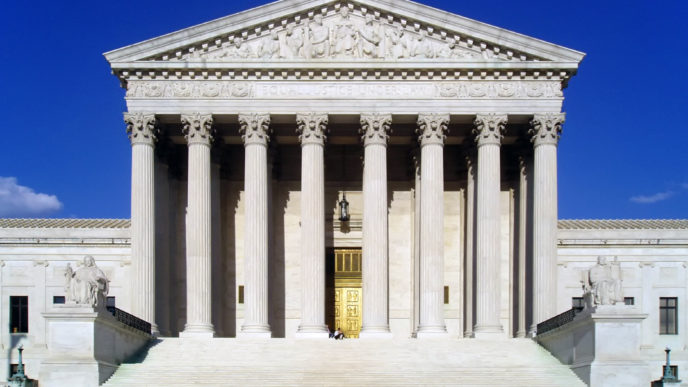
25 Years After Thomas Joins Supreme Court, a Friend Hails an American Originalist

Not every justice on the Supreme Court connects the “magical words” of the Declaration of Independence with the government structure set up in the Constitution to protect natural rights as expressed by Thomas Jefferson.

In fact, the only one to do so with any consistency in recent years is Justice Clarence Thomas, a friend and former White House lawyer said in an interview with The Daily Signal on the occasion of the 25th anniversary of Thomas’s swearing-in.

“What we now have after Thomas has served for 25 years on the court is not just an amazing and inspiring life story, but a remarkable record of jurisprudence,” recalled Mark Paoletta, who was on the White House legal team when President George H.W. Bush nominated Thomas to the high court.

Other judges have produced “originalist” decisions, Paoletta said, but Thomas stands out as the one most willing to challenge prior court decisions that in his view conflict with constitutional rights, some of them lost to history and calling out for restoration:

Thomas is the one justice who is most willing to look back to the Declaration of Independence as the lodestar of our constitutional structure and how this leads into the concept of federalism, the separation of powers, the suspicion of centralized power and how dangerous it can be to liberty, which is why only certain powers are given to the federal government.

Thomas will deliver The Heritage Foundation’s Joseph Story Distinguished Lecture on Wednesday evening.

Thomas was sworn in as the 106th justice of the Supreme Court — and only the second black — in a private ceremony there on Oct. 23, 1991. The quiet dignity of the event belied the firestorm of controversy that surrounded his confirmation hearings before the Senate Judiciary Committee.

The Senate voted 52-48 to confirm Thomas after he endured an onslaught of attacks that included unsubstantiated allegations of sexual harassment. Thomas described the turn taken by his confirmation hearings as a “high-tech lynching for uppity blacks who in any way deign to think for themselves.”

‘Challenging Civil Rights Leadership’

Thomas’s jaundiced view of liberals’ concept of a “living Constitution” that could be molded and reshaped to fit contemporary political agendas antagonized liberal pressure groups that favored abortion rights and racial preferences.

Many of these same groups had worked successfully to convince Democrats to reject President Ronald Reagan’s nomination of Robert Bork to the Supreme Court in 1987. Bork, a former U.S. solicitor general who served on the U.S. Court of Appeals for the District of Columbia, shared many of Thomas’s convictions on the role of the judiciary.

With an eye toward the failed effort to confirm Bork, the political and legal team inside the White House of George H.W. Bush were prepared to mount a vigorous defense of Thomas, Paoletta recalled.

“One of the great achievements of [the elder] George Bush as president was the confirmation of Clarence Thomas to the Supreme Court,” Paoletta told The Daily Signal. “We had a lot of people involved with Bork who recognized what a titanic effort this would be, and they were ready to go on the offensive for Thomas and to provide a rapid-fire response against his critics and to make the case for him.”

While the Bork hearings were “game changing” in terms of how they affected subsequent confirmation processes, Paoletta said, he is convinced that in many respects the left’s attacks on Thomas were more severe and personal:

The Bork hearings showed us all how nasty the left is, and what’s shocking is that as bad as the Bork hearings were, the Thomas hearings were actually worse in terms of now nasty and vicious the left was toward Thomas. I think this had a lot to do with the fact that he was a black conservative who was challenging the civil rights leadership.

While civil rights leaders of the day put their emphasis on group rights that rely upon government solutions such as affirmative action, Thomas emphasized individual rights consistent with natural law as expressed in the Declaration of Independence, Paoletta said.

“I think the black leadership always viewed him as a threat to their business, so they sent out this signal that it was OK to go after him,” Paoletta said. “So you had this toxic combination of the civil rights leadership with all of the other groups that opposed Bork coming together to oppose Thomas.”

Thomas as Natural Law Judge

Since joining the Supreme Court, Thomas has emerged as a staunch proponent of “originalist” jurisprudence and as someone who takes a dim view of longstanding precedents that intrude upon the natural rights of all Americans.

While in some ways the drama of the Thomas confirmation battle never quite subsided, the justice’s contributions to the cause of originalism most intrigue Paoletta.

Thomas’s willingness to uproot “stare decisis”–the doctrine of upholding legal precedents–when it conflicts with the Constitution’s original meaning has placed the justice at odds with jurists and academics from across the political spectrum.

Paoletta points to the 2010 case of McDonald v. City of Chicago, where Thomas separated himself not just from his liberal colleagues but from other justices who might be considered originalists.

Five of the nine justices ruled that the 14th Amendment protects Americans’ individual right to keep and bear arms, and that the states cannot infringe on this right. Four of them based their decision on the doctrine of substantive due process, but not Thomas. Instead, he wrote a concurring opinion seizing upon the 14th Amendment’s “privileges or immunities” clause, which essentially had been discarded by the high court in the 1873 Slaughter-House cases.

Paoletta acknowledges that this commitment to the fixed meaning of the Constitution and the ideals of the American founding period sometimes puts Thomas in conflict with elite opinion, but as far he is concerned it also puts Thomas squarely on the side of “We the People.”

Paoletta, now a partner in the Washington law firm of DLA Piper, played an instrumental role both in the nomination and confirmation of Thomas to the Supreme Court.

Paoletta first reached out on behalf of the White House when Thomas was chairman of the U.S. Equal Employment Opportunity Commission. He asked Thomas to send speeches, articles, and other material in anticipation of his appointment by Bush to the U.S. Court of Appeals for the District of Columbia in 1990.

The following year, Paoletta had a front row seat during the most contentious moments of Thomas’s Supreme Court confirmation hearings. The two men have remained close friends.

‘A Horrible Experience’

Now that Thomas, 68, has served on the court for a quarter of a century, Paoletta, 54, continues to work to correct the record where he sees revisionist history and biased reporting in play.

He set up a website, ConfirmationBiased.com, as a rejoinder to the HBO docudrama “Confirmation,” which aired in April. Paoletta describes the film as a “classic Hollywood hit job” and an “all-out assault on Thomas” that distorts the truth of what transpired during the hearings.

The docudrama is riddled with “glaring omissions and distortions” that can’t be reconciled with key facts, according to ConfirmationBiased.com. That’s in large part because the story Anita Hill presented to the Senate Judiciary Committee in October 1991 was neither believable nor credible, Paoletta argues.

Hill, a law professor who had worked for Thomas at both the Department of Education and Equal Employment Opportunity Commission, testified that he sexually harassed her. But when members of the Judiciary Committee questioned key details of her televised testimony, Paoletta points out, Hill revised and retracted some of her statements.

Paoletta said the docudrama also failed to focus attention on 12 female witnesses who testified on behalf of Thomas. The women had worked with both Thomas and Hill, and said they did not believe Hill’s allegations.

“Even though this was a horrible experience for Thomas, the American people were able to watch those hearings uninterrupted and unfiltered and make their own assessment,” Paoletta told The Daily Signal, adding:

They saw 12 incredibly impressive, strong women who came forward in support of Thomas. But not a single coworker of Hill’s came forward to support her allegations. Usually when you have a case like this, you have many witnesses, not just one. With the case involving Bill Cosby, for example, you have scores of women coming forward. But no one else made the allegations Anita Hill did. Her story was just not plausible.

“Once Thomas was nominated, I spoke with him on a daily basis and the day the Anita Hill allegations broke I stayed close to him,” Paoletta said. “When you go through something like that together, it creates a bond.”

‘Refreshing and Exciting’

By a margin of more than 2 to 1, the American public believed Thomas, and about 26 percent of women believed Hill, according to a New York Times/CBS News poll taken after the hearings in 1991.

“There’s no gender gap there in that poll,” Paoletta said. “Her story just did not add up. The American people took Hill’s full measure and found her wanting.”

Yet organizers of the Smithsonian’s new Museum of African American History and Culture virtually lionize Hill in one exhibit while relegating Thomas to a relative footnote, as both the justice’s admirers and fair-minded historians note.

Five days before the private swearing-in at the Supreme Court 25 years ago Sunday, Thomas was sworn in at the White House with more than 300 family and friends in attendance. (That event can be viewed here.)

Despite ongoing efforts on the left aimed at tarnishing his reputation, some continuing to invoke Hill’s claims, Thomas has made lasting and enduring contributions to the cause of originalism, Paoletta said.

While Thomas is widely viewed as someone who was closely aligned with Justice Antonin Scalia until his death in February, Paoletta says he saw important differences between the two.

“Where Scalia once described himself as a ‘faint-hearted originalist’ who would look to precedent,” Paoletta said, “Thomas is undeterred by precedent when it conflicts with the original meaning of the Constitution.”

(Nearly 25 years later, Scalia, a Reagan appointee, said he “repudiated” those words and instead would call himself an “honest” originalist.)

Paoletta set up a second website, JusticeThomas.com, to detail Thomas’s judicial philosophy and some of the most consequential cases that flesh out the justice’s originalist philosophy.

“What Thomas has done is to go back and dig down deep into every constitutional provision that comes before the court, and to apply the original meaning and to invite litigants to revisit these issues when an earlier decision may have gotten it wrong. That’s refreshing and that’s exciting,” Paoletta said, adding:

When Scalia came along, no one else was really looking at the text or the original meaning, and we are all indebted to Scalia for his remarkable jurisprudence. But it was Thomas who came along and said he would not be cabined in by a judicial process that did not go back and determine what the constitutional text was actually saying. Thomas has taken originalist jurisprudence and made it even stronger because he is unencumbered by precedent.

Beginnings

Paoletta first met Thomas in 1983, when he was an intern for the Republican National Committee and was fortunate enough to hop a ride with Bush, then vice president, on Air Force Two.

It was October, and Bush was flying to Bridgeport, Connecticut, to campaign for Paoletta’s uncle, Leonard S. Paoletta, then the city’s Republican mayor. It turned out Thomas was speaking that same day at Sacred Heart University in Fairfield, Connecticut, and met up with the White House team.

“He made a very big impression on me that day,” Paoletta recalled. “Even back then, I could see how electrifying he was.”

Fast forward to 1989, when Paoletta was working in the White House Office of Personnel. He was assigned the task of reaching out to Thomas about a potential appointment, though it wasn’t clear what exactly it would be. As requested, Thomas sent the White House copies of his writings, speeches, and other materials.

“Even then, I could see from all the material from the 1980s that Thomas was thinking about the Declaration of Independence and the natural law. I could see from his article and speeches that he was taking on certain institutions, and taking on Congress, for example, for passing things on administratively that it should not.”

After the elder Bush appointed Thomas to the D.C. Court of Appeals, the judge offered Paoletta a clerkship with a warning that, unlike the White House, working in that environment would be similar to working in a “monastery.”

When Paoletta informed his White House colleagues of the opportunity, they asked him to serve instead in the Office of White House Counsel. Thomas gave his blessing to the move. (For more from the author of “25 Years After Thomas Joins Supreme Court, a Friend Hails an American Originalist” please click HERE)

Follow Joe Miller on Twitter HERE and Facebook HERE.

Controversial Proposal for Nurses Could Expand Access to Care for Veterans

For years, state and federal policymakers have discussed proposals to expand the role of advanced practice registered nurses, with major physician groups like the American Medical Association squaring off against nurse organizations like the American Nurses Association.

But a proposed rule from the Department of Veterans Affairs to allow nurse practitioners, nurse midwives, and clinical nurse specialists to practice independently of physicians has brought the debate to the national spotlight and sparked an unprecedented response from the public.

“To use advanced practice registered nurses to their full authority, it improves access and enables the delivery of high-quality care, and that’s good for everybody,” Marla Weston, CEO of the American Nurses Association, told The Daily Signal. “It’s good for the health care system, and it’s good for people in all sorts of ways.”

Advanced practice nurses have master’s, post-master’s, or doctoral degrees and have to adhere to scope of practice regulations, which are parameters set by state boards, legislatures, and the government that dictate the services providers can give to which patients and in what settings.

In Arizona, for example, nurse anesthetists cannot provide anesthetics unless they’re “under the direction of and in the presence of a physician or surgeon.”

Groups like the American Nurses Association and the American Association of Nurse Anesthetists have long called on state lawmakers to expand the scope of practice for registered nurses or grant full practice authority.

But up until 2010, states were slow to react.

That year, the Institute of Medicine, after launching a two-year initiative with the Robert Wood Johnson Foundation in 2008, released a report examining the future of the nursing profession. Included in that report was an analysis of the legal barriers in place across many states that make it difficult for advanced practice registered nurses to use the full scope of their training and education.

The report recommended state policymakers lift some of these constraints to expand the scope of practice for advanced registered nurses, which the Institute of Medicine said would improve care for patients.

“Now is the time to eliminate the outdated regulations and organizational and cultural barriers that limit the ability of nurses to practice to the full extent of their education, training, and competence,” the Institute of Medicine concluded.

In the wake of the report, states began to act, with legislators debating laws that would allow advanced practice registered nurses like nurse practitioners and nurse anesthetists to practice independently.

Today, 21 states and the District of Columbia have granted nurse practitioners full practice authority, according to the Robert Wood Johnson Foundation.

Lawmakers in Nebraska and Maryland were to most recent to do so, passing legislation last year that allows nurse practitioners to practice independently of a physician.

And 40 states and the District of Columbia don’t have a physician supervision requirement for nurse anesthetists on the books, according to the American Association of Nurse Anesthetists.

Heading into 2017, lawmakers in Tennessee and Arizona are gearing up to address the scope of practice for advanced practice registered nurses.

A coalition of these nurses in Arizona lobbied the state legislature last year, urging them to expand nurses’ authority and change language requiring nurse anesthetists to provide anesthetics under “the direction of and in the presence of a physician or surgeon.”

But after medical associations worked to stop the original bill, it was ultimately defeated.

Ali Baghai, a nurse anesthetist working in Tempe, Arizona, and the former president of the Arizona Association of Nurse Anesthetists, said advanced practice nurses plan to take a more piecemeal approach to legislation next year.

“APRNs and [nurse anesthetists] provide high quality, safe, and cost effective health care,” Baghai told The Daily Signal. “It’s been proven for decades, and we just want legislation that lets us do our jobs and take care of patients.”

A National Debate

Though advanced practice nurses have seen success at the state level in expanding the scope of practice for nurse practitioners, nurse anesthetists, nurse midwives, and clinical nurse specialists, their efforts have not been met without resistance from medical associations and physician advocates.

And in no place is that split between the nursing community and physicians more evident than at the VA, where a proposed rule to grant full practice authority to advanced practice nurses led to one of the largest responses to a federal regulation, with more than 178,000 comments submitted to the government via the regulations.gov website.

“The best way to honor our commitment to our veterans is to modernize the VA and eliminate unnecessary regulations that only impede our ability to provide them quality care,” Michael Smith, a former clinical specialist in the Army, wrote in a comment to the VA supporting the proposal. “Lifting the restrictions on nurse practitioners is a great place to start.”

Other veterans, meanwhile, opposed the VA’s rule.

“I’m a veteran: I put my life on the line in service to my country, and I believe that I deserve quality health care,” Sean Malin wrote in a separate comment. “I oppose any mandate that would force the best trained physicians out of the operating room.”

The VA announced its proposal in May, and the rule would extend to nurse practitioners, nurse midwives, and clinical nurse specialists while they’re employed by the VA.

A spokeswoman for the VA said officials are hoping to finalize the rule by January.

In its initial notice, the government said that granting advanced practice nurses full practice authority would “increase veterans’ access to VA health care by expanding the pool” of qualified health professionals.

And supporters of the proposal like the American Nurses Association and American Association of Nurse Anesthetists agree.

“One of the things that we know has historically been an issue or been an issue recently is access to care,” Weston said. “One of the things that would happen in an immediate way is that access would increase dramatically. That will be good for the VA and good for our veterans.”

Before the American Nurses Association, Weston worked at the Department of Veterans Affairs in the Veterans Healthcare Administration in both the Office of Nursing Services and the Workforce Management and Consulting Office.

In addition to increasing veterans’ access to care, expanding nurses’ authority would put the VA in line with other government entities that have already done so, supporters said. Currently, advanced practice nurses serving in the armed forces and working with the Indian Health Service can practice independently.

“It doesn’t make sense to say, ‘OK, it’s alright for the military, all branches. It’s alright for the Indian Health Service to do this. But in the VA? No,’” Cheryl Nimmo, president of the American Association of Nurse Anesthetists, told The Daily Signal.

“Does the quality change? No,” she continued. “If a [Certified Registered Nurse Anesthetist] decides they want to retire from active duty military and work in the VA, suddenly they’re not as safe as they were for their first 20 years? It doesn’t make any sense.”

Nimmo, who served in the Army Reserve for 10 years, and the American Association of Nurse Anesthetists are among a long list of organizations like the AARP and the Federal Trade Commission, Republican and Democrat members of Congress, and military groups supporting the Department of Veterans Affairs’ proposal.

Those supporters say that allowing advanced practice nurses to work independently would alleviate the issues plaguing the VA, like shortages of doctors and long wait times for veterans to see physicians.

According to the VA’s data, more than 507,000 veterans were waiting at least 30 days for an appointment, as of Sept. 15.

“This is a sensible, productive, quality way to fix the problem,” Nimmo said.

But on the other side of the proposal are large doctors’ groups lobbying hard against it. Those groups believe the rule is “unprecedented” and say expanding nurses’ authority would impact the standard of care.

“We feel this proposal will significantly undermine the delivery of care within the VA,” Dr. Stephen Permut, board chair of the American Medical Association, said in a statement in May. “With over 10,000 hours of education and training, physicians bring tremendous value to the health care team.”

Like the American Medical Association, the American Society of Anesthesiologists was vocal in opposing the VA’s proposal, calling it “dangerous.”

“Americans understand that it would be wrong to lower the standard of care provided to these men and women who have bravely served our country,” Dr. Daniel Cole, the group’s president, said in July. “We expect the VA will listen to the comments of veterans, their families and the American public who care about the quality of health care in the VA system and abandon this dangerous proposal that runs country to the VA’s own strategy to deliver high-quality, Veteran-centered care.”

Access to Care

Despite the concerns from physicians groups, nurses with advanced training point to their level of education and experience as arguments in favor of proposals to expand their scope of practice.

While physicians and physician groups have said that there is a substantial difference in the levels of education for doctors and advanced practice nurses, both Nimmo and Weston disagreed.

“The standards are very high, and we study the exact same things with the exact same textbooks,” Nimmo said specifically of nurse anesthetists. “Sometimes, they even take the same classes together.”

“If you’re putting the patient first, and if you’re putting the patient at the center of all of this and trying to do the best thing you can for the patient, the pushback is not understandable to me,” she continued, speaking to the opposition from physician groups.

Over the last few years, research has emerged suggesting that expanding the scope of practice for advanced practice nurses can help expand access to underserved populations, especially those living in rural communities.

“The reality is the research is on our side,” Baghai said. “We provide high quality, safe care.”

According to the National Conference of State Legislatures, which tracks scope of practice, 11 percent of the country’s physicians work in rural areas, but 20 percent of the population lives there.

Additionally, no studies suggest that advanced practice nurses deliver care that is of a lesser quality or less safe than that delivered by physicians, according to the Institute of Medicine.

“We are able to provide this much needed service to Americans,” Nimmo said. “It has been historically the norm that advanced practice registered nurses have taken care of patients in rural communities. It increases access for those people.”

“They might not have the time or the wherewithal to get themselves to an urban area for care,” she continued. “This provides the care to them right in their own neighborhood.”

Many groups supportive of expanding the scope of practice point to the floods of Americans—more than 17 million more, according to the National Conference of State Legislatures—that have become newly insured since Obamacare’s implementation as another reason advanced practice registered nurses should be able to work independently of physicians.

While more people are accessing the health care system through primary care providers instead of emergency rooms, there hasn’t been an increase in the number of physicians, the National Conference of State Legislatures found.

Allowing advanced practice registered nurses to work independently of physicians would help serve the growing population of people who are newly insured, Weston said.

“One of the ways the health care system would work the best is to have advanced practice nurses function at full practice authority in all states,” she told The Daily Signal. “It improves access to high quality health care.” (For more from the author of “Controversial Proposal for Nurses Could Expand Access to Care for Veterans” please click HERE)

Follow Joe Miller on Twitter HERE and Facebook HERE.

How My Husband Ended up in Jail After Walking Our Dog

For the record, I told you so, Peter!

In 2007, my British husband got a ticket for walking our dog Henry without a leash in Washington, D.C. The National Park Service made it impossible to pay the ticket. So, a newly minted citizen, Peter said he’d wait for his day in court.

I told him that was most unwise and that he could end up in jail.

I was right.

Overcriminalization is a serious issue in our country, and while Peter’s experience was trivial, it describes a terrible (yet hilarious) day.

Here’s an excerpt from my new book, “Let Me Tell You About Jasper.” This story is written by Peter, explaining how he ended up in jail while I was working at the White House. When he was given his “one phone call” from jail, I was in the Oval Office briefing the president. True story.

With that, I give you: my husband, the off-leash criminal.

It’s all Henry’s fault! My brush with the law started around 7:15 p.m. on Nov. 15, 2007, when I took Henry to Lincoln Park. I parked across the road and was walking in the park with him; the park was deserted apart from a few other dog owners there, and we chatted about our dogs as the darkness settled around us.

We were standing near the Lincoln statue when we noticed headlights entering the park toward the far end, and we saw a police car racing down the middle of the park toward us.

We soon realized the reason for the rapid approach: It was the Park Police and our dogs were off-leash. Everyone immediately called their dog and reached in their pockets for their leash. I did the same, but alas—no leash! I had left it on the seat of the car.

I quickly turned away and, with Henry walking extremely close, started to leave the park.

“You! Stop!” I heard. I turned and sure enough, the policeman had leapt from his car and was advancing rapidly toward me. Busted!

I explained to Officer Smith that I had left my leash in the car and was returning for it, so he asked for ID, then instructed me to wait while he went to the car. He took a few minutes, presumably checking I was not a serial dog-off-leash scofflaw and returned to write the ticket.

I tried to make light of the situation and joke with Officer Smith, but he was all business. No response, no smile, no pleasantries in reply to mine.

I duly received my ticket and was told that I could pay at any of the stations listed on the back. I informed Officer Smith that there were some suspicious squirrels at the end of the park that he might want to check on, and returned to my car.

Okay, I got a ticket. I was in the wrong, I broke the law, and I am not arguing with that. I had 15 days in which to pay and so on Nov. 24 I reported to First District Substation on E Street SE in Washington, D.C., as listed on the back of the ticket.

I was informed that they did not accept the payments anymore, and my inquiry as to where they thought I might be able to pay was met with a disinterested shrug and the words “Park Police headquarters.”

I returned home and, as we were leaving town for a couple of days, I decided to call the Park Police headquarters on Ohio Drive SW to check whether they accepted payment, or ask where I should mail the check, as the ticket stated, “You may mail in the collateral” but did not state where to mail the payment, how to make the payment, or to whom the payment should be made. However, all I got was an answering machine; an hour later I got the same. Are you starting to see a pattern here?

I have since learned that the ticket I received with both wrong and missing information had been incorrect for six years. A friend got a ticket six years prior and the station on E Street SE did not accept payment then.

So I duly wrote a check made out to U.S. Park Police and mailed it to the headquarters, with a letter explaining that their ticket contained wrong and insufficient information.

I also stated, “I know that the job of ticketing dog owners whose dog is off-leash is highly important—especially in time of war and terror threats, not to mention D.C.’s soaring crime rate. However, if someone at your department could see their way to having a ticket written in competent language with correct information, perhaps we might feel our taxes are not being totally squandered.”

They received my letter and did not reply for 12 days before stating that my payment was unacceptable and that I should send a money order to the D.C. Court.

By the time I received the letter it was already 10 days past the cutoff date and the ticket stated that this would “result in the case being presented at the District of Columbia Superior Court for disposition.”

Given that I had made three attempts to pay, and some information on the ticket lacked sufficient details while other information was just plain wrong, I decided to have my day in court. I wanted to explain to the judge just how apathetic/indolent/incompetent the Park Police are with their tickets. And as a newly minted citizen (for all of about two months), I knew it was my right!

I was therefore awaiting notice to attend court, but did not hear anything for some time. Given that the Park Police are apparently incapable of producing a competently written ticket, this didn’t surprise me.

However, upon returning from a business trip in April, I found a letter inviting me to go to the police station on Fourth Street SW so that they could process me through court on the same day. This was part of “Operation Clean Slate.” (I’m not kidding or exaggerating.)

On Wednesday the 18th I went to the station but was told it was too late for processing that day and was asked to return early the next morning, preferably before 7 a.m. When I asked how long the process would be, I was told, “Oh, an hour and a half, maybe two hours.”

So on the 19th I arrived at the station at 6:45 a.m. and was promptly arrested! The arresting officer asked what had happened and he shook his head in amazement. “They issued a warrant for that?” he asked incredulously. “Why didn’t you go to the court and pay the fine?”

Oops! That’s something else not mentioned on the ticket—apparently the Park Police expect citizens to be psychic. So during the 12 days my letter was sitting in the Park Police headquarters being ignored, they had gone ahead and issued a warrant.

My belongings and belt were taken and I was placed in a cell. Now, I am a normal, law-abiding person. I’ve never been in a cell in my life, and my reaction was somewhere between surprise and fascination. It was just like the TV shows. The fact that I knew a judge would release me as soon as I was through the court proceeding meant that I was never worried—this was in no way a long-term situation—but it was strange to know that I could not leave if I wanted to.

I no longer had any control over my own freedom, and while awaiting transportation to the court I contemplated how awful it must be for someone who knows they will be incarcerated for a long time. It doesn’t matter how many times you see it on the TV; it’s different when you are there yourself. I was tempted to ask if I could get a tattoo of Henry on my shoulder to mark the occasion.

However, when the other prisoners were taken to court and I remained there, I inquired as to why and was told that, as I was a Park Police case, I must await a Park Police officer.

Of course nobody turned up from the Park Police station for a couple of hours, so I sat and waited patiently, counting the tiles on the floor (8,280) and finding the whole situation actually quite amusing. Though by this time I knew that the parking meter was running out for my car; so much for a couple of hours.

Finally, the Park Police arrived and it was none other than my old nemesis Officer Smith! He searched me again and, after handcuffing me, led me to his car. At least I sat in the front so it wouldn’t look like I had been arrested if anyone I knew saw me.

When he got into the driver’s seat, I said, “When you put me in the car, weren’t you supposed to put your hand on my head, like they do in the movies?” He did not respond.

I tried making conversation with Officer Smith but the responses were monosyllabic and usually one word. I tried making jokes, but they fell on deaf ears. All business, this guy (or maybe the squirrel jibe was still rankling him).

Upon arrival at the headquarters building, I was taken to another cell and the cuffs were released, then after five minutes Officer Smith brought me out and cuffed me to a wooden bar while he filled in the necessary paperwork. It’s probably just as well he did, because by this time I was considering fleeing.

If I could just overpower this young, fit, armed officer and steal his ID to open the door before anyone noticed—the place was after all virtually empty—I could be free! I could see the headlines: Leashless Dog Walker Stalks D.C. parks.

I knew I was also allowed to call my wife, but I was a little afraid to. Dana had warned me several times about getting that ticket paid, and when I told her I was going to exercise my rights she told me I was going to be arrested. I didn’t believe her. Now I was going to have to call her at the White House, where she was the acting press secretary and surely “didn’t need this crap.” Her White House voice can still scare me to this day.

So I said to Officer Smith that I would like to make a call. He looked at me blankly.

“I’ve seen the movies. I know my rights,” I said with a smile.

He grudgingly obliged.

When I called the press office, her assistant press secretary Carlton Carroll answered the phone. He said she was in the Oval Office and asked if I wanted to interrupt the meeting. Over my dead body! So I asked him to leave her a message, which he promptly emailed. She saw a message came in and snuck a peek at her messages. All it said was that I had been delayed and that she needed to arrange for the dog walker to come take care of Henry.

She later told me that she knew immediately. “That jerk’s been arrested.” (Right on both counts.)

More handcuffs, another car, and I was soon at the court building, where, once Officer Smith was sure we were behind locked doors, I was handed over to the processing officers.

Form-filling and fingerprinting followed; however, these fellows, while highly professional, were a lot more relaxed. When they asked the reason for my arrest and I told them “walking my dog without a leash,” the response was hilarity. I think I was the first, as it took them some time to find the nearest category for me on the computer!

When they stopped laughing, a mature officer of some years’ service also told me, “This is ridiculous.” He explained that most officers would have used their initiative, had the warrant delayed for a couple of days, and made a call, or even visited me to tell me to go to the court and pay.

Still, we enjoyed the humor of the situation and made a few wisecracks, while they fed me cheese sandwiches and lemonade and, after 10 minutes in my third cell, I was cuffed again and placed in the back of yet another car to be taken to the Superior Court building a couple of hundred yards away.

By this time, it was early afternoon, and the officer driving told us he was rushing so that we would be processed that afternoon. He explained that if we weren’t processed that day it would mean an overnight stay. Now it wasn’t quite so funny!

When he asked the reason for my arrest and I told him, it resulted in the same outburst of disbelieving laughter. “Are you serious? You were arrested for that?”

So now I arrived at the Superior Court, where the handcuffs were finally removed, only to be replaced with leg shackles! “If my friends could only see me now,” I thought with a wry smile.

Following another search, I found myself in the fourth cell, one I shared with 20 others.

A couple hours more cell time and after three court-appointed attorneys shared the humor of the situation and expressed their disbelief that an arrest had been made for this, I found myself in front of the judge.

I explained what had happened and even the judge smiled. With my English accent, I was clearly a relative newcomer to the United States, and I had made three attempts to pay via a Park Police system that I described to him as blatantly incompetent, but it had not been possible given the inadequate information they provided.

The judge told me that this should not have happened and that I should not have been there that day. I held up my manacled leg and said, “Well, your honor, it’s been a very interesting day and I’ve had a good insight into the U.S. judicial system.” He smiled and said, “Welcome to America!”

Upon payment my record would be expunged, and I left the court a free man. I had to collect my belongings from the Park Police station the next day—they had told me that after 3 p.m. the office would be closed. I hope nobody went there to pay a fine that afternoon.

As my car keys were with the belongings, I walked there with Henry on a delightful April morning. (On the leash all the way, I would add! Well, most of it—)

Oh, and the good news was—I did not get a parking ticket after being off the meter all the previous day! But if I had, I would have paid that ticket right away.

This is an excerpt from Dana Perino’s new book “Let Me Tell You About Jasper,” courtesy of Twelve Books.

(For more from the author of “How My Husband Ended up in Jail After Walking Our Dog” please click HERE)

Follow Joe Miller on Twitter HERE and Facebook HERE.
‘That Cop Who Died Today’ – This St. Louis Cop’s Gut-Wrenching Words Will Shatter You Heart

St. Louis police officer Don Re has a blog on which he’s become known for his emotional and poignant writing.

Last year, his post on the “senseless” death of a child went viral. His website, “Don of all trades,” addresses issues like stop and frisk, to the relationship between police and the minority communities they serve, to personal stories about his life and family.

His most recent post offers thoughts on the death of a St. Louis-area police officer.

St. Louis County is mourning the loss of 33-year-old Officer Blake Snyder, who was killed early Thursday morning responding to a disturbance call in Green Park. Eighteen-year-old Trenton Forster has been charged with murder and armed criminal action for the shooting. Forster was critically injured by return fire from a backup officer, but is expected to survive.

Snyder leaves behind a wife, Elizabeth, and 2-year-old son. Officer Re posted some thoughts on the tragedy, and the challenges that face all police officers is worth everyone’s time to read.

Officers Re’s powerful blog entry, “That cop who died today,” is republished with permission below:

My coworker walked into my office and I told him, only half-jokingly, that if one more person pissed me off this morning, I was probably going to snap.

Some of the recruits had been pushing my buttons with their repeated mistakes and lack of attention to detail.

I was in a foul mood.

“You’re not going to like this then,” he continued.

“The cop shot this morning died.”

Just like it has for eighteen years now, those words hit me like an unexpected punch in the gut.

I knew about the shooting, but assumed or hoped that he would be okay.

Surely he’d recover with time, just like many other people who get shot do.

Nope.

Another police officer is dead.

A young man with a lot of life ahead of him is dead.

A young father is dead.

A young wife is a widow. She may spend days or weeks or months hoping it’s not true and that her young husband will be home soon.

A two year old will never toddle into his biological dad’s arms again or ever draw pictures of a police man and hand it to his daddy with pride.

“The cop shot this morning died.”

How many times can one hear those or similar words and still go on working as a police officer in spite of it?

Shortly after I heard the news, my own wife texted an emoji to my phone. It was the one where the face is blowing a heart shaped kiss.

Without words, I knew she knew, and that she was thinking about me. She was concerned for me and for her own kids.

We don’t have time for cops to be killed right now. We already have to rearrange our lives to accommodate the circus that is the second presidential debate in St. Louis, and now we have to prepare to bury a fellow officer.

Either event alone is difficult; their simultaneous occurrence is a mess.

Still, we will do it.

We will take care of these events because we must. Somebody has to.

County officers will work the debate alongside us City officers.

We will stand tall with black mourning bands on our badges, thinking about our lost comrade and our own determination to continue on with this fucking job. We will do it right in the face of people who hate Trump or Hillary or cops or just everything in general and who will take that hate out on the front line officers.

We’re easy targets.

We’re easy scapegoats for a system that many people don’t trust or like or respect anymore.

Hate that your taxes are too high?

Hate email scandals?

Hate billionaires who are going to build walls and deport immigrants?

Take it out on the police officers.

You’ll never get close enough to the people who truly cause your life misery, but we’re right here.

Spit in our faces.

Call our black officers vulgar, disgusting names.

Tell female officers you want to meet them off-duty and rape them.

Tell us you want us dead or that you’ll find us and do harm to our families.

This is what officers have to listen to during protests. Every time.

Pretend that we don’t hate email scandals or corrupt billionaires or have to pay taxes or face the same problems as every other schmuck does once we get home from work.

Pretend we’re not unique individuals who share your concerns and hopes for a better future.

We’ll be there for you anyway.

We’ll have our days off cancelled and our shifts lengthened so that everybody can enjoy their debate related shenanigans.

We do it so you can enjoy parades and fairs and professional sports events too.

It’s tiring sometimes, but we do it.

We do it even when we’re deflated by news that a local cop has died.

That somebody who was doing what you do every day has been murdered.

The silver lining is that I’m no longer angry and on the cusp of snapping.

Priorities.

I’m alive and my recruits are alive.

We’ll use this as a learning tool. Mistakes and lack of attention to detail when you’re out of the Academy can get you killed.

They need to know that.

They need to get that through their skulls.

My kids can still draw me pictures of police officers and hand them to me with pride.

My wife can still expect me to come home after a long shift.

My dogs will bark at me when I do come home, and I will be annoyed at them, but less so.

I’m thankful to have my health and my life.

My problems are irrelevant right now, because I wasn’t that cop who died today.

Visit Officer Re’s blog to read the amazing comments of support and camaraderie.

Our law enforcement officers risk their lives every day in service of people who don’t always know or understand (let alone appreciate) why they do what they do.

Police are people. They are important. They matter.

And they need our support.

Thank a police officer today. He/she might die for you. (For more from the author of “‘That Cop Who Died Today’ – This St. Louis Cop’s Gut-Wrenching Words Will Shatter You Heart” please click HERE)

Follow Joe Miller on Twitter HERE and Facebook HERE.

Arizona Just Can’t Get a Break: The Assault on Election Integrity Continues

Poor Arizona. The Grand Canyon State can’t seem to get a break from the Ninth Circuit in protecting its sovereignty and the integrity of its elections.

As it relates to state voter integrity laws, it has come to the point where federal judges are declaring any form of electioneering pursued by George Soros to be mandated by law and/or the Constitution. States are being precluded from even regulating a specific administrative procedure for voting or registration or using common sense regulations to protect the franchise from fraud. The courts have declared the American voter in general, and non-whites in particular, to be impotent in their ability to register to vote and cast ballots without hand-holding and molly-coddling anomalous tactics promoted by the far-left.

The latest case involves a lawsuit against Arizona’s House Bill 2023, which prohibits third-party organizations from collecting absentee ballots and submitting them en masse to the board of elections in what is widely referred to as “ballot harvesting.” This was a reasonable exercise of a state’s near-plenary power over methods and procedures of elections to ensure there is no tampering or mass fraud. The law provides exemptions for family members, caregivers, or postal workers who can gather multiple ballots from individual early voters to submit to the polls. Thus, there is nobody who is being disenfranchised with no recourse to cast a ballot simply because a Soros-style community organizing group is prohibited from harvesting ballots.

It doesn’t take a genius to understand why ballot harvesting is a prima facie recipe for voter fraud. Unscrupulous community organizers can simply send in hundreds, if not thousands, of absentee ballots using known names and addresses. There is no way for election officials to verify the veracity of mail-in ballots, even in states with photo ID requirements for in-person voting. At present, Texas Attorney General Ken Paxton has launched the largest voter fraud investigation in the state’s history after concerns that thousands of signatures collected for mail-in ballots by third-party organizations didn’t match the known signatures of the names on the ballots.

Non-whites can’t vote without the assistance of a third-party?!

In come various Democrat groups and the Clinton campaign, suing Arizona for somehow disenfranchising voters [Feldman v. Arizona secretary of State’s Office]. Scandalously, they assert that this law is invidious and discriminates against non-white voters. Yes, as is the case with photo ID requirements, proof of citizenship, early voting, an option for straight-ticket voting, and placement of extra polling stations, non-white voters are evidently too dumb and impotent to properly register and cast ballots, even during the modern-era of mass communication and transportation — unless Democrats are allowed to work their magic.

This lawsuit was so outlandish that last month even the Obama-appointed district judge, Douglas L. Rayes, refused to issue an injunction against the law for this election, pending the outcome of litigation. He rightly observed that this law “simply regulates an administrative aspect of the electoral process,” over which states have full control unless Congress intervenes. And there is nothing in the Voting Rights Act that grants voters, particularly minorities, a right to have others deliver their absentee ballots to the polls. That is an administrative policy question left up to the states.

While the Ninth Circuit initially refused to overturn Judge Rayes by issuing a preliminary injunction against HB 2023, earlier this week they granted an expedited review of the case. During oral arguments on Wednesday, according to numerous media outlets at the hearing, the appellate judges clearly signaled their intention to tamper with the law.

Despite the law being in effect during the primaries and plaintiffs not being able to identify a single voter who couldn’t cast a ballot as a result of the law, Chief Appeals Court Judge Sidney Thomas seemed to agree with the Democrat position on disparate impact:

Judge Sidney Thomas said that ignores evidence that 14,000 people living on the 2.8 million acre Tohono O’odham reservation have no postal service

“That’s a significant barrier that’s different from the barrier that white citizens would have in Phoenix,’’ he said.

“There’s no comparative white group,’’ Thomas continued. “There’s no white reservation.’’

The judge also noted a similar situation in the largely Hispanic border community of San Luis. [Arizona Capital Times]

Appellate Judge Sandra Ikuta also expressed concerns that this law disenfranchised Latinos and Native Americans.

Taking discrimination accusations to a new low

Not only is disparate impact theory a complete distortion of the Voting Rights Act, it is offensive and simply wrong to assume that voter integrity laws target minorities. And in this case, such an accusation is particularly divorced from reality. As Arizona Assistant Attorney General Karen Hartman-Tellez pointed out, there are plenty of white rural communities that also lack postal service in secluded parts of the state. These are the comforts people who live in remote areas relinquish. There are many benefits to rural life too. The point is that convenience of delivering absentee ballots, as it relates to remote communities, is a political debate for a state legislature, as is the case for questions regarding easy access to other state services. It is absurd for a court to require acceptance of ballot harvesting as a matter of federal law.

What is doubly absurd here is that Democrats usually demand special treatment for urban voters, such as extra polling stations in big cities. In Wisconsin, they got a federal judge to require more early voting centers in urban areas “because not everyone can get downtown easily.” Now they have the nerve to assert that a law that would be more inconvenient for rural areas also disproportionality hurts minorities, even though nobody would deny that — aside from the Indian reservations — most rural communities are overwhelmingly white! As is always the case in outcomes-based jurisprudence, the liberal judges arrive at the desired conclusion using conflicting rationales. Either way, the result is always to bolster the Democrat GOTV operation. You will never find a judge requiring a state with only whites in rural areas to add extra polling stations or offer more days of early voting because they are more isolated.

In reality, this has nothing to do with Native American communities or the lack of postal service in some areas. Liberals are just using that example as the straw man for the lawsuit in order to get standing. The reality is that voter harvesting has been very successful in registering Democrat voters all over Arizona, including in urban areas that have easy access to mail and certainly don’t need assistance. There is nothing wrong with ballot harvesting that is not rooted in fraud, but Democrats are seeking to codify their political practices into law.

As I noted when discussing the North Carolina early voting case, one could conjure up a disparate impact theory to attack any law on the assumption that these administrative procedures will help or hurt one particular group based on their habits, culture, and location. But that doesn’t mean the law is discriminatory. If Republicans succeed in gaming out early voting on Saturdays at rural gun clubs the same way Democrats succeed in GOTV on Sunday with black churches, does that mean the state must provide early voting on Saturday? These are political questions that are decided by the party that wins the spoils of war in an election and controls the legislature, not the courts.

The long-term impacts of judicial supremacy, disparate impact, and absurd rules of standing on state election law

There are several systemic problems evidenced from the series of court cases on election integrity laws we’ve chronicled in this column over the past few months:

1. courts fail to recognize state control over election law;

2. they practically believe that anything short of hand delivering registration and ballots to every adult in the country is tantamount to disenfranchising voters and;

3. any method of voting or anomalous voting procedure that will increase minority turnout is required to be implemented. If nothing is done to stop this judicial cancer, conservatives will have a major problem winning close elections because these mandates prevent states from combating fraud.

The fact that minorities tend to vote Democrat doesn’t vest them with greater power or extra rights to mandate more voting procedures and conveniences any more than rural whites could demand more conveniences in voting because providing such service helps the Republican Party. Courts are adulterating the VRA and are taking the concept of disparate impact to such an absurd extreme that non-whites are now enjoying greater benefits simply because it helps the Democrat Party. To quote Thomas Sowell, “When people get used to preferential treatment, equal treatment seems like discrimination.”

This Arizona case also demonstrates how liberals only need to win at one level in order to enact their election agenda. While the district judge respected the balance of power, the Ninth Circuit is prepared to crush the state. In many instances the Supreme Court doesn’t grant cert to hear an appeal from the Ninth Circuit. In addition to general reforms of court jurisdiction, Congress would be wise to save Arizona from the clutches of the Ninth Circuit by placing it into a different appellate jurisdiction.

A statutory fix of laws such as the VRA and the Motor-Voter law won’t help because judges have shown that when they lack statutory “latitude” to enact their agenda, they have no compunction to enshrine early voting, ballot harvesting, etc. into the First, Fourteenth, and Fifteenth Amendments.

We have a real constitutional crisis on our hands. When the far-left takes over the political institutions, there is recourse through elections. But when progressives take over the courts, redefine the Constitution, statutes, the contours of fundamental rights, and the balance of federalism as it relates to election law, we can’t even win elections anymore.

If Hillary ultimately wins this election, the states will have no choice but to ignore the courts as it relates to precedent, outside of the narrow ruling for a legitimate plaintiff suing for an authentic fundamental right. Whether they like it or not, state judges will have to follow the lead of Alabama Chief Justice Roy Moore in interpreting precedent of a decision in accordance with the Constitution and federal statute and not the Democrat Party platform. Otherwise, free and fair elections will be a thing of the past. (For more from the author of “Arizona Just Can’t Get a Break: The Assault on Election Integrity Continues” please click HERE)

Follow Joe Miller on Twitter HERE and Facebook HERE.

A President Hillary Clinton Must Be Impeached

After reading a comprehensive roundup of Hillary Clinton’s email scandal by National Review’s Andrew C. McCarthy, Conservative Review Editor-in-Chief Mark Levin declared on Facebook that, “A President Hillary Clinton must be impeached.” Levin went through the reasons why.

Levin is exactly right. McCarthy lays out why it would have been an easy prosecution for the Department of Justice, if they weren’t so politically motivated regarding the Democratic presidential nominee.

The question arose because the “(C)” designation — applicable to classified information at the confidential level — turned up in at least one of Clinton’s personal e-mails. Those would be the e-mails that, she repeatedly insisted, never, ever contained classified information. Or at least, that’s what she insisted until government agencies confessed that hundreds of the e-mails do contain classified information. Then Clinton’s “never, ever” tale morphed into the more narrowly tailored lie that there were no e-mails “marked classified.” Alas, that claim could not withstand examination of the e-mails, during which the “(C)” markings were found . . . whereupon the explanation underwent more, shall we say, refining. Thus the final, astonishing claim that she didn’t know what the markings meant, along with the laugh-out-loud whopper that maybe it was all about alphabetical order.

Yeah, that’s the ticket!

In case you’re keeping score: When a person being prosecuted for a crime changes her story multiple times, as if she were playing Twister (kids, ask your parents), the prosecutor gets to prove each of the evolving lies at the trial. As you’d imagine, juries grasp that the truth doesn’t need an editor. That’s why people whose explanations can’t keep up with the evidence are pretty much a lock to get convicted.

If Clinton wins the presidency next month, and the Electoral College confirms that result in December, impeachment is the only remedy left to bring Clinton to justice. But it would require the Congress to actually take its role under the Constitution seriously — something that, lately, Senate Majority Leader Mitch McConnell, and House Speakers John Boehner and Paul Ryan have failed to do.

While impeachment is warranted, for Hillary Clinton’s crimes, the feckless leaders of the “opposition” will undoubtedly say that the “voters have spoken” that they knew about the illegality and elected Clinton anyway. This is why the nation is in need of a true opposition party.

Mark Levin has promised to expand upon his thinking on Monday’s LevinTV episode. (For more from the author of “A President Hillary Clinton Must Be Impeached” please click HERE)

Follow Joe Miller on Twitter HERE and Facebook HERE.
Pollster Tells America to Be Ready for a Shock on Election Day

A lot of polls are going to be wrong come Election Day, according to pollster and analyst Pat Caddell who said Friday that America should be ready for a “shock.”

“Something is going on in this country in these polls,” Caddell said, assessing the differences among polls that show Trump with a narrow lead, Clinton with a narrow lead, or Clinton with a large lead. The most recent polls put Trump in the lead.

“All of the tracking polls keep holding at Trump being ahead,” he continued. “And then all of these other polls that are one-off polls, or whatever.”

Caddell said with so many polls, it was hard to know which were reliable.

“I don’t know how they’re doing some of these university polls. You just put the name of some university and apparently it becomes credible, whether they know what they’re doing, or not.”

“But in any event, polling is all over the place. Something isn’t adding up,” said Caddell.

To him, that means there is a trend going on that has not been fully captured in the polls.

“Something is going to happen here, I just sense it,” he said.

That something, he said, could be from Trump, who on Friday in North Carolina promised “Brexit times five.”

Either “Hillary will glide into the White House, or we’re headed for one of the greatest shocks in American politics. I think it’s a very close call. I think the shock potential is enormous,” he said.

Caddell is not alone. Veteran pollster John Zogby noted the immense strength of Trump’s support.

“I’ve been doing this a long, long time and these races go up and down and up and down,” Zogby said. “We still have 18 days to go, that means 18, maybe 36 news cycles as well.”

Zogby noted the depth of support for Trump.

“You see still a very passionate Donald Trump support. I see three credible polls that are out there that show Donald Trump getting 85, 89 percent of Republican support, winning among whites, winning by double digits among men, leading in two of those polls tied in another,” Zogby said.

“For the umpteenth time, it’s way too early and we don’t know who’s going to vote,” he insisted. (For more from the author of “Pollster Tells America to Be Ready for a Shock on Election Day” please click HERE)

Follow Joe Miller on Twitter HERE and Facebook HERE.
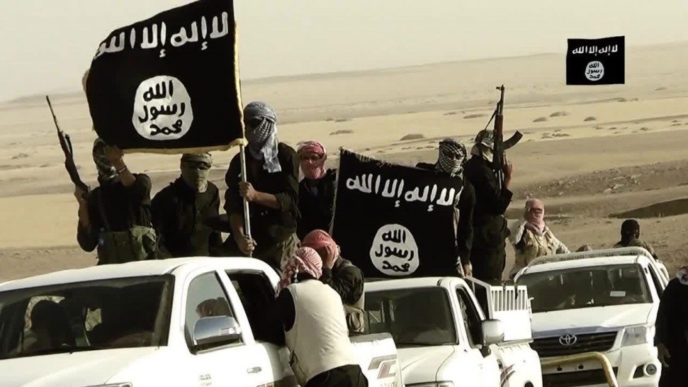
Yazidi Children Screamed and Cried Outside the Door While ISIS Fighters Raped Their Mothers

As the Islamic State continues its genocide of Yazidis and Christians in Syria and Iraq, a detailed report by the U.N.’s Human Rights Council reveals that Yazidi mothers and their children are brutally persecuted – mothers sold and re-sold as sex slaves, children murdered, and children traumatized from being forced to listen behind locked doors as their mothers are raped and beaten.

One Yazidi woman who was sold seven times to ISIS fighters said, “When he would force me into a room with him, I could hear my children screaming and crying outside the door. Once he became very angry. He beat and threatened to kill them. He forced two of them to stand outside barefoot in the snow until he finished with me.”

An ISIS fighter killed the children of a Yazidi woman who was sold three times as a sex slave. When she asked him, “What did you do to them?” he beat her and said, “They are kuffar [non-Muslim] children. It is good they are dead. Why are you crying for them?”

The U.N. report from June, They Came to Destroy: ISIS Crimes Against the Yazidis, explains the Islamic State’s attacks on Yazidi villages in Sinjar in August 2014 and the subsequent (and ongoing) genocidal actions taken by ISIS to destroy the Yazidi people.

The report is based on 45 interviews with survivors, religious leaders, doctors and journalists. An estimated 5,000 Yazidis have been killed, so far, by the Islamic State. “ISIS has sought to destroy the Yazidis through killings, sexual slavery, enslavement, torture and inhuman and degrading treatment and forcible transfer causing serious bodily and mental harm,” states the report. (Read more from “Yazidi Children Screamed and Cried Outside the Door While ISIS Fighters Raped Their Mothers” HERE)

Follow Joe Miller on Twitter HERE and Facebook HERE.

Secret Recording Shows Bill Clinton Admitting He Wishes He Slept With More Women

A secretly recorded phone conversation from 1991 between former President Bill Clinton with his alleged former mistress Gennifer Flowers has been newly released to author and radio host, Aaron Klein.

The conversation took place two months after Clinton had announced his bid for the presidency. Flowers claims she was no longer romantically involved with Clinton at the time of their conversation and was dating another man.

In the conversation, Clinton discussed various women with which he had been accused of engaging in extramarital affairs.

Flowers: I talked to David Watkins. I have a little company with a guy named (name redacted) and (name redacted) called Concepts Plus, that does jingles…

Clinton: Yeah. Beautiful (name redacted).

Flowers: Yes, beautiful.

Clinton: The one I allegedly had an affair with?

Flowers: B.B., (name redacted), uh, anyway. Beautiful (name redacted)…anyway…

Clinton: The only time I ever saw her was at the inaugural. She was so good looking I wished it was true.

Flowers told Breitbart News how she felt during her conversation with Clinton.

“Because, you know, it wasn’t gross locker talk, but it was just kind of that tone. And it was irritating me because but not because it was making me jealous. It was just irritating me that he was doing it. Being disrespectful to her because, you know, she was a great person.”

At one point, Clinton joked that he once told Bill Simmons he wished he had slept with all the women that were mentioned.

Clinton: Bill Simmons read me the list. I said, “God, Bill, I kinda hate to deny that.”

Flowers: You know what I said? I said, “At least he’s an equal opportunity f—er!” (laughter)

Clinton: I’ve got good taste.

Flowers had already made parts of her recorded tape public back in the 1990s. She claimed she had a 12-year affair with the former president and told Klein Friday that her “heart sunk” when she realized that Clinton was going to stay married after she had already become pregnant with his baby.

Flowers claimed that Clinton personally paid her $200 to get an abortion, and described the process to Klein as “not only physically painful but it was very psychologically painful.”

“Understand that when these tapes were made from the very beginning Bill and I were no longer seeing each other,” Flowers told Breitbart. “And I felt like several times in those tapes he was trying to make me jealous because he was talking about other women. About being beautiful. And I clearly felt that he was trying to make me jealous. Because he had let me know that if I change my mind he was there.”

Flowers also commented on the section of the tape in which Clinton stated “I’ve got good taste,” which was his response to the list of five alleged mistresses.

“Well, if I hadn’t been recording him, I would have told him that he was a jackass,” she said. “That he could quit talking like that. You know, at that point, I didn’t want to make myself look bad, but had I been able to really talk freely, I would have said, ‘you can knock that off. It’s not funny.’”

In an exclusive interview with the Daily Mail in 2013, Flowers said she believed that she and Clinton would still be together today, were it not the birth of his daughter, Chelsea.

“We have some unresolved issues that it would be nice to sit down and talk about now. He was the love of my life and I was the love of his life and you don’t get over those things,” she said then.

The topic of infidelity has been a reoccurring theme during this general election. Republican presidential nominee Donald Trump has accused Democratic candidate Hillary Clinton of being an “enabler” during his slew of sexual crimes and infidelities.

In an interview with Fox News Channel’s Ainsley Earhardt on Monday, Melania Trump claimed that bringing up Clinton’s past affairs was reasonable because they have done it to her.

“So they — they’re asking for it?” Earhardt asked.

“They’re asking for it. They started,” she said. “They started from the — from the beginning of the campaign putting my — my picture from modeling days. That was my modeling days, and I’m proud what I did. I worked very hard.”

Several racy photos of Trump’s modeling days have been used as smear campaigns throughout the election. In March and July, photos of her nude where used in both newspapers and anti-Trump advertisements.

The Clintons appeared in January 1992 on 60 Minutes, where the former president denied a relationship with Flowers. He later admitted to one sexual encounter with Flowers in a 1998 deposition for the Paula Jones lawsuit — another woman he was accused of sexually harassing. (For more from the author of “Secret Recording Shows Bill Clinton Admitting He Wishes He Slept With More Women” please click HERE)

Follow Joe Miller on Twitter HERE and Facebook HERE.

Former DOJ Official: Allies of Obama ‘Don’t Face Justice’

A former Department of Justice (DOJ) official says that “you don’t face justice” if you’re an ally of President Barack Obama’s.

“Look, if this was a tea party group coordinating with the Trump campaign to incite violence at Clinton real or NAACP events or whatever, we know exactly what would be happening,” J. Christian Adams told Fox News after the release of a Project Veritas video showing former Democratic operative Bob Creamer allegedly talking about inciting violence at GOP presidential nominee Donald Trump’s rallies. “This would be Justice Department fully investigating this for civil rights violations and all sorts of things.”

Adams, who is one of two DOJ officials to resign in protect after the Obama Administration did not press charges against the New Black Panthers over allegations of armed voter intimidation in 2008, continued:

This is a Justice Department and an FBI that is dolling out justice based on your politics. If you support Clinton, if you are Clinton, you can engage in all sorts of misbehavior without consequence. If you are the IRS commissioner or an attorney general who is held in criminal contempt, he would give you a pass. You don’t face justice under this administration.

Conservatives and the Trump campaign have touted two recent Project Veritas videos as evidence of both voter fraud and operative-incited violence at Trump rallies, and point to the resignation of Creamer and the firing of field operative Scott Foval from their respective Democratic-aligned groups. One target of the Veritas videos, however, is refusing to back down on what he says was a dishonest representation of his tactics to help minorities vote.

“In real life, I was explaining what the outcome of the presidential election will mean for the future of voter-ID laws, which have prevented thousands of Americans from voting; the role of civil disobedience in politics; and the role of activists in planning those protests,” wrote Dream Action Coalition co-director Cesar Vargas at the far-left publication The Nation. Creamer and Foval have also claimed innocence, as have the groups with which they were formerly affiliated.

Like Vargas, Think Progress and some other liberal publications noted a $10,000 donation to Project Veritas reported in disclosure forms provided to The Washington Post by Trump earlier this year. The donation took place in early 2015.

Adams’ reference to various past controversies involving includes the current U.S. Attorney General meeting with Democratic presidential nominee Hillary Clinton’s husband, former President Bill Clinton, a week before the FBI declined to charge Hillary for breaking federal law. FBI Director James Comey said when announcing the decision that Hillary did break the law when using e-mails as U.S. Secretary of State, but as it wasn’t done on purpose, he wouldn’t charge her.

Likewise, Republicans in the House have accused IRS Commissioner John Koskinen of misleading Congress related to the IRS’ targeting of Tea Party groups leading up to the 2012 elections. Some Republicans are pushing for Koskinen to be impeached. And House Republicans held former Attorney General Eric Holder in contempt over his refusal to cooperate regarding the Obama administration’s gun operation Fast & Furious operation that ended in the loss of thousands of firearms to Mexican drug dealers, and the death of a U.S. border agent in addition to hundreds of Mexicans.

The Stream and other outlets have also contrasted the mild treatment of federal officials to pipeline protesters in North Dakota with the aggressive treatment given to ranchers in Oregon last year.

Project Veritas founder James O’Keefe has long been controversial in political circles. Credited for shutting down the activist group ACORN in 2008 after releasing videos allegedly showing members engaging in voter fraud, he was arrested in 2010 after impersonating a telephone repairman in an office of then-Senator Mary Landrieu (D-LA). O’Keefe pled guilty to misdemeanor charges. Additionally, while some of his past videos have drawn resignations and been praised for drawing attention to underreported issues, TheBlaze’s Glenn Beck criticized an O’Keefe video going after NPR in 2011. Earlier this year, a sting attempt by O’Keefe fell flat when he forgot to hang up his phone after making a call to a targeted group. (For more from the author of “Former DOJ Official: Allies of Obama ‘Don’t Face Justice'” please click HERE)

Follow Joe Miller on Twitter HERE and Facebook HERE.