In Texas, Republicans Fight New Sanctuary Cities in Wake of Trump Victory

In the border state of Texas, the Republican governor and state Legislature are promising to combat a new trend since the election of Donald Trump, in which cities and localities vow to limit how much they assist federal authorities with removing immigrants living illegally in their communities.

Sally Hernandez, the Democratic sheriff-elect in Travis County, home to the liberal state capital of Austin, ran on a platform opposing cooperation with U.S. Immigration and Customs Enforcement (ICE) when it seeks to deport illegal immigrants held in the county jail.

“The sheriff’s office will not be part of a deportation force that sacrifices hundreds and thousands of people, our neighbors, to a broken federal immigration system,” Hernandez said during a Nov. 17 press conference.

She and other city and county elected officials told reporters they wanted to address residents’ “safety concerns” since Trump’s election.

If Hernandez fulfills her pledge, Austin would become the state’s first official sanctuary city, a move that would put her at odds with Texas Gov. Greg Abbott and the Republican-led Legislature. Both plan to pursue policies punishing localities that won’t help the federal government enforce immigration law.

“Governor Abbott looks forward to signing a bill banning sanctuary cities in the state of Texas,”John Wittman, Abbott’s press secretary, said in an interview with The Daily Signal.

The fight in Texas shows how states and cities are defining their own policies in anticipation of Trump’s fulfilling his aggressive campaign promises to crack down on immigration enforcement—including his vow to block federal funding from sanctuary cities.

Withholding Funds

Local governments of cities such as the District of Columbia, Los Angeles, New York City, Chicago, and Boston have said they will not change policies that limit their cooperation with immigration-related requests from the federal government.

The Daily Signal previously reported that Trump has broad tools to encourage localities to play a more proactive role in immigration enforcement.

Republican governors and legislators, emboldened by Trump’s victory, also have ways to coerce cities and counties into working with ICE.

Last year, Abbott announced a policy of withholding certain criminal justice grants from sheriff’s offices that do not fulfill requests from ICE to help federal authorities deport illegal immigrants in local custody.

Wittman said that since the policy’s implementation in November 2015, the governor has not blocked any funding because all local jurisdictions in Texas complied with his order.

But that hasn’t stopped state Republican lawmakers from trying to pass laws punishing sanctuary cities.

Last month, state Sen. Charles Perry filed legislation that would deny state grants to local jurisdictions that do not help the federal government enforce immigration law.

Previous versions of the bill failed to make it out of the Senate, but Perry’s latest legislation is supported by Abbott and Lt. Gov. Dan Patrick, also a Republican.

“I have no doubt this will be one of the earliest bills passed by the Senate this session [beginning Jan. 10],” Perry told The Daily Signal in an interview. “Federal and state politicians should have a remedy of reducing or removing discretionary funding if local jurisdictions are found to have policies explicitly harboring criminal aliens.”

Local Backlash

Yet Trump’s victory has inspired some local Texas leaders to guard against his potential policies.

In Harris County, where Houston is located, Sheriff-elect Ed Gonzalez, a Democrat, campaigned on ending his county’s participation in an ICE program known as 287(g).

That program permits local law enforcement to alert federal authorities when they have suspected illegal immigrants in the county jail, and ask about the immigration status of those they arrest.

Javier Salazar, the newly elected Democratic sheriff of Bexar County, which includes San Antonio, also hinted during his campaign that he would forbid deputies from inquiring about immigration status.

The 287(g) program is controversial, and there are just 32 jurisdictions across the country currently involved with it, but Trump has expressed support for bolstering these partnerships.

In 2012, the Obama administration scrapped an aspect of the program that essentially deputized state and local law enforcement as immigration agents who are allowed to make arrests related to immigration status.

Trump has called 287(g) a “popular” program that he would like to “expand and revitalize.”

“I expect the Trump administration’s Department of Homeland Security to strengthen and expand the 287(g) program,” said David Inserra, a policy analyst at The Heritage Foundation, who supports the program. “Because that program is a memo of understanding from DHS to state and local governments, there is nothing holding the Trump administration back from expanding 287(g) to as far as the budget will allow, and they could request more funding for it.”

Immigration experts have speculated that Trump could bring back another contentious local enforcement program, called Secure Communities, as a way of expanding deportations.

In Secure Communities, federal immigration agents asked local law enforcement agencies to keep illegal immigrants in custody for 48 hours longer than usual so they could be picked up and deported. These requests were known as detainers.

The Obama administration revamped Secure Communities in 2014, asking that local authorities notify ICE only when they plan to release someone from jail whom the government seeks to deport.

It also limited who ICE targets for deportation to illegal immigrants considered to be threats to national security and public safety, those convicted of a felony or multiple misdemeanors, and recent border crossers.

Split Sanctuary

Adrian Garcia, a Democrat who was Harris County’s sheriff from 2009 to 2015, said local law enforcement is not legally obligated to help ICE enforce immigration law.

Garcia warns that state politicians using the threat of withholding money to encourage local assistance with immigration enforcement are putting communities at risk.

“It makes no damn sense, you would hinder agencies from doing their job and catching the people we’re all worried about,” Garcia told The Daily Signal in an interview, adding:

This is a bogus position by the governor and others. A sanctuary implies if you do something wrong, nothing happens to you. In Harris County, if you hurt somebody or rob somebody, you go to jail and you are held accountable. There is no sanctuary in that. So they ought to let law enforcement do their jobs and decide on policies best for their communities.

But A.J. Louderback, the Republican sheriff of Jackson County and legislative director of the Sheriffs’ Association of Texas, said law enforcement shouldn’t risk releasing people ICE wants to deport.

“Any sheriff who has a jail needs to work with the federal government on deporting criminal foreign-born individuals who are in the country illegally,” Louderback told The Daily Signal in an interview. “I hope sincerely that each of the new sheriffs that come in will do their job and take their constitutional oath seriously. Our responsibility is to protect our public from criminal activity.” (For more from the author of “In Texas, Republicans Fight New Sanctuary Cities in Wake of Trump Victory” please click HERE)

Follow Joe Miller on Twitter HERE and Facebook HERE.

Did Donald Trump Really Agree with Barack Obama That People Shouldn’t Make Too Much Money?

On Tuesday morning, President-elect Donald Trump Tweeted that Boeing’s effort to construct a new Air Force one for future presidents was too expensive:

Later in the day, he added, “we want Boeing to make a lot of money, but not that much money.”

The implications of this Tweet were heavily debated throughout Tuesday. Some, like The Washington Free Beacon — disclosure: this reporter is a contributor to The Free Beacon — suggested that he agreed with the president, who has said, “I do think, at a certain point, you’ve made enough money.”

On the surface, the Beacon is looking at similar comments: two wealthy men who are or will be president of the United States, neither a proponent of the free market, criticizing those who desire to make lots of money.

However, a deeper look indicates that Trump was looking out for the taxpayers, while Obama was expressing a personal opinion about income.

Why Target Boeing?

One of the nation’s largest defense contractors, Boeing receives billions in military contracts. Contrary to Trump’s Tweet, the company says that the Air Force One project is budgeted for $2.1 billion through 2021, though the Secretary of the Air Force said that the Air Force One construction will take about a decade. Reuters reports that the cost of two planes plus related research and development makes an accurate estimate difficult.

Trump might be wrong about the exact dollar amount for the contracts, and whether they are over-budget is something we won’t know for sure until the projects are completed a decade from now. However, Americans should not automatically consider Boeing a victim.

They are a major of a Department of Defense contracting system that is woefully inefficient, and they profit from the taxpayer-backed Export-Import Bank. This allows the company to take risks while putting average Americans at risk if the bank lost money. Additionally, it was heavily criticized for taking advantage of the Obama administration’s Iran deal to sell billions in planes to Iran.

Obama Versus Trump

On the surface, Trump’s comments express a similar opinion about income as Obama. However, as the folks at The Right Scoop pointed out, context creates a lot of space between Obama and Trump. The President-elect appears to be talking about Boeing costing taxpayers too much money. Obama was expressing a personal opinion that income should be halted at a certain point in general.

But even The Right Scoop didn’t entirely get it right. Here is more of what Obama said in the relevant speech, which was made about financial reform in 2010. “I want to be clear, we’re not trying to push financial reform because we begrudge success that’s fairly earned.”

I mean, I do think at a certain point you’ve made enough money. [Laughter.] But part of the American way is you can just keep on making it if you’re providing a good product or you’re providing a good service. We don’t want people to stop fulfilling the core responsibilities of the financial system to help grow the economy.

In other words, the president was expressing a personal desire about income, even as he said he doesn’t “begrudge success that’s fairly earned.” While he clearly does “begrudge success that is fairly earned” — as seen in his efforts to tax those who are honestly wealthy while simultaneously helping cronies become wealthier through the government bureaucracy — the statement he made does not make him “a socialist moron,” to quote The Right Scoop.

Trump’s Tweet a Good Sign of Times to Come?

At the risk of falling into the trap of assuming a Trump policy based upon a single Tweet and a brief statement, both made before he enters office, I hope that the president-elect will do what no president has been able to do: Reform our bloated and inefficient contracting system.

Holding Boeing and other contractors accountable to the taxpayers is very different than the tax bribes Trump negotiated with Carrier to keep some jobs inside the United States. The latter violates basic free market principles, much like Trump’s proposed protectionist policies.

Taking on Boeing is simply good policy and good politics — Trump’s Tweet came less than 12 hours after The Washington Post reported that the Pentagon hid a report whose authors recommended $25 billion in annual administrative savings for the nation’s military. (For more from the author of “Did Donald Trump Really Agree with Barack Obama That People Shouldn’t Make Too Much Money?” please click HERE)

Follow Joe Miller on Twitter HERE and Facebook HERE.

Mexico Overtakes Canada as No. 2 U.S. Exporter

Mexico is overtaking Canada as the No. 2 exporter of goods to the U.S. this year, in large part due to car manufacturing. It’s a sign of how economic ties have deepened between the two countries even as the relationship is being questioned by President-elect Donald Trump.

Shipments from Mexico totaled $245 billion in the first 10 months of the year, according to Commerce Department figures released Tuesday, ahead of Canada’s $230 billion. If the trend continues, it would be the first time ever the U.S. bought more imports from its neighbor to the south. The two countries ended 2015 tied in exports to the U.S.

The trend of catching up to Canada puts China and Mexico as the top two exporters to the U.S. just as Trump prepares to take office in January, reflecting the strong pull of lower cost jurisdictions for the U.S. economy. Canada, which has one of the highest cost bases in the Americas, has seen its share of U.S. imports fall to about 13 percent from around 20 percent two decades ago.

“Integration with Mexico has become more solid than with Canada,” said Marco Oviedo, chief Mexico economist for Barclays Plc. “Manufacturing continues to be very competitive in terms of wages and location to other U.S. producers and suppliers.”

The growing links between Mexico and the U.S. hinge on motor vehicles. Mexico has won new factories over the past six years from Toyota Motor Corp., Volkswagen AG’s luxury Audi unit, Kia Motors Corp. and BMW AG — up to $25.9 billion in new auto investments since 2010, according to the Center for Automotive Research in Ann Arbor, Michigan — fueling car shipments totaling $90 billion in the first 10 months. That’s versus $54 billion from Canada. (Read more from “Mexico Overtakes Canada as No. 2 U.S. Exporter” HERE)

Follow Joe Miller on Twitter HERE and Facebook HERE.

Oakland Warehouse Organizer Derick Ion Almena’s ‘Cult Like Life’ Revealed

Details of the sinister and sometimes cult-like atmosphere around the ‘artist’ who ran the Oakland warehouse can be revealed.

Derick Ion Almena was in charge of the illegal enclave, described variously as a collective or a commune, where 36 died in Friday night’s devastating fire.

He is facing a criminal investigation into the lead-up to the fire, which happened in a warehouse filled with junk and where Almena was raising his three children with his wife, Micah Allison.

Now details can be disclosed of the power Almena exercised over those who lived in the space he illegally rented to them, to the extent that one described him as ‘a cult leader’.

Almena, who appeared on NBC’s Today Show on Tuesday in a testy exchange with Matt Lauer in which he ranted about being ‘sorry’ but offered no explanations for the conditions in the warehouse, was accused of using threats of violence to get his way, and being able to flip from charming to threatening in a heartbeat. (Read more from “Oakland Warehouse Organizer Derick Ion Almena’s ‘Cult Like Life’ Revealed” HERE)

Follow Joe Miller on Twitter HERE and Facebook HERE.

Trump’s Mexico Border ‘Wall’ Vanishing as GOP Lawmakers Bolt

The Mexican border wall that Donald Trump promised in the campaign doesn’t really have to be a wall, says Representative Dennis Ross, a member of the president-elect’s transition team.

“The ‘wall’ is a term to help understand it, to describe it,” says Ross, a Florida Republican, adding that it “really means ‘security.’ It could be a fence. It could be open surveillance to prevent people from crossing. It does not mean an actual wall.”

Even the president-elect’s closest allies in Congress are working to redefine Trump’s top campaign promise, which many view as too costly and impractical for securing the 1,933-mile border with Mexico. Most illegal immigration can be halted with fencing, more Border Patrol agents and drones, they contend. House Speaker Paul Ryan on Sunday suggested using approaches that simply make the most sense . . .

House Homeland Security Chairman Michael McCaul said Wednesday, “We are going to build the wall. Period.” But he also described his plan, which he plans to propose next year, as a “historic, multi-layered defense system so that drug cartels and terrorists don’t skip through the cracks.”

“That means more Border Patrol agents, new authorities, aerial surveillance, sensors and other technology to protect our territory,” said McCaul of Texas at the Heritage Foundation in Washington. (Read more from “Trump’s Mexico Border ‘Wall’ Vanishing as GOP Lawmakers Bolt” HERE)

Follow Joe Miller on Twitter HERE and Facebook HERE.

Horrific Details of Missing Alaska Teenager’s Death Revealed

A missing Alaskan teenager was allegedly beaten, kidnapped and was forced to walk into remote woods where he was shot dead execution style.

The horrific details of 16-year-old David Grunwald’s death were revealed after his remains were discovered in a remote location in Palmer, Alaska last Friday.

Erick Almandinger, also 16, has since been charged with his murder and kidnapping but he has denied pulling the trigger that killed him.

Grunwald was reported missing by his father on November 13 after he failed to return home. He had told his girlfriend he was going to see Almandinger after he dropped her at her house.

The teenager’s car, a 1994 Ford Bronco, was found burnt out a day after he was reported missing – about 20 miles away from his home, according to court documents seen by KTVA. (Read more from “Horrific Details of Missing Alaska Teenager’s Death Revealed” HERE)

Follow Joe Miller on Twitter HERE and Facebook HERE.

75 Years Later: What Pearl Harbor Taught Us About Patriotism

Seventy-five years ago at about this very hour — 7:55 a.m. Hawaii time — airplanes bearing Japanese insignia began dropping bombs on ships docked at Pearl Harbor. The surprise attack took place on December 7, 1941 — a day which will forever “live in infamy,” as President Franklin Roosevelt declared shortly after the attack. The strike claimed the lives of 2,403 Americans, mostly seamen at the Pearl Harbor naval base. Most were teenagers. A strong sense of patriotism washed over America following the events of December 7, 1941, an emotion not lost on America’s youth. Pearl Harbor has taught Americans a lot about patriotism — then and now.

A Date Which Will Live in Infamy

It was early in the morning, just before 8 a.m. when squadron personnel working inside Hangar 54 heard the sound of Japanese Zeros (A6M2) and Kates (B5N2) dive-bombing the base. At first they thought it was a prank. But when they stepped outside, they realized the gravity of their situation. “Then it became survival,” recalled then-Navy flight engineer Dick Girocco in an interview with the Wall Street Journal. “As luck would have it, they were putting a pipeline of some sort out there by our hangar … we took cover in that.” He and the others ran away from the hangar and into the ditch for cover. “What I remember most was the noise and concussion,” said Girocco. “When the Arizona exploded, it actually shook the ground like an explosion.” Girocco was 20 years old at the time.

Jon “Chief Johnny” Gordon, now 94, said he was a 19-year-old kid getting ready to go to the beach when an airplane flew by. Most of the men at Pearl Harbor were just teenagers, like Gordon. “All kids and a few officers,” he said. “That was when we were called to save the world,” Gordon recalled.

Lester Lindow was aboard the USS Maryland when the attack began, he told FOX News in an interview. He, like Gordon, was planning to go surfing but as he and his buddies stepped out on the quarterdeck, he saw a Japanese plane fly overhead. About that time, said Lindow, “The bugler sounded general quarters and he said ‘This is no bull-you-know-what.’” Lindow remembered getting below in his battle station “pit” — at 19 years old he was a trainer on a 60-inch battery — and didn’t see much, but did feel and hear the enormous explosion that devastated the USS Arizona.

Stuart Hedley, 95, stationed on the battleship West Virginia, told The San Diego Union-Tribune most people today “don’t have the slightest idea what happened there.” When the bombers hit Battleship Row, the West Virginia was docked close to the Arizona. When the bomb hit the Arizona and detonated in a powder magazine, the 20-year-old saw “dozens of bodies” flying through the air. Hedley had to swim through oil-covered water with flames as high as buildings just to get to shore. “I knew how to swim, but not underwater,” he remembered. “I swam underwater that day.”

The average age of the men at Pearl Harbor was 19 years old.

The Rush to Enlist

The next day, December 8, President Roosevelt declared war on Japan.

The surprise attack had taken so much from so many. It took lives, of course, thousands of them. It took the innocence of a nation that believed it could remain out of the war just a bit longer. From a different perspective, though, it also took courage, bravery and heroism for the men to get in their planes and fight back during the second strike on Pearl, just an hour after the first. And it took strength and pride in their beloved America to make thousands upon thousands of men and women rush to enlist in the military. They believed in the USA and the good she stood for and could accomplish. They held a strong standard of right and wrong — and the unprovoked attack on Pearl Harbor would not go unpunished. In those days this young generation showed why it would become known as the Greatest Generation.

Gerry Davison was a college student sitting in class when he and his fellow students heard the news about Pearl Harbor. His professor got a call in the classroom and told them what had happened. “I didn’t even know where Japan was really on the map — or Pearl Harbor … but I knew immediately I was going to go,” he recalled, speaking to News8. Davison, along with nearly all of his classmates, quickly made plans to enlist. “It was such a devastating attack. It absolutely meant that we were totally going to go to war. And having heard from my dad about World War I all my life, I thought that’s what you’re supposed to do.” Asked if there was anything he
wished he could have done differently, Davison replied, “Only that I could have been there sooner.”

Patriotism in Decline

The sense of patriotism and love of country in America isn’t what it used to be. In the past, the identity of an American, the love of country, and the passion and uniqueness of America drove soldiers to enlist and fight for her. The idea of patriotism in America’s youth has changed.

In the aftermath of 9/11, even following Time magazine’s evocation of Roosevelt’s “day of infamy,” enlistment in the military was marginal at best. The New York Times reported that “Americans did not flock to military recruiting stations after 9/11 the way they did in 1941.” Perhaps it’s a waning patriotism that could not be revived even in the aftermath of 9/11.

In a 2014 Pew study, 75 percent of Baby Boomers felt they were patriotic, 64 percent of Generation Xers felt they were patriotic, but only 49 percent of Millennials felt the same. Perhaps the reason is that younger generations were raised with a sense of entitlement, receiving trophies for participation and scoring higher on a narcissism scale than previous generations, according to Time. Social media has flattened the world. Globalization has made the world a much smaller place; the younger generation identifies with faraway cultures and nations much more than in years past.

The one percent who were deployed to the Middle East following 9/11 wonder if the average American thinks about them and their service or the battles they have endured. One injured soldier said he wishes people would worry less about “Escalades and big-screen TVs,” and appreciate what they already have, to think about the world now and then, and to be more informed.

Today, on the 75th anniversary of Pearl Harbor only about 70 survivors of the attack still remain, a fast dwindling number of patriotic heroes. Those still living and able have been flown in to participate in the 75th commemoration ceremonies, perhaps their last trip to the site where so many of their friends and colleagues lost their lives. For some, thinking about Pearl Harbor and the events of that day is an opportunity to reflect on what “we as Americans value.” The takeaway for younger generations reflecting on Pearl Harbor is simple for Lester Lindlow: “Be American.”

Here is President Franklin D. Roosevelt’s “Day of Infamy” speech:

(For more from the author of “75 Years Later: What Pearl Harbor Taught Us About Patriotism” please click HERE)

Follow Joe Miller on Twitter HERE and Facebook HERE.

Make Christmas Great (Again!) with True Christmas Spirit

The American Atheists are at it again: “Make Christmas Great Again: Skip Church!” their new billboard campaign says. The thought grieves me. I can’t imagine wishing for anything as joyless and empty as Christmas stripped of its true spirit.

The Christmas Spirit of Joy

Heaven knows our culture has been trying long enough to strip Christmas of its meaning, reducing it to a mere commercial extravaganza. The great news that kicked it all off in the beginning, however, still shines through with the spirit of Christmas joy.

Joy. That’s the quintessential Christmas word, isn’t it? When else do we use it but December? It’s a Christmas word for a reason. “Joy to the world, the Lord is come! Let earth receive her King!”

Why such joy over a king? It’s because “He rules the world with truth and grace, and makes the nations prove the glories of his righteousness and wonders of his love.”

If it is true — even prophetically true, as Christians believe — that the world is ruled by such sovereign love, then all our darkness is put to flight. There’s no more fitting response to that than joy.

Forms and Traditions Without the Spirit

But atheists have a different account of it. They like to tell stories of our celebration being co-opted from pagan sources, as if Christianity couldn’t have invented the birth of Christ without importing it in from somewhere outside.

Sure, we’ve borrowed some of the trappings. The winter solstice has always been an obvious time to celebrate rebirth, hope, the victory of light over darkness. Pagan and tribal religions have long made it a time of family, feasting and gift-giving.

There is nothing un-Christian about adopting some of those celebratory themes. Even the American Atheists seem willing to run with some of them, if I read their “Make Christmas Great” message correctly. They’re willing to keep some of the forms and traditions of Christmas; they just mean to remove its spirit.

No “Christmas Spirit” for Atheists?

Is that overstating it? What about the “Christmas spirit,” which atheists could still call part of a “great” Christmas? No such luck. By atheists’ own beliefs, it’s a stripped-down word at best: a mood, maybe, but nothing more substantial than that. There’s no room for spirit in the material universe that American Atheists proclaim:

Materialism declares that the cosmos is devoid of immanent conscious purpose; that it is governed by its own inherent, immutable, and impersonal laws; that there is no supernatural interference in human life; that humankind — finding their resources within themselves — can and must create their own destiny.

“Interference” is hardly the word Christians would use for God’s guiding and loving participation with His creation, but there you have it. On this atheistic/materialistic view there is no spiritual reality of any sort. It’s all just matter and energy, moving wherever impersonal laws move it.

That applies to you and me, too. If natural law is impersonal and immutable throughout the universe, it is impersonal and immutable within ourselves. We’re molecules in motion. That’s it. Period.

I’ll bet you thought you are more than that! You are. We all are, believers and unbelievers alike. Atheist beliefs may be inhuman; atheists themselves can’t help being something more.

No Room for Hope or Joy

But we were talking about atheist/materialist beliefs. What room do they leave us for hope or joy? If the impersonal, immutable laws that rule all of reality rule us, too, there can be no human freedom to “create” our own “destiny.”

Do you really make your own decisions? Not if everything about you is under the complete control of natural law. Have you ever seen a light bulb deciding whether to shine after the switch has been flicked? Or a match choosing whether it wants to light when you strike it? The same goes for whatever it is that makes you and me tick. It does what it has to do, not what anyone or anything chooses it to do. Immutable natural law leaves no room for choices.

Which means it also leaves no room for hope, for hope is a sham if you can’t claim your own choices for yourself. As for joy, how real can it be if there’s no meaning to hope?

Christmas Without Christ

So I wonder what atheists think would be great about Christmas that way. Is it families trying harder for a while to remember they should love one another? That’s a nice thought, but it doesn’t often work out so well in practice. Good Christmas intentions flow into optimistic New Year’s resolutions, which fade into forgetfulness before the last bowl game has been played.

Again, what makes Christmas great? How about fueling our consumer economy for another year? I’m all in favor of keeping ourselves fully employed, but we all know there’s a commercial taint to it all. That’s not what makes Christmas great, either.

What then about the really personal touches we associate with Christmas joy? I’m thinking about the gatherings of friends and family; the children opening gifts around the tree; the festive colors, music and delicacies that brim over in our memory: all the best of Christmas traditions apart from Christ. I could imagine an atheist saying that’s all Christmas needs to be great.

It’s “Christmas” For a Reason

But Christ is in Christmas for a reason. He didn’t come to interfere in our world, but to participate in it with us. That’s the core message of Christmas. Our God became one of us. He grew up as one of us, He laughed as one of us, He wept as one of us and He died as one of us. He even rose again as one of us, leading the way to eternal life for all who will receive it from Him.

Yet Jesus’ life was a gift that only God could give and only God could live. His grace and truth (John 1:14) were evident in every interaction, never merely “balanced” but both on full display.

He was always on a mission yet never in a hurry, always in charge yet never forgetting to love, often under attack yet never acting under the gun. At the end He was subjection to the will of His executors, yet strangely in charge the whole time.

He lived the only perfectly loving, self-sacrificial life ever lived. None other like it has even been imagined. If there were ever a man like Jesus who wasn’t God he would be worth following anyway; except only God could be that great among us.

Only Jesus Christ

Which brings me back to that word “great.” How does it improve Christmas to take Jesus’ greatness away from it? The typical atheist answer, I suppose, would be that it’s not about removing greatness, but about removing foolish God-nonsense.

I could argue with them about who’s more foolish, but that’s not what’s really on my mind right now. My first reaction to their new slogan wasn’t, “How wrong!” It was, “How empty. How sad.” For the true greatness, hope and joy of Christmas is in the One after whom the celebration is named.

Don’t shrink your celebration down to a mere mood. Don’t diminish the true joy of the season. Do make Christmas great — again! Do celebrate Jesus. And do go to church! (For more from the author of “Make Christmas Great (Again!) with True Christmas Spirit” please click HERE)

Follow Joe Miller on Twitter HERE and Facebook HERE.

3 Reasons Why Larry Summers’ Misleading Attack on Trump’s Tax Plan Doesn’t Add Up

In an op-ed in the Financial Times, former Clinton Treasury secretary Larry Summers claims that Trump’s tax plans favor the rich anIn an op-ed in the Financial Times, former Clinton Treasury secretary Larry Summers claims that Trump’s tax plans favor the rich and will hamper economic growth.d will hamper economic growth. Summers, a liberal economist, simply recycles the typical progressive rhetoric that any tax cut — ever — adds to the debt, favors the rich, and will fail to encourage economic growth. He’s wrong, and here’s why.

1. Congress determines tax policy, not the president

Summers’ attempt to demagogue the Trump tax plan and imbue fear into the populace is exaggerated. In fact, if tax reform happens, it’s unlikely to look exactly like the proposal offered by Trump. After all, the president doesn’t determine tax policy — Congress does.

For example, look back at the Bush tax cuts. By comparison, the proposed cuts were smaller and less aggressive than what Trump’s proposing. Yet Bush still wasn’t able to convince Congress to agree to the very tax reform plan he ran on during his campaign.

As the GOP nominee in 2000, Bush proposed reducing the top marginal tax rate from 39.6 percent to 33 percent. Bush also proposed offering the charitable tax deduction as a non-itemized deduction that would have allowed most low- and middle-income families to deduct charitable donations. (Charitable deductions are offered only to those who itemize their taxes, which is usually a tax decision that is utilized by upper- and middle-income families.)

Instead of lowering the top marginal rate to 33 percent, Congress lowered it to 35 percent, and it never passed the charitable deduction measure. Additionally, the tax cuts included provisions never offered by Bush on the campaign trail, including a reduction in capital gains and dividend taxes.

Summers knows that Trump’s tax plan is merely an ideological blueprint for Congress to follow — a mandate to implement a large tax cut. However, the exact provisions and the overall size of the tax cut must accommodate the wishes of Congress, too.

2. Tax cuts strengthen and grow the economy, not weaken it

Summers follows up with yet more typical, liberal talking points:

The proposals from the presidential campaign … will massively favour the top 1 percent of income earners, threaten an explosive rise in federal debt, complicate the tax code and do little if anything to spur growth.

There’s one big problem with this statement: It reeks of hypocrisy. Summers can complain all he wants about tax cuts, but that doesn’t change the fact that as President Obama’s economic adviser, Summers was responsible for facilitating a massive stimulus program in 2009, which included $211 billion in tax cuts.

Also, since when has a liberal worried about the debt? Summers oversaw Obama’s economic policies that added $9.3 trillion to the debt — more than the combined debts of the previous 43 presidents.

Furthermore, Summers’ narrative contradicts economic studies published by other mainstream liberal economists. For example, Obama’s first chief economic adviser, Dr. Christina Romer, published an academic paper, which found a positive correlation between tax cuts and “very large and persistent positive output effects.”

The prevailing view that people know how to allocate capital in an economy — i.e., handle their own money — better than the government is shared by more than just academics. In fact, the most famous Democrat of the 20th century, John F. Kennedy, was a constant champion of tax reductions to grow the economy.

Economist Larry Kudlow writes in RealClearPolitics.com, “Fifty-four years ago, at The Economic Club of New York, President John F. Kennedy unveiled a dramatic tax cut plan to revive the long-stagnant U.S. economy.” Quoting from Kennedy’s speech, “In short, it is a paradoxical truth that tax rates are too high today and tax revenues too low, and the soundest way to raise revenues in the long run is to cut rates now.”

As a result, the economy under Kennedy’s tax cuts grew by roughly five percent yearly for nearly eight years. That’s quite the contrast with tax-hike champion, Obama, whose economic growth has averaged 2.1 percent, the fourth lowest since World War II.

3. Upper-income households bear the largest tax burden, not the lower-middle class

Finally, there is the simple intellectual argument about who receives tax cuts. First, tax cut debates are often constructed with the entire tax code in mind. Yet, when Washington talks about tax reform, they are often only focused on one section of the tax code: income taxes.

After all, payroll taxes, which most people pay, provide a dedicated stream of revenue designated for very specific retirement benefits, like Social Security and Medicare. The amount paid in, which is associated with a person’s lifetime salary, is partially correlated to the benefits a person will receive in the future.

But there is little interest in Washington to manipulate the payroll tax. Instead, the debate over tax reform mostly deals with the individual income tax, as well as corporate tax.

Therefore, any tax cut combined with comprehensive tax reform will intrinsically benefit upper-income families. That’s because those individuals — making more than $265,000 per year — pay 88 percent of all federal income taxes. Yet individuals making less than $47,400 don’t pay any federal income tax. In fact, they have a negative tax liability, meaning after accounting for refundable tax credits and deductions, these individuals receive more from the government than they pay in income taxes.

Therefore, Summers knows that any tax cut will simply tax less from the people who make more than $70,000, or in other words, those who pay the bulk of the income taxes. After all, it’s hard to cut income taxes for those far below that average income level since they don’t pay much federal income tax to begin with. In fact, this point only re-enforces the need for tax reform — and tax cuts.

In total, the government is expected to raise $3.421 trillion in taxes in 2017. Of that amount, $1.667 trillion comes from the income tax — nearly 50 percent of all revenues. The individual income tax is the main source of revenue for funding the normal operations of government; the rest is dedicated to specific programs (except for corporate taxes, which are relatively small at $284 billion). Yet the burden of funding our democratic government is increasingly being pushed onto fewer and fewer people.

The message outlined by Summers is nothing new from a liberal ideologue. Summers’ rhetoric is not only misleading, but it is also antithetical to the more important debate. As he acknowledges in his piece, tax reforms:

[C]ould help offset the dramatic increases in inequality that have taken place over a generation, repair a business tax system that globalization has rendered dysfunctional, reduces uncertainty and promote growth.

But the debate must first start with proposals. Summers may not like Trump’s conservative, pro-limited government tax proposal, but the merits of Trump’s plan should be fairly and equally debated so that beneficial compromise or legitimate changes to the plan can materialize. But the skewed commentary in Summers’ op-ed is designed to stymie the discussion — a political vendetta to accomplish nothing but to deliver a loss to Trump and the American people.

The U.S. can’t wait any longer for tax reform; the evidence of the benefits offered are clear. Instead of scoring political points, Summers should join the conversation as an intellectual and help propel tax reform for all Americans. (For more from the author of “3 Reasons Why Larry Summers’ Misleading Attack on Trump’s Tax Plan Doesn’t Add Up” please click HERE)

Follow Joe Miller on Twitter HERE and Facebook HERE.
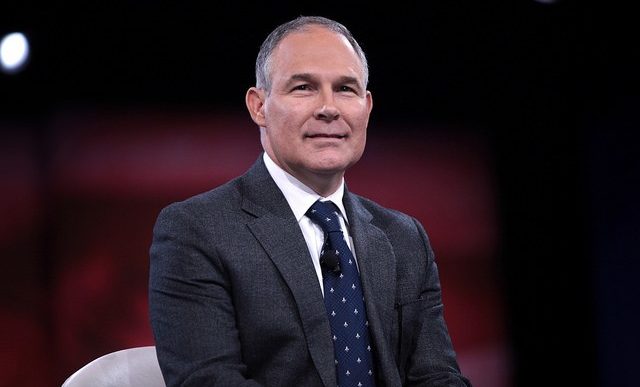
Trump’s Pick for EPA Has a History of Fighting the Agency

President-elect Donald Trump reportedly has nominated Oklahoma Attorney General Scott Pruitt to head the Environmental Protection Agency.

Pruitt is known for waging legal battles against the EPA over its climate change agenda, suggesting that Trump could intend to make good on his promise to “get rid of [the agency] in almost every form.”

Pruitt, a Republican, led the charge in the states’ fight against what he considers an overreach by the EPA on issues including the Clean Power Plan, which aims to combat global warming; the Waters of the United States rule, which aims to protect wetlands and waterways; and the Renewable Fuel Standard, which aims to reduce greenhouse gas emissions.

He has publicly expressed skepticism about climate change science, and supports the notion that the debate is “far from settled.”
The possibility of undoing a series of rules and regulations established under the Obama administration immediately caused alarm among green groups on the left.

“The mission of the EPA and its administrator requires an absolute commitment to safeguard public health and protect our air, land, water, and planet,” said Rhea Suh, president of the Natural Resources Defense Council. “If confirmed, Pruitt seems destined for the environmental hall of shame.”

“Having Scott Pruitt in charge of the U.S. Environmental Protection Agency is like putting an arsonist in charge of fighting fires,” added Michael Brune, executive director of the Sierra Club. “He is a climate science denier who, as attorney general for the state of Oklahoma, regularly conspired with the fossil fuel industry to attack EPA protections.”

Karl Rove, a former senior adviser under the George W. Bush administration, came to Pruitt’s defense, congratulating Trump “on another superb pick.”

“About time for sensible regulator again at such powerful agency,” Rove tweeted.

Pruitt has been criticized for having cozy relationships with energy companies. In 2014, The New York Times reported a letter he sent to the EPA was written “almost entirely” by Devon Energy, a natural gas and petroleum producer.

But in the face of criticism, Pruitt responded: “It should come as no surprise that I am working diligently with Oklahoma energy companies, the people of Oklahoma, and the majority of attorneys general to fight the unlawful overreach of the EPA and other federal agencies.”

Pruitt, who serves in one of the biggest oil and natural gas states in the country, has also been active in defending companies who express skepticism about climate change science.

In March, a group of state attorneys general formed a coalition to “criminally investigate energy companies for disputing the science behind global warming.”

Pruitt, along with Alabama Attorney General Luther Strange, came to the defense of the companies. In a statement, they voiced strong opposition to a coalition they said is an attempt to “use the law to silence voices with which we disagree.”

“Reasonable minds can disagree about the science behind global warming, and disagree they do,” Pruitt and Strange said in a statement. “This scientific and political debate is healthy, and it should be encouraged. It should not be silenced with threats of criminal prosecution by those who believe that their position is the only correct one and that all dissenting voices must therefore be intimidated and coerced into silence.”

Pruitt was elected as attorney general in Oklahoma in 2010, and before that served as a conservative in the Oklahoma state Senate.

In addition to prosecuting the EPA, Pruitt has challenged the Affordable Care Act and the Obama administration’s transgender bathroom guidance. (For more from the author of “Trump’s Pick for EPA Has a History of Fighting the Agency” please click HERE)

Follow Joe Miller on Twitter HERE and Facebook HERE.