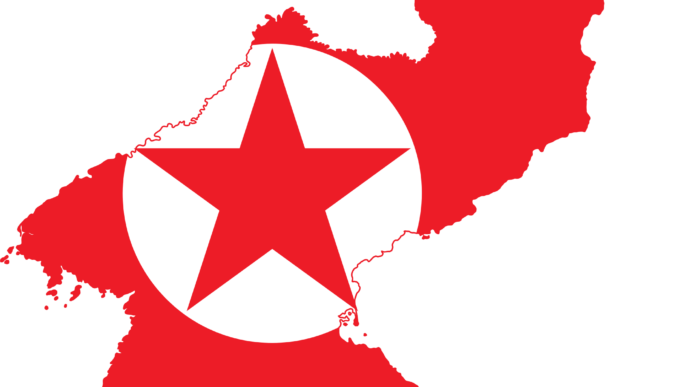
What next with North Korea?

There was a moment at Press Secretary Sean Spicer’s White House briefing Monday that was significant. Asked by a reporter about North Korea’s missile launch last weekend, Spicer said the administration was aware of the launch and that “it failed.” End of story. Next question, please.

Sir Malcolm Rifkind, the former Conservative foreign secretary in Britain, might provide an explanation for Spicer’s tight-lipped response. Rifkind told the BBC Sunday that “…there is a very strong belief that the U.S. — through cyber methods — has been successful on several occasions in interrupting these sorts of tests and making them fail.”

At present, there are no direct links to a cyber attack on North Korea from the U.S., but that hasn’t stopped media outlets from reporting the possibility of one.

American Actions

Last month, the U.S. began sending the first elements of its Terminal High Altitude Area Defense (THAAD) missile defense system to South Korea, though China opposed the move. When it becomes operational will it, along with cyber attacks, be enough to deter North Korean dictator Kim Jong-Un from conducting new missile tests capable of hitting the U.S. with a nuclear warhead, which he has repeatedly threatened to do? Kim has said he will conduct missile tests “weekly” in response to U.S. threats.

On a recent visit to South Korea, Vice President Mike Pence vowed that “the era of strategic patience is over,” a strategy adopted by the Obama administration to explain its long-term view on global conflict resolution. Pence added, “North Korea would do well not to test (President Trump’s) resolve — or the strength of the armed forces of the United States in this region.”

How much of this is bluster on both sides no one can say for sure. After President Trump’s meeting with Chinese president Xi Jinping, there is some optimism that China might be able to exert sufficient pressure on its unpredictable ally to pull back from a direct confrontation with the U.S. Of greatest concern for the Trump administration, in addition to South Korean civilians who would likely suffer massive casualties should there be a North Korean invasion, are the more than 28,000 U.S. troops stationed in South Korea. Kim has threatened to attack them and flood South Korea with his ground forces.

What’s the Goal?

What is our goal with North Korea? Is it regime change? If so, who and what would follow if Kim is ousted? Kim, his father and grandfather have established such an atmosphere of complete control and cult-like obedience with North Koreans who have been cut off from all outside information that it is hard to predict how the people would react. It’s a good bet political prisoners in North Korea’s prison camps would be overjoyed if the regime fell and they were set free.

Humanrights.gov estimates between “80,000 and 120,000 political prisoners and family members are detained in these camps, where starvation, forced labor, executions, torture, rape, forced abortion and infanticide are commonplace.”

Those who wish to hold off on further challenges to North Korea must ask themselves a question. Given the erratic behavior of Kim Jong-Un and his bellicose promises to strike the U.S. with a nuclear missile, is it better to take him seriously and stop him now, or wait until he has the capability to carry out his threat?

Last week, Hawaii’s House public safety committee passed a resolution calling for the state’s defense agency to repair hundreds of fallout shelters that have not been updated since the 1980s and restock them with medical supplies, food and water.

We haven’t yet reached the tension level of the 1962 Cuban Missile Crisis, which put the United States in direct confrontation with the Soviet Union and brought the world to the brink of nuclear war, but the current tension between the U.S. and North Korea could quickly spiral downward.

Will the “peace through strength” doctrine of the Reagan administration, which suggested that military power could help preserve peace, work today? During the Reagan years, Soviet leaders were not unstable, as Kim Jong-Un appears to be, and a nuclear confrontation was avoided. Perhaps a demonstration of what the U.S can do with cyber warfare, a missile defense system and help from China will be enough.

One can only hope. (For more from the author of “What next with North Korea?” please click HERE)

Follow Joe Miller on Twitter HERE and Facebook HERE.
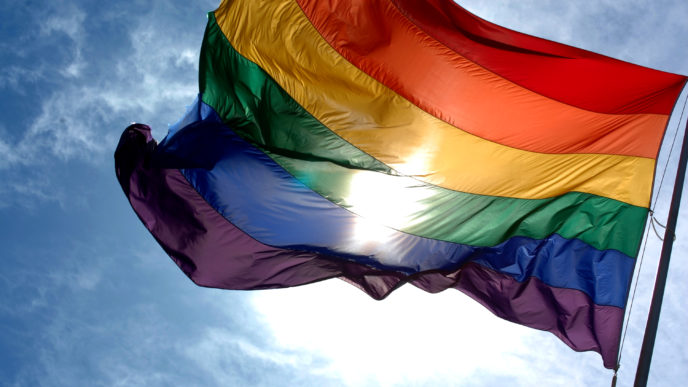
New Jersey Cardinal Welcomes Gay Activists to His Cathedral

One of the more forgettable comedies of 2011 was Cameron Diaz’s farce, Bad Teacher. It wasn’t actually funny. Its efforts at wild irreverence seemed desperate and strained. The sequence that led me to hit Stop and eject the DVD was this one: Diaz was working against her will as a teacher in a high school. Hung over and apathetic, she over and over again blew off giving a lecture. Instead, she popped in a movie of dubious relevance and left the kids to watch it as she napped.

That didn’t make me chuckle. It made me livid. I’ve had some amazing teachers, and a few really bad ones. I know how important the devoted ones can be. They can change your life. And the rotten ones do grave harm. A highly educated person who’s being paid to pass on his learning to you sends a message. If he takes the material seriously, he teaches you it’s important. If he shrugs and waves it off, young impressionable people get that message too: This topic is so bogus, not even the teacher cares about it.

I still remember with bitterness a cynical high school religion teacher. His blasé, sarcastic attitude toward core Christian doctrines made my teenage blood boil. I learned he later went off to peddle suburban homes. I hope he took them more seriously.

Cardinal Joseph Tobin of Newark: Bad Teacher

Which brings us to the Catholic Archbishop of Newark, New Jersey, Joseph Tobin. Recently boosted by Pope Francis to cardinal, Tobin will be one of the tiny group voting on who the next pope will be. He leads a flock of millions, in the New York metro area, with a major Catholic university, Seton Hall right in his city. In fact, Seton Hall is one of the small group of Catholic schools which have seen a resurgence of Catholic identity. That depends in large part on Tobin’s good will. Which is really a shame for Seton Hall. Because like Cameron Diaz’s character in the movie, Tobin is a bad teacher.

The role of a bishop is first and foremost as a teacher. His authority in his diocese is similar to the pope’s over the whole church. He’s considered an heir of the apostles. He is meant to do for (let’s say) Newark what St. James did for Jerusalem: serve as the primary evangelist of the faith of Jesus.

On crucial moral issues, Tobin is snoozing through the class. In this he is like far too many bishops around the world. Worst is that that faction of bishops which Pope Francis seems to favor and promote: social justice activists, who go way beyond the church’s actual teaching on political issues in fashion with the left. But on topics that might bother Caesar, or anger elites, they shrug and go back to sleep. Or worse, with a wink and a nod they give aid and comfort to the enemies of our faith.

Gay Activists at the Cathedral

The man who called Tobin’s abuses to our attention is Joseph Sciambra. Once sunk so deep in the homosexual lifestyle that he acted in pornographic films, Sciambra was granted the grace to escape. Now he bares his soul and braves the scorn of angry activists, defending the Gospel’s teaching on chastity and repentance. If I had to name one person alive today whom I expect someday to be canonized a saint, Sciambra would be that man. On his blog, Sciambra reports that Cardinal Tobin is sponsoring the following event:

An LGBT Pilgrimage and Mass to the Cathedral Basilica of the Sacred Heart in Newark, New Jersey. According to a flyer for the event, the Pilgrimage and Mass are taking place: “With the blessings and best wishes of His Eminence Joseph Cardinal Tobin, C.Ss.R., Archbishop of Newark …”

Mass will be offered by Rev. Francis Gargani, C.Ss.R. Gargani frequently offers retreats to LGBT Catholics, one of which was advertised by the gay-affirmative Open Hearts GLBT Ministry located at St. Patrick – St. Anthony Church in Hartford, Connecticut. The Open Hearts group recently read a book which celebrated the “Queer Christ.” According to a description for the retreat:

Through ritual prayer, reflective input sessions, shared discussion, personal time for prayer and quiet, and social gatherings, this retreat offers a special opportunity for lesbian, gay, bisexual, and transgender persons to celebrate their identity and deepen their experience of community in the living God.

Not a word about chastity or repentance. Sciambra dug deeper and learned about the organizers of the event. They work closely with pro-gay activists who reject Christian moral teaching outright. And Tobin is hosting them at his own cathedral.

Silencing Faithful Priests

But don’t let it be said that Tobin is always asleep at the switch. When it comes to enforcing conformity with liberal politics, his diocese swings into action. As LifeSiteNews reported:

The Archdiocese of Newark says it will crack down on an outspoken pro-life priest after a hit piece on a local news site against him.

On Wednesday, NJ.com published a scathing article about posts made by Father Peter West on his Facebook page.

The article says West “has repeatedly railed against Muslims,” voiced “strong support for the president’s travel ban” and “assailed millennials as ‘snowflakes’,” among other accusations.

The article suggested the priest has violated the Johnson Amendment by being so political on Facebook and worried that West’s “withering attacks … run counter to the statements and philosophies of his own leader, Newark Cardinal Joseph W. Tobin, and his ultimate boss, Pope Francis.”

James Goodness, a spokesperson for the Archdiocese of Newark, told NJ.com that the archdiocese is “concerned about Father West’s comments and actions, and will be addressing them according to the protocols of the Church.”

….

West is … vocally supportive of Catholic moral teaching on his social media. He has 8,494 Facebook followers. More than 200 people have signed a recently-launched petition asking the Archdiocese to condemn the “false, inaccurate” hit piece on him.

West said his posts about radical Islam were made “on what you might say are feminist grounds.”

He said he was troubled by “the fact that they don’t treat women as equals, that one man can have up to four [wives], that a woman is treated as an article of property, that in many of these Muslim countries, they practice female genital mutilation.”

“Eat My Sheep”

Why were gay activists invited to Newark’s cathedral? Why was a faithful New Jersey priest silenced for taking sane stances on social media? Is Tobin catering to social justice leftists while kicking moral conservatives to the curb?

That’s what you call a bad teacher. (For more from the author of “New Jersey Cardinal Welcomes Gay Activists to His Cathedral” please click HERE)

Follow Joe Miller on Twitter HERE and Facebook HERE.
‘America First’ Does Not Mean ‘America Only’

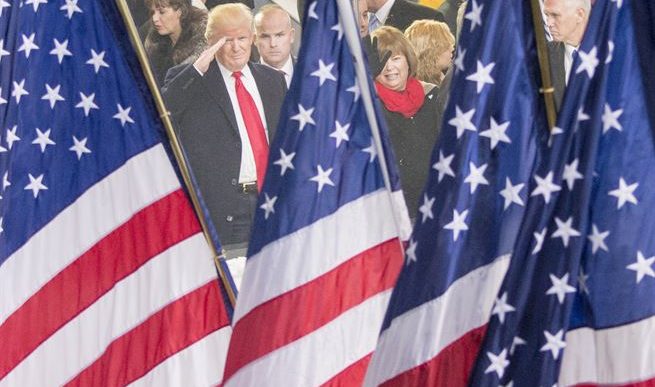
During the presidential campaign when Donald Trump spoke of putting “America first,” I never thought he meant “America only.” It appears that others understood him quite differently. They are not happy with his overseas actions. As summed up by Ann Coulter, “We want the ‘president of America’ back — not ‘the president of the world.’”

Of course, Coulter, along with other Trump loyalists like Paul Joseph Watson, Laura Ingraham, and Mike Cernovich, were not upset because the president bombed another country. They were upset because he bombed Syria after saying for years that we should stay out of there.

They felt betrayed and double-crossed.

They also felt that any American intervention in Syria was unwise, especially if it led to an attempt to remove Assad.

But we did not only bomb Syria. We sent warships to North Korea, warning the demented dictator of that country to behave, or else.

For Coulter, this means that Trump has already become a pawn of the Washington establishment. As she wrote:

Looking for some upside to this fiasco, desperate Trump supporters bleated that bombing Assad had sent a message to North Korea. Yes, the message is: The Washington establishment is determined to manipulate the president into launching counterproductive military strikes. Our enemies — both foreign and domestic — would be delighted to see our broken country further weaken itself with pointless wars.

What, then, are we to make of this? Has Trump caved in to the establishment already? Has he abandoned his pledge to put “America first”?

Nothing Unique About Trump’s ‘America First’ Promise

On the larger question of President Trump and the Washington establishment, time will tell. The same can be said about which direction the president will go. Will it be the way of Jared Kushner or will it be the way of Steve Bannon (a dramatic oversimplification)? Only time will tell.

But when it comes to Trump’s bombing of Syria and standing up to North Korea, I see no contradiction between these actions and “America first.” There is nothing exceptional with the elected leader of a country saying that they intend to put the interests of their country first. But of course! (For more from the author of “‘America First’ Does Not Mean ‘America Only'” please click HERE)

Follow Joe Miller on Twitter HERE and Facebook HERE.

Russian Bombers Spotted off Alaskan Coast Twice in 24 Hours

Two Russian TU-95 Bear bombers were spotted flying about 41 miles off the coast of Alaska on Tuesday, just hours after two US F-22 fighter jets intercepted the same type of Russian aircraft in the area.

An E-3 surveillance aircraft was scrambled in response to the second sighting of Russian bombers off the Alaskan coast in 24 hours, a US defense official told CNN.

It is unclear if these were the same planes that were intercepted by the F-22s on Monday, but defense officials told CNN that it was a separate violation.

On Tuesday, the two Russian TU-95 Bear bombers once again flew into the Alaskan Air Defense and Identification Zone, according to two US defense officials. The closest the bombers came was 36 nautical miles off the mainland Alaskan coast, and they flew 745 nautical miles southwest of Anchorage. (Read more from “Russian Bombers Spotted off Alaskan Coast Twice in 24 Hours” HERE)

Follow Joe Miller on Twitter HERE and Facebook HERE.
Professor Who Tweeted ‘Trump Must Hang’ Takes Paid Leave of Absence

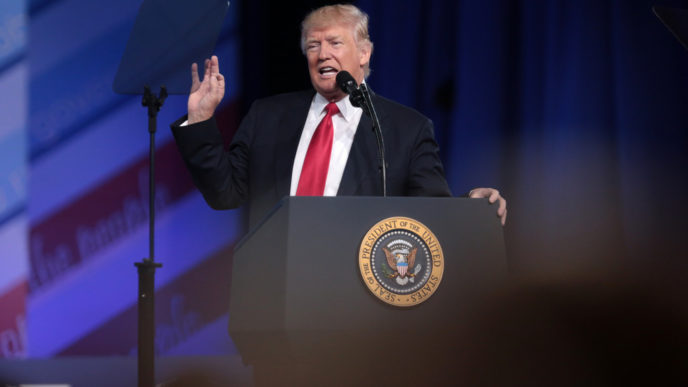
The professor who tweeted “Trump must hang” and that two Republicans should be executed for each immigrant deported is taking a paid leave of absence for the rest of the spring semester.

Professor Lars Maischak of California State University, Fresno agreed upon the leave of absence with the university, according to The Fresno Bee.

The professor’s paid leave of absence comes after The Daily Caller News Foundation reported on threatening tweets sent from his Twitter account (since deleted), including the following:

Daily-Caller-Lars-Maischak-5-620x474

Maischak’s five American history courses will be taught by a substitute teacher. Fresno State Provost Lynnette Zelezny told The Fresno Bee that 213 students will be affected.

“The agreement for the paid leave was reached in accordance with provisions in the collective bargaining agreement with the California Faculty Association, the union that represents all faculty,” said Joseph Castro, Fresno State’s president, in a statement obtained by The Fresno Bee. “During his leave of absence, Dr. Maischak will no longer have a teaching role, but will be conducting research off campus.” (Read more from “Professor Who Tweeted ‘Trump Must Hang’ Takes Paid Leave of Absence” HERE)

Follow Joe Miller on Twitter HERE and Facebook HERE.
Trump’s Disappointing Flip-Flop on the Export-Import Bank

President Donald Trump has apparently changed his mind about eliminating the crony Export-Import Bank, opting to “reform” the swamp rather than drain it.

As bad as this flip-flop is, his excuses for doing so are downright pitiful.

As a candidate in August 2015, Trump categorized the bank as “feather bedding,” adding, “I don’t like it. I think it’s a lot of excess baggage. I think it’s unnecessary. And when you think about free enterprise, it’s really not free enterprise.”

He was right, of course, but that was then.

On Friday, the president announced his intention to nominate former New Jersey Rep. Scott Garrett as bank president and former Rep. Spencer T. Bachus III to the Ex-Im board.

If the two are confirmed, the bank will return to full operation after 21 months without a board quorum—which prohibited deals exceeding $10 million.

And that means billions of taxpayer dollars to foreign firms and foreign governments with which to purchase exports from favored multinational companies such as Boeing, General Electric, and Caterpillar.

The best course of action would be to eliminate the bank altogether. There is no shortage of private export financing, and the subsidies distort credit and labor markets.

Perhaps worst of all, unsubsidized American companies are placed at a competitive disadvantage compared to the foreign firms collecting Ex-Im subsidies. (Delta, for example, loses out when Air India gets a sweetheart deal from Boeing by way of Ex-Im.)

A Meritless Flip-Flop

The White House is making much of the fact that Garrett has been a critic of Ex-Im, twice voting against renewal of the bank charter. That supposedly portends reform, although Congress has previously tried to do so without appreciable effect.

No amount of bureaucratic tinkering can shield taxpayers from bailouts in the event that bank reserves run dry—as occurred in the 1980s—nor protect American businesses from the disadvantages of the U.S. government subsidizing their foreign competitors.

In an April 12 interview with The Wall Street Journal, Trump acknowledged that he had been “very much opposed” to the bank but changed his mind because “lots of small companies will really be helped.

“But also maybe more importantly,” he said, “other countries give it, and … we lose a tremendous amount of business.” He also added, “So instinctively you would say it’s a ridiculous thing but actually it’s a very good thing and it actually makes money. You know, it actually could make a lot of money.”

All of which is nonsense.

Bank proponents focus on small firms to deflect attention from the fact that the vast majority of Ex-Im beneficiaries are titans of industry that are well-positioned to prosper without Ex-Im subsidies.

They do not lack access to private capital, and most have billions of dollars of backorders with which to keep production going.

In recent years, the bank supported less than half of 1 percent of small businesses—which in many cases aren’t so small.

(The bank’s definition of “small business” includes manufacturers with as many as 1,500 employees and service firms and retailers with as much as $20.5 million in annual revenues.)

On their own, businesses with fewer than 500 employees account for 98 percent of all firms exporting goods, and exports have reached high levels in recent years. In fiscal year 2016, for example, U.S. exports totaled $2.2 trillion, with Ex-Im supporting just 0.22 percent ($5 billion).

That makes one thing very clear: Export financing obviously is not a problem for small firms in the aggregate.

This is further validated by the fact that small businesses ranked “Exporting My Products/Services” as the least problematic of 75 business problems assessed in the 2016 annual survey by the National Federation of Independent Business Research Foundation.

(The cost of health care ranked as the most severe problem. The president would do well to focus on that rather than resuscitate Ex-Im.)

In the event that a small business cannot access private capital, it can seek to export through wholesalers or associate its business operations with larger firms or with global supply chains.

The real beneficiaries are the big boys like Boeing (market cap $110 billion), and the extent to which the bank caters to the company is staggering.

As of March 2014, at least 28 percent ($32 billion) of Ex-Im’s total portfolio was devoted to financing wide-body jets. In 2013, the bank authorized financing for the purchase of Boeing aircraft in 25 countries, including China, Russia, and the United Arab Emirates.

Subsidies for air transport, in general, comprised more than 45 percent of all export subsidies that year.

General Electric (market cap $256 billion) is another top Ex-Im beneficiary. The company began 2017 with a record backlog of $321 billion. Likewise, Caterpillar (market cap $54 billion) posted a backlog of $12 billion at the end of 2016.

Ex-Im Doesn’t ‘Level the Playing Field’

The claim that U.S. companies will lose sales to foreign competitors without Ex-Im financing is also drivel.

Economist Veronique de Rugy of the Mercatus Center has documented that only about a third of Ex-Im financing—which benefits just 2 percent of all U.S. exports—is designated in bank records as necessary to counter subsidized foreign competition.

A whopping 66 percent of the financing classified as necessary to counteract foreign competition went to Boeing.

In other words, Ex-Im Bank financing counteracts foreign subsidies for less than 1 percent of U.S. exports—with more than half the benefit accruing to Boeing.

Finance costs are only one among a variety of factors that affect a purchaser’s choice of supplier. Availability, reliability, and stability all play significant parts in purchase decisions. There should be no question that U.S. firms are capable of competing successfully without corporate welfare.

The claim of “competitive disadvantage” is further belied by the agreement among 31 member countries of the Organization for Economic Cooperation and Development to abide by a set of financing rules covering loan term limits, minimum fees, and other practices.

There is rarely such a thing as a “level playing field” in trade. Every country has advantages that others lack.

The ingenuity and drive of American companies can, in many instances, trump the export subsidies doled out by foreign governments—assuming, of course, that tax and regulatory barriers do not further restrict free enterprise.

It is silly for Ex-Im advocates to cite China’s massive subsidies as proof that Ex-Im is necessary. Do they really want America to emulate a country in which all the largest enterprises are owned by the state?

As reported in The Wall Street Journal, almost 14 percent of China’s listed, nonfinancial companies’ profits are attributable to government support, according to an analysis by Wind Info.

And let’s not forget that Trump campaigned on challenging China’s trade practices. He cannot now claim with any credibility that we must match its subsidies to stay competitive.

An Anti-Market Institution

Perhaps most disappointing, though, is the president’s defense of Ex-Im based on its potential to “make money.” That statement, out of all his others, insults the very concept of free enterprise and limited government.

By that rationale, Washington should assume control of all profitable companies to feed its insatiable appetite for spending.

In any event, the claim that Ex-Im is profitable is illusory: The bank uses “accrual” accounting, which does not factor in the risk of defaults related to bank financing.

For example, under current accounting methods, bank officials claim that Ex-Im will return a $14 billion surplus to taxpayers in the next decade.

But the Congressional Budget Office reported in 2014 that Ex–Im programs, if subjected to the fair value accounting methods required of private banks, actually operate at a deficit that will cost taxpayers some $2 billion over 10 years (in addition to the bank’s operating costs).

Ex-Im advocates offer myriad excuses for maintaining government interference in export financing, including job creation, gaps in private investment, and government subsidies lavished on foreign firms.

Such justifications do not stand up to the facts, and the purported benefits—if any—are not commensurate with the risk to taxpayers.

The president has made a huge mistake on Ex-Im, but it isn’t too late for him to change direction—back to where he was in the first place. (For more from the author of “Trump’s Disappointing Flip-Flop on the Export-Import Bank” please click HERE)

Follow Joe Miller on Twitter HERE and Facebook HERE.

Watchdog Sues for Records on Tax Dollars Funding ‘Soros Infantry’

Judicial Watch is suing to obtain government records regarding almost $5 million in U.S. tax dollars flowing to the “Soros infantry” that is disrupting Macedonia’s political system.

What’s more, the government watchdog group says it wants to know why President Donald Trump hasn’t replaced President Barack Obama’s ambassador to Macedonia, Jess L. Baily.

The United States Agency for International Development, or USAID, is an appendage of the State Department. It has given $4.8 million to the Open Society Foundation-Macedonia, part of liberal billionaire George Soros’ vast network of global nonprofits, between Feb. 27, 2012, and Aug. 31, 2016, according to Judicial Watch.

“The Obama administration seemed to bust taxpayer budgets in an effort to fund the Soros operation,” Judicial Watch President Tom Fitton said in a statement. “The Trump State Department and USAID should get their act together and disclose the details of the Obama-Soros spigot.”

The USAID website links to the Soros website, and said the project trained hundreds of young Macedonians “on topics such as freedom of association, youth policies, citizen initiatives, persuasive argumentation, and use of new media.”

A Judicial Watch press release on Wednesday said:

The Open Society Foundation has established and funded dozens of leftwing, nongovernmental organizations (NGOs) in Macedonia to overthrow the conservative government. One Macedonian government official interviewed by Judicial Watch in Washington D.C. recently, calls it the ‘Soros infantry.’ The groups organize youth movements, create influential media outlets, and organize violent protests to undermine the institutions and policies implemented by the government.

Members of Congress have inquired about the USAID dollars going to Soros.

In a March 23 letter responding to inquiries from Republican senators, Joseph E. Macmanus, executive secretary with the State Department, said the USAID goal in Macedonia is for “democratic reform and civic engagement, for strengthening of the rule of law.” (For more from the author of “Watchdog Sues for Records on Tax Dollars Funding ‘Soros Infantry'” please click HERE)

Watchdog Sues for Records on Tax Dollars Funding ‘Soros Infantry’

UC Berkeley Rewards Liberal Violence by Not Allowing Coulter Speech

Apparently the lesson University of California, Berkeley learned from the violent protests surrounding writer Milo Yiannopoulos’ speech earlier this year was … you shouldn’t let controversial figures give speeches.

The Associated Press reported Wednesday that commentator Ann Coulter’s upcoming speech had been canceled “for security concerns.”

“UC Berkeley officials say they were ‘unable to find a safe and suitable’ venue for the right-wing provocateur who was invited to speak by campus Republicans on April 27,” the AP report added.

This shouldn’t be acceptable.

UC Berkeley canceled Yiannopoulos’ Feb. 1 speech. The level of violence and destruction that greeted Yiannopoulos—who was rightly condemned shortly after the Berkeley violence for remarks he made months earlier about teens, adults, and sexual relationships—was astonishing. Just look at these pictures:

No doubt it’s quite a headache for a university to figure out how to cope with thugs who are willing to act like this, just because they want someone silenced. Although the fact that UC Berkeley appears to have arrested only one person in the aftermath of the protests suggests a lack of seriousness about holding protesters accountable for their actions.

(Update: In an email to me received after publication, Sgt. Sabrina Reich, a public information officer at University of California, Berkeley Police Department, wrote: “To date, there have been two arrests and one student is facing school discipline … but the investigative efforts continue.”)

The point is, no college should reward violent protesters by refusing to allow controversial speakers to appear.

Because this isn’t really about Coulter or Yiannopoulos or author Charles Murray, who was greeted by violent protests when he arrived to speak to Middlebury College in Vermont.

It’s about whether we as a society protect free speech—or not.

Yes, free speech can make some people, including college students, feel sad or threatened or dozens of other unpleasant emotions.

But it can also force them to realize a new insight or perspective that might challenge their values, might make them re-think their views on a certain issue. Or sometimes it works the other way: The weakness of the opposition’s argument makes someone surer that her own perspective is right.

Regardless, if we believe in a reason-driven society—one where arguments, not violence, drive our perspective—we need to allow a diversity of voices to communicate their views. We need to let people, hopefully guided by reason and a good education, to decide what they think is right—not force them, by silencing some perspectives, to adopt a certain viewpoint by default.

College students, like all Americans, deserve a chance to hear a variety of views—and then make up their own minds.

Once, colleges understood that. But U.C. Berkeley’s decision here suggests that at least this university is prioritizing some views over others. (For more from the author of “UC Berkeley Rewards Liberal Violence by Not Allowing Coulter Speech” please click HERE)

Follow Joe Miller on Twitter HERE and Facebook HERE.
The Most Controversial DNA Test You’ve Never Heard Of

A vote on whether to approve a proposal that would allow familial DNA searching in certain criminal cases has been delayed by New York state’s Forensic Science Committee. The controversial proposal has been sent back to a special subcommittee to “tighten up the language.” If approved, the new policy would allow police to investigate family members of New Yorkers whose DNA closely matches DNA found at crime scenes.

Because familial searching has gotten little to no coverage in mainstream media, many people have no idea what it is — or that it’s already being used in California, Colorado, Florida, Michigan, Texas, Utah, Virginia, Wisconsin, Wyoming, and Ohio.

The FBI describes the investigatory process as follows:

Familial searching is an additional search of a law enforcement DNA database conducted after a routine search has been completed and no profile matches are identified during the process. Unlike a routine database search which may spontaneously yield partial match profiles, familial searching is a deliberate search of a DNA database conducted for the intended purpose of potentially identifying close biological relatives to the unknown forensic profile obtained from crime scene evidence. Familial searching is based on the concept that first-order relatives, such as siblings or parent/child relationships, will have more genetic data in common than unrelated individuals. Practically speaking, familial searching would only be performed if the comparison of the forensic DNA profile with the known offender/arrestee DNA profiles has not identified any matches to any of the offenders/arrestees.

Though familial searching is already being used in ten states and has led to the arrests of numerous violent criminals, it is not always accurate.

“Anyone who knows the science understands that there’s a high rate of false positives,” Erin Murphy, a New York University law professor and the author of Inside the Cell: The Dark Side of Forensic DNA told Wired magazine.

Further, civil liberties experts have expressed concern that the method violates personal privacy. According to comments from the New York Civil Liberties Union, “criminal suspicion will attach to innocent persons merely because of their biological relation to a person whose DNA is in the state’s databank.”

David Loftist, the attorney in charge of post-conviction and forensic litigation at the Legal Aid Society, told Gothamist:

You are creating a ‘suspect class’ of citizens. If you have a family member that has been convicted of fare beating, his DNA is in the database. Now all of his family members would be subject to searching in perpetuity.

He also pointed out that the state DNA bank is disproportionately black and Latino, adding, “This creates a dragnet for the entire community now…all of their relatives are possible suspects. It’s a genetic stop and frisk.”

Queens District Attorney Richard Brown, however, is a huge advocate for familial DNA searching. “This technology has proven effective at generating important DNA investigative leads in cold cases,” he said. “We have an obligation to use every means at our disposal to identify the murderer.”

The Forensic Committee decided last week that the requirements for initiating a familial search are too broad at this point. It has postponed the vote until a new draft can be completed. The next official meeting is set for June 16th. (For more from the author of “The Most Controversial DNA Test You’ve Never Heard Of” please click HERE)

Follow Joe Miller on Twitter HERE and Facebook HERE.
“Not Terrorism,” But Murder Spree Suspect’s Name is Muhammad, Shouted “Allahu Akbar”, and Had Pro-Muslim Rant on Social Media

Three people are dead in a shooting spree in downtown Fresno on Tuesday, and the suspect was wanted in connection to the Motel 6 killing last week, the Fresno Police Department said.

Kori Ali Muhammad, 39, shouted “Allahu Akbar” as police tackled him to the ground after the shootings which were spread over four locations, Police Chief Jerry Dyer said.

The victims appeared to be random, Dyer said.

“These individuals that were chosen today did not anything to deserve what they got,” Dyer said. “These were unprovoked attacks.”

Shot Spotter detected the first gunshots around 10:45 a.m. Muhammad shot into a Pacific Gas & Electric (PG&E) vehicle killing the passenger. The driver sped away and drove to Fresno Police headquarters. (Read more from “Murder Suspect’s Name is Muhammad” HERE)

_______________________________________________

Police: Killings had “Nothing to Do With Terrorism”

A man wanted in the slaying of a security guard set out to kill as many white people as he could on Tuesday, gunning down three men on the streets of downtown Fresno before he was captured and admitted to the shootings, authorities said.

Kori Ali Muhammad, 39, was arrested shortly after the morning rampage that left three white men dead, police said. Muhammad, who is black, fired 16 rounds in less than two minutes at four places within a block, shooting men who appeared to be going about their day, authorities say.

During his arrest, Muhammad shouted “Allahu Akbar,” but Fresno Police Chief Jerry Dyer said the shootings had “nothing to do with terrorism in spite of the statement he made.” (Read more about the murder suspect whose name is Muhammad HERE)