Fed President Resigns Over Role in 2012 Leak of Information

Richmond Federal Reserve President Jeffrey Lacker announced his immediate resignation Tuesday, admitting his involvement with a 2012 information leak.

Lacker said a conversation with an analyst from Medley Global Advisors in 2012 may have disclosed confidential information about Fed policy options.

The day after the conversation, Medley Global Advisors reported details of a September 2012 Fed policy-setting meeting. Those details were made public one day before the central bank’s own record of a meeting during which officials discussed a major massive bond-buying stimulus that was planned for later in 2012.

The Medley report controversy became a topic of debate in Congress, leading to a criminal investigation.

In May 2015, Financial Services Committee chair Jeb Hensarling, R-Texas, subpoenaed documents and communications related to the leak. At the time, Fed officials said sharing information with Congress might jeopardize a criminal investigation.

Lacker’s resignation was negotiated with law enforcement officials involved in the probe, CNBC reported. It said no charges will be filed against Lacker.

“In this episode, as in all of my communications with analysts, journalists and the public, it was never my intention to reveal confidential information,” Lacker said in a statement.

“I further acknowledge that through this and other conversations with the Analyst, I may have contravened the External Communications Policy, which prohibits providing any profit-making person or organization with a prestige advantage over its competitors,” he added.

Lacker noted that he was not forthcoming about the incident in a December 2012 investigation.

“Although it was my intention to cooperate fully with the internal review, I regret that I did not disclose to the General Counsel, either in my December 6, 2012 questionnaire or the December 10, 2012 interview, that the Analyst was in possession of confidential information,” he said.

He admitted that he did not reveal what had transpired until 2015, when he was investigated by the United States Attorney’s Office for the Southern District of New York, the Office of the Inspector General of the Federal Reserve Board, the Federal Bureau of Investigation and the U.S. Commodity Futures Trading Commission.

“I apologize to my colleagues and to the public I have been privileged to serve. I have always strived to maintain the appropriate balance between transparency and confidentiality, but I regret that in this instance I crossed the line to confirming information that should have remained confidential,” he wrote in his statement.

He said that he had initially planned to step down in October, but instead was making his resignation immediate. (For more from the author of “Fed President Resigns Over Role in 2012 Leak of Information” please click HERE)

Follow Joe Miller on Twitter HERE and Facebook HERE.

DHS Head Backs Phone Searches of Those Entering U.S. At Airports

The Department of Homeland Security will continue searching the mobile phones and electronic devices of travelers at U.S. airports, the agency’s leader said as lawmakers of both parties questioned whether the anti-terrorism tool is unlawfully intrusive.

DHS Secretary John Kelly, speaking Wednesday to the Senate Homeland Security Committee, said such searches are valuable in the fight to keep terrorists out of the U.S. and that they affect a fraction of the 1 million people who enter the country every day.

The electronics searches are “not routine; it’s done in a very small number of cases,” the retired Marine general told lawmakers. “If there’s reason to do it, we will do it. Whether it’s France, Britain Egypt, Saudi Arabia or Somalia, it won’t be routinely done at a port of entry.”

Kelly appeared before the panel to announce that the number of undocumented immigrants apprehended at the border last month reached a 17-year low since President Donald Trump took office. (Read more from “DHS Head Backs Phone Searches of Those Entering U.S. At Airports” HERE)

Follow Joe Miller on Twitter HERE and Facebook HERE.

Why Won’t the US Help Syrian Christians Fighting ISIS?

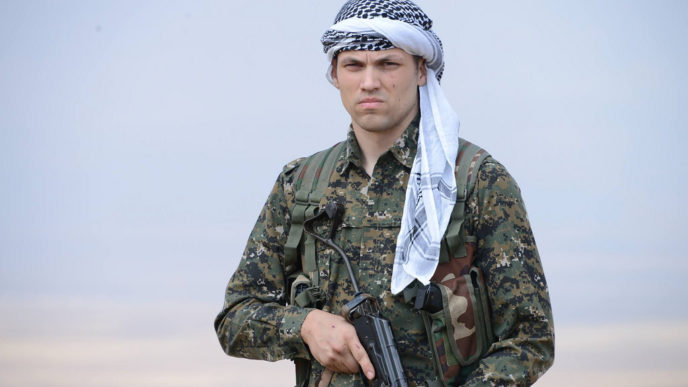
It’s no secret that the battle for Raqqa, the ISIS capital, is near. The Syrian Democratic Forces are preparing themselves for what will be a gruelling battle to liberate the city.

The Syrian Democratic Forces are an alliance of Kurds, Turkmen, Arabs and Syriac-Assyrian Christians in northern Syria. They fight together against ISIS, with the express support of the U.S. The SDF is the army of the Federation of Northern Syria.

The One Free Region in Syria

I’ve written before about the Federation at The Stream. Unlike most of the Middle East, it offers multi-ethnic governance, real freedom for women and real freedom of religion. It governs an area twice the size of Lebanon with several million people.

A crucial move towards the fight for Raqqa happened on March 22. That’s when the U.S. airdropped an entire SDF fighting force at the southern bank of the Euphrates, near the Tabqa town and dam southwest of Raqqa. Soon both Tabqa and the dam over the Euphrates will be taken by the SDF.

ISIS was seized by panic. A rumor spread that the dam was about to break and many fled Raqqa. Still many ISIS fighters stayed. They started to dig in even deeper, increasing the prospect of a gruelling battle for Raqqa.

Turkey Halts Attack on Christians’ Allies

The Trump Administration apparently finally concluded that Turkey is of no use for any further anti-ISIS operations in Syria. Regardless of Turkish pressure, the U.S. is sticking with the SDF. That became very clear when U.S. Secretary of State Rex Tillerson visited Turkey and Turkey announced an end to its Euphrates Shield attack on the SDF.

One important question remained unanswered. Why is the U.S. singling out the Syrian Christian militias and refusing to arm them? So far, the U.S. has only sent arms to the Arab elements in the SDF. Those forces deserve the help. But so do the Christians.

Why Deny Christians Weapons?

The Syriac-Assyrians (Christians) in the SDF have released a statement calling for equal treatment. The Syriac Military Council says:

General Votel stated in the congressional hearing of March 29, 2017 that “the most effective force (against ISIS) we have right now in Syria is the Syrian Democratic Forces that consist of both Kurds and Arabs, Turkmen and in some cases Christians.”

First of all we want to emphasize that it is a simple fact that we as Syriac-Assyrian Christians are a founding member of the SDF via the Syriac Military Council. We have furthermore been in every single operation of the SDF.

Yes our numbers are smaller as our population is smaller as a consequence of the genocides against our people. However we are a full and equal partner in the SDF. … Our men and women are on the frontlines and we lost dear friends in battle. We know that it is not our compatriots who created this impression but a lack of information on the side of the US. …

The fact that we suffered under genocides emphasizes the need for delivery of military equipment. If we are weak, we are a target of the extremist forces that the SDF is fighting against.

We will be part of any operation against Raqqa, regardless of our current level of military equipment. We cannot imagine that the U.S. would deliberately want us to be more poorly equipped then our Arab partners when we go into that big battle.

We thank the US for the air support given in crucial battles and the support to the SDF. We also hope that this is an opportunity to work together for the long-term security and freedom of our people and all the peoples of the region.

The Second Amendment for Syria’s Christians

The statement is a challenge to the Trump administration. Trump has (rightly) emphasized the need to protect Christians and to act against persecution. Syria’s Christians don’t ask for U.S. troops. They ask for equal treatment. They need the arms to protect themselves against ISIS, just like their neighbors. In fact they would like to have the same right as Christians in the U.S. — who also have the equal right of self-protection as their fellow citizens, thanks to the Second Amendment.

The crucial question is whether Christians in the U.S. will stand up. Will they ask the Trump Administration to treat Syria’s Christians equally? Or will they allow their brothers and sisters to be more easily killed by ISIS? Will U.S. Christians lobby Congress, Senate and White House to set this injustice right? Or will they allow brothers and sisters to be left without protection? Do they imagine that Christians in the Middle East do not need to protect themselves against jihadists?

This is an urgent question as the battle for Raqqa will commence very soon. Syriac-Assyrian Christians in northern Syria are now treated equally by their fellow citizens fighting ISIS. The question is if Christians in the U.S. will do the same. The answer will determine if Syria’s Christians have a reliable ally in American Christians and a strong voice in the post-ISIS settlement of Syria. (For more from the author of “Why Won’t the US Help Syrian Christians Fighting ISIS?” please click HERE)

Follow Joe Miller on Twitter HERE and Facebook HERE.

Assisted Suicide Means Throwing Patients Away

The assisted-suicide bill in Hawaii was just deferred. We may see it threaten patients again in coming years. I offer my comments as a psychiatrist, and as a clinical expert on suicide.

Assisted-suicide is, at the very least, a medical procedure unlike any other. A surgeon hopes that his patients will wake up again, and be alive to critique him. A living patient is a complaining (and perhaps a litigious) patient.

A dead patient is a patient who by definition cannot complain — a point never lost on pirates (“Dead men tell no tales”) or on the Mafia. In fact, there is probably something profound in the old Jewish idea of glorifying God through our kvetching.

To bring the point back to doctoring: Imagine, if you will, a procedure where a patient cannot complain afterwards. Picture a procedure whose purpose is to end complaining, precisely by taking away a patient’s ability to complain.

Such is an assisted-suicide. How convenient for the doctor. His patients are so satisfied with their outcome … they’re practically speechless.

Assisted Suicide: The 21st Century Lobotomy

In my own field of psychiatry, for many decades we had another such procedure, one which obviates complaint. Almost no patient ever complained about his lobotomy. Patients who were lobotomized were docile. They hardly complained about anything.

Today, we do not allow lobotomies. Patients may request it, as they sometimes used to. But it isn’t available. We consider it barbaric and inhumane. Doctors have said NO. We have imposed our value system on our patients.

We’re Ashamed to Say “No”

These days, doctors can be very uncomfortable saying NO. Look no further than the opioid epidemic we are facing as a country. It’s largely caused by the unwillingness of doctors to say NO. Like you and everyone else, doctors do not like being characterized as callous or cruel.

Doctors are, perhaps, in their wish for moral esteem, even more sensitive to these accusations than the average person. Especially in our touchy moral climate.

A doctor who facilitates an assisted-suicide may be touted as a doctor who looks squarely at his patient’s suffering. But he might be, on the contrary, a doctor unwilling to sustain the professional burden of having failed a patient.

Patients Who Feel They’ve Failed Their Doctors

On an unconscious level, a minority of cancer patients may actually feel guilty for not responding to treatment. They may equate their illness with personal failure. The patient may also perceive his suffering as causing the doctor to suffer.

The patient may have an unconscious wish to preserve, at all costs, his own belief in the doctor’s omnipotence to heal. Some patients may imbue their doctor with childhood feelings, the sorts of feelings in which mommy can kiss away any boo-boo, and no matter what, daddy will find a way to fix it.

For these patients, the thing that absolutely cannot be endured, is not their suffering per se, but to see a doctor turn and throw up his hands.

These emotional factors in interplay can create a perfect storm. To a doctor with no other moorings than “I’m good, science is good,” a lethal prescription may be quite appealing. The finality of it may be especially so.

An Unholy Communion Wafer

On a deeper and more perverse level, the sacramental aspect of it may resonate. A lethal prescription may be prescribed by mouth, like a Satanic wafer, or like a coin on the mouth for Charon the ferryman.

What are the chief duties of physicians? They are “to cure sometimes, relieve often, and comfort always.” To sit with our patients. To admit our failings. To say NO if necessary. And to continue to offer our help.

Emphatically, it is not among our duties to ship our patients off to some unknown shore, a shore from which they can never return, and wash our hands of the whole thing.

We saw this mindset in the unique history of the leper colony in Kalaupapa, Hawaii. We saw it especially in the doctors who sent patients there, but who refused to go there themselves. (For more from the author of “Assisted Suicide Means Throwing Patients Away” please click HERE)

Follow Joe Miller on Twitter HERE and Facebook HERE.

Boko Haram Won’t Stop Killing Christians. It’s a Demonic Assault.

On Friday, Boko Haram Islamists kidnapped 22 more young girls. They will be held as sex slaves or sold to the highest bidder.

“Boko Haram” means “Western education is forbidden” in the Hausa language. These Islamists terrorists hate all things western and Christian. They want to forcibly establish an Islamic Caliphate and impose Shariah Law on everyone.

They call themselves al-Sunnah wal Jamma: “Followers of the Prophet’s Teachings.” Their official name is Jama’atu Ahlis Sunna Lidda’awati wal-Jihad, which means “People committed to the propagation of the prophet’s teachings and Jihad.”

This definition defines them. They are proud of it. They boast of their evil acts and have no conscience. Who is the main target of their jihad? Christians.

The Christian Targets

Remember three years ago, when Boko Haram kidnapped over 200 girls from a school in Chibok, northern Nigeria? Most of the girls are Christians. These girls can be sold as brides to the Islamist terrorists for $12.00.

With a smile on his face, Boko Haram leader Abubakar Shekau admitted to reporters, “I abducted your girls. I will sell them in the market, by Allah. … There is a market for selling humans. Allah says I should sell. He commands me to sell. I will sell women. I sell women.”

They haven’t stopped. Here’s a story from last September, just one of dozens of stories about their atrocities. Boko Haram members on motorcycles shot down Christians walking home from church. They killed eight and wounded others. This was part of a week in which they killed six civilians and three soldiers traveling in a convoy, and then beheaded a village chief and his son before setting fire to many homes in their village. They shot the villagers as they fled, killing two.

And just a few days ago, they kidnapped the 22 girls.

The terrorists of Boko Haram haven’t stopped and they won’t stop. After one church bombing in 2011, a spokesman boasted, “There will never be peace, until our demands are met. We want all our brothers who have been incarcerated to be released; we want full implementation of the Sharia system and we want democracy and the constitution to be suspended.”

A Demonic Assault

This attack on Christians is a demonic assault. A spokesman for Boko Haram announced in 2012 they were planning a “war on Christians.” They told a local reporter, “We will create so much effort to end the Christian presence in our push to have a proper Islamic state that the Christians won’t be able to stay.”

We need to remember that the attack on all of the others is also demonic. The devil hates mankind. He hates Christians in particular, because we bear the name of Jesus Christ. But he wants all people to suffer, because we’re all made in the image of God.

Look at the misery Boko Haram has created. Crux reported last year: “The seven-year Islamic uprising has killed more than 20,000 people, driven some 2.6 million from their homes and spread to neighboring countries.” The famine-like conditions these terrorist have created “are killing children and starving some 2 million Nigerians still trapped in northeast areas by Boko Haram. Most of the refugees are subsistence farmers who have been unable to farm for years now.”

Americans don’t like to think about the demonic. We don’t want to believe anyone else is really serving evil. Our scholars and pundits try to explain such evil in economic and political terms. That can be partially true, of course, but it doesn’t change the reality of evil or the fact that it is at work in all of this horror. As the Apostle Paul reminded the Christians in Ephesus, we need to be reminded, “we are not contending against flesh and blood, but against the principalities, against the powers, against the world rulers of this present darkness, against the spiritual hosts of wickedness” (Eph. 6:12, 13).

We need to listen to our brothers and sisters in Jesus Christ who live in the midst of the Islamist terror. They can tell us about responding to the kind of demonic evil Boko Haram has unleashed on the Christians of northern Nigeria.

Only God Can Save Us

The Catholic Bishop of Kafanchan Diocese called Christians throughout Nigeria to join in focused prayer and take concerted action. Joseph Bagobiri told Vatican Radio, “Since we have no government that would listen to our plight, we have carried our case directly to God. It is only God that can save us from our present situation. Our hope in Him is never in vain since he knows our problem and He will deliver us one day just as he delivered the people of Israel from the hands of the Egyptians.”

These Christians don’t suffer only from Boko Haram. They suffer from the Muslim-dominated governments and society of northern Nigeria. They suffer from what the bishop called “structural injustices.” These include the unfair distribution of goods and infrastructure, with Muslims getting more than Christians. It also includes discrimination in holding political and public offices, so Christians have few people in power to defend them. Their lives are hard even without Boko Haram.

The courageous Christians of Nigeria are staying, and praying. They are losing their freedom, and shedding their blood. Bishop Bagobiri says: “We as a Church must evolve new ways on how we can face violence without losing faith. It is our prayer that God will give us strength and the needed direction on how to make Christianity survive despite the constant attacks and persecution.” (For more from the author of “Boko Haram Won’t Stop Killing Christians. It’s a Demonic Assault.” please click HERE)

Follow Joe Miller on Twitter HERE and Facebook HERE.

Heroic Dog Saves Wedding by Tackling Female Suicide Bomber

A dog died after tackling a female suicide bomber in Nigeria, preventing the would-be attacker from detonating herself in a wedding party.

The dog’s brave actions prevented the suicide bomber from causing any other casualties to the party. The failed attack occurred in Maiduguri, the capital of Nigeria’s Borno state, where the ISIS-affiliated Boko Haram terrorist group is known to engage in suicide attacks.

“A female suicide bomber with [an improvised explosive device] strapped to her body attempted to infiltrate a wedding ceremony gathering in Belbelo community of Jere,” said a spokesperson for the Nigeria Police Force in Borno State, as quoted by Nigeria’s Premium Times. “She was however prevented by a watch dog, so she had to detonate the IED to kill herself and the dog. The dog was owned by a resident in the locality.”

Boko Haram is well-known for its use of female suicide bombers. Three suicide bombers blew themselves up Sunday while trying to enter Maiduguri. It is unclear if the dog was a trained to detect bombs, but its efforts were effective, nonetheless. (Read more from “Heroic Dog Saves Wedding by Tackling Female Suicide Bomber” HERE)

Follow Joe Miller on Twitter HERE and Facebook HERE.

Did North Carolina Legislators Sell Their Souls for Dollars?

How should we view North Carolina’s repeal of HB2, the so-called Bathroom Privacy Act?

It’s true that the state caved to the bullying tactics of the NCAA. But was it a complete capitulation? On one hand, the legislators took a step in the wrong direction. That’s why conservative organizations like ADF and FRC condemned the repeal. On the other hand, the legislators pushed back against LGBT activism. That’s why LGBT groups condemned the new bill. How do we sort this out?

Did North Carolina Give in to Bullies?

Let’s start with the negative.

Since the day HB2 passed, North Carolina has been bullied by big business, the media, and the world of sports and entertainment. “If you don’t repeal this mean-spirited bill, we will take our business elsewhere!”

Judging by the news reports, you’d think the state’s economy was floundering because of this pressure. The economy is actually thriving. It’s receiving some of the highest ratings in the nation in terms of overall health. As Lt. Gov. Dan Forest explained, the boycotts cost the state roughly one-tenth of 1 percent of its economy.

Why, then, did some legislators cave in when the NCAA gave them a 24-hour deadline to repeal HB2? Was it the bad publicity? Was it the importance of having these major college events brought back to the state? (After all, North Carolina just won the NCAA college basketball championship this week.)

Whatever the motivation, the capitulation seemed cowardly, as if money was more important than morality and popularity more important than principle.

As expressed by Kellie Fiedorek of ADF:

Sadly, North Carolina has failed families by giving in to hypocritical bullies like the NCAA and billion-dollar corporations. Every North Carolinian deserves to have their privacy respected in intimate settings like locker rooms and restrooms. One of government’s essential duties is to protect the citizens it governs, not to create uncertainty about whether showers and locker rooms will still be safe for women and girls. North Carolina’s economy is booming, so the state should not let the NCAA and others dictate the state’s policies and sell out their citizens’ interests based on flat-out lies about an economic doomsday that never happened.

LGBT Activists Didn’t Get What They Wanted

Still, things are not all bad. As former NC governor Pat McCrory explained, LGBT activists “did not get a full repeal of HB2.” (According to the HRC, McCrory’s support for the state’s compromise was a “kiss of death.”)

That’s why the editorial board of the left-leaning Charlotte Observer wrote:

Legislators and Gov. Roy Cooper hailed Thursday’s HB2 repeal bill as a compromise. In fact, it is nothing of the kind. It is a betrayal of the promises the governor made to the LGBT community and an entrenchment on discrimination by Republican legislators who have backed it all along.

Referring to the new bill, HB 142, the editors opined,

House Bill 142 literally does not do one thing to protect the LGBT community and locks in HB2’s most basic and offensive provision. It repeals HB2 in name only and will not satisfy any business or organization that is truly intolerant of an anti-gay environment and of a state that codifies discrimination.

HB2’s most fundamental requirement was that local governments cannot pass anti-discrimination ordinances that govern public accommodations such as restaurants and hotels. Under Thursday’s agreement, that is still true, until at least December 2020.

Return to the Status Quo

So where does this new bill leave us? How should we respond?

When it comes to bathroom privacy, the biggest thing the bill does is return to the status quo of 2015. This was before the Charlotte City Council passed a radical bill that would have in effect rendered all public bathrooms and locker rooms gender neutral. (This applied to public schools as well.)

As explained by law professor Greg Wallace, before “the Charlotte ordinance that sparked the debate, there were no laws regarding bathroom usage. If a man went into the women’s restroom, or vice versa … he’d likely be asked to leave, and if he refused, he could be arrested for trespassing.”

But, says the Charlotte Observer, “the legislation dodges the whole bathroom question. Charlotte’s ordinance allowed transgender individuals to use the public bathroom of the gender with which they identify. HB2 banned that. The new law does not specify what transgender people are to do.”

And that brings us back to where we were before 2016, which is not such a bad place.

Were there numerous instances of men posing as women in order to invade the ladies’ bathrooms and locker rooms? Not to my knowledge.

Were there male-to-female transgenders who appeared to be female getting kicked out ladies’ bathrooms? Not to my knowledge.

The NCAA is Happy With The Change

As the saying goes, if it’s not broken, don’t fix it. Yet that is just what the Charlotte City Council did in 2016 with its city ordinance, leading to the passing of HB2. This led to the national boycotts and bad publicity, which led to the partial repeal of HB2.

As much as LGBT activists and their allies are outraged by the state’s actions, things were not so terrible before 2016. That’s why the NCAA and the NBA had no problem with full participation in the state. That’s why PayPal planned to bring new business to Charlotte. That’s why entertainers like Bruce Springsteen and Ringo Starr were scheduled to perform here.

Even the NCAA recognized this in their announcement that they were lifting their boycott:

We recognize the quality championships hosted by the people of North Carolina in years before HB2. And this new law restores the state to that legal landscape: a landscape similar to other jurisdictions presently hosting NCAA championships.

Of course, the NCAA managed to make some politically correct (but logically bankrupt) statements. They referred to “the cumulative impact HB2 had on local communities’ ability to ensure a safe, healthy, discrimination-free atmosphere for all those watching and participating in our events.”

Can someone please tell me how allowing biological males to play on female sports teams and share their locker rooms ensures “a safe, healthy, discrimination-free atmosphere for all those watching and participating in our events”? Can anyone explain this? And what would the NCAA do if one of the nation’s top, male college players announced he was female? Would he/she be welcomed on the women’s teams?

Naturally, the NCAA was careful to say that “as with most compromises, this new law is far from perfect.” Nonetheless, the NCAA’s decision to reverse its boycott indicates that the old status quo was acceptable. Therefore, with the partial repeal of HB2, there was no reason to continue the boycott.

Hopefully the NBA and others will follow suit. But if they choose not to, I hope the people of North Carolina will say, “we will do just fine without you.”

Back to Where We Were

As for moral conservatives upset by the compromise, I have a word of encouragement. The sky is not falling. HB 142 will not empower male predators to pose as women so as to prey on children and women. Common sense will prevail. The people of North Carolina will not have to fear speaking up to a bathroom intruder.

And where does this leave transgenders? As in the past, if no one can tell that you have “transitioned,” then no one will protest your presence in a bathroom. Why would they?

But if you are clearly a biological male who identifies as female and you walk into a ladies’ room, don’t be surprised if some ladies ask you to leave.

“That’s unfair,” you might say.

But what about fairness to everyone else? What about fairness to the 99 percent who are not transgender? What about the women who have been sexually abused by men who are traumatized by a male presence in these private places — even if the male in question is totally harmless?

I can’t imagine the struggles that trans individuals live with and the difficult choices they make. But we can’t turn society upside down to accommodate the few struggling souls. Instead, we listen to the them and do our best to help them, but we also remember the needs of the vast majority.

In short, here in North Carolina, we’re back to where we were in 2015 but with a few more legislative safeguards in place.

Overall, that’s not so bad. (For more from the author of “Did North Carolina Legislators Sell Their Souls for Dollars?” please click HERE)

Follow Joe Miller on Twitter HERE and Facebook HERE.

Assad Is Using Chemical Weapons. How Trump Can Counter the Barbarism.

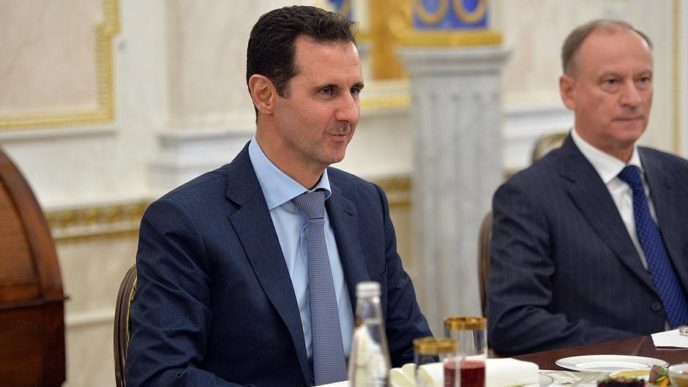
Syrian President Bashar al-Assad’s brutal dictatorship has been caught using illegal chemical weapons again.

The Trump administration has charged that the Assad regime was behind a toxic gas attack on Tuesday in the rebel-held town of Khan Sheikhoun in northwestern Syria.

The death toll rose to 72 by Wednesday, including 20 children and 17 women. Videos from the scene showed victims convulsing, choking, and foaming from the mouth, symptoms often manifested by victims of nerve gas attacks.

A sarin gas attack launched by the Assad regime in August 2013 near Damascus killed more than 1,400 people and led President Barack Obama to declare that Assad had violated the “red line” that he had set against the use of chemical weapons.

But the Obama administration backed off after then-Secretary of State John Kerry brokered a last-minute deal with Moscow that called for the destruction of Assad’s chemical weapons stocks.

It has long been clear that the Obama administration accepted that face-saving deal proffered by Russia at a high cost to its own credibility and to U.S. national interests. Assad continued using chemical weapons with impunity. The United Nations and the Organization for the Prohibition of Chemical Weapons found that Syria’s government was responsible for at least three chlorine gas attacks in 2014 and 2015.

In January 2016, the same organization reported that blood samples extracted from victims of one attack indicated they had been exposed to a sarin or sarin-like nerve toxin.

President Donald Trump on Tuesday condemned the attack in a statement:

Today’s chemical attack in Syria against innocent people, including women and children, is reprehensible and cannot be ignored by the civilized world. These heinous actions by the Bashar al-Assad regime are a consequence of the past administration’s weakness and irresolution. President Obama said in 2012 that he would establish a “red line” against the use of chemical weapons and then did nothing. The United States stands with our allies across the globe to condemn this intolerable attack.

This statement is correct as far as it went, but the United States must do more than just condemn the attacks. It must drive up the diplomatic, political, economic, and potential military costs to the Assad regime of using illegal chemical weapons.

This means conducting a thorough investigation of the matter and holding regime officials accountable for any confirmed war crimes. Sanctions should be ratcheted up on the regime to penalize its unacceptable behavior.

Russia has vetoed seven U.N. Security Council resolutions calling for action against the Syrian regime, so the sanctions may need to be devised and applied outside the U.N. framework if Moscow again protects its odious client regime from the consequences of its crimes.

Russia’s diplomatic credibility, which has steadily declined under the duplicitous President Vladimir Putin, has been further undermined by the failure of the 2013 chemical weapons disarmament agreement that Moscow brokered.

Washington should balk at any further diplomatic understandings with Putin on Syria, until he has taken effective action to address the violations of the 2013 agreement. The Trump administration should not repeat its predecessor’s mistake of trusting Russia to enforce agreements.

The Trump administration appropriately has prioritized the military defeat of the Islamic State, also known as ISIS, as its highest immediate priority in Syria. But reaching a political settlement to end the civil war and preventing ISIS from resurging are likely to be unreachable goals as long as Assad clings to power.

Although Assad’s departure does not need to be a short-term U.S. priority, it should be a long-term diplomatic priority if the administration expects to defeat ISIS, prevent it from making a comeback, reduce the carnage in Syria, and enable the return of more than 5 million Syrian refugees.

The Trump administration is unlikely to take direct military action against the Assad regime for its chemical attack, just as the Obama administration opted not to retaliate for repeated chemical attacks in 2014-2015.

The potential costs and risks of a direct military response are much higher after Russia’s September 2015 military intervention in Syria.

But the Trump administration can indirectly raise the military costs of Assad’s continued chemical aggression by providing greater aid to select Syrian rebel groups, who have no links to ISIS, al-Qaeda, and other Islamist terrorists or to the Kurdistan Workers’ Party.

The latest chemical attack launched by Assad’s ruthless regime is a reminder that if the Trump administration seeks to eradicate terrorism in Syria, then it cannot ignore the Syrian tyrant, who repeatedly has unleashed one of the most terrifying weapons against his own people. (For more from the author of “Assad Is Using Chemical Weapons. How Trump Can Counter the Barbarism.” please click HERE)

Follow Joe Miller on Twitter HERE and Facebook HERE.
Export-Import Bank’s Secret Dealings Demonstrate the Problem With Crony Capitalism

The annual conference of the Export-Import Bank begins Thursday, which is an opportune time to catch up with the federal agency that doles out billions of dollars in subsidies to benefit foreign governments and titans of industry.

Of particular interest are transaction details that the bank won’t reveal, as well as its relatively limp support for small business.

Over at the bank’s downtown District of Columbia headquarters, most everyone is concerned about what President Donald Trump will do.

The Ex-Im charter is authorized through September 2019, but there are three vacancies on the five-seat board of directors. The lack of a quorum limits the size of bank deals to $10 million or less, including export loans and loan guarantees as well as capital and credit insurance. (That’s how it is supposed to work, in any event.)

Ex-Im opponents are hoping that the president will, at the very least, maintain the status quo—although the best course of action would be to eliminate the bank altogether. (More on that below.) But the Ex-Im lobby is pushing for Trump to nominate board candidates and negotiate their Senate confirmation. Doing so would free up billions of dollars in subsidies for Boeing Co., General Electric Co., Caterpillar, and the like—that is, multinational corporations that do not lack access to capital and which can finance exports without taxpayer handouts.

On the other hand, Congress could—at least conceivably—exercise leadership and phase the bank out of existence. It is not as if there is a shortage of private export financing: U.S. exports totaled $2.2 trillion in fiscal year 2016, with Ex-Im supporting just 0.22 percent ($5 billion).

Who benefitted from that $5 billion? Ex-Im officials are keeping mum, although the transactions are supposed to be public. But if allowed to operate in secret, citizens and their representatives in Congress cannot determine whether the bank is complying with the $10 million transaction limit or with the other rules it has violated in the past.

The Heritage Foundation made repeated requests in the past five weeks for information on 48 transactions in fiscal year 2016 that far exceeded the $10 million limit. For example, both JPMorgan Chase & Co. and TD Bank, N.A. were awarded a whopping $500 million on Dec. 14, 2015, and Wells Fargo & Co. was awarded $200 million on the same day. Several others were awarded between $15 million and $150 million.

According to Ex-Im officials, some of the awards in question represent taxpayer-backed insurance for U.S. banks that issue letters of credit used overseas to finance foreign firms’ purchases of American exports.

However, Ex-Im’s public database does not identify the borrowers or exporters, products or countries, involved in at least half of those 48 transactions, and multiple requests for details were in vain.

Ex-Im representatives claim that prior boards of directors have authorized bank staff to unilaterally approve short-term transactions that exceed $10 million. But they also said that individual transactions under this so-called delegated authority are subject to limits of $10 million for corporate entities, $25 million for financial institutions, and $35 million for sovereign entities.

Alas, without transaction details, neither Congress nor the public can determine whether the awards of $500 million, $200 million, $150 million, and the like were proper.

Also in fiscal year 2016, there were five transactions listed in the bank database as approved by the board—although there was no board quorum to approve deals at the time.

According to a bank representative, the working capital loans were approved by the board when a quorum existed, and represent installments of multiyear authorizations. However, the decision dates for the four transactions are listed as fiscal year 2016, and prior entries for the same companies do not indicate a multiyear authorization.

The one medium-term transaction, for Aeromexico, refers to an amendment to a transaction approved by the board in 2014, according to an Ex-Im representative. The nature of the amendment is unknown, although the representative did say that Ex-Im staff exercised their (supposed) delegated authority to approve the (supposedly proper) amendment.

Throughout the two-year debate over reauthorization of the Ex-Im charter, proponents incessantly claimed that small business was the bank’s “core mission.” That simply wasn’t true. Just 20 percent or less of total financing went to small businesses. But lacking a quorum, and thus barred from dispensing billions of dollars in export subsidies to the big guys, one might think that bank officials would maximize its small-business assistance.

But that didn’t happen. The bank reported $2.7 billion in authorizations to benefit small business in fiscal year 2016, which was about half of the level of small-business support from two years before. Obviously, they aren’t banging down Ex-Im’s door for help.

The vast majority of small-business exporters do not need—and do not receive—taxpayer subsidies. Indeed, small businesses ranked “exporting my products/services” as the least problematic of 75 business problems assessed in an annual survey by the National Federation of Independent Business Research Foundation. The cost of health care ranked as the most severe problem.

The debate about Ex-Im isn’t about helping small business. It is about the powerful bond between big business and big government. Ex-Im subsidies are neither the biggest nor worst manifestation of corporate welfare. But change in Washington is tortuous, and ending Ex-Im is a practical and rational target at present for reasons both material and ideological.

Despite overwhelming evidence to the contrary, some members of Congress believe that a few legislative tweaks will remedy all that is wrong with the bank. Ex-Im officials have thwarted past attempts by Congress to impose reforms.

More importantly, no amount of bureaucratic tinkering can shield taxpayers from bailouts in the event that bank reserves run dry—as occurred in the 1980s—nor will it protect American businesses from the disadvantages of the U.S. government subsidizing their foreign competitors.

There isn’t an economist alive who could coherently argue that Ex-Im subsidies don’t distort credit and labor markets—and always to the detriment of those who remain independent of the welfare state. That is why Trump and Congress must eliminate the bank, both to prove that cronyism can be restrained, and because it would most benefit the nation. (For more from the author of “Export-Import Bank’s Secret Dealings Demonstrate the Problem With Crony Capitalism” please click HERE)

Follow Joe Miller on Twitter HERE and Facebook HERE.
4 Issues Trump Will Likely Confront Chinese Leader About

North Korea will be the top agenda item for President Donald Trump when he meets Friday with Chinese President Xi Jinping.

“As you know, I’ll be meeting with the president of China very soon in Florida, and that’s another responsibility we have, and that’s called the country of North Korea,” Trump said Wednesday during a Rose Garden press conference with King Abdullah II of Jordan.

Trump suggested his predecessor, President Barack Obama, allowed North Korea to grow stronger.

“We have a big problem. We have somebody that is not doing the right thing and that’s going to be my responsibility,” Trump said, referring to North Korean dictator Kim Jong Un. “But I’ll tell you, that responsibility could have been made a lot easier if it was handled years ago.”

White House officials said there were a number of other items the two leaders will discuss—one being trade and commerce—paramount during Trump’s campaign, where he frequently took shots at the Chinese.

The meeting Friday and Saturday at Trump’s Mar-a-Lago estate in Florida will be a significant chance for both leaders to learn about one another, said Fred Fleitz, a former State Department official in the George W. Bush administration.

“China is coming here to try to figure Trump out. He’s not like a president they’ve ever seen before. He’s not a president they can walk all over like Obama was,” said Fleitz, now a senior vice president for the Center for Security Policy, a national security think tank.

Here are the four key issues Trump and Xi will likely be discussing.

1.) North Korea

North Korea initiated a missile test this week aimed at Japanese waters, but the test reportedly failed. The country previously conducted a missile test in February, and several in 2016. North Korea leader Kim is reportedly seeking to produce a long-range nuclear weapon capable of hitting the continental United States in a few years.

“Trump is going to be forceful with China over North Korea. He is not going to ask for help anymore. We are going to demand help,” said Walter Lohman, director of the Asian Studies Center at The Heritage Foundation. “The time for talk is over. The U.S. can impose secondary sanctions on Chinese companies if China doesn’t cooperate.”

A senior White House official told reporters the matter is urgent and “the clock is now very, very quickly running out.”

“Because of the amount of leverage that China has economically, the best outcome would be one in which China very thoroughly implements the U.N. sanctions and resolutions,” the official said. “That is really what we’re working toward.”

China has blocked U.N. Security Council resolutions against North Korea. After South Korea deployed the Terminal High Altitude Area Defense, or THAAD, missile defense system, China threatened South Korea with economic, diplomatic, and military measures.

2.) Trade

The administration recognizes it is economically interdependent with China, but will insist that all bilateral trade be “mutually beneficial,” according to a White House official.

“President Trump is very concerned about how the imbalance in our economic relationship affects American workers, and wants to address these issues in a candid and productive manner,” a senior White House official said. “President Trump will convey to President Xi the importance of establishing an economic relationship that is fair … We want to work with the Chinese in a constructive manner to reduce the systemic trade and investment barriers that they’ve created that lead to an uneven playing field for U.S. companies.”

A report by the U.S. trade representative in March said the U.S. trade deficit more than doubled from 2000 to 2016, from $317 billion to $648 billion, and that “[o]ur trade deficit in goods and services with China soared from $81.9 billion in 2000 to almost $334 billion in 2015.”

China joined the World Trade Organization in 2001.

3.) South China Sea

Late last year, China expanded artificial islands and seized an unmanned underwater drone belonging to the U.S. Navy in the South China Sea.

“The United States will certainly continue to fly and sail where international law allows. I would not be surprised if that came up in conversation,” a senior White House official told reporters. “It’s no secret that the president was disturbed by activities that took place under the last administration. He and his Cabinet members have been on the record as saying that has got to stop.”

This is again a matter in which the Obama administration allowed China to show too much assertiveness, Fleitz noted.

“China will look at American leadership. The lack of leadership has been very destructive,” Fleitz said.

4.) Religious Freedom and Human Rights

Fleitz also said that Trump should make a strong statement about China’s mistreatment of the Uyghur community in Xinjiang, which human rights groups have criticized.

He said there are several issues to address specifically, but hopes Trump speaks broadly about China’s abysmal human rights record in the meeting.

A White House official said this will likely come up.

“I’m not going to pre-speak the president’s talking points, but human rights are integral to who we are as Americans,” the senior official said. “It is the reason we have alliances at the end of the day, one of the reasons, other than they serve our security and prosperity here at home. Human rights issues I would expect will continue to be brought up in the relationship.” (For more from the author of “4 Issues Trump Will Likely Confront Chinese Leader About” please click HERE)

Follow Joe Miller on Twitter HERE and Facebook HERE.