Chinese officials on Tuesday arrested 18 leaders of the underground Zion Church. Almost 30 pastors and staffers have been detained, without formal arrest, since the middle of October.
Zion Church is an underground or “house church,” meaning it has not been authorized and controlled by the Chinese Communist Party. The Chinese government is using a technique called “Sinicization” to take control of organized religion and make it subordinate to Communist Party doctrine. “Sinicized” churches, mosques, and temples are forced to teach Communist dogma in addition to their religious beliefs.
Millions of Chinese Christians have bravely chosen to defy the system by worshiping at “house churches,” so-called because they typically hold services in the homes of their congregants. The Zion Church was founded in 2007 by Pastor Ezra Jin Mingri, who converted to Christianity after the Tiananmen Square massacre in 1989.
Jin’s church grew rapidly during the Wuhan coronavirus pandemic by offering services online — and even by defying dictator Xi Jinping’s harsh lockdown policies to hold services in person. Zion Church is now one of the largest remaining underground churches.
Xi’s regime launched its biggest crackdown on house churches in years this October, detaining dozens of pastors and staff members, including Pastor Jin. Five of the detainees were released in October and four more were released on bail in early November, according to Jin’s daughter Grace. (Read more from “China Arrests 18 Church Leaders in Crackdown on Religious Freedom” HERE)
https://joemiller.us/wp-content/uploads/china-flag-themes-idea-1587109233I6b.jpeg434615Joe Millerhttps://joemiller.us/wp-content/uploads/logotext.pngJoe Miller2025-11-20 20:11:252025-11-20 20:00:47China Arrests 18 Church Leaders in Crackdown on Religious Freedom
New Zealand health officials announced Wednesday that new prescriptions for puberty blockers will no longer be issued to children identifying as transgender.
Doctors will stop prescribing the gender-affirming medication — gonadotropin-releasing hormone analogues — to minors starting Dec. 19, after the health ministry cited a lack of “high-quality evidence that demonstrates the benefits or risks,” Health Minister Simeon Brown said.
Existing patients can still access the medication for gender dysphoria or other conditions, such as early-onset puberty, endometriosis, and prostate cancer.
Officials said 113 people were using puberty blockers in 2023 — down from 140 in 2021.
Hormone blockers can pause puberty and are occasionally used to treat children with gender dysphoria.
Critics slammed the decision, warning the ban will severely impact transgender and gender-diverse youth, arguing medical decisions should be left to the individuals doctor. (Read more from “New Zealand bans puberty blockers for transgender minors” HERE)
A Queens senior citizen who shot dead a man who tried to rob him will spend four years in prison after admitting to toting an unlicensed revolver — as his lawyer ripped the city’s “draconian” gun laws.
Charles Foehner, 67, pleaded guilty to one count of criminal weapons possession Thursday in a deal to end his case more than two years after he fatally shot would-be thief Cody Gonzalez, who charged at him near his Kew Gardens home.
The Queens District Attorney’s Office chose not to prosecute Foehner, a retired doorman, for Gonzalez’s killing after he told cops that he’d defended himself from a mugger who lunged at him late at night holding what looked like a knife — but which turned out to be a pen.
But prosecutors slapped Foehner with a slew of weapons raps for the unlicensed handgun and for an arsenal of illicit handguns, revolvers and rifles inside his home in the quiet neighborhood.
Foehner took the plea deal to avoid a trial, where he faced 25 years in prison on gun charges that are not hard to prove, said his attorney Thomas Kenniff after Thursday’s hearing in Queens Supreme Court. (Read more from “Senior citizen who saved himself from would-be mugger heading to prison because of NYC’s ‘draconian’ laws” HERE)
https://joemiller.us/wp-content/uploads/920x920-221144459.jpeg612920Joe Millerhttps://joemiller.us/wp-content/uploads/logotext.pngJoe Miller2025-11-20 19:44:262025-11-23 00:14:50Senior citizen who saved himself from would-be mugger heading to prison because of NYC’s ‘draconian’ laws
The US Coast Guard denied claims it’s revising its policies to reclassify hate symbols, including the swastika and nooses, as “potentially divisive” symbols — slamming the suggestion as “categorically false.”
The claim, first reported by the Washington Post on Thursday afternoon, picks apart the Coast Guard’s “Harassing Behavior Prevention, Response, and Accountability” manual that was approved this month.
The military branch flatly denied the outlet’s report that it was planning to reclassify its list of hate symbols
“The claims that the U.S. Coast Guard will no longer classify swastikas, nooses or other extremist imagery as prohibited symbols are categorically false,” Admiral Kevin Lunday, acting commandant of the US Coast Guard, wrote in a statement on X. “These symbols have been and remain prohibited in the Coast Guard per policy. Any display, use or promotion of such symbols, as always, will be thoroughly investigated and severely punished.”
“The claims that the U.S. Coast Guard will no longer classify swastikas, nooses or other extremist imagery as prohibited symbols are categorically false. These symbols have been and remain prohibited in the Coast Guard per policy. Any display, use or promotion of such symbols, as…
“The Coast Guard remains unwavering in its commitment to fostering a safe, respectful and professional workplace. Symbols such as swastikas, nooses and other extremist or racist imagery violate our core values and are treated with the seriousness they warrant under current policy.” (Read more from “US Coast Guard denies claim it will stop classifying swastikas as hate symbols: ‘Categorically false’” HERE)
https://joemiller.us/wp-content/uploads/30309295957_aea25c2e28_b-1105993722.jpeg6831024Joe Millerhttps://joemiller.us/wp-content/uploads/logotext.pngJoe Miller2025-11-20 19:42:102025-11-20 19:35:18US Coast Guard denies claim it will stop classifying swastikas as hate symbols: ‘Categorically false’
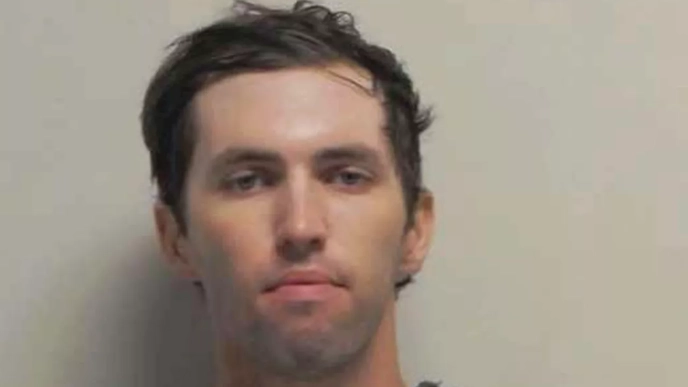
The investigation into the assassination of conservative commentator Charlie Kirk has taken a sharp turn after the discovery that key surveillance footage of the accused shooter, Tyler Robinson, is missing.
On September 10, 2025, Kirk was shot and killed during an event at Utah Valley University. Authorities later recovered a scoped Mauser Model 98 rifle believed to have been used in the shooting. The suspect, 26-year-old Tyler Robinson, surrendered shortly after the killing. Washington County Sheriff Nate Brooksby stated on September 17 that Robinson was brought to the sheriff’s office within the hour by a family friend, accompanied by his parents, and was met by plainclothes detectives. “Our job was not to interview; our job was just to get him here,” Brooksby explained.
Despite that timeline, public records requests later filed with the sheriff’s office painted a different picture. When local outlet 2News requested security footage showing Robinson arriving at the sheriff’s office or entering a holding area, the department initially responded that no such records existed, stating that Robinson “did not go to or enter the jail area.” After a second, broader request seeking any surveillance video showing Robinson entering the building at all, the sheriff’s office offered a new explanation: the footage had once existed but was automatically deleted due to a 30-day retention policy. Officials further stated the video was never shared with prosecutors, the FBI, or any outside investigative agency.
The conflicting accounts have drawn sharp criticism. Defense attorney Rudy Bautista, who has handled death-penalty cases in Utah, called the situation “very concerning,” noting that in a high-profile murder case, every piece of potential evidence should have been immediately secured. Without video confirmation, the timeline of Robinson’s surrender is based solely on the sheriff’s office account, offering no visual record of the conditions under which he was taken into custody.
Political commentator Candace Owens has also weighed in, telling her audience that the unexplained absence of surveillance footage “raises bigger questions than it answers.” She suggested that either the footage was never archived properly or “maybe it never existed in the first place,” noting that such an oversight would be unthinkable in a case of this magnitude.
Robinson is currently facing the death penalty, and prosecutors have already requested additional security measures in court, including video appearances in which Robinson’s face is partially concealed. The intense public scrutiny surrounding the case means that evidence handling will likely continue to be a central issue as the trial approaches.
https://joemiller.us/wp-content/uploads/what-we-can-learn-about-charlie-kirk-suspect-tyler-what-we-can-learn-about-charlie-kirk-suspect-tyler-8EA6511F7A14EA54BB0C9FAF577F0204-4234447617.webp7201280Joe Millerhttps://joemiller.us/wp-content/uploads/logotext.pngJoe Miller2025-11-20 19:33:472025-11-22 23:54:06Questions Mount as Missing Surveillance Footage Emerges in Charlie Kirk Murder Case
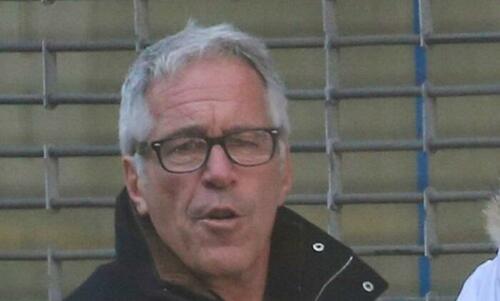
A key provision in the newly passed Epstein Files Transparency Act is drawing intense scrutiny amid fears it could allow Attorney General Pam Bondi to heavily redact long-anticipated records related to the late financier Jeffrey Epstein and his network of associates.
The bill—overwhelmingly approved this week by both the House and Senate and now awaiting President Donald Trump’s signature—requires the Justice Department to release its full investigative files on Epstein and co-conspirator Ghislaine Maxwell within 30 days of becoming law. Epstein died in a New York jail in 2019 while awaiting trial on sex-trafficking charges.
But despite its sweeping mandate for disclosure, the legislation includes several exceptions permitting Bondi to withhold or obscure certain information. Records may be redacted if they:
Contain personally identifiable information that would invade the privacy of victims,
Include child sexual abuse material or graphic depictions of violence or injury,
Could compromise an active federal investigation or prosecution, or
Contain material deemed sensitive for national defense or foreign policy reasons.
Any such redactions must be accompanied by written explanations to Congress, and Bondi is instructed to declassify as much as possible, even if only through summaries. Still, the exemptions have fueled worries that the final release could arrive with significant omissions—especially after years of public pressure for transparency.
The bill passed the House 427-1, with only Republican Clay Higgins opposing, and was fast-tracked through the Senate without debate. Passage came only after mounting pressure on the Trump administration, which has repeatedly shifted its stance on disclosure.
Trump campaigned strongly in favor of releasing the files, only to backtrack once in office—prompting Kentucky Republican Thomas Massie to force a discharge petition compelling the House to vote. With both chambers now aligned, the bill is set to reach the president’s desk imminently.
While the bill’s passage marks a breakthrough, not all survivors are satisfied—particularly with the political drama that played out along the way.
Survivor Haley Robson, a Republican voter who has supported Trump in the past, told CNN she is “disappointed” not only in the White House’s wavering but also in House Speaker Mike Johnson, who she accuses of delaying the vote for political spectacle.
“The flip-flop in the back and forth has been nothing short of nauseating and embarrassing,” Robson said, urging Trump to sign the bill without any further delay. “If you would like to clear your name once and for all… follow through with what you said you were going to do.”
Robson also blasted Johnson for what she described as political theatrics, noting that survivors sat in the gallery while Johnson suggested the vote risked harming privacy or exposing innocent people.
“The only theatrics I saw was from him,” she said. “This is not a hoax. There is no theater from the survivors. I’m appalled by him and I’ve lost a lot of respect.”
Robson argued Johnson’s stated concerns about protecting unnamed survivors were misplaced, clarifying that those who wish to stay private are already shielded under pseudonyms in legal filings.
The legislative push unfolded as Congress endured a 44-day government shutdown—during which Representative Adelita Grijalva, a crucial vote for the discharge petition, was not sworn in. Robson believes that delay stalled progress and may have given time for behind-the-scenes maneuvering.
“You will never convince me that shutting down the government for 50 days—and in those 50 days was when we needed them the most—was coincidental,” she said.
Social media users have also raised concerns that the redaction authority could be used to soften or limit what the public ultimately sees—a fear amplified by years of speculation about who may be named in the files.
But whether the Epstein files land as a historic data dump—or as pages blacked out “for official reasons”—may be decided in the Attorney General’s office, not in Congress. For many who have waited years, the only test that matters is whether the truth finally emerges in full.
https://joemiller.us/wp-content/uploads/epstein_builda-2357526493-1.jpeg301500Joe Millerhttps://joemiller.us/wp-content/uploads/logotext.pngJoe Miller2025-11-19 17:34:272025-11-19 17:31:11Congress Forces Epstein Files Release, But New Law Allows DOJ to Withhold Key Information
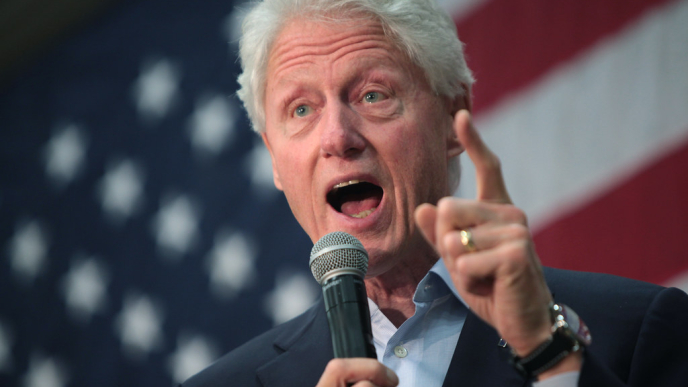
Former Clinton-era Treasury Secretary Larry Summers resigned from the OpenAI board on Wednesday after emails showed his association with sex offender Jeffrey Epstein.
Summers’ resignation followed his decision to back away from public commitments in response to House Democrats releasing over 20,000 emails from Epstein’s estate, some of which indicated that Summers regularly communicated with the sex offender from 2013 to 2019. His most recent correspondence was from the day before Epstein’s arrest in 2019, according to NBC News.
“In line with my announcement to step away from my public commitments, I have also decided to resign from the board of OpenAI,” Summers said in a statement. “I am grateful for the opportunity to have served, excited about the potential of the company, and look forward to following their progress.”
Summers joined the OpenAI board in November 2023. The company said it respected Summers’ decision and were grateful for his contributions.
“We appreciate his many contributions and the perspective he brought to the Board,” the company said, according to NBC News. (Read more from “Ex-Clinton Cabinet Member Resigns From Board Over Epstein Scandal” HERE)
https://joemiller.us/wp-content/uploads/25348147923_4ca3c05e17_b-1453549153.jpeg6831024Joe Millerhttps://joemiller.us/wp-content/uploads/logotext.pngJoe Miller2025-11-19 15:52:162025-11-19 15:48:56Ex-Clinton Cabinet Member Resigns From Board Over Epstein Scandal
A MAGA influencer melted down on Wednesday over comments Attorney General Pam Bondi made during a news conference about the Jeffrey Epstein files.
Bondi was noncommittal during the press conference about when the Department of Justice would release more of the Epstein files. She also said that the administration would “continue to follow the law with maximum transparency,” though some analysts doubt that the administration has been forthcoming about the files.
Benny Johnson, a MAGA influencer who hosts an eponymous podcast on YouTube, responded to Bondi’s comments on Wednesday night. . .
“That should enrage all of you,” he added. (Read more from “‘Astonishing’: MAGA Influencer Melts Down and Accuses Pam Bondi of ‘Gaslighting’” HERE)
https://joemiller.us/wp-content/uploads/140311171107156832074134-169084457-2.jpg557800Joe Millerhttps://joemiller.us/wp-content/uploads/logotext.pngJoe Miller2025-11-19 14:42:032025-11-23 00:06:50‘Astonishing’: MAGA Influencer Melts Down and Accuses Pam Bondi of ‘Gaslighting’
Summer Heather Worden, the ex-wife of NASA astronaut Anne McClain, pleaded guilty to lying to law enforcement after she previously accused McClain of committing the first crime in outer space.
Worden, a former U.S. Air Force intelligence officer, entered her guilty plea on Nov. 13, the U.S. District Attorney’s Office, Southern District of Texas announced on Tuesday, Nov. 18.
Worden, 50, a resident of Sedgwick County, Kan., claimed McClain guessed the password for her bank account and “illegally accessed” it while she was in the International Space Station in July 2019, federal prosecutors say.
“However, Worden had actually opened the account in April 2018. Both parties had accessed it until January 2019 when Worden changed the credentials. The investigation revealed Worden had granted her spouse access to her bank records from at least 2015, including her login credentials,” the release from the DA’s office continued.
McClain, 46, and Worden were married from 2014 to 2019. McClain, 46, a West Point graduate who served in Iraq, joined NASA in 2013, The New York Times reports. She most recently served as commander of NASA’s SpaceX Crew-10 mission, which began in March, and saw her return to Earth in August, according to the outlet. (Read more from “Lesbos in Space: Alleged Victim of ‘First Crime in Space’ Admits She Lied About NASA Astronaut Ex-Wife” HERE)
https://joemiller.us/wp-content/uploads/3686365971_12107421e7_o_d-3292542876.jpeg16352180Joe Millerhttps://joemiller.us/wp-content/uploads/logotext.pngJoe Miller2025-11-19 13:45:032025-11-19 13:40:17Lesbos in Space: Alleged Victim of ‘First Crime in Space’ Admits She Lied About NASA Astronaut Ex-Wife
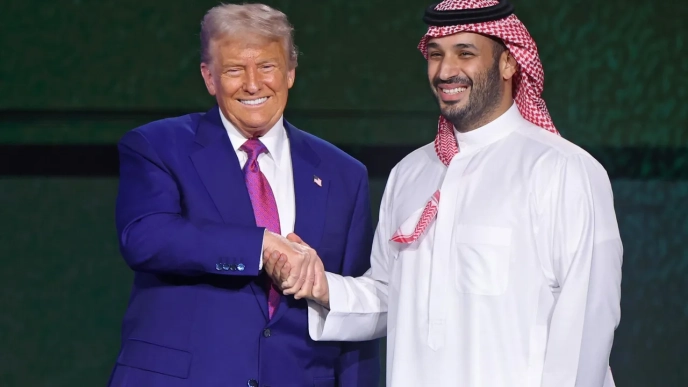
President Donald Trump vowed that the U.S. would work on securing peace in Sudan thanks to the urging of Saudi Crown Prince Mohammed bin Salman.
Trump made the announcement while speaking to Saudi and U.S. officials at the Kennedy Center in Washington on Wednesday. The administration has been vocal about peace efforts in Sudan for months, but now Trump appears to be redoubling efforts.
“Working with the crown prince was amazing because he said, ‘Sir, you’re talking about a lot of wars, but there’s a place on Earth called Sudan, and it’s horrible what’s happening,'” Trump said, saying MBS explained the cultural history behind the conflict.
“Really amazing to hear,” Trump said, addressing the Saudi leader. “You know we’ve already started working on that, OK?
“We’re working on that. We started about 30 minutes after you explained to us the great importance of that. I view it differently now than I did just a day ago.”
Trump’s efforts come after Pope Leo XIV also called attention to the persecution of Christians in Sudan and elsewhere on Tuesday. (Read more from “Trump Says US to Work on Sudan Peace Deal at Request of Saudi Crown Prince” HERE)
https://joemiller.us/wp-content/uploads/1280X720-13863-2921265066.webp7201280Joe Millerhttps://joemiller.us/wp-content/uploads/logotext.pngJoe Miller2025-11-19 13:33:112025-11-19 13:32:18Trump Says US to Work on Sudan Peace Deal at Request of Saudi Crown Prince