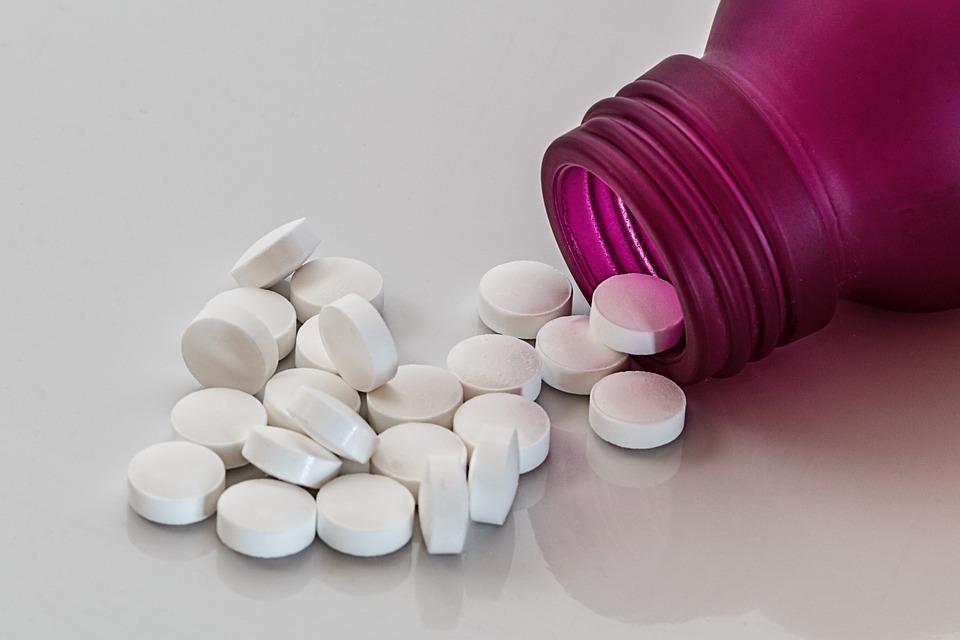
Abortions Are Down but Abortion Medication Use Is on the Rise. What Are Pro-Lifers to Do?
New data from Reuters shows more women are using an abortifacient to end their pregnancies — referred to as “abortion medication,” which seems a bit contradictory — than ever before, even though abortions overall are still declining. The data reveal not only the current state of abortion in this country, but also the effect pro-life lawmakers have had on the debate, and what lays ahead for the movement.
What is ‘abortion medication’?
Reuters, via Huffington Post, reported, “Medication abortion involves two drugs, taken over a day or two. The first, mifepristone, blocks the pregnancy sustaining hormone progesterone. The second, misoprostol, induces uterine contractions. Studies have shown medical abortions are effective up to 95 percent of the time.”
These drugs have been available for some time, but fewer FDA regulations that occurred in March increased availability and popularity. Doctors can now prescribe the pills up until mom is 10 weeks along, instead of seven. The guidelines also changed to reduce the “number of required medical visits and allowed trained professionals other than physicians, including nurse practitioners, to dispense the pills.” Its usage is now at 43 percent, up from 35 percent just six years ago. States like Michigan and Iowa have very few restrictions on the drugs, and so “medication abortions” make up nearly half of all abortions in Michigan and a little more than half in Iowa.
Why? Convenience. Tammi Kromenaker, director of the Red River Women’s Clinic in Fargo, North Dakota, said, “Women who ask for the medication prefer it because they can end a pregnancy at home, with a partner, in a manner more like a miscarriage.”
That said, the overall U.S. abortion rate continues to decline. In 2008, there were roughly 19 terminations per 1,000 women aged 15-44. In 2011, that had dropped to 16.9. And last year, it was at its lowest point since 1973.
What does this mean?
Let’s face it: This “medication” makes abortion even more convenient than it already is. Contrary to liberal talking points, abortions are quite easy to receive. In fact, in some states, teens don’t even have to tell their parents they’re getting one. Folks in Florida are up in arms that the Florida Supreme Court is considering implementing a 24-hour waiting period before a woman can have an abortion.
Pro-choice advocates will no doubt spin this bit of “good news” to their advantage, claiming once and for all that determined women will abort their children and no amount of effort from pro-life advocates can stop it. But this type of spin is normal.
Remember back in September, when Ushma D. Upadhyay, an associate professor of obstetrics, gynecology and reproductive sciences at the University of California, San Francisco, penned The New York Times op-ed about these very abortion drugs? She said, “my colleagues and I found that such laws are not just covers for restricting abortion access — they can actually harm women’s health.” Upadhayay continued, saying:
We need scientific research that evaluates these laws’ actual effects on women and their health. If state legislatures want to create policies around abortion, they should be based on evidence. When policy is not based on science, American women pay the price.
Since more women than ever before are utilizing these drugs, I guess American women aren’t suffering (she didn’t make the case for it regardless).
The Frisky observed “Just think about it: while TRAP (Targeted Regulation of Abortion Providers) laws were exploding across the nation, reasonable guidelines for abortion pills were being developed. Today, more than 2.75 million U.S. women have used abortion pills since they were approved in 2000.” The Frisky went so far as to say it shows that regardless of what pro-life advocates do, nothing will stop a woman determined to end the life of her unborn child.
TRAP laws resulted in hundreds of clinics across the country shutting down and have forced women seeking abortions to travel long distances to obtain the procedure, delay having the procedure potentially until the second trimester, or to self-induce. The anti-abortion laws may close clinics, but they fail to actually achieve the anti-choice movement’s goal of stopping abortions from happening.
While fewer abortion clinics, due to TRAP laws, may have contributed to the rise in “abortion medication,” I’m not sure it supports the idea that pro-life advocates are failing. After all, there abortions have at their lowest number since Roe v. Wade. So women are having fewer abortions. Why this is happening seems more multi-faceted.
Pro-life lawmakers should press on, along with educators and families
The fact that the usage increased only when FDA regulations were reduced shows the power of regulation and legislation. As a small-government conservative, I’m hesitant to encourage regulation just to take up space. But pro-life lawmakers’ strategies to help reduce abortions, whether by defunding Planned Parenthood or imposing strict guidelines of the condition of abortion clinics, have contributed to the national reduction of abortions.
Lawmakers should continue to reduce abortions, by whatever creative, persuasive, and legal means necessary. A few mind-boggling videos caused a House Committee to investigate Planned Parenthood in 2015 and at least a dozen states have voted to defund it. I’d say that’s one way to accomplish the “anti-choice movement’s goal of stopping abortion from happening.”
It’s imperative women understand what an abortion entails and when life begins. Knowledge and education, via schools, communities, families, and friends, are key ways to discuss this “abortion medication.” If life begins at conception, which science supports, these drugs are ending a tiny baby’s life. This cannot be overstated. As I said in this space a few months ago,
his former abortion doctor explains that the abortion pill slowly starves a baby to death. ‘Dr. Anthony Levatino, an OB/GYN who did over 1200 abortions, uses medically accurate animations inside the womb to show how the abortion pill slowly starves a baby to death over a period of days. He also details how developed the baby is at this early stage and the abortion pill’s potentially dangerous effects on the mother.’
While a mother can’t see much at an ultrasound under 10 weeks — research show women are often moved to change their minds after seeing her baby on an ultrasound — she may be able to hear a heartbeat, which is often exciting. Finally, the most obvious answer for many pro-life advocates, and the hardest for a mother-to-be is to encourage mom to forgo the use of any “abortion medication,” and bring the baby to term. There are between one and two million couples waiting to adopt. There is a way that is safe for everyone, including mom and baby.
Pro-life advocates should not be discouraged at the news that “abortion medication” is increasing, but neither should they ignore what it says about a woman’s desire for convenience and privacy. While legislation can be a helpful tool in decreasing abortions, education, knowledge and support are key in continuing to reduce the number of aborted babies nationwide. (For more from the author of “Abortions Are Down but Abortion Medication Use Is on the Rise. What Are Pro-Lifers to Do?” please click HERE)
Follow Joe Miller on Twitter HERE and Facebook HERE.