Brave New World: Terrifying Pro-Life Consequences of UK’s 3-Parent Decision
It’s official. We are living in a brave new world.
This week, the British government’s Human Fertilisation and Embryology Authority approved new reproductive procedures that will allow doctors to “create babies” by combining the DNA of three “parents.” HFEA Chair Sally Cheshire called it a “life-changing” decision that could prevent a small group of at-risk children from inheriting life-threatening mitochondrial diseases (like muscular dystrophy and major organ failure) from their mothers.
Proponents of the methods have assured that the decision will not activate a new age of genetically modified babies, as the procedures will be implemented on a case-by-case basis. British pro-lifers responded with a collective, “Yeah, we’ll see about that.”
Each of the new techniques involves manipulating a mother’s egg, a father’s sperm, and a donor egg to ensure that the mother’s mitochondrial DNA is not passed on. The DNA from the donor amounts to an estimated one percent of the child’s genes (hence the three “parents” claim).
“The fact that there are now calls in Newcastle for egg donors — in practice, to produce healthy embryos solely for spare parts — tells us much about attitudes to women used to produce embryos this way, and harms and endangers us all,” bioethicist Anthony McCarthy, education director at Britain’s Society for the Protection of Unborn Children, told the Catholic Herald.
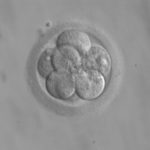
Per Dr. McCarthy, only one of the two approved procedures, pronuclear transfer, destroys two viable human embryos in order to create what doctors hope will be a healthy, disease-free child. And while the alternative procedure, maternal spindle transfer, doesn’t require that an embryo be destroyed, Dr. McCarthy noted that “the new life has come to be through a production process which fragments maternity and will in practice be subject to quality-control.”
The doctors and scientists who advocated for the approval of these procedures undoubtedly believe, in their quest to give all children healthy bodies free of any deformity, that the procedures are humane. But in order to achieve their desired end, these individuals are willing to discard countless lives. If that sounds like eugenics, it’s because it is. These procedures approved by the British government aim to rid society of “undesirables.” Not very humane when you put it that way, right?
Even when the embryos are spared, as in the case of maternal spindle transfer, these procedures raise concerns regarding the purpose of procreation and parenting.
If mitochondrial DNA manipulation is permissible, why couldn’t this lead to other forms of selective DNA manipulation? For example, what if the donor has a higher IQ than the mother? Better hair? A nicer voice?
Is it fair to subject a child, who has rights of his own, to such a procedure? Shouldn’t he at least be given the choice of having a full 50 percent of his DNA come from his mother, and his mother alone?
Pro-life advocate and chairman of Oxford’s Conservative Policy Forum, Mark Bhagwandin, called the new procedures “very uncertain and potentially dangerous.”
“Whilst we are deeply sympathetic to the plight of people with mitochondrial related diseases, the ends [do] not always justify the means,” Bhagwandin told Catholic Herald. “We would encourage and support greater investigation and research into ethical remedies which do not seek to genetically modify human beings.”
At the core of the pro-life movement is the belief that children who are physically, mentally, and economically “disadvantaged” are still better off alive, with two (not three) parents who love and care for them. The pro-life community is rightfully troubled by progressive efforts that attempt to defy this belief. (For more from the author of “Brave New World: Terrifying Pro-Life Consequences of UK’s 3-Parent Decision” please click HERE)
Follow Joe Miller on Twitter HERE and Facebook HERE.