
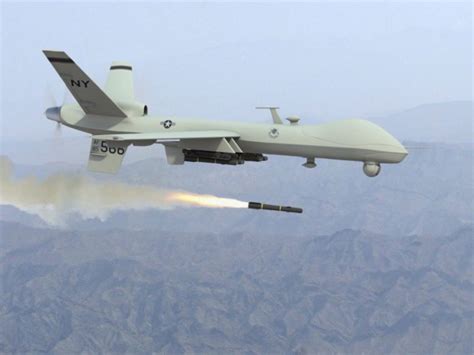
Drone Warfare Has Come to the United States
Amid the raging conflict in the Middle East, the astonishing events at Barksdale Air Force Base earlier this month have attracted only limited media attention. It is reported that swarms of unidentified drones repeatedly loitered over Barksdale between March 9 and 15, drawing no publicly known effective response from the military or the Department of Homeland Security (DHS).
Barksdale is the headquarters of the Air Force’s Global Strike Command, which is responsible for the nation’s nuclear intercontinental ballistic missiles and strategic bomber forces, including B2, B1, and B52 aircraft. The base is home to the 2nd Bomb Wing B52s and is the central hub of communications and logistical support for coordinating and directing those forces. The fact that potentially threatening drones were able to operate over such a critical complex with apparent impunity over several days, after a similar event, spanning 17 days, occurred more than two years ago at Langley AFB, is astonishing. Reports indicate that Barksdale personnel were repeatedly ordered to take cover as drones roamed over buildings and aircraft.
That there was no reported effective response to that incursion comes as no surprise to those who have been calling for an overhaul of how the US homeland is protected. The truth is that homeland defense today remains largely centered on deterring nuclear threats, such as ballistic missiles and bombers, flying over northern polar regions, launching ordinance into North America. Decades ago, the North American Aerospace Defense Command (NORAD) and the United States Northern Command (NORTHCOM) were organized primarily to deter a strategic attack utilizing weapons of mass destruction. Protected by the Atlantic and Pacific Oceans, the homeland was widely regarded as invulnerable to non-strategic threats.
Beginning first with 9/11, and now with the advent of unmanned aerial systems (UAS)—including military-style drones, and such long-range precision weapons as cruise, ballistic, and hypersonic missiles launched from space, air, land, sea, and subsea—that comfortable “safe haven” assumption no longer holds. What happened at Barksdale is not an anomaly but a forerunner of a new era in warfare. Defense of the homeland has become, and will continue to be, a far more complex challenge.
At Barksdale, as at Langley AFB, the government apparently lacked effective technology to identify and counter the drones. Even if counter-UAS capabilities (C-UAS) were available, a decision to use them was likely complicated by concern over potential collateral injury to military personnel and civilians, and property damage. Some reports indicate that Barksdale attempted to employ C-UAS jamming, but without success. The inability to jam could indicate that Barksdale was facing a threat with autonomous or effective anti-jamming capabilities. If accurate, this would suggest that a sophisticated foreign actor was behind the incursion rather than a drone hobbyist. (Read more from “Drone Warfare Has Come to the United States” HERE)


