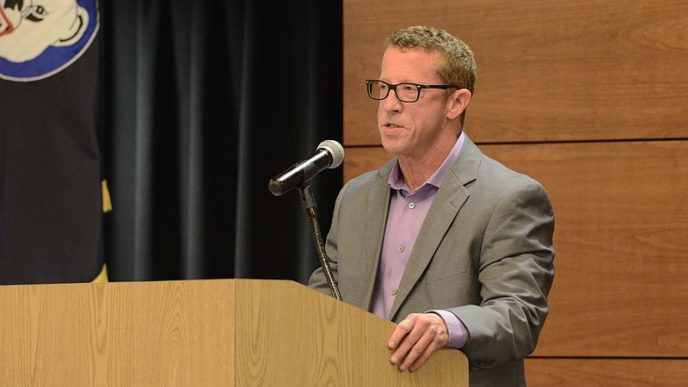
Poll: Joe Miller Dominates among 2018 Hopefuls for Alaska’s Governorship

Yesterday, we told you how some Democrats would do in their 2018 gubernatorial primary if it were held today. Today is the Republicans’ turn. Well, Republicans and Gov. Bill Walker.

But before we give you all the numbers, just as we did yesterday, we’ll tell you about the poll itself. The survey was conducted by Harstad Strategic Research, Inc. and sampled registered voters in Alaska between March 22 – April 2. You can see the sample breakdowns here:

gov-poll-1-e1491786182558

gov-poll-8

gov-poll-7-e1491786214879

The poll asked voters who say they normally vote in GOP primaries who they would vote for if their choices for Governor were former Speaker of the House Mike Chenault, former candidate for U.S. Senate Joe Miller, former gubernatorial candidate John Binkley, current State Senators Mike Dunleavy and Peter Micciche, and current Governor Bill Walker.

Walker’s inclusion in the poll is interesting. We’ve told you in recent months that we believe if at least 3-4 candidates get in the GOP primary — Alaska GOP Vice-Chairman Rick Whitbeck has said on numerous occasions he has a list of about 50 names of people who could run — then Walker would likely have a path to victory if he jumped in.

The rest of model looks like a good mix of names. There are candidates from various areas of the state including Kenai, Mat-Su, Valdez, and Fairbanks, current legislators and those who can play the “outsider” card, and a blend of business conservatives, social and fiscal conservatives, and moderates. The pollster gave Republican voters options that varied in enough ways to see where they really stand.

Here is how numbers came out:

gov-poll-4

Joe Miller dominates with 25% of the vote, with Walker coming in just behind him at 19%. The rest barely make a blip. That is likely because despite being well-known names in political circles most voters likely have never heard of them.

Now, here’s where things get really interesting. Look at what happens when respondents are asked their second choice, or who they would vote for if Miller or Walker (the top two picks) weren’t in the election.

gov-poll-5

Interestingly, Joe Miller is Walker voters’ top second choice (19%), and in what will come as a shock to many, Walker is the second choice of a full quarter of Miller voters. It should come as no surprise, then, that when either Walker or Miller are taken out of the race, the other takes a commanding position. Miller gets 37% without Walker, three times his closest competitor, and Walker comes in with 25% without Miller, two and half times anyone else.

Finally, if Walker and Miller went head to head, Miller would start off 12 points ahead at 33% to 21%, with a hefty 46% undecided.

The conclusion has to be that if the GOP primary attracts more than one credible candidate other than Walker, the Governor would have a plausible path to victory if he chooses to go that route for reelection. The only Republican currently positioned to disrupt such a move is everyone’s favorite beard, Joe Miller. (For more from the author of “Poll: Joe Miller Dominates among 2018 Hopefuls for Alaska’s Governorship” please click HERE)

Follow Joe Miller on Twitter HERE and Facebook HERE.

Record Snowfall Buries Anchorage

It was a late March surprise for residents of Alaska’s largest city, the kind that snarls traffic and keeps kids at home for the day.

The National Weather Service said 8.8 inches (22.4 centimeters) of snow fell on Anchorage between 10 p.m. Tuesday and 1:30 p.m. Wednesday . . .

The latest snowfall on record of at least one-tenth of an inch is May 22, which occurred in 1964. (Read more from “Record Snowfall Buries Anchorage” HERE)

Follow Joe Miller on Twitter HERE and Facebook HERE.

Hearing Set on Bill to Legalize Doctor-Prescribed Suicide in Alaska

A hearing has been set for March 28 at 3 p.m. on a bill that aims to legalize doctor-prescribed suicide in Alaska. House Bill 54, sponsored by Anchorage Democrat Rep. Harriet Drummond would permit doctors to prescribe lethal drugs to patients for the purpose of suicide.

The upcoming hearing will include “testimony by invitation only,” which means that testimony from the general public will be heard at a later date.

Bill sponsor, Drummond, is expected to give a general overview of the bill at the March 28 hearing in the House Health & Social Services Committee, after which, members of the committee can ask questions of the sponsor. Though verbal testimony from the public will not be heard until later, written testimony can be submitted at any time. Such comments are sometimes utilized by committee members in framing the issues when asking questions of the bill’s sponsor during the hearing.

In the case of HB 54, opponents of the practice include physicians and faith leaders who believe that patients with terminal illness need proper care, not destruction.

Alaska’s highest ranking Catholic prelate who leads 30,000 Catholics in Southcentral Alaska — Anchorage Archbishop Paul Etienne — has called doctor-prescribed suicide “a violation of principles of good medicine.”

Archbishop Etienne siad that, in the face of suffering health care should strive for the “elimination of as much suffering as we possibly can through moral practices that respect that dignity and sanctity of human life, but to help people to take their own life is a violation of principles of good medicine.”

The Alaska bill is part of a national push by an outside, multi-million-dollar operation called Compassion & Choices, formerly the Hemlock Society. To date, doctor-prescribed suicide — euphemistically called “medical aid in dying” and “death with dignity” — is legal in six states.

Many patient and disability advocacy organizations — such as Access Alaska — oppose doctor-prescribed suicide because it targets vulnerable citizens who need care but are pushed to die.

“When people with disabilities see themselves as a burden, without worth or dignity, as taught or experienced in society, the option for assisted suicide becomes more of an attractive option,” Doug White, executive director of Access Alaska told the Catholic Anchor. “We teach, advocate, support and foster the belief that all people have intrinsic value to themselves, their family and their community.”

Drummond has argued that doctor-prescribed suicide should be available to Alaskans with a “terminal” condition or who are expected to die within six months — though such predictions are notoriously unreliable and could include people with chronic illness or disabilities not receiving appropriate treatment — and who are “experiencing so much pain that their quality of life is completely degraded,” though the bill does not specify that a person must be in pain to request lethal drugs.

But pain is not among the top reasons for taking lethal drugs. According to the Oregon Health Authority’s “Death with Dignity Act Annual Reports,” in 2015, over 90 percent of patients cited “losing the ability to engage in activities making life enjoyable” and “losing autonomy,” and 48 percent cited being a “burden” on family, friends or caregivers.

Most victims are vulnerable elders. “It seems solitary, dependent and chronically ill seniors are prime candidates for assisted suicide in Oregon,” the U.S. bishops’ conference notes. Physical and psychological pain is treatable. According to a report by the National Institutes of Health: “…if all patients had access to careful assessment and optimal symptom control and supportive care, the suffering of most patients with life-threatening illnesses could be reduced sufficiently to eliminate their desire for hastened death.” (For more from the author of “Hearing Set on Bill to Legalize Doctor-Prescribed Suicide in Alaska” please click HERE)

Follow Joe Miller on Twitter HERE and Facebook HERE.

Abortion Activists Launch Email Campaign to Loosen Regulations in Alaska

Abortion rights backer ACLU of Alaska is praising a proposed change to Alaska law that would loosen abortion regulations across the state and allow for more widespread late term abortion.

In a March 21 email, the group’s Executive Director Joshua Decker said proposed changes by the Alaska State Medical Board are “an improvement and would make it easier for thousands of Alaskan women to access the reproductive healthcare they need.”

The move to change state regulations comes on the heels of a lawsuit filed in November by the ACLU and Planned Parenthood, Alaska’s largest abortion chain. The lawsuit seeks to force Alaska to repeal certain regulations on second trimester abortions — those done after 13 weeks and six days.

In response, the State Medical Board issued proposed changes in February, which are now undergoing a public comment period that extends until March 24.

With only days left to file comments, the ACLU is pressing abortion supporters in Alaska to influence the State Medical Board by individually emailing a largely pre-written message to the board members.

Each email contains “required” text that states that “proposed changes to the State Medical Board’s current regulations on abortion care are a step in the right direction for Alaska.” It later states: “I appreciate the time and effort that went into updating the regulations because Alaskan women deserve better than the current restrictions placed on their access to a critical healthcare service.”

The proposed changes would eliminate the need for an abortion provider to get a second opinion from another doctor before performing a second trimester abortion. Additionally, abortionists would no longer be required to have access to an operating room equipped for major surgeries. Instead, abortions performed after a baby is viable would need to done in a hospital with neonatal care facilities. Abortionists also would no longer need to make a written record of a woman’s “physical and emotional” health prior to undergoing an abortion.

The Planned Parenthood lawsuit maintains that Alaska law overly burdens women seeking later-term abortions — procedures they claim are safe. Given that Planned Parenthood cannot comply with the current regulations, it is restricted from aborting babies after the second trimester. This leads to women to fly out of state to obtain late term abortions, they claim.

Planned Parenthood currently performs first-trimester surgical and chemical abortions at clinics in Anchorage, Fairbanks, Juneau and Soldotna. Together these clinics account for more than 90 percent of the roughly 1,300 abortions performed annually in Alaska.

Despite Planned Parenthood’s claim that second trimester abortions are “performed safely in outpatient facilities,” numerous studies conclude that second trimester abortions account for a disproportionate amount of abortion-related morbidity and mortality and carry risks of infection, bleeding and damage to organs.

Abortions performed after 20 weeks, when not done by inducing premature labor, are most commonly performed by dilation and evacuation. These techniques involve crushing, dismemberment and removing a baby’s body from a woman’s uterus, even after the baby could potentially survive outside the mother. In some cases, late-term abortion involves a lethal injection into the unborn baby’s heart to ensure that the child is not pulled out alive or with the ability to survive.

The State Medical Board will take comments on its proposed changes until March 24. After the public comment period ends, the Board will either adopt the proposed regulation changes without further notice, or decide to take no action. The language of the final regulation may be different from that of the proposed regulation.

The State Medical Board consists of five physicians, one physician assistant, and two public members. Board members are appointed by the governor and confirmed by the Legislature.

The board adopts regulations to carry out the laws governing the practice of medicine in Alaska.

Comments on the proposed regulations can be submitted in writing to Jun Maiquis, Regulations Specialist, Division of Corporations, Business and Professional Licensing, P.O. Box 110806, Juneau, AK 99811-0806. Additionally, the board will accept comments by facsimile at (907) 465-2974 and by email at [email protected]. Comments may also be submitted through the Alaska Online Public Notice System. Comments must be received not later than 5 p.m. on March 24.

In addition to submitting public comments, Alaskans may send in written questions about the proposals to Jun Maiquis, Regulations Specialist, Division of Corporations, Business and Professional Licensing, P.O. Box 110806, Juneau, AK 99811-0806 or email [email protected]. Questions must be received at least 10 days before the end of the public comment period. The board will aggregate its response to similar questions and make the questions and responses available online.

Comments on the proposed regulations can be submitted in writing to Jun Maiquis, Regulations Specialist, Division of Corporations, Business and Professional Licensing, P.O. Box 110806, Juneau, AK 99811-0806. Additionally, the board will accept comments by facsimile at (907) 465-2974 and by email at [email protected].
Comments may also be submitted through the Alaska Online Public Notice System. Comments must be received not later than 5 p.m. on March 24.In addition to submitting public comments, Alaskans may send in written questions about the proposals to Jun Maiquis, Regulations Specialist, Division of Corporations, Business and Professional Licensing, P.O. Box 110806, Juneau, AK 99811-0806 or email [email protected]. Questions must be received at least 10 days before the end of the public comment period. The board will aggregate its response to similar questions and make the questions and responses available online. (For more from the author of “Abortion Activists Launch Email Campaign to Loosen Regulations in Alaska” please click HERE)

Follow Joe Miller on Twitter HERE and Facebook HERE.
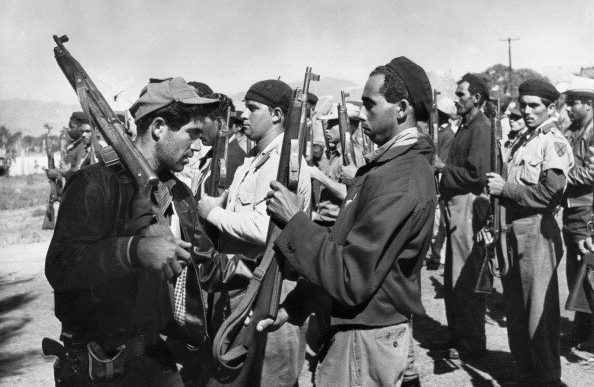
VIDEO: Lisa Murkowski Practically Assaults Reporter For Daring to Question Her on Obamacare

Reflecting her incredible arrogance – and stupidity – Lisa Murkowski practically assaults a reporter this week for daring to question her about whether she would support House efforts against Obamacare.

Watch the incredible exchange here:

Of course, virtually all Alaskans know this is how their Senator acts both in public and private. So how the heck does she keep getting reelected? Perhaps that’s a question for the state’s corrupt Division of Elections…

Rod Perry: Still Crazy After All These Years

Adventure has been a way of life for Rod Perry of Chugiak, Alaska. Now seventy-four, an age when most are slowing way down if not sitting still, Rod has caught another gear and is speeding up.

Perry grew up in Oceanside, Oregon. With the surf pounding out his front door and thousand-year-old forests in back, and with a winter population of just 175 in the 1950s, the little village provided an idyllic setting for an outdoors-crazy kid like Rod to develop. Learning of woods lore was greatly enhanced by a father who never wore a pair of shoes until age twelve, only Sarcee moccasins, having grown up on a homestead and trapline in the foothills of the Canadian Rockies where his father’s hunting and trapping partners were of that First Nations people.

Rod attended Tillamook, Oregon schools, then Oregon State University. In 1967, with a wildlife management degree in his pocket, he put Oregon in his rear-view mirror and headed for Alaska. “Where else could I have gone for my kind of self-expression?” reflects Perry. “Had I stayed out in America (as he calls the contiguous states) my life would have been dull as dishwater. God didn’t wire me that way.”

Through the years his employments have included work on a moose research project, guiding big game hunters, and operating his commercial fishing boat in the high-risk, high reward waters of Bristol Bay, the world’s richest salmon fishery.

Rod conceived and filmed the iconic Alaska motion picture classic, ‘Sourdough,’ starring his late father, Gil Perry. With son rolling film, dad played an aged trapper and prospector attempting to live out a disappearing lifestyle amidst a dying old-time Alaska. Perhaps no other motion picture which toured the world’s theaters ever started with less. Gil had never acted, Rod had never produced a film, and they began with barely two nickels to rub together. Never hesitant to go where only fools dare to tread, Rod dove headlong into the several-year-long project without a hint of filmmaking experience. In its place was a humble confidence in his God-given artistic sense and a feel for how to craft a magnetically romantic tale of the Old North.

A rough draft version toured Alaska to record-breaking crowds and was shown in Rod’s former Oregon hometown. Then Hollywood’s Albert S. Ruddy (‘The Godfather,’ ‘The Longest Yard,’ many others) engineered the final edit. Since 1977 ‘Sourdough’ has quite likely been seen by more theater goers, TV audiences, and home video watchers than any film ever made in Alaska.

Rod Perry once rode a wild moose, and he has weathered several close shaves with charging grizzlies. But he waves those off as topics unworthy of more than passing mention. What he really likes to recount are his wild adventures by dog team. He has freighted sled loads of supplies for climbers up onto the flanks of Denali. A memorable trip took him to visit Eskimo friends. Mushing north around the frozen shores of the Bering and Chukchi Seas, he stayed a day or two in each little village. On the way, from one high overlook at the tip of the Seward Peninsula, he could see the coast of Siberia across the Bering Straits. The trip ended far above the Arctic Circle.

His most daring trek was to bring twenty-two sled dogs out to the highway system from the remote cabin where he had been living. It would have cost the lives of the small group Perry led if they failed to make it through before their almost thousand pounds of dog and human food ran out.

“Once we traveled beyond a point of no return,” recalls Rod, “it was make it all the way through or die. Out there in that vast trackless country between Mount Denali and the Yukon River there was no trail; we had to make our own. If we had fallen, no one would have known where the wolves and ravens picked our bones.

“It was about 175 grueling miles to the highway system, route-finding by map and compass, cutting our way by axe and bow saw, and breaking trail by snowshoe in front of the dogs. Camps far below zero were made each night wherever darkness overtook us. Only two pieces of canvas comprised our shelter, but that’s enough if you know how.

“We reached the highway the morning of the eighteenth day. Our food had run out the night before.”

Almost eight hundred individuals have completed Alaska’s Iditarod Trail Sled Dog Race. Of their number, those who have taken such a lengthy wilderness trip as Rod’s, and have done it on their own outside of an organized race structure where trail and supplies are established, can be counted on the fingers of one hand.

And so Rod was drawn like a moth to a flame to test drive what would go on to be known the world over as “The Last Great Race on Earth.”

“Recalling the moment I first learned of plans to stage such a stupendous thing as the Iditarod Trail Sled Dog Race still makes the hair on the back of my neck stand on end,” says Rod. “I almost levitated. I could no more turn away from being among the intrepid band that pioneered it than turn down my next breath.

“It was an incredible departure from the standard sled dog racing model of short dashes over manicured trails near towns and villages. The plan was so audacious few thought it could be brought off. According to common opinion, for us to plunge headlong by dog team into a thousand-mile crossing of wild Alaska, in the dead of an arctic winter, was sure proof we were fools.”

With virtually zero belief on the streets in what sounded like a cockamamie goat-rope of an impossible dream, race founder Joe Redington and his few true believers found it impossible to raise adequate funding. But funded or not they were determined to go. With logistical help thin, emergency help non-existent, and organization barely enough to hold things together, Joe needed a seasoned field of veteran bush travelers used to going it alone in Alaska’s winter wilderness. And that’s exactly who came to the starting line—gold prospectors, trappers, big game guides, homesteaders, bush pilots, and, most notably, the final trailing edge of Alaska’s great (pre-snowmachine) Native dog men. Since that first race in 1973, no field of their likes has ever been assembled to run the Iditarod.

“Had we failed, we would have only proven the skeptics correct, erasing the thin amount of credibility we had. That would have made it impossible for even the slight funding Joe had scraped up to be gathered for a second try,” says Perry, “and the event would have died right there.”

But those hard-to-kill trailsmen, with Iditarod’s very future riding precariously on their shoulders, did not fail. From their glorious success the race would grow to become Alaska’s most world-famous annual event. And although that trailblazing first run through to Nome would go down as the greatest Iditarod adventure of all time, no telling solely about their wild and crazy, sometimes bizarre passage has ever found its way to the screen.

A few years back, Rod was gripped by what a shame it is that the chance to tell the story in that powerful, ‘I was there, I did it’ dynamic is dying as one after the other of Iditarod’s original mushers slip away. With only a dozen of the original entrants left, Rod became more and more driven to do something about preserving the tale.

Rod thought, “What are the chances that one of the elite group of first Iditaroders would be an author (‘TRAILBREAKERS—Pioneering Alaska’s Iditarod,’ available at www.rodperry.com) and a veteran filmmaker? And then what are the odds that an Academy Award nominated filmmaker, Buzz Rohlfing, would walk up out of the blue and suggest we collaborate on a First Iditarod film? God must be tapping me on the shoulder.”

Now Rod Perry has plunged headlong into filming, with Buzz Rohlfing, ‘TRAILBREAKERS—The Men of Seventy-Three.’

“It’s gonna blow people away!” exclaims Perry, excitement in his voice and glinting from his eyes. “That first race was so one-of-a-kind, there’s the 1973 Iditarod, and then there are the other forty-four. I’ve chuckled that it was about as foreign-sounding to today’s racers and as distant from today’s race as if it was the tale of Jason and the Argonauts’ voyage in quest of the Golden Fleece!”

There was very little media coverage of that first race, because there was so much skepticism that the 1973 event could be brought off. Once many of the racers returned to their remote homes and villages, most of their stories never saw print, much less the screen. But down through the decades, the hints and whispers that have seeped out from the backwoodsmen who ran it have clothed that incredible odyssey with an alluring aura of rich fables and untold mystery, tantalizingly dangling just beyond reach.

_______________________________________

Perry and Rohlfing say production information is up on their brand new website www.menof73.com Soon informative articles interesting to race fans will be posted there. Those who heed Rod Perry’s call to jump on his runners and ride along on the filming adventure are in for a wild, educational ride into Iditarod’s glorious, untold past.

Follow Joe Miller on Twitter HERE and Facebook HERE.
ACLU Attempts to Prohibit Prayer at Kenai Assembly, Citizens Fight Back

For more than 30 years, Alaska’s Kenai Peninsula Borough Assembly meetings have opened with an invocation prayer. This coming Tuesday, that could continue indefinitely if Alaskans and others send an email to the Borough Assembly and/or call in or show up at the 6pm meeting held at the Borough building.

The ACLU wants it to stop the invocation prayer and has sued the Kenai Peninsula Borough over its current policy. With the help of Alliance Defending Freedom, the Borough has constructed a policy that has been proven and tested by the federal courts. The policy, in part, currently states,

“All religious associations with an established presence in the Kenai Peninsula Borough that regularly meet for the primary purpose of sharing a religious perspective, or chaplains who may serve one of more of the fire departments, law enforcement agencies, hospitals, or other similar organizations in the borough, are eligible to provide invocations to the assembly, and the authorized leader of any such association or chaplain can make an online submission to provide an invocation to the borough clerk.”

Clearly, the people of the Kenai Peninsula Borough, in a recent poll in the Peninsula Clarion, stated they wish for the invocations to continue. In all of the past votes, the Borough Assembly has also voted to keep the invocation even with the threat of a lawsuit. This lawsuit now brought before the state court in Alaska has not deterred the majority of the Assembly, the faith community, or the citizens of the Kenai Peninsula. They continue to honor what happens every day in our federal government, our state government, and many other agencies and public meetings throughout Alaska. To date, demonstrated support through emails is almost equal to keep or kill the invocation.

As Alaskans and others, you can support the invocation policy in three ways:

1. Personally testify at the meeting or call into the meeting to state your support. Call in information can be found on the Borough website depending on your location.

2. Send a simple email sent to the Assembly members stating your support at https://www.kpb.us/assembly-clerk/clerks-office/clerks-forms/email-assembly-members.

3. Pray for God’s best for our citizens and borough officials through this Tuesday’s meeting.

We can continue to see God brought into the public square by your support. This has been a part of American public meetings since the founding of our country. Read these words of Benjamin Franklin as he spoke to President George Washington:

“I have lived, Sir, a long time, and the longer I live, the more convincing proofs I see of this truth: that God Governs in the affairs of men. And if a sparrow cannot fall to the ground without His notice, is it probable that an empire can rise without His aid?

We have been assured, Sir, in the Sacred Writings, that “except the Lord build the House, they labor in vain that build it.” I firmly believe this; and I also believe that without His concurring aid we shall succeed in this political building no better than the Builders of Babel: We shall be divided by our partial local interests; our projects will be confounded, and we ourselves shall become a reproach and bye word down to future ages.

I therefore beg leave to move – that henceforth prayers imploring the assistance of Heaven, and its blessing on our deliberations, be held in this Assembly every morning before we proceed to business, and that one or more of the clergy of this city be requested to officiate in that service.”

Make a difference in protecting our religious freedom in Alaska by supporting invocation prayers in the Kenai Peninsula today with your response. It is not just for our Borough, but for all of Alaskans.

Follow Joe Miller on Twitter HERE and Facebook HERE.

Massive Oil Discovery in Alaska Is Biggest Onshore Find in 30 Years

Some 1.2 billion barrels of oil have been discovered in Alaska, marking the biggest onshore discovery in the U.S. in three decades.

The massive find of conventional oil on state land could bring relief to budget pains in Alaska brought on by slumping production in the state and the crash in oil prices.

The new discovery was made in just the past few days in Alaska’s North Slope, which was previously viewed as an aging oil basin . . .

The discovery is 20 miles south of where the two companies have already found oil in a project known as Pikka. That northern project is already in early development and is 51% owned by Armstrong, which is the operator on both developments. (Read more from “Massive Oil Discovery in Alaska Is Biggest Onshore Find in 30 Years” HERE)

Follow Joe Miller on Twitter HERE and Facebook HERE.

Big Surprise? For First Time, FCC Allows 100% Foreign Ownership of Radio Stations, Four of Five in Alaska

The FCC’s Media Bureau has granted a petition by a pair of Australian citizens to control 100% of several broadcast stations — four radio stations in Alaska and Texas . . .

But this is the first time it has allowed 100% foreign ownership of the parent of broadcast licensees, at least outside of one-off waivers — the FCC allowed NewsCorp., also Australian, to buy its (Fox) TV stations in the 1990s.

The FCC’s Media Bureau issued the declaratory ruling Feb. 23 allowing the ownership change. It said the petition had been unopposed and that it had consulted with the “relevant agencies” on law enforcement, national security, foreign policy and trade issues — and none of those agencies raised any objections or said any conditions should be put on the deal . . .

The stations at issue are KGTW(FM) Ketchikan and KINY(AM) Juneau, both Alaska, and KCMC(AM) Texarkana and KTOY(FM) Texarkana, both Texas.

The stations are owned by Frontier, an Alaska-based company controlled by Richard and Sharon Burns, who are Australian citizens. They each own 10% of the ownership interests in the stations and want to buy the other 80%. (For more from the author of “Big Surprise? For First Time, FCC Allow 100% Foreign Ownership of Radio Stations, Four of Five in Alaska” please click HERE)

Follow Joe Miller on Twitter HERE and Facebook HERE.

Alaska Continues to Push LGBT Agenda in Schools

The State of Alaska is continuing its efforts to push educators in encouraging children to experiment with alternative genders including transitioning away from their biological sex.

Late last year the Alaska Department of Education and Early Development partnered with the Department of Health and Social Services to sponsor a conference that included instructing educators on how to assist students — elementary age and older — who wish to transition away from their biological sex and identify otherwise. The conference also urged teachers to keep this information from parents who may take issue with the school enabling their child’s gender experimentation.

In preparation for an upcoming conference this spring on preventing sexually transmitted diseases, the state is continuing its promotion of gender theory in issuing a call last month for presentations on topics such as “Sexual health promotion for LGBTQ individuals” and “LGBTQ inclusivity in the health care setting.”

A Jan. 5 email from Jenny Baker, Adolescent Health Project Coordinator for Alaska’s Division of Public Health, called for abstracts for the upcoming May 8-10 conference in Anchorage.

The conference website states that it will “Bring together public health and health care professionals and providers in the behavioral, medical, social services and education fields” to share the “newest information available on HIV/AIDS, Viral Hepatitis, STDs and related health issues.”

Baker was a featured speaker at the most recent Alaska School Health & Wellness Institute this past October, where she guided teachers and school nurses through ways to advance what she said many might consider to be “controversial” sex education in their school districts.

She told attendees that sexually transmitted infections are on the rise among Alaska’s youth but pregnancies are dropping. She credited the increased use of “birth control, like pills, IUD shot, patch, ring” as a possible reason for the decline in teen pregnancies. Abortion also plays a role, she said, while noting that more measures need to be taken.

During the same workshop Baker acknowledged that “talking about sex education and talking about sex in general is controversial” and that some parents and school boards don’t support it. Nonetheless, she encouraged Alaska educators to push for “comprehensive” sex education that includes explicit instruction on the proper use of a condom, how to procure and utilize a wide range of contraceptives and how to understand and accept gender roles, gender identity and sexual orientation, among other topics. (For more from the author of “Alaska Continues to Push LGBT Agenda in Schools” please click HERE)

Follow Joe Miller on Twitter HERE and Facebook HERE.