Point-Counterpoint: It’s Time for Alaskans to Have School Choice

Photo Credit: truth in american education

Photo Credit: truth in american education

“There is no respect in which inhabitants of low-income neighborhoods are so disadvantaged as in the kind of schooling they can get for their children.” (Nobel Prize-winner Milton Friedman)

Milton Friedman heralded freedom — that free choices and free markets unfettered by government restrictions produce the happiest, healthiest, wealthiest peoples throughout world history. Friedman’s free-choice belief was most adamant in the education marketplace — where government-run monopoly public schools often consign poverty families to multi-generational bondage to local failing education institutions. Alaska is fraught with examples from inner city to remote native regions.

Americans have long understood that free market competition produces a better product at a lower price than government monopolies. The collapse of the command-and-control Soviet economy was proof positive. Yet, for unknown reasons, we ignore this principle when considering the most important product — our children’s education. This despite the fact that many studies show that both public and private schools perform better when they are competing against each other on a level playing field. Twenty-six such studies are cited online at The Friedman Foundation for Educational Choice. And other studies focus on the tax dollar savings resulting when school competition produces cost efficiencies — one study revealing $444 million in tax dollar savings attributable to various school choice programs.

Alaska parents and school choice advocates want parent consumer empowerment with a school funding system where education dollars follow the student to the private or public school of the parents’ choice — via scholarships, grants, or even tax credits. This gives parents flexibility to put their child in the private or public school best suited to their child’s needs, and gives them “customer clout” to demand higher performance from their local public schools. The research proves this.

Rather than debating the conclusive research and economic logic supporting school choice, government unions and educratic interests prefer hiding behind the Alaska Constitution’s Blaine Amendment — “No … public funds for the direct benefit of any religious or other private educational institution.” Yet, as a violation of the federal Constitution’s 14th Amendment, the U.S. Supreme Court declared the Blaine Amendment unconstitutional in Mitchell v. Helms (June 28, 2000) “…This doctrine [the Blaine Amendment], born of bigotry, should be buried now.”

In 2007, the U.S. Commission on Civil Rights reiterated that state Blaine Amendments are rooted in shameful religious bigotry. “… Blaine Amendments reek of religious discrimination. As such, they are illegitimate relics of a shameful past we have neither adequately acknowledged nor effectively remedied.”

And consider the false narrative that the Blaine Amendment’s anti-religious prohibitions are wise or prudent. Seventy years of American history prove repeatedly that religiously neutral student support is effective and efficient. The GI Bill aids veterans to attend religious (or non-religious) schools of their choice, with amazing positive results. Child Care and Development Block Grants provided government aid irrespective of the religious or non-religious affiliation of childcare institutions, with similar positive results. And both federal and state Child Care Tax Credits subsidize parental choice of child care providers with direct credits offsetting expenses — regardless of the providers’ religious affiliations.

These are three examples of numerous government aid programs which succeeded despite clear diametric conflict with state Blaine Amendments.

The $64,000 question: If a religiously neutral, competitive level playing field is good for college programs, preschool programs, after-school programs, and summertime programs; why isn’t this also good for K-12 regular school programs? Here’s why — none of these other programs have powerful government unions lobbying against them, opposing any attempts to reform the monopolistic system. That’s the only difference. Alaska politicians need to recognize this fact and choose sides rather than feigning “constitutionality” crisis issues.

And government union lobbyists need to start debating school choice on the merits of competition. Try refuting the many studies which reveal improved public school performance in school choice marketplaces, rather than clinging to the shameful anti-religious bigotry known as the Blaine Amendment.

Legislators should grant Alaska voters their right to vote on this reeking relic long past its time. If voters do the right thing and toss it from their constitution, they will have cleared the first hurdle en route to educational freedom, real school competition, and better schools.

_______________________________________________________________________

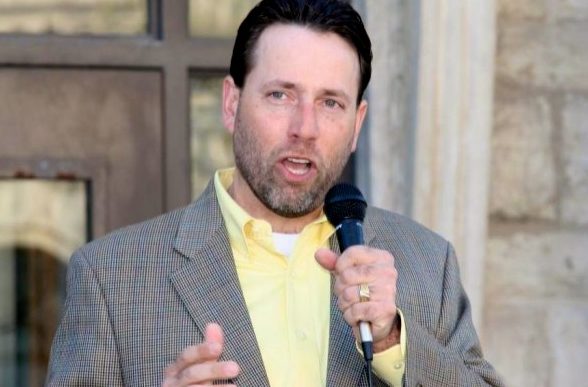
Joe Balyeat ([email protected]) is the state director for school choice projects for Americans For Prosperity — Alaska. He is a National Merit Scholar and former Montana state senator. He resides part year at his home near Anchor Point.

image001

Alaska Sled-Dog Race Organizers Tell NY’s Idiotarod ‘Cease and Desist’

Photo Credit: mypubliclands

Photo Credit: mypubliclands

The Iditarod, a grueling multi-day sled dog race across Alaska, is not – not! – to be confused with the Idiotarod, a pointedly sillier affair due to take place this weekend with costumed participants racing modified shopping carts through New York City.

The organizers of the Alaska race, however, are taking no chances. This week, they got their lawyer to send a cease-and-desist letter to the organizers of the Idiotarod.

The letter, which Idiotarod organizers shared on their Facebook page on Friday, says the New York race, with its “slight variation” in name, is breaching the Iditarod Trail Committee’s trademark rights, and said Idiotarod organizers risked a lawsuit to seek damages.

Jon Dawson, the Iditarod committee’s lawyer, wrote that the Idiotarod organizers were causing the public to associate the name “with an event that celebrates wacky costumes and antics over one that honors the endurance and athleticism of champion sled dogs and the courage and skill of the men and women that run them.”

On Friday, Idiotarod organizers called the letter frivolous, and said its 10th anniversary race, described on its website as an “urban spoof” of the Alaskan race, would proceed virtually as planned this weekend.

Read more from this story HERE.

U.S. Appeals Court Throws Arctic Drilling Into Further Doubt

Photo Credit: Paxson Woelber

Photo Credit: Paxson Woelber

A federal appeals court ruled Wednesday that the U.S. Interior Department wrongly awarded offshore oil leases in the Chukchi Sea near Alaska in 2008 without considering the full range of environmental risks posed by drilling in the Arctic.

A three-judge panel of the 9th U.S. Circuit Court of Appeals sent the on-going dispute – pitting environmental groups and Native Alaska tribes against the federal government and energy companies – back to U.S. District in Anchorage, Alaska.

It was not immediately clear what the decision would mean for the oil company Royal Dutch Shell Plc and its plans, revealed in December, to resume exploratory drilling this coming summer in the Chukchi.

Shell is the major lease holder from the sale six years ago. Company spokeswoman Megan Baldino said in an email statement: “We are reviewing the opinion.”

A spokeswoman for the Interior Department declined to comment, saying the agency does not discuss pending legal matters.

Read more from this story HERE.

Facing Tough Re-Election Fight, Begich Seeks Cover Under Murkowski’s Voting Record

Photo Credit: Bill Clark/CQ Roll Call File Photo

Photo Credit: Bill Clark/CQ Roll Call File Photo

Sen. Lisa Murkowski, R-Alaska, might not want her Democratic colleague, Mark Begich, to win re-election in 2014, but her habit of breaking with the GOP on several key votes could give him some political cover ahead of 2014.

“As an Alaska delegation, we’ve got to be working on those issues that are important to our constituents,” Murkowski told the Anchorage Daily News this week. “Sen. Begich has been keying in on the issues that I think Alaskans are worried about and doing what he was tasked to do.”

“I’m going to be working to get Republicans elected,” she later added.

Murkowski’s more moderate voting record could help Begich, given how much the two Alaskans overlap on some issues. Begich faces a tough re-election fight this year in a state that has traditionally elected Republicans to Congress. There’s a competitive GOP primary in August to determine his opponent.

Murkowski, once a member of the Senate GOP leadership team, has broken ranks several times since her 2010 re-election victory as a write-in candidate. Murkowski votes with her party only 61 percent of the time, according to data compiled by the Washington Post’s Congress Votes Database.

Read more from this story HERE.

Listen to Joe Miller’s Interview with Tea Party Express: Miller has Proven History of Challenging the Status Quo, Taking on Establishment

unnamedIn this week’s “On the Campaign Trail” podcast, we are joined by Joe Miller. Joe discusses his campaign for the U.S. Senate in Alaska where he hopes to replace Democrat incumbent Senator Mark Begich.

Joe Miller shocked the political world on August 24, 2010 when he came out of nowhere to defeat incumbent Senator Lisa Murkowski in the Alaskan Republican Primary. He then entered into a contentious three-way general election, where federal contractors and others who benefited from the status quo waged a multimillion-dollar campaign and managed to help narrowly defeat Joe.

Joe talks about the important lessons he learned from his 2010 Senate race, as well as the NSA surveillance scandal, the FBI investigation of the IRS, and the news that for the first time in the history of the Index of Economic Freedom, the United States is ranked outside the top ten.

You are really going to enjoy this interview with a candidate who has a proven history of challenging the status quo and taking on the political establishment.

LISTEN NOW!

2014 is going to be a huge election year as we fight to hold onto the House and are poised to take the gavel out of Harry Reid’s hands and take control of the Senate. It is important that we enter 2014 prepared and informed. Here is your chance to get to know one of the outstanding U.S. Senate candidates, Joe Miller.

“On the Campaign Trail” is a weekly podcast that features interviews with House and Senate candidates as well as Tea Party leaders to provide voters with a regular discussion of important political issues and campaigns.

A new Tea Party Express podcast will be available every Tuesday on the Tea Party Express website HERE or it is available by subscription on both RSS and iTunes.

‘Drop the Cabbage, Bullwinkle!’: Alaskan Man Faces Prison for the Crime of Moose-Feeding

Photo Credit: Mark Newman Stock Connection Worldwide/Newscom

Photo Credit: Mark Newman Stock Connection Worldwide/Newscom

He was on his property, it was his cabbage to give, and no one claims that he meant any harm to his amply-antlered friends. But 67-year old Samuel Becker is facing prison for giving visiting moose vegetables to munch on, reports Fox News.

After receiving a tip last month that Becker had been feeding moose, Alaska State Troopers responded to the scene. They claim that Becker fed moose on the day of their visit. And so, Becker will appear in court on Feb. 3 to face a misdemeanor charge of intentionally feeding game. He faces a fine of up to $10,000 and up to a year in jail.

That’s right–a year behind bars.

Enticing moose onto one’s land may not be a brilliant idea. Moose can be dangerous beasts, as Troopers spokeswoman Megan Peters explained to Fox News: “Even if they don’t attack you, your presence around them could agitate them, and it could make it more dangerous for somebody else passing by that might not even know the moose is standing there.” It’s reasonable to discourage people from getting too close to moose with civil fines, but it’s beyond the pale to threaten them with jail time.

Do we really think these are serious charges? Isn’t the threat of heavy fines and jail an empty one? If only this were so. In 2010, retired Alaskan schoolteacher Charlie Vandergaw was fined $20,000 after he pleaded guilty to charges of illegally feeding bears. Sure, it was stupid. But a crime? Treating such infractions as crimes can ruin people’s lives.

In the name of protecting Becker from the consequences of his admittedly questionable decisions, the state of Alaska is poised to inflict a far more grave injury. The continued existence of such criminal laws represents more of a threat to our livelihoods, reputations, and liberties than unruly moose. These criminal charges should be dropped and the matter should be resolved through the civil justice system.

This article originally appeared at Heritage.com and is re-published in full with the Heritage Foundation’s permission.

Video: Home Depot Worker Catches Falling Baby in Anchorage

Photo Credit:  daysofthundr46

Photo Credit: daysofthundr46

A Home Depot employee in Anchorage, AK, caught a baby as it was falling out of a shopping cart.

The amazing catch was caught on store security video last week.

Read more from this story HERE.

Top Republican Praises Alaska’s Senator Mark Begich

Photo credit: aflcio

Photo credit: aflcio

Sen. Mark Begich (D-Alaska) is drawing praise from across the aisle from one of Alaska’s top Republicans.

Rep. Don Young (R), the state’s lone congressman, praised the work Begich has done as senator.

“Mark’s done a great job of, very frankly, representing people. He’s not always on my page, that’s for sure, but he’s done a good job,” Young told The Hill on Wednesday.

Read more from this story HERE.

Alaska to Pay $5.75 Billion for Exxon LNG Project Stake

exxon-mobil_LogoAlaska plans to jump-start a $45 billion natural gas export project by pitching in more than 10 percent of the cost and joining Exxon Mobil Corp. (XOM), BP Plc (BP/), ConocoPhillips and TransCanada Corp. (TRP) as an equity partner.

The agreement between the state and the four companies outlines a framework in which Alaska would take as much as a 25 percent stake in a proposed gas processing plant, an 800-mile (1,287-kilometer) pipeline from Alaska’s North Slope and a liquefaction facility in the Kenai Peninsula.

Governor Sean Parnell has asked the Alaska legislature to approve the deal and give state agencies the ability to negotiate shipping and leasing arrangements, according to a statement released today by the Alaska Department of Natural Resources.

“This is the first time we’ve had all of the parties aligned on a path forward,” Joe Balash, the department’s commissioner, said in a phone interview today before the announcement. The deal gives the project a “good shot” at proceeding, he said.

Read more from this story HERE.

Alaska Will Be Leaving the Smarter Balanced Assessment Consortium

Photo Credit: truth in american education

Photo Credit: truth in american education

Erik McCormick, director of assessment with the Alaska Department of Education and Early Development (AK DEED) announced that Alaska will be leaving the Smarter Balanced Assessment Consortium (SBAC). Governor Parnell and Commissioner Hanley had signed a Memorandum of Understanding with SBAC in April of 2013, but withheld announcement of signing the agreement until the legislature had ended the 2013 session in mid-April. The announcement comes days before the beginning of the 2014 legislative session.

The April 2013 announcement spurred controversy during most of the summer and fall of 2013. Many activists in education policy believed that the governor and the AK DEED had overstepped their legal authority in signing the consortium agreement. According to the Alaska state constitution, education authority lies with the legislature not the governor. Case law such as the Moore decision squarely affirmed that the final authority for education was with the legislature.

Unlike any prior consortia, SBAC’s governing board was more like an Agenda 21 regional governing structure. The legislature’s ability to determine policy would have been significantly eroded by continued membership. Federal overreach, along with sovereignty rights were frequently expressed by activists who opposed Alaska’s membership in the consortium.

Activists also expressed concerns because the senior adviser to SBAC is Obama’s campaign adviser, Linda Darling Hammond. Hammond is so radical that Senate Democrats blocked her nomination to the U.S. Department of Education in the early days of Barack Obama’s first term. Hammond is a frequent contributor to the United Nations committee on global education playing a dual role as a U.S. researcher on that committee and as an SBAC adviser. Hammond’s earlier project, CSCOPE was met with considerable controversy in Texas and was recently outlawed in that state.

Second amendment supporters also expressed concern about the consortia. SBAC is housed at the University of California where Janet Napolitano became system president in the late summer of 2013. Because SBAC had a data sharing agreement with the state and the federal government, many Alaskans expressed concern that the consortia was simply surrogate for the federal government to further encroach on Alaska’s privacy and rights.

Several legislators were poised to introduce legislation aimed at eliminating the state’s involvement in the consortia, through either education funding or through substantive legislative language.

Shane Vander Hart of the Truth in American Education website noted,

“Alaska took a great first step in pulling out of the Smarter Balanced Assessment Consortium. Now they must shine light on the back door approach to implementing the Common Core unbeknownst to their residents.”

AK DEED McCormick also stated that Alaska was contracting with Assessment & Achievement Institute, an organization with the University of Kansas for the construction of the tests for the Alaska State Standards. The state had already been working with another University of Kansas group, DLM Consortium, to create a new Alternate Assessment for students with severe cognitive disabilities.

Activists should not celebrate too soon. Alaska may face circumstances to those faced by Utah, Alabama, Maine, and Michigan when they left SBAC. In those cases, withdrawal from SBAC had to be approved by the SBAC’s governing board and U.S. Department of Education secretary Arne Duncan. In those states, the standards remained controversial because they are very similar to the common core.

______________________
Dr. Barbara Haney is an economist, political activist, and social media consultant in Alaska. She has previously served as a program director and faculty member at University of Alaska, Eastern Illinois University, University of Notre Dame, and other colleges and research institutions. In addition to her university experience, Dr. Haney has served as an ABE educator and a home school educator. She has served as a district chairman, national delegate, and campaign volunteer in various Republican campaigns. Dr. Haney receives mail at [email protected]