What States Should Do Instead of Demanding More Taxpayer Bailouts

Activists and policymakers on the left are trying again to grab Americans’ tax dollars to bail out state and local governments from their own poor budget choices, this time using the COVID-19 pandemic as an excuse.

Congress provided tens of billions of dollars in coronavirus relief to states as part of the CARES Act, of course. But those who view the federal government as a money machine for their causes appear determined to secure unfettered funds for state and local officials to spend.

Last month, liberal lawmakers were unsuccessful in their attempt to include those bailouts in congressional legislation creating the Paycheck Protection Program, designed to provide coronavirus relief to owners of small businesses and their employees.

“Not only would such a bailout set the stage for future mismanagement,” Heritage Foundation President Kay C. James argued at the time, “it is not the federal government’s role to use taxpayer dollars to finance states’ ordinary operations or encourage longer shutdown measures than necessary.”

The Daily Signal, Heritage’s multimedia news organization, asked state-based, free-market think tanks to weigh in on what’s happening in their states and the need to resist the allure of bumming billions more from Uncle Sam, as if hard-pressed taxpayers wouldn’t get stuck with the bill.

First, some background and context. Policy analysts at Heritage and other conservative organizations argue that policymakers should resist calls for U.S. taxpayers to bail out state and local governments.

Heritage’s own National Coronavirus Recovery Commission has recommended that Congress provide targeted and temporary economic relief for taxpayers, families, and businesses of all sizes.

Rachel Greszler and Adam Michel, two of the leading conservative think tank’s experts on related issues, make the case against using federal taxpayer dollars to cover states’ self-imposed fiscal woes, arguing that it would result in more such recklessness.

“COVID-19 is a public health crisis, not a pretext for states to request funding for things that are their own responsibility,” Greszler writes.

Michel criticizes the National Governors Association’s recent request for Congress to fork over $500 billion with no restrictions on using that money.

“Congress is making the same mistakes with some of the promised federal aid as lawmakers made with past federal bailouts,” Michel writes, adding:

Doubling down on this flawed strategy by sending more money, especially unrestricted money, to state governments would grow states’ budgets, increase future funding shortfalls, further undermine local decision-making, and set a dangerous precedent that could lead to further federal bailouts of the most irresponsible states. Instead, Congress should provide more flexibility to states by lifting unfunded mandates.

State-based public policy organizations—or think tanks—are making similar arguments to their states’ elected officials and other policymakers as they move to revive their coronavirus-battered economies.

Here’s how some of them responded to The Daily Signal’s invitation to assess what’s happening on their ground.

Florida: The James Madison Institute

Under Gov. Ron DeSantis, a Republican, Florida addressed several challenges to the health care system that ensured we were not only better prepared for COVID-19, but future health stresses.

These steps included expanding telehealth; eliminating “certificate of need” laws governing establishment or expansion of health care facilities; allowing highly qualified nurses to practice at the top of their training; and allowing pharmacists to test and treat for flu, strep, and other routine conditions.

In addition, Florida passed comprehensive occupational licensing reform to better position the state for economic recovery and more quickly get Floridians back to work.

Our reserves are hefty, but there will be a limit to the pain. Sen. Rick Scott, R-Fla., is on board and probably all our state-level leadership in that money from any COVID-related relief legislation should not be used to fix problems that existed before the pandemic (i.e., pensions or awful budgeting practices).

However, if there is a package in Congress that deals solely with relief of revenues lost from mandated government shutdowns that affected the state budget, that will be a tough one for elected leaders to say “no” to based solely on principle.—Bob McClure, president and CEO, The James Madison Institute

Louisiana: Pelican Institute for Public Policy

Louisiana is no stranger to disasters. After Hurricane Katrina, a large influx of federal funds caused state spending to skyrocket, but unfortunately, Louisiana didn’t work to reprioritize state spending. As in other states, we don’t foresee a situation where federal dollars would be rejected in Louisiana.

Now, as new federal dollars start to pour in, Louisiana is considering passing much-needed limits on state expenditures to ensure it prioritizes funding. This will prevent the new federal influx from permanently increasing state spending and ensure that Louisiana lives within its means.—Daniel Erspamer, CEO, Pelican Institute for Public Policy

Maine: Maine Policy Institute

Mainers are getting restless. Recently, hundreds packed the streets of Augusta to protest the decision by Gov. Janet Mills, a Democrat, to continue a state of emergency and advance an arbitrary, phased-in reopening plan.

Maine Policy Institute has gathered more than 6,000 signatures supporting an alternative plan, emphasizing flexibility for businesses and trust in people. Republicans, in the minority, are urging legislative leadership to call a special session to end the state of emergency. But since Maine would lose federal relief funds, this is unlikely, as Senate President Troy Jackson, D-Allagash, has indicated.

Our executive branch and leadership in both chambers of the state Legislature seem to be keen on the possibility of accepting federal funds for COVID-19 relief.—Nick Murray, policy analyst, Maine Policy Institute

Maryland: Maryland Public Policy Institute

As Maryland grapples with the immediate public health crisis, the Maryland Public Policy Institute is shining a light on the looming fiscal and economic crises that will remain after COVID-19 subsides.

Gov. Larry Hogan, a Republican, wrote a letter to President Trump in his capacity as National Governors Association chairman asking for $500 billion in federal aid to states to help with budget shortfalls related to COVID-19. So he is definitely asking for aid for the states.

Our chief economist, Stephen J.K. Walters, is urging Maryland to halt plans for $32 billion in new public education spending. The so-called Kirwan plan could be paid for only with massive tax hikes, which, as I have written, will cripple taxpaying families and small businesses at a time they can least afford it.—Carol Park, senior policy analyst, Maryland Public Policy Institute

Michigan: Mackinac Center for Public Policy

Michigan Gov. Gretchen Whitmer and legislative leadership agreed to cuts in a recent spending bill to address COVID-19. This included axing a corporate subsidy program for the tourism industry to $0. Whitmer, a Democrat, also has relaxed onerous “certificate of need” rules and expanded scope of practice opportunities for some medical personnel.

State Sen. Jim Stamas has called for government layoffs and Majority Leader Mike Shirkey has ordered Senate subcommittee chairmen to propose cuts of between 10% and 30% of the budgets they oversee. Both senators are Republicans.

Whitmer has publicly opposed the path to bankruptcy that U.S. Senate Majority Leader Mitch McConnell, R-Ky., floated April 22. The Legislature seems to be preparing to bail itself out with real cuts.

On the previous billions sent to Michigan strictly for pandemic-related expenses, we have seen interest in some flexibility in how the money can be used.—Michael LaFaive, senior director of fiscal policy, Mackinac Center for Public Policy

North Dakota: Roughrider Policy Center

North Dakota’s revenues were running 7.6% higher than forecast early in 2020 and the state’s budget stabilization fund holds $700 million, roughly 25% of the budgeted expenditures for the remainder of the biennium.

Gov. Douglas Burgum, a Republican, can access the “rainy day fund” by making a 3% allotment across the board to the state budget, with further funds available after additional spending cuts of 1% and 2%. No budget cuts have been made to date, but the governor requested state agencies to reduce their budgets 5% to 15% for the next biennium.

North Dakota used funds from the CARES Act to shore up the unemployment trust fund. The governor and our state Legislature aren’t interested in more government bailouts and have no interest in bailing out poorly run states across the nation that do not show fiscal responsibility in good times.—Bette Grande, CEO and president, Roughrider Policy Center

Ohio: The Buckeye Institute

As recommended by The Buckeye Institute in its “Policy Solutions for the Pandemic” series, Ohio plans to strategically use its rainy day fund to help balance the state’s budget.

Ohio also is taking other prudent Buckeye-recommended steps such as freezing state hiring and cutting nonessential state spending by at least 20% and redirecting spending to cover costs related to COVID-19.

The state has delayed its biennial capital budget, which also will save taxpayer dollars during this crisis.—Rea S. Hederman Jr., executive director, Economic Research Center, Buckeye Institute

Oklahoma: Oklahoma Council of Public Affairs

The crisis caused by COVID-19 and the response to it has put a strain on state budgets. Fortunately, Oklahoma will be able to weather the storm a little better, thanks to policymakers’ actions in 2019.

In a year that saw record-breaking state revenue, Gov. Kevin Stitt, a Republican, insisted upon placing nearly a third of that surplus revenue into savings. These savings will allow Oklahoma to take a measured approach to budget cuts without resorting to tax increases or federal bailouts to prop up unsustainable spending.

Oklahoma policymakers haven’t taken a position on further federal aid to the state, but do believe that greater flexibility is needed in using current funds provided to states in the CARES Act.—Curtis Shelton, policy research fellow, Oklahoma Council of Public Affairs

Rhode Island: Rhode Island Center for Freedom & Prosperity

The Rhode Island General Assembly has not committed to reconvening. All public comments, however, make it clear that Rhode Island’s political leaders are “hoping and praying” for federal bailouts, so that they won’t have to cut or reprioritize any spending.

For example, the Providence Journal quoted state Sen. Sam Bell, a Democrat, as saying:

Rhode Island desperately needs to repeal the 2006 tax cuts for the rich, raising the top marginal income tax rate back to 9.9%. … Furloughs, layoffs, hiring freezes, or even keeping the hiring surge small would be incredibly reckless. Rhode Island is facing an enormous jobs crisis, and to stabilize our jobs market, a surge of state hiring is desperately needed.

The same article quotes state Reps. Mary Messier and Christopher Millea, both Democrats, as supporting boosting revenues by legalizing marijuana. Millea also proposes expanding online gambling.

In summary: Tax the rich, drug the poor, and gamble away middle incomes, while maintaining all government union jobs.—Mike Stenhouse, CEO, Rhode Island Center for Freedom & Prosperity

Tennessee: Beacon Center of Tennessee

Tennessee has shown both fiscal and regulatory restraint in combating the pandemic. The state Legislature passed a bare-bones budget before temporarily recessing in March, cutting $1.2 billion from the state’s original proposed budget.

Gov. Bill Lee, a Republican, has suspended more than three dozen health care, economic, and licensing regulations, several recommended by Beacon Center. Since then, Tennessee has become one of the first states to begin safely reopening.

The state would benefit from increased flexibility in how the existing $150 billion in federal pandemic funds for state and local governments can be used, such as providing tax relief or filling pandemic-related revenue gaps rather than incurring new spending.

However, given that Tennessee is well managed fiscally, any future bailout—of, say, pension systems—would be harmful.

We have the third best-funded pension system in America, so a bailout would involve our taxpayers forking over hard-earned money to more reckless states, in essence punishing us for other states’ poor decisions. Beacon Center’s policy recommendations and reopening guidance may be read here.—Justin Owen, president and CEO, Beacon Center of Tennessee

National: The Foundation for Government Accountability

Medicaid is the Pac-Man of state budgets. The program now eats up 1 out of every 3 state tax dollars spent. A provision in the Families First Act gives increased Medicaid funds to states but requires them to keep everyone on Medicaid, even ineligible individuals.

Congress can relieve some of the budget pressure on states, and resulting calls for further bailouts, by taking these handcuffs off states and letting them deal with their budgets.—Sam Adolphsen, policy director, The Foundation for Government Accountability, Naples, Florida

(For more from the author of “What States Should Do Instead of Demanding More Taxpayer Bailouts” please click HERE)

Follow Joe Miller on Twitter HERE and Facebook HERE

Study Reveals That the Stress From Coronavirus Response Will Destroy More Years of Life Than Lockdowns Save; Salon Owner Sent to Jail for Reopening During Lockdown

By Washington Examiner. A recent study shows that anxiety and social disruption because of the coronavirus could destroy 7 times more years of human lives than can be saved by strict lockdowns.

The study, conducted by Just Facts, computed based on a broad array of scientific data that stress is one of the deadliest health hazards in the world, and stay-at-home orders, business shutdowns, media frenzy, as well as legitimate concerns about the virus can ultimately cost more lives than lockdowns can save.

“This research is engaging and thoroughly answers the question about the cure being worse than the disease,” said Joseph P. Damore, Jr., M.D., who reviewed the study.

Just Facts compiled mental health studies showing that one-third to one-half of all U.S. adults have been “substantially compromised” by reactions to the pandemic, citing several examples including a survey from the American Psychiatric Association, showing that at least 36% of adults say the coronavirus is “is having a serious impact on their mental health.” (Read more from “Study Reveals That the Stress From Coronavirus Response Will Destroy More Years of Life Than Lockdowns Save” HERE)

_____________________________________________________

Salon Owner Gets 7 Days in Jail for Reopening During Coronavirus Lockdown

By NBC News. A Dallas salon owner was sentenced to seven days behind bars Tuesday for disobeying coronavirus shutdown orders, doing business well ahead of even the aggressive reopening plans in Texas.

Dallas County Judge Eric Moye held Shelley Luther, owner of Salon À la Mode, and her corporate entity, Hot Mess Enterprises, in criminal and civil contempt. . .

A defiant Luther, who faces at least $3,500 in fines, argued that she was trying to prevent her children and employees from “going hungry,” NBC Dallas-Fort Worth reported.

“I have to disagree when you say I’m selfish, because feeding my kids is not selfish,” Luther said. “I have hair stylists going hungry because they’d rather feed their kids. If you think law is more important than kids being fed, go ahead with your decision. But I’m not going to shut the salon.” (Read more from “Salon Owner Gets 7 Days in Jail for Reopening During Coronavirus Lockdown” HERE)

Follow Joe Miller on Twitter HERE and Facebook HERE
Secure the Nursing Homes, Not the Beaches: Most New Deaths Are From Nursing Homes

What if our government expended all our national funding, resolve, regulations, and resources pushing a quarantine of healthy people with less than a 0.1% fatality rate and then left nursing homes – the main target of COVID-19’s deadly reach – completely exposed?

Part of why it’s so important for the government to stop lying to people about the risk of death for younger and healthier people is not just to get our lives and economy moving again, but to more effectively and efficiently train our resources and focus on those who truly are in danger. Now it appears that some of the governors who were most concerned with expending money and resources to lock down an entire nation, including people with a very low fatality rate, failed to properly secure the nursing homes.

One peculiar observation about the death count is that the number of deaths continues to skyrocket, even as hospitalizations have long since peaked and everyone agrees the curve has been bent. The main argument of the pro-lockdown crowd is only concerning what might happen if lockdown is ended. So why are the deaths still going up, and where are they coming from?

At the same time, as I document the percentage of states’ total COVID-19 fatalities that come from nursing homes, I’ve noticed that the percentage seems to be rising nearly every day in many states. One would expect the percentage to remain relatively the same. If nursing homes account for half the deaths, all things equal, that trend should hold. I don’t have screenshots of state dashboards on this particular data point tracked by day, but we can go back in time to some reporters or commentators who did and track the growth.

Consider the following:

Massachusetts: On April 16, I used data culled from databases by Phil Kerpen, who found that in Massachusetts, “530 COVID-19 deaths of nursing home residents, 47.8% of the state’s total reported 1108 deaths.” The number was 56% on April 24 and 59% on May 4, which means a disproportionate share of the recent increase was from nursing homes.

Pennsylvania: On the same day, Kerpen reported that “Pennsylvania reports 365 COVID-19 deaths of nursing home residents, 51.6% of the state’s total reported 707 deaths.” Local media reported that number had risen to 61% as of April 26. Then, as of noon on May 5, it was 67.3%.

New Jersey: On April 17, Bloomberg reported that nursing home deaths were 39.8% of New Jersey’s total count. As of May 5, it was 50%.

Minnesota: On April 28, the Star-Tribune reported that nursing homes composed 77% of Minnesota’s COVID-19 deaths. Now it’s up to 85%.

Connecticut: As of April 16, long-term care facilities accounted for 40% of the total deaths; now it’s 55%.

Virginia: Using state data posted by Kaiser Family Foundation on April 23, we can show the share of nursing home deaths jumped from 22% to 57%. Which would mean that nearly all the recent deaths were in long-term care facilities. This would explain the enigmatic rise in Virginia, while nobody on the ground is seeing a general crisis in the state.

Illinois: As of April 19, nursing home deaths accounted for 22% of statewide fatalities. As of May 1, it was up to 44%. That would mean that 68% of all new deaths for those 11 days were in nursing homes, and the trend seems to be accelerating every day.

When you go through the data, it becomes clear that not only are more than half the deaths in most states from long-term senior care facilities, but the percentage of deaths nursing homes compose is growing rapidly every day. For example, in Pennsylvania, on May 5, an astounding 55 of the 62 deaths recorded that day were in nursing homes or long-term care facilities. Last week, the number of deaths at a state-run veterans’ care facility tripled in just five days.

This fact was borne out most dramatically when New York Gov. Andrew Cuomo announced yesterday that the state added 1,700 nursing home deaths to its overall total. It’s unclear how many of the states are registering these increases retroactively from earlier deaths and how many are current with the date of the report.

It is, therefore, quite obvious why the deaths continue to grow in large numbers even as the hospitalizations plummet. The majority of the new deaths are increasingly coming from nursing homes, and many of the patients die in the facilities, not in a hospital.

This clear fact pattern demonstrates the need for two policy changes that are really one.

First, it is insane for the government and the media to obscure and muddle the nursing home crisis and conflate it with the general population. It’s quite evident that the nursing homes are the main crisis. There’s no reason why younger and healthier people should not be brought out of lockdown.

At the same time, the very fact that we are focusing all our energies and resources on locking down an entire nation and getting protective gear for people who are at low risk is harming those who are 100 times more at risk. The national universal lockdown is what is killing, not saving, Grandpa. The police and public education resources targeting young people in parks and at the beach should all be focused on nursing homes. The tests and PPE that are being diverted to the general population should all be prioritized first at nursing homes.

What the politicians have done is akin to trying to extinguish a fire in a building by spraying water at the entire town, hoping that enough of it will reach the building.

At this point, more than a national pandemic crisis, we have a morality crisis in terms of care in nursing homes. While the death rate is high for those over 80, it appears, at least anecdotally, that the death rate inside nursing homes is even higher. Are they getting the proper care once they contract the virus? Are they getting the proper precautions for avoiding the virus?

In one nursing home in New Jersey, a nurse is quoted lamenting that staff were not given PPE until April 6 and that there were no isolation rooms for individual patients. In states like New Jersey and across the country, the pattern is the same: not enough resources, quarantine space, testing for patients and staff, or adequate health care.

Imagine if we had not mandated the use of masks on an entire population and had diverted testing from those with a 0.1% fatality rate and instead used them all for those with a death rate exponentially higher. South Korea, which to begin with didn’t shut down its entire society, appeared to achieve a much better result in its long-term senior living facilities with a more targeted and precise approach.

Then there is the 800-pound gorilla in the room: Andrew Cuomo’s March 25 decision to force senior facilities to take in those who were already hospitalized with the virus. A similar dynamic played out in California, Connecticut and New Jersey. In their panic to deal with an exaggerated death rate among the general population and free up more hospital space that was not needed, they caused an astronomical death rate in nursing homes. It turns out that it was the purveyors of the panic porn and universal lockdown who killed Grandpa. (For more from the author of “Secure the Nursing Homes, Not the Beaches: Most New Deaths Are From Nursing Homes” please click HERE)

Follow Joe Miller on Twitter HERE and Facebook HERE
Senate Will Hold Vote to Override Trump Veto on Iran War Powers Resolution

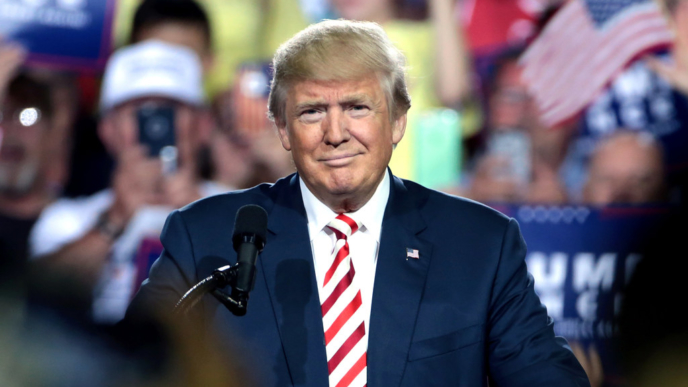
The Senate will vote on Thursday to override President Trump’s veto of a resolution that would have curbed his ability to use military action against Iran.

The vote will happen at 1:30 p.m., Senate Majority Leader Mitch McConnell announced after the veto on Wednesday, according to the Hill. The move, which would require the approval of two-thirds of Congress, is expected to fail.

“I urge my colleagues to join me in voting to override his veto. Unless there’s a carefully reached consensus in Congress that war is necessary, we should not be sending our troops into harm’s way,” said Democratic Virginia Sen. Tim Kaine in a statement after the president’s veto. . .

Trump blasted the resolution, which saw eight Republican senators join forces with Democrats, in a Wednesday statement from the White House. (Read more from “Senate Will Hold Vote to Override Trump Veto on Iran War Powers Resolution” HERE)

Follow Joe Miller on Twitter HERE and Facebook HERE
Bombshell Report Claims CBS Coronavirus Testing Footage Was Staged (VIDEO)

Project Veritas says that CBS News staged footage of coronavirus testing in order to make it look more dramatic at the Cherry Medical Center in Michigan.

In a Wednesday release, Project Veritas reported that CBS even included fake patients in testing areas.

The release alleged that CBS News reportedly asked health care workers to make a line of patients awaiting COVID-19 testing look longer than it actually was.

According to the report, “A CBS News crew pulled medical professionals off the floor at the Cherry Medical Center in Grand Rapids, Michigan, to line up in their vehicles so a CBS film crew would have a long line for their COVID-19 coverage.”

At least one health care professional reportedly told Project Veritas that the health care workers could have used their time better.

(Read more from “Bombshell Report Claims CBS Coronavirus Testing Footage Was Staged” HERE)

Follow Joe Miller on Twitter HERE and Facebook HERE

WATCH: Animal Expert Lets Giant Hornet — Similar to ‘Murder Hornet’ — Sting Him on Video

On the heels of news that the Asian “murder hornet” has been discovered in the United States for the first time, videos of an animal expert allowing a similar hornet sting him are lighting up the internet. . .

Coyote Peterson — with his “Brave Wilderness” crew — had embarked on a mission a while back to experience the most painful stings in the world first hand. , ,

In 2018, Peterson & Co. traveled to Japan, captured a Japanese giant hornet, and then Peterson went to great lengths to let it sting him to demonstrate the effects on his body while video rolled. . .

Then he howled in agony. “Absolute searing pain,” he told his companions. Sprawled on the ground, he added that a wave of dizziness hit him. . .

In a follow-up “Brave Wilderness” video posted Tuesday, Peterson revisited the Japanese giant hornet sting in light of the “murder hornet” news that swept the globe over the weekend.

(Read more from “WATCH: Animal Expert Lets Giant Hornet — Similar to ‘Murder Hornet’ — Sting Him on Video” HERE)

Follow Joe Miller on Twitter HERE and Facebook HERE

Stolen Weapons Cache Seized in California After Border Patrol Operation

El Centro Sector Border Patrol agents teamed up with local law enforcement officers to recover a stash of stolen firearms and ammunition near the California border with Mexico. The suspects, Mexican nationals, allegedly stole the weapons from Yuma, Arizona.

Imperial County Sheriff’s Office detectives began an investigation on April 29 into a large number of firearms and ammunition reportedly stolen in Yuma, Arizona. El Centro Sector Special Operations Detachment (SOD) Border Patrol agents and the Yuma Police Department assisted in the investigation, according to information provided by El Centro Sector Border Patrol officials.

The El Centro Sector SOD agents joined with the ICSO investigators to execute multiple search warrants in Calexico, California. During the searches, the investigators found 11 firearms and a large quantity of “military-grade ammunition,” officials reported. The searches also led to the recovery of several high-capacity magazines. (Read more from “Stolen Weapons Cache Seized in California After Border Patrol Operation” HERE)

Follow Joe Miller on Twitter HERE and Facebook HERE
Media Slams Trump for Honoring Nurses at the White House

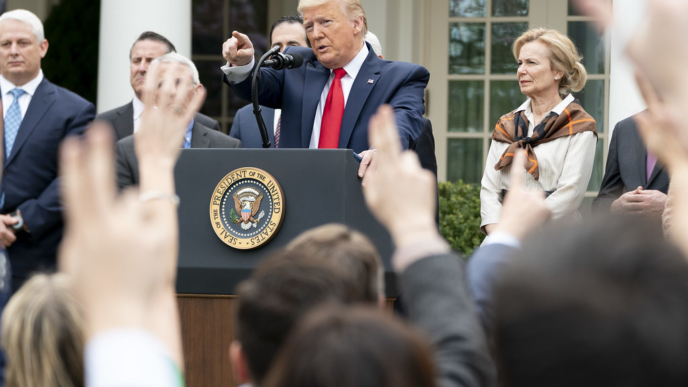
President Donald Trump honored a group of nurses at the White House on Wednesday, thanking them for their efforts to fight the coronavirus.

“America’s nurses are waging a war against the invisible enemy,” he said.”They’re fighting on the frontlines of the battle risking their health to save lives of fellow citizens.”

The president signed a proclamation in honor of National Nurses Day and met with six nurses and the presidents of the American Nurses Association and the American Association of Nurse Practitioners.

One reporter questioned whether the president was sending the wrong message to Americans for meeting a group of nurses who were not socially distancing in the Oval Office and were not wearing masks. . .

The president turned and looked straight into the camera and said, “Look, here’s a story. There’s not a single thing I can do to satisfy the media, the Democrats, and the fake news.” (Read more from “Media Slams Trump for Honoring Nurses at the White House” HERE)

Follow Joe Miller on Twitter HERE and Facebook HERE

YouTube Censors Video Criticizing Fauci and Coronavirus Response

YouTube has censored a video featuring a virologist who once worked with Dr. Anthony Fauci and questions the government’s approach to the coronavirus pandemic.

In the video, which apparently violates the platform’s requirement that any views expressed on the pandemic cannot be in conflict with the World Health Organization, Dr. Judy Mikovits contends the isolate-everyone policy is a big mistake and claims officials have a financial incentive to implement mass vaccinations. . .

Mikovits claims Fauci was among the top health officials who framed her and destroyed her career because of her contrary views.

YouTube CEO Susan Wojkicki said in a recent interview with CNN that “anything that would go against World Health Organization recommendations would be a violation of our policy.” . . .

Mikovits claims in the video that the government’s approach to the coronavirus is an existential threat to the United States. (Read more from “YouTube Censors Video Criticizing Fauci and Coronavirus Response” HERE)

Follow Joe Miller on Twitter HERE and Facebook HERE

Report: Trump Wants Border Wall Painted Black to Make It Too Hot for Illegal Aliens to Touch

President Donald Trump still wants to paint the U.S.-Mexico border wall black to make the barrier look more menacing and hot to the touch during the summer months, the Washington Post reported Wednesday.

During a White House meeting in April about the border wall, Trump told senior aide Jared Kushner and others to move forward with plans to paint the wall black and to gather the cost estimates of such a project, according to several administration officials who spoke with the Washington Post.

Government contracting estimates obtained by the Post project that the endeavor would cost at least $500 million.

Trump has pushed for black paint before, but the proposal has been long opposed by border officials and military commanders who believe the black paint would be unnecessarily costly and require too much maintenance in the long-term, according to the Post.

However, Trump — who has made immigration enforcement a hallmark of his presidency — reportedly believes the black paint would look more frightening. The black color would also allow the wall to absorb more heat during the summer months, making it that much harder for individuals to scale. (Read more from “Report: Trump Wants Border Wall Painted Black to Make It Too Hot for Illegal Aliens to Touch” HERE)

Follow Joe Miller on Twitter HERE and Facebook HERE