Just after midnight Tuesday in college football’s National Championship game, Clemson quarterback Deshaun Watson, with one second left, threw the ball two yards to wide receiver Hunter Renfrow. The pass won the game at 35-31, giving Clemson their first championship since 1981. The typical college-football-win hysteria was there, along with the mandatory Gatorade dunk, obligatory press interviews and drunken bar scenes filled with screaming fans.
But if that’s all you saw, you missed the game. The real story goes much deeper — as deep as the faith of Head Coach Dabo Swinney and his players.
‘It’s What God Wanted’
As ticker tape rained down on the field and cheering fans formed a deafening roar, quarterback Deshaun Watson stood with a reporter for an interview. Still gasping for air following the game, his smile was electric. “I’m speechless right now, man. It’s what God want[ed]. He put us [here] for a reason,” he said. “I talked to one of my coaches and he said ‘It’s a movie and it’s going to end the right way. Just keep believing in God, and just believe in your teammates and everything’s gonna fall in place,’ and that’s what happened and now we’re national champs and it’s amazing!”
Watson was asked why he made the decision to attend Clemson when he originally wanted to go to Florida. Calling Florida his “dream school” and saying that he loved Tim Tebow and Percy Harvin, Watson said the decision was made after he found Christ in 9th grade. He began to pray, along with his ailing mother, about which school to attend and that God would lead him to the right decision. “The day I committed to Clemson, God was talking to me and I just felt like the timing was perfect and that’s what I wanted to do. I stuck through it and it was the best decision of my life.”
‘Only God Can Do This’
Head Coach Dabo Swinney, in a post-game press conference, said rival Alabama worked hard and was a great team, but in the end, his players worked harder. “They fought. They fought for every play,” he said. “I said it out on the field and I’ll say it again. For me personally, only God can do this … there’s just no other explanation for me. It’s not anything to do with me. It’s God working through me and the staff and these players.
“Alabama [is] a challenge. … we just kind of hung in there. We made some mistakes, really we played great defense outside of about three plays, four plays, great drive by them there at the end, unbelievable play, to get the first down there, but at the end of the day, we had one second. We got it done with one second left and we’re the National Champs. To God be the glory.”
Journey of Faith
Wide receiver Hunter Renfrow said being a walk-on player was a “journey,” and that he could never have imagined last night’s win back as a senior in Myrtle Beach. “It’s almost like I got knocked out in the third quarter and this is just all a dream. And credit — I think my faith in God really got me through.” In a locker room interview, Renfrow added that winning the championship felt “unbelievable.” “Just glory to God. Thankful for everyone who … got me to this point.”
The Real Story
The real story of Clemson’s win isn’t about the school having the biggest or fastest or strongest players — although Tigers worked very hard to get to the championship game. It isn’t about who had the most genial or magnetic personality — although Coach Swinney is known for having such a disposition. The real story behind the incredible win is that the men interviewed following the game — the coach and key players — exhibited and proclaimed their faith on the world stage.
Given the opportunity to remain silent, these guys held up Christ as their hope and reason for success.
Watson summed it up in one last interview question on the field. The star quarterback was asked what he told his teammates when he led his offense back on the field after Alabama had regained the lead very late in the fourth quarter. “I walked up to my offensive line and I walked up to my receivers and I said, ‘Let’s be legendary. Let’s be great. God put us here for a reason.’”
https://joemiller.us/wp-content/uploads/21848251428_828543004e_b-1.jpg6801024Joe Millerhttps://joemiller.us/wp-content/uploads/logotext.pngJoe Miller2017-01-10 20:25:112017-01-10 20:25:11‘To God Be the Glory’: The Faith That Carried Clemson to Victory
The Rev. Al Sharpton is organizing a resistance movement comprised of black civil rights leaders to protest the presidency of Donald Trump.
He showed up Tuesday at Sen. Jeff Sessions’ confirmation hearing for attorney general. In an interview with The Daily Signal, Sharpton rehashed allegations of racism against the Alabama senator, claiming they were “found to be substantial.”
Here’s what Sharpton had to say—and The Daily Signal’s examination of the facts.
(For more from the author of “Al Sharpton Makes Some Serious Charges Against Jeff Sessions. Here Are the Facts.” please click HERE)
https://joemiller.us/wp-content/uploads/1080px-Al_Sharpton_by_David_Shankbone.jpg10241080Joe Millerhttps://joemiller.us/wp-content/uploads/logotext.pngJoe Miller2017-01-10 20:17:252017-01-10 20:17:25Al Sharpton Makes Some Serious Charges Against Jeff Sessions. Here Are the Facts.
It got rowdy at times during the hearing Tuesday on Sen. Jeff Sessions’ nomination to become attorney general, but not so much because of fellow senators who questioned the Alabama Republican.
Protesters interrupted the Senate Judiciary Committee hearing multiple times, some dressed in Ku Klux Klan outfits, others wearing the familiar Code Pink attire. They shouted “No Trump! No KKK! No fascist USA!” and other slogans.
The hearing itself wasn’t as contentious as some expected, as even some Democrats noted their friendship with Sessions, President-elect Donald Trump’s choice to run the Justice Department as attorney general.
Until Sen. Al Franken, D-Minn., challenged Sessions on the precise number of civil rights cases he was involved in as a U.S. attorney in Alabama, there was little talk about the allegations of racism that helped sink Sessions’ 1986 nomination as a federal judge.
Here are eight takeaways from the first day of the Sessions confirmation hearings:
1. Racism Allegations ‘Damnably False’
During his opening remarks, Sessions confronted head-on allegations lodged 30 years ago by other Justice Department lawyers that he was hostile to civil rights.
“I was accused in 1986 of failing to protect the voting rights of African-Americans by presenting the Perry County case, the voter fraud case, and of condemning civil rights organizations and even harboring—amazingly—sympathies for the KKK,” Sessions told his colleagues on the Judiciary Committee. “These are damnably false charges.”
He explained that he brought a 1982 voter fraud case in Perry County, Alabama, against civil rights advocate Albert Turner at the urging of local prosecutors and a grand jury foreman.
“The voter fraud case my office prosecuted was in response to pleas from African-Americans, incumbent elected officials who claim that the absentee ballot process involved a situation in which the ballots cast for them were stolen, altered, and cast for their opponents,” Sessions said. “The prosecution sought to protect the integrity of the ballot, not to block voting. It was a voting rights case.”
Turner and others were acquitted.
Sessions noted his role as both a U.S. attorney and later as Alabama’s attorney general in the prosecution and execution of Klansman Henry Hays.
“As to the KKK, I invited civil rights attorneys from Washington, D.C., to help us solve a very difficult investigation into the unconscionable, horrendous death of a young African-American,” Sessions told the committee, adding:
There was no federal death penalty at the time and I felt the death penalty was appropriate in this case. I pushed to have it tried in state court, which was done. That defendant was indeed convicted and sentenced to death and 10 years later—ironically—as Alabama’s attorney general, my staff participated in a defense of that verdict. That murdering Klansman was indeed executed. I abhor the Klan and what it represents and its hateful ideology.
Sessions said he “never declared the NAACP was un-American nor that a civil rights attorney was a disgrace to his race,” as he had been accused of in 1986.
2. He’ll Recuse Himself on Clinton
Sessions said as attorney general he would recuse himself from any federal investigation into former Secretary of State Hillary Clinton or the Clinton Foundation, because he publicly criticized the Democratic nominee during the 2016 presidential race.
Sen. Dianne Feinstein, D-Calif., the ranking member of the Judiciary Committee, asserted her concerns during opening remarks.
“The president-elect said to his opponent during a debate, ‘If I win, I’m going to instruct my attorney general to get a special prosecutor to look at your situation,’” Feinstein said. “Mr. Chairman, that’s not what an attorney general does. An attorney general does not investigate and prosecute at the behest of a president.”
Later, Judiciary Chairman Charles Grassley, R-Iowa, raised the question.
“In light of the comments that you made, some have pressed concern about whether you can approach the Clinton matter impartially in both fact and appearance. How do you plan to address those concerns?” Grassley asked.
Sessions said it was a highly contentious campaign.
“I, like a lot of people, made comments about the issues in that campaign with regard to Secretary Clinton and some of the comments I made I do believe could place my objectivity in question,” Sessions said. “I’ve given that thought. I believe the proper thing for me to do would be to recuse myself from any kind of investigations involving Secretary Clinton and matters raised during the campaign.”
Later in the hearing, in response to a question from Sen. Sheldon Whitehouse, D-R.I., Sessions said he never joined the chants of “lock her up” during the presidential campaign.
3. Russian Espionage
Sen. Dick Durbin, D-Ill., asked whether Sessions would recuse himself and appoint a special prosecutor for an investigation of any Trump campaign officials that might have worked with Russian intelligence. Durbin said it was “a hypothetical.”
His decision to recuse himself from any Clinton probe was “because I’ve made public comments that could be construed as having an impact on the final judgment that would be rendered,” Sessions said, adding:
I don’t think I made any comments on this issue that would go to that. But I would review it and try to do the right thing as to whether or not it should stay within the jurisdiction of the attorney general or not.
Early in the hearing, Sen. Lindsey Graham, R-S.C., asked about the alleged Russian hacking of the Democratic National Committee and of Clinton campaign chairman John Podesta’s email.
“How do you feel about a foreign entity trying to interfere in our election? I’m not saying they changed the outcome, but it is clear they did it. How do you feel about it and what should we do?” Graham asked.
Sessions called it a “a significant event.”
“We have penetration apparently throughout our government by foreign entities. We know the Chinese revealed background information on millions of people in the United States,” Sessions said, adding:
These I suppose ultimately are part of international big power politics. But when a nation uses their improperly gained or intelligence-wise gained information to take policy positions and impact other nation’s democracy or approach to any issue, then that raises real serious matters. Really I suppose it goes in many ways to our State Department and our Defense Department in how we as a nation have to react to that.
4. ‘Access Hollywood’ Video
In a line of questioning that seemed to catch Sessions off guard, Sen. Patrick Leahy, D-Vt., brought up the 2005 “Access Hollywood” video, in which Trump is heard making lewd comments about groping women.
“If a sitting president or any other high federal official is accused of committing what the president-elect described in a context in which it could be federally prosecuted, would you be able to prosecute it and investigate it?” Leahy asked.
Sessions, who also agreed any such behavior would be sexual assault, said the president could be prosecuted.
“The president is subject to certain lawful restrictions and they would be required to be applied by the appropriate law enforcement official if appropriate, yes,” Sessions said.
5. Saying ‘No’ to President Trump
Sessions talked about how he would move from making law and voting on policy to enforcing laws—even laws he voted against—as a matter of duty. Stressing independence, he also said the attorney general is not a political office.
“He or she must be committed to following the law,” he said. “He or she must be willing to tell the president ‘no’ if he overreaches. He or she cannot be a mere rubber stamp to any idea the president has.”
He added:
He or she also must set the example for the employees in the department to do the right thing and ensure that they know the attorney general will back them up, no matter what politician might call, or what powerful special interest, influential contributor, or friend might try to intervene.
6. Abortion and Same-Sex Marriage
Feinstein pressed Sessions on two major social issues, abortion and same-sex marriage. Sessions said he would enforce the law on both.
“You have referred to Roe v. Wade as ‘one of the worst, colossally erroneous Supreme Court decisions of all time.’ Is that still your view?” Feinstein asked.
Sessions responded:
It is. I believe it violated the Constitution and really attempted to set policy and not follow law. It is the law of the land. It is established and has been so for a long time. It deserves respect, and I will respect it and follow it.
Asked later whether his Justice Department would argue before the Supreme Court in favor of overturning Roe v. Wade, which legalized abortion across the nation, Sessions said the question was too hypothetical.
Feinstein referred to a November interview that Trump gave on “60 Minutes” in which the president-elect said same-sex marriage was settled law. She asked whether Sessions agreed.
“It was 5-4 and five justices on the Supreme Court, the majority of the court has established the definition of marriage for the entire United States of America, and I will follow that decision,” Sessions said.
7. Illegal Immigration
On one of Trump’s signature issues, curbing illegal immigration, Sessions said the U.S. must enforce its laws. He also said Congress has a role in fixing the nation’s broken immigration system.
“Colleagues, it has not been working right,” Sessions said. “We’ve entered more and more millions of people illegally into the country. Each one of them produces some sort of humanitarian concern. But it is particularly true for children. We’ve been placed in a particularly bad situation.”
When the matter came up later, Sessions talked about the economic impact of illegal immigration.
“Immigration has been a high priority for the United States. We’ve been a leading country in the world in accepting immigration,” Sessions said, adding:
I don’t think the American people want to end immigration. I do think if you bring in a larger flow of labor than we have jobs for, it does impact adversely the wage prospects, the job prospects of American citizens. As a nation, we should evaluate immigration on whether or not it serves and advances the national interest and not the corporate interest. It has to be in the people’s interest first.
8. Operation Choke Point
Sessions briefly addressed Operation Choke Point, a secretive Justice Department program that works with the Federal Deposit Insurance Corp. and other agencies to target legal businesses—such as payday lenders, tobacco sellers, and gun dealers—that the Obama administration opposes.
Choke Point refers to the aim of discouraging banks and other lenders from doing business with these industries, thus choking off financing.
Sen. Mike Crapo, R-Idaho, later asked Sessions whether it is proper to target legal businesses for political reasons, and whether he would stop it if confirmed.
“At least as you framed this issue, as I understand the issue, from what little I know about it, fundamentally, a lawful business should not be attacked by having other lawful businesses pressured not to do business with the first business. For me that would be hard to justify,” Sessions said.
(For more from the author of “8 Takeaways From the First Day of Jeff Sessions’ Confirmation Hearings” please click HERE)
https://joemiller.us/wp-content/uploads/6235841005_2c1baba0b3_b-1-1.jpg6831024Joe Millerhttps://joemiller.us/wp-content/uploads/logotext.pngJoe Miller2017-01-10 20:12:382017-01-10 20:12:388 Takeaways From the First Day of Jeff Sessions’ Confirmation Hearings
As Congress enters debate on a new budget, Sen. Jeff Flake, R-Ariz., is making sure wasteful spending remains at the forefront with a report citing examples ranging from a study of how college students party to research on whether dinosaurs could sing.
Flake told The Daily Signal that he released the report, “Wastebook: PORKémon Go,” for two reasons.
“One, to inform the debate that is being had right now about whether we should bring earmarking back,” Flake said. “And two, just the issue of priorities. We have to make choices when we’re borrowing a lot of money.”
Named after the wildly popular mobile app Pokémon Go, “Wastebook: PORKémon Go,” released Tuesday, details more than $5 billion in what Flake calls wasteful government spending.
The report, which Flake discussed during an appearance Tuesday at The Heritage Foundation, is the second volume in the Arizona Republican’s “Wastebook” series.
Flake has a habit of exposing government waste. In 2015, he released a detailed report entitled “Wastebook: The Farce Awakens” and has put out similar reports since 2003, when he was in the House.
Here are seven of the most outrageous examples detailed in the new “Wastebook” report:
1. “Spaceport to Nowhere.” The Missile Defense Agency continues to fund a rocket launch site in Alaska that could cost the organization up to $80.4 million. The facility is 20 years old, “rarely used,” and was established with an $18 million earmark. “The millions spent to date on this launch complex have not made America safer from potential missile attacks from foreign adversaries,” the report states. “To the contrary, it has siphoned away tens of millions of dollars that could have been better spent on more promising initiatives.”
2. Fishes on a Treadmill. How long can a mudskipper use a treadmill? The University of California-San Diego’s Scripps Institution of Oceanography is using grant money from the National Science Foundation to answer just that. The study found that mudskippers “can exercise longer and recover quicker under higher oxygen concentrations.” The grant also is slated to be used “to purchase what one of the researchers jokingly refers to as ‘all the toys’ as well as travel costs for junkets to conferences.”
3. Holograms at a Comedy Museum. The National Comedy Center, a nonprofit in New York, received a $1.7 million grant from the Department of Commerce’s Economic Development Administration to create a comedy museum. The museum will feature holograms of dead comedians. A New York state lawmaker has promised to bring an additional $3 million in federal funding. “I’m not kidding you,” Flake said at Heritage. “It’s a comedy club that, unfortunately, gets your tax dollars.”
4. Partying College Students. Part of a $5 million grant from a section of the National Institutes of Health paid for a researcher at Brown University to study the partying habits of college students. Some findings: “Greek members engaged in more risky health behaviors … than non-Greek members,” and college students tend to increase their intake of alcohol on game days. “According to the researchers,” Flake said, “all the games had the same goal—causing the participants to become intoxicated. I think that falls into the obvious category.”
5. Do Boys or Girls Play More With Dolls? A study executed by Vanderbilt University with money from the National Eye Institute and National Science Foundation examined “whether boys or girls spend more time playing with Barbie dolls.” The report surveyed about 300 men and women and cost over $300,000. The study also found, in the words of Flake’s report, that “women were much better at identifying the correct Barbies while the men were more likely to recognize the Transformers.”
6. Singing Dinosaurs. A study conducted with partial funding from $450,000 in grants from the National Science Foundation examined whether dinosaurs were able to sing. The two-year study examined, in part, whether dinosaurs ever possessed a syrinx. The lead author said the study was “another important step to figuring out what dinosaurs sounded like.”
7. Binge-Watching Computers. Can computers learn human behavior by binge-watching TV shows such as “The Office” and “Desperate Housewives?” The study was funded in part by the Department of Defense’s Office of Naval Research and the National Science Foundation, which helped researchers study how TV shows “train computers to understand and predict human behavior.” Flake said he sees this research as nonsensical. “Spending nearly a half a billion dollars to … turn computers into couch potatoes doesn’t compute for me,” he said. (For more from the author of “7 Ways This Senator Says Government Wastes Your Tax Dollars” please click HERE)
https://joemiller.us/wp-content/uploads/6355404323_cf97f9c58e_b-1.jpg6831024Joe Millerhttps://joemiller.us/wp-content/uploads/logotext.pngJoe Miller2017-01-10 19:59:272017-01-10 19:59:277 Ways This Senator Says Government Wastes Your Tax Dollars
Kalashnikov assault rifles are among the most iconic symbols of the Soviet military.
Weapons such as the AK-47, the AKM, the AK-74, and the AK-103 are ubiquitous reminders of the Red Army’s legacy among the modern militaries of former Warsaw Pact countries and Soviet client states.
Also, the contemporary, worldwide use of Kalashnikovs by terrorists and insurgent groups offers grim evidence of the widespread proliferation of Soviet weapons during and after the Cold War.
On Jan. 3, as part of a long-term plan to adopt NATO military standards, Ukraine took a step toward ditching this Soviet military carryover.
Ukroboronprom, Ukraine’s nationalized defense industry conglomerate, announced a partnership agreement between the Ukrainian defense manufacturer Ukroboronservis and the U.S. company Aeroscraft to produce in Ukraine a variant of the U.S. M16 assault rifle.
“The M16 project was conceived some time ago, as the Ukrainian armed forces, border guards, and National Guard will with time switch to NATO standards,” Aeroscraft founder and CEO Igor Pasternak said during a Jan. 3 press conference in Kyiv.
The M16 variant Ukraine will produce is called the WAC47.
The catch: The WAC47 uses Soviet ammunition, not the standard NATO 5.56×45 mm cartridge.
However, the Ukrainian production of Soviet-caliber M16s plan is a first step toward adopting NATO military standards—a goal Ukrainian President Petro Poroshenko directed the military to achieve by 2020.
The WAC47 can be modified to use NATO ammunition, and “switching calibers” was one of the reasons Ukroboronprom listed to justify its decision to build its M16 variant.
“For our country and the Ukrainian army, M16 production in Ukraine is a real step towards Euro-Atlantic structures,” Ukroboronprom said in a statement published to its website.
By the time Ukraine fully adopts NATO military standards, its military will have a stockpile of M16s that can be modified to use NATO ammunition.
According to Ukroboronprom, interoperability problems Ukrainian troops have faced while on joint operations with NATO troops spurred the decision to produce the American assault rifle.
“Ukrainian soldiers are already participating in joint maneuvers with NATO,” Ukroboronprom said on its website. “And in each case, one of the problems is logistics.”
Ukrainian troops deployed to support NATO’s mission in Afghanistan, for example, had to borrow German assault rifles from Lithuanian troops due to ammunition incompatibility issues.
There is no standard assault rifle among NATO countries, only an agreement to use the same caliber small arms ammunition. NATO Standardization Agreement No. 4172 sets the standard small arms caliber at 5.56×45 mm.
In theory, troops from NATO countries could swap ammunition in combat, even if they use different weapons.
NATO Standards
The M16 became the standard infantry weapon for the U.S. military in 1967. U.S. versions of the weapon use the standard NATO cartridge.
However, the WAC47 (the M16 version to be produced by Ukraine) is designed for 7.62×39 mm ammunition used by Soviet weapons such as the AK-47 and the AKM assault rifles.
Ukraine plans to adopt NATO military standards by 2020. Consequently, the Ukrainian weapons will have to be retroactively modified to use NATO ammunition.
According to weapons experts consulted by The Daily Signal, the WAC47 can be modified to take the NATO 5.56×45 mm cartridge, but it might be cost prohibitive.
“Rechambering a rifle for a cartridge different than it was originally designed for can be done in some circumstances,” Dakota Wood, senior research fellow for defense programs at The Heritage Foundation, told The Daily Signal.
“A lot of expense that simply implies it would be cheaper to buy new rifles designed for common NATO ammo,” Wood said.
In order to modify Ukrainian M16s to use NATO ammunition, the bolt and barrel will have to be replaced, Brian Summers, a U.S. Army veteran and weapons expert, told The Daily Signal.
“The only items that would have to be replaced are what I would describe as items that would normally be replaced based on use,” Summers said. “The magazines are ammo specific, and would have to be changed to the specific caliber.”
The M16 rifle has two main components—an upper and a lower receiver. According to Summers, for a Soviet-caliber M16 to use NATO ammunition, only the upper receiver has to be modified by replacing the bolt and barrel.
The M16 weapons system is “one of the most versatile weapon platforms in configuration and caliber,” Summers said. “Your troops essentially can train on one platform and when switching over to a new caliber do not need to be retrained in a new weapons system … Core of the platform, lower receiver, does not change and any optics can be moved.”
In the 1990s, Colt Defense LLC, the original M16 producer, produced a special civilian version of the military assault rifle designed to use Soviet 7.62×39 mm ammunition.
“I own this variant and if I want to fire 5.56 mm [NATO ammunition], I simply switch the upper receiver with 5.56 mm bolt and mags,” Summers said. “Two minutes to change.”
The Ukrainian M16 deal is not the first time a foreign weapon modified to use Soviet ammunition has been mass produced in Ukraine.
Ukrainian weapons manufacturer RPC Fort produces a version of the Israeli Tavor assault rifle, which the Israel Defense Forces chose to replace the M16.
Israeli Tavors use standard NATO 5.56×45 mm ammunition. The Ukrainian variant, however, uses Soviet 5.45×39 mm ammunition, but can be modified to use NATO cartridges.
Soviet Surplus
The Ukrainian military is embroiled in a nearly three-year-old proxy war against pro-Russian separatists and Russian regulars in the Donbas, Ukraine’s embattled southeastern territory on the border with Russia.
Since the war began in early 2014, Ukraine has embarked on a crash course to rebuild, resupply, and modernize its military.
According to Ukrainian news reports, pro-Russian separatists captured Ukraine’s only small arms ammunition manufacturer, the Luhansk cartridge plant, in 2014.
Since then, the Ukrainian military has relied on Soviet-era stockpiles to supply its troops in combat.
In June 2016, a group of top Ukrainian military officials announced a plan to develop domestic ammunition manufacturing.
“The ammunition reserves inherited by our country from the Soviet Army … are not unlimited, while their significant part has been thoughtlessly recycled or sold at a time when no one was thinking that we would be engaged in a war,” Oleksandr Turchynov, secretary of the National Security and Defense Council of Ukraine, said, according to Ukrainian news reports.
“This is a crucial large-scale task, and we have no other option but to implement it as soon as possible, for our country’s security directly depends on it,” Turchynov said.
Ukroboronprom’s 2016-2017 product catalogue does not include 7.62×39 mm or 5.45×39 mm ammunition—the two calibers most widely used by Ukraine’s armed forces.
According to arms experts, Ukraine currently has about 1 million AK-74 assault rifles and RPK-74 light machine guns in service. Both weapons use Soviet 5.45×39 mm ammunition.
NATO Standards
On May 20, 2016, Poroshenko, Ukraine’s president, signed a comprehensive military reform plan called the Strategic Defense Bulletin.
The document calls for a total revamp of Ukraine’s military doctrine, training, and operations to ultimately achieve the “full membership in NATO.”
“We have finally abandoned the system of the Soviet army and started to build truly efficient armed forces,” Poroshenko said. “It is very important for me, because it is evidence that Ukraine and NATO speak the same language and understand each other well.”
The Strategic Defense Bulletin directs the Ukrainian military to adopt NATO standards by 2020. It also singles out Russia as the No. 1 national security threat.
Ukrainian M16 production is a step—albeit a largely symbolic one—toward divorcing Ukraine from its Soviet military past by ditching Soviet weapons systems, thereby inching the country toward NATO interoperability.
“Every country that has teared itself away from Russia’s orbit, went or is going through this difficult stage, taking many years and demanding great effort,” Ukroboronprom, the Ukrainian defense industry conglomerate, said in a statement published to its website.
Resale Value
Ukraine will produce M16s for use by its armed forces, as well as for export. The deal, therefore, is a piece of a larger plan to reform and expand Ukraine’s defense industry.
Joint ventures with foreign partners is a key part of reforming Ukraine’s defense industry.
“Weapon manufacture in accordance with NATO standards is an important part of the development and reform of the Ukrainian defense industry,” said Serhiy Mykytyuk, head of Ukroboronservis, according to a statement posted to the Ukroboronprom website.
Aeroscraft, the American firm partnering with Ukroboronservis to produce M16s, is a California-based aviation company specializing in lighter-than-air aircraft—including airships intended for U.S. military use.
Pasternak, Aeroscraft’s founder and CEO, was born in Soviet Kazakhstan and founded his first company, Aeros Ltd., in Ukraine. He immigrated to the U.S. in 1994, according to a biography published on Aeroscraft’s website.
Ukrainian officials also want to make Ukraine one of the world’s top arms exporters.
“Ukraine is rapidly increasing its military capacities,” Poroshenko wrote in the introduction to the 2016-2017 Ukroboronprom product catalogue. “To become among the world’s top-five arms exporters is our strategic objective.”
In 2014, Ukraine was among the world’s top ten arms exporting nations, according to the Stockholm International Peace Research Institute. (For more from the author of “Ukraine’s Plan to Manufacture US M16 Combat Rifles Hits a Snag Over Ammunition” please click HERE)
https://joemiller.us/wp-content/uploads/M16-A2_rifle_with_M203_grenade_launcher.jpg15002100Joe Millerhttps://joemiller.us/wp-content/uploads/logotext.pngJoe Miller2017-01-10 19:51:192017-01-10 19:51:19Ukraine’s Plan to Manufacture US M16 Combat Rifles Hits a Snag Over Ammunition
The current Russia “debate” is counter-productive. Yes, Russia meddled in our elections, but Russia did not determine the result. Hillary Clinton’s loss is on her, not Putin. This level of concern from the world’s sole superpower only inflates Putin’s power, and — as the citizens of Aleppo can attest — that power will not be a force for good.
Let’s get a few things straight about Russia. First, it is a mafia basket case in precipitous decline economically, culturally, and demographically. Most of it resembles the Third World. After the Cold War, American military personnel returning from Russia were typically incredulous that such a backward place had caused such fear in the West. It has only gone downhill since.
In 1985, the Soviet Union had 275 million people, a $2.2 trillion economy, and 13 treaty allies. Today, the Russian Federation has 144 million citizens. Even though it is one of the world’s largest producers of oil, it’s economy has shrunk to just $1.3 trillion, putting it on par with Spain (a country with 46 million people and no oil). Last year, Russian poverty reached 15.7 percent. And most of its former allies are now part of NATO, and Russia makes its bed with powerhouses Belarus and Armenia.
But Putin wants you to imagine Russia in the big, bad boy of 1980s Cold War USSR. Think “Red Dawn” or “The Hunt for Red October.” In reality, putting today’s Russia in those movies would be like Jack Ryan hunting rogue Uruguayan submarines — Russia’s nearest rival on the U.N.’s Human Development Index.
Sure, Russia is an existential threat to Estonia, Georgia, and Ukraine, not us. But Russia has nuclear weapons, you say? Two words: North Korea.
Second, put into perspective the meme that Trump is pro-Russian. I am sure Russians cheered his election, not because they succeeded in installing a Manchurian Candidate in the White House, but because they think they have Trump’s number. That’s on Trump to disprove.
Clinton would have had difficulty making that case after cashing all those Clinton Foundation checks from Russia.
President Obama proudly conjured the “reset button.” And who can forget President Bush peering into Putin’s soul? Both look like fools because of it.
As an aside, Vice President-elect Pence might want to take notes if he wants to succeed Trump. Putin always prefers the party out of power. Always. He offers the illusion of good relations after the White House changes parties. If the Trump administration foolishly makes the same Faustian Bargain as Obama and Bush, Putin’s shenanigans will target him. Ask Clinton.
Third, be honest about what Russia did. Yes, Russia hacked the DNC and the personal emails of Clinton, Inc. cronies. Russia released it through their agent Julian Assange. But the idea that John Podesta’s leaked emails trumped the will of 300+ million people is ludicrous.
The irony of the situation is that Putin was reacting to polls just like everyone else. He likely saw Clinton as inevitable. As such, the leaks were about damaging her before she entered office, not electing Trump. They were to ensure U.S. policy toward Russia remained feather-pillow soft in the event Russia investments in the Clinton Foundation did not pan out.
In the near term, the most practical thing is to be honest about Russia. Putin spent hundreds of millions of dollars to discredit a losing presidential candidate — all while Russian babushkas must save pennies to buy food.
Insufficient though Putin’s effort may have been, he still messed with America. That comes with a price, but determining that price should not distract us from the important stuff.
Virtually the entire Democratic Party seems obsessed with Russia, forgetting its pride in Obama’s Seinfeldian snark to Mitt Romney about Russia in 2012. “The 1980s are calling to ask for their foreign policy back.” Indeed.
The medium-term solution is to support regional allies like Estonia, Georgia, and Ukraine, so they can handle Russia for us. They’re more than capable if we back them properly. Look at alliances through the prism of leverage. You will find them quite useful, especially if we want to clear our docket of nettlesome bullies like Putin and deal with the threats that matter.
The long-term solution is to atomize and reorganize our dysfunctional national security structure, but that is another discussion.
The new administration needs to focus on advancing a conservative foreign policy agenda that tackles the threats facing this country, chief among them radical Islam. An administration consumed with Russia will not have the time.
By all means, point out that Russia meddled. Punish them. Better yet, help our allies do it. But be honest about it, and quit obsessing about Russia. It just encourages Putin’s sad grasp for unearned relevance. We have more important things to be doing. (For more from the author of “Russia Derangement Syndrome. Let’s Focus on REAL Threats to American Security” please click HERE)
https://joemiller.us/wp-content/uploads/russia-112721_960_720.jpg661960Joe Millerhttps://joemiller.us/wp-content/uploads/logotext.pngJoe Miller2017-01-09 22:46:062017-01-09 22:46:46Russia Derangement Syndrome. Let’s Focus on REAL Threats to American Security
While the rest of America was preoccupied with the NFL Wildcard Playoffs and the Golden Globes ceremony Sunday evening, the FBI released another batch of Hillary Clinton documents, completely unannounced. The 300 items contained information regarding the federal investigation into the form Democratic presidential candidate’s private email server and her questionable handling of classified material.
Wikileaks was the first to announce the news via Twitter:
FBI quietly releases new Hillary Clinton investigation documents (part 5) [as yet, no announcement] https://t.co/lmyWF5rA8H
According to Wikileaks, the documents were released at 22:37 p.m. UTC on the Bureau’s Vault website, where it publishes information regarding Freedom of Information Act (FOIA) requests. Sunday marked the fifth of such Clinton document dumps on behalf of the FBI.
The Daily Caller’s Chuck Ross conducted a preliminary perusal of the 300 documents, many of which appear to be emails between State Department officials and federal law enforcement disputing whether certain emails sent over Clinton’s private server contained “classified” information.
From the Daily Caller:
In one April 27, 2015 email, an FBI official wrote to other officials that they were “about to get drug into an issue on classification” of Clinton’s emails. The official, whose name is redacted, said that the State Department was “forum shopping,” or seeking a favorable opinion on the classification issue by asking different officials to rate emails as unclassified.
The emails also appear to show that State Department officials made multiple special requests for the FBI to reduce its classification of certain emails found on Clinton’s.
More from the Daily Caller:
The FBI release also includes an email from the attorney of Bryan Pagliano, the Hillary Clinton State Department aide who set up and managed her secret email server. In the email, Mark MacDougall, Pagliano’s lawyer, informed the FBI that Pagliano would decline the bureau’s request for an investigation. Pagliano would eventually meet with the FBI in December, but only after receiving limited immunity from the Department of Justice.
Sunday’s low-profile email dump proves that the Hillary Clinton email saga is far from over, and that the FBI has some explaining to do. (For more from the author of “While America Was Watching Football, the FBI Dropped These 300 Clinton-Related Docs” please click HERE)
https://joemiller.us/wp-content/uploads/24293026090_06ea9fef5d_b-2.jpg6831024Joe Millerhttps://joemiller.us/wp-content/uploads/logotext.pngJoe Miller2017-01-09 22:37:482017-01-15 00:33:20While America Was Watching Football, the FBI Dropped These 300 Clinton-Related Docs
When is a cold-blooded murderer hailed as an international hero? When he’s a radical Islamic terrorist who slaughters Jews.
It is gut-wrenching to watch the video footage of a truck ramming into a crowd of Israelis in East Jerusalem, killing four of them and injuring at least 15 more. Three of the victims were female soldiers, aged 20, 20 and 22. The fourth victim was an Israeli man, also just 20-years-old. All of them had dreams of a bright future, a future none of them will live to see.
Israel is again in mourning.
But there is celebration in the Jew-hating, Israel-despising world. It doesn’t get any better than slaughtering Israelis — especially Israeli soldiers — in cold blood.
As for the truck driver, a religious Palestinian Muslim who was shot dead by police, his sister said “the family was ‘thankful’ for the attack and called her brother’s death ‘the most beautiful martyrdom.’”
Other Palestinian Muslims reacted similarly, as reported by Michael Qazini on the Daily Wire, noting, “These weren’t spontaneous celebrations by a few bad actors. Praise for the terrorist came from the top of the Palestinian leadership chain, placing a rubber stamp on a Jew-hating culture of death.” (See the article for details.)
Accordingly, Hamas, representing the most extreme side of Palestinian leadership, lauded the truck attack as “heroic.” (Yes, it takes a real hero to back up a truck and run over your victims. What courage.)
Similarly, Al Quds [Jerusalem] News posted a report, “Live from where the heroic incident took place in Occupied Jerusalem.” (See the link for more examples of Palestinian celebration, including passing out sweets in the streets.)
But this shouldn’t surprise us at all, since this is same leadership that names children’s schools after Palestinian terrorists who died in the course of their murderous acts, hailing them as martyrs. (Last October, the Palestinian Authority “dedicated a new school to the mastermind of the 1972 Munich Olympics massacre …”)
This is the same leadership that pays salaries to imprisoned Palestinian terrorists at a rate up to four-times the average Palestinian salary. This is the same leadership that sponsors summer camps for children where they learn the requisite skills for slaughtering Jews, also naming the camps after famous terrorists.
Over on the Iranian-run Press TV Facebook page, the hatred flowed freely, with a good number of commenters justifying the slaughter because these Israelis were in East Jerusalem, which they consider to be an illegal occupation. (Wait a minute. Didn’t the Obama administration just affirm that in the UN Security Resolution it allegedly helped craft?)
Comments on the Press TV page included:
“Sow the wind, reap the storm. Occupiers have no rights, only the obligation to go back to where they came from. The Israeli regime is responsible for the deaths of its citizens in this instance. There will never be peace on stolen land.”
“Palestinians have every right to self-defense. If they find IOF on their roads they must repeat this and should be encouraged.”
“I wish and pray there will be repetition of this incident at much much bigger scale which will wipe out brutal israel from world map, Insha Allah [God willing].”
“Good job … because its Israel problem killing innocent Palestinians every day no one criticise why…”
“Tonight I’m very happy after watching video, and I especially order for mutton biryani.”
“Hahaha look at the IDF soldiers. Muppets. I don’t support terrorism but at least this one did not kill any innocent woman or child and went straight for their killers!”
“Killing an oppressor is not being an extremist. These were occupation soldiers and were in the process of going to commit atrocities in Palestine. When the French resisted German occupation it was not called terrorism.”
“It is so good to hear this News.”
“Good work ever done by a true Muslim.”
“BWAHAHAHA!”
“Kill them all.”
“Deserved.”
“The Zionists been ramming tents and makeshift shelters of innocent Palestinians for the past 70 years no problem, now that some Zionist soldiers rammed by Palestinian is good thing to happen.”
“One sure remedy — ‘Get out of Palestine’ — back to your Ghettos.”
I have no doubt that there are Palestinians who have been mistreated by Israeli soldiers and for that reason, harbor intense hatred against the people of Israel. As a friend of Israel, I say: Let the injustices be exposed and rectified. And certainly, many Palestinians are shocked and grieved over the death of these young people.
I also recognize that there are right-wing extremists in Israel who have engaged in terrorist acts against Palestinians (like the infamous Baruch Goldstein), and I know that some of these extremists consider Palestinians (and even all non-Jews) to be less human, even saying that the only good Arab is a dead Arab.
But this represents the extreme fringe of the extreme fringe, and if an Israeli rammed a truck into a crowd of young Palestinians, there would be national outrage in Israel (and the worldwide Jewish community), the government would immediately and unconditionally condemn the killer and look to arrest any accomplices, and there would be a sense of shame rather than glee through the country.
But when Jewish blood is shed by a radical Islamic terrorist — in particular Israeli blood, especially the blood of an Israeli soldier — then celebration erupts among Jew-haters worldwide.
Time to pass out the candy and rejoice.
This is beyond sick. (For more from the author of “The Sickening Nature of Anti-Israel Hatred” please click HERE)
The Washington Post published an article Friday reporting that American taxpayers will have to pay for the promised wall between Mexico and the southern U.S. border, despite President-elect Donald Trump’s earlier claims that Mexico would be forced to fund the project.
There is still a way that Mexico could pay for the wall, however.
How Illegal Immigrants Receive Hefty Tax Returns
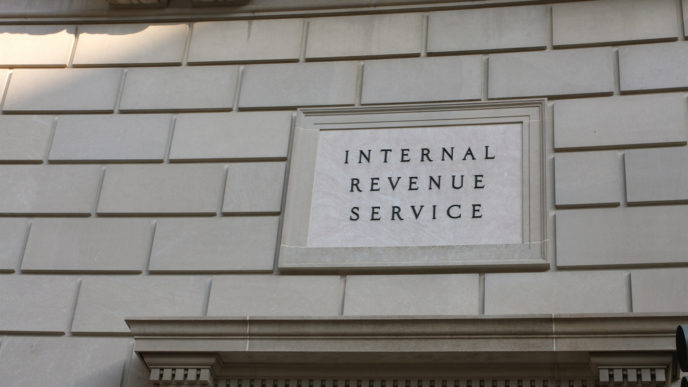
Congress, through the Internal Revenue Code (IRC), allows illegal immigrants working in the United States to claim their relatives living in Mexico and Canada, or illegally in the Unitesd States, as dependents on their tax return, thus reducing their tax liability. Amending the IRC to allow only U.S. Citizens (USC’s) or legal residents to be claimed as dependents would likely generate billions of dollars in additional tax revenue which could then be earmarked for a border fence between Mexico and the United States.
Here’s how the system current works. An illegal immigrant living in the United States can file a Form W-7 through an “Accepting Agent” (usually a return preparer) with the IRS to get an Individual Tax Identification Number (ITIN). He then can get ITIN’s for his relatives living in Mexico or illegally in the United States.
When he files his Form 1040, he slaps his ITIN on the front of the return and attaches his Form W-2 showing his wages. The Form W-2 usually shows the social security number that he has purchased, stolen, or borrowed because he was ineligible to work in the Unites States. He then loads up his return with the ITIN’s of his dependents either living illegally in the United States or residing in Mexico. These dependents don’t have to be the taxpayer’s children. They can be his parents, uncles, and distant relatives such as nieces and nephews. The taxpayer’s 2016 taxable income is reduced by $4,050 for each dependent.
Crazy True Story
Here’s a true example. IRS special agents raided a one-person tax preparation business in a small Wisconsin town in 2014. Over the course of seven years, the owner filed 10,437 applications for ITIN’s on behalf of her clients. From the 2011 through 2014 filing season, her clients racked up over $34 million in refunds from the 9,489 returns she filed with the IRS. Her clients received an average refund of $3,509 even though 69 percent of the listed an ITIN holder as the primary taxpayer and about 75 percent of the claimed dependents had ITIN’s.
Translated into English, this means that 69 percent of her taxpayers were illegal immigrants working in the United States who got an annual check for about $3,600 from Uncle Sam after claiming other illegals (or relatives in either Mexico or Canada) as dependents. During an undercover operation, this return preparer counseled her client (the conversation was conducted in Spanish) to find children in Mexico to claim so he could get a tax refund instead of owing money to the IRS.
IRS Mismanagement
Now, matters are getting worse. Illegal immigrants who want to claim bogus dependents operate on the honor system because Congress decimated the IRS’s enforcement budget. This move was made in response, I believe, to former IRS director Lois Lerner’s pleading of the 5th, lost IRS emails, crashed IRS hard drives, a few million dollars spent on a Disney Land boondoggle for IRS management, and videos showing high ranking IRS executives practicing a line dance or parodying a Star Trek episode. (Note that they mix the bridge of the original Star Trek with the Next Generation uniforms. Atrocious.)
The IRS does not publish statistics on the tax revenue lost by allowing illegal immigrants to claim other illegal immigrants, or people residing in Mexico, as dependents. However, the example provided above shows that just one return preparer can cost the Treasury $34 million in a few short years. What we do know is that the IRS estimates that the Tax Gap (the amount of tax revenue that should be collected but isn’t) stands at $468 billion per year.
If President-Elect Trump wants Mexico to pay for the wall, I suggest he sign a revision of the Tax Code which eliminates the dependency exemption for persons residing in Mexico and illegal immigrants from Mexico residing in the Unites States. Doing so would both fulfill a campaign promise and reduce the Tax Gap.
By the way, the return preparer in my example was never indicted, though hope springs eternal. (For more from the author of “Retired IRS Special Agent: Here’s How to Get Mexico to Pay for the Wall” please click HERE)
https://joemiller.us/wp-content/uploads/4772935322_c42e8e75f0_b-2.jpg6831024Joe Millerhttps://joemiller.us/wp-content/uploads/logotext.pngJoe Miller2017-01-09 22:25:172017-01-15 00:36:58Retired IRS Special Agent: Here’s How to Get Mexico to Pay for the Wall
Last night at the Golden Globes in her speech denouncing Donald Trump and his voters, Meryl Streep reminded millions of Americans why we rejected Hillary Clinton, her party, and the media elites that tried to stuff Clinton down our throat. It’s also why Hollywood keeps making expensive politicized failures that choke at the box office, like the sordid anti-gun potboiler Miss Sloane.
We’ve suffered through eight long years of Obama’s preening, class-president speeches and empty, “virtuous” gestures. We have seen him and his designated successor fawned on by tame (debate-question-leaking) Ivy-schooled reporters and gorgeous, empty-headed celebrities. We know perfectly well that America’s media and political elites consider us the great unwashed, which is why they’ve been fire-hosing us for decades with toxic solvents like anti-male feminism, anti-Western multiculturalism, and anti-family hedonism.
And we’ve learned a thing or two. We’ve learned that pretty people who are talented at acting are pretty good at saying things which they know aren’t true — and doing so convincingly. After all, that’s their chosen craft. We’ve also learned how to recognize and dismantle the Elitist Lie 2.0.
That’s a whirring little time-bomb that lefties like to plant in every “narrative” they get their hands on, from Islamic terror attacks (they blame the truck, the bomb, or the gun — whose motives it is “too soon to determine”) to the kidnapping and torture of a handicapped Trump supporter (just kids being kids, where are their parents?).
Streep reached into her goodie bag and produced her own Elitist Lie 2.0, which she tossed out to America like a trinket we should treasure. This device has three active components:
1. A Phony Claim of Victimhood to Seize the Moral High Ground
In Streep’s speech she managed to cast as persecuted victims a roomful of fantastically overpaid actors, and the coddled film critics of Hollywood’s foreign press, who today are still picking through the goodie-bags they got from billion-dollar movie studios. She took up for these hapless victims as “the most vilified segments in American society right now…. Hollywood, foreigners, and the press.” From Streep’s account, you would think that cross-burning Klansmen were attacking movie theaters for showing films where interracial couples kiss, while Inquisitors burned piles of Vanity Fair and The New Yorker in public squares across America. What really happened? The Democrats lost an election. But that’s not supposed to happen.
Did Donald Trump threaten to end all immigration? No, he promised to enforce our democratically enacted laws that regulate the process. Did he campaign against “foreigners”? No, he warned of those criminal aliens who’ve evaded our laws, with the help of “sanctuary” cities and others who help aliens to flout the law. Has he threatened to infringe on the First Amendment, to silence the media which he considers biased? No, he has gone on Twitter to dispute things he disagrees with. Has Trump spoken of jailing those who criticize his position on immigration? Never — unlike Germany’s Angela Merkel, whose government has jailed those who oppose her influx of Islamists.
2. An Unearned Claim of Moral or Intellectual Superiority
Streep listed a number of actors from working class origins or foreign countries, and presented them as moral exemplars because of their “compassionate” performances which taught Americans how to “enter the lives of those who are different from us.”
Let’s try to unpack that. Apart from those who play themselves in cameos, every actor is paid to portray someone “different” from himself. And every movie we watch (apart from home movies) is about people “different” from us. That’s why it’s entertaining. All that Streep has done here is to describe what happens in drama — while trying to spin it as a form of heroic altruism. So the actors in 50 Shades of Grey were improving America’s moral tone by teaching millions of theater-goers about sexual activities that are “different” from what they’re used to — and those who made that movie should not just be highly paid, but considered part of a virtuous elite that is improving America’s ethics. Got it? We actors, by our very profession, are better than the rest of you helots.
Then she went on to peddle the false claim that President-Elect Trump mocked a reporter’s disability. That media myth is debunked in detail here. So Streep uses a false account of what a real politician said in his own defense while fighting for his political life in response to a reporter at America’s top newspaper, to cast Trump as a bully and moral monster, compared to those heroes of empathy (actors) who read the lines they’ve been given in the dozens of crass, trashy, manipulative movies that Hollywood dumps on the public every year.
3. An Implicit or Explicit Threat of Punishment
Standing atop the papier-mâché moral high ground which she claimed, Streep included a nasty, elitist little warning to the rest of America: “Hollywood is crawling with outsiders and foreigners and if we kick ‘em all out, you’ll have nothing to watch but football and mixed martial arts, which are not the arts.” Now, of course this is a jibe at the ignorant rubes which Streep imagines lowing and grazing in vast, lumbering herds between the Hudson River and Hollywood, staring slack-jawed at wrestling matches.
It’s also a threat: You common people need us, and if you keep voting the wrong way, we might just go on strike. We will turn up our noses at the million-dollar paychecks we collect for reading back the words that writers put there for us, and starve America of “the arts.” So watch your step, or we will walk. Seriously, that red carpet leads all the way to Canada. We mean it this time. …
These are people who voted, campaigned, and fund-raised for Hillary Clinton, confident that she could pack the Supreme Court with justices who would pluck every critical issue out of the grubby hands of voters. Meanwhile, our Meryl Streeps would offer cinematic carrots, and our Byerleys wield the stick, until every American learned to be worthy of his masters, or starved in rural obscurity.
Gotta love those Golden Globes! (For more from the author of “Meryl Streep Slams Trump’s Deplorables: ‘Let Them Eat Wrestling'” please click HERE)