We All Avoid Taxes

Give Donald Trump credit for going big. When he wanted to declare a $915,729,293 loss on his 1995 tax returns, the software used by his accountant couldn’t accommodate anything higher than a seven-figure loss. The accountant had to add the first two digits, “91,” with a typewriter.

The improvisation gets to what is most noteworthy about Trump’s tax gambit, which is the sheer scale of it.

As reported by The New York Times from leaked Trump tax documents, the businessman declared the enormous loss to avoid paying federal income taxes in future years, perhaps for almost the next two decades. The report was quickly deemed a bombshell, but it didn’t reveal anything illegal or — besides the jaw-dropping number — even unusual.

The so-called net operating loss carryforward that Trump took advantage of is not an exotic loophole in the tax code. Many industrialized countries have similar provisions. In 2014, more than a million taxpayers declared net operating losses. The provision simply reflects that if you, say, lose $100,000 setting up a business and earn $50,000 the next year, it makes no sense for the government to tax the $50,000 as if it were the only part of the equation; the loss should be accounted for, too.

Whenever there is a story like this in the political news, liberals trot out the old chestnut from Supreme Court Justice Oliver Wendell Holmes Jr., “Taxes are what we pay for civilized society.” Never mind that civilized society existed on this continent long before the institution of the federal income tax as we know it in 1913. The rejoinder to those congratulating themselves on paying taxes is, Do you take deductions? Do you employ an accountant? Or, Do you pay taxes that you don’t technically owe?

Almost no one does the latter, of course, at least not intentionally. We all operate in keeping with another chestnut from another jurist, Judge Learned Hand. He wrote in a 1935 case: “Over and over again the Courts have said that there is nothing sinister in so arranging affairs as to keep taxes as low as possible. Everyone does it, rich and poor alike and all do right, for nobody owes any public duty to pay more than the law demands.”

Hillary Clinton may rend her garments over Trump’s minimization of his tax liability, yet the Clintons surely aren’t maximizing their own. As tax expert Ryan Ellis points out in a Forbes column, the Clintons realized a capital loss of $700,000 in 2015, which they can use to offset future capital gains.

The damage to Trump of the Times story is probably not his tax strategy. The candidate had all but admitted to it during the first debate, when he called avoiding taxes “smart.” Rather, the vulnerability for Trump is the fact — stated in black and white in his own filings — that he lost nearly a billion dollars by recklessly overextending himself in the 1990s. This will be thrown back at him every time he touts his business acumen. In other words, all the time.

Trump is also done no favors by his overzealous surrogates, Rudy Giuliani and Chris Christie. They were out on the Sunday shows calling him a “genius” for his tax avoidance. This is not only over-the-top (were “shrewd” and “canny” deemed insufficient descriptors?), it implies that there was some complex manipulation at work. It would have been much better to emphasize the pedestrian nature of Trump’s tax maneuver, rather than blowing it up into an unsurpassed triumph of a master at gaming the tax code.

If Trump had released his taxes or even some of them, he wouldn’t have been vulnerable to a leak that, coincidentally, hit the news as the campaign enters the homestretch. He has enough enemies that he could be certain that information about his taxes would get out, and there may be yet more to come. He teed up this October Surprise. (For more from the author of “We All Avoid Taxes” please click HERE)

Follow Joe Miller on Twitter HERE and Facebook HERE.

Clinton Estate Tax Plan Would Affect Many Families, Not Just the Very Rich

Hillary Clinton’s newly proposed top estate tax rate of 65 percent on $1 billion estates can sound innocuous enough to the average taxpayer. Last year only a handful of estates would have been large enough to have been affected. If that was all there was to the new Clinton estate tax announced in September, most families would be wiser to focus on other things.

But Clinton’s 65 percent estate tax is really just the tip of the iceberg. She also wants to lower the level at which estate taxes become payable to only $3.5 million. By contrast, Donald Trump would eliminate the estate tax.

In addition, Clinton’s website says she would end the current law pertaining to capital gains—which her website calls an “egregious loophole”—whereby inheritors of assets bought decades ago only owe tax when they sell them, not when they inherit them. Under her plan, a much larger capital gains tax than now would be due, and it would be due at death.

A person mourning a loved one might have no choice but to sell inherited assets to pay capital gains taxes. Clinton’s website states that “[Her estate tax plan] will include exemptions to ensure this change only affects the high-income families who by far benefit the most from this loophole, and protects middle-class families.” However, no details as to the exemptions have been announced. (For more from the author of “Clinton Estate Tax Plan Would Affect Many Families, Not Just the Very Rich” please click HERE)

Follow Joe Miller on Twitter HERE and Facebook HERE.
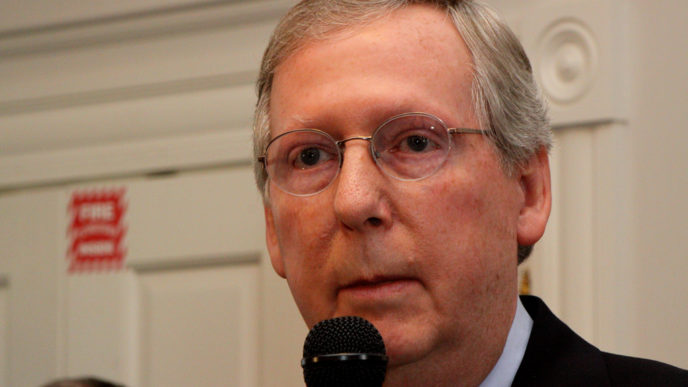
First Look at the Hillary 2024 Campaign Poster

It would appear that the lack of excitement among Democrats (and the nominee’s insults of both Democrats and Republicans alike) has led to a reset by her advisers.

After eight years of President Trump (and what about my proposed campaign slogan of America needs a Trump Card?), no matter what the increasingly skewed polling results say, Hillary’s campaign is doomed. With that said, word on the street is that she wants to run again.

By that time, of course, the bloated catlady’s failing body won’t be around for the campaign (in spite of all the “yoga”), so what better way to keep her plugging away than this?

161001-hillary-brain2

(For more from the author of “First Look at the Hillary 2024 Campaign Poster” please click HERE)

Follow Joe Miller on Twitter HERE and Facebook HERE.

EXPOSED: The Corrupt Clinton Foundation You’ve Never Heard Of

Three months after leaving the White House in 2001, former President Bill Clinton arrived in India to cheering throngs to help those who had just lost a million homes in the aftermath of a massive earthquake that killed 20,000 and injured 166,000.

In classic Clinton style, he solemnly promised that his new nonprofit — called the American India Foundation (AIF) — would rebuild 100 villages. Rajat Gupta, his millionaire co-chairman, pledged $1 billion for the victims.

It never happened. Years later, AIF’s annual reports were reviewed by the Daily Caller News Foundation and show only seven villages were partially rebuilt by Clinton’s group, and a mere $2.7 million of $53 million raised over a decade went to the earthquake victims.

The rest went for completely unrelated projects, including “accelerating social change,” fighting AIDS, “sustainable development,” and working for “digital equalizers.”

Paltry aid for the victims notwithstanding, Clinton handsomely profited from the charity as AIF’s top officers poured more than $13 million into the Clinton Foundation and others generously gave to Democratic nominee Hillary Clinton’s political campaigns. (Read more from “EXPOSED: The Corrupt Clinton Foundation You’ve Never Heard Of” HERE)

Follow Joe Miller on Twitter HERE and Facebook HERE.
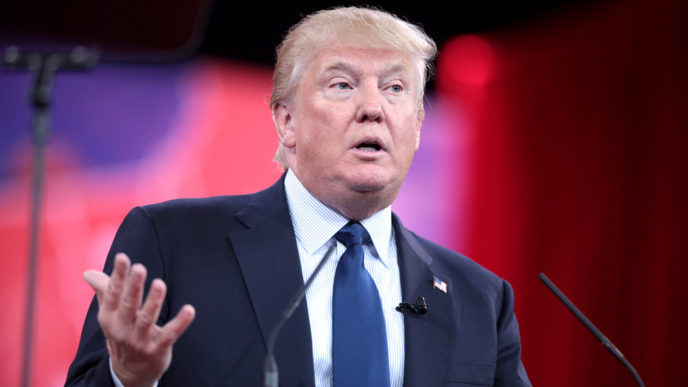
Tim Kaine Defies the Bible and Makes a Mockery of the Church

No matter how hard Democratic vice-presidential hopeful Tim Kaine tries to pass off his invented religion as “Catholic,” he will fail. That is because Kaine’s views are not actually Catholic or in any meaningful sense even Christian.

For 2,000 years, Christians have agreed on the sanctity of human life. Kaine’s own church teaches that abortion is always and everywhere a grave evil (Catechism of the Catholic Church, 2270-2275). There is absolutely no wiggle room here. Yet Tim Kaine, who campaigns as a Catholic, supports legalized abortion and touts a 100 percent rating on Planned Parenthood’s scorecard, America’s number one baby killer. He is also endorsed by NARAL Pro-Choice America for his 100 percent pro-abortion voting record.

The Bible is equally clear about homosexual acts, which the Catholic Church teaches are “intrinsically disordered,” “contrary to the natural law,” and “under no circumstances [to] be approved” (CCC 2357). In the same breath, the Church distinguishes between the homosexual acts and the persons with homosexual attraction. About the persons with homosexual attraction, the Church says, “They must be accepted with respect, compassion, and sensitivity” (CCC 2358).

Loving God and loving our neighbor is the Great Commandment upon which “all the law and the prophets” depend (Mt. 22:36-40). The church has always taught to love the person, but hate the sin. This commandment applies to each and every one of us and to all sins under the sun “since all have sinned and fall short of the glory of God” (Rom. 3:23). While we are called to love our neighbor, encouraging our neighbor to commit grave sin is the most unloving thing we can do.

Like Jesus, we must show authentic and unconditional charity to the person who is in sin while rejecting the sinful actions that threaten his soul. We must do this humbly, knowing full-well that we are miserable fellow sinners, in desperate need of God’s saving grace. Charity and truth, both attributes of God himself, work together. They’re not in tension.

Distorting Truth for Political Gain

For political gain, Tim Kaine has distorted and defied Pope Francis’ words, the Church’s teaching, and Holy Scripture itself. Kaine spoke on Sept. 10 at the high-powered LGBT Human Rights Campaign dinner in Washington D.C. where he self-identified as a “devout Catholic.”

In the speech, he admitted that the Catholic Church is opposed to same-sex marriage. However, he held out to the audience the fantasy that the Church will change her 2,000-year teaching to fit the liberal zeitgeist. He then proceeded to distort Genesis 1 and Pope Francis’ comments to match his own ideology. He said that such change may occur “because my church also teaches me about a creator in the first chapter of Genesis, who surveys the entire world including mankind and [says], ‘It is very good,’” referencing Genesis 1:31. “Pope Francis famously said, ‘Who am I to judge?’ And to that I want to add: Who am I to challenge God for the beautiful diversity of the human family? I think we’re supposed to celebrate it, not challenge it.”

Kaine conveniently snipped off the Scripture passages that came before and after. In Genesis, God created them “male and female” (Gen. 1:27) and commanded them to “be fruitful and multiply” (Gen. 1:28) which is only possible within the sexual union of one man and one woman. Adam confirms that Eve is “bone of my bones, and flesh of my flesh; She shall be called Woman, because she was taken out of Man. For this reason a man shall leave his father and his mother, and be joined to his wife; and they shall become one flesh.” (Gen 2:23-24).

The Bible is Clear — And Kaine is Wrong

Could it be any clearer that Holy Scripture affirms that sexual relations and marriage is between one man and one woman? To see the full picture, here are just some of the Holy Scripture passages that directly speak about the grave evil of homosexual acts:

“Do not have sexual relations with a man as one does with a woman; that is detestable” (Lev. 18:22).

“For this reason God gave them up to dishonorable passions. Their women exchanged natural relations for unnatural, and the men likewise gave up natural relations with women and were consumed with passion for one another, men committing shameless acts with men and receiving in their own persons the due penalty for their error” (Rom. 1:26-27).

“But since sexual immorality is occurring, each man should have sexual relations with his own wife, and each woman with her own husband” (1 Cor. 7:2).

“Or do you not know that wrongdoers will not inherit the kingdom of God? Do not be deceived: Neither the sexually immoral nor idolaters nor adulterers nor men who have sex with men nor thieves nor the greedy nor drunkards nor slanderers nor swindlers will inherit the kingdom of God” (1 Cor. 6:9-10).

Nor can Kaine really hide behind Pope Francis’ words, which do not mean what the secular press pretends. As the pope explained his comment (“Who am I to judge?”):

If a person is gay and seeks out the Lord and is willing, who am I to judge that person? … I was paraphrasing by heart the Catechism of the Catholic Church where it says that these people should be treated with delicacy and not be marginalized. … I prefer that homosexuals come to confession, that they stay close to the Lord, and that we pray all together. … You can advise them to pray, show goodwill, show them the way, and accompany them along it.

Confession — that is where Catholics go to repent their sins and gain the grace to avoid them in future. Does that sound like a papal stamp of approval? Pope Francis is calling on us to accompany them in kindness, charity, and truth — most importantly through our own example — yet not to become complicit by praising the sins that damage them.

Truth and Charity: Not Mutually Exclusive

Correcting Kaine’s misleading statements, his own bishop, Francis DiLorenzo of Richmond, responded that “the Catholic Church’s 2,000-year-old teaching to the truth about what constitutes marriage remains unchanged and resolute. As Catholics, we believe, all humans warrant dignity and deserve love and respect, and unjust discrimination is always wrong … Marriage is the only institution uniting one man and one woman with each other and with any child from their union. Redefining marriage furthers no one’s rights, least of all those of children, who should not purposely be deprived of the right to be nurtured and loved by a mother and a father.”

Tim Kaine has no right to treat Church teachings and the Bible like a buffet in a cafeteria, picking the teachings he finds convenient.

The call of the Christian in every generation is to communicate both truth and charity. Truth without charity is a “noisy gong or a clanging cymbal” (1 Cor. 13:1), and charity without truth is plain sentimentality. May we all live out the call to continual personal conversion, as well as the call to charity in truth and truth in charity. (For more from the author of “Tim Kaine Defies the Bible and Makes a Mockery of the Church” please click HERE)

Follow Joe Miller on Twitter HERE and Facebook HERE.

An American Horror Story: Vignettes From Hillary’s First Hundred Days

On Friday, January 20, 2017, a woman with time-worn features raises her right hand on the steps of the U.S. Capitol. She places her left hand flat on a book of law as she stands in front of Supreme Court Chief Justice John Roberts and takes the oath of the Presidency. Roberts’ presence chafes her. She’d voted against his nomination, considering him too conservative to fit her radical views on judicial interpretation. Today, though, she’ll overlook it. Vindication proves curative enough for past ills.

The years as First Lady, her time as the Democratic Senator from New York, and later, as Secretary of State — they have all culminated here, in the office of which she’d been in steely-eyed pursuit of for so long. She had survived the Benghazi debacle, and the classified email leaks. The puerile public had even overlooked those phones smashed with hammers. She’d finally crushed the noxious right-wing conspiracy that had hounded her every move. She would gut the system from the inside out just as she’d promised Saul Alinsky she would.

There was only the fight, and she’d won. He’d have been proud.

In rural Ohio a few weeks later on a day of waning winter, Susan Frazier and her husband Tom sit anxiously in front of a family counselor at the faith-based Agape Adoption agency. Unable to conceive, they have waited three years to adopt an infant. But with a heavy sigh, the counselor explains that the baby promised to them will instead go to a lesbian couple in Columbus. When asked why, she says that a recent law prohibits the agency from exhibiting a preference for married couples over LGBTQ individuals seeking adoption. Seeing the pain on both of their faces, she reveals that threatened with impossible fines and so many children needing homes, they felt pressured to comply despite their religious beliefs. Religion, the counselor reminds them, is no longer good for anything but church.

The next day, Susan and Tom flip on the news. An image of Chicago O’Hare flickers on the screen. The airport’s glass wall gapes like a wound, smoke spiraling heavenward. Bodies draped with white sheets lay in rows on the concrete. Susan grabs Tom’s hand. Two Syrian refugees with ties to ISIS have driven a construction vehicle through a barrier, into the main terminal and opened fire with AK 47s. In a display of force, the President quickly announces she has temporarily suspended the Second Amendment right to keep and carry a firearm. Not only will all gun sales be immediately suspended, the Democratic Congress has also approved her order for a federal weapon registry. Failure to register any and all firearms with the federal government will result in confiscation and forfeiture of the firearm(s) and any property or assets related to the transporting or housing of those firearm(s).

Susan and Tom look at each other, unsettled by the idea of “suspending” a constitutional right. Tom’s hunting rifle is used only to put venison on the table in winter. But this was a special circumstance, right? Susan reaches for a stack of mail during the commercial break, and an envelope catches her eye. It’s a tax liability statement from the Internal Revenue Service. They haven’t paid enough. Her confusion bleeds to anger as she shoves the statement toward her husband. Didn’t this President promise them lower taxes?

On the television, the President is now shaking hands with Xi Jinping, the Communist leader of the People’s Republic of China. With practiced ease, she promises the press corps that under her administration, trivialities like human rights won’t interfere with more important issues like global warming. She says nothing of the imprisonments and executions ordered by the smiling Chinese dictator standing to her left. But she is keen to apologize for America’s previous hostility toward communism.

Tom Frazier is deployed the next week. An Army air defense artillery officer, he is on his way to Aleppo to fight a war he does not understand and never seems to end. His command at Wright-Patterson Air Force Base has been subjected to hours of training on transgender sensitivity and “white privilege,” but no instruction on code of conduct or law of land warfare. When he finally boards the plane for the 14-hour flight to Syria he feels acutely unprepared to fight a hidden enemy. His seat mate remarks with acid in his voice that this President doesn’t know when to quit. She is, he reminds Tom, the one who sends people in but doesn’t bring them home.

Within a few months of the President’s taking the oath, Paul Watford — an appellate judge from the 9th Circuit Court of Appeals and former clerk to far-left Justice Ruth Bader Ginsburg — is confirmed for the U.S. Supreme Court. Within a matter of weeks, he essentially codifies the president’s gun grab by ruling with the majority in nullifying the Second Amendment right to carry a fire arm. Shortly thereafter, he denies a church’s Equal Protection claim.

The President calls a press conference, praising both decisions as the none-too-soon death knell of conservatism. She explains that in particular, religion has been given “special treatment” for too long. In matters of Equal Protection and Free Exercise, churches have used religious freedom as code for discrimination, intolerance, racism, sexism, homophobia, Islamophobia and Christian supremacy for too long. The President promises that religious freedom will no longer be used to deny others equality.

Susan flips off the radio in her car. She touches the cross around her neck and ignores the rising knot in her throat.

The Ohio leaves return to green. Susan is still without her husband, and she’s received no promise of his return. Today, she flips the towel she’s using for the dishes over her shoulder, and clicks on the television, where the President sits at her desk in the Oval Office, pen mid-signature, flanked by Senator Elizabeth Warren and Planned Parenthood president Cecile Richards. This is a common sight, Susan thinks, this President and her many bills. The trio of well-dressed women exchange beaming smiles and congratulatory hugs. The President has signed the Freedom of Choice Act, a bill that legalizes abortion-on-demand, while simultaneously repealing the Hyde Amendment prohibiting federal funding for abortion. All taxpayers will now be forced into partnership with Planned Parenthood, the nation’s largest abortion provider. The towel falls from Susan’s shoulder. She realizes that the baby for which she so desperately longs is now simply another woman’s temporary mistake. A mistake she is being forced to pay for.

Susan is gnawed by a growing regret as she remembers the snaking lines at the polling place last year. She remembers driving by, muttering that some people were just too consumed with politics. She recalls the campaign signs and the heated rhetoric and the televised debates. She remembers trying to ignore it all, trusting it would work out. That she was just one person, and even without her vote, it would all work out.

Wouldn’t it? (For more from the author of “An American Horror Story: Vignettes From Hillary’s First Hundred Days” please click HERE)

Follow Joe Miller on Twitter HERE and Facebook HERE.

New Lawmakers’ Project Aims to Support Religious Institutions

A new project has been launched to show the need of religious institutions, which are in danger of losing influence in society as they face challenges to their existence today.

“We need our faith-based institutions,” Republican Study Committee Chairman Bill Flores, R-Texas, said at the launch of the America Without Faith project at the Hillsdale College Kirby Center in Washington, D.C., in September.

The project, launched by the largest conservative caucus in Congress, the Republican Study Committee, aims to reinforce the importance of religious institutions’ role in civil society. These institutions have a long history in the maintenance of civil society, and have played an important role in solving problems such as drug addiction, illiteracy, hunger, homelessness, and supporting families living below the poverty line.

It was created “to help members of Congress and religious liberty advocates communicate about how important the work of faith-based groups are for our nation today,” the RSC said in a press release.

“I think we’ve seen the president [Barack Obama] of the executive branch try to belittle or embarrass Christians in particular and to say that we’re ignorant and that therefore we’re discriminatory. … I think by trying to marginalize us and intimidate us that he’s taken that sort of mindset and pushed it through the entire government bureaucracy,” said Flores, who will oversee the project. “It’s up to us as Americans to try to start rolling that back.”

Since the inception of America, religious institutions have played a foundational role in the country. They’ve been a boon to preserving a strong civil society, but now, according to the RSC, they exist on “shaky ground” as targets of both cultural and governmental forces have formulated strategies to create friction in their ability to do their work.

“Over the past decade they have faced repeated challenges to their very existence, including threats to revoke their tax-exempt status,” says the RSC.

“There are strong cultural forces afoot that want America to become a more and more secular nation,” Howard Husock of the Manhattan Institute said at the Hillsdale College event. They pose a “risk of politicizing philanthropy,” Husock warned, adding, “America is the most generous and charitable country on earth, but our public policies could put an end to that.”

Flores, a supporter of Yellowstone Academy, a nonprofit faith-based institution with 350 students in Houston, Texas, talked about the difference in success rates between the federal government and religious-based institutions.

According to Flores, less than 20 percent of students graduate from public high schools in that part of Houston. However, “the first class of students that came in as 4 year olds at Yellowstone just graduated from high school in May with a 98 percent graduation rate,” he said.

“No federal bureaucrat can make that happen,” Flores added. “No federal bureaucrat can institute that sort of change in a community that’s been struggling for decades.”

A strong correlation exists between religious practice and a vibrant civil society, because “religious practice promotes the well-being of individuals, families, and the community,” wrote Patrick F. Fagan, a senior fellow and director of the Center for Research on Marriage and Religion at the Family Research Council.

“Regular attendance at religious services is linked to healthy, stable family life, strong marriages, and well-behaved children,” Fagan, a former senior fellow at The Heritage Foundation, added. “The practice of religion also leads to a reduction in the incidence of domestic abuse, crime, substance abuse, and addiction.”

“Why punish the organizations that are serving their communities, providing free social services, and helping our economy?” Alison Howard, director of alliance relations at Alliance Defending Freedom, a Christian legal aid group, said in a statement provided to The Daily Signal.

“Religious institutions should be free to live out their mission in society without threat of punishment by the government and the political elite,” she added.

Gridlock in Washington, Flores said, makes it impossible to introduce new legislation to stop these forces from eroding the influence of faith-based institutions. Although, for him, all hope is not lost.

“The best way to have this happen is for this message to get out to real world America, to the grassroots of America, and everybody says ‘Aha, we have got too close to that tipping point, it’s time to start pulling back,” Flores concluded, highlighting the urgency of the problem. (For more from the author of “New Lawmakers’ Project Aims to Support Religious Institutions” please click HERE)

Follow Joe Miller on Twitter HERE and Facebook HERE.
3 Ways to Use the Vice Presidential Debate to Talk About Religious Liberty

Since both candidates in Tuesday night’s vice presidential debate have a record when it comes to religious liberty, you can bet the topic will come up—giving you the opportunity to talk with the people in your life about a deeply important issue.

Unsurprisingly, religious liberty is a tricky topic to navigate because it’s personal. People feel strongly about the ability to live life as they want, but some betray the concept of tolerance by crying “intolerant!” if others want to live life through the lens of their faith.

So, how do you talk about religious liberty with someone who thinks the government can force people to violate their beliefs? Here are some guidelines that allow you to tread lightly and expertly discuss the issue without fear and trembling.

Common Ground

We’ve talked in the past about how common ground is disarming, and we’re going to make that case again.

Liberals frequently cry “intolerant!” when conservatives start to talk about religious liberty. Don’t let them.

Though it’s become a dirty word, tolerance is important—we should be able to disagree with each other and then live side-by-side in peace. Tolerance doesn’t mean defeat, but it does require kindness and respect from both parties.

Acknowledging the common ground of tolerance creates a safe space to examine, discuss, and disagree. And addressing the elephant in the room—“we disagree on this issue, but it’s ok. I’ll maybe kinda sorta still like you when this is over. Now let’s talk about it”—frees you up to make your case and rightly frames your motivation.

The liberal on the other side of the conversation can’t claim you’re intolerant if you just said you believe we should be able to disagree, discuss, and then live in peace side-by-side.

Goodbye, argument of intolerance. Hello, civil discussion.

Examples

Unfortunately, there are numerous examples of folks trying to run businesses, practice medicine, or simply move up the corporate ladder but have been punished for not wanting to violate their beliefs.

Here is the latest from The Daily Signal on the Oregon bakers who refused to bake a wedding cake for a same-sex ceremony in January 2013. Nearly four years later, the bakery is closed and the case is still moving through the court system (think of those hefty legal bills).

This article explains why a 70-year-old florist is facing seven figures in legal fees for refusing to make flower arrangements for a same-sex wedding.

Illinois signed into law a bill that forces doctors to tell their patients about the benefits of abortion and refer them to abortion providers, even if the doctor is pro-life.

These are powerful examples to use when arguing for religious liberty. Not only do you have plenty to choose from, but the person you’re talking to will more quickly recognize the person you’re defending.

Words

Be inclusive. Don’t point fingers. Go on offense, not defense.

When you talk about religious liberty, you’re not only making a case for your beliefs, but also for the beliefs of those you disagree with. If you’re going to argue for tolerance, that means both sides are able to live and let live. So come at this conversation with an attitude of “I care deeply about my beliefs, but also about yours.”

Words and phrases like “tolerance,” “live and let live,” and “no one should be forced by government” go a long way in illustrating what we have in common despite party affiliation—that this country was founded so that people could live free from burdensome government interference.

Here’s hoping you’re able to make a case for religious liberty that emphasizes its importance for both sides. Religious liberty doesn’t just protect those who identify as “religious,” it also benefits those that don’t. It’s an argument for all, and that’s an easy argument to make. (For more from the author of “3 Ways to Use the Vice Presidential Debate to Talk About Religious Liberty” please click HERE)

Follow Joe Miller on Twitter HERE and Facebook HERE.

‘Men Without Work’: America’s ‘Quiet Catastrophe’ of Unemployment

America is in the midst of an ongoing crisis that predates the war in Iraq, with devastating, far-reaching consequences exceeding those of the 2016 presidential election. Some 10 million able-bodied men between the ages of 20 and 64 are missing from the workforce today.

Work rates for prime-aged adult men in this country have been falling for most of the post-World War II era. In his newly released book, “Men Without Work” from Templeton Press, AEI political economist and demographer Nicholas Eberstadt explains the economic, historic, and cultural precedents for this modern tragedy.

“Romans used the word ‘decimation’ to describe the loss of a tenth of a given unit of men,” Eberstadt writes. “The United States has suffered something akin to a decimation of its male workforce over the past 50 years.”

He adds, however, that “unlike the dead soldiers in Roman antiquity, our decimated men still live and walk among us, though in an existence without productive economic purpose.”

Hiding in plain sight

Politicians, economists, and the mainstream media have failed to detect this aggressive cancer and diagnose its symptoms, and so the problem has remained largely untreated, metastasizing within our borders for the last half century.

In “Men Without Work,” listed are recent examples of when the mainstream media failed to capture this problem “hiding in plain sight”:

The Jobless Numbers Aren’t Just Good, They’re Great (Bloomberg, August 2015)

The Jobs Report is Even Better Than It Looks (FiveThirtyEight, November 2015)

Healthy Job Market at Odds with Global Gloom” (The Wall Street Journal, March 2016)

June’s Super Jobs Report (Atlantic Monthly, July 2016).

Further, it points out that U.S. economists and policymakers seem to have formed a bipartisan consensus that the nation’s economy is either at or near “full employment,” when “we are, in reality, living through a period of extraordinary, Great Depression-scale underutilization of male manpower.”

But if circumstances are so dire, why haven’t we noticed the effects? Eberstadt offers two explanations for why this “quiet postwar collapse of male work” did not lead to political outcry/crises or chronic issues of worker shortage in various industries. The first is the progressive and exponential growth of women in the workforce after World War II. The second factor is the voluntary exodus of men from the workforce.

The Labor Force Participation Rate (LFPR), the common statistical tool used to gauge economic health and growth, only accounts for the number of people who are either employed or actively seeking employment. What it doesn’t account for, however, are the individuals who are unemployed and not actively looking for work. Because this drop in male employment is caused by a “willing outmigration,” it flies under the radar (as far as official government statistics are concerned).

Invisible men

Who are these invisible “men without work”? Based on a variety of demographical factors, Nicholas Eberstadt concludes that they are most likely to be 1. less educated; 2. never married and without children; 3. native born; and 4. African-American. But, he clarifies, the task of predicting who is more likely to become a not-in-the-labor-force (NILF) male isn’t that simple:

“No matter their race or educational status, married men raising a family work more, and never-married men without children or children in their home work less. No matter their ethnicity or race, prime-age men who come to this country work more than those here by birth.”

He notes that while that wedding rings and green cards don’t ensure “innate advantage in the competition for jobs,” decisions to marry or migrate “point to motivations, aspirations, priorities, values, and other intangibles that do so much to explain real-world human achievements.”

Free from the time commitments of family, work, work travel, and job searching, NILFs have more spare time than any other category of Americans (Eberstadt estimates this to be an additional 2,150 hours a year compared to employed men). What’s shocking, however, is how little of this extra free time is spent “helping others in their family or community.”

Based on data from 2014, these men spent less time engaged in religious and volunteer activities. By contrast, the amount of time this group spent on socializing, relaxing, and leisure — e.g. gambling, tobacco and drug use, listening to the radio, and arts and crafts “as a hobby” — amounted to a full-time job.

Quiet catastrophe

“Americans may be the hardest working people of any affluent society in the world today, yet no other developed nation simultaneously floats such a large proportion of its prime-age men entirely outside the labor force … ,” AEI’s Eberstadt observes.

One possible reason for this, he suggests, could be greater social toleration for unemployed able-bodied men who subsist on the produce of others, be they family, wives or partners, or the government. And though well-informed people are bound to disagree about the causes of this uniquely American problem, the consequences are manifold.

In addition to the economic consequences of an underutilized male work force, there are social repercussions of this modern catastrophe — such as family breakdown, increased dependency on government-funded programs like welfare and disability, and increased economic dependency of able-bodied men on women. Political consequences include male withdrawal from civic engagement, community participation, and voluntary association.

Finally, the additional costs associated with the human need for purpose, as opposed to mere “work,” are noted. Foremost, it is the loss of self-purpose and accomplishment, and the inevitable loss of self-esteem and respect of others that emanate from perpetually idle hands.

“Men Without Work” admits that as of now, there is no clear or simple solution to this “grave social ill,” but there are at least three areas of focus that can help to propel the country in the right direction:

1. “revitalizing American business and its job-generating capacities”;

2. “reducing the immense and perverse disincentives against male work embedded in our social welfare programs”;

3. “coming to terms with the enormous challenge of bringing convicts and felons back into our economy and society.”

Nicholas Eberstadt calls for collaborative problem solving, and stresses that a bipartisan effort is needed to eradicate this modern “social emasculation” and bring these men “back into the workplace, back into their families, and back into civil society.” (For more from the author of “‘Men Without Work’: America’s ‘Quiet Catastrophe’ of Unemployment” please click HERE)

Follow Joe Miller on Twitter HERE and Facebook HERE.
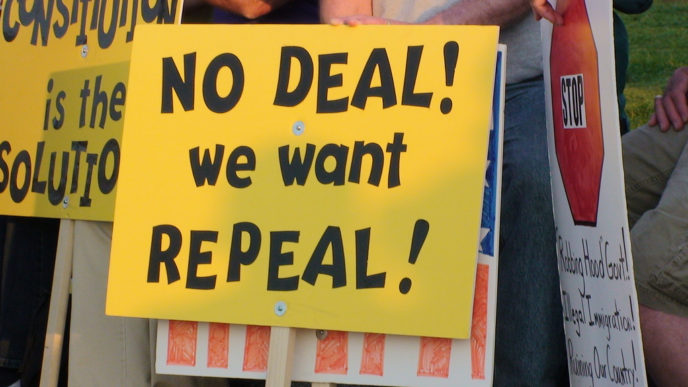
Queen of Political Opportunism: 5 Things You Don’t Know About Hillary

Americans feel like they know everything there is to know about Hillary Clinton — and Donald Trump for that matter.

But there are five things you may not know about Hillary.

1. Pakistan

Hillary criticized Senator Obama’s position when he advocated for attacking terrorists havens in Pakistan before she took credit for advising him to send Seal Team 6 into Pakistan to capture and kill Obama Bin Laden. Clinton lies and hypocricy should not shock anybody, yet this duplicitous claim has gone under reported.

PolitiFacts reported back on February 27, 2008:

At the Democratic debate in Cleveland, Ohio, on Feb. 26, 2008, Sen. Hillary Clinton stole a line from Sen. John McCain and President Bush.

Clinton said that last summer, Sen. Barack Obama “basically threatened to bomb Pakistan, which I don’t think was a particularly wise position to take.”

Clinton’s line echoes recent comments by McCain, who told reporters Feb. 20 that Obama “suggested bombing Pakistan,” and Bush, who said in a Feb. 17 TV interview that he didn’t know much about Obama’s foreign policy except that “he’s going to attack Pakistan and embrace (Iranian President Mahmoud) Ahmadinejad.

This was one of those issues that raised Republican eyebrows when Senator Obama argued that if he had actionable intelligence that bad guys were hiding in Pakistan, he would use it and not hesitate to act on it. A position that is reasonable and had many Republicans siding with Obama over McCain.

It was truly bizarre that Sen. McCain, R-Ariz. (F, 32%) and Hillary Clinton would hit him on that statement because it was the right position — and that hypothetical became reality when Hillary was secretary of state.

Obama’s position was mapped out on August 2007 at the Woodrow Wilson International Center for Scholars in Washington and said (as quoted by PolitiFacts):

I understand that (Pakistan) President Musharraf has his own challenges. But let me make this clear. There are terrorists holed up in those mountains who murdered 3,000 Americans. They are plotting to strike again. It was a terrible mistake to fail to act when we had a chance to take out an al-Qaida leadership meeting in 2005. If we have actionable intelligence about high-value terrorist targets and President Musharraf won’t act, we will.

Hillary criticized that statement, yet she repeatedly bragged that she advised President Obama to go into Pakistan to get Bin Laden. According to a Washington Post account “Through weeks of sometimes heated White House debate in 2011, Clinton was alone among the president’s topmost cabinet officers to back [the Osama Bin Laden raid].” I guess she supported the raid before she opposed it.

Too bad Hillary was not as decisive during the Benghazi attacks when Americans were at risk. She seems to have run away from that disaster and you will not find heroic chapters in any of her books detailing her tough choices when it comes to Libya. All of her decisions with regard to the Libyan war and the Benghazi attacks were wrong.

2. Flip Flop on Marriage

Hillary was for traditional marriage before she became a self-proclaimed champion for gay marriage. What a profile in courage!

In 2004, Senator Hillary Clinton spoke on the Senate floor and said the following when voicing opposition to a proposed constitutional amendment defining marriage as between one woman and one man:

I believe that marriage is not just a bond, but a sacred bond, between a man and a woman. I have had occasion in my life to defend marriage. To stand up for marriage. I believe in the hard work and challenge of marriage. I take umbrage at anyone who might suggest that those of us who worry about amending the Constitution, are less committed to the sanctity of marriage. To the fundamental bedrock principal that it exists between a man and a woman going back into the mists of history as one of the founding, foundational institutions of history, humanity and civilization and its primary principal role in during those millennia are those raising and socializing of children into society where they are about to become adults.

Wow — she would be jailed as a deplorable hate monger for saying those things today.

Can you imagine if Donald Trump said those words during the last debate? Hillary would have called him a homophobic, anti-gay bigot. Only a Clinton could be 100% pro traditional marriage in 2004, then completely flip flop ten years later and make believe that she always supported gay marriage.

3. Clinton Tax Avoidance

Although the Clinton campaign is apoplectic that Trump will not release his returns and evidently used a massive capital gains loss as a way to avoid paying taxes, Hillary seems to have done the exact same thing. From Zero Hedge:

While not on the scale of Trump’s business “operating loss”, Hillary Clinton – like many ‘wealthy’ individuals is taking advantage of a legal scheme to use historical losses to avoid paying current taxes.

I guess that makes her smart to avoid paying taxes, but a hypocrite for hitting Trump for taking advantage of the same tax law that she took.

4. Senator Clinton’s List of Accomplishments

Hillary Clinton acts as though she has had a long and distinguished career as a politician, yet her time as senator resulted in very few accomplishments.

According to a National Review Online piece from July 28, 2016 written by Nicole Goeser and John R. Lott, Jr.:

In her eight years in the Senate, just one of Hillary’s bills got enacted into law. This bill designated the U.S. courthouse at 40 Centre Street in New York City as the “Thurgood Marshall United States Courthouse.”

Pretty lame record of accomplishment.

5. Hillary Changed Her Name for Political Purposes

How does President Hillary Rodham sound? Before Hillary changed her name to adopt Bill Clinton’s last name, she had been a good feminist and refused to take his surname. One could not be a Clinton without flip flopping on an issue as central to a person’s being as one’s last name.

According to a U.S News and World Report story from January 30, 2007:

When Hillary Rodham and Bill Clinton were wed on Oct. 11, 1975, she kept her maiden name, not realizing it would become a controversial decision. After her husband’s defeat for re-election in the 1980 Arkansas gubernatorial election, she changed her surname to Clinton. Voters had questioned their marriage’s stability.

Shocking to think that in 1975 Rodham and Clinton had marital problems. Who knew?

These five facts are yet five more reasons that confirm American’s belief that Hillary Rodham Clinton is untrustworthy, duplicitous and dishonest. Clinton has flip flopped on issues from the Bin Laden raid to her own last name. (For more from the author of “Queen of Political Opportunism: 5 Things You Don’t Know About Hillary” please click HERE)

Follow Joe Miller on Twitter HERE and Facebook HERE.