After Cruz’s About-Face, Trump Follows Suit, Graciously Accepts Endorsement

Texas Sen. Ted Cruz, who finished second to Donald Trump in the GOP presidential primaries, has done an about-face since his speech at the Republican National Convention in July.

Instead of endorsing Trump as nominee, Cruz said, “To those listening, please, don’t stay home in November. If you love our country … stand and speak and vote your conscience. Vote for candidates up and down the ticket who you trust to defend freedom and to be faithful to the Constitution.”

The senator was booed by the audience and received a lot of criticism for his decision.

Trump responded to Cruz’s lack of support at the time by saying, “He’ll come and endorse in the next little while because he has no choice. … I don’t want his endorsement. Ted, stay home, relax, enjoy yourself.”

Cruz announced his reversal in a Facebook post Friday.

“After many months of careful consideration, of prayer and searching my own conscience, I have decided that on Election Day, I will vote for the Republican nominee, Donald Trump,” the senator said.

While Cruz changed his mind about the endorsement, Trump changed his mind about accepting it.

After learning of the endorsement, the GOP nominee said, “I am greatly honored by the endorsement of Senator Cruz. We have fought the battle and he was a tough and brilliant opponent. I look forward to working with him for many years to come in order to make America great again.”

Cruz explained the reason for his change of heart in his Facebook post.

He cited first his earlier promise to endorse the party’s nominee. Second was his belief that supporting Democrat Hillary Clinton is “wholly unacceptable.”

The senator went on to praise Trump for his commitment to appoint Supreme Court justices “in the mold of [Antonin] Scalia.”

During the primaries, Trump and Cruz often bumped heads.

At one point, Trump, quick to assign a nickname to an opponent, started referring to Cruz as “Lyin’ Ted.” He also mocked the appearance of Cruz’s wife and suggested the senator’s father was involved with the assassination of President John F. Kennedy.

Before ending his campaign, Cruz called Trump a “serial philanderer,” “utterly amoral” and “a narcissist at a level I don’t think this country’s ever seen.”

Vice presidential nominee Mike Pence is credited by some with having a major role in easing the tensions between the two men.

Cruz and Trump have communicated by message and phone as well as meeting in person once. (For more from the author of “After Cruz’s About-Face, Trump Follows Suit, Graciously Accepts Endorsement” please click HERE)

Follow Joe Miller on Twitter HERE and Facebook HERE.

FBI Report: Obama Used Phony Name to Email Clinton on Her Private Server

Communications from President Barack Obama have been discovered among those in the cache of emails recovered from Hillary Clinton’s private email server.

The emails show that during the time Clinton, now the Democratic presidential candidate, was secretary of state in Obama’s first term, Obama used a phony name when he was emailing Clinton and other officials.

The latest disclosure came in 189 pages of documents released Friday by the FBI.

The FBI has been investigating Clinton’s use of a private server while she was secretary of state. Although the FBI said Clinton has been careless in handling classified information, she was not charged with breaking any laws. The FBI has been issuing reports from its investigation.

The FBI report includes an interview with Clinton aide Huma Abedin in which she was shown an email exchange between Clinton and Obama. However, Abedin did not recognize the sender’s name.

The report explained what happened next.

“Once informed that the sender’s name is believed to be pseudonym used by the president, Abedin exclaimed, ‘How is this not classified?’” the report says. “Abedin then expressed her amazement at the president’s use of a pseudonym and asked if she could have a copy of the email.”

The contents of the emails between Obama and Clinton have not been made public by the State Department, which has cited “presidential communications privilege,” to hide the communications from the Freedom of Information Act.

The FBI report does not provide details about the emails between Clinton and Obama.

The report is the first clear evidence that Obama used Clinton’s unsecured email server to communicate with his secretary of state.

The FBI earlier revealed Clinton had relied on others’ judgment to not send her classified material during email correspondences.

“Clinton did not recall receiving any emails she thought should not be on an unclassified system,” the FBI said in its Sept. 2 report. “She relied on State officials to use their judgment when emailing her and could not recall anyone raising concerns with her regarding the sensitivity of the information she received at her email address.”

The information revealed Friday includes the FBI interviews with a number of individuals, including Clinton aides Abedin and Cheryl Mills; senior State Department officials; and Marcel Lazar, better known as the Romanian hacker “Guccifer.”

Friday’s reports also covered interviews with Jake Sullivan, Clinton’s policy director; Bryan Pagliano, a former Clinton technology aide; Monica Hanley, a Clinton aide; and Sidney Blumenthal, a Clinton confidante.

Interviews were also released from FBI sessions with former Secretary of State Colin Powell, former CIA acting director Mike Morell, State Department official Patrick Kennedy, and other officials. (For more from the author of “FBI Report: Obama Used Phony Name to Email Clinton on Her Private Server” please click HERE)

Follow Joe Miller on Twitter HERE and Facebook HERE.

Concerns Over Hillary’s Health Increasing as Parkinson’s Rumors Surface

The American presidency may be the world’s most demanding job, aging presidents twice as fast as the general population, and there are increasing concerns that Hillary Clinton may not be up to it. Clinton, 68, has had several medical issues in recent years.

During one such incident, while being interviewed by reporters, her head started shaking violently for several seconds. At other times, she has lapsed into blank stares and lost her focus. She admits she has fallen or passed out more than once. Even this week, questions were raised by The Hill about abnormal eye movements during a speech last week in Philadelphia.

Clinton’s Health

Clinton’s health is negatively affecting her campaigning. She recently canceled trips to California, sending her husband Bill Clinton in her place to headline Hollywood fundraisers. She went 257 days without holding a single press conference over the past year, only resuming them a few weeks ago. She has missed events that presidential candidates would normally participate in, such as visiting the flood-ravaged areas of Louisiana in August.

Some suspect Clinton and her staff are covering up the seriousness of her health problems. After she collapsed near Ground Zero after leaving a ceremony for the 15th anniversary of 9-11, her doctor, Lisa Bardack, released a letter assuring the public that Clinton was in good health and had merely suffered the effects of pneumonia. Bardack, chair of internal medicine at CareMount Medical in Mount Kisco, New York, asserted that Clinton was fit to serve as president. She said a CAT scan of Clinton’s brain in March revealed no abnormalities.

However, not all doctors agree with the clean bill of health. The pro-Clinton New York Times reported that “doctors not connected with the candidate’s care say that the letters omit basic information like height and weight, and that a more detailed history of her blood clots and a 2012 concussion should be disclosed.”

In the article, a clinical professor of medicine at New York University, Lawrence K. Altman, explained that Clinton has “had serious medical problems in recent years.” His review of her health issues covered her recent pneumonia, her history of blood clots, the medications she’s taking, recovery from the 2012 concussion and her cardiac health. It revealed areas for concern, including her not having public neuropsychological exams, but no serious medical problems.

But the problems Altman highlighted are not the only concerns about Clinton’s health.

A Neurological Disorder?

An increasing number of doctors are suggesting that Clinton’s symptoms appear to indicate a neurological disorder, most likely Parkinson’s Disease. Dr. Lee Hieb, an orthopaedic surgeon specializing in spinal surgery, explained to WND that people who faint from the usual causes, like low blood pressure and heat stress, “slump limply,” but Clinton “is rigid and in spinal extension.”

Further, “Any doctor who has treated pneumonia can affirm that if you are sick enough to pass out, you are not going to recover in an hour to become a smiling, waving Hillary exiting her daughter’s condo.” The bobbing of her head and the exaggerated eye and facial movement are both seen in late Parkinson’s patients, he continued.

Parkinson’s patients are notorious for falling during “freeze” episodes because they cannot initiate movement to catch their balance. … People with Parkinson’s very frequently have dementia, cognitive deficits (reasoning problems), mood alterations and can have anger issues.

Dr. Erika Schwartz, who treats women’s health, similarly noted on KABC’s Midday Live how strange it was that Clinton was seen a few hours after her September 11 fall waving and talking to people outside her daughter Chelsea’s apartment. “You don’t tend to see the kind of recovery [after a fall due to pneumonia] that Mrs. Clinton seemed to exhibit that day,” Schwartz remarked.

Dr. Ted Noel, former director of the NovaMed Surgery Center in Orlando, writes on his website, “Hillary Clinton has had Parkinson’s Disease for at least ten years. She has known it for all of that time. Her campaign shows a complete disregard for America in the pursuit of personal graft.” He says during a short news video he created, “Everything … fits the theory,” he said. “Video evidence is solid. [There’s] strong evidence of having advanced Parkinson’s disease.”

Dr. Jane Orient, executive director of the Association of American Physicians and Surgeons, and Dr. Elizabeth Lee Vliet, who treats women’s health, also echoed this concern. Orient told Breitbart that Clinton’s neurocognitive functioning is the biggest concern when it comes to Clinton’s health. In the same article, Vliet noted that Altman’s summary of Clinton’s medical issues in the Times didn’t even go far enough. He “doesn’t address the abnormal movements we have seen on multiple public videos of events where she is speaking.”

What else do we know about the Democratic nominee’s health? Something, if we accept everything in her doctor’s letter, but there’s also a lot we don’t know.

Concussion

Clinton suffered a concussion in 2012. She apparently contracted a stomach virus after foreign travel which dehydrated her, causing her to faint. She fell down in her bathroom and hit her head on the toilet. After she was treated, a blood clot (her third, see below for the history of the first two) was discovered in one of the main veins connected to her brain.

Bill Clinton said her concussion “required six months of very serious work to get over,” but — as Altman points out — Clinton’s doctor said she recovered in only two months. Bardack also said the concussion and clots were completely resolved by 2013.

Similarly, Dr. Jamie Wells, MD, FAAP, a Board-Certified physician and Director of Medicine at the American Council on Science and Health, notes, “As we have seen with football players and other people with head injuries, traumatic brain injury does not always just ‘go away.’” Orient noted how Clinton telling the FBI she forgot several things may be evidence of lingering damage.

Altman noted that head injuries may hasten dementia. They are also considered a possible risk factor for Parkinson’s.

Blood Clots and Phlebitis

Clinton suffered her first blood clot in 1998 while First Lady. It developed in her calf, which is known as phlebitis. Her second blood clot, in 2009, also afflicted her calf, causing it to swell. She refused to be hospitalized as doctors recommended, citing the rigors of campaigning.

In 2012, a third blood clot, known as a transverse sinus venous thrombosis since it developed in her brain, forced her to spend a few days in the hospital and take a month off work. She takes Coumadin, a powerful blood thinner, for the clots. Also known as warfarin or Jantoven, it comes with its own additional set of risks. If a patient gets a cut or takes the medication improperly, it can cause heavy bleeding. Some of the possible side effects are so serious they require immediate medical attention. In addition to heavy bleeding, they include dizziness or weakness, bruising without a cut, and red or brown urine, among others.

Pneumonia

An anonymous board certified internist writing at Powerline thinks it’s more likely that Clinton has aspiration pneumonia, where food or liquid gets into the lungs, than a neurological condition. He says this “raises profoundly troubling implications for her possible election as president.” Unlike regular pneumonia, “This is especially worrisome because it is likely to recur given the underlying, usually incurable disease process and because it can be a life-threatening event.”

Sinus and Ear Infection

Clinton developed a sinus and ear infection last winter. As a result of progressive pain in her left ear, a myringotomy tube was placed in her left ear. Myringotomy is considered minor surgery, but it requires general anesthesia.

Lingering Cough

Last year, Clinton started coughing frequently during debates and interviews. Her doctor asserts it is allergy related, but it could also be a symptom of Parkinson’s Disease, since those afflicted sometimes have difficulty clearing their throat due to lack of motor control.

Lingering Concerns

Clinton has a sluggish thyroid, known as hypothroidism, for which she takes medication. In 2009, she slipped inside a government garage and fractured her elbow — another fall.

She still has not released her medical records from her White House years, which could reveal even more serious issues.

While she has released more medical records than Donald Trump, he hasn’t shown any signs of serious health problems. Trump’s doctor, Harold Bornstein, issued a letter stating that the presidential candidate is in “excellent physical health.”

Clinton’s defenders are trying to discredit questions about her health as “conspiracy theories.” She can continue denying she has serious health problems, but if she really does have them, she will not be able to hide them forever. Dr. Wells observes, “Dr. Bardack is ethically bound not to violate the expressed privacy wishes of her patient but she is also responsible for not making false claims.”

Since early ballots are already being mailed in parts of the country, it is unlikely the Democrats will replace Clinton with another presidential candidate. If she does have Parkinson’s, the disease will progress. At stage three of Parkinson’s, falling becomes more frequent, and the disease “significantly affects daily tasks at this stage.”

Stage four may require a walker. According to Healthline, “Many people are unable to live alone at this stage of Parkinson’s because of significant decreases in movement and reaction times. Living alone at stage 4 or later may make many daily tasks impossible, and can be extremely dangerous.” If Clinton does have this debilitating disease, there is a very good chance if elected president she will not be able to complete her term, requiring her vice-presidential pick Tim Kaine to relieve her as president.

On Wednesday, Hillary Clinton was asked by reporter Sarin Fazan of ABC News’ Tampa affiliate WFTS whether she would, as some doctors have suggested, take neurocognitive tests. She laughed off the suggestion.

Regardless of what may be ailing Secretary Clinton we pray for her health, that she receives the proper treatment and that she will trust the American people enough to share with them the truth. (For more from the author of “Concerns Over Hillary’s Health Increasing as Parkinson’s Rumors Surface” please click HERE)

Follow Joe Miller on Twitter HERE and Facebook HERE.

Violence on Charlotte’s Streets Began With Chaos in Hearts, Homes — and, Yes, Bathrooms

North Carolina is a battleground today as it hasn’t been since 1864. It’s a crucial swing state in the upcoming presidential election, whose outcome in judicial appointments might determine the very meaning of the U.S. Constitution — including its First Amendment protections for political speech and religious freedom, and Second Amendment guarantee of the right to self-defense. The state’s brave, pro-family governor is fighting for reelection, targeted by multimillion-dollar gay activist foundations. The state itself is under boycott by massive corporations including the NBA, NCAA and Paypal over its resistance to transgender pressure.

And the streets of Charlotte offer scenes that look like they were filmed in Libya or Syria — places where the state has lost control over public violence, and factional warfare has erupted in the streets. Agitators from all over the country have been shipped in to stir the outrage after a possibly unjust police shooting of a black citizen. Instead of peaceful protests, however, what erupted was large-scale violence, including this chilling footage of rioters seemingly trying to burn a reporter alive:

The last time I heard of Charlotte in the news was when that city passed a transgender access law that would have denied any legal recognition to biological sex, granting men full access to women’s bathrooms and locker rooms, provided they whispered the secret password: “transgender.” The state’s legislature and governor swung into action, passing a state law overturning the local measure, and calling down on it the wrath of Bruce Springsteen, Barack Obama, and the rest of our country’s financial, political and cultural elite. And now Charlotte is ground zero for radical activists who want to start a race war.

Is that a coincidence? Some grim piece of irony? More than that, it’s a vital clue to the fragile chain of order in civilized society, and a warning that when we weaken its basic links, the whole thing can come crashing down in the most literal sense — in the form of burning cars, shattered storefronts, and policemen under siege by mobs of fanatics.

In his classic The Roots of American Order, Russell Kirk observes that harmony, order and freedom in society are not something imposed from outside by police or the national guard. Armed guards are the backstops, the last resort, which we call in for emergencies, when chaos is breaking out.

Those great good things make up the social peace that St. Paul, and all Christians since him, have prayed for in their time. They emerge from a much more intimate source than government agents with guns. They flow from the human heart and well-ordered minds, then play out in everyday life, especially in the home. That same order radiates organically through society, as honest people interact with each other, compete fairly, cooperate for mutual benefit, and when need be sacrifice their personal interests for the sake of the greater good. Fallen though we are, people can live together fruitfully when they agree on basic, truthful premises about good and evil, man and woman, justice and freedom — even if they differ on points of philosophy or theology.

What happens when that consensus breaks down? When the rules are constantly changing, perpetually under self-righteous attack, and as a result large swathes of the population learn that they don’t have to play by them? Picture trying to hold something as simple as a football game, if the referees had markedly different rule books and were subject to bribery; if each team felt free to doctor the ball; and players were stashing brass knuckles or knives inside their uniforms. Go further, and imagine that each team’s fans were so fanatical that they would cheer, not jeer, each time their own team cheated.

Charlotte: Ground Zero of the Bathroom War and Maybe a Race War

Welcome to Charlotte, North Carolina, a place where the many fault-lines of postmodern life apparently intersected, and the ground simply gave way under citizens’ feet. Below I will list the basic ground rules that used to govern American life, which virtually everyone held in common until 1968 or so.

Men and women are equally important, but crucially different. Their biology both dictates and reflects these profound differences.

Sex is meant for marriage, and marriage is meant for children, who deserve a full set of parents.

Citizens must support themselves and their children, and not rely on the government except for short periods during emergencies.

Men must support the children whom they father, and women should withhold sex from men who haven’t proven their ability and willingness to do that.

Men must help to rear and discipline their sons, and protect their daughters.

Clearly these aren’t truths peculiar to America, or the West. They are not even distinctively Christian, though the church has embraced them as part of the “natural law” written on the human heart by God, which even pagans can usually discern, in the dim light of fallen reason. These are simply the rules of human life by which virtually every society we know of has lived — with certain short-lived, decadent exceptions.

They are also truths that are now literally unspeakable — by which I mean that security guards will come and stop you from speaking them — on our country’s college campuses.

That’s because each of those rules has been attacked by our own elites in the past 40 or 50 years, as a barrier to self-expression, pleasure or absolute autonomy — the kinds of goals that spoiled members of leisure classes start to insist on, when they take too much for granted that there will always be food in the restaurants, clean water flowing through the tap and order in the streets.

In fact, well-protected property rights, a functioning economy, abundant food, potable water and civil peace are not the natural state of mankind, as the fragile snowflakes who preen and fret on our college campuses have been taught by their fools of professors to believe. (I wonder how many Ivy Leaguers by now believe that Mt. Rushmore is a natural formation.) These crucial goods are carefully crafted artifacts, the result of hundreds of years of political struggle, hard work, technical competence, careful reflection and compromise. They demand our cooperation, our consent and sometimes our willingness to sacrifice the next whim that flickers through our libido, for the sake of some greater good — such as the life of an unborn child, a woman’s self-respect or the property rights of a neighbor.

In the 1960s a New Left desperate to wreck the social order in free market countries — which were clearly out-competing the socialist hellholes that had taken Marx at his word — latched onto the destructive power of short-sighted selfishness. That movement offered elite approval to sexual hedonism and drug abuse as “revolutionary acts,” and set about undermining support in our laws and in our mores for those fundamental truths listed above. And now we are seeing this program of cultural terrorism achieve its desired outcome:

Young men born out of wedlock, raised by their mothers on government largesse, whose communities are as a result hotbeds of violent crime where police are afraid to patrol and sometimes overreact (with tragic outcomes) are destroying the businesses and homes in their own neighborhoods. Meanwhile national elites bully the hard-pressed local government with threats of crippling economic sanctions if it will not destroy the privacy of women and deny biology, allegedly in service to a tiny group of mentally ill people, who are backed by a wealthy splinter group, the homosexual lobby, that speaks for some two percent of Americans.

No, what’s happening in Charlotte isn’t an accident. It’s a postcard from the future. If Hillary Clinton is elected, that future will come sooner, and with mathematical certainty. (For more from the author of “Violence on Charlotte’s Streets Began With Chaos in Hearts, Homes — and, Yes, Bathrooms” please click HERE)

Follow Joe Miller on Twitter HERE and Facebook HERE.

When Does Debating End and the Work Begin?

The crowd was standing and booing loud and long. The worried Secret Service hustled the speaker’s wife out of the arena as the tension and decibel level increased. The senator got off the stage.

A few weeks ago, Ted Cruz attempted a victory lap in the Republican National Convention after losing the primary fight. Cruz had refused to endorse the decision of the organization. I was sitting with a former Ohio Congressman who said, “He just ended his political life…” Commentator Charles Krauthammer said Cruz’s speech, “Was the Longest Suicide Note in US Political History.”

There are times to debate. There are times to work. Cruz didn’t know the difference. Unfortunately, most in business don’t either.

But Cruz has, in the end, taken the right action.

No Yes-Men

Your subordinates are pushing back. This is what you want — you didn’t hire yes-persons who polish apples and kiss your backside. You need a real debate to get the best recommendation to help you make the best decision. A heated discussion is needed around the conference table; the refining fire of dispute to burn away dross and all that.

The best bosses demand vigorous deliberation to vet a course of action. No unthinking rubber-stampers are on your team, right?

But sometimes the push-back pushes the manager over the edge. When is too much debate simply too much? And does the staffer understand when to stop debate and start executing?

The manager and staffers should know as a matter of policy when the debate turns from a dialogue of equals to the hierarchy of superior and subordinate.

The deliberation is over when the manager has made the decision. Or when a nominee is picked and the work pivots from Primary Debate to General Election. The political decision was made, but some who lost the debate want the argument to continue as Ted Cruz demonstrated at the GOP Convention in Cleveland.

Here, in business, the subordinate can help manage the manager. The alert staffer can clear the fog of decision-making by asking the manager a direct question, “Is the debate over and is there a ruling?” If the answer is yes and the decision has been made, then the arguing and arm-wrestling is over, and then the execution begins. A gavel pounded on a lectern is helpful.

Talented managers make decisions and are, well, decisive. There should be no doubt further down the org chart that the talking is done and action is to begin.

(In)Decision

However, if the staff does not know that the decision has (really!) been made, then confusion sets in. The push-back and the pleading will continue, followed by the whining.

We have an example of where even the Creator of the Universe was reconsidering a decision. Abraham, a good man, is arguing with God against destroying Sodom and Gomorrah. Then he said, “May the Lord not be angry, but let me speak just once more. What if only ten [righteous] can be found there?” He answered, “For the sake of ten, I will not destroy it.” (Genesis 18:32)

Those ten could not be found and the decision of God’s wrath was about to be carried out. So Abraham, you better get out.

Managers must make clear the bright line that divides debate from decision. When the boss has signaled that the line has been crossed and the decision has been made, then the debating and second-guessing is over.

After the debating is over and the decision made, the professional will support the manager even if he disagrees. The pro will get the job done as if the decision were his own.

This is where Ted Cruz missed his moment: He did not say ‘yes.’ Instead of supporting the verdict of the organization and its common goals, he did not immediately endorse the candidate of his party. We each have the option of saying ‘no’ to an organizational decision. But—

When the boss decides, then do the work. Or leave the organization.

Ted Cruz now understands that his party’s debate is over and that the decision has been made.

The planning and organizing are complete. Leading the execution is about to begin. (For more from the author of “When Does Debating End and the Work Begin?” please click HERE)

Follow Joe Miller on Twitter HERE and Facebook HERE.
Obama Just Vetoed a Bill That Would Allow 9/11 Families to Pursue Justice

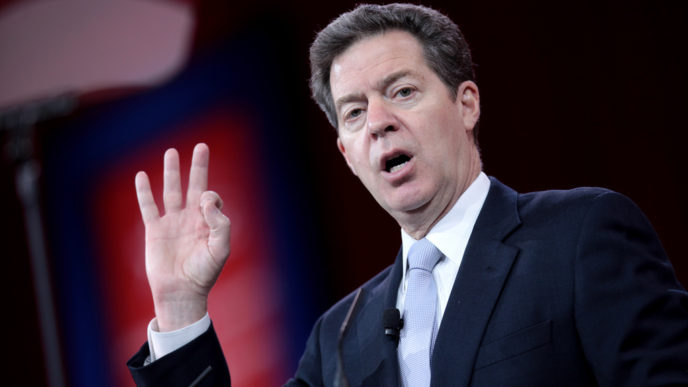
Friday, President Obama vetoed legislation — the Justice Against Sponsors of Terrorism Act — allowing 9/11 families to sue Saudi Arabia.

Fifteen of the 19 hijackers of the September 11 terror attacks were from Saudi Arabia, and it has long been suspected that people in the Saudi government helped finance those terrorists. The release this summer of the previously-classified 28 pages of the Joint Inquiry report into the 9/11 attacks renewed focus on both the events and victims of the terrorist acts.

The Senate unanimously passed the legislation that would allow the 9/11 families to sue Saudi Arabia in U.S. courts earlier this year. On Sept. 9, two days before the 15th anniversary of 9/11, the House of Representatives unanimously passed the legislation.

“I recognize that there is nothing that could ever erase the grief the 9/11 families have endured,” Obama wrote in his veto message, reports Jordan Fabian and The Hill. “Enacting JASTA into law, however would neither protect Americans from terrorist attacks nor improve the effectiveness of our response to such attacks.”

Signs are good that Obama’s veto will be overridden, which would be the first time Congress has overridden a veto during Obama’s presidency. As Sen. Charles Schumer, D-N.Y. (F, 2%) told The Hill earlier this month, “I think we easily get the two-thirds override if the president should veto.” (For more from the author of “Obama Just Vetoed a Bill That Would Allow 9/11 Families to Pursue Justice” please click HERE)

Follow Joe Miller on Twitter HERE and Facebook HERE.

Legal or Not, Obama Wants to Bring Gitmo Detainees to the US

Despite the fact it’s illegal, further proof that the Obama administration is not opposed to moving inmates from Guantanamo Bay’s military detention facility to U.S. soil was confirmed this week.

Kansas Attorney General Derek Schmidt disclosed the Pentagon spent federal dollars to scope out Fort Leavenworth — where the Department of Defense’s only maximum security prison is located — as a potential site to house former Gitmo detainees,” the Topeka-Capital Journal’s Justin Wingerter reports.

“As time runs out for the Obama administration to make good on its promise to close Guantanamo, this document raises new concerns for those who object to bringing detainees to the U.S. mainland,” Schmidt said after his office discovered the Pentagon’s actions through a Freedom of Information Act request.

Schmidt’s office underwent a 10-month battle with the DOD over the FOIA request.

However, bringing Gitmo inmates to the U.S. is illegal and prohibited by federal law. Additionally, multiple members in Congress have emphasized it will continue to remain illegal.

“After seven years, President Obama has yet to convince the American people that moving Guantanamo terrorists to our homeland is smart or safe. And he doesn’t seem interested in continuing to try,” Speaker of the House Paul Ryan R-Wis., (F, 53%) said in a statement in February after Obama confirmed his intentions to close the facility in Cuba.

“His proposal fails to provide critical details required by law, including the exact cost and location of an alternate detention facility. Congress has left no room for confusion. It is against the law — and it will stay against the law — to transfer terrorist detainees to American soil. We will not jeopardize our national security over a campaign promise.”

Questions regarding the transference of remaining Guantanamo detainees have been rekindled. Just this month, Rep. Jeff Duncan, R-S.C. (A, 96%), reintroduced a proposal halting detainees to be transferred to U.S. soil. This resolution was first introduced in February and is now gaining support from 50 Republican House members.

Similar to Kansas residents near Fort Leavenworth, the issue is relevant for Duncan and his district, since another potential U.S. site for the detainees is the Naval Consolidated Brig in Charleston, S.C.

“No state should be a terrorist dumping ground. I know the people of South Carolina are vehemently opposed to this plan,” Duncan said in a statement. “If brought to a city like Charleston, the community would immediately become a high priority terrorist target where millions of tourists travel every year to visit. In fact, any community forced illegal to house these notorious terrorists would be at risk.”

Currently, there are 61 detainees remaining at the Gitmo facility; Obama said earlier this month 20 of those are approved for transfer.

It’s important to note 66 percent of Americans are opposed to closing the facility, according to a Gallup poll from June.

Americans are concerned about former terrorists on the loose, and Obama should be, too. (For more from the author of “Legal or Not, Obama Wants to Bring Gitmo Detainees to the US” please click HERE)

Follow Joe Miller on Twitter HERE and Facebook HERE.

A GOP Congress Should Not Give Planned Parenthood Another Dime of Taxpayer Money

Planned Parenthood has once again proven it does two things exceedingly well—ending innocent human lives in the womb for a fee, and getting American taxpayers to subsidize its operations.

How else to explain Congress making America’s No. 1 abortion provider eligible for new funding when it already gets over a half-billion dollars (yes, billion) in taxpayer money per year?

The House version of the continuing resolution, a short-term government spending measure, provided $95 million in health care funds to address the Zika emergency. But it effectively limited grant recipients to Medicaid providers in Florida and Puerto Rico.

This meant that Planned Parenthood clinics in Florida would have been guaranteed funding, but its Puerto Rico partner, Profamilia, would not because it did not qualify under Medicaid rules.

This was unacceptable to congressional Democrats who threatened a shutdown fight over this one abortion provider that runs six clinics. The subsequent Senate version of the continuing resolution dropped the Medicaid requirement and allows Profamilia access to Zika funds, but seems to leave the question of who ultimately gets funding in the hands of Florida and Puerto Rico health authorities.

Because Florida cut off Planned Parenthood funding under Medicaid this year (only to be overturned by a liberal judge), there is at least some hope that it will direct all Zika funds to life-affirming health centers instead of abortion clinics.

But Puerto Rico? The place that once boasted of the highest female sterilization rate in the world because of the coercive teamwork between Planned Parenthood and the Puerto Rican government? We already know Planned Parenthood and its allies are willing to hold emergency Zika funding hostage over a handful of clinics, so it would be the height of naïveté to think that the master of working the system would not find a way to get its typical cut of the money if given the chance.

Instead of allowing Planned Parenthood access to new federal funding streams, Congress should be closing the spigot entirely. For example, when videos of alleged corruption and illegal voter fraud surfaced around the notorious left-wing group known as ACORN, Congress promptly defunded it. The same logic applies to Planned Parenthood, especially after undercover videos raised serious questions over whether its affiliates were illegally profiting from selling organs of unborn babies.

Thankfully, we still have landmark laws like the Hyde Amendment that prevent direct taxpayer funding of abortion. But while Planned Parenthood fights for Hyde’s repeal, it has used every trick in the book to get federal money by trying to pretend that its core business is anything but industrial-scale abortion.

Congress should not make Planned Parenthood eligible for a raise. Rather, it should bar Planned Parenthood and other abortion providers from health care funding up front and redirect it to more comprehensive and life-affirming health care providers. Such a move would reflect the simple fact the Planned Parenthood has long since disqualified itself from taxpayer money because of its callous disregard for innocent human life. (For more from the author of “A GOP Congress Should Not Give Planned Parenthood Another Dime of Taxpayer Money” please click HERE)

Follow Joe Miller on Twitter HERE and Facebook HERE.

How to Use Presidential Debate to Talk About Conservatism

With an estimated 100 million people tuning in to watch Monday night’s presidential debate, the topic of conversation for the week will be the showdown between Hillary Clinton and Donald Trump, therefore giving you ample opportunity to talk conservative policy.

But you’ll have to be diligent in this endeavor as the memorable moments in presidential debates are rarely about policy:

1. Ronald Reagan disarmed Walter Mondale in a 1984 debate, saying, “I am not going to exploit, for political purposes, my opponent’s youth and inexperience.” The punchline not only made the audience laugh, but Mondale genuinely cracked up too.

2. In 1988, Michael Dukakis lacked every emotion when asked if he would favor the death penalty if his wife were raped and murdered. He responded without mentioning his, uh, wife: “No, I don’t … I think you know that I’ve opposed the death penalty during all of my life. I don’t see any evidence that it’s a deterrent and I think there are better and more effective ways to deal with violent crime.”

3. Most remember that Al Gore repeatedly sighed as George W. Bush spoke during a 2000 debate. “But the best moment might have been when Gore at one point stood up, seemingly to intimidate Bush, and Bush simply nodded hello at him and continued what he was saying,” writes Time’s Dan Mitchell.

These moments are brought to you by an “uh-oh,” or a laugh, or a great sound bite, not policy. But we promise the ensuing chatter around these moments and the superficial aspects highlighted by the media allows you to pivot to a substantive conversation.

Here are three ways to focus your otherwise shallow conversation on conservative policy.

Common Ground

While we want to be entertained during the 90-minute debate (no risk of being slighted this year), you want to move past the performance and instead discuss policy. Acknowledge the moments the media will obsess over, but then pivot to the candidates’ policies on your political issue of choice.

For example, if a candidate makes an exaggerated claim about income inequality that the media just can’t stop talking about, acknowledge the claim as absurd and then pivot to policy. Use common identifiers like “we both know his/her statement was absurd, but the policy behind it needs to be addressed. We can both agree that…” You recognize the absurdity of the claim (common ground) and then refocus the conversation on the substance behind the claim.

Examples

Use what the candidates say. Even if we witness in-depth policy discussions Monday night, you may disagree with the style and substance. Play off the candidates’ comments to give tangible examples. If the person you’re talking to cares about guns, or health care, or income inequality, refer back to the columns we’ve written about how to have conversations about those topics.

Remember, you win by using an example, personal anecdote, or analogy that frames the policy in a relatable way. And adding in a simple data point along with an example is always a great way to prove you’re right … because numbers, like hips, don’t lie.

Words

NEWS FLASH: Beating someone over the head with your perspective is not persuasive. You gain no ground by talking (or yelling) at someone. They will shut down and likely never want to discuss politics with you again. We know the debate will be heated Monday, but don’t let that tension influence your conversation.

A great way to resist the temptation to yell/kick/scream your way to winning is to use the right words. Talk about “choice,” what’s “fair,” “rights,” and “equality.” It’s been said many times before, but steal the words and phrases used to great effect by liberals. Doing so is disarming, but more importantly, those words accurately describe your conservative policy position too.

While fireworks are expected, remember that what the candidates do on stage won’t be worth mimicking in real life, especially if you want to persuade. Instead, find common ground, use examples, and say the right words. (For more from the author of “How to Use Presidential Debate to Talk About Conservatism” please click HERE)

Follow Joe Miller on Twitter HERE and Facebook HERE.

Congress Has Little to Show for Its Work This Year

Lawmakers on Capitol Hill are in a hurry to get out of town so they can hit the campaign trail and convince voters to send them back to Washington. But, considering they’ve pushed off most of the big decisions until after the election, their list of accomplishments this year is a very short one. Maybe they think voters won’t notice.

(For more from the author of “Congress Has Little to Show for Its Work This Year” please click HERE)

Follow Joe Miller on Twitter HERE and Facebook HERE.