Almost Everything the Media Tells You About Sexual Orientation and Gender Identity Is Wrong

A major new report, published today in the journal The New Atlantis, challenges the leading narratives that the media has pushed regarding sexual orientation and gender identity.

Co-authored by two of the nation’s leading scholars on mental health and sexuality, the 143-page report discusses over 200 peer-reviewed studies in the biological, psychological, and social sciences, painstakingly documenting what scientific research shows and does not show about sexuality and gender.

The major takeaway, as the editor of the journal explains, is that “some of the most frequently heard claims about sexuality and gender are not supported by scientific evidence.”

Here are four of the report’s most important conclusions:

The belief that sexual orientation is an innate, biologically fixed human property—that people are ‘born that way’—is not supported by scientific evidence.

Likewise, the belief that gender identity is an innate, fixed human property independent of biological sex—so that a person might be a ‘man trapped in a woman’s body’ or ‘a woman trapped in a man’s body’—is not supported by scientific evidence.

Only a minority of children who express gender-atypical thoughts or behavior will continue to do so into adolescence or adulthood. There is no evidence that all such children should be encouraged to become transgender, much less subjected to hormone treatments or surgery.

Non-heterosexual and transgender people have higher rates of mental health problems (anxiety, depression, suicide), as well as behavioral and social problems (substance abuse, intimate partner violence), than the general population. Discrimination alone does not account for the entire disparity.

The report, “Sexuality and Gender: Findings from the Biological, Psychological, and Social Sciences,” is co-authored by Dr. Lawrence Mayer and Dr. Paul McHugh. Mayer is a scholar-in-residence in the Department of Psychiatry at Johns Hopkins University and a professor of statistics and biostatistics at Arizona State University.

McHugh, whom the editor of The New Atlantis describes as “arguably the most important American psychiatrist of the last half-century,” is a professor of psychiatry and behavioral sciences at the Johns Hopkins University School of Medicine and was for 25 years the psychiatrist-in-chief at the Johns Hopkins Hospital. It was during his tenure as psychiatrist-in-chief at Johns Hopkins that he put an end to sex reassignment surgery there, after a study launched at Hopkins revealed that it didn’t have the benefits for which doctors and patients had long hoped.

Implications for Policy

The report focuses exclusively on what scientific research shows and does not show. But this science can have implications for public policy.

The report reviews rigorous research showing that ‘only a minority of children who experience cross-gender identification will continue to do so into adolescence or adulthood.’

Take, for example, our nation’s recent debates over transgender policies in schools. One of the consistent themes of the report is that science does not support the claim that “gender identity” is a fixed property independent of biological sex, but rather that a combination of biological, environmental, and experiential factors likely shape how individuals experience and express themselves when it comes to sex and gender.

The report also discusses the reality of neuroplasticity: that all of our brains can and do change throughout our lives (especially, but not only, in childhood) in response to our behavior and experiences. These changes in the brain can, in turn, influence future behavior.

This provides more reason for concern over the Obama administration’s recent transgender school policies. Beyond the privacy and safety concerns, there is thus also the potential that such policies will result in prolonged identification as transgender for students who otherwise would have naturally grown out of it.

The report reviews rigorous research showing that “only a minority of children who experience cross-gender identification will continue to do so into adolescence or adulthood.” Policymakers should be concerned with how misguided school policies might encourage students to identify as girls when they are boys, and vice versa, and might result in prolonged difficulties. As the report notes, “There is no evidence that all children who express gender-atypical thoughts or behavior should be encouraged to become transgender.”

Beyond school policies, the report raises concerns about proposed medical intervention in children. Mayer and McHugh write: “We are disturbed and alarmed by the severity and irreversibility of some interventions being publicly discussed and employed for children.”

They continue: “We are concerned by the increasing tendency toward encouraging children with gender identity issues to transition to their preferred gender through medical and then surgical procedures.” But as they note, “There is little scientific evidence for the therapeutic value of interventions that delay puberty or modify the secondary sex characteristics of adolescents.”

Findings on Transgender Issues

The same goes for social or surgical gender transitions in general. Mayer and McHugh note that the “scientific evidence summarized suggests we take a skeptical view toward the claim that sex reassignment procedures provide the hoped for benefits or resolve the underlying issues that contribute to elevated mental health risks among the transgender population.” Even after sex reassignment surgery, patients with gender dysphoria still experience poor outcomes:

Compared to the general population, adults who have undergone sex reassignment surgery continue to have a higher risk of experiencing poor mental health outcomes. One study found that, compared to controls, sex-reassigned individuals were about five times more likely to attempt suicide and about 19 times more likely to die by suicide.

Mayer and McHugh urge researchers and physicians to work to better “understand whatever factors may contribute to the high rates of suicide and other psychological and behavioral health problems among the transgender population, and to think more clearly about the treatment options that are available.” They continue:

In reviewing the scientific literature, we find that almost nothing is well understood when we seek biological explanations for what causes some individuals to state that their gender does not match their biological sex. … Better research is needed, both to identify ways by which we can help to lower the rates of poor mental health outcomes and to make possible more informed discussion about some of the nuances present in this field.

Policymakers should take these findings very seriously. For example, the Obama administration recently finalized a new Department of Health and Human Services mandate that requires all health insurance plans under Obamacare to cover sex reassignment treatments and all relevant physicians to perform them. The regulations will force many physicians, hospitals, and other health care providers to participate in sex reassignment surgeries and treatments, even if doing so violates their moral and religious beliefs or their best medical judgment.

Rather than respect the diversity of opinions on sensitive and controversial health care issues, the regulations endorse and enforce one highly contested and scientifically unsupported view. As Mayer and McHugh urge, more research is needed, and physicians need to be free to practice the best medicine.

Stigma, Prejudice Don’t Explain Tragic Outcomes

The report also highlights that people who identify as LGBT face higher risks of adverse physical and mental health outcomes, such as “depression, anxiety, substance abuse, and most alarmingly, suicide.” The report summarizes some of those findings:

Members of the non-heterosexual population are estimated to have about 1.5 times higher risk of experiencing anxiety disorders than members of the heterosexual population, as well as roughly double the risk of depression, 1.5 times the risk of substance abuse, and nearly 2.5 times the risk of suicide.

Members of the transgender population are also at higher risk of a variety of mental health problems compared to members of the non-transgender population. Especially alarmingly, the rate of lifetime suicide attempts across all ages of transgender individuals is estimated at 41 percent, compared to under 5 percent in the overall U.S. population.

What accounts for these tragic outcomes? Mayer and McHugh investigate the leading theory—the “social stress model”—which proposes that “stressors like stigma and prejudice account for much of the additional suffering observed in these subpopulations.”

But they argue that the evidence suggests that this theory “does not seem to offer a complete explanation for the disparities in the outcomes.” It appears that social stigma and stress alone cannot account for the poor physical and mental health outcomes that LGBT-identified people face.

As a result, they conclude that “More research is needed to uncover the causes of the increased rates of mental health problems in the LGBT subpopulations.” And they call on all of us work to “alleviate suffering and promote human health and flourishing.”

Finally, the report notes that scientific evidence does not support the claim that people are “born that way” with respect to sexual orientation. The narrative pushed by Lady Gaga and others is not supported by the science. A combination of biological, environmental, and experiential factors likely account for an individual’s sexual attractions, desires, and identity, and “there are no compelling causal biological explanations for human sexual orientation.”

Furthermore, the scientific research shows that sexual orientation is more fluid than the media suggests. The report notes that “Longitudinal studies of adolescents suggest that sexual orientation may be quite fluid over the life course for some people, with one study estimating that as many as 80 percent of male adolescents who report same-sex attractions no longer do so as adults.”

Findings Contradict Claims in Supreme Court’s Gay Marriage Ruling

These findings—that scientific research does not support the claim that sexual orientation is innate and immutable—directly contradict claims made by Supreme Court Justice Anthony Kennedy in last year’s Obergefell ruling. Kennedy wrote, “their immutable nature dictates that same-sex marriage is their only real path to this profound commitment” and “in more recent years have psychiatrists and others recognized that sexual orientation is both a normal expression of human sexuality and immutable.”

But the science does not show this.

While the marriage debate was about the nature of what marriage is, incorrect scientific claims about sexual orientation were consistently used in the campaign to redefine marriage.

In the end, Mayer and McHugh observe that much about sexuality and gender remains unknown. They call for honest, rigorous, and dispassionate research to help better inform public discourse and, more importantly, sound medical practice.

As this research continues, it’s important that public policy not declare scientific debates over, or rush to legally enforce and impose contested scientific theories. As Mayer and McHugh note, “Everyone—scientists and physicians, parents and teachers, lawmakers and activists—deserves access to accurate information about sexual orientation and gender identity.”

We all must work to foster a culture where such information can be rigorously pursued and everyone—whatever their convictions, and whatever their personal situation—is treated with the civility, respect, and generosity that each of us deserves. (For more from the author of “Almost Everything the Media Tells You About Sexual Orientation and Gender Identity Is Wrong” please click HERE)

Follow Joe Miller on Twitter HERE and Facebook HERE.

Another Travel Fiasco Courtesy of the TSA

I have long been a believer that, in most cases, a private company will do a more effective and efficient job than any government agency charged with the same task. My recent travel experience solidified that belief.

It all started out with a half-empty water bottle at Ronald Reagan National Airport just outside the District of Columbia.

I had checked in the night before, checked my bag at the curbside when I arrived, and now had a full hour to go through security. With Congress gone since late July and much of the District emptied out until Labor Day, I didn’t expect long security lines. I was right. I breezed through in two minutes, until…

Like many airline passengers, I had forgotten to take my plastic bottle of water out of my bag before placing it on the moving belt for security screening. So, naturally, the screener pulled my bag and after I waltzed through the body image scanner with no hiccups, I joined the Transportation Security Administration agent assigned to check my bag.

As I suspected, the water bottle was the culprit but he still had to do a mandatory chemical test of my bag. That’s when they take those little black sticks with swatches on the end and rub them over your belongings, or sometimes the palms of your hands, and then run them through a machine. Fairly routine. Except this time my swatch sent off an alarm. No noise, just a flashing “Alarm” text on the machine’s computer screen. So, they tried again. Same response.

That meant I qualified for a full-body pat-down. I know people who have gone ballistic when asked to have that done, but I go along as I’ve got nothing to hide and I just want to get my purse and get to my gate. Nope. After the pat-down, they do a chemical test on me and my swatches send off the alarm too.

We’re now about 15 minutes and five (yes, five) TSA agents into this little drama. The screener, the guy who first checked my bag, the female TSA agent who was assigned to do the pat-down, the TSA agent who had checked my ID and boarding pass were all there, along with another agent who, as best as I could tell, was simply assigned to stand next to me and make small talk and make sure I didn’t go anywhere.

The agents do another chemical test and decide they need to do another full-body pat-down. They want to do this one in private, assign a new female TSA agent to do it, but tell the original one to also attend as a witness. When I come back out, there is now a manager involved and they are calling the head of something—I could never get the official title—who was supposedly the only person at Reagan airport who could come check my chemical tests and figure out what was going on.

Twenty minutes later, and with no sense of urgency, he arrives. So here we, meaning me and now up to eight TSA agents, go again. Now they are taking out my items one by one to run through the screener—my two lipsticks, eyeshadow, computer power cord, jewelry bag, wallet, sunglasses, etc. Not sure why the original crew didn’t do that, but at this point it was clear most of these folks, bless their hearts, probably had this job because it is one of the few that requires no problem-solving skills or ability to act with speed, and where, heaven knows, customer satisfaction is found nowhere on a personnel review form.

Four gray TSA bins, each holding a few of my items, are then whisked off by no less than three TSA agents (that’s right, it took three people to carry four bins holding heavy-duty items like makeup and hand sanitizer) to a back room. I’m told nothing. For another 15 minutes I sit, not asking too many questions because I still have hope against hope that I might make my flight and don’t want to do anything to take one of these whiz kids off their game.

Now, 55 minutes into this whole process, the back room door opens, out come all my bins and items and I’m told I’m free to go. Dumping everything into my bag and grabbing my shoes, which I had not been allowed to put on, I race barefoot to the gate.

Alas, it was not meant to be. I missed my flight.

The only positive, or so I thought, was that now I’d have time to go back and check in with the TSA folks to find out exactly what it was that caused the problem. I hadn’t taken the time to do so when they finally gave me the all-clear because I just wanted to get to the gate. But now, in an attempt to not relive this experience in the future, I was determined to find out what shampoo I had used or lotion I was wearing that sent their chemical sensors into a frenzy.

No such luck. They can’t tell you that. When I got back to the TSA area, I found the agent who had been the original screener and asked him if he had been told what had caused the problem. “I can’t tell you,” was his response. “It’s a chemical but I’m not allowed to tell you what kind.”

I prodded further, “You mean you know what it is, you must have concluded it wasn’t dangerous because you all finally let me go, but you can’t tell me so that I make sure not to wear it again or have it in my bag again?”

Mr. TSA Agent: “Right. Sorry.”

So how many TSA agents did it take to make me miss my flight yet give no explanation as to why or what to do different next time around?

I lost count.

My story apparently isn’t unique. A man putting on his shoes after coming through security and sitting on the bench next to me as I was working on this article said the exact same thing happened to his wife last summer, except that in her case it turned out she wasn’t sporting some odd lotion or perfume, the machine had simply malfunctioned multiple times. Too bad she missed her international flight while they figured that out.

I wonder if her story, or mine, would have been different if more U.S. airports did what most European airports do, use private screeners. Since 2001, something called the Screening Partnership Program has existed that allows for U.S. airports to contract with private screeners as opposed to using those assigned by the TSA.

A study by the House Transportation Committee found that $1 billion could be saved over five years if America’s 35 largest airports used private screeners. My Heritage Foundation colleague David Inserra has pointed out that “with smaller overhead costs and lower levels of attrition, the screening program is likely a financial boon for most airports.” He also says those airports report improved customer service.

So why do roughly only 20 U.S. airports make use of the private screening option? Because the Obama administration, in one of its “go around the laws we don’t like” moves, suspended the program in 2011 (Congress rightly later reinstated it), because it can take up to four years for an airport to get approval due to government bureaucracy, and because the TSA and its unionized workforce has no interest in competing with the private sector.

The reality is that air travel need not be the fiasco it has become. Congress can rein in the TSA by streamlining the process to hire private screeners and forbidding the unionization of its employees.

Until then, maybe you shouldn’t shower before your flights. (For more from the author of “Another Travel Fiasco Courtesy of the TSA” please click HERE)

Follow Joe Miller on Twitter HERE and Facebook HERE.

Lawsuit Filed Over Feds, Refugee Groups Losing 10,000+ Refugee Children, Possibly to Sex Trade or Worse

A 12-year-old Honduran boy seeking asylum in the United States has been “lost” in the system, illustrating what immigration experts say is a widespread problem of the government failing to keep track of the large number of vulnerable children flooding across the border.

The case of missing child [Walter] has been brought to light in a lawsuit filed in federal district court in Columbia, South Carolina, that names Gov. Nikki Haley, the S.C. Department of Social Services, Lutheran Services and World Relief among the defendants. World Relief is a division of the National Association of Evangelicals and, like the Lutherans and Catholics, is heavily involved in the resettlement of refugees and asylum seekers, getting paid handsomely to perform one of the government’s most secretive and cash-rich operations under the guise of humanitarianism, the suit claims. . .

The federal government has been “rubber stamping” the asylum applications of tens of thousands of child migrants like Walter since 2014, says Lauren Martel, the attorney representing [the plaintiff taxpayer] in the case. Their asylum applications are rushed through the system without taking time to ensure the children’s safety. . .

“There’s a 12-year-old boy out there somewhere who is unaccounted for and we only know about him because a lawyer in the Family Court of Beaufort County didn’t redact his name [on court documents],” Martel told WND. “So now he could be part of the sex trade industry for all we know. Nobody can tell us anything” . . .

“They do not routinely do background checks or determine that the person claiming them is capable, responsible, law-abiding or even financially able,” Vaughan said. “There are more than 10,000 kids who are here now without family members, and most of them are unaccounted for.” (Read more from “Lawsuit Filed Over Feds, Refugee Groups Losing 10,000+ Refugee Children, Possibly to Sex Trade or Worse” HERE)

Follow Joe Miller on Twitter HERE and Facebook HERE.
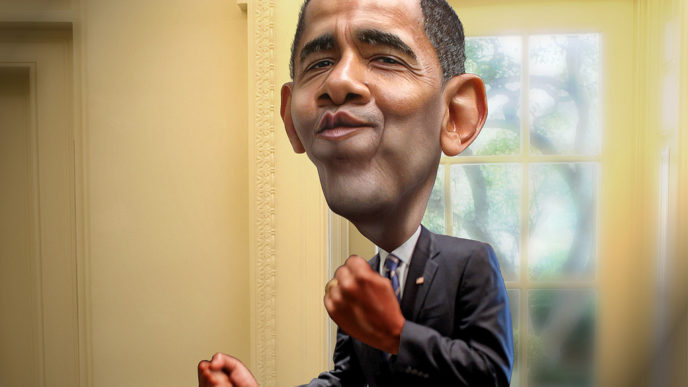
DESTROYER-IN-CHIEF: Obama Finally Admits He “Accidentally” Shredded U.S. Healthcare

Hillary Clinton is telling voters she wants “to build on” Obamacare. But President Obama’s signature healthcare law remains highly unpopular because many Americans believe it’s not a good deal for them personally.

The president essentially laid out a case for his own law’s failures in an article he wrote for the Journal of the American Medical Association.

He wrote: “too many Americans still strain to pay for their physician visits and prescriptions, cover their deductibles, or pay their monthly insurance bills; struggle to navigate a complex, sometimes bewildering system; and remain uninsured.”

It was a striking concession. It also shows that the president still has no idea how much damage he’s done to Americans’ healthcare:

1. “too many Americans still strain to pay for their physician visits and prescriptions…” Drug costs have risen dramatically over the past few years. According to a report last fall from Emory University, the people insured through Obamacare are hit especially hard. Out-of-pocket expenses for medications in a typical Obamacare silver plan are twice as high as they are in the average employer-sponsored plan.

Obamacare insurance also tends to have more restrictions on the doctors patients can see. People may try to get an appointment with their family doctor, only to be told, “Sorry, we don’t take Obamacare.” They can get hit with a huge bill for a routine office visit that’s now “out-of-network.”

2. “cover their deductibles…” In a recent poll, two-thirds of Americans said they would have trouble coming up with the money to cover a $1,000 emergency. The average silver plan in the Obamacare exchanges this year has a deductible of more than $3,000. Some Obamacare plans next year will have deductibles as high as $7,000.

If you have to switch insurance in the middle of the year, you could find that you have already paid thousands of dollars toward your deductible, only to have to start over again with a new insurer. This is the situation facing 72,000 people in Illinois and Ohio whose taxpayer-supported health insurance co-ops collapsed over the past few months.

Similarly, you may have to find new doctors or hospitals where your new Obamacare insurance is accepted.

3. “pay their monthly insurance bills…” Even President Obama hasn’t been able to ignore the headlines about skyrocketing premiums. Insurers across the country expect to raise their prices an average of 23 percent next year.

The Obama administration predicts that health spending in America will reach a record high of more than $10,000 per person this year. Under Obamacare, millions of people are paying more of this cost themselves.

4. “struggle to navigate a complex, sometimes bewildering system…” America’s healthcare system was complicated before Obamacare. The healthcare law took that complexity to a new level. The law was more than 2,000 pages long. Rules and regulations associated with it run to about 30,000 pages.

Ever since the failed launch of healthcare.gov in 2013, the annual ritual of signing up for Obamacare has been a nightmare. Families often have no idea if their doctor will accept their insurance from one year to the next. They also have new paperwork to fill out for the IRS.

The administration also recommends you do hours of research every fall and to switch plans and possibly doctors.

5. “and remain uninsured.” President Obama could have said from the start that the law’s only real goal was to cover people who didn’t have health insurance. He could have admitted that doing this would create more chaos, higher costs and worse care for American families.

The law still would have fallen short. About 29 million people in America still don’t have insurance. Last year, the Congressional Budget Office predicted that 21 million people would enroll in coverage through the Obamacare exchanges this year. The number is actually 11 million.

President Obama has finally acknowledged some of the ways his law is failing the American people. Hillary Clinton and Democrats in Washington continue to promise that they can fix Obamacare if we just allow them to make it bigger, costlier and more complex.

That’s simply not going to work. The only way to fix Obamacare is to end it and replace it with patient-centered care. (For more from the author of “DESTROYER-IN-CHIEF: Obama Finally Admits He “Accidentally” Shredded U.S. Healthcare” please click HERE)

Follow Joe Miller on Twitter HERE and Facebook HERE.

Federal Judge Continues Persecution of Sheriff Arpaio, Seeks Criminal Contempt Against Joe and His Defense Attorney

By Megan Cassidy. A federal judge on Friday referred Maricopa County Sheriff Joe Arpaio and three of his aides to the U.S. Attorney’s Office, requesting that they be prosecuted for criminal contempt of court.

The landmark decision comes after U.S. District Court Judge G. Murray Snow found that Arpaio intentionally violated various orders rooted in an 8-year-old racial-profiling case.

The judge’s order also refers Chief Deputy Jerry Sheridan, Arpaio’s former defense attorney Michele Iafrate, and Capt. Steve Bailey for prosecutors to consider criminal contempt charges against them as well.

The sheriff and Sheridan already have been held in civil contempt of court. Potential penalties are steeper in a criminal case, and only criminal contempt could result in incarceration.

“Criminal contempt serves to vindicate the Court’s authority by punishing the intentional disregard for that authority,” Snow wrote in his Friday order. (Read more from “Federal Judge Continues Persecution of Sheriff Arpaio, Seeks Criminal Contempt Against Joe and His Defense Attorney” HERE)

__________________________________________

Sheriff Joe Reveals the Donald Trump the Establishment Doesn’t Want You to Know

By Lee Stranahan. In an exclusive interview with Breitbart News in June, Maricopa County Sheriff Joe Arpaio presents the side of Donald Trump the media is desperately trying to hide: his decency as a human being and how he is different from other politicians.

Both the leftist media and establishment GOP pundits spent months trying to portray Republican presidential nominee Donald Trump as a monster, calling him a misogynist, a racist, and “Hitler.” After Trump’s blockbuster speech in Charlotte, North Carolina last night showed that Trump is both caring and tough, expect the media to go into overdrive laying down more dishonest narratives about who Donald Trump really is.

In the first major address given by Trump since former Breitbart News Executive Chairman Stephen K. Bannon took the reins of the Trump campaign, The Donald showed that you can be passionate about America, compassionate about people, but still tough-as-nails honest about what it’s going to take to restore America’s greatness. (Read more from “Sheriff Joe Reveals the Donald Trump the Establishment Doesn’t Want You to Know” HERE)

Follow Joe Miller on Twitter HERE and Facebook HERE.

Another ‘Mentally Ill’ Muslim Excused for Stabbing Spree

…The rising number of attacks on Jews and synagogues in recent years has been well documented, but it has nothing to do with terrorism and certainly not Islamic terrorism, French authorities say.

The latest attack came in Strasbourg, France, where an Orthodox Jewish rabbi was attacked in broad daylight Friday and left hospitalized by a knife-wielding Muslim yelling “Allahu Akbar!”

The incident was immediately scrubbed by French police as “not terrorism related” in what has become a pattern across Europe, Canada and the United States.

Instead of calling it terrorism, the authorities initially refer to the assailant as mentally ill or “suffering from psychiatric issues,” as the Daily Mirror reported on the latest incident, which took place just outside the rabbi’s home about 500 yards from the main synagogue in the city’s Jewish quarter.

As recently as Aug. 11, a woman ran over two police officers in Montreal with her car while yelling “Allah!” and she was also deemed mentally ill by Canadian authorities, CIJ News reported. (Read more from “Another ‘Mentally Ill’ Muslim Excused for Stabbing Spree” HERE)

Follow Joe Miller on Twitter HERE and Facebook HERE.

Obama’s Harsh Words for George W. Bush Come Back to Haunt Him

Despite massive flooding in Louisiana that has killed 13 people and left thousands homeless, President Obama has continued to enjoy a vacation at Martha’s Vineyard rather than cutting it short to tour the damage and lend support to those in need.

Sitting U.S. presidents have historically responded when disasters strike the homeland, and failing to do so quickly has drawn harsh criticisms for some of them, both from the media and rival politicians.

When President George W. Bush waited two days before cutting his vacation short to tour the damage from Hurricane Katrina in 2005, he was portrayed as uncaring and inept.

One of the president’s fiercest critics was Sen. Barack Obama.

The Washington Examiner detailed Thursday how in 2005, Obama slammed Bush for his response after Katrina ripped through New Orleans, leaving thousands stranded in high waters.

“I can say from personal experience over the last week, how frustrating it has been, how unconscionable it has been to be unable to find somebody in charge so that we can get medical supplies, doctors, nurses and other supplies down to the affected areas quickly enough,” the senator said.

“We’re going to have to do some hard thinking about how we could have failed our fellow citizens so badly, and how we will prevent such failures from ever occurring again,” Obama declared.

Three years later, when Obama was campaigning for president, he said, “Because when the people of New Orleans and the Gulf Coast extended their hand for help, help was not there. When people looked up from the rooftops, for too long, they saw an empty sky. When the winds blew and the floodwaters came, we learned that for all of our wealth and our power, something wasn’t right with America.”

He continued to decry “a president who only saw the people from the window of an airplane, instead of down here on the ground trying to provide comfort and aid.”

The media coverage of Obama’s vacation also differs greatly from what Bush faced after Katrina.

Fox News noted Thursday that Bush was “torn to shreds in 2005 by mainstream media commentators for his initial response to Hurricane Katrina – yet President Obama’s detached response to the recent Louisiana floods has been met with resounding silence from those same outlets.”

The report said that media coverage at the time “not only criticized Bush for the difficulties the federal government faced in responding to the disaster, but also lambasted him for taking too long to return from vacation and to visit the site on the ground.”

Fox pointed to a 2005 news analysis in USA Today that declared, “President Bush has shown that he can be empathetic, sensitive and decisive. But those qualities eluded him for days after Hurricane Katrina, and the lapse could become a defining moment of his White House tenure.”

The Washington Post also railed against Bush’s Katrina response, calling it the second-worst moment of his presidency.

“Hurricane Katrina in 2005 was the last straw for Bush’s second term, with his widely criticized handling of the recovery pretty much precluding him from any kind of success in his final years in office,” the Post wrote.

Fox noted that “such concerns have been almost entirely absent from media coverage of the Louisiana floods in recent days.”

One media outlet that has had strong words for Obama is the Advocate newspaper in Baton Rouge, site of some of the worst flooding.

In an editorial Wednesday, it urged the president to cut short his vacation at “a playground for the posh and well-connected” and instead visit “the most anguished state in the union.”

The Advocate said that “a disaster this big begs for the personal presence of the president at ground zero. In coming here, the president can decisively demonstrate that Louisiana’s recovery is a priority for his administration – and the United States of America.” (For more from the author of “Obama’s Harsh Words for George W. Bush Come Back to Haunt Him” HERE)

Follow Joe Miller on Twitter HERE and Facebook HERE.

Colin Powell Denies He Had Conversation With Hillary Clinton About Private Email

According to notes provided to Congress by the FBI, Democratic presidential nominee Hillary Clinton claimed that former Secretary of State Colin Powell had advised her to rely on a private email address for nonclassified communication.

The conversation supposedly took place during a 2009 dinner party at the home of Madeleine Albright. According to Clinton, Powell discussed the multiple benefits of using private email to handle certain work-related tasks.

The New York Times reported on the conversation Thursday, citing an excerpt from an upcoming book by journalist Joe Conason titled Man of the World: The Further Endeavors of Bill Clinton.

“Toward the end of the evening, over dessert, Albright asked all of the former secretaries to offer one salient bit of counsel to the nation’s next top diplomat,” Conason wrote. “Powell told her to use her own email, as he had done, except for classified communications, which he had sent and received via a State Department computer.”

But on Friday, Powell said that no such conversation regarding the usage of private email to conduct business had taken place.

“General Powell has no recollection of the dinner conversation,” the former secretary of state’s office said in a statement.

Powell’s office did clarify that at one point he sent an email to Clinton describing the benefits of using personal email for certain intradepartmental communications.

“He did write Secretary Clinton an email memo describing his use of his personal AOL email account for unclassified messages and how it vastly improved communications within the State Department,” the statement said.

Clinton has referred to Powell in order to justify setting up her own email server. But the differences between the two are stark: Powell used a commercial account while Clinton set up a private network, and Powell sent only two emails that were retroactively classified at the lowest level, while Clinton sent more than 1,000 that were classified.

House Republicans have officially requested that the Department of Justice investigate whether Clinton committed perjury while testifying before Congress about the email scandal.

Among other things, they cite her claim that “there was nothing marked classified on my emails, either sent or received.”

FBI Director James Comey said last month that some of the emails found on Clinton’s private server were in fact marked that they contained classified information and were so marked at the time they were handled by Clinton.

Although the FBI did not recommend that Clinton be prosecuted, Comey rebuked her for her extremely careless handling of classified information. (For more from the author of “Colin Powell Denies He Had Conversation With Hillary Clinton About Private Email” please click HERE)

Follow Joe Miller on Twitter HERE and Facebook HERE.

Trump Criticized for Not Helping Enough in Baton Rouge

Republican presidential nominee Donald Trump took a timeout from campaigning to visit flood victims in Baton Rouge, La.

His campaign manager, Kellyanne Conway, told reporters that the visit was to “help people on the ground” with “no press allowed.” She said the move was nonpolitical and would show Trump’s more “presidential” side.

However, Trump did take a moment at Greenwell Springs Baptist Church to slam President Obama for not showing up and offering assistance.

“The president said he doesn’t want to go, he’s trying to get out of a golf game,” Trump said.

Evangelist Tony Perkins, whose own home was flooded, joked that the reason was that Obama was trying to stay “under par while we’re underwater.”

“He’ll never be under par,” Trump quipped back.

Some media outlets, however, criticized the GOP nominee for not doing enough to help. They highlighted a moment caught on camera in which the real estate mogul was seen unloading toys for flood victims.

Tommy Christopher of Mediaite sarcastically put “helping out” in quotes, saying that Trump assisted people “by unloading a truckload of toys for 49 seconds.”

Others echoed that sentiment on Twitter.

Trump spent the rest of his trip visiting various locations. He and his running mate, former Indiana Gov. Mike Pence, traveled across flood-ravaged areas through East Baton Rouge and Ascension parishes.

Church maintenance supervisor Terry Phinney said he was happy with the candidate’s visit, telling reporters that “it was a good little boost for folks who are tired.”

Phinney was no fan of Trump before the visit. However, after he saw that the GOP nominee was genuinely concerned about the situation and seeking to educate himself on the damage, he changed his stance.

“He wanted to know percentages of homes damaged in the area, around about how many would have flood insurance,” Phinney said.

Overall, Trump was very well received by the locals, with a number of people commenting positively on his visit.

Jeff Nolan, who lost his home in the flood, met the candidate at the church and had him sign the back of his shirt.

Nolan said it meant “everything” to him that Trump came to Louisiana to see the damage and relief efforts first-hand.

“Trump is the man,” he said. “He’s the real deal.”

Pam West, who had to be rescued from her flooded home, also came to see Trump and said his visit was “awesome.”

“Our own dear president is too busy at Martha’s Vineyard to visit us,” she said.

Obama, who declined to cut short his vacation to tour Louisiana and offer support, announced after Trump’s visit that he too would travel to the area next week.

So far the flooding has killed 13 people, and more than 70,000 have registered for assistance from the Federal Emergency Management Agency. (For more from the author of “Trump Criticized for Not Helping Enough in Baton Rouge” please click HERE)

Follow Joe Miller on Twitter HERE and Facebook HERE.

Jesus in Rio: Christian Olympians Share Their Faith During Games

Jesus has been looming over the Rio games. And we don’t just mean the iconic Christ the Redeemer statue towering over the city. His presence has been felt in expressions of Christian faith by many of the athletes competing in the Olympics, though you’d be hard-pressed to find it breaking through the mainstream media coverage of the games.

In most instances, reporters would rather try catching a javelin with their bare hands then catch themselves quoting athletes expressing their joy in the Lord. Video highlights seem to cut away from the medal-winner just as they get to praising Jesus. Even Simone Biles saying Tuesday night she wanted to see Christ the Redeemer seemed to throw NBC’s Bob Costas for a loop. He offered a startled and odd “oh,” and an awkward, rapid change of subject.

By contrast, it’s amusing to watch the mainstream media fawn over Muslim fencer Ibtijah Muhammad, who was wildly heralded for being the first American Olympian to wear a hijab while competing. On Saturday, when America medaled in the women’s team sabre event, the AP story opened, “Ibtihaj Muhammad came to the Olympics determined to show the world that Muslim-American women can excel in sports. Muhammed will return home to New Jersey with proof she was right.”

Did anyone really need proof? Do her teammates — who remain unnamed in the article — have the right to feel like chopped liver?

Muslim Fencer Scores Media Victory Over Christian and Jewish Gymnasts

The media fixated on Muhammad’s Muslim faith the second she stepped onto the fencing strip for the individual sabre competition. Newsbusters’ Katie Yoder did some calculating. As of last Friday, American television networks dedicated 13 minutes, 25 seconds to Muhammad simply because she was the first American Olympian to wear a hijab.

By contrast, says Yoder, “When the U.S. women’s gymnastics landed a gold medal Tuesday evening, the broadcast networks spent 22 minutes, 35 seconds celebrating the win and interviewing the girls. Only 0.6 percent of the coverage mentioned the girls’ faith, even though several of them clearly expressed that God was their inspiration for competing.”

Now, as a former fencer, watching any fencer get national attention is worth a crisp salute. But Muhammad getting 100 times more attention for being a Muslim than the “Final Five” got for their faith should earn the media a major point deduction.

Still, the Light has found a way to shine. Here are just a few examples:

Faith of “The Final Five” on Display

Monday morning, as she prepared to compete on the balance beam, 16-year-old Laurie Hernandez tweeted out Isaiah 40:31:

I don’t know how anybody could walk — let alone flip, flop and fly — on a 4″-wide elevated piece of wood without feeling at least a little faint. But Hernandez did “soar on wings like eagles,” and earned a silver medal. In the ensuing hoopla, she found time to praise Hillsong United’s “Touch the Sky.”

Hillsong Young & Free is just one of the Christian artists on the Olympic training playlist teammate Gabby Douglas shared with Billboard magazine right before the Games. Unfortunately, Gabby Douglas has had an Olympic experience filled with more lament than celebration. Cruel attacks on her looks, her demeanor, even her patriotism devastated the regal 2012 Olympic darling. She told the media Tuesday the comments were “really hurtful,” and as ESPN reported, she then walked down a hallway, “stood in a corner, facing a wall, and had a good, long cry.” Very few people approached her. Hopefully, one of the songs on her Billboard list came to her heart: “You’ll Never Be Alone.”

By Wednesday, it appears Gabby was itching to soar again.

“God Prepared My Heart to Respond That Way”

American runner Abbey D’Agostino knows the presence of God in the midst of pain. Her inspirational example of the Olympic spirit has made headlines across the globe. Abbey was competing in a 5,000-meter qualifier Tuesday when she got tangled with New Zealand’s Nikki Hamblin. Both women crashed to the ground. Abbey scrambled to her feet to continue racing, but stopped cold when she saw Nikki was still crumpled on the track. Abbey reached for her competitor, helped her up and urged the New Zealander to keep running.

Both completed the race. However, Abbey was carted off the track in a wheelchair. Somehow, maybe you can say miraculously, she had finished the final 2,000 meters despite suffering a torn ACL and strained MCL in her right knee. (For you metric-phobes, that’s 1.25 miles.)

Despite the stop, despite the injury, Abbey has no regrets. And you have to hear why. “Although my actions were instinctual at that moment, the only way I can and have rationalized it is that God prepared my heart to respond that way,” said the 24-year-old Christian. “This whole time here, he’s made clear to me that my experience in Rio was going to be about more than my race performance — and as soon as Nikki got up I knew that was it.”

According to the race results, Abbey D’Agostino finished in 29th place. Yet even Michael Phelps is no greater a champion.

“We Just Let His Presence Come Upon Us”

American women’s hurdlers are leaving Rio with the bling. Brianna Rollins, Nia Ali and Kristi Castlin earned gold, silver and bronze in the 100-meter hurdles; the first time a single nation has swept the medals since 1972. And to Him they gave the glory.

“I just kept God first and just continued to let Him guide me through the rounds,” Rollins said, “We formed a prayer circle this morning and we just let His presence come out here and continue to glorify him and do the best that we can and that’s what we did.”

“We Are Winners Because of This World”

Finally, we started out by saying the mainstream media appears to be downplaying the importance of Christian faith to many of the athletes. So we do have to credit NBC where credit’s due, as in their story “Divers Johnson and Boudia rely on faith to put minds at ease,” about Olympic silver medalists Steele Johnson and David Boudia.

But we close with an inspirational moment that NBC didn’t quite get. Go to NBCOlympics.com and you’ll find a video titled “Fiji rugby players sing after winning gold.” The full caption accompanying the video reads, “The Figi men’s rugby team sang in celebration after winning the gold medal.” Oh, NBC, it was much more. They sang alright. They sang like David sang.

This was the first Olympic gold medal Fiji has won in that nation’s entire history, and the Fiji rugby 7 were singing about the King. It’s a gospel hymn called “E Da SA Qaqa.” Translation: “We Are Winners Because Of This World.”

The lyrics:

“We have overcome,
We have overcome.
By the blood of the lamb in the Word of the Lord
We have overcome.”

(For more from the author of “Jesus in Rio: Christian Olympians Share Their Faith During Games” please click HERE)

Follow Joe Miller on Twitter HERE and Facebook HERE.