Notorious Socialist Dictator Nicolás Maduro Perp Walked Ahead Of Facing ‘Full Wrath Of American Justice’; Someone Made a Huge Profit Predicting Maduro’s Capture
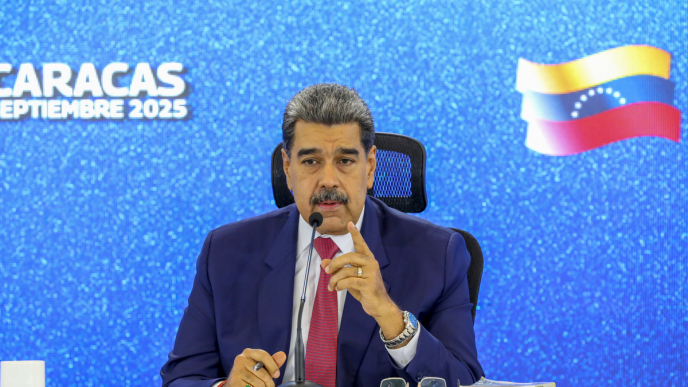
By New York Post. Deposed socialist Venezuelan dictator Nicolás Maduro arrived at a New York City jail Saturday night, hours after U.S. military forces captured him in Caracas, and awaits arraignment on four criminal charges, including narco-terrorism conspiracy.
A 12-second video posted to X late Saturday by the White House’s Rapid Response account shows Drug Enforcement Administration (DEA) agents escorting an apparently handcuffed Maduro, wearing a hat and grasping a water bottle, through the notorious Metropolitan Detention Center in Brooklyn (MDC Brooklyn). In the video, which the social media account captioned “Perp walked,” the ex-leader can be heard saying “good night” in both English and Spanish, as well as “happy new year” in English — apparently his first public remarks since being taken into U.S. custody.
Another one of MDC Brooklyn’s current inmates is Luigi Mangione, the 27-year-old man accused of murdering UnitedHealthcare CEO Brian Thompson in December 2024. The pretrial detention facility’s previous inmates notably include sex trafficker Ghislaine Maxwell, rapper Sean “Diddy” Combs, and cryptocurrency fraudster Sam Bankman-Fried.
Perp walked.pic.twitter.com/34iIsFUDdG
— Rapid Response 47 (@RapidResponse47) January 4, 2026
Combs’s lawyers wrote that several courts “have recognized that the conditions at [MDC Brooklyn] are not fit for pre-trial detention” in a 2024 motion for bail. Maxwell also reportedly took issue with the jail’s accommodations during her stay, with the Jeffrey Epstein accomplice having complained of its allegedly abusive guards and plentiful rats.
WATCH: Chaos erupts as police maneuver through large crowds outside Brooklyn’s Metropolitan Detention Center where Venezuela’s Nicolás Maduro is being held. pic.twitter.com/DYZTO2r52c
— Fox News (@FoxNews) January 4, 2026
Attorney General Pam Bondi, in a Saturday morning post to X, vowed Maduro “will soon face the full wrath of American justice on American soil in American courts.” (Read more from “Notorious Socialist Dictator Nicolás Maduro Perp Walked Ahead Of Facing ‘Full Wrath Of American Justice’” HERE)
__________________________________________________________
Someone Made a Huge Profit Predicting Maduro’s Capture. Here’s What Happened
By Axios. Traders and speculative bettors earned huge profits on prediction markets because of the capture of Venezuela President Nicolás Maduro.
Why it matters: Though the capture of Maduro seemed to come out of the blue for many Americans, some were ahead of the curve, netting them thousands of dollars.
These bets — many of which were on Maduro’s capture, and are now on what happens next to the ousted leader — will renew longstanding questions about inside information and access to prediction markets.
Driving the news: Traders on Polymarket appeared to anticipate Maduro’s capture late Friday night, before President Trump announced it early Saturday morning.
The market for whether or not Maduro would be out of power climbed shortly before 10pm ET on Friday, after hovering in the low single digits for weeks, per the Wall Street Journal.
What appears to be a newly created account appeared to invest $30,000 Friday in Maduro’s exit. After Maduro went into custody Saturday morning, that same investor netted $436,759.61.
(Read more from “Someone Made a Huge Profit Predicting Maduro’s Capture. Here’s What Happened” HERE)