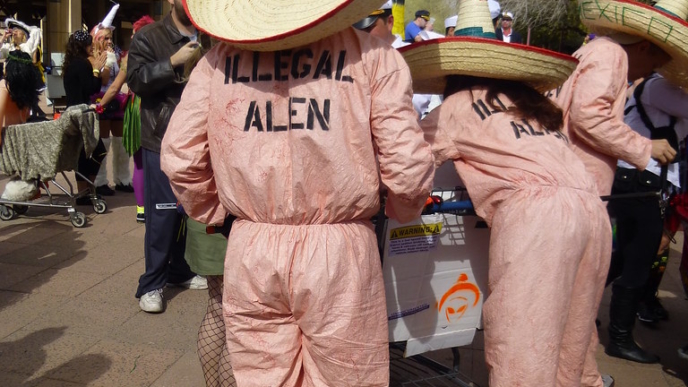
Venezuelan Blackouts Have Left Millions Without Clean Water

Venezuelans are already living in darkness after the country’s electrical system collapsed, but now millions of people, residents of Caracas and other major cities whose water systems are tied to the power grid, are completely without clean water.

The Daily Wire’s Ashe Schow reported Monday that Venezuelan President Nicolas Maduro is now instituting a rationing program for the country’s meager supply of electricity, allowing residents to turn their lights on for only a half hour at a time for the next 30 days.

But the same grid and now-defunct hydro-electric power plant that powers homes in Caracas also powers the country’s water system, and without electricity, local pumping stations simply won’t work, according to Yahoo News. The government is providing some residents with water from pumping trucks, but it’s simply not enough to address Venezuelan’s meager needs.

“[P]eople try to find water wherever they can: from springs, leaky pipes, gutters, government-provided tankers and the little that flows through the Guiare River in Caracas,” Yahoo reports. . .

More comprehensive reports about water shortages from earlier in March reveal that the Guiare River, where many desperate Venezuelans are getting water, is fetid and heavily polluted. The Associated Press reported back in January that Venezuelans who “farm” the river for “treasures” risk life and limb, and that the river serves as a “drain for rainwater from the streets and sewers, along with industrial waste.” (Read more from “Venezuelan Blackouts Have Left Millions Without Clean Water” HERE)

Follow Joe Miller on Twitter HERE and Facebook HERE

Pakistan Is Still Supporting Insurgency to Topple the Afghan Government

Exclusive interview of Pasbanan with US army retired official

Arranged by: Shershah Nawabi

How do you define insurgency and insurgent groups?

I define an insurgency similarly to that described in the U.S. Army Field Manual 3-24. Insurgencies arise when parts of the population grow dissatisfied with the status quo and are willing to fight to change the conditions to their favor, using both violent and nonviolent means to effect a change in the prevailing authority. An insurgency is the organized use of subversion and violence to seize, nullify, or challenge political control of a region.

Although the Taliban are using classical insurgency tactics, what is happening in Afghanistan is not an insurgency. It is a proxy war being conducted by Pakistan using the Taliban to gain a dominating political influence in Afghanistan in the pursuit of Pakistani national aims. Pakistan created the Taliban in the 1990s for that purpose and Pakistan has sustained and supported the Taliban since 2001 for the same reason.

According to your experience how these groups are been made and how they manage to grow?

Again, I think FM 3-24 provides a useful guide as to how insurgencies grow or fail. It is based on legitimacy, that is, acceptance of authority by society. The population of a country decides who has the legitimacy to establish the rules and the government for that society. A population’s values and cultural norms will determine who that society perceives as a legitimate authority. Both the insurgency and the country’s government attempt to control the population by some mixture of consent and coercion.

Here we must distinguish between an insurgency and a proxy war. Although Afghans may have grievances with the Kabul government and may, at times, agree with certain positions held by the Taliban, the Taliban are not a movement indigenous to Afghanistan. As already stated, the Taliban are a creation of the Pakistani military and an instrument of Pakistani foreign policy. After the Taliban defeat in 2001, they were provided a safe haven in Pakistan, where an elaborate support infrastructure was established to provide recruitment, training, infiltration routes and medical treatment for Taliban fighters.

Do you believe that Afghanistan is a great platform for them to raise and have a high level of growth here?

The terrorist threats to Afghanistan come from the outside, either when those outside forces create instability inside Afghanistan or try to create a government in Afghanistan that hosts terrorists as Pakistan did with the Taliban in the 1990s when al Qaeda established a base in Afghanistan.

For example, there is a lot of concern now about the Islamic State in Afghanistan, which actually originates from and is sustained by Pakistan.

Members of the Pakistani Taliban (Tehrik-e Taleban Pakistan, TTP) began migrating to Afghanistan’s Nangarhar Province as “refugees” in 2010 after Pakistani military operations against the TTP in Orakzai and Khyber Agencies of the Federally Administered Tribal Areas.

It was those “refugees” who provided a foundation for the Islamic State. That base support was augmented by thousands of Pakistanis who fought for ISIS in Syria and returned starting in 2013.

In January 2015, the Islamic State of Khorasan Province (ISKP) was declared with former TTP commander Hafiz Saeed Khan of Orakzai as the leader, whose 12-member Shura had nine Pakistanis.

An ISKP support zone was set up in Pakistan adjacent to the Haqqani Network support zone.

What are the major aspects that the insurgency is growing in South Asia on a daily basis?

As stated above, it is not so much the growth of the insurgency as the growth of terrorism where the greatest focus should be placed, on Pakistan, not on Afghanistan.

The Taliban is a creation of Pakistan. Pakistan-based terrorist groups such as Lashkar-e-Taiba and Jaish-e-Mohammad are attacking India. The Pakistan-based Sunni supremacist group Jaish-ul-Adl attacks Iran. Pakistan also uses such extremist groups to suppress ethnic and religious minorities inside Pakistan.

It is that growing level of extremism and intolerance in Pakistan that should be of concern, which has been a threat to Afghanistan and will be the main contributor to instability in South Asia.

It is the direct result of official Pakistani policy.

The “Islamization” program initiated by Pakistani President Zia ul Haq in the late 1970s, which involved the proliferation of Islamic schools, “madrasas” and the promotion of Islamic law “Sharia,” was specifically designed to create national unity by suppressing ethnic separatism and religious diversity. Not surprisingly, radical groups have proliferated, becoming increasingly more extreme and intolerant.

The 1979 Iranian Shia revolution accelerated “Islamization” in Pakistan, for example, the 1985 formation of the Deobandi Sipah-e-Sahaba, an offshoot of Jamiat Ulema-e-Islam, founded to counter Shia influence in Pakistan.

In 1996 elements within the Sipah-e-Sahaba who did not believe the organization extreme enough left to form Lashkar-e-Jhangvi

Lashkar-e-Jhangvi al-Alami is a splinter group of Lashkar-e-Jhangvi and a Pakistani partner for the Islamic State has conducted terrorist attacks inside Pakistan, primarily in Balochistan.

Nevertheless, successive Pakistani governments have found it useful to employ members of those groups as “non-state actors” in its foreign policy and as a paramilitary force to suppress domestic unrest. We are currently seeing that play out in Pakistan’s suppression of the Pashtun Tahafuz Movement using the Taliban as enforcers for the Pakistani military. (For more from author of “Pakistan Is Still Supporting Insurgency to Topple the Afghan Government” please click HERE)

_________________________________________________________

Lawrence Sellin is a retired U.S. Army Reserve colonel with branch qualifications and assignments in Special Forces, Infantry and Medical Services. He served in Afghanistan and Iraq and participated in a humanitarian mission to West Africa. Sellin holds a Master’s Degree in Strategic Studies from the U.S. Army War College and received training in Arabic, Kurdish and French from the Defense Language Institute. He had a distinguished civilian career in medical research after completing a Ph.D. in physiology, followed by an international business career in information technology, where he was a manager and subject matter expert in telecommunications, business process management, and command and control systems. He is also the author of numerous articles on military and national security issues.

Follow Joe Miller on Twitter HERE and Facebook HERE

Despite Trump’s Threat to Close Border, Mexico Won’t Militarize Its Southern Border to Stop Caravans

Mexico will not militarize its southern border to prevent Central American migrant caravans from moving through the country on their way to the United States, said Mexican Interior Secretary Olga Sanchez Cordero, according to The Hill.

Why is this an issue? President Donald Trump has threatened to completely close the border between the United States and Mexico if Mexico doesn’t do more to stop the large groups of illegal immigrants that travel through the country to the U.S. seeking asylum or illegal entry. . .

How is Mexico responding? Sanchez Cordero stated Mexico’s intention to “regulate and provide security to migrants from Central America,” The Hill reported, saying Mexico’s government is “not repressive.”

After President Trump made the border closing threat, Mexican President Andres Manuel Lopez Obrador did not take part in a war of words, saying “we’re not going to argue” and expressing a desire to maintain a good relationship with the U.S.

Lopez Obrador’s passive response drew criticism from political opponents in Mexico. National Action Party leader Marko Cortes called Lopez Obrador’s attitude “submissive, timid and cowardly.” (Read more from “Despite Trump’s Threat to Close Border, Mexico Won’t Militarize Its Southern Border to Stop Caravans” HERE)

Follow Joe Miller on Twitter HERE and Facebook HERE
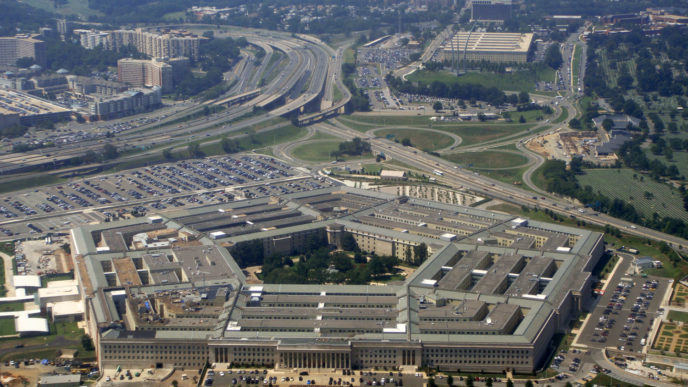
Another Fantastic Discovery in Israel: Evidence of Famed Biblical King Josiah

A clay seal found in Jerusalem has given further evidence of the reign of the famed Biblical Jewish King Josiah, who is noteworthy in Jewish history as the king who brought the Jewish people back to observance of the Torah after the nefarious reign of his predecessor Manasseh.

Discovered by the Israel Antiquities Authority and Tel Aviv University, the seal was found underneath a current-day car park; the archaeological team found evidence of a large building that featured ornate architecture and tiled floors that was later burned by the Babylonians when they conquered Jerusalem in 586 B.C. Those features enabled archaeologists to identify the building as an administrative center for the Jewish government of the king.

Archaeologists Ayyala Rodan and Sveta Pnik, who are part of the project to excavate the original city of King David, made two finds; both of them bullae, which were utilized to hold rolls of papyrus. Yuval Gadot, one of the excavators, said excitedly, “This bulla connects to a whole context, a whole world, that we have been uncovering in this spot.”

Archaeologist Dr. Yiftah Shalev of the Israel Antiquities Authority added, “What is importance is not just that they were found in Jerusalem, but [that they were found] inside their true archaeological context. It is not a coincidence that the seal and the seal impression are found here.” He added that the significance of finding the seals where they had originally been left helps to “connect between the artifact and the actual physical era it was found in.” (Read more from “Another Fantastic Discovery in Israel: Evidence of Famed Biblical King Josiah” HERE)

Follow Joe Miller on Twitter HERE and Facebook HERE
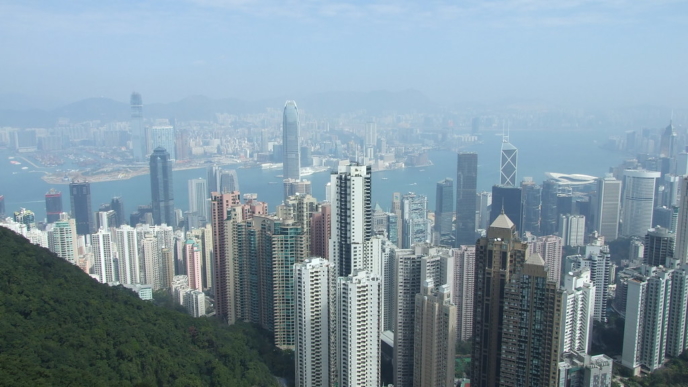
Trump Follows Through on Warning, Cuts off Aid From Central American Countries

The State Department announced Saturday it was cutting off aid to the Central American countries of El Salvador, Honduras and Guatemala, home to the thousands of immigrants attempting to reach the U.S. illegally.

“At the Secretary’s instruction, we are carrying out the President’s direction and ending FY 2017 and FY 2018 foreign assistance programs for the Northern Triangle,” a spokesman with the State Department said. “We will be engaging Congress as part of this process.”

The State Department acknowledged it will need to “engage Congress in the process,” meaning it must win the approval of lawmakers before withholding the estimated $700 million in aid that would otherwise be given to the three Central American countries. . .

The Department of Homeland Security apprehended 50,000 to 60,000 illegal migrants a month in late 2018. More than 75,000 apprehensions and encounters were made in February — the highest number in over a decade. DHS estimates March to be another record-breaker, with apprehensions expected to near 100,000. March already experienced back-to-back records in single-day apprehensions. . .

Immigrants from Guatemala, El Salvador and Honduras sent back a record $120 billion in remittances this decade, according to an immigration expert using U.N. and Latin American banking statistics. The numbers are expected to keep climbing, with immigrants from these three countries having sent $17 billion in 2018 alone. (Read more from “Trump Follows Through on Warning, Cuts off Aid From Central American Countries” HERE)

Follow Joe Miller on Twitter HERE and Facebook HERE

Chinese City Offering Rewards for People to Turn in Christian Groups

A city in southern China is offering $1,500 to citizens willing to inform on “illegal religious groups,” ramping up China’s crackdown on underground churches.

The Guangzhou Department of Ethnic and Religious Affairs officially announced the offer of the reward on its website, saying that anyone who provides information about the structure of an illegal religious group, or information leading to the capture of key members and leaders of those groups would receive 10,000 Yuan. The announcement comes as part of Guangzhou officials’ increasingly severe crackdown on Christian churches that have not registered with China’s communist government. . .

Guangzhou authorities raided and shut down Rongguili Church in December of 2018, claiming that the unregistered church had violated China’s Religious Affairs Regulation. The church, which served a congregation of roughly 5,000 Christian faithful, was one of the most prominent centers of Christian worship in southern China. Christians in Guangzhou, however, are not alone in suffering persecution from Chinese government officials.

Shortly before the closure of Rongguili Church, authorities in Chengdu shut down Early Rain Covenant Church and arrested its pastor and 100 of its 500 members. Authorities in Beijing shut down Zion Church, which served 1,500, in September of that year. Chinese authorities have repeatedly kidnapped and detained pastors and priests who refuse to submit to the Chinese Communist Party. At least four regional governments have also banned children from attending church and any other religious activity and threatened any believers caught taking a child to church with severe penalties. (Read more from “Chinese City Offering Rewards for People to Turn in Christian Groups” HERE)

Follow Joe Miller on Twitter HERE and Facebook HERE

China Warns U.S. Against Push to Label Pakistan-Based Jihadi a ‘Global Terrorist’

China and its all-weather ally Pakistan are reportedly furious with the United States for pushing a draft resolution this week to outlaw the Pakistani leader of an anti-India, U.S.-designated terrorist group directly to the United Nations Security Council, bypassing established procedures. . .

Responding to the recent U.S. move, Geng Shuang, a spokesman for China’s foreign ministry, reportedly urged the United States to “act cautiously” and avoid “forcefully” pushing the draft resolution.

“This is not in line with [the] resolution of the issue through dialogue and negotiations. This has reduced the authority of the committee as a main anti-terrorism body of the UNSC, and this is not conducive to the solidarity and only complicates the issue,” Geng added. . .

China and Pakistan are closed military and financial allies. While Pakistan refuses to condemn the reported mistreatment of Muslims in China’s Xinjiang province, Beijing has repeatedly defended Islamabad against accusations of serving as a sanctuary for terrorists.

According to the U.S. government, China faces a terrorist threat from jihadis training and operating in the Afghanistan-Pakistan region, which houses the highest concentration of terrorist groups in the world. (Read more from “China Warns U.S. Against Push to Label Pakistan-Based Jihadi a ‘Global Terrorist'” HERE)

Follow Joe Miller on Twitter HERE and Facebook HERE
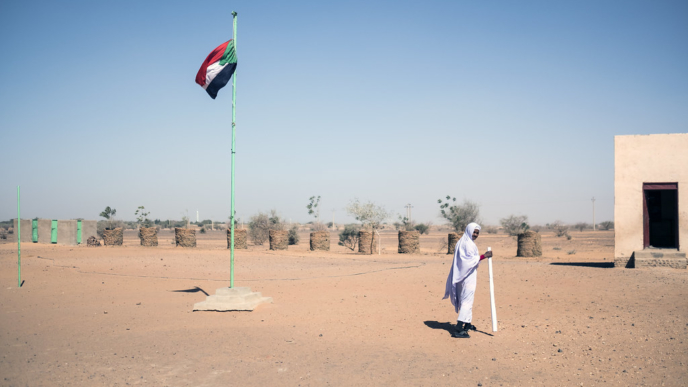
Utility Industry Aids Putin’s Stealth War on U.S. Uranium Mining

Years after the sale of Uranium One to Russia, the motivation behind the purchase is now becoming clear. On the road to dominate the global uranium supply chain, it appears that Russian President Vladimir Putin wants to bankrupt uranium mining companies operating in the U.S.

The sale of Uranium One to the mining arm of Russia’s state-owned nuclear energy company Rosatom, approved by the Obama administration including Hillary Clinton’s State Department, signaled an expansion in Putin’s global uranium ambition. It now appears Putin’s plan was not to export uranium from the U.S. but to manipulate the global uranium market to bankrupt uranium mines operating in the U.S.

Following the purchase of Uranium One, Rosatom has throttled back uranium production in the U.S. Its Willow Creek mine in Wyoming produced 362 tons of uranium in 2013 and only an estimated 47 tons in 2017. The mine stopped production in 2018. All uranium production in the U.S. is at a historic low.

But the acquisition gave Russia access to Uranium One’s mines throughout the world, including Kazakhstan, which allows Russia to circumvent the Russian Suspension Agreement that limits uranium derived from Russian mines to 20 percent of anticipated U.S. demand.

The Russian Suspension Agreement under the U.S. Trade Commission initially stopped Russian uranium sales to the U.S. because of dumping practices. Over time, periodic reviews allowed Russia to sell to the U.S. The agreement will expire in 2020.

The timing of the expiration of the Russian Suspension Agreement fits nicely into Putin’s plan.

Kazakhstan and Russia are tag-teaming an effort to undermine domestic uranium miners by putting them under significant economic pressure. Both countries can produce uranium at lower costs because of inferior environmental standards at their mining operations, and state ownership can subsidize and protect domestic production from market conditions. In addition, Kazakhstan’s export efforts also benefits from devaluation of its currency.

Accordingly, Russia and Kazakhstan are selling uranium at artificially lower prices, undercutting domestic producers. As a result, U.S. mines provide only 11 percent of uranium purchased by U.S. utility nuclear power plants, while 89 percent came from foreign sources in 2016.

Of the uranium import total, Kazakhstan, Russia, and Uzbekistan delivered 38 percent, while Australia and Canada supplied 40 percent to the U.S. The balance came from ten different countries.

On the ropes, two companies that operate uranium mines in the U.S., Ur-Energy and Energy Fuels, are seeking federal government intervention to combat the manipulated market conditions. The companies are asking the Department of Commerce to take action under Section 232 of the Trade Expansion Act of 1962, the federal government mechanism to protect industries vital for national security and threatened by imports.

Predictably, the U.S. utility industry, benefiting from low uranium prices, is fighting the mining companies’ petition, unleashing a lobbying effort to protect their profits.

The utility industry is notorious for flexing its special interest muscle to twist federal policy in its direction. Companies such as Duke Energy and Exelon were big backers of cap-and-trade legislation in 2009, which was essentially the Green New Deal 1.0.

Skyrocketing electricity prices under cap-and-trade, as promised by Obama in 2008, would have helped utility CEOs but punished Americans, especially low- and middle-income families.

From a national security viewpoint, it doesn’t make sense to buy any uranium from Russia, let alone 20 percent, especially since the end goal could be bankrupting companies producing uranium in the U.S.

Without domestic uranium production, the U.S. would be dependent on foreign sources for uranium, including Russia, to feed nuclear power plants that supply 20 percent of our nation’s electricity.

Uranium is also essential for U.S national security, since it’s used for nuclear weapons and powers the Navy’s fleet, including aircraft carriers and submarines, and more of it might be needed to support the planned military buildup under President Trump.

Unknown to most Americans, the U.S. uranium production cycle is on the verge of collapse. In addition to the uncertain future of mining, the only U.S. owned uranium enrichment facility is currently idle.

Ensuring stable domestic uranium mining is a national security issue, and it’s consistent with President Trump’s America-first agenda and his energy plan.

By fighting for cheap foreign uranium, including from Russia, utility CEOs are putting profit before national security. (For more from the author of “Utility Industry Aids Putin’s Stealth War on U.S. Uranium Mining” please click HERE)

Follow Joe Miller on Twitter HERE and Facebook HERE

Sex Payouts, Character Assassinations: Trudeau Struggles to Contain Corruption Scandal

As sordid details of the SNC-Lavalin corruption scandal emerge, Justin Trudeau’s Liberals are under fire for what many analysts allege were strategic leaks intended to smear Jody Wilson-Raybould.

The former attorney general has accused Canada’s prime minister and top staffers of attempting to interfere in the criminal prosecution of Montreal-based global engineering firm SNC-Lavalin on bribery and corruption charges relating to its government contracts in Libya from 2001 to 2011.

Since the scandal broke in February, Trudeau and the Liberals have taken a hit in the polls, dropping four points behind the Conservatives, CBC News reported in March. And the prime minister’s personal popularity has tanked more than his party’s, dropping six to eight points, with some pundits predicting the growing SNC-Lavalin scandal may be the end of Trudeau’s political career.

In a more unsavory aspect of the affair, Montreal’s La Presse revealed last month that SNC-Lavalin paid $30,000 to Saadi Gadhafi, the son of former Libyan dictator Moammar Gadhafi, to cover his hiring of prostitutes during his visit to Canada in 2008, according to the National Post. . .

The information was gathered during an investigation of Stéphane Roy, former vice-president of SNC-Lavalin, on fraud and bribery charges, and its publication was allowed after the charges were dropped in mid-February because of court delays, the National Post reported. (Read more from “Sex Payouts, Character Assassinations: Trudeau Struggles to Contain Corruption Scandal” HERE)

Follow Joe Miller on Twitter HERE and Facebook HERE

Migrants Hijack Cargo Ship

By Fox News. Migrants hijacked a cargo ship that had rescued them in the Mediterranean Sea, forcing the crew to set a course for Europe, the governments of Italy and Malta said Wednesday.

Authorities in both countries vowed to keep the vessel, identified as the Turkish oil tanker El Hiblu 1, out of their territorial waters.

Italian Interior Minister Matteo Salvini said the tanker had rescued some 120 people, and described the incident as “the first act of piracy on the high seas with migrants” as alleged hijackers.

“Poor castaways, who hijack a merchant ship that saved them because they want to decide the route of the cruise,” Salvini, who heads the anti-migrant League party, was quoted as saying by the ANSA news agency.

Salvini said weather conditions in the Mediterranean were not good; it was unclear if the tanker would end up approaching Malta or Italy’s Lampedusa island. But he had a message for the pirates: “Forget about Italy.” (Read more from “Migrants Hijack Cargo Ship” HERE)

_______________________________________________________

Rescued Migrants Hijack Merchant Ship Near Libya – Reports

By BBC News. Migrants have hijacked a merchant vessel that rescued them off Libya’s coast, ordering the crew to head towards Malta, reports say.

More than 100 migrants aboard the cargo ship are said to have acted after being told they would be taken back to Libya. . .

The EU says the decision to suspend Operation Sophia in September follows a request by Italy.

The mission was put in place four years ago to deter people smugglers and rescue migrants trying to reach Europe by boat. Tens of thousands have been saved.

Lately, the mission has largely targeted smuggling networks as the number of people making the crossing dropped sharply following a controversial deal between the EU and Libya. (Read more from “Rescued Migrants Hijack Merchant Ship Near Libya – Reports” HERE)

Follow Joe Miller on Twitter HERE and Facebook HERE