Japan Investigates Delay in Reporting US Navy Ship Collision; Other Mysterious Circumstances Abound

By Mari Yamaguchi. Japan’s coast guard is investigating why it took nearly an hour for a deadly collision between a U.S. Navy destroyer and a container ship to be reported.

A coast guard official said Monday they are trying to find out what the crew of the Philippine-flagged ACX Crystal was doing before reporting the collision off Japan’s coast to authorities 50 minutes later.

The ACX Crystal collided with the USS Fitzgerald off Japan’s coast, killing seven of the destroyer’s crew of nearly 300. The ships collided early Saturday morning, when the Navy said most of the 300 sailors on board would have been sleeping. Authorities have declined to speculate on a cause while the crash remains under investigation. (Read more from “Japan Investigates Delay in Reporting US Navy Ship Collision” HERE)
_______________________

As Japan Investigates, Other Contradictions Emerge

By Zachary Cohen.

[A]fter interviewing the ACX Crystal’s crew, the Japanese coast guard revised its crash time estimate to 1:30 a.m. [But t]he US 7th Fleet is maintaining that the collision occurred at 2:20 a.m. — and both US and Japanese officials have declined to explain why there is a discrepancy regarding timing.

Timing will play a critical role in determining exactly how the collision happened, particularly as the shipping data from Marinetraffic.com appears to indicate that the ACX Crystal made a sharp right turn at close to 1:30 am — the time that the Japanese coast guard said the crash occurred.

On Sunday, Vice Adm. Joseph Aucoin, commander of the US 7th Fleet, would not speculate on how the accident occurred, but said there would be multiple investigations into the collision, including one by the Navy’s Judge Advocate General and one by the US Coast Guard.

Other investigations could come from the Japanese and Philippine authorities, because of where the accident took place and the Philippine registration of the container ship. (Read more from Japan Investigates Delay, Other Contradictions Abound, HERE)

Follow Joe Miller on Twitter HERE and Facebook HERE.

After US Shoots Down Russian-Made Fighter, Russia Threatens to Shoot Down US Jets

By MICHAEL R. GORDON and IVAN NECHEPURENKO. Long-running tensions between the United States and Russia erupted publicly on Monday as Moscow condemned the American military’s downing of a Syrian warplane and threatened to target aircraft flown by the United States and its allies west of the Euphrates.

The Russians also said they had suspended their use of a hotline that the American and Russian militaries used to avoid collisions of their aircraft in Syrian airspace. . .

The latest escalation comes as competing forces converge on ungoverned swaths of Syria amid the country’s six-year civil war. Syrian forces and Iranian-backed militias that support them are extending their reach east closer to American-backed fighters, including forces that the Pentagon hopes will pursue the militants into the Euphrates River valley after they take the Islamic State’s self-declared capital of Raqqa. The collision of the disparate forces has, in effect, created a war within a war. (Read more about Russia’s saber-rattling after the US shoots down a Syrian SU-22 HERE).

_______________________________

Pentagon: US Shoots Down Syrian Fighter Jet for First Time

By Robert Burns. The U.S. military on Sunday shot down a Syrian Air Force fighter jet that bombed local forces aligned with the Americans in the fight against Islamic State militants, an action that appeared to mark a new escalation of the conflict.

The U.S. had not shot down a Syrian regime aircraft before Sunday’s confrontation, said Navy Capt. Jeff Davis, a Pentagon spokesman. While the U.S. has said since it began recruiting, training and advising what it calls moderate Syrian opposition forces to fight IS that it would protect them from potential Syrian government retribution, this was the first time it resorted to engaging in air-to-air combat to make good on that promise.

The U.S.-led coalition headquarters in Iraq said in a written statement that a U.S. F-18 Super Hornet shot down a Syrian government SU-22 after it dropped bombs near the U.S. partner forces, known as the Syrian Democratic Forces. (Read more from “Pentagon: US Shoots Down Syrian Fighter Jet for First Time” HERE)

Follow Joe Miller on Twitter HERE and Facebook HERE.

Massive Escalation in Syria: Iran Fires Missiles at ISIS, US Warplane Shoots Down SU-22

Iran Fires Multiple Missiles Into Syria

By Artemis Moshtaghian. Iran’s military said Sunday that it has launched several missiles into eastern Syria, targeting Islamic State fighters in retaliation for the twin attacks that rocked Tehran on June 7.

The strikes are the first time Iran has fired missiles at another country in three decades and represent a major escalation of Iran’s role in the war in Syria.

Islamic Revolutionary Guard Corps (IRGC) said on its official news website, Sepah News, that several “ground-to-ground, mid-range missiles” were fired from bases in Kermanshah province, western Iran. (Read more from this story, “Iran Fires Multiple Missiles Into Syria”, HERE)

_________________________________________________


Navy Fighter Shoots Down Syrian SU-22 After US Says its Allies Were Attacked

By Jeff Schogol. A Navy F/A-18E Super Hornet shot down a Syrian SU-22 on Sunday, giving the U.S. military its first air-to-air kill since 1999.

This is the latest example of tension between the Russian-backed Syrian regime and U.S.-led coalition forces, who are partnering with Arab and Kurdish forces to destroy ISIS.

“The Coalition’s mission is to defeat ISIS in Iraq and Syria,” the U.S. task force in charge of operations in Syria and Iraq announced on Sunday. “The Coalition does not seek to fight Syrian regime, Russian, or pro-regime forces partnered with them, but will not hesitate to defend Coalition or partner forces from any threat.”

Sunday’s incident came after Syrian aircraft attacked Syrian Democratic Forces earlier in the day, wounding several of the fighters, who are allies of the U.S.-led coalition to destroy ISIS, Combined Joint Task Force -Operation Inherent Resolve announced in a news release. (Read more from this story about the US shooting down the Syrian jet right before Iran fires missiles into the same region, HERE)

Three Sick Responses to the Murder of an Israeli Policewoman

How did the BBC, Hamas and the Palestinian Authority respond to the premeditated, terrorist murder of a 23-year-old Israeli policewoman? The answer is: true to form.

The BBC has a long history of biased, anti-Israel (and even anti-Semitic) reporting, as documented on BBCWatch.org and other sites. The bias is commonly seen in BBC’s headlines.

For example, in 2013, Labour’s Lord Ahmed “was suspended for claiming that Jews were responsible for his imprisonment after driving offences.” How did the BBC report this? “Labour peer Lord Ahmed suspended after ‘Jewish claims.’” What in the world are “Jewish claims”?

As one reader commented, “There were no ‘Jewish claims’ – it was antisemitism.”

Why, then, didn’t the BBC properly identify this as “anti-Semitism”? The word, they explained, is “too long”!

More commonly, BBC headlines mislead the reader in terms of guilt and responsibility. Compare these two headlines, one when a Palestinian is killed by Israeli soldiers and the other when an Israeli is killed Palestinian terrorists. The headlines are: “Israeli attack kills baby girl” vs. “Israeli baby killed by gunfire.”

In the former, Israel is to blame; in the latter, it is just “gunfire” that is to blame. How the gun was fired and who fired it is a mystery.

Other acts of Palestinian terrorism have been reported with headlines like this: “Bomb stokes Mid-East tension.”

Yes, just a generic bomb that somehow went off. Those bombs can be so independent and nasty.

BBC on the Murder of Israeli Policewoman

How, then, did the BBC report the terrorist slaying of this young Israeli policewoman? Brace yourself. It’s as ugly as it gets for a major news outlet like the BBC. The headline read, “Three Palestinians killed after deadly stabbing in Jerusalem.” That is outrageous.

There is no mention of the cold-blooded murder of a young Israeli woman. No mention that the deadly stabbing was a Palestinian terrorist attack. No mention that the three Palestinians killed were the terrorist murderers. And the emphasis, inexcusably, is put on the rightful killing of terrorists armed with an assault rifle and knives.

BBC’s apology was too little too late: “We accept that our original headline did not appropriately reflect the nature of the events and subsequently changed it. Whilst there was no intention to mislead our audiences, we regret any offense caused.”

Yes, just another innocent error.

Hamas Reacts to the Murder

Hamas reminded us that its anti-Israel hatred is as deep as ever, despite recent claims that it had softened its tone. Prime Minister Netanyahu literally threw such claims into the trash can last month.

Like the BBC, Hamas is consistent. In April, Hamas hailed the vehicular ramming attack that killed one Israeli and wounded another. “We bless this heroic ramming attack at the Ofra intersection near Ramallah, which is a response to the continued crimes of the Zionist occupation at the expense of our people,” said Hamas spokesman Abdul-Latif Qanou.

Now, both Hamas and ISIS are claiming responsibility for Friday’s murder. (Heaven forbid that ISIS gets the credit for such a good kill.) A Hamas spokesman described the killers as “three hero martyrs.” Yes, three hero martyrs who attacked Israelis before the Sabbath, wounding one and stabbing the other to death. How heroic.

Palestinian Authority is Outraged … That the Terrorists Were Killed

As for the Palestinian Authority, Israel’s supposed peace partner, they too have proven true to form.

It has often been documented that the PA names children’s schools and city squares after mass-murdering terrorists. And the fact that the PA pays the salaries of imprisoned terrorists is a point of contention now with the Trump administration.

So how did Fatah, the PA’s political faction, respond to Friday’s terrorist attack? It condemned Israel for killing the terrorists, calling it a “war crime”! Here’s the official statement from spokesperson Osama al- Kawasm: Fatah “condemns the war crime carried out by Israeli occupation forces in Jerusalem against three Palestinian teens.” (The terrorists were 17, 18, and 19.) Fatah added that “the international community’s silence emboldened Israel to further spill the blood of Palestinians.”

Yes, those evil Israelis did it again. They, and they alone bear the guilt.

And so, as a beautiful young woman named Hadas Malka succumbed to multiple stabbing wounds, the BBC misreported the murder, Hamas praised it, and Fatah condemned Israel for killing the young murderers. Do you see now why I described their responses as “sick”?

In reality, the responses of Hamas and Fatah in particular only provoke further bloodshed, thereby bereaving the families of both Palestinians and Israelis. This is beyond sick. (For more from the author of “Three Sick Responses to the Murder of an Israeli Policewoman” please click HERE)

Follow Joe Miller on Twitter HERE and Facebook HERE.

How Dissidents Are Responding to Trump’s Change in Cuba Policy

The letter sent by Cuba’s main dissident group to President Donald Trump thanking him for his decision to prohibit U.S. trade with the military, security and intelligence services on the island—their tormentors—serves as a timely rebuke of President Barack Obama’s warm embrace of the Castro regime and those still defending it.

The letter was sent by Berta Soler on behalf of the group she leads, The Ladies in White. These brave, mostly Afro-Cuban women suffer constant harassment, beatings, and incarcerations at the hand of the Castro regime when they attempt to march on the streets of Havana on Sundays.

“These days, Mr. President, when most of the world responds with a deafening silence to the harassment, arbitrary detentions, beatings, house searches, and robberies against peaceful opponents, human rights activists and defenseless women, your words of encouragement are most welcomed,” Soler wrote.

“We will continue to fight for our rights because we recognize it is our duty to free ourselves, but we can’t do it alone. It is also the duty of the freedom loving peoples of the world. The United States must continue to be the first defender of those who lack rights and freedoms in the world,” she added.

Sent Saturday, one day after Trump unveiled in Miami his new restrictions, the letter crystalizes what is at stake. One can believe these women’s intimate understanding of the vicious nature of the Cuban regime, or those who have come out in support of Obama’s policy, who minimize the brutality and economic devastation unleashed upon Cuba by the communist regime.

Perhaps the most acidic critic of the Trump doctrine has been the architect of Obama’s policy, his former deputy Ben Rhodes. In op-eds and tweets since last week, Rhodes has zigzagged between insisting that Trump’s changes won’t matter and warning that they will have a chilling effect on trade.

He has been joined by a cadre of progressive journalists, especially at NPR and MSNBC, whose leading defender of relations with Raul Castro’s Cuba, Andrea Mitchell, reported her show from Havana last week.

Trump was unstinting in his attacks on the Castros’s nearly six decade uninterrupted military dictatorship of Cuba.

“For nearly six decades, the Cuban people have suffered under communist domination. To this day, Cuba is ruled by the same people who killed tens of thousands of their own citizens, who sought to spread their repressive and failed ideology throughout our hemisphere, and who once tried to host enemy nuclear weapons 90 miles from our shores,” said Trump in Miami.

“The Castro regime has shipped arms to North Korea and fueled chaos in Venezuela. While imprisoning innocents, it has harbored cop-killers, hijackers, and terrorists. It has supported human trafficking, forced labor, and exploitation all around the globe. This is the simple truth of the Castro regime,” he added.

“My administration will not hide from it, excuse it, or glamorize it. And we will never, ever be blind to it. We know what’s going on and we remember what happened,” said the president, in a clear reference to his predecessor.

Obama not only unilaterally ended many restrictions on trade and travel with Cuba after he announced on Dec. 17, 2014 that he would undo the adversarial approach toward Castro of his 10 predecessors, Obama went out of his way to extend his hand to those who pummel people like Soler.

He traveled to Havana last May with his entire family, went to a baseball game with the dictator Raul Castro, and even did the wave with him while in the stands. At no time did he make his warmth contingent on Castro promising to ease up on dissidents.

And indeed, human rights groups report that political beatings and arrests (nearly 10,000 in 2016 alone) have increased.

The arguments made by Rhodes, Mitchell et al basically boil down to “sure, Mr. Castro ain’t no Thomas Jefferson, but there are worse people.”

In an op-ed in The Atlantic on Friday, Rhodes laid much of the blame for Cuba’s ruined economy on the U.S. embargo of the past six decades, rather than on the fact that communism has been a failed system everywhere it has been tried.

“Yes, the Cuban government shoulders its share of the blame,” Rhodes allows in passing. “But there are dozens of authoritarian governments; we do not impose embargoes on China or Vietnam, Kazakhstan or Egypt.” He refers to the dissidents once in his piece, damning them by calling them “the dissidents that the United States supports.”

Mitchell made similar comments last week, suggesting at one point that though Castro may not hold elections, world leaders like Turkey’s Recep Tayyip Erdogan and the Philippines’ Rodrigo Duterte are worse.

These comments and others make clear why Castro gets a pass. Erdogan and Duterte represent threats to democracy in their countries, but both were democratically elected, whether we like it or not, and lead nations that are treaty allies, which makes things tricky.

The Castro brothers have not had elections since they took over in 1959 and lead a virulently anti-American regime, which as Trump said, continue to destabilize our region.

One can only decry that the Obama opening to the Castros has been reversed if one is blind to the brutality of the Castro government and the threat it represents to American interests and Cuban lives. (For more from the author of “How Dissidents Are Responding to Trump’s Change in Cuba Policy” please click HERE)

Follow Joe Miller on Twitter HERE and Facebook HERE.
Experts: To Stop Global Jihad, Wage War Against Political Islam

The Senate Homeland Security and Governmental Affairs Committee brought forward a few of the nation’s premier experts on extremist ideologies this week for a hearing on “Ideology and Terror: Understanding the Tools, Tactics, and Techniques of Violent Extremism.”

America continues to wage an all-out effort to battle the forces of global jihadism, but has had little success in preventing the spread of radical Islam. So, what are we missing? Why has the West failed to stop global jihad?

The panel agreed that a new path forward — of combating political Islam (or, “Islamism”) and its state-sponsors — was needed.

Ayaan Hirsi Ali, a research fellow at the Hoover Institution and a world-renowned expert on Islamic extremism, shared her thoughts on how to fight back against the Islamist epidemic.

Her testimony was based on her recently published monograph: “The Challenge of Dawa: Political Islam as Ideology and Movement.” In it, the Somali-born Dutch-American Ali discusses the link between non-violent Islamist movements and active jihadi extremism. Ali stresses that the only way to defeat the radicalism is to wage ideological war against the countries, groups, and individuals that promote political Islam.

“Political Islam is not just a religion as most Western citizens recognize the term ‘religion’ — a faith. It is also a political ideology, a legal order, and in many ways also a military doctrine,” Ali said.

The next witness called upon to deliver his testimony was Dr. John Lenczowski, president of the Institute of World Politics in Washington, D.C.

Lenczowksi, who served on the Reagan administration’s National Security Council specializing in Soviet affairs, discussed how to defeat the jihadist enemy through ideological warfare. Most importantly, the U.S. needs to define what victory looks like, he stressed.

“The United States has spent trillions of dollars fighting radical Islamist terrorism. We have done so by treating jihadist aggression as principally a military and intelligence problem. Yet, it is a civilizational problem,” Lenczowski said.

“To solve this problem necessitates fighting a war of ideas. The problem is that we have virtually no ideological warriors in this war.”

The Senate panel’s third witness was Asra Q. Nomani, the founder of the Muslim Reform Movement and former Wall Street Journal reporter.

Similar to Ali, the India-born Nomani explained that our enemy threat doctrine starts and ends with political Islam. The tenets of Islamism are pursued not only by groups like al-Qaida and ISIS, but also by “state sponsors of extremism” such as Saudi Arabia, Qatar, and Iran, Nomani said.

“If you doubt whether Islamism is an extremist ideology, please recognize its central tenet: It seeks to overthrow our democracies to supplant them with Islamic governance and sharia … which, importantly, violates United States law on multiple fronts,” Nomani said.

“Political Islam threatens life, liberty, and the pursuit of happiness in the United States, and globally. It even considers young girls attending an Ariana Grande concert ‘dangerous’ because of the freedoms they are enjoying.”

Click here for the witnesses’ full testimony. (For more from the author of “Experts: To Stop Global Jihad, Wage War Against Political Islam” please click HERE)

Follow Joe Miller on Twitter HERE and Facebook HERE.

Russia Claims It Killed ISIS Leader Baghdadi in Airstrike

The Russian defense ministry claims to have killed Islamic State leader Abu Bakr al-Baghdadi in a May 28 airstrike in Raqqa, Syria.

Russian forces in Syria launched the airstrike after receiving intelligence that ISIS leaders were planning a meeting in the outskirts of Raqqa.

“According to the information that is being verified through various channels, ISIS leader Abu Bakr al-Baghdadi also attended the meeting and was killed in the airstrike,” the ministry said in a statement Friday, according to the Associated Press.

In addition to several senior ISIS leaders, Russia estimates around 30 field commanders and 300 personal guards were killed in the strike.

The ministry claims it informed the U.S. of the airstrike in advance. Air Force Col. John Dorrian, the spokesman of the U.S.-led coalition, said he could not confirm the Russian report of Baghdadi’s death. (Read more from “Russia Claims It Killed ISIS Leader Baghdadi in Airstrike” HERE)

Follow Joe Miller on Twitter HERE and Facebook HERE.
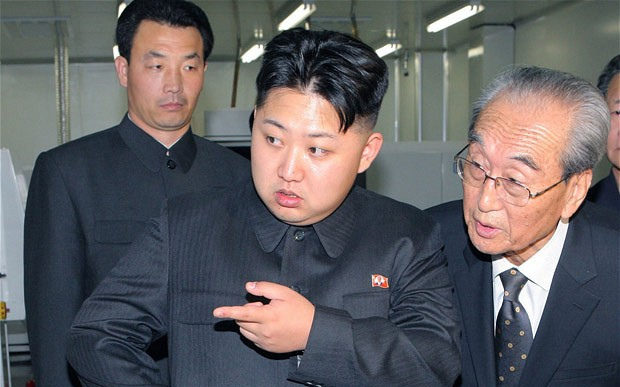
Father of College Student Released From N. Korea Doesn’t Buy Explanation for Son’s Coma

North Korea returned a young college student [Otto Frederick Warmbier] detained for over a year this week. He’s in a coma, and his parents don’t believe a word of North Korea’s explanation . . .

Warmbier returned to Cincinnati Tuesday and is now being treated at the University of Cincinnati Medical Center. The comatose student’s condition is stable, but he suffered a “severe neurological injury,” according to a spokesperson from the medical facility where Warmiber is receiving care.

He reportedly fell into a coma shortly after his trial, and no one had heard anything from Warmbier for fifteen months.

“Even if you believe their explanation of botulism and a sleeping pill causing the coma, and we don’t, there is no excuse for any civilized nation to have kept his condition secret and deny him top-notch medical care for so long,” his father, Fred Warmbier, said at a press conference Thursday.

The U.S. recently obtained intelligence reports suggesting that North Korean authorities brutally beat Warmbier while in custody, a senior American official told The New York Times. There were actually serious concerns that the young student was dead. Some American officials suspect that Warmbier’s current condition is the result of his treatment. (Read more from “Father of College Student Released From N. Korea Doesn’t Buy Explanation for Son’s Coma” HERE)

Follow Joe Miller on Twitter HERE and Facebook HERE.

US and Vietnam Deepen Ties During Prime Minister’s Recent Visit

The May summit between President Donald Trump and Vietnamese Prime Minister Nguyen Xuân Phúc demonstrated the extent of warming relations between Vietnam and the U.S.

Over the past two decades, U.S.-Vietnam relations have been relatively stable with converging interests in economics, military affairs, and geopolitics. This relationship will prove to be particularly important as both countries contend with China’s expansion in the South China Sea.

Hours after meeting with Trump, Phúc spoke at The Heritage Foundation about Vietnamese-American relations and Vietnam’s security concerns.

During his speech, the prime minister touched on several shared U.S.-Vietnamese interests. He commended the trading of technology and produce, the signing of $15 billion in contracts, the investing of $10 billion to American projects in Vietnam, and the expanding of tourism and education.

According to U.S. Commerce Secretary Wilbur Ross, part of the deals included a $3.4 billion investment in goods manufactured in the U.S. that support 23,000 jobs.

The prime minister also mentioned that investments between the two countries continue to be signs of good relations, with 850 American projects already in Vietnam worth over $10 billion and Vietnam-issued licenses making way for $50 to $70-million projects in America.

Converging military interests are also bringing the two nations closer, despite their embattlement in the Vietnam War decades ago.

The White House announced that the U.S. and Vietnam pledged to strengthen defense ties under the 2011 Memorandum of Understanding on Advancing Bilateral Defense Cooperation and the 2015 Joint Vision Statement on Defense Relations.

One of the most noticeable agreements in recent months is the delivery of six patrol boats and a decommissioned U.S. Coast Guard Hamilton-class cutter. More measures to expand maritime security have also been in the talks between the two countries.

As for humanitarian issues, Phúc advocated for “accelerated humanitarian cooperation to address [the] consequences of war” through continued cooperation in areas such as decontamination, extraction of explosives, and investigation of missing soldiers.

The U.S. and Vietnam have long cooperated in the accounting for American servicemen missing from the Vietnam War.

One topic the prime minister did not address was the issue of human rights for Vietnamese citizens.

According to the State Department, Vietnam has a poor track record with its restrictive policies on speech, its poor judicial system, and inhumane police treatment.

Many Vietnamese activists urged Trump to address arbitrary arrests and beatings of citizens like bloggers defending land-rights and Catholic priests protesting the Formosa Plastics Corp. environmental disaster.

Prior to the prime minister’s visit, however, the U.S. and Vietnam did hold human rights dialogues in Hanoi—something that would not be possible without a broader, positive relationship.

The United States and Vietnam have intersecting interests across a range of issue areas. The two nations should seek to develop those common interests through continued economic, cultural, military, and humanitarian engagement. (For more from the author of “US and Vietnam Deepen Ties During Prime Minister’s Recent Visit” please click HERE)

Follow Joe Miller on Twitter HERE and Facebook HERE.

Reversal: Trump Sells Fighter Jets to Terror-Supporting Qatar

After taking credit for a Mideast-wide initiative to shine a light on the terror-supporting activities of the government of Qatar, President Donald Trump has done a dramatic reversal and will sell Doha up to 36 U.S. military jets.

Bloomberg reported Wednesday afternoon that the Qatari defense minister will meet with Defense Secretary James Mattis at some point later that day to officially sign the agreement.

On June 6, the president tweeted about Qatar’s support for terrorism:

Now, just over one week later, as evidenced by the fighter jet sales, he appears to have little concern with the country labeled by some as the foremost supporter of the Islamic State and other jihadist groups like al-Qaida and Hamas.

Over the past couple weeks, several Middle Eastern countries have imposed boycotts on Qatar, citing its support for terrorist groups like the Muslim Brotherhood and Hamas. The Arab states also remain gravely concerned about its diplomatic endeavors with the regime in Iran, which views most Sunni states as enemy nations.

The Trump administration has sent mixed messages about its policy toward Qatar, with some White House officials calling for an end to hostilities, and others calling for Doha to do more to stop support for terror. While the State Department has pushed for conflict resolution, White House officials often point to Qatar’s long-suspected terror financing.

The Qatari government has long solicited favor in Washington, D.C., by dumping millions of dollars into lobbying governments, past state officials, and prominent think tanks and universities. Doha recently signed a $15 million deal with the Brookings Institution, arguably the most prominent left-of-center think tank in the U.S. The Gulf state also donated $1 million to the Clinton Foundation while Hillary Clinton was serving as secretary of state.

In addition to the White House deal with Qatar, the administration has signed $100-plus billion mega-deal with Saudi Arabia to sell American military equipment to the Gulf monarchy. Like Qatar, Saudi Arabia has been accused of financing and arming terrorist networks in the Middle East. An effort led by Sen. Rand Paul, R-Ky., to block the arms sale failed in the Senate Tuesday by a vote of 47-53. (For more from the author of “Why Yesterday’s Near-Massacre? Look at Bernie Volunteer’s Facebook Postings, History of Democratic Party” please click HERE)

Follow Joe Miller on Twitter HERE and Facebook HERE.