Syria Cease-Fire Collapse Highlights How Far US-Russia Relations Have Fallen

The story is depressingly familiar.

On Friday, the cease-fire in Syria, which was brokered by U.S. Secretary of State John Kerry and his Russian counterpart Sergei Lavrov, collapsed as Russian and Syrian warplanes resumed their scorched earth airstrike campaign in Aleppo.

“Russia has no vested interest in stability in the Middle East,” Stephen Blank, senior fellow for Russia at the American Foreign Policy Council, told The Daily Signal.

“For Russia, security is only achievable if everyone else is insecure,” Blank said. “They’re not peacemakers, it’s a pretense. They want to force people to accept that Russia is important.”

The collapse of the cease-fire in Syria is the latest in a series of setbacks for U.S.-Russian relations.

Repeated attempts to cooperate in defusing conflicts in Ukraine and Syria have fallen flat. And a pattern of Russian warplane flybys of U.S. military aircraft and naval vessels in Eastern Europe, as well as allegations that the Kremlin is trying to influence the U.S. election through cyberattacks have exacerbated tensions.

Joint operations to support the International Space Station are among the last holdouts of post-Cold War cooperation between the U.S. and Russia.

Verbal sparring between Kerry and Lavrov at a United Nations Security Council meeting Wednesday highlighted how relations between Russia and the U.S. are at a post-Cold War nadir.

“Russia and the United States are in a state of conflict,” Blank said. “But it’s not a new Cold War. It’s a struggle between democracy and autocracy, not communism and capitalism.”

War of Words

The Syrian cease-fire, which went into effect Sept. 12, was dead on arrival, underscoring how far U.S.-Russia relations have deteriorated. The failed truce also highlighted intractable differences of opinion over key questions related to the war in Syria, such as the fate of the country’s ruler, Bashar al-Assad.

The 5-year-old war in Syria has displaced half of the country’s population and is estimated to have killed more than 400,000 people.

Fighting briefly ebbed last week in Syria after the cease-fire allegedly went into effect, but the war never stopped.

The cease-fire edged toward total collapse Monday night when, according to U.S. officials, Russian warplanes bombed a convoy transporting humanitarian aid to the 78,000 people trapped in the rebel-controlled city of Aleppo.

Twenty out of the convoy’s 31 trucks were destroyed, and about 20 people died, according to news reports.

The strikes were likely carried out by two Russian Su-24 warplanes, which were recorded as operating in the vicinity of the convoy, according to U.S. officials.

Marine Corps Gen. Joe Dunford, chairman of the Joint Chiefs of Staff, said during Senate testimony on Thursday that either Russian or Syrian warplanes might have attacked the convoy.

“It was either the Russians or the regime,” Dunford said. “There’s no doubt in my mind that the Russians are responsible. I just don’t know whose aircraft actually dropped the bomb.”

At the U.N. on Wednesday, Kerry blamed Russia for the attack.

The Kremlin has subsequently suggested a series of alternative scenarios, including the possibility that a U.S. drone carried out the strike, or that the convoy was attacked from the ground by opposition forces fighting against the Assad government.

“I listened to my colleague from Russia and I sort of felt like we’re in a parallel universe here,” Kerry said in response to Lavrov’s remarks at Wednesday’s U.N. Security Council meeting.

Kerry called for a halt in Syrian and Russian airstrikes to allow the cease-fire to take hold.

Yet, as of Friday, Russian and Syrian airstrikes had resumed in Aleppo and a new offensive by Assad’s forces to take back the city had begun, according to news reports from the region.

Machinations

In a gambit to increase its importance on the world stage, Moscow has positioned itself as a key player in negotiating peace deals in conflicts it started, such as Ukraine, or elbowed its way into, as in Syria.

“I think Russia, through Putin, is the ultimate opportunist,” said Steven Bucci, visiting fellow at The Heritage Foundation’s Allison Center for Foreign Policy Studies.

“They see U.S. weakness and exploit it,” Bucci, a former Army Special Forces commander, said. “I’m not sure if they want to be peace arbiters, but they want influence, and they need domestic control. Their growing engagements give them both. They are now seen as a serious player on the world stage, who many believe are more steady than the U.S. That turnaround is remarkable.”

Some experts claim that Russia has little genuine interest in ending the conflicts in Ukraine or Syria. The longer those conflicts last, some say, the longer Russia is able to remain relevant as a global power.

“That creaking sound you hear is Russia’s international credibility taking an additional hit,” White House spokesman Josh Earnest told reporters in Washington.

Modern Russia doesn’t have the Soviet Union’s military clout to force countries in Eastern Europe to succumb to its vassalage or to shape outcomes in other regions like the Middle East.

But the metrics of state power in the post-Cold War era are not defined by the ability to invade or subjugate countries. Russia has created diplomatic leverage in Ukraine and Syria through limited military operations, which exploit the reluctance of U.S. and European leaders to become entangled in those conflicts.

In 2013, Assad used chemical weapons against rebel-controlled pockets of the Damascus suburbs. The attacks killed about 1,500 civilians, including more than 400 children, and tested President Barack Obama’s “red line” warning to Assad—that the use of chemical weapons would spur a U.S. military response.

As the U.S. prepared to attack, Russia stepped in to arbitrate a last-minute deal to dismantle Syria’s chemical weapons stockpiles. The U.S. never launched punitive strikes, and Assad, a Moscow ally, remains entrenched in power.

“Russia is working hard to show the U.S. is not the leader it claims to be, but Russia is,” Bucci said. “They know Obama does not want or have the stomach for difficult foreign policy situations, and that Kerry is a incompetent negotiator. They are taking full advantage of that.”

In Ukraine, the more than 2-year-old conflict is in a perpetual holding pattern, periodically spiking in violence. Russia played a hand in brokering multiple failed cease-fires while it simultaneously and covertly armed pro-Russian separatists and deployed its own troops inside Ukraine.

“Nowhere is Russia’s intervention in internal affairs more brazen and bloody than in the conflict in Ukraine, which Russia continues to fuel by arming, training, and commanding so-called ‘separatists,’” Tom Malinowski, U.S. assistant secretary of State for Democracy, Human Rights, and Labor, said during remarks at a Sept. 19 meeting of the Organization for Security and Cooperation in Europe in Warsaw, Poland.

“The Cold War was a global struggle between two power blocks—that’s not the case today,” Blank said. “Today, it’s a multipolar world order. Russia is upset they don’t have the status they had during the Cold War. They want to be coequal to the United States, but they’re not going to get it.” (For more from the author of “Syria Cease-Fire Collapse Highlights How Far US-Russia Relations Have Fallen” please click HERE)

Follow Joe Miller on Twitter HERE and Facebook HERE.

Discovery: Ancient Old Testament Fragment Identical to Copy Found 2,000 Years Later

Modern technology met ancient text when imaging software showed a 2,000-year old Israeli scroll matches the modern Hebrew Bible’s Book of Leviticus.

As reported by The Associated Press, the scroll was discovered decades ago and has been kept in a storeroom thanks to being too brittle to open. According to researchers, that’s no longer a problem:

The passages from the Book of Leviticus, scholars say, offer the first physical evidence of what has long been believed: that the version of the Hebrew Bible used today goes back 2,000 years.

The discovery, announced in a Science Advances journal article by researchers in Kentucky and Jerusalem on Wednesday, was made using “virtual unwrapping,” a 3D digital analysis of an X-ray scan. Researchers say it is the first time they have been able to read the text of an ancient scroll without having to physically open it.

“You can’t imagine the joy in the lab,” said Pnina Shor of the Israel Antiquities Authority, who participated in the study.

The digital technology, funded by Google and the U.S. National Science Foundation, is slated to be released to the public as open source software by the end of next year.

The scroll was discovered 46 years ago inside an ancient synagogue that was destroyed in a fire. Preserved by the dry climate, it was left largely undamaged until researchers attempted to open it. Since 1970, it has set dormant, unreadable and unusable.

The experimental reading was requested last year by the man who discovered the scroll, Yosef Porath. AP reports he asked researchers at the Israel Antiquities Authority’s Dead Sea Scrolls preservation lab in Jerusalem to scan a box of scrolls. While Shor initially asked if Porath was “joking,” she agreed to do the scans.

[Shor] agreed, and a number of burned scrolls were scanned using X-ray-based micro-computed tomography, a 3D version of the CT scans hospitals use to create images of internal body parts. The images were then sent to William Brent Seales, a researcher in the computer science department of the University of Kentucky. Only one of the scrolls could be deciphered.

Using the “virtual unwrapping” technology, he and his team painstakingly captured the three-dimensional shape of the scroll’s layers, using a digital triangulated surface mesh to make a virtual rendering of the parts they suspected contained text. They then searched for pixels that could signify ink made with a dense material like iron or lead. The researchers then used computer modeling to virtually flatten the scroll, to be able to read a few columns of text inside.

“Not only were you seeing writing, but it was readable,” said Seales. “At that point we were absolutely jubilant.”

The scroll is expected to be of assistance in expanding the understanding of the Hebrew Bible. The famed Dead Sea Scrolls date back more than 1,700 years, but differ significantly from the modern Hebrew Bible, despite scholars’ belief that the Bible has changed little since the time of Christ. One scholar told AP after the recent discovery that “in 2,000 years, this text has not changed.”

The implications for other historical discoveries are also significant, according to Tel Aviv University’s Noam Mizrahi. “It’s not only what was found, but the promise of what else it can uncover, which is what will turn this into an exciting discovery,” he told AP. (For more from the author of “Discovery: Ancient Old Testament Fragment Identical to Copy Found 2,000 Years Later” please click HERE)

Follow Joe Miller on Twitter HERE and Facebook HERE.

OBAMA’S PARTNERS IN PEACE: We Will Turn Israel ‘to Dust’

A banner at an Iranian military parade Wednesday threatened to “turn Tel Aviv and Haifa to Dust,” The Jerusalem Post reported Wednesday.

Iran held military parades across the country to commemorate the start of the 1980 war with Iraq. At the Tehran parade, which was shown on state television, a banner on a military truck read, “If the leaders of the Zionist regime make a mistake then the Islamic Republic will turn Tel Aviv and Haifa to dust.”

Iran displayed its latest military equipment at the parades, including the recently acquired Russian S-300 air defense systems. The Iranian navy displayed over 500 vehicles, including submarines and helicopters, at the parade in the port city of Bandar Abbas.

The test launch of an Iranian ballistic missile received global attention in March because the missile had the phrase “Israel must be wiped from the face of the earth” inscribed on it in Hebrew.

Ahmad Karimpour, a senior adviser to the Iranian Revolutionary Guard Corps’ elite Quds Force, boasted in May that “If the Supreme Leader’s orders [are] to be executed, with the abilities and the equipment at our disposal, we will raze the Zionist regime in less than eight minutes.” (Read more from “OBAMA’S PARTNERS IN PEACE: We Will Turn Israel ‘to Dust'” HERE)

Follow Joe Miller on Twitter HERE and Facebook HERE.

Walls Are Beautiful

The UK is building a wall to keep the denizens of the Calais “Jungle” migrant camp from invading cars and trucks after some 22,000 breaches of the port road. The “Jungle” is a nightmare for the local population which has been terrorized by the mob of migrants aspiring to invade the UK.

The French have blamed the British and the British have blamed the French. But the migrant invasion is not the fault of either alone. In a sense it is the fault of everyone in the European Union . . .

Instead of bringing countries together, open borders create conflicts.

The biggest source of tension between America and Mexico remains the open border. Not only is the open border bad for America, but it’s bad for Mexico. As profitable as the remittances might be, the cost of the cartels and migrants drawn to that border end up offsetting it.

What globalists fail to understand is that good walls really do make for better neighbors. Countries with walls may occasionally invade each other, but a lack of walls means that the invasion never stops. Walls are torn down in the name of peace, but the lack of walls is what makes peace impossible. (Read more from “Walls Are Beautiful” HERE)

Follow Joe Miller on Twitter HERE and Facebook HERE.

Scathing Report: America’s ‘Ultimate Failure’ in Afghanistan

A blistering new report blasts the U.S. government’s pouring of billions of dollars into projects in Afghanistan with inadequate oversight that in many cases fueled corruption on unprecedented levels and ultimately undermined America’s mission there.

The 164-page report, published online today by the Special Inspector General for Afghanistan Reconstruction (SIGAR), is the first in the agency’s “Lessons Learned” series, which takes a broader look at the U.S. government’s shortcomings in the 15 years since the 2001 invasion. SIGAR previously released report after report about the waste of millions of dollars in failed individual projects.

This report, titled “Corruption in Conflict,” says that at early on, the U.S. government did not “fully appreciate the potential for corruption to threaten the security and state-building mission in Afghanistan,” where some form of regular corruption has existed for centuries.

“The U.S. government also failed to recognize that billions of dollars injected into a small, underdeveloped country, with limited oversight and strong pressures to spend, contributed to the growth of corruption,” the report says.

In its dogged pursuit of al-Qaeda and the Taliban, the U.S. threw its lot in with local “warlords” and their militias — men who later rose to prominence in the Afghan government and used their positions engage in “rampant corruption activities,” the report says. (Read more from “Scathing Report: America’s ‘Ultimate Failure’ in Afghanistan” HERE)

Follow Joe Miller on Twitter HERE and Facebook HERE.
Sniper Takes out ISIS Executioner From a Mile Away

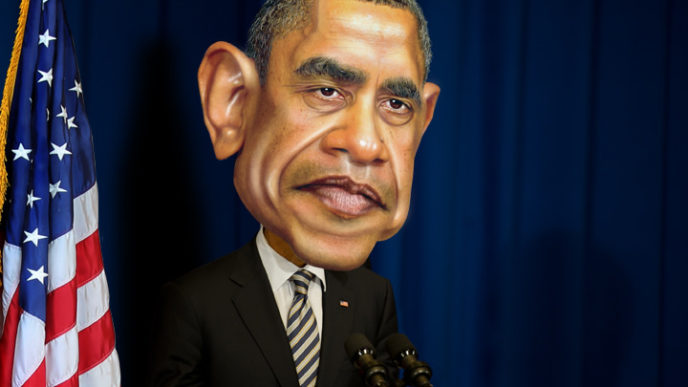
A sharpshooter killed a top ISIS executioner and three other jihadists with a single bullet from nearly a mile away — just seconds before the fiend was set to burn 12 hostages alive with a flamethrower, according to a new report.

The British Special Air Service marksman turned one of the most hated terrorists in Syria into a fireball by using a Barett .50-caliber rifle to strike a fuel tank affixed to the jihadi’s back, the UK’s Daily Star reported Sunday.

The pack exploded, killing the sadistic terrorist and three of his flunkies, who were supposed to film the execution, last month, the paper said.

The ISIS butcher — who reportedly delighted in burning hostages alive — had been on a US “kill list” for several months, sources told the paper, which did not identify the sniper or the executioner. (Read more from “Sniper Takes out ISIS Executioner From a Mile Away” HERE)

Follow Joe Miller on Twitter HERE and Facebook HERE.
Journalists Caught in the Crossfire of the Ukraine-Russia Conflict

There is a memorial to murdered Ukrainian journalists on Khreshchatyk, Kyiv’s central boulevard.

It’s a simple, nondescript metal plaque flanked by flowers on the side of a building. Some of the names are faded now, worn down by the years and the elements.

The names date from 1992, the first year after Ukraine gained its independence from the Soviet Union, underscoring how the fall of communism 25 years ago did not portend a new era of vibrant democratic culture in Ukraine.

Ukraine has spent much of the past quarter century under oligarchic thug rule, in which free and objective journalism was often seen as a nuisance to be controlled and manipulated—and sometimes a threat worth eliminating—by those in power.

And this summer, more than two years after Ukrainians took to the streets to overthrow the regime of former pro-Russian President Viktor Yanukovych, a string of violent incidents against journalists and media outlets has rocked Ukraine’s capital.

Journalists are caught in the crossfire of those wishing to control the country (both in Kyiv and in Moscow), as well as targets of simmering anti-Russian sentiments due to the ongoing war in the east.

Journalists of all leanings have been targeted this summer, including government corruption watchdogs and those accused of maintaining a pro-Russian bias.

On July 20, Pavlo Sheremet, a well-known journalist in Ukraine for the news agency Ukrainska Pravda, was killed in a brazen car bomb attack in central Kyiv. Ukrainian officials requested the assistance of U.S. FBI investigators, but a motive has not yet been determined and officials have not named any suspects.

“I think the final aim was to scare or to intimidate Ukrainian journalists apart from or simultaneously trying to further destabilize the situation in the country,” said Andriy Kulykov, chairman of Hromadske Radio, during a broadcast interview for the independent Ukrainian radio news outlet.

“I don’t see that Ukrainian investigative journalists are limited in their duties or became scared and abandoned their jobs after Sheremet’s murder,” said Viktor Kovalenko, a Ukrainian journalist and former journalism professor.

“On the contrary, I see that now they are turning their eyes inside media society to find out how deeply Kremlin’s manipulators infiltrated and rule it according to their infowar against Ukraine,” Kovalenko added. “This attention to ourselves will help in cleaning, rethinking of journalism standards, and with actual rebirth of Ukrainian journalism.”

On the same day as Sheremet’s assassination, a knife-wielding man attacked Maria Rydvan, 25, an editor for Forbes Ukraine, as she was walking in a central Kyiv park.

“In park for no apparent reason a man ran to me and stabbed me three times… It’s all very strange,” Rydvan wrote on her Facebook page.

On Aug. 28, Russian journalist Alexander Shchetinin was found dead on the balcony of his Kyiv apartment. He died due to what police said was a self-inflicted gunshot wound to the head, according to Ukrainian news reports, and was discovered by friends who had come to celebrate his birthday.

Shchetinin renounced his Russian citizenship to be a Ukrainian citizen and founded the Kyiv-based New Region news agency.

Ukrainian officials are investigating Shchetinin’s death as a suicide. The Organization for Security and Cooperation in Europe, or OSCE, is pushing for his death to be “swiftly and thoroughly investigated.”

Without directly alleging that Shchetinin’s death was the result of foul play, Dunja Mijatovic, OSCE representative on freedom of the media, said Ukrainian officials should “improve the fragile situation regarding the safety of journalists and fully and effectively address the issue of impunity.”

Information Wars

On Sunday, the Kyiv offices of the TV news station Inter were set ablaze in an arson attack. Protesters had gathered outside the building to rally against the channel’s alleged pro-Russian bias, setting tires on fire and spray painting graffiti on the side of the building and on a fence hastily put up to keep them back.

One message read: “Inter—get out!” Another said: “Inter agents of Moscow.”

There were reports of minor injuries, but no deaths. Protesters barricaded Inter’s offices until Tuesday, when a deal was allegedly reached with the news agency, in which unspecified changes to Inter’s editorial policy were agreed upon.

“If the channel fails to observe the deal, the blockade will be resumed in a more radical way,” said Oleksiy Serdiuk, a protest leader, according to the Ukrainian news site Ukraine Today.

Many Ukrainians took to social media for a polarizing debate about the Inter incident.

Inter is commonly known among Ukrainians to harbor a pro-Russian bias, and after more than two years of war against pro-Russian separatists and Russian regulars in eastern Ukraine, and the murder of more than 100 protesters by the Yanukovych regime during the 2014 revolution, there is no love lost in Ukraine for those who promote Russian propaganda.

The arson attack against Inter on Sept. 4 was preceded by a Facebook post on Aug. 31 by Ukrainian Interior Minister Arsen Avakov, in which he pushed for the National Television and Radio Broadcasting Council and the Security Service of Ukraine, or SBU (Ukraine’s equivalent of the FBI), to investigate Inter for “anti-Ukrainian” and “anti-state” propaganda.

Most Ukrainian officials condemned the Inter incident. Some also expressed concern about the perceived damage to Ukraine’s ongoing efforts to showcase the country’s progress toward a stable democracy worthy of deeper ties to the European Union and NATO.

“It’s clear that those who want to show a turbulent Ukraine suffering from destabilization and alike benefit from this,” Ukrainian Prime Minister Volodymyr Groysman told Ukrainian media. “But it is important that the law enforcement system gives an adequate answer: who has done this, what was the aim, and, most important, those people should be punished.”

Kovalenko noted that the Kremlin exploits incidents like the Inter arson attack as part of an ongoing effort to destabilize Ukraine to undercut support from the U.S. and the EU.

“I treat an attack on Inter TV as another element of Kremlin’s infowar … and at the same time damage the reputation of the Ukrainian government abroad to force the West to weaken support in times of military aggression,” Kovalenko said. “Freedom of the press is a very sensitive value for Europe and the U.S., therefore, Moscow propagandists love to speculate on this to get the maximal level of media noise.”

The patience and resolve of the EU to maintain punitive economic sanctions on Moscow for its aggression in Ukraine will likely wear thin if Ukraine is perceived as slipping back into old authoritarian habits. And U.S. support for Ukraine—including military training programs and the delivery of limited nonlethal military hardware—could also dry up if Kyiv fails to show adequate progress in shoring up its democratic institutions.

“The whole world is watching you. That’s a fact,” U.S. Vice President Joe Biden said in an address to Ukraine’s parliament on Dec. 9. “They’re watching you because their hopes for your success as you fight both the unrelenting aggression of the Kremlin and the cancer of corruption will impact on them.”

Biden continued:

Ukraine’s moment. It may be your last moment. Please for the sake of the rest of us, selfishly on my part, don’t waste it. Seize the opportunity. Build a better future for the people of Ukraine.

(For more from the author of “Journalists Caught in the Crossfire of the Ukraine-Russia Conflict” please click HERE)

Follow Joe Miller on Twitter HERE and Facebook HERE.

THANKS, MR. OBAMA: Japan Prepares Warplanes and Naval Forces to Repel China’s Rising Ambitions

Japan is providing regional partners with the tools required for future showdowns with China in the South China Sea.

Japanese Prime Minister Shinzo Abe met Tuesday with Philippines President Rodrigo Duterte and agreed to gift the Philippines two large patrol ships and five surveillance aircraft, according to Reuters.

The promised vessels and aircraft will be in addition to the 10 coast guard ships Japan promised to the Philippines as part of a $158 million soft loan agreement in 2015. The first of the 10 ships arrived in August.

Abe will reportedly also give Malaysia two used coast guard vessels, reports the Nikkei Asian Review. Along with the ships, Japan will provide technical support and repair services.

Japan agreed to furnish Vietnam with $1.7 million in used patrol vessels and equipment in September last year. The two sides decided to accelerate and enhance the patrol boat program during a high-level meeting in May.

The Philippines, Malaysia, and Vietnam are all engaged in territorial disputes with China in the South China Sea.
China claims the vast majority of the South China Sea, through which roughly $5 trillion in global trade passes each year. The Permanent Court of Arbitration in The Hague ruled against China’s claims in mid-July; however, China has completely rejected the ruling and the authority of the arbitration tribunal.

Between 2010 and 2016, there were 45 incidents in the South China Sea, and China’s coast guard vessels were involved in 68 percent of these incidents, the Center for Strategic and International Studies (CSIS) revealed in a recent report.

Over the past five years, China has spent roughly $1.74 billion annually on its coast guard. The annual coast guard budgets for the Philippines and Vietnam have only been around $100 to $200 million.

China’s total coast guard tonnage increased from 110,000 to 190,000 between 2010 and 2016. The total coast guard tonnage for the Philippines, Malaysia, and Vietnam are only 20,000, 6,500, and 15,000 respectively.

China is able to engage in provocative behavior in the South China Sea because other claimant states lack the coast guard capabilities to stand up to China.

“We’re seeing bullying, harassment and ramming of vessels from countries whose coast guard and fishing vessels are much smaller, often to assert sovereignty throughout the South China Sea,” Bonnie Glaser, a CSIS regional security expert, explained in an interview with Reuters. “The evidence is clear that there is a pattern of behavior from China that is contrary to what law enforcement usually involves.”

Japan’s coast guard budget by comparison is around $1.5 billion, which suggests that Japan has the ability to boost the capabilities of some of China’s neighbors.

Chinese ships, including several coast guard vessels, have reportedly returned to the Scarborough Shoal, stirring concerns in the Asia Pacific and beyond.

China’s stance on Japan’s involvement in the South China Sea has been fairly consistent. “Japan is not a concerned party in the South China Sea issue, and it has no right to intervene in relevant disputes,” explained Chinese Ministry of National Defense spokesperson Colonel Wu Qian at a press conference last month.

China has told Japan that if it expands its operations and attempts to participate in a freedom-of-navigation drill in the South China Sea, it will cross a “red line.” (For more from the author of “THANKS, MR. OBAMA: Japan Prepares Warplanes and Naval Forces to Repel China’s Rising Ambitions” please click HERE)

Follow Joe Miller on Twitter HERE and Facebook HERE.

U.S. Ship Forced to Change Course After Being Harrassed by Iranian Vessels

In an open act of harassment, a fast attack craft, belonging to Iran’s Islamic Revolutionary Guard Corps approached a U.S. Navy coastal patrol ship in the central Gulf Sunday, coming within 100 yards of the vessel.

A statement from U.S. Defense Department officials called the encounter between the Iranian ship and the USS Firebolt, “unsafe and unprofessional due to lack of communications and the close-range harassing maneuvering.”

According to the department officials, uncovered weapons manned by members of the crew were visible on the Iranian ships.

As the ship continued to approach the U.S. vessel, the Firebolt tried unsuccessfully to make radio contact.

After three attempts at communication with the Iranian ship, the Firebolt was forced to change its course.

According to one official, Iranian ships have been responsible for 31 such incidents of harassment this year alone.

“We don’t see this type of unsafe and unprofessional activity from any other nation,” the official said.

In August, Fox News reported a similar occurrence, which took place in the Strait of Hormuz.

An official with the U.S. Navy confirmed that four ships from the IRGC fleet “harassed” the American destroyer USS Nitze.

The official reported that during a “high-speed intercept,” two of the Iranian ships were able to come within 300 yards of the Nitze.

The USS Nitze, which was on a “routine transit” in international waters, was joined by the USS Mason, a guided missile destroyer, when the incident occurred.

One official described the action of the Iranian ships as “unsafe and unprofessional.”

He went on to say the incident “created a dangerous, harassing situation that could have led to further escalation.”

The USS Nitze made 12 unsuccessful attempts to communicate with the Iranian vessel after which the USS Mason sounded its whistle 5 times, but the Iranian ships continued to approach.

Just like the USS Firebolt, the Nitze was forced to change course. (For more from the author of “U.S. Ship Forced to Change Course After Being Harrassed by Iranian Vessels” please click HERE)

Follow Joe Miller on Twitter HERE and Facebook HERE.

Threats of a Russian Election Hack a Mere Smoke Screen by Democrats for Power Grab

The Democrats are now playing the Russia card. As Donald Trump rises in the polls against an increasingly unpopular Hillary Clinton, Democrats are raising the specter of the nefarious Vladimir Putin. Then-Secretary of State Hillary Clinton’s famous Russian relations reset was a bust, but we are supposed to trust her to handle Putin in the future. More important, the Democrats are sowing grounds to challenge the election, relying on their unnatural ability to squeeze, as if by magic, extra votes from the courtroom.

There may be an even more insidious objective, Outgoing Nevada Sen. Harry Reid — never a fan of election fair play — warned of Russian tampering and called for an FBI investigation. This followed warnings by Jeh Johnson, Secretary of the Department of Homeland Security, of potential cyber-attacks come November. He indicated he was considering designating the election system “critical infrastructure.”

Why is that significant? This would be followed by a Washington campaign to “assist” and “protect” balloting, which inevitably would turn into control. The Heritage Foundation’s Hans von Spakovsky warned that Johnson’s action “may be a way for the administration to get Justice Department lawyers, the FBI and DHS staff into polling places they would otherwise have no legal right to access, which would enable them to interfere with election administration procedures around the country.” That would dramatically, and permanently, transform the constitutional balance between the national and state governments.

Despite scare-mongering by Reid and Johnson, there is no evidence of any impending cyber-attack on the American electoral system. Even Johnson apparently admitted that he could point to no indications of such a threat. A far greater danger to the integrity of U.S. democracy is voter fraud, yet the courts seem determined to block any effort to even require identification to cast a ballot. This undermines the great strength of America’s elections, state control.

As von Spakovsky pointed out, “we have the most decentralized election system of any Western democracy.” This approach protects America from having Russia (or China or anyone else) manipulate electoral outcomes. Nationalizing the process actually would make U.S. elections far more vulnerable to outside attack.

Which demonstrates the continuing wisdom of the nation’s Founders in creating a system that kept most important public policies and activities at the state level. The national government was established to deal with national problems, not to elevate to the national level controversies which belonged closer to the people.

The Founders’ idea, called “federalism,” naturally grew out of Americans’ commitment to self-government. The people, not a king or emperor, were sovereign. They were to solve their own problems and chart their own futures. That required decision-makers to be close to each other and the challenges facing them.

In this way federalism had a lot in common with the Catholic doctrine of subsidiarity. Whenever possible, higher, more distant institutions should leave undisturbed authorities below. Each government had a specific role and should not encroach upon the responsibilities of others.

Early Americans well understood the meaning of federalism: creating two distinct levels (local authorities being subsumed within states) of government with separate and defined duties. Unfortunately, however, the founding generations allowed ambiguity to creep in by calling the national government the “federal” government.

The very concept of federalism requires protecting the vibrancy of state (and local) institutions. The federal system meant dual authority rather than the unitary system prevalent in Europe, including in Great Britain. Although the Civil War established the ultimate supremacy of the national government, the conflict did not wipe out state sovereignty. The so-called federal government remained small, without much day-to-day impact on most people’s lives. Even enthusiastic nationalists at the time could not have imagined the wholesale federal takeover of education, health care, and welfare.

Of course, to speak of “federal” action now means to nationalize an issue. Thus, supporting the founding principle of “federalism” risks communicating the opposite of the truth to people, suggesting that the Constitution turned most problems over to the “federal,” that is, national government. And that continuing islands of state authority, such as running elections, are anomalies which should be wiped out.

Federalism in the original sense of the word always set American democracy apart from that of other nations. Power was separated and balanced; responsibility was accorded to institutions best able to confront problems. The people retained ultimate sovereignty and remained close enough to their officials to hold the latter accountable.

Unfortunately, these principles are under sustained attack. Attempts to tie Trump to Russia are just another attempt to expand federal, as in national, authority. With so many of their leaders AWOL, only the American people are left to stand up for their country’s founding principles. Only We the People. (For more from the author of “Threats of a Russian Election Hack a Mere Smoke Screen by Democrats for Power Grab” please click HERE)

Follow Joe Miller on Twitter HERE and Facebook HERE.