Scathing Report: America’s ‘Ultimate Failure’ in Afghanistan

A blistering new report blasts the U.S. government’s pouring of billions of dollars into projects in Afghanistan with inadequate oversight that in many cases fueled corruption on unprecedented levels and ultimately undermined America’s mission there.

The 164-page report, published online today by the Special Inspector General for Afghanistan Reconstruction (SIGAR), is the first in the agency’s “Lessons Learned” series, which takes a broader look at the U.S. government’s shortcomings in the 15 years since the 2001 invasion. SIGAR previously released report after report about the waste of millions of dollars in failed individual projects.

This report, titled “Corruption in Conflict,” says that at early on, the U.S. government did not “fully appreciate the potential for corruption to threaten the security and state-building mission in Afghanistan,” where some form of regular corruption has existed for centuries.

“The U.S. government also failed to recognize that billions of dollars injected into a small, underdeveloped country, with limited oversight and strong pressures to spend, contributed to the growth of corruption,” the report says.

In its dogged pursuit of al-Qaeda and the Taliban, the U.S. threw its lot in with local “warlords” and their militias — men who later rose to prominence in the Afghan government and used their positions engage in “rampant corruption activities,” the report says. (Read more from “Scathing Report: America’s ‘Ultimate Failure’ in Afghanistan” HERE)

Follow Joe Miller on Twitter HERE and Facebook HERE.

Sniper Takes out ISIS Executioner From a Mile Away

A sharpshooter killed a top ISIS executioner and three other jihadists with a single bullet from nearly a mile away — just seconds before the fiend was set to burn 12 hostages alive with a flamethrower, according to a new report.

The British Special Air Service marksman turned one of the most hated terrorists in Syria into a fireball by using a Barett .50-caliber rifle to strike a fuel tank affixed to the jihadi’s back, the UK’s Daily Star reported Sunday.

The pack exploded, killing the sadistic terrorist and three of his flunkies, who were supposed to film the execution, last month, the paper said.

The ISIS butcher — who reportedly delighted in burning hostages alive — had been on a US “kill list” for several months, sources told the paper, which did not identify the sniper or the executioner. (Read more from “Sniper Takes out ISIS Executioner From a Mile Away” HERE)

Follow Joe Miller on Twitter HERE and Facebook HERE.

Journalists Caught in the Crossfire of the Ukraine-Russia Conflict

There is a memorial to murdered Ukrainian journalists on Khreshchatyk, Kyiv’s central boulevard.

It’s a simple, nondescript metal plaque flanked by flowers on the side of a building. Some of the names are faded now, worn down by the years and the elements.

The names date from 1992, the first year after Ukraine gained its independence from the Soviet Union, underscoring how the fall of communism 25 years ago did not portend a new era of vibrant democratic culture in Ukraine.

Ukraine has spent much of the past quarter century under oligarchic thug rule, in which free and objective journalism was often seen as a nuisance to be controlled and manipulated—and sometimes a threat worth eliminating—by those in power.

And this summer, more than two years after Ukrainians took to the streets to overthrow the regime of former pro-Russian President Viktor Yanukovych, a string of violent incidents against journalists and media outlets has rocked Ukraine’s capital.

Journalists are caught in the crossfire of those wishing to control the country (both in Kyiv and in Moscow), as well as targets of simmering anti-Russian sentiments due to the ongoing war in the east.

Journalists of all leanings have been targeted this summer, including government corruption watchdogs and those accused of maintaining a pro-Russian bias.

On July 20, Pavlo Sheremet, a well-known journalist in Ukraine for the news agency Ukrainska Pravda, was killed in a brazen car bomb attack in central Kyiv. Ukrainian officials requested the assistance of U.S. FBI investigators, but a motive has not yet been determined and officials have not named any suspects.

“I think the final aim was to scare or to intimidate Ukrainian journalists apart from or simultaneously trying to further destabilize the situation in the country,” said Andriy Kulykov, chairman of Hromadske Radio, during a broadcast interview for the independent Ukrainian radio news outlet.

“I don’t see that Ukrainian investigative journalists are limited in their duties or became scared and abandoned their jobs after Sheremet’s murder,” said Viktor Kovalenko, a Ukrainian journalist and former journalism professor.

“On the contrary, I see that now they are turning their eyes inside media society to find out how deeply Kremlin’s manipulators infiltrated and rule it according to their infowar against Ukraine,” Kovalenko added. “This attention to ourselves will help in cleaning, rethinking of journalism standards, and with actual rebirth of Ukrainian journalism.”

On the same day as Sheremet’s assassination, a knife-wielding man attacked Maria Rydvan, 25, an editor for Forbes Ukraine, as she was walking in a central Kyiv park.

“In park for no apparent reason a man ran to me and stabbed me three times… It’s all very strange,” Rydvan wrote on her Facebook page.

On Aug. 28, Russian journalist Alexander Shchetinin was found dead on the balcony of his Kyiv apartment. He died due to what police said was a self-inflicted gunshot wound to the head, according to Ukrainian news reports, and was discovered by friends who had come to celebrate his birthday.

Shchetinin renounced his Russian citizenship to be a Ukrainian citizen and founded the Kyiv-based New Region news agency.

Ukrainian officials are investigating Shchetinin’s death as a suicide. The Organization for Security and Cooperation in Europe, or OSCE, is pushing for his death to be “swiftly and thoroughly investigated.”

Without directly alleging that Shchetinin’s death was the result of foul play, Dunja Mijatovic, OSCE representative on freedom of the media, said Ukrainian officials should “improve the fragile situation regarding the safety of journalists and fully and effectively address the issue of impunity.”

Information Wars

On Sunday, the Kyiv offices of the TV news station Inter were set ablaze in an arson attack. Protesters had gathered outside the building to rally against the channel’s alleged pro-Russian bias, setting tires on fire and spray painting graffiti on the side of the building and on a fence hastily put up to keep them back.

One message read: “Inter—get out!” Another said: “Inter agents of Moscow.”

There were reports of minor injuries, but no deaths. Protesters barricaded Inter’s offices until Tuesday, when a deal was allegedly reached with the news agency, in which unspecified changes to Inter’s editorial policy were agreed upon.

“If the channel fails to observe the deal, the blockade will be resumed in a more radical way,” said Oleksiy Serdiuk, a protest leader, according to the Ukrainian news site Ukraine Today.

Many Ukrainians took to social media for a polarizing debate about the Inter incident.

Inter is commonly known among Ukrainians to harbor a pro-Russian bias, and after more than two years of war against pro-Russian separatists and Russian regulars in eastern Ukraine, and the murder of more than 100 protesters by the Yanukovych regime during the 2014 revolution, there is no love lost in Ukraine for those who promote Russian propaganda.

The arson attack against Inter on Sept. 4 was preceded by a Facebook post on Aug. 31 by Ukrainian Interior Minister Arsen Avakov, in which he pushed for the National Television and Radio Broadcasting Council and the Security Service of Ukraine, or SBU (Ukraine’s equivalent of the FBI), to investigate Inter for “anti-Ukrainian” and “anti-state” propaganda.

Most Ukrainian officials condemned the Inter incident. Some also expressed concern about the perceived damage to Ukraine’s ongoing efforts to showcase the country’s progress toward a stable democracy worthy of deeper ties to the European Union and NATO.

“It’s clear that those who want to show a turbulent Ukraine suffering from destabilization and alike benefit from this,” Ukrainian Prime Minister Volodymyr Groysman told Ukrainian media. “But it is important that the law enforcement system gives an adequate answer: who has done this, what was the aim, and, most important, those people should be punished.”

Kovalenko noted that the Kremlin exploits incidents like the Inter arson attack as part of an ongoing effort to destabilize Ukraine to undercut support from the U.S. and the EU.

“I treat an attack on Inter TV as another element of Kremlin’s infowar … and at the same time damage the reputation of the Ukrainian government abroad to force the West to weaken support in times of military aggression,” Kovalenko said. “Freedom of the press is a very sensitive value for Europe and the U.S., therefore, Moscow propagandists love to speculate on this to get the maximal level of media noise.”

The patience and resolve of the EU to maintain punitive economic sanctions on Moscow for its aggression in Ukraine will likely wear thin if Ukraine is perceived as slipping back into old authoritarian habits. And U.S. support for Ukraine—including military training programs and the delivery of limited nonlethal military hardware—could also dry up if Kyiv fails to show adequate progress in shoring up its democratic institutions.

“The whole world is watching you. That’s a fact,” U.S. Vice President Joe Biden said in an address to Ukraine’s parliament on Dec. 9. “They’re watching you because their hopes for your success as you fight both the unrelenting aggression of the Kremlin and the cancer of corruption will impact on them.”

Biden continued:

Ukraine’s moment. It may be your last moment. Please for the sake of the rest of us, selfishly on my part, don’t waste it. Seize the opportunity. Build a better future for the people of Ukraine.

(For more from the author of “Journalists Caught in the Crossfire of the Ukraine-Russia Conflict” please click HERE)

Follow Joe Miller on Twitter HERE and Facebook HERE.
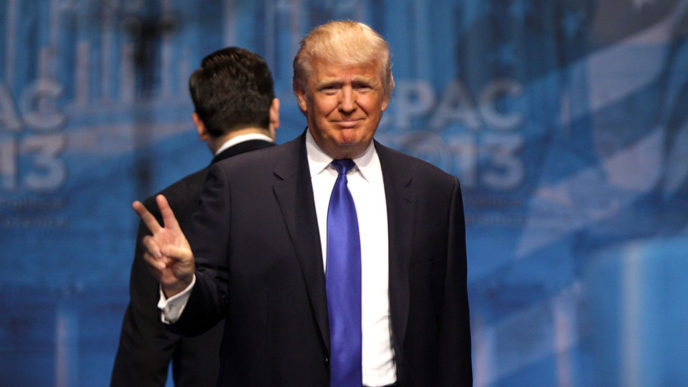
THANKS, MR. OBAMA: Japan Prepares Warplanes and Naval Forces to Repel China’s Rising Ambitions

Japan is providing regional partners with the tools required for future showdowns with China in the South China Sea.

Japanese Prime Minister Shinzo Abe met Tuesday with Philippines President Rodrigo Duterte and agreed to gift the Philippines two large patrol ships and five surveillance aircraft, according to Reuters.

The promised vessels and aircraft will be in addition to the 10 coast guard ships Japan promised to the Philippines as part of a $158 million soft loan agreement in 2015. The first of the 10 ships arrived in August.

Abe will reportedly also give Malaysia two used coast guard vessels, reports the Nikkei Asian Review. Along with the ships, Japan will provide technical support and repair services.

Japan agreed to furnish Vietnam with $1.7 million in used patrol vessels and equipment in September last year. The two sides decided to accelerate and enhance the patrol boat program during a high-level meeting in May.

The Philippines, Malaysia, and Vietnam are all engaged in territorial disputes with China in the South China Sea.
China claims the vast majority of the South China Sea, through which roughly $5 trillion in global trade passes each year. The Permanent Court of Arbitration in The Hague ruled against China’s claims in mid-July; however, China has completely rejected the ruling and the authority of the arbitration tribunal.

Between 2010 and 2016, there were 45 incidents in the South China Sea, and China’s coast guard vessels were involved in 68 percent of these incidents, the Center for Strategic and International Studies (CSIS) revealed in a recent report.

Over the past five years, China has spent roughly $1.74 billion annually on its coast guard. The annual coast guard budgets for the Philippines and Vietnam have only been around $100 to $200 million.

China’s total coast guard tonnage increased from 110,000 to 190,000 between 2010 and 2016. The total coast guard tonnage for the Philippines, Malaysia, and Vietnam are only 20,000, 6,500, and 15,000 respectively.

China is able to engage in provocative behavior in the South China Sea because other claimant states lack the coast guard capabilities to stand up to China.

“We’re seeing bullying, harassment and ramming of vessels from countries whose coast guard and fishing vessels are much smaller, often to assert sovereignty throughout the South China Sea,” Bonnie Glaser, a CSIS regional security expert, explained in an interview with Reuters. “The evidence is clear that there is a pattern of behavior from China that is contrary to what law enforcement usually involves.”

Japan’s coast guard budget by comparison is around $1.5 billion, which suggests that Japan has the ability to boost the capabilities of some of China’s neighbors.

Chinese ships, including several coast guard vessels, have reportedly returned to the Scarborough Shoal, stirring concerns in the Asia Pacific and beyond.

China’s stance on Japan’s involvement in the South China Sea has been fairly consistent. “Japan is not a concerned party in the South China Sea issue, and it has no right to intervene in relevant disputes,” explained Chinese Ministry of National Defense spokesperson Colonel Wu Qian at a press conference last month.

China has told Japan that if it expands its operations and attempts to participate in a freedom-of-navigation drill in the South China Sea, it will cross a “red line.” (For more from the author of “THANKS, MR. OBAMA: Japan Prepares Warplanes and Naval Forces to Repel China’s Rising Ambitions” please click HERE)

Follow Joe Miller on Twitter HERE and Facebook HERE.
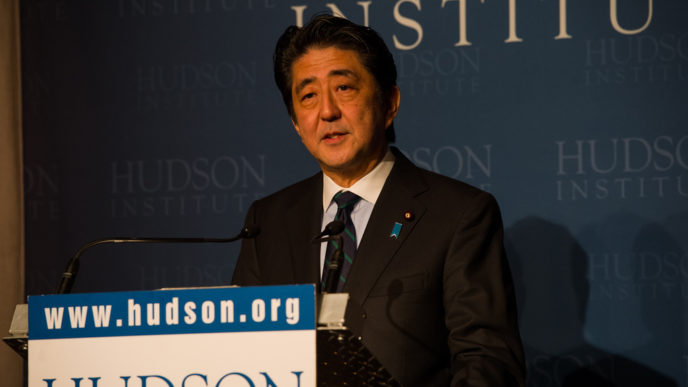
U.S. Ship Forced to Change Course After Being Harrassed by Iranian Vessels

In an open act of harassment, a fast attack craft, belonging to Iran’s Islamic Revolutionary Guard Corps approached a U.S. Navy coastal patrol ship in the central Gulf Sunday, coming within 100 yards of the vessel.

A statement from U.S. Defense Department officials called the encounter between the Iranian ship and the USS Firebolt, “unsafe and unprofessional due to lack of communications and the close-range harassing maneuvering.”

According to the department officials, uncovered weapons manned by members of the crew were visible on the Iranian ships.

As the ship continued to approach the U.S. vessel, the Firebolt tried unsuccessfully to make radio contact.

After three attempts at communication with the Iranian ship, the Firebolt was forced to change its course.

According to one official, Iranian ships have been responsible for 31 such incidents of harassment this year alone.

“We don’t see this type of unsafe and unprofessional activity from any other nation,” the official said.

In August, Fox News reported a similar occurrence, which took place in the Strait of Hormuz.

An official with the U.S. Navy confirmed that four ships from the IRGC fleet “harassed” the American destroyer USS Nitze.

The official reported that during a “high-speed intercept,” two of the Iranian ships were able to come within 300 yards of the Nitze.

The USS Nitze, which was on a “routine transit” in international waters, was joined by the USS Mason, a guided missile destroyer, when the incident occurred.

One official described the action of the Iranian ships as “unsafe and unprofessional.”

He went on to say the incident “created a dangerous, harassing situation that could have led to further escalation.”

The USS Nitze made 12 unsuccessful attempts to communicate with the Iranian vessel after which the USS Mason sounded its whistle 5 times, but the Iranian ships continued to approach.

Just like the USS Firebolt, the Nitze was forced to change course. (For more from the author of “U.S. Ship Forced to Change Course After Being Harrassed by Iranian Vessels” please click HERE)

Follow Joe Miller on Twitter HERE and Facebook HERE.

Threats of a Russian Election Hack a Mere Smoke Screen by Democrats for Power Grab

The Democrats are now playing the Russia card. As Donald Trump rises in the polls against an increasingly unpopular Hillary Clinton, Democrats are raising the specter of the nefarious Vladimir Putin. Then-Secretary of State Hillary Clinton’s famous Russian relations reset was a bust, but we are supposed to trust her to handle Putin in the future. More important, the Democrats are sowing grounds to challenge the election, relying on their unnatural ability to squeeze, as if by magic, extra votes from the courtroom.

There may be an even more insidious objective, Outgoing Nevada Sen. Harry Reid — never a fan of election fair play — warned of Russian tampering and called for an FBI investigation. This followed warnings by Jeh Johnson, Secretary of the Department of Homeland Security, of potential cyber-attacks come November. He indicated he was considering designating the election system “critical infrastructure.”

Why is that significant? This would be followed by a Washington campaign to “assist” and “protect” balloting, which inevitably would turn into control. The Heritage Foundation’s Hans von Spakovsky warned that Johnson’s action “may be a way for the administration to get Justice Department lawyers, the FBI and DHS staff into polling places they would otherwise have no legal right to access, which would enable them to interfere with election administration procedures around the country.” That would dramatically, and permanently, transform the constitutional balance between the national and state governments.

Despite scare-mongering by Reid and Johnson, there is no evidence of any impending cyber-attack on the American electoral system. Even Johnson apparently admitted that he could point to no indications of such a threat. A far greater danger to the integrity of U.S. democracy is voter fraud, yet the courts seem determined to block any effort to even require identification to cast a ballot. This undermines the great strength of America’s elections, state control.

As von Spakovsky pointed out, “we have the most decentralized election system of any Western democracy.” This approach protects America from having Russia (or China or anyone else) manipulate electoral outcomes. Nationalizing the process actually would make U.S. elections far more vulnerable to outside attack.

Which demonstrates the continuing wisdom of the nation’s Founders in creating a system that kept most important public policies and activities at the state level. The national government was established to deal with national problems, not to elevate to the national level controversies which belonged closer to the people.

The Founders’ idea, called “federalism,” naturally grew out of Americans’ commitment to self-government. The people, not a king or emperor, were sovereign. They were to solve their own problems and chart their own futures. That required decision-makers to be close to each other and the challenges facing them.

In this way federalism had a lot in common with the Catholic doctrine of subsidiarity. Whenever possible, higher, more distant institutions should leave undisturbed authorities below. Each government had a specific role and should not encroach upon the responsibilities of others.

Early Americans well understood the meaning of federalism: creating two distinct levels (local authorities being subsumed within states) of government with separate and defined duties. Unfortunately, however, the founding generations allowed ambiguity to creep in by calling the national government the “federal” government.

The very concept of federalism requires protecting the vibrancy of state (and local) institutions. The federal system meant dual authority rather than the unitary system prevalent in Europe, including in Great Britain. Although the Civil War established the ultimate supremacy of the national government, the conflict did not wipe out state sovereignty. The so-called federal government remained small, without much day-to-day impact on most people’s lives. Even enthusiastic nationalists at the time could not have imagined the wholesale federal takeover of education, health care, and welfare.

Of course, to speak of “federal” action now means to nationalize an issue. Thus, supporting the founding principle of “federalism” risks communicating the opposite of the truth to people, suggesting that the Constitution turned most problems over to the “federal,” that is, national government. And that continuing islands of state authority, such as running elections, are anomalies which should be wiped out.

Federalism in the original sense of the word always set American democracy apart from that of other nations. Power was separated and balanced; responsibility was accorded to institutions best able to confront problems. The people retained ultimate sovereignty and remained close enough to their officials to hold the latter accountable.

Unfortunately, these principles are under sustained attack. Attempts to tie Trump to Russia are just another attempt to expand federal, as in national, authority. With so many of their leaders AWOL, only the American people are left to stand up for their country’s founding principles. Only We the People. (For more from the author of “Threats of a Russian Election Hack a Mere Smoke Screen by Democrats for Power Grab” please click HERE)

Follow Joe Miller on Twitter HERE and Facebook HERE.
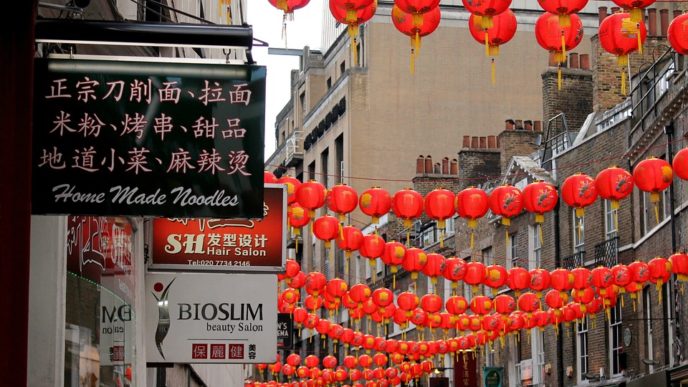
Muslim Refugee Tells Court Raping Little Boys ‘Culturally Appropriate’ in His Homeland

A Muslim refugee on trial in Australia for raping a 10-year-old boy told the judge he did not know it was a wrongful act, as doing such is “culturally appropriate” in his homeland of Myanmar.

The Daily Telegraph reports, via the Daily Mail, that 20-year-old Mufiz Rahaman told Sydney’s Downing Centre Court that sexually assaulting children was not viewed as morally wrong in his country of origin, as he pleaded guilty to aggravated sexual assault.

Rahaman and the boy, also a refugee, are stateless Rohingya Muslims, a religious minority of “people considered illegal immigrants from Bangladesh by the Buddhist-majority in Myanmar—who came to Australia to flee religious persecution,” according to the Daily Mail.

Rahaman attacked the 10-year-old boy while they were living among a community of refugees, including the boy’s father, in the southwest Sydney suburb of Lakemba.

The rapist argued he was completely unaware of his wrongdoings throughout the trial:

Rahaman told the court he had been a victim of sexual abuse as a child before he moved to Australia.

Judge Andrew Scotting said Rahaman failed to understand his actions would ‘physically’ and ‘psychologically damage’ his young victim.

He also said Rahaman, who insisted he thought sexual assault was not seen as morally wrong in his homeland, had not accepted responsibility for his actions and demonstrated a ‘lack of morality’, according to the Daily Telegraph.

‘There is a need for specific deterrence … The offence appears to have been (viewed) as being culturally acceptable conduct in the offender’s childhood,’ Judge Scotting said.

The 20-year-old rapist was sentenced to five years in prison. (For more from the author of “Muslim Refugee Tells Court Raping Little Boys ‘Culturally Appropriate’ in His Homeland” please click HERE)

Follow Joe Miller on Twitter HERE and Facebook HERE.

A 12-Step Plan for Global Economic Freedom

In the decades since The Heritage Foundation began publishing its annual Index of Economic Freedom in 1995, the world has witnessed profound advances in economic freedom.

Open economies have led the world in a startling burst of innovation and economic growth, and political authorities have found themselves increasingly held accountable by those they govern.

Unfortunately, the United States has drifted downward in the index rankings—propelled by reckless government spending that has spiraled out of control and led to unprecedented budget deficits. The long U.S. slide has been marked by stagnant economic expansion and extremely sluggish employment growth.

So, in this important election year, The Heritage Foundation has dedicated its annual “Global Agenda for Economic Freedom” to a detailed examination of ways to improve Americans’ economic freedom and America’s positive impact on the global economy.

Here are 12 steps the next U.S. president can take in 2017 for more economic freedom in America and the rest of the world:

1. American workers and consumers have benefitted from international trade, but global barriers to the free flow of goods and services and investment (e.g. nontariff barriers and nontransparent investment regimes) grew under President Barack Obama. The next administration must promote economic freedom by reducing them and opening new markets.

2. China faces huge economic challenges that, if unaddressed, will drag down the global economy. As a start, the next U.S. president should push China’s leadership to sign a bilateral investment agreement to make doing business there easier.

3. The price and availability of one of the most important production inputs—energy—will benefit from further liberalization of American and global energy markets.

4. Export financing subsidies from the U.S. Export-Import Bank and elsewhere are unnecessary and distort the U.S. and global economies. The Export-Import Bank should be shut down.

5. American economic growth will be enhanced by better, U.S.-led international policy coordination. The next president should downgrade the ineffective G-20 process and create a new, informal G-9 group of the world’s top nine economies.

6. The International Monetary Fund was created to bring stability to the international financial system. The IMF must return to basics by promoting rules-based monetary policies instead of bailing out countries that fail to follow those rules.

7. Many countries’ economic freedom scores would be substantially higher if not for the prevalence of government corruption. The next administration should make the fight against corruption a key component of U.S. development assistance programs.

8. The next president should evaluate all foreign aid programs for effectiveness and insist Congress update the 1961 Foreign Assistance Act to put the United States Agency for International Development directly under State Department control.

9. Massively subsidized state-owned enterprises are a main factor restraining development. The next president should review U.S. state-owned enterprises, remove the U.S. government from activities best left to the private sector, and push other countries to do likewise.

10. The next president must confront rogue states pursuing deliberately harmful policies that threaten global security and commerce by creating a sanctions strategy that targets troublemakers and prioritizes reforms that enhance economic freedom.

11. Climate change policies are another area where government decisions have created opportunities for rent-seeking cronyism and have harmed economic growth while doing nothing that actually affects global temperatures. The next administration should take immediate action to withdraw from the redistributionist and ineffective United Nations Framework Convention on Climate Change and end U.S. payments to the U.N. Green Climate Fund.

12. Government-sponsored corporate socialist cronyism, often under the guise of promoting corporate social responsibility, increased greatly under Obama. The next president must assess the risks of cronyism-related CSR rent-seeking and end federal “corporate excellence” awards, “green” tax credits, “public-private partnerships,” and all other forms of corporate welfare.

The revitalizing policies in the “2017 Global Agenda for Economic Freedom” will create good, new jobs for Americans and a freer flow of capital, goods, services, and ideas around the world. (For more from the author of “A 12-Step Plan for Global Economic Freedom” please click HERE)

Follow Joe Miller on Twitter HERE and Facebook HERE.

Trump Heads to Mexico, but Someone’s Lying About That Border Wall

Mexican president Enrique Peña Nieto disputed remarks made by Republican candidate for president Donald Trump regarding the construction of a wall along the U.S-Mexico border.

Having Mexico pay for the construction of a wall along the border has been a key theme of Mr. Trump’s campaign, since his announcement last year. His campaign website features a detailed plan titled “compelling Mexico to pay for the wall.”

When asked if he discussed his plans with the Mexican president in their meeting today, Mr. Trump said the topic was not broached.

“Who pays for the wall? We didn’t discuss,” Trump said when asked by a reporter during the follow-up questions to their statements. “We did discuss the wall. We didn’t discuss payment of the wall. That’ll be for a later date.”

President Peña Nieto has disputed that account of their meeting. According to Peña Nieto, he flat out told Mr. Trump Mexico will not pay for a wall at the very beginning of their meeting.

“At the beginning of meeting with Donald Trump, I made it clear Mexico will not pay for the wall.”

One of these two men seems to be lying. (For more from the author of “Trump Heads to Mexico, but Someone’s Lying About That Border Wall” please click HERE)

Follow Joe Miller on Twitter HERE and Facebook HERE.
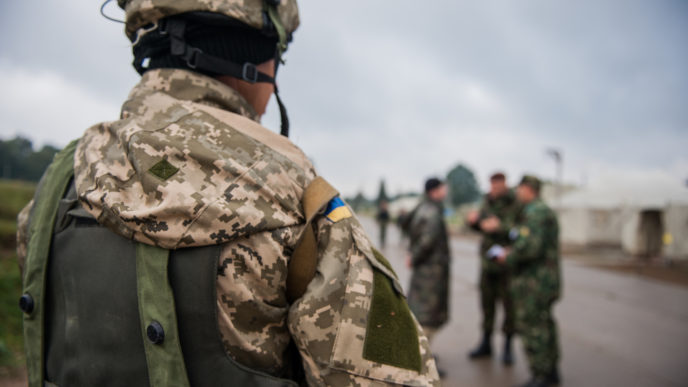
AS THE TERROR THREAT RISES: Europe Changes Course

Sixteen years ago, when Dutch commentator Paul Scheffer published his “Multicultural Drama” declaring that multiculturalism in the Netherlands had failed, the response was swift and angry. Critics across Europe called him racist, bigoted, nationalistic. Others dismissed his views as mere rants and ramblings of a Leftist in search of a cause.

Not anymore.

With over 275 people killed in 10 Islamic terrorist attacks since January 2015, Europeans harbor no more illusions about the multiculturalist vision: where immigrants from Muslim countries are concerned, that idealist vision has more than just failed. It has produced a culture of hatred, fear, and unrelenting danger. Now, with European Muslim youth radicalizing at an unprecedented rate and the threat of new terrorist attacks, Europe is reassessing its handling of Muslim communities and its counterterrorism strategies and laws.

Among the changes being considered are a reversal of laws that allow radical Muslims to receive handouts from the very governments they seek to destroy; restricting foreign funding of mosques; and stronger surveillance on private citizens.

Chief among the new counterterrorism approaches is a program to coordinate intelligence data among European Union countries – a tactic that has not been pursued with any regularity or such depth before now. But following the November attacks in Paris, the Dutch intelligence agency AIVD initiated weekly meetings among intel agencies from all EU countries, Switzerland, and Norway, with the objective of sharing information, exchanging new clues, insights, and suspect alerts, and discussing improvements to a Europe-wide system of counterterrorism and intelligence.

Through these meetings and the improved shared database, it is now possible for each country to contextualize its intelligence and understand links between individuals and various groups from one city to another – and so, between radicals and radical groups as they pass through a borderless EU.

Concurrently, EU members are now beginning to share information about web sites and even details about private citizens where needed. Most countries had been reluctant to make such exchanges, citing both privacy concerns and the need to protect their sources. Other cooperative efforts include an EU initiative begun in February 2015 to counteract Islamic extremist propaganda. The project received a major €400 million boost in June, indicating the high priority Europe now places on fighting recruitment.

Earlier this month, Europol began a new effort to screen refugees still awaiting placement in Greek asylum centers. According to a report from Europa Nu, an initiative between the European parliament and the University of Leiden, Europol agents “specifically trained to unmask and dismantle terrorists and terror networks” will be dispatched to the camps to try to prevent terrorists from infiltrating the flood of refugees to Europe.

Some EU measures, however, have been based more in politics than counterterrorism, including efforts to crack down on the ability of radical Muslims to benefit from welfare programs. British citizens, for instance, reacted with outrage when it was discovered that the family of “Jihadi John” had received over £400,000 in taxpayer support over the course of 20 years. In Belgium, Salah Abdeslam, the terrorist accused of participating in the Nov. 13 Paris attacks, pulled in nearly €19,000 in welfare benefits from January 2014 and October 2015, according to Elsevier. And Gatestone reports that more than 30 Danish jihadists received a total of €51,000 in unemployment benefits all while battling alongside the Islamic State in Syria.

Such concerns have also spread to the United States. Earlier this year, U.S. Rep. Bruce Poliquin, R-Maine, introduced the “No Welfare For Terrorists Act.”

“Terrorist victims and their families should never be forced to fund those who harmed them,” he said in a statement. “This bill guarantees this will never happen.”

But not all of Europe’s new approaches to the terror threat are being coordinated out of Brussels. Many more, in fact, are country-specific, such as England’s decision to follow an example set earlier by the Netherlands and Spain, separating jailed terrorists and terror suspects from other prisoners. The measures follow others the country adopted after the July 7, 2005 bombings of a London underground and buses, to criminalize “those who glorify terrorism, those involved in acts preparatory to terrorism, and those who advocate it without being directly involved,” the New York Times reported.

In fact, prisons worldwide, including in the U.S., have long been viewed as warm breeding grounds for radicals and potential terrorists. Ahmed Coulibaly, the gunman at the Porte de Vincennes siege in January 2015, was serving time for a bank robbery, for instance, when he met Cherif Koauachi, one of the Charlie Hebdo attackers. Both converted to Islam there. It was in that same prison that the two encountered Djamel Beghal, an al-Qaida operative who attempted to blow up the American Embassy in Paris in 2001.

Hence many experts now argue in favor of isolating those held on terrorism-related charges as a way to stop them from radicalizing their fellow inmates.

Yet British officials have until now resisted creating separate wings for terror suspects, arguing that doing so gives them “credibility” and makes it harder to rehabilitate them. But a recent government report on Islamist extremism in British prisons forced a change in thinking, in part by noting that “other prisoners – both Muslim and non-Muslim – serving sentences for crimes unrelated to terrorism are nonetheless vulnerable to radicalization by Islamist Extremists [sic].”

Similarly, France, the site of the worst attacks of the past two years, also balked at first at the idea of separating terrorists from other prisoners, arguing that doing so “forms a terrorist cell within a prison.” But the Charlie Hebdo attacks of January 2015 changed all that. Now, officials are even going further, looking at other potential sources of radicalization: the mosques.

Shortly after the Bastille Day attack in Nice, Prime Minister Manuel Valls announced plans to ban foreign financing for French mosques as part of an effort to establish a “French Islam,” led by imams trained only in France. France hosts dozens of foreign-financed mosques – many sponsored by Saudi Arabia and Morocco – which preach Salafism, an extreme version of Islam practiced in the Saudi Kingdom and the root of much radical Islamist ideology. And according to a new report on counter-radicalization, about 300 imams come from outside France.

That same report also calls for “regular surveys” of France’s 4-5 million Muslims, according to France 24, in order “to acquire a better understanding of this population in a country where statistics based on religious, ethnic, or racial criteria are banned.”

Both proposed measures have been met with resistance. The “surveys,” as even the report itself notes, are a means of circumventing laws against gathering information on the basis of religious criteria – and so, go against democratic principles. And many French officials also oppose the ban on foreign funding for mosques, arguing that French government intervention in places of worship contradicts separation between church and state. Besides, they claim, radicalization doesn’t take place there anyway.

But Dutch authorities and counter-extremism experts are not so sure. The announcement earlier this month that Qatar would finance an Islamic center in Rotterdam, for instance, set off alarms even among Muslim moderates, including Rotterdam’s Moroccan-born mayor Ahmed Marcouch. There are good reasons for this. The Salafist Eid Charity, which sponsors the project, has been on Israel’s terror list since 2008, according to Dutch daily NRC Handelsblad. Moreover, in 2013 the U.S. Treasury Department accused the charity’s founder, Abd al-Rahman al-Nu’aymi, of providing funding for al-Qaida and its affiliates, and named him a “specially designated global terrorist.”

Plans for the center sound much like those of the now-abandoned plans for New York’s “Ground Zero mosque,” with sports facilities, prayer space, tutoring for students, Islamic child care, and, reports Dutch newspaper Volkskrant, imam training.

Yet the center’s prospective director, Arnoud van Doorn, a convert to Islam and former member of the far-right, anti-Islam political party PVV, insists that any fears about the project are unfounded. “Our organization has nothing to do with extremism,” he told the NRC. “We want only to provide a positive contribution to Dutch society.”

Notably, though, France’s proposal to ban foreign mosque funding and the Qatari backing of the Rotterdam center point to some of the deepest roots of Europe’s radical Islam problem, and, despite all the new initiatives now underway, the greatest challenges to ending it. When Muslim immigrants came to Europe in the 1970s, they carved prayer spaces wherever they could: the backs of community grocery stores, in restaurants and tea rooms. But these soon became too small to handle the growing Muslim population. Mosques – real mosques – would have to be built.

But by whom? The Muslim communities themselves were too poor. Western governments, wedded to the separation of church and state, could not subsidize them with taxpayer funds. And so the door was opened to foreign – mostly Saudi – investment, and the placement of Saudi-trained and Saudi-backed imams in European mosques. Europe had, in essence, rolled out the welcome mat for Salafism.

Now they want to roll it in again. But is it too late? Even as Western intelligence is now uniting to fight radical Islam, Islamic countries are pooling together in Europe to expand it. The result, as Manuel Valls told French daily Le Monde, is that, “What’s at stake is the republic. And our shield is democracy.”

Hence as the number attacks against Western targets increase, many Europeans are coming to understand that preserving the core of that democracy may mean disrupting some of the tenets on which it’s built, like certain elements of privacy, for instance, and religious principles that violate the freedom that we stand for . It is, as it were, a matter of destroying even healthy trees to save the forest. But in this tug-of-war between the Islamic world’s efforts to shape the West, and Western efforts to save itself, only our commitment to the very heart of our ideals will define who wins this fight. (For more from the author of “AS THE TERROR THREAT RISES: Europe Changes Course” please click HERE)

Follow Joe Miller on Twitter HERE and Facebook HERE.