By Stoyan Zaimov. A diplomat with the Organization for the Prohibition of Chemical Weapons has confirmed laboratory tests that show the Islamic State terror group has been using banned chemical weapons on soldiers in Iraq.
Reuters reported on Monday that the diplomat, who chose to remain anonymous because the OPCW report has not yet been officially released, said the findings point to IS using sulfur mustard gas on around 35 Kurdish troops last August, in at least one confirmed case.
The use of chemical weapons has been banned throughout the vast majority of the world, with sulfur mustard known to cause severe delayed burns to the eyes, skin and respiratory tract.
Although the OPCW concluded back in October that mustard gas has been used in the civil war raging in Syria, which IS is also a part of, the new findings show that.
The question also arises of how IS has managed to obtain chemical weapons. Another diplomat suggested to Reuters that the terror group might have obtained the sulfur mustard agent from the stockpiles of the Syrian regime, which had promised to dismantle its chemical weapons program by 2014. (Read more from “Confirmed: ISIS Using Banned Chemical Weapons in Iraq; U.S. Troops Moving Into Contaminated Areas” HERE)
___________________________________
U.S. Troops in Iraq Move Into Region Where ISIS Just Used Mustard Gas
By Andrew Tilghman. U.S. troops in Iraq are setting up a train-advise-and-assist team at a forward operating base near the Islamic State group’s front lines outside of Mosul, not far from the site of recent chemical weapons attacks.
The Nineveh Operations Center in the farming village of Makhmour will be a primary base for the U.S. to support the Iraqis’ long-awaited battle to seize Mosul from Islamic State militants, also known as ISIS or ISIL, a U.S. military official said.
A large convoy of Iraqi army forces began arriving at the base in Makhmour in early February. Iraq’s military leaders plan to deploy about 4,500 soldiers to the area for the Mosul operation, Iraqi officials said.
“There’s a lot going on in Makhmour. That’s where one of our operations centers is located. So there are American advise-and-assist capabilities there,” said Army Col. Steve Warren, a U.S. Defense Department spokesman in Baghdad. (Read more from “U.S. Troops in Iraq Move Into Region Where ISIS Just Used Mustard Gas” HERE)
https://joemiller.us/wp-content/uploads/logotext.png00Joe Millerhttps://joemiller.us/wp-content/uploads/logotext.pngJoe Miller2016-02-18 23:06:422016-04-11 10:52:29Confirmed: ISIS Using Banned Chemical Weapons in Iraq; U.S. Troops Moving Into Contaminated Areas
By Lucas Tomlinson and Yonat Friling. The Chinese military has deployed an advanced surface-to-air missile system to one of its contested islands in the South China Sea according to civilian satellite imagery exclusively obtained by Fox News, more evidence that China is increasingly “militarizing” its islands in the South China Sea and ramping up tensions in the region.
The imagery from ImageSat International (ISI) shows two batteries of eight surface-to-air missile launchers as well as a radar system on Woody Island, part of the Paracel Island chain in the South China Sea.
It is the same island chain where a U.S. Navy destroyer sailed close to another contested island a few weeks ago. China at the time vowed “consequences” for the action . . .
The missiles arrived over the past week. According to the images, a beach on the island was empty on Feb. 3, but the missiles were visible by Feb. 14.
A U.S. official confirmed the accuracy of the photos. The official said the imagery viewed appears to show the HQ-9 air defense system, which closely resembles Russia’s S-300 missile system. The HQ-9 has a range of 125 miles, which would pose a threat to any airplanes, civilians or military, flying close by. (Read more from “In Provocative Move, China Places Advanced Surface to Air Missiles on Artificial Island During Middle of Obama’s Asian Conference” HERE)
_________________________________
China Has Raised the Stakes in South China Sea With Surface-To-Air Missile Batteries
By Dean Cheng. The U.S. government has reported that China has deployed several batteries of surface-to-air missiles (HQ-9) to Woody Island, Paracels, in the South China Sea. This is a significant military move, and it makes clear that China is prepared to employ military forces to support its expansive claims to the South China Sea.
The People’s Liberation Army (PLA) has previously deployed some of its advanced fighters (J-11 fighters, the domestic version of the Su-27) to Woody island but did not apparently make this permanent. This surface-to-air missiles deployment appears to be for the longer term.
The HQ-9 is the Chinese equivalent of the Russian S-300/SA-10 SAM, a very advanced, very capable system comparable to the American Patriot SAM. Its deployment creates a 125-mile danger zone around the Paracels and marks a major increase in the scale and capabilities of forces deployed to the region.
While the Paracels are not the Spratlys (where China has built a number of artificial islands), they are part of the larger dispute underway about the future of the South China Sea.
Seized from South Vietnam in 1974, the Paracels remain a source of contention between China and Vietnam, which has not acceded to the Chinese seizure. In 1988, China sank three Vietnamese ships in nearby waters, to underscore its commitment to retaining those islands.
The Chinese have laid claim to a vast area of the South China Sea encompassed by what is known as the “Nine Dash Line” (recently revised to 10 dashes). The area includes not only the Paracels and Spratlys, but also Macclesfield Bank and Mischief Reef, as well as the Pratas island group (currently held by Taiwan). To administer these dispersed territories, the Chinese promoted the city of Sansha, on Woody Island, in 2012 to a prefecture level and vested it with authority over all of these islands. The Chinese have also sought to treat the region, which includes vital shipping lanes over which $5.3 trillion’s worth of trade transits, as virtually their territorial waters.
Chinese vessels have repeatedly sought to enforce these expansive claims. In 2009, for example, Chinese forces interfered with the operations of the USNS Impeccable and several other ships. Earlier this year, the USS Curtis Wilbur, in a recent freedom of navigation operation, sailed near Woody Island to underscore the American commitment to freedom of the seas. (For more from the author of “China Has Raised the Stakes in South China Sea With Surface-To-Air Missile Batteries” please click HERE)
https://joemiller.us/wp-content/uploads/Barack_Obama_at_Las_Vegas_Presidential_Forum.jpg20483072Joe Millerhttps://joemiller.us/wp-content/uploads/logotext.pngJoe Miller2016-02-18 23:01:462016-04-11 10:52:30In Provocative Move, China Places Advanced Surface to Air Missiles on Disputed Island During Middle of Obama’s Asian Conference
After a series of stunning declines through the month of January and the first half of February, global financial markets seem to have found a patch of relative stability at least for the moment. But that does not mean that the crisis is over. On the contrary, all of the hard economic numbers that are coming in from around the world tell us that the global economy is coming apart at the seams. This is especially true when you look at global trade numbers. The amount of stuff that is being bought, sold and shipped around the planet is falling precipitously. So don’t be fooled if stocks go up one day or down the next. The truth is that we are in the early chapters of a brand new economic meltdown, and I believe that all of the signs indicate that it will continue to get worse in the months ahead. The following are 21 new numbers that show that the global economy is absolutely imploding…
#1 Chinese exports fell by 11.2 percent year over year in January.
#2 Chinese imports were even worse in January. On a year over year basis, they declined a whopping 18.8 percent.
#3 It may be hard to believe, but Chinese imports have now plunged for 15 months in a row.
#4 In India, exports were down 13.6 percent on a year over year basis in January.
#5 In Japan, exports declined 8 percent in December on a year over year basis, while imports plummeted 18 percent.
#6 For the sixth time in six years, Japanese GDP growth has gone negative.
#7 In the United States, exports were down 7 percent on a year over year basis in December.
#8 U.S. factory orders have fallen for 14 months in a row.
#9 The Restaurant Performance Index in the United States has dropped to the lowest level that we have seen since 2008.
#10 This month the Baltic Dry Index fell below 300 for the first time ever.
#11 It is now cheaper to rent a 1,100 foot merchant vessel than it is to rent a Ferrari.
#12 Orders for Class 8 trucks in the United States dropped by 48 percent on a year over year basis in January.
#13 Due to a lack of demand for trucks, Daimler just laid off 1,250 U.S. workers.
#14 Even though Saudi Arabia and Russia have agreed to freeze oil production at current levels, the price of U.S. oil has still fallen below 30 dollars a barrel.
#15 It is being reported that 35 percent of all oil and gas companies around the world are at risk of falling into bankruptcy.
#16 According to CNN, 67 oil and gas companies in the United States filed for bankruptcy during 2015.
#17 The number of job cuts in the United States skyrocketed 218 percent during the month of January according to Challenger, Gray & Christmas.
#18 All over America, retail stores are shutting down at a stunning pace. The following list of store closures comes from one of my previous articles…
-Wal-Mart is closing 269 stores, including 154 inside the United States.
-K-Mart is closing down more than two dozen stores over the next several months.
-J.C. Penney will be permanently shutting down 47 more stores after closing a total of 40 stores in 2015.
-Macy’s has decided that it needs to shutter 36 stores and lay off approximately 2,500 employees.
-The Gap is in the process of closing 175 stores in North America.
-Aeropostale is in the process of closing 84 stores all across America.
-Finish Line has announced that 150 stores will be shutting down over the next few years.
-Sears has shut down about 600 stores over the past year or so, but sales at the stores that remain open continue to fall precipitously.
#19 The price of gold is enjoying its best quarterly performance in 30 years.
#20 Global stocks have fallen into bear market territory, which means that about one-fifth of all global stock market wealth has already been wiped out.
#21 Unfortunately for global central banks, they have pretty much run out of ammunition. Since March 2008, central banks have cut interest rates 637 times and they have purchased a staggering 12.3 trillion dollars worth of assets. There is not much more that they can do, and now the next great crisis is upon us.
Without any outside influences, the global economy and the global financial system will continue to rapidly fall apart.
But if we do have a major “black swan event” take place, that could cause the bottom to fall out at any moment.
In particular, I am deeply concerned about the possibility that World War III could be sparked in the Middle East. In an article that I published earlier today entitled “Turkey Is Asking The United States To Take Part In A Ground Invasion Of Syria“, I included a quote from Turkish Foreign Minister Mevlut Cavusoglu that reveals just how eager Turkey and Saudi Arabia are for war to begin…
“Some countries like us, Saudi Arabia and some other Western European countries have said that a ground operation is necessary,” Turkish Foreign Minister Mevlut Cavusoglu told Reuters in an interview.
However, this kind of action could not be left to regional powers alone. “To expect this only from Saudi Arabia, Turkey and Qatar is neither right nor realistic. If such an operation is to take place, it has to be carried out jointly, like the (coalition) air strikes,” he said.
The Turks and the Saudis very much want the United States to take a leading role in any ground invasion of Syria, but the Obama administration is not likely to do that.
So we shall see if the Turks and the Saudis are willing to go ahead without us. Let us hope that they do not decide to invade Syria, because that could start the biggest war in the Middle East that any of us have ever seen.
Unfortunately, Turkey is already attacking.
Turkey has been shelling Kurdish and Syrian military positions in northern Syria for four days in a row even though the Obama administration has been urging them to stop.
The first month and a half of 2016 has already been quite chaotic, and the stage is set for global events to greatly accelerate during the months ahead.
Sadly, the mainstream media in the United States is largely ignoring the preparations for a ground invasion of Syria, and they keep telling us that the global economy is going to be just fine, so most ordinary Americans are going to be absolutely blindsided by what is about to happen. (For more from the author of “21 New Numbers That Show That the Global Economy Is Absolutely Imploding” please click HERE)
https://joemiller.us/wp-content/uploads/Earth-At-Night-Public-Domain-460x306.jpg306460Joe Millerhttps://joemiller.us/wp-content/uploads/logotext.pngJoe Miller2016-02-16 22:42:412016-04-11 10:52:3521 New Numbers That Show That the Global Economy Is Absolutely Imploding
As you read this article, Turkish forces are massing along the border with Syria, and the largest “military exercises” in the history of the Middle East are being held in northern Saudi Arabia. The Saudis are publicly warning that Syrian President Bashar al-Assad “will be removed by force” if a political solution cannot be found, and Turkey is claiming that it may have to establish a “safe zone” in northern Syria “for humanitarian purposes”. Saudi Arabia, Turkey and their Sunni allies have poured massive amounts of money and arms into the conflict in Syria, and now that their Sunni insurgents are on the verge of total defeat, they are trying to come up with a way to justify going in there and doing the job themselves.
For the Saudis, their focus is on trying to convince everyone that Syrian President Bashar al-Assad is an extremely dangerous dictator that must be removed at all costs. The following comes from the London Independent…
Syrian President Bashar al-Assad will be removed by force if the peace process fails, Saudi Arabia’s Foreign Minister has said.
“Bashar al-Assad will leave – have no doubt about it,” Saudi Arabia’s Foreign Minister Adel al-Jubeir told CNN. “He will either leave by a political process or he will be removed by force.”
Saudi Arabia has sent troops and fighter jets to a Turkish military base ahead of a possible ground invasion of Syria.
So precisely who will be doing the “removing” if force is necessary?
Are the Saudis ready to send in ground troops?
Apparently they are. Just consider what Saudi Arabia’s Foreign Minister Adel al-Jubeir told CNN…
Saudi Foreign Minister Jubeir made clear that his country’s troops would not go it alone.
“I can tell you that there is some serious discussion going on with regards to looking at a ground component in Syria, because there has to be a possibility of taking and holding ground, that one cannot do from the air.”
“We are saying we will participate within the U.S.-led coalition, should this coalition decide to send ground troops into Syria, that we are prepared to send special forces with those troops.”
But if the Saudis try to take Damascus and remove Assad by force, the Syrians and their allies will certainly fight back. That means that the Saudis will be fighting Hezbollah, the Iranians and the Russians.
Needless to say, Saudi Arabia is going to need a lot of help to do that.
So that may explain why Saudi Arabia has organized the largest “military exercise” in the history of the Middle East. CNN finally reported on this gigantic gathering of military forces in northern Saudi Arabia earlier today…
Saudi Arabia launched a massive military exercise that will include troops from 20 nations, state media reported Monday.
The drill, dubbed North Thunder, involves Arab and Muslim countries, according to the Saudi Press Agency. It’s taking place in King Khalid Military City in northeastern Saudi Arabia.
The news agency did not provide much information on what the exercise entails but called it “the largest in the region’s history.” The agency said it will involve air, sea and land forces.
This is the list of nations that are reportedly participating in these “exercises” so far…
-Saudi Arabia
-Jordan
-Bahrain
-Senegal
-Oman
-Qatar
-United Arab Emirates
-Sudan
-Kuwait
-the Maldives
-Morocco
-Pakistan
-Chad
-Tunisia
-Comoro Islands
-Djibouti
-Malaysia
-Egypt
-Mauritania
-Mauritius
As I discussed yesterday, 350,000 soldiers, 20,000 tanks, 2,450 warplanes and 460 military helicopters are reportedly gathering for these “military exercises”.
To me, that seems to be a great deal of overkill if the goal is just “training”.
Here is more about these “exercises” from RT…
The Saudi state agency made the announcement on Sunday, adding that participating troops will begin arriving in “the next few hours.”
The oil-rich nation described the exercises as “the largest and most important” military drills in the region’s history.
The so-called “Northern Thunder” exercise will take place in the north of the country and will include air, sea and land forces. SPA said that it will show that Riyadh and its allies “stand united in confronting all challenges and preserving peace and stability in the region.”
So are these forces massing for a ground invasion of Syria?
We shall see.
In the end, we probably won’t have to wait too long before we find out the answer.
Meanwhile, Turkish officials continue to assert that they may have to establish a “safe zone” for refugees in northern Syria. Since thousands of refugees are continually pouring their direction, they claim that they have no other choice but to go in and take control of the situation.
In fact, Turkey has already established several very large refugee camps on the Syrian side of the border…
Some 100,000 Syrian refugees are being looked after in camps inside Syria close to the Turkish border, including 35,000 who this month fled a Russian-backed regime offensive in northern Aleppo province, a top Turkish official said Friday.
Turkish Deputy Prime Minister Yalcin Akdogan, whose country has come under increasing pressure to open its border to people fleeing the violence, said the refugees were being accommodated in nine camps just across the border with Syria.
But make no mistake – this is not just about helping refugees.
The truth is that ISIS has been using Turkey as a home base for years, and hundreds of millions of dollars of ISIS oil has been shipped into Turkey where it has then been sold to the rest of the world. Barack Obama knows about all of this, and yet he has refused to do anything to stop it.
At this point the cooperation between ISIS and Turkey has become so obvious that even CNN is admitting that ISIS militants are being resupplied from Turkey…
To the east of Aleppo, Kurdish forces are, with American support, eyeing the remaining ISIS strongholds along the Turkish border — Jarablus and Manbij. The U.S. wants ISIS out, to remove its access to resupply of materiel and fighters from Turkey.
Meanwhile, Turkey, America’s NATO ally that is engaged in a brutal but often unseen war with the Kurds’ allies in Turkey’s southeast, doesn’t want the Kurds to advance, and may stop at nothing to prevent that.
Fortunately, the Russian bombing campaign has pretty much put an end to the endless parade of ISIS oil trucks that were entering Turkey, and now the primary supply line to Sunni militants in the strategically important city of Aleppo is about to be cut off.
The corridor that runs through the city of Azaz is vitally important, and the Prime Minister of Turkey recently insisted that the Turkish government “will not allow Azaz to fall”…
Turkey shelled YPG positions for a third straight day on Monday to try to stop its fighters seizing Azaz, just 8 km from the border. Ankara fears the Kurdish militia, backed by Russia, is trying to secure the last stretch of around 100 km along the Syrian border not already under its control.
“We will not allow Azaz to fall,” Davutoglu told reporters on his plane on the way to Ukraine. “If they approach again they will see the harshest reaction,” he said.
Unfortunately for the Turkish government, it appears that Azaz is already slipping away from the militants. The following was reported by an Iranian news source…
Ankara is likely to take action to counter the Syrian military and allied groups on choking up a supply link on which militants relied to get weapons and logistics.
Syrian troops and Lebanon’s Hezbollah fighters have retaken the town of Azaz, located to the northwest of Aleppo, prompting Saudi Arabia and Turkey to hint at deployment of ground forces to the region.
Asked if Ankara might act to reverse the gains, Turkish Prime Minister Ahmet Davutoglu (seen below) said on Friday, “Wait for the next few days and you will have the answer,” Turkish paper Hurriyet reported.
Wait for the next few days and you will have the answer?
That sounds rather ominous.
Like I said yesterday, I don’t think that I have ever seen a scenario which was more likely to lead to World War III than the one that we are watching play out right now.
Do Saudi Arabia and Turkey actually expect to waltz into Syria and start taking territory without a response from the Syrians, Hezbollah, the Iranians and the Russians?
And if fighting does break out, how is the United States possibly going to stay out of it?
The truth is that Saudi Arabia and Turkey would never invade Syria in the first place without the express approval of the Obama administration.
The next couple of weeks are key. If we can get into early March without an invasion, by that time Saudi Arabia and Turkey may have missed their window. The troops gathered for the massive military exercise in northern Saudi Arabia will start to go home, and by then the Sunni militants remaining in Aleppo will probably be pretty much completely defeated.
But will Saudi Arabia and Turkey really be willing to walk away after pouring so much time, effort and money into the conflict in Syria? They had dreamed of turning Syria into a full-blown Sunni nation, and if they give up now Syria will end up being dominated by Iran and Hezbollah. It will be a result that is far worse than if they never tried to overthrow Assad in the first place.
So my gut feeling is telling me that Saudi Arabia, Turkey and their Sunni allies are not done in Syria. But their obsession with that country threatens to plunge us into World War III, and if that happens the consequences will be felt by every man, woman and child on the entire planet. (For more from the author of “World War III Approaches: Saudi Arabia and Turkey Drop Hints That an Invasion of Syria Is Imminent” please click HERE)
https://joemiller.us/wp-content/uploads/War-Public-Domain-460x368.jpg368460Joe Millerhttps://joemiller.us/wp-content/uploads/logotext.pngJoe Miller2016-02-16 22:39:542016-04-11 10:52:35World War III Approaches? Saudi Arabia and Turkey Drop Hints That an Invasion of Syria Is Imminent
By Mehreen Khan. The world’s tentative experiment with negative interest rates got off to an unremarkable start.
Sweden’s Riksbank – the world’s oldest central bank – became the first major monetary authority to cross the rubicon and take its main policy rate into the red exactly a year ago to the month.
The Riksbank’s move followed the likes of Switzerland and Denmark, who had turned negative in a bid to stimulate flagging inflation and halt the punishing appreciation of their currencies.
But the introduction of sub-zero rates caused no immediate panic that central bankers were “losing control”.
Neither did they seem to produce deleterious economic effects in their host countries, as savers continued to keep their money deposited in banks rather than fleeing for the safety of cash. Commercial lenders, meanwhile, adjusted their business models to help maintain profitability. (Read more from “Negative Central Bank Interest Rates Now Herald New Danger for the World” HERE)
_____________________________________
Central Bankers ‘Don’t Have a Clue’ – Jim Rogers
By Alanna Petroff. Famed investor Jim Rogers is warning that financial Armageddon is just around the corner, and it’s being fueled by moronic central bankers.
“We’re all going to pay a horrible price for the incompetence of these central bankers,” he said Monday in a TV interview with CNNMoney’s Nina dos Santos. “We got a bunch of academics and bureaucrats who don’t have a clue what they’re doing.”
The Singapore-based American investor said central bankers are doing everything they can to prop up financial markets, but it’s all for naught. He predicts their unconventional monetary strategies will lead to a stock market rally in the near future, but deep trouble later this year and into 2017.
“This is going to be a disaster in the end,” he said. “You should be very worried and you should be prepared.” (Read more from “Central Bankers ‘Don’t Have a Clue’ – Jim Rogers” HERE)
https://joemiller.us/wp-content/uploads/dollar-726882_960_720.jpg678960Joe Millerhttps://joemiller.us/wp-content/uploads/logotext.pngJoe Miller2016-02-15 23:53:432016-04-11 10:52:38Negative Central Bank Interest Rates Now Herald New Danger for the World
There are more slaves today than at any time in human history, reported Benjamin Skinner, a fellow at the Carr Center for Human Rights Policy at Harvard Kennedy School of Government. An estimated 27 million people in the world are forced to work, held through fraud, under threat of violence, for no pay beyond subsistence, in forced marriages, in sex-trafficking and prostitution.
Though mostly illegal and called by different names, slavery nevertheless exists today in India, Pakistan, Nepal, Bhutan, Southeast Asia, Romania, Sudan, Haiti, Brazil, Latin America, and even in the United States.
It was reported in Time magazine, Jan. 18, 2010: “Despite more than a dozen international conventions banning slavery in the past 150 years, there are more slaves today than at any point in human history.”
Ancient cultures made slaves of those captured during wars in Egypt, Babylon, Persia, Greece, China, India, Africa and Rome. Julius Caesar conquered in Gaul and brought so many captured “slavic” peoples into to Rome that the term “slav” took the connotation of permanent servant – “slave.” Over half of Rome’s population were slaves.
Another form of slavery was generational indebtedness, spread by Roman Emperor Diocletian. The Roman economy was so bad that people unable to pay their mortgages abandoned their properties, renounced their Roman citizenship and went off to live with the barbarians. Diocletian made it so people could never be free from their debts, tying them and their children to the land in perpetuity, creating the feudal system. (Read more from “More Slaves Today Than at Any Time in History” HERE)
https://joemiller.us/wp-content/uploads/James_Hopkinsons_Plantation_Slaves_Planting_Sweet_Potatoes.jpg673924Joe Millerhttps://joemiller.us/wp-content/uploads/logotext.pngJoe Miller2016-02-15 23:51:402016-04-11 10:52:38More Slaves Today Than at Any Time in History
350,000 soldiers, 20,000 tanks, 2,450 warplanes and 460 military helicopters are massing in northern Saudi Arabia for a military exercise that is being called “Northern Thunder”. According to the official announcement, forces are being contributed by Saudi Arabia, the United Arab Emirates, Egypt, Jordan, Bahrain, Sudan, Kuwait, Morocco, Pakistan, Tunisia, Oman, Qatar, Malaysia and several other nations. This exercise will reportedly last for 18 days, and during that time the airspace over northern Saudi Arabia will be closed to air traffic. This will be the largest military exercise in the history of the region, and it comes amid rumors that Saudi Arabia and Turkey are preparing for a massive ground invasion of Syria.
If you were going to gather forces for an invasion, this is precisely how you would do it. Governments never come out and publicly admit that forces are moving into position for an invasion ahead of time, so “military exercises” are a common excuse that gets used for this sort of thing.
If these exercises are actually being used as an excuse to mass forces near the northern Saudi border, then we should expect an invasion to begin within the next couple of weeks. If it happens, we should expect to see the Saudi coalition storm through western Iraq and into Syria from the south, and it is likely that Turkey will come in from the north.
The goal would be to take out the Assad regime before Russia, Iran and Hezbollah could react. For the past couple of years, Saudi Arabia, Turkey and their allies have been funding the Sunni insurgency in Syria, and they were counting on those insurgents to be able to take down the Assad regime by themselves.
You see, the truth is that ISIS was never supposed to lose in Syria. Saudi Arabia and her allies have been funneling massive amounts of money to ISIS, and hundreds of millions of dollars of ISIS oil has been shipped into Turkey where it is sold to the rest of the world.
The major Sunni nations wanted ISIS and the other Sunni insurgent groups to take down Assad. In the aftermath, Saudi Arabia and her allies intended to transform Syria into a full-blown Sunni nation.
But then Russia, Iran and Hezbollah stepped forward to assist the Assad regime. Russian air support completely turned the tide of the war, and now the Sunni insurgents are on the brink of losing.
Aleppo was once the largest city in Syria, and Sunni insurgents have controlled it since 2012. But now relentless Russian airstrikes have made it possible for Syrian, Iranian and Hezbollah ground forces to surround the city, and it is about to fall back into the hands of the Syrian government.
If this happens, the war will essentially be over.
Saudi Arabia, Turkey and their allies have invested massive amounts of time, money and effort into overthrowing Assad, and they aren’t about to walk away now.
If the war was to end right at this moment, a weakened Assad regime would remain in power, and Iran and Hezbollah would be the dominant powers in the country for years to come. And once Assad died, it would be inevitable that Iran and Hezbollah would attempt to transform Syria into a full-blown Shiite nation. This is something that Saudi Arabia and Turkey want to avoid at all costs.
So they are actually considering what was once absolutely unthinkable – a massive ground invasion of Syria.
But if Saudi Arabia, Turkey and their allies go in, they run the risk of a full-blown war with Russia, Iran and Hezbollah. Just consider some of the comments that we have seen in recent days…
Reacting to a potential troop deployment, Syrian Foreign Minister Walid al-Muallem said Saturday, “Let no one think they can attack Syria or violate its sovereignty because I assure you any aggressor will return to their country in a wooden coffin.”
Pavel Krasheninnikov, a deputy of Russia’s State Duma, has warned Saudi Arabia that any military ground operation in Syria without Damascus’ consent would amount to a declaration of war, Press TV reported.
We could literally be looking at the spark that sets off World War 3. I can’t believe that Saudi Arabia and Turkey are actually considering this.
And if it does happen, you can rest assured that Barack Obama gave them the green light to go in.
Unfortunately, it sounds like the decision may have already been made. Just consider what Turkish Foreign Minister Mevlut Cavusoglu is saying…
“If we have such a strategy, then Turkey and Saudi Arabia may launch a ground operation,” he added, fueling concerns that a foreign troop invasion may soon further complicate the already turbulent situation in the war-torn country.
Earlier, Saudi Arabia, Bahrain and the UAE voiced their readiness to contribute troops for a ground operation in Syria on the condition that the US would lead the intervention. Damascus and its key regional ally, Iran, warned that such a foreign force would face strong resistance.
And in addition to all of the forces massing in northern Saudi Arabia, the London Independent is reporting that the Saudis have sent troops and aircraft to a military base in Turkey…
Saudi Arabia is sending troops and fighter jets to Turkey’s Incirlik military base ahead of a possible ground invasion of Syria.
The Turkish foreign minister, Mevlut Cavusoglu, confirmed the deployment in a statement to the Yeni Şafak newspaper on Saturday, days before a temporary ceasefire is due to come into force.
There are reports that Saudi officials are saying that the decision to send in ground troops is “irreversible”, and Reuters is reporting that the Syrian government claims that some Turkish troops have already entered the country…
The Syrian government says Turkish forces were believed to be among 100 gunmen it said entered Syria on Saturday accompanied by 12 pick-up trucks mounted with heavy machine guns, in an ongoing supply operation to insurgents fighting Damascus.
“The operation of supplying ammunition and weapons is continuing via the Bab al-Salama crossing to the Syrian area of Azaz,” the Syrian foreign ministry said in a letter to the U.N. Security Council published by state news agency SANA.
Of course the Turkish government is not going to confirm that report, but what we do know is that Turkey is shelling Kurdish forces on the Syrian side of the border. The funny thing is that these Kurdish forces are actually being supported and supplied by the U.S. government.
So the Turks are not supposed to be doing this, but according to Reuters they have been doing it for two days in a row anyway…
The Turkish army shelled positions held by Kurdish-backed militia in northern Syria for a second day on Sunday, killing two fighters, the Syrian Observatory for Human Rights monitoring group said.
Turkey on Saturday demanded the powerful Syrian Kurdish YPG militia withdraw from areas that it had captured in the northern Aleppo region in recent days from insurgents in Syria, including the Menagh air base. The shelling has targeted those areas.
The hostility between Turkey and the Kurds goes back a long, long way. The Syrian Kurds are not threatening Turkey in any way right now, but Turkey is using the instability in the region as an excuse to lob artillery shells at a hated enemy. It is an act of naked aggression that the Obama administration should be loudly denouncing.
In addition, it is being reported that Syrian government forces have also been getting shelled by the Turkish military…
Anatolia news agency reported that the Turkish military hit Syrian government forces on Saturday, adding that the shelling had been in response to fire inflicted on a Turkish military guard post in Turkey’s southern Hatay region.
Turkish artillery targeted Syrian forces again late on Saturday, according to a military source quoted by RIA Novosti. The attack targeted the town of Deir Jamal in the Aleppo Governorate.
Needless to say, the Russians are quite alarmed by all of this.
In fact, Russian Prime Minister Dmitry Medvedev is warning about what could happen if things spiral out of control…
In the wake of Saudi Arabia’s proposal to send in ground troops on Thursday, the Russian Prime Minister claimed the move could spark a new world war.
“A ground operation draws everyone taking part in it into a war,” he told the Handelsblatt newspaper.
“The Americans and our Arab partners must consider whether or not they want a permanent war.”
If Saudi Arabia, Turkey and their allies launch an invasion and make a mad dash to take out the Assad regime in Damascus, the Russians will inevitably respond.
And if tactical nuclear weapons are necessary to keep the invading forces out of Damascus, the Russians will not be shy about using them.
I don’t know if I have ever seen a scenario which was more likely to initiate World War 3 than the one that we are watching unfold right now.
So what has the mainstream media been saying about all of this?
Incredibly, they have been almost entirely silent. When he went looking for news about these events, James Bailey could find almost nothing on either Fox News or CNN…
I just visited the home page for Foxnews.com and found not one single mention of the insane events now unfolding in the Middle East. I could not believe it, so I used my Find tool to search for Syria and Saudi Arabia. Not one mention!
Of course that could change at any moment, but nothing there when I checked. Their stories were all about the meaningless Presidential election, which has already been decided regardless of what we think about it, and other stories about entertainment, sports, Congressional political theater, etc.
So I went to CNN and found just about the same thing with one news story about the Syrian cease fire, but when I read it there was no mention of any of the big events that have developed this week. This is truly an amazing media blackout!
But Fox News does have space to run headlines like these…
–Spanish man skipped work for 6 years, still got paid
–48 people rescued from stuck tram cars at New Hampshire ski resort
–Lovelorn elephant takes out his rage on more than a dozen cars
And CNN apparently thinks that these news stories are more important than the potential beginning of World War 3…
–Kanye West drops album, says he’s $53 million in debt
–Dutch cops train eagles to hunt drones
–Teen hands out 900 flowers to girls at school
If Saudi Arabia, Turkey and their allies are going to conduct an invasion of Syria, the most likely time for this to happen will be by the end of this month during these military exercises.
If we can get to March 1st and no invasion has happened yet, perhaps we can breathe a little sigh of relief.
But if it does happen, and the Russians and the Iranians decide to shoot back, it really could be the start of World War 3.
If you have not been paying attention up until now, you need to start, because this could literally change everything. (For more from the author of “World War 3 Could Start This Month: 350,000 Soldiers in Saudi Arabia Stand Ready to Invade Syria” please click HERE)
https://joemiller.us/wp-content/uploads/War-Soldiers-Public-Domain-460x276.jpg276460Joe Millerhttps://joemiller.us/wp-content/uploads/logotext.pngJoe Miller2016-02-14 23:37:112016-04-11 10:52:39World War 3 Could Start This Month: 350,000 Soldiers in Saudi Arabia Stand Ready to Invade Syria
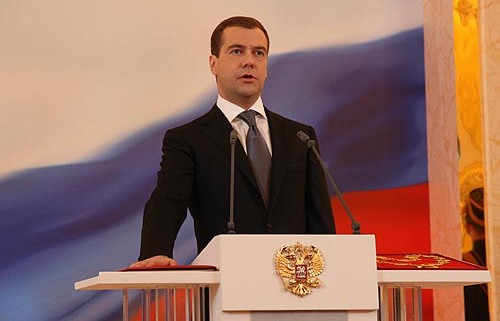
Russian Prime Minister Dmitry Medvedev said his country is in a new Cold War with the U.S. and its allies, underscoring the tenuous level of trust that’s putting a day-old plan for a truce in Syria at risk.
The clash, with echoes of superpower rhetoric during the 20th century, played out at the Munich Security Conference on Saturday even as Russia, Europe and the U.S. say they’re seeking cooperation to end Syria’s civil war, resolve the armed standoff in eastern Ukraine and make progress toward lifting European economic sanctions against Russia.
Fresh from helping craft the accord for Syria, Russian Foreign Minister Sergei Lavrov suggested that the U.S. is reneging on the agreement and put the chances of success at less than 50 percent. U.S. Secretary of State John Kerry, addressing the meeting separately, demanded an end to Russian bombing of groups opposed to Syrian President Bashar al-Assad.
“This is a hinge point,” Kerry told the Munich Security Conference on Saturday. “We hope this week can be a week of change. It is critical for all of us to take advantage of this moment to make this cessation of hostilities work.”
On stage at the international gathering of diplomats and defense officials, Medvedev set a different tone, blaming the U.S.-led North Atlantic Treaty Organization for stoking conflict. Jens Stoltenberg, the alliance’s secretary general, said Russia is using its nuclear arsenal to intimidate Europe. (Read more from “Russia’s Prime Minister: We Are in a New Cold War” HERE)
https://joemiller.us/wp-content/uploads/Inauguration_of_Dmitry_Medvedev_7_May_2008-7.jpg334500Joe Millerhttps://joemiller.us/wp-content/uploads/logotext.pngJoe Miller2016-02-14 23:29:342016-04-11 10:52:40Russia’s Prime Minister: We Are in a New Cold War
A quick-thinking refueling plane crew saved a fighter pilot who faced having to eject over Islamic State territory.
The F-16 had been trying to refuel in mid-air when the pilot discovered a malfunction with his fuel system, which meant he could only fly for 15 minutes – nowhere near enough to reach safety.
Instead of leaving the pilot to cope with the emergency himself, the US Air Force KC-135 Stratotanker crew managed to escort him back to its base while refueling every 15 minutes to keep the jet in the air.
US Air Force commander Lt Col Eric Hallberg said: “Over 80% of his total fuel capability was trapped and unusable.
“Knowing the risks to their own safety, they put the life of the F-16 pilot first and made what could’ve been an international tragedy a feel-good news story. (Read more from “Air Force Crew Refueling Plane Saves Pilot in Emergency Over ISIS Territory” HERE)
https://joemiller.us/wp-content/uploads/AQMI_Flag_asymmetric.svg_.png15002000Joe Millerhttps://joemiller.us/wp-content/uploads/logotext.pngJoe Miller2016-02-14 23:28:022016-04-11 10:52:42Air Force Crew Refueling Plane Saves Pilot in Emergency Over ISIS Territory
North Korea poses an increasing danger of using long-range missiles capable of striking the United States with nuclear warheads and is fielding new road-mobile and submarine-launched missiles, the Pentagon said in a report to Congress made public Friday.
The Pentagon is working with South Korea, Japan and other countries to counter “the continued and growing threat from North Korea, its nuclear and missile programs, and its proliferation of related technology,” the report said, adding that the U.S. provides “extended deterrence” through both nuclear and conventional forces . . .
“North Korea’s continued pursuit of nuclear technology and capabilities and development of intermediate- and long-range ballistic missile programs underscore the growing threat it poses to regional stability and U.S. national security,” the 30-page report states.
“North Korea’s pursuit of a submarine-launched ballistic missile capability also highlights the regime’s commitment to diversifying its missile force, strengthening the missile force’s survivability, and finding new ways to coerce its neighbors.”
North Korea’s submarine-launched ballistic missile (SLBM) program was first disclosed by the Washington Free Beacon. In January, the first successful ejection test of the developmental SLBM was carried out. (Read more from “Pentagon: North Korea Nuclear, Missile Threat Increasing” HERE)