State Passes Pro-Life Bill to Protect Unborn Babies With Down Syndrome

The Oklahoma House passed a pro-life bill Tuesday that would prevent women from aborting unborn children diagnosed with Down syndrome.

Known as HB 1549 or the Prenatal Nondiscrimination Act of 2017, the bill protects unborn children with Down syndrome or another “genetic abnormality” from being aborted because of their diagnosis. Physicians who knowingly violate the act would have their licenses removed. The bill passed Tuesday, which was also World Down Syndrome Day, with a House vote of 67-16, NewsOK reported.

The bill comes at a time when many pro-choice advocates around the world are pushing acceptance of abortions based on genetic abnormalities. LifeSite News reported last week that in Iceland, 100 percent of unborn babies diagnosed with Down syndrome are aborted. Last year a French court upheld a ban on a video called Dear Future Mom celebrating the lives of children and adults with Down syndrome. The ban was upheld since the video was “likely to disturb the conscience of women” who had chosen to abort their babies because of a Down syndrome diagnosis, France’s State Council ruled.

Oklahoma’s HB 1549 will now move to the state Senate. (For more from the author of “State Passes Pro-Life Bill to Protect Unborn Babies With Down Syndrome” please click HERE)

Follow Joe Miller on Twitter HERE and Facebook HERE.
Drinking Tea Daily Can Slash Dementia Risk

A cup of tea a day can keep dementia away, according to a study from the National University of Singapore, which found that tea can slash the risk of dementia in people aged 55 and older.

Drinking tea cuts the risk of cognitive impairment in older people in half, but the news is even better for those who are genetically at risk of Alzheimer’s. In people who carry the APOE e4 gene, tea reduces the risk by as much as 86 percent.

The researchers also discovered that the ability of tea to protect the brain isn’t limited to a particular type of tea, as long as the tea is brewed from tea leaves, such as green, black or oolong tea . . .

Other studies have found that tea protects the brain. In Alzheimer’s patients, amyloid protein in the brain forms into clumps and fastens onto nerves in brain cells, causing them to die. Scientists at Britain’s University of Leeds found that treating the proteins with extracts of green tea and resveratrol disrupted the ability of amyloid to clump. (Read more from “Drinking Tea Daily Can Slash Dementia Risk” HERE)

Follow Joe Miller on Twitter HERE and Facebook HERE.

Chicago Teen Apparently Gang-Raped on Facebook Live

A 15-year-old Chicago girl was apparently sexually assaulted by five or six men or boys on Facebook Live, and none of the roughly 40 people who watched the live video reported the attack to police, authorities said.

The video marks the second time in recent months that the Chicago Police Department has investigated an apparent attack that was streamed live on Facebook. In January, four people were arrested after a cellphone footage showed them allegedly taunting and beating a mentally disabled man.

Police only learned of the latest alleged attack when the girl’s mother approached the head of the police department, Superintendent Eddie Johnson, Monday afternoon as he was leaving a department station in the Lawndale neighborhood on the city’s West Side, department spokesman Anthony Guglielmi said Tuesday. She told him her daughter had been missing since Sunday and showed him screen grab photos of the alleged assault. (Read more from “Chicago Teen Apparently Gang-Raped on Facebook Live” HERE)

Follow Joe Miller on Twitter HERE and Facebook HERE.
Gorsuch Responds to Sexism Allegation From Former Student

During his Supreme Court confirmation hearing, Judge Neil Gorsuch addressed accusations from a former law student claiming he had encouraged sexist hiring practices in the classroom.

The student in question, Jennifer Sisk, took one of the Supreme Court nominee’s classes at the University of Colorado Law School and wrote in a letter sent to lawmakers Sunday night that Gorsuch said “many” working women exploit employers when receiving maternity benefits.

The Daily Signal reported Monday that Sisk has close ties to the Democratic Party. She is a former political appointee of the Obama administration and worked for former Sen. Mark Udall, a Democrat. In covering Sisk’s allegations, multiple media outlets did not initially disclose her ties to Democrats and President Barack Obama.

After being questioned about the letter by Sen. Dick Durbin, D-Ill., Gorsuch—who noted the first time he heard about this was the night before his confirmation hearing—responded to this accusation by implying that it was a misunderstanding he wanted to clear up.

“I teach from a standard textbook … there is one question in the book that is directed at young women—because sadly, this is a reality that they sometimes face,” Gorsuch said.

“The problem is this: Suppose an older woman at the firm that you’re interviewing at asks you if you intend to become pregnant soon, what are your choices as a young woman?” Gorsuch asked rhetorically. “You can say yes, and tell the truth … and not get the job and not be able to pay your debts [from law school]. You can lie, maybe get the job, say no, that’s a choice, too, it’s a hard choice. Or you can push back in some way, shape, or form.”

The judge added that the question raised by the textbook was a part of a broader discussion on the hardships lawyers face in life, including high suicide rates, alcoholism, divorce, depression, and financial difficulties.

“We talk about the pros and cons in this erratic dialogue and they can think through things on how to answer very difficult questions,” Gorsuch said.

Gorsuch then asked that everybody who has heard questions like this from employers to raise their hand—attempting to make the point that these “inappropriate questions about family planning,” as he said, are fairly common.

“It still happens every year,” Gorsuch said. (For more from the author of “Gorsuch Responds to Sexism Allegation From Former Student” please click HERE)

Follow Joe Miller on Twitter HERE and Facebook HERE.
The Unforeseen Consequences of Transgenderism

Determining one’s own sex or that of another used to be a simple matter.

First, there was the matter of appearance, whether a person looked like a male or looked like a female. If appearance produced some uncertainties, one could determine sex by examining a person’s birth certificate.

If appearance and a birth certificate produced uncertainties, the ultimate, absolute proof of sex was a person’s chromosomes; XX marked a female, and XY marked a male. Case closed.

But those old-fashioned, simple methods of identifying sex have changed. In fact, relying on those old tried-and-true methods of sex identification qualifies one for opprobrium, with the charge of being homophobic.

Today—independent of appearance, genitalia, birth certificate, and chromosomes—one is a male or female based on how one labels oneself.

This new liberty applies to not only sex but also race.

Rachel Dolezal, born Caucasian, chose to be a black person. By becoming a black person, she became the president of the Spokane, Washington, office of the NAACP and an instructor of Africana studies at Eastern Washington University.

As far as she is concerned, she’s still a black person now, and she has a new legal name, Nkechi Amare Diallo, which means “gift of God” in Ibo.

A notable beneficiary of racial fakery is Sen. Elizabeth Warren, D-Mass., who claimed that she was of Cherokee Indian ancestry. That helped her land a $430,000 job for a year at diversity-hungry Harvard University as a professor of law.

If Diallo and Warren were not leftist, learned college professors and students would condemn their behavior as racial appropriation.

But let’s explore further the idea of freeing oneself from the oppression of biological determinism. There is no better testing ground than America’s colleges, which are at the forefront of transgenderism, for seeing how this might work.

How tolerant would college administrators be of conservative male students, if they said that they feel womanish, going into the ladies’ bathroom and showering facilities? Would these men, claiming to be women, be eligible for tryouts for the women’s basketball or field hockey team?

Suppose a college honored the right of its students to free themselves from biological determinism and allowed those with XY chromosomes to play on teams formerly designated as XX teams.

I would anticipate a problem competing with other colleges. An unenlightened women’s basketball team might refuse to play against a mixed-chromosome team whose starting five consists of 6-foot-6-inch, 200-pound XYers.

The NCAA should have a rule stating that refusal to play a mixed-chromosome team leads to forfeiture of the game. It’s no different from a team of white players refusing to play another because it has black players.

It’s not just college sports that would yield benefits for those escaping biological determinism. What about allowing XYers who claim they are women to compete in the Women’s International Boxing Association?

Then there are the Olympics. The men’s fastest 100-meter speed is 9.58 seconds. The women’s record is 10.49 seconds.

What about giving XY people a greater chance at winning the gold by permitting them to compete in the women’s event? They could qualify by just swearing that they feel womanish or suffer from gender dysphoria.

You say, “There you go, Williams, picking on colleges again!”

I applaud the fact that some colleges are taking a leadership role in fighting biological determinism. Barnard College President Debora Spar wrote:

There was no question that Barnard must reaffirm its mission as a college for women. And there was little debate that trans women should be eligible for admission to Barnard.

With that announcement, Barnard College joined a growing list of women’s colleges—along with Smith College, Mount Holyoke College, Mills College, and Simmons College—that have updated their admissions policies to take transgender women’s applications into consideration.

The question that remains is just how much equality these enlightened colleges will permit between XXers and XYers.

Will they sexually integrate all of their facilities? Or will they endeavor to develop the morally repugnant policy of “separate but equal”? (For more from the author of “The Unforeseen Consequences of Transgenderism” please click HERE)

Follow Joe Miller on Twitter HERE and Facebook HERE.
Teens Abusing Opioids Are Getting Their Painkillers Legally

A majority of teens abusing opiate based painkillers began their addictions through legally prescribed medication from a doctor, according to a new study in the journal Pediatrics.

Researchers gathered data from 1976 through 2015 and found a correlation between painkiller abuse and previous prescriptions. Roughly eight percent of teens are currently abusing opioid medication, according to the researchers from the University of Michigan. The majority of those abusing the pills were found to have previously been prescribed opioids by a doctor, reports Live Science.

Hospitals are experiencing steep increases in the number of teens and children admitted for opioid poisoning and experts blame over-prescribed pain medications. The number of prescription pills saturating the U.S. market quadrupled since 2000, sparking the opioid epidemic and predisposing young individuals to severe addiction. Hospitalizations for opioid poisoning are up 176 percent among people ages 15 to 19 years old.

“Health professionals who prescribe opioid medications to adolescents can play an important role in reducing prescription opioid misuse,” Sean McCabe, study author and research professor at the University of Michigan, told Live Science. “We consider any rate of non-medical use of prescription opioids alarming, based on the known adverse consequences associated with this behavior.”

The majority of new heroin addicts begin with a dependence on prescription painkillers, before transitioning after building high tolerances that make the pills too expensive. Heroin use among U.S. teens more than doubled over the past 10 years. Officials with the Drug Enforcement Administration say four out of five heroin addicts started with painkillers. (Read more from “Teens Abusing Opioids Are Getting Their Painkillers Legally” HERE)

Follow Joe Miller on Twitter HERE and Facebook HERE.
That’s Not Carry-On! Five-Foot Snake Loose on Alaska Flight

Anna McConnaughy was flying to Alaska’s largest city when the announcement came over the intercom: a passenger on a previous flight had brought a pet snake on board . . .

“The pilot came, and said, ‘Guys, we have some loose snake on the plane, but we don’t know where it is,’” McConnaughy said Tuesday . . .

A little boy, one of seven passengers on the Ravn Alaska commuter flight Sunday from the Alaska village of Aniak to Anchorage, was climbing on his seat when he spotted the slumbering snake. It was lying partially covered by a duffel bag near the back of the plane. (Read more from “That’s Not Carry-On! Five-Foot Snake Loose on Alaska Flight” HERE)

Follow Joe Miller on Twitter HERE and Facebook HERE.

Transgender Weightlifter Wins Women’s Competition

A transgender weightlifter who transitioned from male to female caused outrage after he won a female competition Sunday.

Laurel Hubbard, born a male, outperformed his female competitors in the Australian International competition, reports AU.News.

Hubbard lifted about 591 pounds, compared to runner-up Iuniarra Sipaia, who lifted approximately 572 pounds.

One weightlifter pointed out that Hubbard competing in the women’s division could be unfair.

(Editor’s note: read HERE about a recent public high school wrestling match in Texas where a trans “girl” unfairly won a 6A contest)

“We all deserve to be on an even playing field,” Deborah Acason, from the Australian Weightlifting Federation, told 1News Now. “It’s difficult when you believe that you’re not. If it’s not even, why are we doing the sport?” (Read more from “Transgender Weightlifter Wins Women’s Competition” HERE)

Follow Joe Miller on Twitter HERE and Facebook HERE.
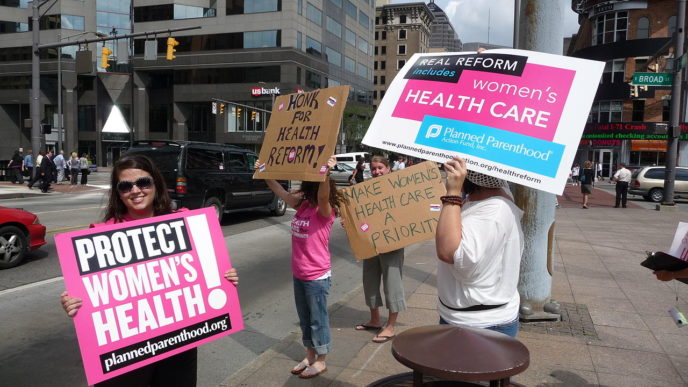
Over 100 College Campuses to Screen Documentary About Abortion Health Risks

More than 100 college and medical school campuses will host a screening of the award-winning documentary Hush, which investigates the long-term health risks associated with abortion.

Students for Life of America, a pro-life student-led group, organized the screenings to take place on campuses March 23.

Director Punam Kumar Gill, a self-described “pro-choice” advocate, teamed up with “pro-life” Executive Producer Drew Martin and “neutral” Producer Joses Martin to create a nonpolitical “pro-information” documentary about women’s health and specifically the effects of abortion on a woman’s body, including a look at links between abortion and breast cancer, premature birth, and psychological and emotional trauma. National Right to Life News reports that Hush presents “an extraordinary amount of evidence and testimony” including that of post-abortive women. Gill also shared her own loss over a third-trimester miscarriage of a son and its affect on her present and future health.

Opening a Dialogue on What Women Should Know

Students for Life of America president Kristan Hawkins said she hopes the informative documentary will begin a dialogue about what women should know before having an abortion.

“The film is specifically about opening up a healthy conversation on women’s reproductive health and providing correct information that women are entitled to have if they are considering abortion,” said Hawkins. “It’s being screened at colleges and universities because it’s these women who are the largest demographic who may be suffering from complications from abortions and it’s at these educational institutions that thoughtful and fair consideration in the pursuit of truth is still king.”

Producer Joses Martin said that the film will inform everyone and that some findings question claims considered long settled by pro-abortion advocates. “This is not a political film, it’s a women’s health film that is packed with important information about breast cancer, premature birth, miscarriage, pregnancy and abortion, that every audience member will learn something from,” said Martin. “But it does come out with some very controversial findings that refute supposedly conclusive statements made by international health organizations.”

“We see this as an opportunity on campuses for respectful and productive discourse for the sake of women’s health, not a screaming match over abortion,” said Hawkins. “We are hoping that these serious side effects to abortion will be given the attention that they demand by the mainstream media in a true service and honor to women.”

Some of the colleges hosting the screening of the film include Boston College, Brown University, Dartmouth College, Georgetown University, Hillsdale College, Stephen F. Austin State University, Wheaton College and Yale.

(For more from the author of “Over 100 College Campuses to Screen Documentary About Abortion Health Risks” please click HERE)

Follow Joe Miller on Twitter HERE and Facebook HERE.
This Author’s Dying Wish Will Rip Your Heart Out

Recently the New York Times ran an essay in their “Modern Love” section with a title that seemed ubiquitous yet clever — at once unassuming yet intriguing. “You May Want to Marry It turned out to be anything but ordinary. The writer, a children’s book author named Amy Krouse Rosenthal, who passed away just Monday of ovarian cancer, but was in hospice when the essay was published, has made hundreds of readers ponder end-of-life scenarios and love lost and found — an unusual yet compelling combination.

A dating ad on a deathbed

Like many great writers, Rosenthal wastes no time in introducing her hook to hungry readers yearning for love. She knows her time on earth is limited — she was diagnosed with ovarian cancer in September 2015 — and she wants to introduce the world to her husband, possibly even providing a unique segue to future companionship when she’s gone. The entire essay is composed as a bit of a dating profile: eHarmony meets the New York Times. What results isn’t butterflies but tears.

Still, I have to stick with it, because I’m facing a deadline, in this case, a pressing one. I need to say this (and say it right) while I have a) your attention, and b) a pulse.

I have been married to the most extraordinary man for 26 years. I was planning on at least another 26 together.

The column made readers catch their breath. Responses and similar, shorter essays poured in – about 1,300 according to the New York Times. Her obituary said the column had drawn over four million readers online.

In just a few short anecdotes we learn her husband is handsome, helpful, adventurous, kind and clearly the love of her shortened life. But like all good writers, she shows us this, instead of telling us:

Here is the kind of man Jason is: He showed up at our first pregnancy ultrasound with flowers. This is a man who, because he is always up early, surprises me every Sunday morning by making some kind of oddball smiley face out of items near the coffeepot: a spoon, a mug, a banana.

This is a man who emerges from the minimart or gas station and says, “Give me your palm.” And, voilà, a colorful gumball appears. (He knows I love all the flavors but white.)

After a few more illustrations like this, you can’t help but like Mr. Rosenthal a lot, and Mrs. Rosenthal even more for sharing her favorite things about him with us. Yet the frame of the piece — her impending death — makes this “dating ad” all the more bittersweet, yet illuminating.

The meaning of love and death, intertwined

I never had the pleasure of meeting Rosenthal, but based on her children’s books, her TED talks, and glimpses of videos she made on her web site, she seemed quirky, fun, and hard-working. A wife, mother, and writer who chose to see the brighter side of life and the good in people. (She produced one short film called “The Beckoning of Lovely.”)

Yet here she is, near her death at 51, penning these words to a mass of (presumably) single women looking for love.

If our home could speak, it would add that Jason is uncannily handy. On the subject of food — man, can he cook. After a long day, there is no sweeter joy than seeing him walk in the door, plop a grocery bag down on the counter, and woo me with olives and some yummy cheese he has procured before he gets to work on the evening’s meal.

Here the writer shows far more selflessness than I ever could. Instead of weighing in on the usual questions when faced with knowledge one’s death is imminent due to illness, What did my life mean? What have I contributed? She’s concerned with the emotional well-being and companionship needs of her “incredibly handsome” husband. Rosenthal’s barreling toward death yet there’s no self-pity, no outward flailing, no requiem on how the world has wronged her by cutting time with her husband short when they had just become empty nesters and planned to travel.

Rosenthal says this about her husband, “If you’re looking for a dreamy, let’s-go-for-it travel companion, Jason is your man. He also has an affinity for tiny things: taster spoons, little jars, a mini-sculpture of a couple sitting on a bench, which he presented to me as a reminder of how our family began.” These glimpses of Mr. Rosenthal show us what she deems important: Love and the people she has loved.

I can’t help but read that and contemplate the same things. My husband too knows exactly the kind of coffee I like (lots of flavored creamer, no sugar) and he too, picks up little gifts for the kids when he’s traveling (Nothing for me; he knows I hate trinkets). Deep down we all treasure these things about the people we love: Whether it’s the way a person cocks his head when he’s thinking or the way she says certain words (My daughter can’t say her “r” sound correctly right now, and I hope I never forget this temporary flaw.). We all cherish these types of things about the people we love and who love us but why does it take a woman’s essay penned at the end of her life to help me notice?

Rosenthal isn’t really talking about gumballs, travel, or live music. She’s really encouraging us to appreciate the time with the people we love and to live life fully in the moments we have.

Live like you’re dying

Rosenthal closes with these heart-wrenching words:

I want more time with Jason. I want more time with my children. I want more time sipping martinis at the Green Mill Jazz Club on Thursday nights. But that is not going to happen. I probably have only a few days left being a person on this planet. So why I am doing this?

I am wrapping this up on Valentine’s Day, and the most genuine, non-vase-oriented gift I can hope for is that the right person reads this, finds Jason, and another love story begins.

She concludes the essay — and indeed the entire point if taken literally — with what seems to be a quirky yet selfless gesture to ensure her husband finds a companion following her death. Although on the other hand perhaps it was just a clever, tear-jerking, emotional way of making the rest of us realize we don’t love the people in our lives enough.

Call me millennial or just much more selfish, but her essay forced me to contemplate what we tend to push under the rugs of our minds, even though the entire floorboard of our brains is hammered together with the nails of mortality: Do I love the people in my life, as Rosenthal clearly adores her husband? At my end, with just enough strength and clarity to pen one final essay in the New York Times, could I encapsulate my husband, a good friend, my parents, my children, with a few lines that make that person seem incredible and endearing, a marvel, yet real? Because that’s what the people we love with mortal bodies and immortal souls are: wonderfully-made, God-sewn delights. Yet so often I complain when a friend doesn’t check in on me, when my husband doesn’t respond to a text, or that I’m not immediately forgiven when I’ve wronged someone — or apologized to when I’ve been wronged.

Over five years ago I interviewed a young man, my age, who had been diagnosed with an inoperable brain tumor and given less than five years to live. The tumor wrapped inside his brain like a wire mesh rather than a baseball and was likely to effective his ability to communicate as it grew. “How do you feel about your prognosis — that you may not live through this?” I asked. “We all have an expiration date,” he replied firmly. “Some of us just know when it is.” (He’s still alive.)

May we, when whether we know our “expiration” date or not, as one of Rosenthal’s favorite quotes reads, “[R]ealize life while they live it?” (For more from the author of “This Author’s Dying Wish Will Rip Your Heart Out” please click HERE)

Follow Joe Miller on Twitter HERE and Facebook HERE.