Sharing the Stories of Heroes This Memorial Day

Many nations set aside days to celebrate the end of wars or major battles, and to honor those who fought in them.

Memorial Day in America is different in that it doesn’t celebrate veterans—we have a different day set aside for that. This federal holiday was designed to celebrate and honor those who have died while in uniformed service to our country in times of peace or war.

While noble in nature, the day presents a unique challenge to those of us who look for ways to show our gratitude.

Every year, my church goes long in its efforts to meet that challenge. In the heart of every Memorial Day service, our pastor asks those who have served in the military to stand, and as they do, the church body thanks them with a rousing, heartfelt round of applause.

The choir lifts the entire sanctuary with a battery of some of the most patriotic music you can imagine, and yet no matter how wonderful the veterans and congregation may feel at the end of each service, our collective efforts miss the mark.

As well intended as they are, my church isn’t alone in giving gestures that fall short.

Furniture stores and car dealerships use the occasion to offer special deals to serving military members. Pools open, and communities put on parades that feature local celebrities, marching bands, and veterans from the wars of our age.

Clans of family and friends gather in homes and parks throughout the United States to revel in the first of two holidays that frame the summer.

But almost all our Memorial Day revelry focuses on the living. There is little talk of those who gave their all, and even less about what that phrase might mean to one who has never leaned into the thought.

I guess we all need reminders.

I stumbled onto a collection of photos a few weeks ago that rekindled those thoughts in me. It was a site called the Wall of Faces. There, the names of the pictured men and women we lost in Vietnam are revealed with the move of a cursor.

As the arrow touched each picture, my mind raced to calculate the time that separated their birth and casualty dates. Some were a bit older and Vietnam was at least their second war, but the majority were under 20 when they died.

That’s when the second piece of math hit me.

In the 37 years beyond my 20th birthday, I met and married the woman I had been searching for my entire life.

I was there to welcome our two sons into this world, and I’ve been right by their side to celebrate those birthdays for all but a fraction of their years.

Somewhere along the way, I managed to climb into the dream I dreamed of as a child and, while the highs I’ve enjoyed as a man have been immeasurable, they don’t quite measure up to my all.

I’ve been given time enough to be a loving partner in life for my wife, and a doting father, shepherd, and coach for my two sons.

When I think about all that I’ve been given, I begin to get a sense of what others gave up when they gave us their lives.

Two men died of exposure during Gen. George Washington’s march on Trenton in the winter of 1776. Just over a year ago, 12 Marines were killed during a training mishap off the coast of Hawaii. And on Jan. 29 of this year, a Navy SEAL fell to enemy fire in Yemen.

Like those we’ve lost in every other conflict, incursion, or mishap, their stories run the gamut. Some were immortalized as heroes, and others have faded into near anonymity, save for the memories they left with the living.

In the course of my years in the service, I received the contagious laughter, the loves, and aspirations of 11 different men who laid down their lives. While each willingly gave up everything for this nation of ours, our gratitude is what will carry them forward in memory.

When you wake up Monday morning, take a moment to do your own math, then lean into your family and friends with a story about one of our Memorial Day heroes.

And when you hit your knees Monday night, say a prayer for those who long for the company, the loving touch of one who gave his or her all for you and me. (For more from the author of “Sharing the Stories of Heroes This Memorial Day” please click HERE)

Follow Joe Miller on Twitter HERE and Facebook HERE.

Major Insurance Company Ditches Obamacare in Kansas City

Blue Cross Blue Shield of Kansas City announced Wednesday morning it will no longer offer or renew insurance plans on the city’s Obamacare exchange next year in Kansas or Missouri.

The fallout is likely to affect some 67,000 Blue Cross customers in 30 counties in Kansas City, according to a statement from Blue Cross Blue Shield of Kansas City. The company provides insurance to over 1 million individuals in the Kansas City area.

Blue Cross customers who get insurance through their employers will not be affected, nor will customers who have “a Medicare supplement, Medicare Advantage, a Short-Term Policy or a Student Health Plan.”

The company is experiencing rising operating costs which have made it such that providing plans on the Kansas City Obamacare exchange is no longer profitable.

“Like many other insurers across the country, Blue KC has faced many challenges in this market,” the statement said. “Through 2016, the company lost more than $100 million in this market, which is unsustainable.” (Read more from “Major Insurance Company Ditches Obamacare in Kansas City” HERE)

Follow Joe Miller on Twitter HERE and Facebook HERE.
Appeals Court Deals Blow to Trump Administration Travel Ban

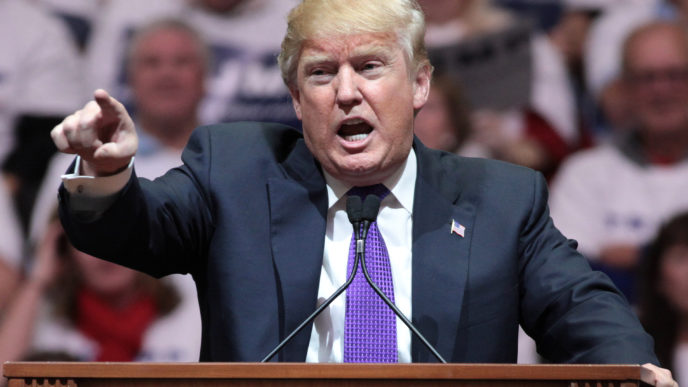
A federal appeals court dealt another blow to President Donald Trump’s revised travel ban targeting six-Muslim majority countries on Thursday.

The 4th U.S. Circuit Court of Appeals upheld a lower court ruling that blocks the Republican’s administration from temporarily suspending new visas for people from Iran, Libya, Somalia, Sudan, Syria and Yemen.

The Richmond, Virginia-based 4th Circuit is the first appeals court to rule on the revised travel ban, which Trump’s administration had hoped would avoid the legal problems that the first version encountered. (Read more from “Appeals Court Deals Blow to Trump Administration Travel Ban” HERE)

Follow Joe Miller on Twitter HERE and Facebook HERE.

This 1962 Novel Predicted Western Collapse and Islam’s Takeover

Following the news, I get more and more outraged. Not at God. Nor at Islam. Not even at my fellow man. The person I really resent is whatever satirical novelist is scripting our daily events from Hell. Or Purgatory, at best. No writer in Heaven would be cruel enough to inflict all this on us. Or would he? Perhaps to teach us a lesson. …

Love Among the Ruins

Is it you, Evelyn Waugh? You predicted our transgender madness, the euthanasia craze, and the toxic, infantilizing effects of the welfare state in Love Among the Ruins. Now are you pulling strings to make it all come true? Is this payback for that lousy movie adaptation of Brideshead Revisited? Enough, already.

That Hideous Strength

Or you, C.S. Lewis? Yes, you laid out to the letter what would become of our sexual culture in That Hideous Strength. You imagined a race that inhabited the Moon, who lost all interest in actual intercourse, and instead began to mate with technological images of each other. That’s how deep their disgust for God’s physical creation had become. Now married couples are shunning each other, while porn websites flourish. So yes, okay, you were right. But lay off already!

The Camp of the Saints

I would ask Jean Raspail, who wrote The Camp of the Saints, to accept that we’ve learned our lesson. Yes, you were dead-on right that self-loathing Europe would die not with a bang but a simper. The same glum hedonists who won’t have any children and warn that the slightest upsurge in Christian practice could lead to the Inquisition: they’re falling over themselves to show how “open” and “welcoming” they can be to Dark Ages-haunted theocrats, who have families of six and seven kids at taxpayer expense. I expect no mercy from you, Raspail. The French are an unforgiving race.

The Wanting Seed

But really I’m angriest at Anthony Burgess (most famous for A Clockwork Orange — far from his best book). If there is a single culprit, one writer who sketched out what would happen to us today, it’s you, Anthony. In The Wanting Seed you laid out a compelling theory of history: That the back and forth of ideologies and religions in the West acts like a see-saw. We always are either at or on the way to one extreme or the other. We oscillate between two theories of man.

Man Is Perfectible

One theory is that we can engineer man to be better, and make earthly life close to perfect. All we need to do is follow secular reason, impose more controls, and allow our enlightened elites to shepherd us forward to Eden. You dubbed this “Pelagianism,” after the English heretic who believed that God’s grace is optional and Jesus was just a really, really uplifting example. You linked it with socialism, Malthusianism, science-worship, and population control.

A society in its grips, you cannily predicted, will try to suppress the family, and hold up as heroes not just homosexuals, but actual eunuchs. Did you see Bruce “Caitlyn” Jenner offering President Trump advice in some crystal ball you consulted?

Man Is Unfixable

The other extreme is that man’s animal instincts and inborn evil are fundamental to his being. They will always overwhelm attempts to perfect human society. War, hierarchy, cruelty, and other historic evils: baked into the cake. There is no sense in trying to wipe them out, or even limit them. Instead we should harness and use them, and try to make sure that our group holds the whip hand instead of other people’s. Unfairly, I think, you labeled this “Augustinianism.”

In the novel, you pictured the Malthusian/Eunuch state collapsing all right — as indeed it is, before our eyes. You imagined a resurgence of fundamentalism, militarism, bloodlust, and primitive tribal hatred. On all that you were dead right. But you pictured it happening among Westerners, even Anglicans! What your visions didn’t tell you, at least in this novel, is that its agents would be Islamic. That they would be newcomers welcomed in by the pallid, Malthusian optimists. To give you credit, some twenty years later you did see the Muslim takeover coming, and wrote about it in your novella 1985.

The Wanting Seed is the creepiest, most chillingly prescient piece of literature I’ve ever come across. Plug in “Islam” for “Augustinianism,” and the novel flat-out predicted the events that wouldn’t happen till 50 years later. About how many other books can we say the same?

Pope Benedict on Technology vs. Islam

For the last piece of the intellectual puzzle, see Pope Benedict XVI’s famous speech at Regensburg. He pointed out that the dark shadow cast by the West’s obsession with godless speculation and technology was Voluntarism: the grim belief that Will, not Reason, is the ultimate force in the universe. That is the theory of God that most of Islam clings to. It feeds the cult of violence which has always accompanied that religion, wherever it conquers. The individual terrorist channels the capricious wrath of God.

Burgess’ novel is grim, alarming, funny, and deeply pessimistic. It needs to be made into a miniseries for Netflix. At the very least, it should be required reading for every Western college student. It’s only fair to warn them what they’re in for.

And Anthony, we get the point. Please cut it out. (For more from the author of “This 1962 Novel Predicted Western Collapse and Islam’s Takeover” please click HERE)

Follow Joe Miller on Twitter HERE and Facebook HERE.

Trump’s Food Stamp Reform Would Close the Trap of Dependency

President Donald Trump’s newly released budget contains a proposed food stamp reform, which the left has denounced as a “horror” that arbitrarily cuts food stamp benefits by 25 percent.

These claims are fundamentally misleading.

In reality, the president’s proposed policy is based on two principles: requiring able-bodied adult recipients to work or prepare for work in exchange for benefits, and restoring minimal fiscal responsibility to state governments for the welfare programs they operate.

The president’s budget reasserts the basic concept that welfare should not be a one-way handout. Welfare should, instead, be based on reciprocal obligations between recipients and taxpayers.

Government should definitely support those who need assistance, but should expect recipients to engage in constructive activity in exchange for that assistance.

Work Requirements

Under the Trump reform, recipients who cannot immediately find a job would be expected to engage in “work activation,” including supervised job searching, training, and community service.

This idea of a quid pro quo between welfare recipients and society has nearly universal support among the public.

Nearly 90 percent of the public agree that “able-bodied adults that receive cash, food, housing, and medical assistance should be required to work or prepare for work as a condition of receiving those government benefits.”

The outcomes were nearly identical across party lines, with 87 percent of Democrats and 94 percent of Republicans agreeing with this statement.

Establishing work requirements in welfare was the core principle of the welfare reform law enacted in the mid-1990s. That reform led to record drops in welfare dependence and child poverty. Employment among single mothers surged.

Despite the harsh impact of the Great Recession, much of the poverty reduction generated by welfare reform remains in effect to this day.

Unfortunately, though, welfare reform altered only one of more than 80 federal means-tested welfare programs. The other programs were left largely untouched. Trump’s plan is to extend the successful principle of work requirements to other programs.

Restoring State-Level Accountability

The second element of Trump’s plan is to restore a minimal share of fiscal responsibility for welfare to state governments.

As noted, the federal government operates over 80 means-tested welfare programs providing cash, food, housing, medical care, training, and targeted social services to poor and low-income persons. In addition, state governments run a handful of small separate programs.

Last year, total federal and state spending on means-tested aid was over $1.1 trillion. (This sum does not include Social Security or Medicare.)

Some 75 percent of the $1.1 trillion in spending comes from the federal government. Moreover, nearly all state spending was focused in a single program: Medicaid.

Excluding Medicaid, the federal government picks up the tab for nearly 90 percent of all means-tested welfare spending in the U.S.

The United States has a federal system of government with three separate levels of independent elected government: federal, state, and local. Under this three-tier system, the federal government already bears full fiscal responsibility for national defense, foreign affairs, Social Security, and Medicare.

It makes no sense for the federal government to also bear 90 percent of the cost of cash, food, and housing programs for low-income persons.

But for decades, state governments have increasingly shifted fiscal responsibility for anti-poverty programs to the federal level. As a result, the federal government picks up nearly all the tab for welfare programs operated by the states.

This is a recipe for inefficiency and nonaccountability.

One of the key lessons from welfare reform—now 20 years ago—is that both blue and red state governments spend their own revenues far more prudently than they spend “free money” from Washington.

Efficiency in welfare requires state governments to have some fiscal responsibility for the welfare programs they operate.

The food stamp program is 92 percent funded by Washington. Washington sends blank checks to state capitals—the more people a state enrolls in food stamps, the more money Washington hands out.

A dirty secret in American politics is that many governors, both Republican and Democrat, regard this type of “free money” poured from Washington as a benign Keynesian stimulus to their local economies. The more spending, the better.

The Trump budget recognizes that the food stamp program will become more efficient if the state governments that operate the program have “skin in the game.” Therefore, it raises the required state contribution to food stamps incrementally from 8 percent to 25 percent.

By 2027, this would cost state governments an extra $14 billion per year. Half of the so-called “cuts” in food stamp spending in the Trump budget simply represent this modest shift from federal to state funding.

The remaining savings in food stamps in the Trump budget come from assumed reduction in welfare caseloads due to the proposed work requirement.

A Proven Policy

Today, there are some 4.2 million nonelderly able-bodied adults without dependent children currently receiving food stamp benefits. Few are employed. The cost of benefits to this group is around $8.5 billion per year.

In December 2014, Maine imposed a work requirement on this category of recipients. Under the policy, no recipient had his benefits simply cut. Instead, recipients were required to undertake state-provided training or to work in community service six hours per week.

Nearly all affected recipients chose to leave the program rather than participate in training or community service. As a result, the Maine caseload of able-bodied adults without dependent children dropped 80 percent in just a few months.

A similar work requirement for able-bodied adults without dependents, imposed nationwide, would save the taxpayer $80 billion over the next decade.

Even this would be a pittance compared to the $3.6 trillion the federal government will spend on cash, food, and housing benefits over that period.

The Trump policy is the exact opposite of so-called “block grants” in welfare.

In a welfare block grant, the federal government collects tax revenue and dumps money on state governments to spend as they will.

Welfare block grants have always been failures. In fact, the Trump budget would eliminate two failed block grant programs—the Community Development Block Grant and the Community Services Block Grant.

Instead of block grants, Trump is seeking to reanimate the principles of welfare reform from the 1990s that emphasized work requirements and renewed fiscal responsibility from state governments.

Deeply Needed Reforms

Of course, the left adamantly opposed welfare reform in the 1990s. In their view, welfare should be unconditional. Recipients should be entitled to cash, free food, free housing, and medical care without any behavioral conditions.

No wonder they have proclaimed Trump’s proposal to be “devastating” and a “horror.”

Contrary to protestations from the left, the U.S. welfare state is very large and expensive. For example, federal spending on cash, food, and housing benefits for families with children is nearly three times the amount needed to raise all families above the poverty level.

But the current welfare state is very inefficient. Trump seeks to reform that system.

In Trump’s unfolding design, welfare should be synergistic. Aid should complement and reinforce self-support through work and marriage rather than penalizing and displacing those efforts.

A welfare state founded on this synergistic principle would be more efficient than the current system. It would reduce both dependence and poverty.

More importantly, it would improve the well-being of the poor who have benefited little from the fractured families, nonemployment, dependence, and social marginalization fostered by the current welfare state. (For more from the author of “Trump’s Food Stamp Reform Would Close the Trap of Dependency” please click HERE)

Follow Joe Miller on Twitter HERE and Facebook HERE.

Trump’s Budget Puts Medicaid on a Path to Long-Needed Reform

Medicaid, the huge government health program for the poor and the indigent, is broken.

Both the Trump administration’s recent budget submission and the House-passed American Health Care Act, designed to partially repeal and replace Obamacare, propose Medicaid fixes.

Dubious assumptions burden the Trump budget proposal, and the House health care reform bill labors under some serious deficiencies. Both are correct, however, in resetting the general direction on Medicaid policy.

Medicaid is beset by two serious problems.

The first is a fiscal problem. Medicaid is an “open-ended” federal entitlement, and thus it contributes, like other major federal entitlements, to deficits and dangerous levels of national debt.

As the Congressional Budget Office has described current Medicaid financing:

All federal reimbursement for medical services is open-ended, meaning that if a state spends more because enrollment increases or costs per enrollee rise, additional federal payments are automatically generated.

America can no longer afford automatic federal entitlement spending. This is a bipartisan conclusion.

In 2008, for example, a politically diverse group of senior analysts and economists, in “Taking Back Our Fiscal Future,” concluded:

The first step toward establishing budget responsibility is to reform the budget decision process so that the major drivers of escalating deficits—Social Security, Medicare, and Medicaid—are no longer on autopilot.

The signatories included top analysts from The Heritage Foundation, American Enterprise Institute, Brookings Institution, Progressive Policy Institute, New America Foundation, and Urban Institute.

These analysts issue a further recommendation:

Congress and the president enact explicit long-term budgets for Medicare, Medicaid, and Social Security that are sustainable, set limits on automatic spending growth, and reduce the relatively favorable budgetary treatment of these programs compared with other types of expenditures.

Both the Trump budget proposal and the House health care reform bill are taking a first big step in that direction: capping the annual growth in Medicaid spending. This is a fundamental and fiscally responsible decision. Medicaid should no longer be an “open-ended” entitlement.

The second Medicaid problem is its programmatic performance.

Medicaid serves the poor and the indigent—mostly poor women and children, the disabled, and the poor elderly, including nursing home care as part of its long-term care supports and services.

The program is not doing a good job. Compared to the privately insured, based on various studies, Medicaid patients have less access to care, longer hospital stays, and higher mortality rates.

This is not surprising since Medicaid pays doctors about 66 percent of what Medicare pays, and Medicare already pays doctors about 20 percent below private market rates.

Medicaid is not delivering the value commensurate with its rising cost. The best way to secure value—better care at lower costs—is to encourage competition based on personal choice and control over the dollars and decisions.

Obviously, such a market-based model is not appropriate for all Medicaid beneficiaries. A block grant approach, with ample state flexibility to manage care in their interest, may be the best option.

For able-bodied persons, however, Congress and the administration should go beyond block grants and create a new Medicaid option, harnessing the market forces of choice and competition.

This can best be done through a defined contribution (a “premium support”) to competing private health plans and providers that able-bodied Medicaid beneficiaries choose.

With broader networks of doctors and other medical professionals, such a policy would offer Medicaid beneficiaries superior coverage and better access to care than they have today. That kind of change would be transformational. (For more from the author of “Trump’s Budget Puts Medicaid on a Path to Long-Needed Reform” please click HERE)

Follow Joe Miller on Twitter HERE and Facebook HERE.

Major Exxon Investor Warns Shareholders Not to Give Into Global Warming Hysteria

An activist-led measure at Exxon Mobil Corp.’s next annual meeting addressing global warming could financially wipe out the company’s largest shareholders, one long-time Exxon shareholder said.

BlackRock and Vanguard Group are toying with the idea of supporting an investor-created proposal that would force Exxon to measure how regulations limiting greenhouse gasses could impact the value of the company’s oil assets, sources told The Wall Street Journal Thursday.

The measure is receiving intense scrutiny from shareholders who worry Exxon could get wobbly-kneed in the face of the environmentalist push.

Some analysts believe the measure, if passed, could indicate the full weight and force powerful investors and money managers that are concerned about climate change have on energy companies. Exxon is opposed to the measure and will find out if Vanguard and BlackRock support the measure at the company’s annual meeting on May 31.

But Steve Milloy, a lawyer-statistician and climate skeptic, believes Exxon’s shareholders are flirting with the devil. (Read more from “Major Exxon Investor Warns Shareholders Not to Give Into Global Warming Hysteria” HERE)

Follow Joe Miller on Twitter HERE and Facebook HERE.

Overcoming Assault Charge, Republican Gianforte Wins Montana Congressional Seat

Republican Greg Gianforte overcame a last-minute assault charge to win Montana’s special congressional election Thursday, keeping its lone House seat in GOP hands and dealing Democrats a setback in their bid to gain a red-state toehold ahead of the 2018 midterm election.

Gianforte, 56, a wealthy businessman who ran unsuccessfully for governor in November, had long been the front-runner against Democrat Rob Quist, a professional bluegrass musician making his first run for public office.

With more than 90% of the votes counted, Gianforte was holding a healthy lead with just over 50% support.

Appearing at an exuberant victory rally in Bozeman, the congressman-elect hushed the crowd and apologized to the reporter with whom he tangled on election eve, reversing his campaign’s initial assertion that the journalist was to blame. (Read more from “Overcoming Assault Charge, Republican Gianforte Wins Montana Congressional Seat” HERE)

Follow Joe Miller on Twitter HERE and Facebook HERE.

Netflix Series Exposes Govt-Connected Child Sex Ring in Baltimore, Police Forced to Respond

Baltimore police have found themselves in an awkward position as of late after a horrifying documentary from Netflix exposed a dark underground child sex ring involving the church, politicians, and cops. The series, titled, The Keepers, has forced the Baltimore police to set up an online submission form as people began to come forward after watching it.

While the series is on Netflix for the world’s entertainment, the harsh truth is that it really happened. After the church attempted to keep it quiet by paying off the victims under the table, the documentary has exposed these monsters to the world.

The seven-part documentary series, which premiered on Friday, also covers the unsolved murder of one of the teachers, Sister Catherine Ann Cesnik. On Tuesday, enough former victims had seen the documentary that they began calling the Baltimore police department to report their abuse.

Baltimore Police have since made an online submission form available for those who would want to report any instances of sexual abuse related to the series.

“We have been contacted by victims from the past who want to report the sex offenses that occurred to them. The murder investigation related to this Netflix series was handled by the Baltimore County Police Department,” the website reads.

Dozens of victims had been suppressing the memories of their abuses and when this documentary came out, it brought the nightmares right back. Originally, many people thought the first woman to come forward was ‘faking’ it, until dozens more followed suit.

Baltimore police spokesman T.J. Smith said to the Washington Post after the series was released,

We’ve heard from people who previously hadn’t reported their offense. We just wanted to streamline the process. This is a crime that occurred to them, they don’t need to constantly relive the nightmare, telling the story over and over again.

As the Post reports, Smith said he did not know how many calls his department had received but noted that victims in the case were probably teenagers at the time, and “this is bringing back memories for them. We just wanted to cut out the middleman and want to route them directly where they need to go.” He said sex crimes detectives will receive the online submissions and reach out to anyone who believes they were victimized.

Conveniently absent from the coverage of this Netflix series on the Washington Post and other mainstream outlets, however, is the fact that the victims in this documentary have implicated politicians as well as the police in these most unspeakable crimes.

“We never set out to solve the murder,” director Ryan White says of his new Netflix docuseries, to Vanity Fair. The seven-episode show explores the 1969 disappearance and murder of Sister Cathy Cesnik, a 26-year-old nun and beloved English teacher at Baltimore’s all-girls Archbishop Keough High School. Still, White knew this was no ordinary crime: “The truth had been deliberately buried from the beginning,” he says. Indeed, what begins as an investigation into a cold case soon becomes the story of a concerted effort to conceal widespread rape and sexual abuse committed by Keough school chaplain and counselor Father Joseph Maskell, as well as other clergy, police, and a local gynecologist.

Because, Maskell, the monster behind this widespread rape and abuse, was well-connected int the political realm, he brought others into his sick ring to prey on these young girls.

Maskell’s brother was a high-ranking city cop. This connection had two facets. First, it allowed him to cover up their crimes using these police connections. Second, it allowed for these depraved police officers to enter into this dark child sex ring.

According to Jean Wehner, the woman at the center of the abuse, Maskell operated this sex abuse ring, bringing in outside men — many of them police officers and local politicians — to take part in the abuse.

When Wehner confessed the abuse to Sister Cathy Cesnik, Cesnik became determined to put a stop to it. However, that is exactly what got her murdered.

As the Free Thought Project has previously pointed out, pedophilia among the elite is rampant. In instance after horrifying instance, the Free Thought Project continues to push these issues to the forefront — in spite of mainstream media claiming that talk of elite pedophilia is akin to tin foil hat wearing conspiracy theory.

The good news is that this paradigm seems to be shifting. As we reported in March, even some brave folks within the mainstream media have begun to report on this nightmarish reality.

In an exclusive interview seen by millions across the United States, Dr. Phil exposed the deadly secretive, and the highly organized world of elite pedophilia — with a former child sex slave going by the name of “Kendall” describing being literally born into, and growing up in, the world of elite sexual slavery.

Kendall explains that she was born to be a sex slave, as her parents intentionally had her for the trafficker she calls her “owner.” Kendall says that her parents sold her at birth to an elite pedophile ring that serviced some of the world’s power elite, describing her first memories as being passed around groups of rich and prominent men and women for them to “take turns” with her for sadistic sexual pleasure.

While Netflix and Dr. Phil have done a huge service to society by exposing this reality, we have a long way to go to end it. Pedophilia and child trafficking is a very real issue and those who attempt to discredit it and sweep it under the rug are either horribly incompetent or complicit.

This problem will not go away through ridicule and name calling. We must shine light into the darkness through refusing to be silenced. We must stand for those who are too scared to come forward and we must be the voice for the voiceless. Please share this story with your friends and family so that they may see the real horror of what goes on behind the well-connected political scenes in this country. Until enough people become aware, none of this will end. (For more from the author of “Netflix Series Exposes Govt-Connected Child Sex Ring in Baltimore, Police Forced to Respond” please click HERE)

Follow Joe Miller on Twitter HERE and Facebook HERE.

Obama Admin Knew Gang Members Were Part of Illegal Alien Surge

The Obama administration knowingly let in at least 16 admitted MS-13 gang members who arrived at the U.S. as illegal immigrant teenagers in 2014, a top senator said Wednesday, citing internal documents that showed the teens were shipped to juvenile homes throughout the country.

Sen. Ron Johnson, chairman of the Senate Homeland Security Committee, said a whistleblower turned over Customs and Border Protection documents from 2014 detailing the 16 people who were caught crossing the border.

“CBP apprehended them, knew they were MS-13 gang members, and they processed and disbursed them into our communities,” Mr. Johnson, Wisconsin Republican, said.

The gang members were part of the surge of UAC, or “unaccompanied alien children,” as the government labels them, who overwhelmed the Obama administration in 2014, leaving Homeland Security struggling to staunch the flow from Central America.

Officials at the time said the children should be treated as refugees fleeing horrific conditions back home — though security analysts said the children were prime recruiting territory for gangs already in the U.S. (Read more from “Obama Admin Knew Gang Members Were Part of Illegal Alien Surge” HERE)

Follow Joe Miller on Twitter HERE and Facebook HERE.