Trump Administration Announces First Batch of Federal Court Nominees

The Trump administration on Monday named 10 judges it plans to nominate for key posts.

White House press secretary Sean Spicer said that among the candidates are individuals previously named on Trump’s list of 21 possible picks for Supreme Court justice. All nominees would require Senate confirmation.

The announcement came less than a month after Trump’s pick for the Supreme Court, Neil Gorsuch, was confirmed, restoring the court’s conservative tilt. (Read more from “Trump Administration Announces First Batch of Federal Court Nominees” HERE)

Follow Joe Miller on Twitter HERE and Facebook HERE.

Google Asked to Label Anti-Fracking Websites as ‘Fake News’

An oil and gas drilling advocacy group published an open letter to Google asking the search engine giant to consider “purging or demoting” websites spreading misinformation about hydraulic fracturing.

Google rewrote its search engine algorithm to bury “fake news” websites in the wake of the 2016 presidential election. Now the industry-funded Texans for Natural Gas wants Google to include anti-fracking websites.

“We believe many of the most prominent anti-fracking websites have content that is misleading, false, or offensive – if not all three,” the group wrote in an open letter to Google published Monday.

“As a result, we urge you to consider purging or demoting these websites from your algorithm, which in turn will encourage a more honest public discussion about hydraulic fracturing, and oil and natural gas development in general,” the group wrote.

Google raters “assess search results — to flag web pages that host hoaxes, conspiracy theories, and what the company calls ‘low-quality’ content,” Bloomberg reported in April. (Read more from “Google Asked to Label Anti-Fracking Websites as ‘Fake News'” HERE)

Follow Joe Miller on Twitter HERE and Facebook HERE.

Texas Takes Strong and Needed Action on Sanctuary Cities

Texas Gov. Greg Abbott acted to protect the citizens of Texas on Sunday when he signed into law SB 4, a bill to punish (and deter) local cities and counties like Austin from implementing sanctuary policies.

Abbott and the legislators who sponsored this bill are trying to stop the Lone Star State from being a sanctuary for criminal aliens. They want to make sure that criminals are removed from the state and deported from the country, rather than remaining in Texas so they can victimize even more citizens of the state.

SB 4 requires local governments in the state to comply with federal immigration law. That includes 8 U.S.C. § 1373, which forbids state and local governments from preventing their officials from exchanging information with the federal government on the citizenship status of any individual.

Under the new Texas law, local governments can’t prevent their law enforcement officials from sending information to the feds on criminals they have arrested or detained.

City and county officials also can’t prevent federal immigration officers from enforcing immigration laws in local jails, and are charged with “assisting or cooperating with a federal immigration officer as reasonable or necessary” to provide “enforcement assistance.”

Further, Texas law enforcement agencies are directed to “comply with, honor, and fulfill any request made in the detainer request provided by the federal government.”

This means that local jurisdictions that fail to honor federal detainer warrants—which are requests issued by federal immigration authorities to hold illegal aliens for pickup—will also be in violation of state law.

SB 4 imposes a civil penalty on sanctuary cities of up to $25,500 for each day of intentionally violating this law. In a fitting sense of justice, the civil penalties collected will be deposited in a special victim’s crime fund set up by the state.

This means that those who have been victimized by criminal illegal aliens will be able to seek compensation from this fund. Local law enforcement officials, such as sheriffs and chiefs of police, can also be charged with a Class A misdemeanor for failing to comply with federal detainer warrants.

Finally, local officials who refuse to comply with SB 4 and who implement sanctuary policies or ordinances can be removed from office. Petitions for their removal are filed by the attorney general of Texas, and such petitions will get the same precedence as election contests under Texas law.

This ensures that such petitions will not languish in court behind other cases. And Texas courts are directed to remove that official if he or she is found guilty—judges have no discretion to keep the official in office.

Abbott said he signed this bill because public safety is his top priority: “This bill furthers that objective by keeping dangerous criminals off our streets.”

Abbott added that it is “inexcusable to release individuals from jail that have been charged with heinous crimes like sexual assault against minors, domestic violence, and robbery.”

He said that such behavior by local officials would no longer be “tolerated,” and that SB 4 was “doing away with those that seek to promote lawlessness in Texas.”

Lt. Gov. Dan Patrick, who also supports the new law, pointed out that “in the past six years, criminal aliens have been charged with more than 566,000 crimes in Texas including kidnapping, homicide, burglary and much more.”

As he said, “there is no excuse for endangering our communities by allowing criminal aliens who have committed a crime to go free.”

Given the large number of crimes committed by recidivist criminal aliens, the claim by some in Texas that this bill will make “our communities more dangerous” defies common sense.

This is particularly true because the new law exempts an illegal alien who “is a victim of or witness to a criminal offense,” or “is reporting a criminal offense.” Thus, it will not deter the reporting of crimes.

As I have pointed out before, sanctuary policies endanger the residents of the very cities they are claimed to “help.” Criminal aliens who would otherwise be detained and removed from sanctuary cities are instead released back into the community, where they can commit more crimes.

One Government Accountability Office study of the criminal histories of 55,322 illegal aliens showed that they had been arrested 459,614 times and committed almost 700,000 offenses.

The vast majority of these crimes would never have been committed if we had a secure border that prevented these criminal aliens from entering the country in the first place, or if we had an effective policy of removing them once they did make it here, or after being detained or arrested for committing a crime.

The Texas governor and legislators are trying to protect their state’s residents from the reckless and irresponsible decisions being made by local jurisdictions to release criminal aliens and to obstruct enforcement of federal immigration law.

This is a good start and the right thing for them to do. (For more from the author of “Texas Takes Strong and Needed Action on Sanctuary Cities” please click HERE)

Follow Joe Miller on Twitter HERE and Facebook HERE.

Younger Judicial Nominees Give Trump Chance for Legacy in Courts

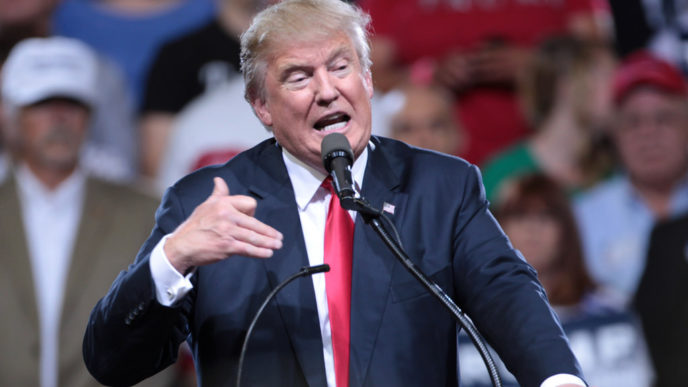
President Donald Trump will begin to leave his mark on the lower courts of the federal judiciary with 10 nominees named Monday, many of them judges still in their 40s.

Shortly after 7:30 p.m. Monday, the White House formally announced Trump’s nomination of five judges to federal appellate courts and another five judges to lower federal courts.

“They all appear to be bright, young, capable conservatives who promise to be outstanding judges; some are already judges,” John Malcolm, a legal scholar who oversees the Institute for Constitutional Government at The Heritage Foundation, told The Daily Signal earlier in the day.

Two of the appeals court nominees—Michigan Supreme Court Justice Joan Larsen, 48, nominated to the 6th Circuit, and Minnesota Supreme Court Justice David Stras, 44, nominated to the 8th Circuit—were on the list of 21 contenders for the U.S. Supreme Court that the Trump campaign released months ago.

The Heritage Foundation and The Federalist Society developed the list at Trump’s request.

Trump also nominated Amy Coney Barrett, 45, a law professor at Notre Dame and former law clerk for the late U.S. Supreme Court Justice Antonin Scalia, for the 7th Circuit, and Louisville lawyer John K. Bush, 53, for the 6th Circuit.

Rounding out the appeals court nominees is Alabama’s former solicitor general, Kevin Newsom, 44, who clerked for Justice David Souter, nominated for a seat on the 11th Circuit.

White House press secretary Sean Spicer told reporters during the Monday afternoon briefing:

These 10 individuals the president has chosen were chosen for their deep knowledge of the law and their commitment to upholding constitutional principles. Two of the nominees today came from the list of potential Supreme Court nominees that the president released during the campaign. … The president followed the principles that were used to guide that list to select the additional eight individuals.

Spicer said more judicial and other nominations are on the way.

“I think you will continue to see a very robust amount of announcements on not just the judicial front, but on several fronts,” he said.

Most Supreme Court justices previously served as appeals court judges. Also, the high court can take only a limited number of cases. So, circuit court nominees are highly important.

Trump previously nominated U.S. District Judge Amul Thapar to serve on the 6th Circuit. He is awaiting Senate confirmation.

With more than 120 vacancies, the nominations can’t come too soon, said J. Christian Adams, a former Justice Department attorney who now is president of the Public Interest Legal Foundation, a conservative legal group.

“I’m in federal courts all the time. There are too many vacancies,” Adams told The Daily Signal. “So, we can’t have too many nominees.”

A Democratic majority in the Senate eliminated that chamber’s filibuster for nominees to the district and circuit courts in 2013.

“With a Republican Senate, now is the best time to nominate solid judges,” Adams said. “There is no reason to wait.”

Trump seems to have his eyes on the future with these nominees, said Curt Levey, president of the Committee for Justice and a constitutional lawyer with FreedomWorks, a conservative advocacy group.

“It’s clear that the administration is looking at young nominees,” Levey told The Daily Signal. “Being an appeals court judge, if not on the short list, it puts you on the long list for the Supreme Court. … This administration seems to be making a bigger factor of age than previous administrations.”

Trump also nominated Damien Schiff, a lawyer with the Pacific Legal Foundation, a conservative legal group, to the U.S. Court of Federal Claims.

The White House said the president made two district court nominations and intends to make two more:

Scott Palk, with the University of Oklahoma College of Law, to the Western District of Oklahoma.

Idaho state Judge David Nye to the U.S. District Court for Idaho.

Dabney Friedrich, a member of the U.S. Sentencing Commission and a former associate White House counsel under President George W. Bush, to the U.S. District Court for the District of Columbia (pending).

U.S. Magistrate Judge Terry Moorer to the Middle District of Alabama (pending).

The nominees build on Trump’s success in getting another appeals court judge, Neil Gorsuch, confirmed to the Supreme Court just weeks ago, said Carrie Severino, chief counsel for the Judicial Crisis Network, who posted brief biographies of each of Monday’s nominees on National Review’s website.

“The nominees have stellar qualifications and a record of courageous commitment to the rule of law that will make them excellent additions to the federal bench,” Severino said. “When it comes to fulfilling his campaign promise to appoint strong, principled judges, Trump is knocking it out of the park.” (For more from the author of “Younger Judicial Nominees Give Trump Chance for Legacy in Courts” please click HERE)

Follow Joe Miller on Twitter HERE and Facebook HERE.

Oregon Man Fined $500 for Challenging Timing on Red-Light Cameras

Mats Jarlstrom’s trouble all began with a red-light camera.

In April 2013, Jarlstrom’s wife, Laurie, received a ticket after driving her Volkswagen through an intersection in Beaverton, Oregon, that was equipped with a traffic camera.

His wife paid the fine, but the timing of the traffic lights at the intersection piqued Jarlstrom’s interest, so he decided to look into a formula created in 1959 to calculate the length of yellow lights.

Jarlstrom says he realized the original formula failed to take into account the extra time it takes for a car to slow before making a right-hand turn safely.

“Currently, people are getting tickets for running red lights because they’re slowing down when they’re making turns,” he tells The Daily Signal “It’s a safety issue because any time we run a red light, we’re in the intersection for the wrong reason, and there is cross traffic, and especially pedestrians are in danger.”

Jarlstrom, an electronics engineer from Sweden, revised the formula to take the deceleration into account, and decided to take his findings public.

But doing so, he quickly learned, came with a risk, and a costly one at that.

Jarlstrom shared his findings with local media, policymakers, the sheriff, and Alexei Maradudin, who helped craft the original mathematical formula in 1959. He also emailed his theory to the Oregon State Board of Examiners for Engineering and Land Surveying, in hopes it would take a look at his research.

The Oregon panel said it didn’t have any jurisdiction over traffic lights. But it did have jurisdiction over the state’s engineering laws. And it decided to open an investigation into Jarlstrom because of “his use of the title ‘electronics engineer’ and the statement ‘I’m an engineer,’” according to an order from the board.

After investigating Jarlstrom for two years, the board fined him $500.

The reason?

Jarlstrom, according to the board, practiced engineering without a license each time he “critiqued” the traffic-light system and identified himself as an engineer in correspondence with the panel.

“You don’t need to be an engineer to understand this,” Jarlstrom says in an interview with The Daily Signal, adding:

I read something that was already public and understood it, and I wanted to share that information with the public talking about it. I felt completely shocked when I contacted them that they weren’t interested in listening to the problems that I presented to the board. They accused me of being illegal by saying I was a Swedish electronics engineer.

Jarlstrom paid the $500 fine, and the board closed its investigation. But now, the public-interest law firm Institute for Justice is fighting alongside the Oregon man in federal court to challenge the state’s engineering laws.

“The issues are classic First Amendment issues,” Sam Gedge, an Institute for Justice lawyer who is representing Jarlstrom, tells The Daily Signal. “The government can’t punish people for expressing their concerns. The government can’t take words and redefine them and then punish people for using them in a way the government doesn’t like.”

‘Unusual’

Jarlstrom does have education and experience in engineering.

He has a degree in electronics engineering from Sweden, which is the equivalent of a bachelor’s degree in engineering in the United States.

Jarlstrom, 56, also worked for Luxor Electronics before immigrating to the United States in 1992.

But in Oregon, anyone who engages in “creative work requiring engineering education, training, and experience” under the state Professional Engineer Registration Act is required to be licensed as a professional engineer.

Nearly every state requires professional engineers to have a license. However, those licenses typically are reserved for engineers who build skyscrapers or design electrical plans for buildings.

The Institute for Justice is challenging the vague definition of what constitutes a professional engineer in Oregon, which in effect allows the board to regulate the exchange of ideas and of the word “engineer,” Gedge says:

What makes Oregon so unusual is they’ve taken the licensing regime for professional engineers and are applying it to people like Mats, who are talking about issues that concern them. That’s unusual.

There are two issues for Jarlstrom, Gedge says: He used the word “engineer” to describe himself, and he talked about technical topics.

“There have been a number of instances about the board going after people simply because they used the word engineer to describe themselves,” the lawyer says. “There are also examples of the board going after people who have never used the word engineer to describe themselves, but are nonetheless going out in public and speaking about technical topics.”

“That word isn’t off-limits to people,” he says. “The laws can’t be used to stop people from sending an email to his sheriff for safety.”

Other Incidents

Indeed, Jarlstrom’s experiences with Oregon’s Board of Examiners for Engineering and Land Surveying aren’t exclusive to him.

Last year, the board opened an investigation into Allen Alley, a Republican gubernatorial candidate, who stated in campaign ads: “I’m an engineer and a problem solver.”

Alley received a bachelor of science in mechanical engineering from Purdue University and worked as an engineer for Ford and Boeing. But he isn’t a licensed professional engineer in Oregon.

The board’s investigation into Alley is ongoing.

In another instance, the panel investigated a woman profiled in Portland Monthly’s “Oregon Woman 2015” edition.

Included in the magazine was an article about Marcela Alcantar and a headline about “the incredible story of the engineer behind Portland’s newest bridge.”

The board opened a “law enforcement case” against Alcantar based on the line, since she wasn’t a registered professional engineer.

Ultimately, the case was closed after the board’s staff spoke with the journalist who wrote the article. The board determined “engineer” was a designation given not by Alcantar, but by the article’s editors.

“The definition of the practice of engineering is so broad according to the board, and the board has shown itself to be so aggressive,” Gedge says. “Expressing your concerns on technical topics certainly leaves you at the risk of being investigated.”

Whistleblower

Although Jarlstrom ultimately paid the fine, he says he believes the board’s decision violated his freedom of expression.

And while he does have engineering experience, Jarlstrom contends the skills he used to craft his revised formula relied on 6th- and 7th-grade math:

It’s interesting that just because students here in Beaverton or elsewhere are using math and looking at some traffic-flow issues in school, they would be considered practicing engineering according to the board. We can’t have laws having that kind of power or overreach.

Jarlstrom says he considers himself a whistleblower and is surprised something like this could happen in the United States. But he vows to continue working to “improve our civil rights and freedom of speech so individuals like myself can share ideas, whether they’re good or bad.”

“We still need to be able to express them,” he says. “If we can’t, there won’t be any ideas to choose from.” (For more from the author of “Oregon Man Fined $500 for Challenging Timing on Red-Light Cameras” please click HERE)

Follow Joe Miller on Twitter HERE and Facebook HERE.

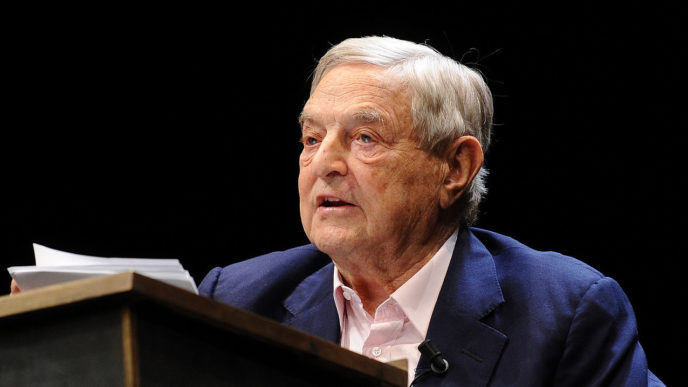
Federal Suit Hits Soros for $10 Billion For “Political Meddling…Motivated Solely by Malice”

Billionaire globalist and altogether controversial figure, George Soros, is now the subject of a $10 billion lawsuit accusing him of being a “racketeer billionaire” for meddling in the affairs of a sovereign African nation — purely for personal reasons — in what critics say typifies his modus operandi.

For those who skimmed that first sentence, yes, that’s Billion — with an emphatic capital “B.”

FOX News reports the 86-year-old financier and manager of a global network of nonprofits will be forced by BSG Resources’ lawsuit to answer for manipulating the politics and economics of Guinea for his own benefit.

“Soros was motivated solely by malice,” BSGR states in the suit, “as there was no economic interest he had in Guinea.”

Despite Soros’ often contentious dealings and reputation as a pompous busybody, last month’s filing in New York Federal Court has thus far largely escaped the spotlight.

“Companies controlled by Israeli mining magnate Beny Steinmetz sued fellow billionaire George Soros, claiming he cost them at least $10 billion through a defamation campaign that stripped them of rights to an iron ore deposit in Guinea and other business opportunities around the world,” Bloomberg reported.

Soros funded law firms, transparency groups, investigators and government officials in Guinea in a coordinated effort to ensure BSG Resources Ltd. lost the rights to the Simandou deposit in April 2014, BSGR said in a complaint filed [April 14] in Manhattan federal court.

Interestingly, as opposed to innumerable civilians directly affected by Soros’ notoriously shady string-pulling, the lawsuit originates with the billionaire’s peers — who claim his monied influence bilked them of at least as many billions as claimed.
“To Soros, Steinmetz’s success, as well as his active, passionate promotion of Israeli life, business and culture are anathema,” the lawsuit states. “Soros is also well known for his long-standing animus toward the state of Israel.”

Steinmetz was arrested in December 2016 over allegations he and BSGR forked over millions in bribes to government officials for mining rights on Simandou — but those charges had been based on “fabricated reports by Soros-funded companies,” BSGR explains in its suit.

Bloomberg notes Mamadie Toure, the fourth wife of the former president of Guinea, “who implicated BSGR and Steinmetz, received $50,000 from an adviser to President Alpha Conde and $80,000 from an ‘agent or affiliate of Soros,’ according to the complaint.”

States the lawsuit, “Soros’s financial clout gave him power over Guinea’s processes of government, which he then thoroughly abused” — and only as a matter of enmity, since the obscenely wealthy globalist stood to gain nothing economically in the Western African nation.

Iron ore from the untapped Simandou is thought to be of the highest grade in the industry, with reserves estimated to comprise over two billion tons — making this legal brawl among tycoons a matter of grave financial consequence — at least, to those other than Soros.

Years of allegations and accusations of underhanded business affairs between BSGR and Soros had not led the company to take direct action until now. In its complaint, “BSGR alleges that Soros was driven by a grudge dating back to 1998 around a business in Russia and his alleged hostility towards Israel.”

Indeed, accusations the Hungarian-American regularly disguises shady political maneuvers as humanitarian in nature — when the contrary tends to be true.

Among many other entities, Soros’ Open Society Foundations — an umbrella over multiple ostensibly beneficial organizations — has long been suspected of funding and training political movements toward ends favorable to the globalist.

Even officials from his homeland of Hungary affirm this, as top education official, Minister of Human Capacities Zoltan Balog, asserting recently, as quoted by FOX,

We are committed to use all legal means at our disposal to stop pseudo-civil society spy groups such as the ones funded by George Soros.

Soros reaches deep into personal financial reserves during U.S. elections, often spending ample funds for desirable candidates in every level, from District Attorneys to presidential hopefuls — and frequently bequeaths millions to contenders on both sides of the aisle.

In fact, Soros’ undeniable influence over American politics will be central to BSGR’s case against him, as the suit claims sway over the U.S. Department of Justice after it sided with the billionaire on the bribery issue.

J. Christian Adams, former Obama-era DOJ attorney, told FOX the system had been ‘at Soros’ beck and call,’ noting he had been instrumental in reforming police procedures and in bringing about changes to voter ID laws. Adams told the outlet,

Soros’ organizations in the U.S. were instrumental in shaping DOJ policy under the Obama administration.

Americans do not understand the extent to which Soros fuels this anti-constitutional, anti-American agenda.

A spokesperson for Soros told FOX the lawsuit is a diversionary tactic for the company, as BSGR only wishes to deflect from its own wrongdoing.

Whatever the ultimate outcome of the BSGR lawsuit, it’s clear the planet can no longer stomach the parlor game attitude Soros effects when meddling in the affairs of sovereign nations, entities, and individuals.

In the Age of Information, and with the wealth of information available online, bottomless pockets like Soros’ can no longer pull puppet strings without someone, somewhere taking notice — and moving to sever the ties for good. (For more from the author of “Federal Suit Hits Soros for $10 Billion For “Political Meddling…Motivated Solely by Malice” please click HERE)

Follow Joe Miller on Twitter HERE and Facebook HERE.

Police Reportedly Describe Horrific Scene Where Boston Doctors Were Found Dead

Authorities who found two Massachusetts doctors dead in their apartment said the pair was bound at the hands with their throats slit and there was blood smeared on the wall with a message of revenge written, the Boston Globe reported.

Richard Field, 49, and Lina Bolanos, 38, were found dead on the 11th floor of the Macallan Building in their Boston residence Friday police said. The Boston Globe reported that Field had sent a text message to a friend in his final moments asking for help. But when police arrived, it was too late.

Boston Police Commissioner William Evans said when police arrived on the scene they were met with gunfire from Bampumin Teixeira. Police fired back at Teixeira, striking him but not killing him. The paper reported that Teixeira was taken to Tufts Medial Center for treatment. No police officers were hurt in the exchange of gunfire . . .

Field was a doctor at North Shore Pain management and served as an anesthesiologist and pain management specialist at several other places, while Bolanos was pediatric anesthesiologist at Massachusetts Eye and Ear. The pair was engaged to be married, Fox 25 Boston reported.

Police were still trying to determine the motive behind the murders, but they believe Teixeira, 30, and the doctors knew each other. Teixeira’s ex-girlfriend told the Globe that he had sent her a mysterious text message and called her on April 22. (Read more from “Police Reportedly Describe Horrific Scene Where Boston Doctors Were Found Dead” HERE)

Follow Joe Miller on Twitter HERE and Facebook HERE.

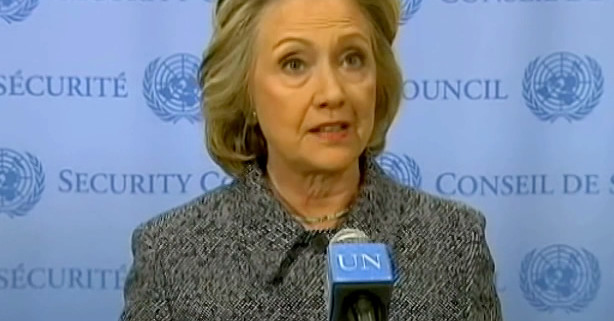
FBI Email Exposes Attorney General Promise to Protect Hillary Clinton From Criminal Charges

Virtually unnoticed by the majority of corporate media, on Wednesday — in a hearing before the Senate Judiciary Committee on the FBI’s oversight of an investigation of Hillary Clinton’s emails — Director James Comey revealed a murky effort as outlined in an undisclosed document by Attorney General Loretta Lynch or her associates to ensure the former presidential candidate would not be charged.

No matter what was divined during that investigation, this peculiar document apparently evinced the thwarting by Lynch and associates of any effort to hold Clinton accountable.

But Comey, mildly recalcitrant in testimony due to the classified nature of ongoing investigations, refused to reveal any details about the ostensible document — or about why Lynch would have employed such extreme protectionism on the topic of Clinton.

A report from the New York Times last month first discussed the ostensible contents of this mystery document and its implications, stating it appeared Comey and his associates harbored misgivings about the oversight of their bosses at the Justice Department — and whether or not their biases would allow for a neutral probe.

Speaking on condition of anonymity with more than 30 current and former law enforcement, congressional, and other officials, the Times found Comey’s quasi-rogue attitude toward supervisory departments and tradition of bureau secrecy caused friction between the DOJ and FBI — and extended specifically to his direct boss, Lynch.

Lynch, the Times inquiry found, refused even to allow Comey to publicly term the probe of Clinton an “investigation” — over fears such semantics would prejudice the public against the former secretary of state.
“His misgivings were only fueled by the discovery last year of a document written by a Democratic operative that seemed — at least in the eyes of Mr. Comey and his aides — to raise questions about her independence. In a bizarre example of how tangled the F.B.I. investigations had become, the document had been stolen by Russian hackers,” the Times reported.

Of course, the theory Russian hackers actively subverted the U.S. presidential election — enjoining willing and tacit participants in a scheme to both leak information and insert pro-Russian, anti-Clinton propaganda — has never been unassailably proven.

Nevertheless, the Times reports officials from the U.S. Intelligence Community were, at times, privy to information hacked by The Russians — and even received a cache of hacked documents for perusal.

That Lynch, or someone close to her, intended to undertake a Herculean effort to ensure Hillary Clinton would survive the crucial probe over wrongdoings and misbehavior — as putatively revealed in this undisclosed, explosive document — comprised one bit of information seen by the Russians, Comey worried. Continued the Times report,

The document, which has been described as both a memo and an email, was written by a Democratic operative who expressed confidence that Ms. Lynch would keep the Clinton investigation from going too far, according to several former officials familiar with the document.

Read one way, it was standard Washington political chatter. Read another way, it suggested that a political operative might have insight into Ms. Lynch’s thinking.

Normally, when the F.B.I. recommends closing a case, the Justice Department agrees and nobody says anything. The consensus in both places was that the typical procedure would not suffice in this instance, but who would be the spokesman?

The document complicated that calculation, according to officials. If Ms. Lynch announced that the case was closed, and Russia leaked the document, Mr. Comey believed it would raise doubts about the independence of the investigation.

Even the very existence of this damning document has never been proven — perhaps due to its incendiary contents.

At Wednesday’s hearing, Republican Senator Chuck Grassley referenced the New York Times’ article in questioning Comey, stating it “reportedly provided assurances that Attorney General Lynch would protect Secretary Clinton by making sure the FBI investigation ‘didn’t go too far.’”

“How, and when, did you first learn of this document? Also, who sent it and who received it?” Grassley queried the FBI chief.

“That’s not a question I can answer in this forum, Mr. Chairman, because it would call for a classified response,” Comey stymied. “I have briefed leadership of the intelligence committees on that particular issue, but I can’t talk about it here.”

Grassley, not content at the stonewall tactic, pressed further in a similar vein, asking,

What steps did the FBI take to determine whether Attorney General Lynch had actually given assurances that the political fix was in no matter what? Did the FBI interview the person who wrote the email? If not, why not?

Comey balked, however, refusing on the same grounds his answer would be considered classified — and maintained that position, even when Grassley noted the FBI had yet to answer the Committee’s request to view the contentious document, described occasionally as an email, replying,

I’m not confirming there was an email, sir. I can’t — the subject is classified and in an appropriate forum I’d be happy to brief you on it. But I can’t do it in an open hearing.

Lynch’s apparent loyalty to Clinton came into sharp focus on a number of occasions — including in a private meeting on an airport tarmac between herself and former President Bill Clinton — amid the ongoing investigation of Secretary Clinton, which Lynch at least semantically opposed.

Senator John Cornyn, in questioning Comey, pointed to both the unrevealed email or document and the tarmac meeting that exploded international ire for its brazen indiscretion, stating,

[I]t was the former attorney general Loretta Lynch, who up until that meeting with President Clinton, was the person responsible for making the decision whether to convene a grand jury involving the allegations against Secretary Clinton. And it was former attorney general Loretta Lynch who apparently forbade you from using the word investigation. Indeed, if the New York Times story is true, a Democratic operative expressed confidence that the former attorney general would keep that investigation from going very far.

With the FBI still looking into the campaigns and communications of Clinton, the document in question — and its likely damning contents pegging the U.S. Attorney General responsible for abating efforts to levy charges as needed against the former secretary of state — could prove combustible, if not detrimental, to assumed neutrality of high-level investigators in preeminent law enforcement agencies.

James Comey maintains the bureau “made right decisions” in its investigations, no matter the alleged ambivalence from his boss, Loretta Lynch — but, in order to earn the trust of Congress and the American public, it would behoove the FBI or any other entity in possession of the startling document to reveal its contents to the world.

Until then, flagrant and surreptitious stonewalling of the FBI’s probe, as controvertible then as at present, will paint the top law enforcement agency’s efforts against Clinton as an impotent remnant of failed presidential aspirations — but further evidence that family’s dynasty had been gifted impunity of steel from its nascent days in Arkansas. (For more from the author of “FBI Email Exposes Attorney General Promise to Protect Hillary Clinton From Criminal Charges” please click HERE)

Follow Joe Miller on Twitter HERE and Facebook HERE.

Atheist Group Sues Trump Over Religious Freedom Executive Order

A Wisconsin-based atheist group has filed a lawsuit asking a federal judge to strike down President Donald Trump’s order easing enforcement of an IRS rule limiting religious organizations’ political activity.

A 1954 federal law prohibits tax-exempt charitable organizations such as churches from participating in political campaigns. Violators could lose their tax-exempt status, but the law — known as the Johnson Amendment — has rarely been enforced.

The IRS doesn’t make its investigations of such cases public, but only one church is known to have lost its tax-exempt status as a result of the law. Still, Trump has long promised conservative Christians who supported his White House bid that he would block the regulation. (Read more from “Atheist Group Sues Trump Over Religious Freedom Executive Order” HERE)

Follow Joe Miller on Twitter HERE and Facebook HERE.
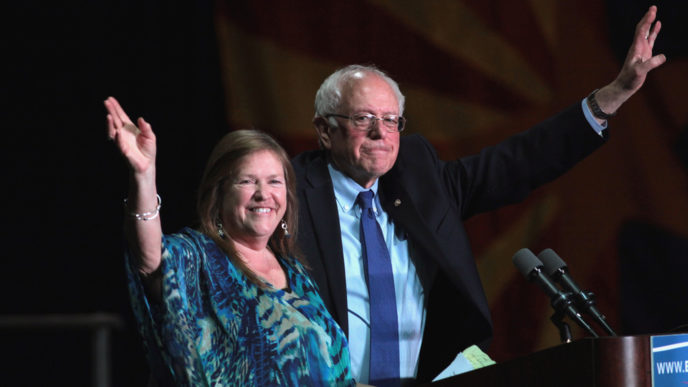
Confirmed: FBI Is Conducting Even More Interviews Over Alleged Jane Sanders Bank Fraud

Federal investigators are conducting interviews in Florida regarding accusations Vermont Sen. Bernie Sanders’ wife, Jane Sanders, defrauded a bank while serving as president of the now-defunct Burlington College.

Allegations Jane Sanders falsified loan documents to expand the campus of Burlington College, which collapsed into bankruptcy in May 2016, have swirled more than a year. The Daily Caller News Foundation first broke the news of the allegations against Mrs. Sanders in March 2015. The Department of Justice and the FBI will not confirm the existence of an investigation, but recent interviews conducted by officials from the FBI and the Federal Deposit Insurance Corporation (FDIC), independently confirmed to TheDCNF, suggest an investigation is ongoing.

Sanders wrote on a 2010 loan application that 83-year-old Corinne Bove Maietta, the daughter of the founders of Bove Restaurants in Burlington, pledged $1 million to Burlington College over five years. Maietta, who has a property in West Palm Beach, says it was not a pledge but an unspecified bequest to be paid to the school upon her death. Maietta’s accountant confirmed to The Daily Caller News Foundation the FBI contacted him seeking an interview with Maietta.

“It was sometime back in March or April, during tax season,” Richard Moss, Maietta’s accountant, told TheDCNF. “It was in regards to Corine Maietta’s current address and where they could contact her for questions related to Burlington College. If she was in Vermont, the FBI was going to interview her, and if she was down in Florida, a person with the FDIC working with the FBI was going to interview her.”

The FBI also recently interviewed Ron Leavitt, an orthopedic surgeon who moved to Naples, Fla., after leaving Burlington. The agents asked him about a $30,000 donation he made, according to Seven Days, an alternative weekly publication covering local issues in Vermont. Former Burlington College board member Sara Adsit-McCuin confirmed to Seven Days April 28 that two FBI agents interviewed her in person “a couple of weeks ago” regarding the loans. (Read more from “Confirmed: FBI Is Conducting Even More Interviews Over Alleged Jane Sanders Bank Fraud” HERE)

Follow Joe Miller on Twitter HERE and Facebook HERE.