#NeverTrump Delegates Disrupt RNC After Rules Report Is Presented

As the Republican National Convention kicked off Monday in Cleveland, it was clear from the outset that presumptive presidential nominee Donald Trump still faces serious backlash from critics within the party. A number of GOP delegates have petitioned for a rule change allowing them to vote their conscience instead of serving as a rubber stamp for their home states’ choice.

Making a final effort to effect such change, anti-Trump delegates attempted to secure a vote on the issue. Though media reports and party sources described the push as nearly impossible to pull off, protesting delegates nevertheless made their point.

That forecast appeared accurate when the rules committee report was finalized and denied the change being sought. According to exclusive reports from the convention, anti-Trump delegates were still determined to disrupt the convention proceedings.

M. Dane Waters, whose Delegates Unbound group has been at the forefront of this effort, predicted that delegates would “take this fight to the floor.”

Norvell Rose, reporting for Western Journalism from Cleveland this week, was on hand to witness the moment they did exactly that.

A revolt on the floor reportedly began shortly after the committee’s report was presented and caused a temporary disruption in the day’s scheduled events.

When those voting “yes” were declared the majority following a floor vote on the rules’ passage, anti-Trump delegates reportedly erupted in a chorus of booing and loud chants of “no.”

At one point, the convention’s band was instructed to begin playing as the fracas played out on the floor. Shortly after the display, prominent Virginia anti-Trump delegate Ken Cuccinelli was surrounded by inquiring attendees.

Cuccinelli reportedly reacted to the decision by tossing his credentials on the convention floor and leaving.

A motion for a roll-call vote on the rules has since been denied. (For more from the author of “NeverTrump Delegates Disrupt RNC After Rules Report Is Presented” please click HERE)

Follow Joe Miller on Twitter HERE and Facebook HERE.

Rush Limbaugh Renames ‘Black Lives Matter’ Group

Conservative talk show host Rush Limbaugh warned Monday that with the recent acquittal of another officer in the Freddy Gray case, Baltimore now has a target on its back. He warned that as Black Lives Matter continues to create a vitriolic environment, the likelihood increases of a similar attack in Baltimore like those on police in Baton Rouge, La., and Dallas, Texas.

Limbaugh took no prisoners in his description of the group, dubbing them with a new name.

“This could be a problem in Baltimore now. I’m serious,” he said. “This is the kind of thing that’s happening now that causes Black Lives Murder. You know, that’s what it’s becoming out there.”

President Barack Obama also came under heavy fire from Limbaugh, calling out his irresponsible rhetoric for putting more lives on the line.

“Because of the president’s inflammatory rhetoric — which pretty much accused the whole police force of being racist — more lives could be at risk,” he said. “During an earlier speech at Madrid, Obama said, ‘America’s police will be safer when they admit they have a problem… There are legitimate issues that have been raised, and there’s data and evidence to back up the concerns that are being expressed by these protesters.’”

Limbaugh also accused the Democrat elite for spreading a lie with the intention of causing strife.

“One of the flash points for all that’s happening now is the lie. A lie that has been known, a lie that wasn’t knowingly spread, a lie whose flames were knowingly fanned by people no less than Barack Obama and others ranking high in the Democrat Party, and that is ‘hands up, don’t shoot,” he said. (For more from the author of “Rush Limbaugh Renames ‘Black Lives Matter’ Group” please click HERE)

Follow Joe Miller on Twitter HERE and Facebook HERE.

DEAD BROKE: Forbes Says the Clintons Pulled in $229 Million Between 2001 and 2014

Remember when Hillary Clinton claimed she and Bill were “dead broke” when they left the White House?

Hey, I know this will startle you, but it turns out that’s a bunch of crap.

Because even before they left the White House, the Clinton had purchased both a “…a five-bedroom home in Chappaqua, N.Y., for $1.7 million [and] a seven-bedroom house near Embassy Row in Washington, D.C. [for] $2.85 million.”

With that said, Hillary’s long litany of lies don’t disqualify her for the presidency.

And the Obama administration has swept her felonious mishandling of classified government documents under the rug. So those technically don’t disqualify her.

But the Clinton Foundation and the Clintons’ methods of enriching themselves do. The mainstream media, with a few exceptions such as the New York Times, have failed to see the foundation as a target for investigative reporting. But Peter Schweizer, in his 2015 book Clinton Cash, examined the foundation and discovered how it allowed the Clintons to make foreign policy pay. Donate to the foundation or give Bill Clinton an exorbitant fee for a speech and good things often happened. According to Forbes, Bill and Hillary Clinton made $229,319,855 between 2001 and 2014.

The Clintons created a structure whereby foreign governments, businesses, and financiers could buy access to American politicians, Schweizer says. “Foreign entities are prohibited by federal law from giving to political campaigns and super-PACs. But with the Clinton Foundation and speaking fees, foreign entities can sidestep what has been a longtime consensus point in American politics.” That point: American foreign policy isn’t like politics, where campaign donations buy access and favors. With the Clintons, foreign policy is politics by other means.

When his wife became secretary of state, Bill Clinton’s speaking fees skyrocketed. He gave two speeches in Nigeria at $700,000 apiece. He was paid $750,000 by Ericsson, the Swedish telecom company, for a speech in Hong Kong. He gave 13 speeches for more than $500,000 a pop from the time he stepped down as president in 2001 to the day his wife left as secretary of state in 2013. Eleven of them occurred while she was in office, Schweizer found. PolitiFact confirmed his numbers and speech dates.

The examples of the Clintons’ remunerating themselves with help from holding high office are numerous. He got $16.5 million from Laureate International Universities, the parent company of an online diploma mill, as honorary chancellor for five years. Laureate Education Inc. got $55 million in State Department grants. The Clintons benefited from deals in Russia, India, Colombia, and Africa. At least Bill Clinton did.

Fred Barnes put it succinctly: “Hillary Clinton is the most corrupt person ever to get this close to becoming president of the United States.” (For more from the author of “DEAD BROKE: Forbes Says the Clintons Pulled in $229 Million Between 2001 and 2014” please click HERE)

Follow Joe Miller on Twitter HERE and Facebook HERE.

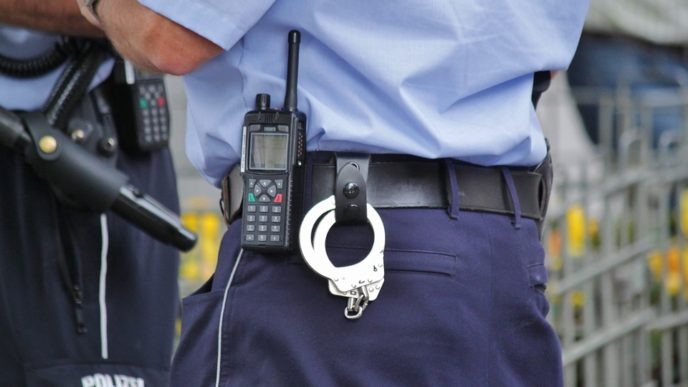
Why Police Say Body Cameras Can Help Heal Divide With Public

The 75 police officers of the Parker Police Department favor wearing cameras on their body to capture encounters with citizens.

“I don’t know if you could find one officer who would want to go back to not having body cameras,” said Cmdr. Chris Peters, who designed Parker’s body camera program, which is approaching its one-year anniversary in September. “Any officer who is doing the right thing on a daily basis would want to have a camera on them. What the camera provides is an unbiased third-party account, and helps reduce the amount of questions of what happened.”

The fatal police shootings of black men in Louisiana and Minnesota earlier this month have renewed focus on the debate over supervising police and citizen interactions.

Even before those incidents, the Parker Police Department, a small force representing 50,000 people in a mostly white, affluent suburb of Denver, was not the only law enforcement agency embracing body cameras.

Some, like the Salt Lake City Police Department, acted even before the fatal police shooting two years ago of a black teenager in Ferguson, Missouri. The officer was not charged in that case, and critics argued that had he worn a body camera, there would have been a clearer account of what happened.

In May 2012, the Salt Lake City Police Department, which serves Utah’s capital city and its large Latino and refugee population, equipped two patrol officers with body cameras.

Today, 372 officers wear cameras—including detectives—attaching them to their collar, helmet, or sunglasses.

The cameras have proven not only popular but successful, the department says, in helping limit the kind of forceful interactions between police and citizens that have sparked a divide between law enforcement and minority communities.

“When we talk to our officers about body cameras, we tell them we have to be transparent with our community,” said Salt Lake City’s Assistant Police Chief Tim Doubt, who noted that use of force complaints from citizens have dropped from 40-50 per year in 2008 to 2010, to six in 2014, and 18 last year.

“We are part of the community, they are part of us, and we have to show them that the bad things that come out on YouTube from cellphone video are outliers,” Doubt added. “In this country we’ve lost trust in the last couple of years with the public, and that body camera helps tell more of the truth.”

Early Results

Though research is in its infancy, some studies have shown that the use of body cameras can reduce use of force by officers and complaints by the public.

The San Diego Police Department is a rare agency that has released a study on its body camera program.

In July 2014, the department deployed cameras to 871 officers. A first-year investigation of the program revealed mixed results.

According to a copy of the study obtained by The Daily Signal, citizen complaints against officers decreased 23 percent from the year before the department began using body cameras, to a year after.

However, officer use of force incidents increased 10 percent in that time period.

Meanwhile, a study of the Rialto Police Department in California showed that when officers began using body cameras, use of force by police dropped 59 percent, and citizen complaints against them fell 87 percent.

Travis Easter, the media relations coordinator for the San Diego Police Department, said it’s too early to connect body cameras to police and citizen behavior.

But Easter, who used to wear a body camera when he worked in the field, said it’s not too soon to try and make a difference.

“Everytime I contact somebody I have an affect on their opinion of law enforcement, whether good or bad,” Easter told The Daily Signal. “That can change given how the contact with an officer goes. If officers and citizens are being watched, we are both more liable to do the right thing.”

Policy Pickle

But as body cameras become an accepted norm of modern policing, law enforcement agencies are facing challenges over related issues such as privacy, transparency, and performance.

The trickiness of body cameras was shown during last week’s deadly police shooting of Alton Sterling in Baton Rouge, Louisiana.

Police officials said after the shooting that body cameras worn by the two police officers involved fell out of position during the altercation, resulting in poor quality video unlikely to be useful in an investigation.

In another officer-involved shooting last week, the officer who killed Philando Castile during a traffic stop in Falcon Heights, Minnesota, was not wearing a body camera. Castile’s girlfriend used her phone to film the aftermath of the shooting on Facebook Live.

Technical issues aside, there are other complex questions involving body cameras, including:

Who wears body cameras, and in what circumstances should they be recording?

Who gets to see the video? Assuming the public can view the video, when can they get access to it (before an investigation is completed or after)?

And finally, who creates these policies? How does a state’s public records law interact with police departments that want to set their own standards for releasing body camera video?

The ways in which departments answer these questions will prove crucial in whether body cameras do what they are intended to do—to help settle disputes over controversial police-citizen interactions.

“Police body cameras are never good or bad unto themselves,” said Chad Marlow, a privacy and technology expert at American Civil Liberties Union.

“What determines good or bad is the policy that governs their use,” added Marlow, who has assisted police departments on their body camera policies, including the Parker Police Department. “The challenge in drafting a good body camera policy is we need to strike a balance between promoting policy transparency and accountability and preserving individual privacy. If you go too far in either direction you don’t create a workable or robust policy.”

Public View

Early adopters of body cameras are trying to be proactive in setting clear rules to catch up with the technology.

“We were one of the first to run a program, so when we started working on a policy, no one had a policy we could use as precedent,” said Doubt of the Salt Lake City Police Department, in an interview with The Daily Signal.

Although Salt Lake City has not faced a singular high-profile altercation between the police and the public that swept it to action, Doubt says the department appreciated early the benefits body cameras could provide, both for officers and citizens.

“It can resolve an internal affairs complaint, a criminal case, and of course, it’s evidence,” Doubt said. “We believe 99 percent of cops are doing a great job everyday, and that cameras will show that officers do a good job the majority of the time.”

But the public is constrained in seeing that for themselves.

The Salt Lake County district attorney, Sim Gill, has taken the position that he won’t let the police department publicly release video footage—if he considers it evidence in a case—until after he conducts an investigation of a use of force incident, or officer involved shooting.

“My obligation is the due process rights of everyone,” Gill told The Daily Signal in an interview. “It all goes to classification. If I classify the body camera footage as evidence, and it is material and relevant to prosecution, I have to treat it as evidence [and not release it during the investigation]. If the video is no longer relevant, then of course it should be released before the investigation is finished.”

Doubt says he personally disagrees with delaying the release of video, believing it harms the legitimacy of the investigation.

He says the police department is working on a policy that would reinforce its support for making footage available earlier unless the district attorney can publically justify a compelling reason not to.

“This is me talking—I believe once you get all of those first statements in first three or four days, we should release all that stuff,” Doubt said. “We should release video and reports so people see we are not trying to hide anything.”

Gill said the state’s public records law allows for body camera footage to be private during an active investigation.

While Gill insists he “believes in open transparency,” he says he has to treat body camera footage just like any relevant item in an investigation. And that means limiting when the public can obtain video.

“If we are going to rush and release body camera video, why aren’t we releasing the full confession of a homicide defendant?” Gill said. “Why not release audio tape of a serial rapist? Why not release still photographs of a bloody encounter? Everyone intuitively in the community understands we can’t do that.”

“As a public prosecutor, at least in Salt Lake County, I’ve led the conversation on transparency, and the open release of information, and I absolutely believe that,” Gill added. “It’s not that we don’t release body camera video. It’s really about the right time to release it.”

State Lines

The challenge in Salt Lake City is familiar to Nancy La Vigne, director of Urban Institute’s Justice Policy Center, who helped write a comprehensive database of state laws regarding body cameras.

La Vigne learned that even states that have laws allowing expansive access to public records often have an exception for law enforcement in some manner.

These laws give local law enforcement broad powers to restrict the access to content it controls, including body camera footage, but less freedom to release it.

“My fear is that police departments won’t release the video because of these laws,” La Vigne told The Daily Signal. “To the average citizen, this may make it look like, ‘Well, so much for body cameras; there is no transparency there.’ But most law enforcement under existing statute can withhold this information and arguably rightfully so.”

Some states whose public record laws don’t explicitly reference body camera footage are creating policy that does.

For example, this month, North Carolina Gov. Pat McCrory, a Republican, signed into law a policy that says police dashboard camera and body camera footage are not public records.

That means the general public has no right to see or receive copies of the film. People who are seen or heard in the video can request to obtain it.

In June of this year, New Hampshire adopted a body camera law that takes a much different approach.

This policy gives police departments discretion with who can access the footage, allowing video that shows “any restraint or use of force” by an officer to be a part of public record.

In addition, New Hampshire police departments are required to keep footage depicting officer use of force incidents, and citizen complaints, for at least three years.

Marlow of the ACLU contends that while most body camera video holds “no value” and should not be released, especially footage shot in a private residence or that involving confidential informants, material of high public interest should be easy to obtain.

“There is broad consensus in the year 2016 that body cameras are going to be a part of modern policing,” Marlow said. “But there are many people out there whose approach is if the body camera train has left the station, then we can stop the train at its next stop and that is making the video available to the public.”

“If police body cameras are used in the field, but the public does not have the right to see important footage, they go from a tool promoting transparency into becoming yet another police surveillance tool,” Marlow added.

Unique Approach

The New Orleans Police Department has devised a unique process to decide when to release body camera video.

In February, the department created a “critical incident team” that will review body camera footage of every officer-involved incident resulting in serious injury or death, and determine whether to release the video before an investigation of the case is adjudicated.

The team, made up of the department’s deputy chief of internal affairs, the New Orleans city district attorney, the Orleans Parish district attorney, and the U.S attorney for the Eastern District of Louisiana, has one week to make a recommendation on whether to release video.

New Orleans Police Superintendent Michael Harrison then has two additional days to make the final decision.

Harrison, in an interview with The Daily Signal, said there have not yet been any “critical incidents” for the team to review since the policy was created.

In March, the department released body camera video for the first time, documenting two fatal police shootings from the year before. But the release of that video came after the police department’s internal investigation of both shootings found them to be justified. Prosecutors chose not to pursue criminal charges against the officers involved.

Harrison insists that in the future, he would authorize the release of video before a case is settled, even if it shows his officers behaving improperly.

“As chief, I have to think about the shock to the conscience of the community, I have to think about whether showing this video comprises the investigation and I have to worry about public unrest as a result of showing it compared to not showing it,” Harrison told The Daily Signal. “Let’s just be real—sometimes releasing it very well could hurt us more, and that’s okay. If it’s a good video that depicts what happened I would probably show it.”

In addition to creating a robust policy around releasing video, Harrison says a body camera program’s effectiveness is also determined by whether departments hold officers accountable when they don’t follow the rules.

New Orleans began deploying body cameras in April 2014. Today, 620 officers wear them on their chests, including police doing patrols, gang investigations, and even school resource officers.

The department’s policy requires officers to activate the cameras during all calls for service, and if they don’t, Harrison says they could be punished.

“The oversight of the program has to be really good in order to go to the public and say body cameras are a new measure of accountability,” Harrison said.

Supervisors run audits on the video shot by officers every month, reviewing all footage capturing use of force, and also conducting random spot checks.

In April, the department reported that 99 percent of officers were compliant with the rules of the program.

Despite officer buy-in from the program, Harrison is careful about predicting body cameras as the solution to bring police and communities closer together.

“Chiefs should be very careful about giving false expectations that the camera captures everything because it does not,” Harrison said. “It captures what it’s designed to capture, but not 360 degrees.”

“I think New Orleans is doing much better than we have in past with community relations, but we realize there is long way to go,” Harrison added. “But because we are truly transparent, we are given the benefit of the doubt many times. Citizens are feeling better about us, and officers feel better about their department.” (For more from the author of “Why Police Say Body Cameras Can Help Heal Divide With Public” please click HERE)

Follow Joe Miller on Twitter HERE and Facebook HERE.

‘Blueprint for Reform’ Gives Desperately Needed Guidance to Washington

The barbaric attack in Nice, the slaughter of police officers in Dallas and Baton Rouge, and Hillary Clinton’s umpteenth legal cakewalk leave many Americans feeling angry and powerless—and understandably so. The social contract seems to have been shredded by the mayhem that envelops us.

But the upcoming election and change of administration offer Americans an opportunity to demand a return to principles that can keep the nation free and strong—if embraced.

These principles—free enterprise, limited government, individual freedom, traditional American values, and a strong national defense—underlie the dozens of policy recommendations detailed in The Heritage Foundation’s new “Blueprint for Reform: A Comprehensive Policy Agenda.” Released last week, the publication is the latest in a series of “Mandate for Leadership” books that debuted in 1981 to guide the incoming Reagan administration.

Washington desperately needs the guidance, of course.

As noted in “Blueprint for Reform,” excessive spending has nearly doubled the federal debt in recent years, from $9.9 trillion at the close of 2008 to $19.2 trillion in May 2016. There also has been an unparalleled expansion of regulation, with some 20,000 rules issued by the Obama administration and an increase in annual regulatory costs of more than $108 billion (according to the regulatory agencies’ own numbers). The loss of individual freedom is incalculable.

Meanwhile, the $1 trillion that Americans spend each year on means-tested welfare programs isn’t buying much self-sufficiency for the needy among us. And U.S. military capabilities have languished.

In its first six chapters, “Blueprint for Reform” summarizes the state of the economy; taxes; entitlements; regulation; energy and natural resources; and foreign policy and defense. The second half features analyses by Heritage experts of the missions, operations, and budgets of 15 Cabinet departments and eight other agencies, along with a detailed policy agenda “to allow Americans to build for themselves a stronger economy, a stronger society, and a stronger defense.”

On taxes, for example, the plan reveals that the federal government expects to collect $42.1 trillion in revenues between 2017 and 2026, and spend $51.4 trillion. Doing so will increase the total gross debt from $19.2 trillion in May 2016 to an estimated $29.1 trillion by September 2026.

As noted by Heritage Foundation experts, a more rational tax system would feature a low, flat rate applied on a base of wages, salaries, and limited number of other forms of income. And the rate would be set to collect no more revenue than is necessary to fund government’s core constitutional functions.

Exercising Power of the Purse

“Blueprint for Reform” also prescribes a variety of regulatory reforms to curtail the vast administrative state that has eroded the fundamental character of America. Chief among them is returning accountability to Congress by requiring lawmakers to approve all major regulations before they are allowed to take effect.

The plan calls on Congress to exercise the power of the purse by withholding appropriations from ruinous regulations such as the Obama administration’s so-called Clean Power Plan, among others.

Indeed, President Barack Obama’s crackdown on coal and petroleum has been particularly punishing by prohibiting access to natural resource exploration, subsidizing politically preferred energy sources, and implementing burdensome regulations that distort markets and provide little environmental benefit.

“Blueprint for Reform” recommends greater access to resource development and trade in energy resources, the elimination of subsidies, favoritism, and shifting more regulatory authority to the states. As noted by Heritage analysts:

Freely importing and exporting energy and energy technologies would yield tremendous economic benefits, providing Americans with more opportunities to sell products to more customers and to buy cheaper goods and services from abroad. Free trade in energy also bolsters national security by increasing supply diversity and providing choices for allies; it will have beneficial geopolitical implications for every region of the world.

Reducing Regulations and Entitlements

The hundreds of regulations imposed on the financial sector under the Dodd-Frank Act likewise have increased costs, reduced access to credit, and inhibited economic growth. Advocates evidently fail to grasp that banks and other financial institutions actually promote prosperity by allocating capital.

But as Heritage experts point out, Dodd-Frank actually has eroded financial stability by inciting industry concentration, which harms investors and consumers. To reverse this trend, “Blueprint for Reform” recommends repeal of Dodd-Frank and a return to regulation focused on deterring and punishing fraud and fostering reasonable, scaled disclosure of material information.

Major reforms also are necessary to rationalize America’s entitlement programs, including Social Security, Medicare, Medicaid, and Obamacare, which accounted for more than half of all tax revenues in 2015.

“Blueprint for Reform” eliminates any excuse for hand-wringing among members of Congress by providing specific reforms, such as:

Raising the Social Security and Medicare retirement ages to account for increased life expectancies and work capacities.

Transitioning to a flat, anti-poverty benefit for Social Security and Disability Insurance.

Reducing the payroll tax to allow individuals to save more for retirement and disability.

Defending the Nation

And then there is defense. It is all too apparent that America is unprepared and ill-equipped to confront Russian adventurism in Eastern Europe, Chinese expansion in the South China Sea, and Islamist terrorists streaming across swaths of Asia, the Middle East, and North Africa.

“Blueprint for Reform” recommends reprioritizing defense spending while maintaining the aggregate spending levels for discretionary programs under the Budget Control Act. Resources should be shifted to restoring capacity, particularly of U.S. ground forces; accelerating readiness; and updating nuclear weapons and missile defense systems, among other changes.

Improving the efficiency of the Defense Department also should be a priority, according to Heritage experts, including cutting excessive bureaucracy and modernizing acquisition system.

A great many other policy corrections fill the 152-page “Blueprint for Reform” that should be required reading for every policymaker and elected official—in Washington and beyond. It also offers citizens an inside look at the inner workings of the executive branch and experts’ guidance on making America once again the land of the free and the home of the brave. (For more from the author of “‘Blueprint for Reform’ Gives Desperately Needed Guidance to Washington” please click HERE)

Follow Joe Miller on Twitter HERE and Facebook HERE.
Baton Rouge Cop-Killer in Nation of Islam, Part of “Remote Mind Control” Group

By WND. The shooter who gunned down three Baton Rouge law-enforcement officers and injured three more has ties with the Nation of Islam.

Gavin Eugene Long of Kansas City, Missouri apparently coincided his 29th birthday – July 17, 1987 – with his rampage. In his extensive online presence, which included tweets, self-published books, YouTube videos and a website, he said he was once a member of Louis Farrakhan’s Nation of Islam, but said he had no affiliations with outside groups.

“Yeah, I also was a Nation of Islam member. Don’t affiliate me with it. Don’t affiliate me with anything,” he said in one video. “I thought my own thoughts. I made my own decisions. I’m the one who’s got to listen the judgment. That’s it. And my heart is pure.”

Long made a video stating he went to Dallas after the police shootings and called killer Micah Johnson “one of us” . . .

Long was wearing black with his face covered when he began shooting “indiscriminately” as officers responded to a call about a man with an “assault rifle.” Long was killed at the scene. Officers initially thought two additional gunmen were involved, but later said there were no active shooters were in the city. (Read more from “Baton Rouge Cop-Killer in Nation of Islam” HERE)

________________________________________

CNN: Cop Killer Claimed Membership in Group for Those “Abused by Remote Brain Experimentation”

By Joshua Berlinger. Long followed several conspiracy groups devoted to government surveillance and monitoring. An email address linked to him showed that he was a member of a support group in an organization called Freedom from Covert Harassment and Surveillance.

The group’s mission is to help those “marginalized and abused by … remote brain experimentation, remote neural monitoring of an entire humans body.”

On that site he’s identified as a “Buddy” representing other “targets” of government surveillance.

The FBI is vetting the claim Long made on YouTube that he was a member of the Nation of Islam. An official said the belief is that Long identified as being associated with the black separatist movement in some capacity but there is no indication he was directed by it. The law enforcement official said the FBI has no indication any black separatist or other domestic terrorist groups are supporting or sending people to kill cops. (Read more about killer’s affiliation with Nation of Islam, other groups HERE)

Follow Joe Miller on Twitter HERE and Facebook HERE.

Obama Admin. Under Fire for Scheme to Disarm Seniors

A legal team already fighting the Veterans Administration over bureaucratic procedures that arbitrarily deprive veterans of their Second Amendment rights now is warning the Social Security Administration, which is proposing the same process, that it still isn’t constitutional.

“As is the case with the VA’s so-called ‘adjudication process’ the proposed SSA regulations contain confusing and ambiguous definitions of who constitutes a ‘representative payee,’ the criteria for appointing such a payee, and why the appointment of such a payee automatically classifies a Social Security Disability Insurance beneficiary as mentally defective for the purpose of NICS,” said a comment letter submitted to the SSA.

It comes from Michael Connelly of the United States Justice Foundation.

“It also appears that the adjudication of a recipient as being mentally defective can be made by any federal bureaucrat working for the SSA, and they can make the decision without any medical professional being involved. The often vague and sometimes generalized criteria for this adjudication process described in the proposed regulations clearly denies the basic elements of due process to the affected social security beneficiaries.

“The burden of proving they are competent and/or not mentally defective falls squarely on the Social Security beneficiary. This means the bottom line for Social Security recipients is the same as that for veterans. They are being denied their right to keep and bear arms protected by the Second Amendment without due process of law. (Read more from “U.S. Under Fire for Scheme to Disarm Seniors” HERE)

Follow Joe Miller on Twitter HERE and Facebook HERE.
The Intolerant Left: This Dem Senator Wants to Censor Climate Change Skeptics

According to Sen. Sheldon Whitehouse, D-R.I. (F, 4%), you shouldn’t be reading this commentary.

A polemic he’s written for the Columbia Journalism Review makes that clear. Why? Because I, along with several others whom the senator identifies, am a “persistent climate denier.” Anything I write questioning the attacks on the First Amendment rights of those who have their doubts about global warming is nothing more than “clever, made-to-order, industrial-scale dissemination of industry propaganda.”

Whitehouse suggests that editorial boards should refrain from publishing articles and letters containing what he calls “phony ‘opinion’ writing” about the climate change debate.

Whitehouse is unapologetic, of course, about urging censorship and supporting government-run investigations of anyone on the wrong side of what he considers to be an undisputable fact – the existence of man-induced, catastrophic global warming. Never mind that this is an unproven, scientific theory over which there is vigorous, persistent and educated debate by reputable researchers, scientists and meteorologists. Whitehouse refuses to distinguish between what are facts and what is opinion.

He refers to the “fossil fuel industry’s climate denial operation,” even though there is no proof any such widespread, systematic “conspiracy” exists. This unsubstantiated allegation apparently justifies, in his mind, either a civil or criminal investigation under RICO, the Racketeer Influenced and Corrupt Organizations Act. He faults me and others for not distinguishing between civil and criminal RICO investigations, as if a civil RICO investigation by the government of a company (or anyone else) is somehow less onerous or less serious than a criminal investigation.

The state attorneys general who have launched these investigations have been hazy on whether they are conducting civil or potential criminal investigations. But it doesn’t really matter. Any type of investigation that attempts to criminalize scientific dissent or impose civil penalties for such dissent is an abuse of government power and a violation of fundamental First Amendment rights.

Whitehouse says that fraud trumps the First Amendment. But as I pointed out recently in a letter to The Washington Post, the U.S. Supreme Court said in 2003 in Illinois ex rel Madigan v. Telemarketing Assocs., Inc. that “simply labeling an action one for ‘fraud’ does not carry the day.”

What “fraud” has been committed? According to Whitehouse, it is the sponsorship by companies such as ExxonMobil of “phony science” supporting climate denial. What “phony science” is he talking about? In a 2006 Corporate Citizenship Report, ExxonMobil (seemingly the main target of this series of investigations) acknowledged that “the risk to society and ecosystems from rising greenhouse gas emissions could be significant” and that “strategies that address the risk need to be developed and implemented.” That doesn’t sound like a denial to me.

Moreover, in the countersuit filed by the Competitive Enterprise Institute after it was served with a subpoena issued by the U.S. Virgin Islands attorney general for all of its research on climate change, CEI noted that the AG could only come up with two statements made by ExxonMobil that he claimed were supposedly fraudulent:

“International accords and underlying regional and national regulations for greenhouse gas reduction are evolving with uncertain timing and outcome, making it difficult to predict their business impact.”

“Current scientific understanding provides limited guidance on the likelihood, magnitude, and timeframe of physical risks such as sea level rise, extreme weather events, temperature extremes, and precipitation.”

These statements simply express the uncertainty that exists over the scope, causes and pace of climate change and about appropriate climate policy. The view that these are, or even could be construed as, fraudulent statements that can form the basis of a governmental investigation lacks both common sense and a basic understanding of the legal standards that apply not just to government investigations, but to protected First Amendment activity.

Also alarming is the fact that these nascent investigations appear to target not only ExxonMobil, but scientists and academic scholars who question the accepted wisdom of those who want to declare the debate about climate change is over. How else can one explain why a think tank, the Competitive Enterprise Institute, was targeted with a subpoena in a climate change investigation? Or why another subpoena served on ExxonMobil targeted its communications with almost a hundred different think tanks, universities, and individual scientists, professors and researchers?

Whitehouse and others have tried to compare these investigations to the lawsuits filed against the tobacco industry for misleading the public about the health effects of tobacco. But that comparison fails to distinguish between proven facts and unproven theory. When those lawsuits were filed, we had decades’ worth of tests, observation, research and experimentation showing that tobacco contains carcinogens that cause cancer, and that nicotine is a highly addictive drug.

On the other hand, there are many problems with the theory of man-induced, catastrophic climate change, from computer models that have over-predicted warming to data sets that disagree on whether the earth is warming or whether temperatures have plateaued. And it is a matter of great dispute — and vigorous debate — over how much of our climate is influenced by man-made events, as opposed to natural occurrences such as sun flares.

The bottom line is that no fraud of any kind is being committed by anyone or any entity that questions the “science” behind climate change. Anyone who insists that those who question this should be investigated is violating basic free speech rights guaranteed by the Bill of Rights. Americans — and that includes corporate America, both profit and non-profit — have the right to speak their minds about public policy and issues involving science and technology — and that includes climate change. They should not be harassed, threated, investigated, silenced or bullied for doing so. (For more from the author of “The Intolerant Left: This Dem Senator Wants to Censor Climate Change Skeptics” please click HERE)

Follow Joe Miller on Twitter HERE and Facebook HERE.
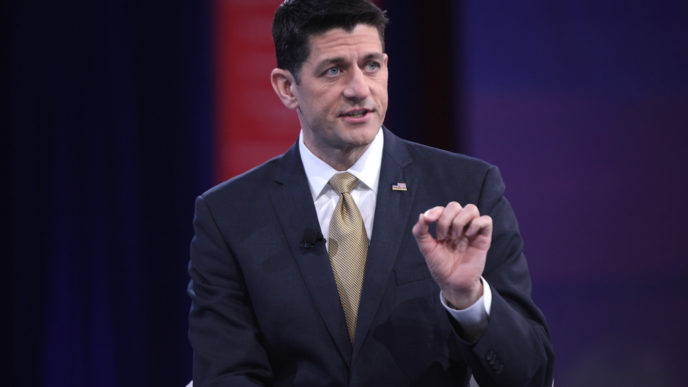
Paul Ryan Speaks out on Trump’s Choice of Pence for VP

House Speaker Paul Ryan fully supports Republican presidential candidate Donald Trump’s choice of Indiana Gov. Mike Pence as his running mate.

Ryan said in a statement on Friday there is “no better choice for our vice presidential candidate.”

The speaker added that Pence “comes from the heart of the conservative movement — and the heart of America.”

“We need someone who is steady and secure in his principles, someone who can cut through the noise and make a compelling case for conservatism. Mike Pence is that man,” he continued.

“He will help bring real change to Washington, and so I will do everything I can between now and November to help our ticket and our party win a national majority.”

Florida senator and former presidential candidate Marco Rubio echoed Ryan’s sentiment.

As reported by Western Journalism, Ryan held off endorsing Trump for a month after he became the presumptive nominee out of concern that he did not support some core conservative principles.

“I think what a lot of Republicans want to see is that we have a standard bearer that bears our standards and unifies all wings of the Republican Party,” Ryan said in early May.

After meeting with Trump on multiple occasions, Ryan came around and in early June endorsed him, writing in an op-ed: “Through these conversations, I feel confident he would help us turn the ideas in this agenda into laws to help improve people’s lives. That’s why I’ll be voting for him this fall.”

Fox News’ chief political anchor Bret Baier said of Trump’s choice of Pence on Friday, “He brings stability. He brings outreach to both social conservatives and the establishment in the Republican Party. … I guess what he brings most is a contrast to Donald Trump in campaign style, how he talks about things.” (For more from the author of “Paul Ryan Speaks out on Trump’s Choice of Pence for VP” please click HERE)

Follow Joe Miller on Twitter HERE and Facebook HERE.
New Poll Shows Trump Making Strong Gains Among Key Demographic to Lead Clinton

A new poll that shows Republican presidential candidate Donald Trump leading Democratic presidential candidate Hillary Clinton also shows Trump doing something 2012 GOP nominee Mitt Romney was unable to do.

The Los Angeles Times poll shows that Trump, who led Clinton overall by a 43 percent – 40 percent margin, picked up the support of 30 percent of the Hispanics surveyed in the poll. Romney, in his 2012 presidential campaign, did not make the 30 percent mark, ending up with 27 percent of the Hispanic vote.

Trump’s ability to garner support from Hispanic voters has been an issue ever since the dawn of his campaign, when he made building a wall between the U.S. and Mexico a major campaign proposal and used strong, negative language to describe immigrants entering the U.S. from Mexico.

However, Trump has shown success among Hispanic voters. In the New York State GOP primary, for example, Trump won more than half the Hispanic vote in New York City. His Hispanic supporters say they like Trump’s style.

“He’s very blunt. I’m blunt too,” explained Tony Castaneda, a Texan whose grandparents came to the U.S. from Mexico. “Maybe that’s why I like some of his positions, because he’s not a side shooter. You know, he talks directly, directly to the point. Maybe that needs to be polished up a bit to be politically correct, but I don’t think he wants to be politically correct. We’re tired of politically correct people occupying the White House and occupying positions of government that represent us. We don’t want to hear the politically correct response. We want to hear the truth.”

Other key findings in the poll:

— Trump led among men, 47 percent – 36 percent, while Clinton had a 41 percent -34 percent lead among women.

— Trump led among voters 45 and older, Clinton among those younger.

— Trump dominates among whites who did not graduate form college by 53 percent – 24 percent.

Ever since the July 5 announcement by the FBI that condemned Clinton’s handling of classified material in her use of a private email server while she was secretary of state, her poll numbers have fallen. (For more from the author of “New Poll Shows Trump Making Strong Gains Among Key Demographic to Lead Clinton” please click HERE)

Follow Joe Miller on Twitter HERE and Facebook HERE.