After waging a nearly 15-hour-long filibuster, Senate Democrats succeeding in persuading Republican lawmakers to vote on gun control proposals this coming Monday, The Hill reported.
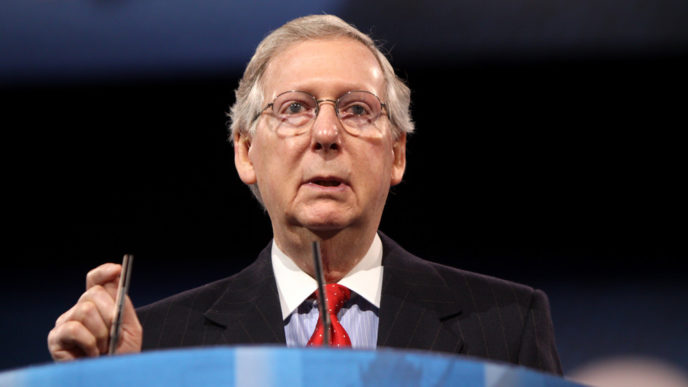
Senate Majority Leader Mitch McConnell scheduled the four proposals to be heard, two from Republicans and two from Democrats, which could potentially amend the Commerce, Justice, and Science appropriations bill.
Democrats have rallied behind a bill sponsored by Sen. Dianne Feinstein (D-Calif.) that would give the attorney general discretion to block the sale of firearms in cases where “reasonable suspicion” exists that an individual has or will commit a terrorist attack.
Critics of Feinstein’s proposal argue authority granted under the bill would be too broad and could impact innocent Americans.
Instead, Republicans have opted to support a proposal from Sen. John Cornyn (R-Texas) that would allow the attorney general to temporarily suspend the purchase of a firearm, up to 72 hours, with a court order required for anything longer.
Furthermore, a suspension could be approved for individuals who have been the subject of a terror investigation within a five-year period.
Cornyn put forward a similar proposal last year, but it was shot down because of an attached amendment that would have placed penalties on sanctuary cities.
In addition, the Senate will hold votes for expanded background check proposals, including one by Sen. Chuck Grassley (R-Iowa) that would authorize and fund the National Instant Background Check System and provide incentives to share mental health records and federal record sharing.
Democrats have put forward their own proposal that would expand background checks across the board for the sale or transfer of any firearm, as well as impose penalties on states that do not cooperate. (For more from the author of “Senate Republicans Cave to Democrats, Agree to Vote on Gun Control Bills” please click HERE)
https://joemiller.us/wp-content/uploads/8567872816_972101b2b6_b-1.jpg6831024Joe Millerhttps://joemiller.us/wp-content/uploads/logotext.pngJoe Miller2016-06-16 23:11:222016-06-16 23:11:22Senate Republicans Cave to Democrats, Agree to Vote on Gun Control Bills
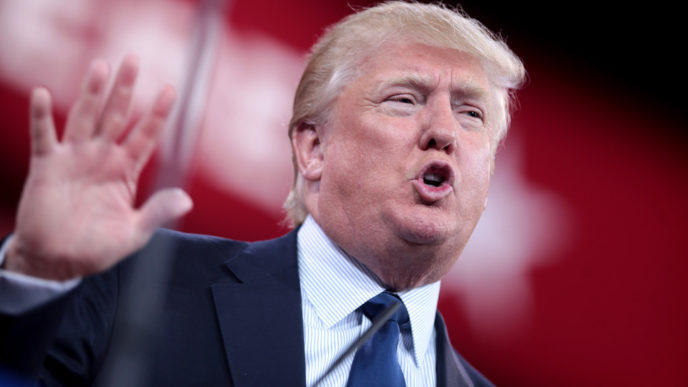
It didn’t take long for opposition research on Donald Trump to be leaked to the public.
A man calling himself “Guccifer 2.0” — which is a tribute to the Romanian hacker who exposed Hillary Clinton’s private email server — released the documents to the far-left site Gawker.
Thev documents were stolen from the Democratic National Committee last week by Russian government hackers. The research includes detailed accounts of Trump’s record and attacks on his personal character. The presumptive Republican nominee’s marriages are also discussed in detail.
The 200-page document, which was compiled before the start of the presidential primaries, tries to make the case that Trump is without a core and lacks any solid principles:
One thing is clear about Donald Trump, there is only one person he has ever looked out for and that’s himself. Whether it’s American workers, the Republican Party, or his wives, Trump’s only fidelity has been to himself and with that he has shown that he has no problem lying to the American people. Trump will say anything and do anything to get what he wants without regard for those he harms.
Others pages includes details on when Trump has switched his position or said something that could be “offensive.”
People commenting on Gawker were worried that the leaked document might take the wind out of Clinton’s sails, especially since there isn’t a lot of new information about Trump in the report.
One of the top rated comments said, “Happening this early, I think it’s a bad thing. Also opens up to lots of jokes about insecure files and emails.”
The hacker also claimed he has an extensive amount of data which includes donor lists, personal mail, and finanical reports, but said he was holding onto that for the time being. (For more from the author of “Hackers Who Stole DNC Research on Trump Make a Massive Move” please click HERE)
https://joemiller.us/wp-content/uploads/16471528757_b86c01b734_b.jpg6831024Joe Millerhttps://joemiller.us/wp-content/uploads/logotext.pngJoe Miller2016-06-15 23:45:372016-06-19 01:14:46Hackers Who Stole DNC Research On Trump Make A Massive Move
In the days after America’s deadliest mass shooting, presumed GOP presidential nominee Donald Trump is making a hard pitch for support among LGBT Americans by tying shooter Omar Mateen to radical Islamic beliefs he reportedly espoused before killing 49 people at a popular Orlando gay bar.
Earlier this week, Trump said same-sex attracted Americans should support his candidacy over former Secretary of State Hillary Clinton’s. While the likely Democratic nominee has backed the full LGBT agenda, including redefining marriage and eliminating sex segregation in restrooms, Trump said her willingness to allow Syrian and other refugees into the country endangers same-sex attracted Americans.
An Attack on Who We Are
“Crooked Hillary wants to increase these immigration numbers very, very substantially,” said Trump at a campaign event on Tuesday. “She’s no friend of women. And she’s no friend of LGBT Americans. No friend, believe me.”
Mateen attacked the club “to execute gay and lesbian citizens for their sexual orientation,” he said. “It’s a strike at who we are as a nation. It’s an assault on the ability of a free people to live their lives, love who they want, and express their identity.”
Trump has given mixed messages with regards to the political issues often prioritized by LGBT groups. Last August, he said he believes marriage should be limited to between a man and a woman, but he also opposed a constitutional amendment making that view the law because it wouldn’t pass. “Anybody that’s making that an issue is doing it for political reasons. The Supreme Court ruled on it.”
The thrice-married Trump has said marriage should be a states’ rights issue, and that as president he would appoint judges that support traditional views on marriage and religious liberty. But he also supports workplace laws that puts same-sex sexual attractions in the same category as race or sex. According to leading social conservative Maggie Gallagher, he only “conditionally” backs the First Amendment Defense Act, a popular conservative bill that would guarantee religious liberty for business owners and others opposed to redefining marriage.
A Limited Response
Trump’s success to gain LGBT support appears to be limited, so far, with mostly small and anonymous backing. The Washington Examiner quoted three people who said they were gay and declared their support for Trump. In a post at PJ Media, an anonymous gay blogger backed Trump, saying that liberals believe “appeasing Muslims is more important than defending the lives of gay people. Every progressive who runs interference for Islamic murderers is complicit in those murders, and I can no longer be a part of that team.”
That blogger said he was writing anonymously thanks to the danger of being a public Trump backer.
One influential gay conservative who came out this week said LGBT Americans should stand with Trump. “It’s disgusting what the Democratic Party is doing right now. I’m shocked and that’s why I came out,” Gateway Pundit blogger Jim Hoft told Newsmax TV. “These Democrats, Steve, we are going to see more dead bodies, more dead mothers, babies and dead gays in nightclubs until they wake up!” In his original blog post, he called gays to “come back home to the Republican Party.”
While he declined to say whether Clinton or Trump would prove better for the LGBT movement’s goals, gay lobby Log Cabin Republicans president Gregory Angelo told The Stream that “national security is — or should be — an important issue for LGBT Americans. In his remarks in New Hampshire, Mr. Trump emphasized this point.”
Angelo previously described Trump’s views as “all over the place.” At the time, Angelo said he was encouraged that Trump
has attended a same-sex wedding, opposes discrimination against gay people in the workplace, and told a lesbian reporter that the LGBT community can expect ‘forward motion’ on equality when President Trump is in office, [but] the promise Mr. Trump has made to appoint justices to the Supreme Court who would overturn the 2015 marriage equality ruling is deeply concerning.
Some LGBT leaders are not taking so kindly to Trump’s outreach, however. Chad Griffin, President of the radical Human Rights Campaign, told CNN that “he is no friend to the LGBT community. … I bet there is not a single family member or friend or brother or sister or girlfriend or boyfriend that is suffering from this great loss that found any comfort in what Donald Trump had to say today.”
Angelo criticized people whose “knee-jerk reaction is to call someone a hypocrite simply because they are moved to offer support for a community in need,” in reaction to those like CNN’s Sally Kohn and Anderson Cooper who criticized Christians who oppose the LGBT movement’s goals yet condemned Mateen’s actions. “People who hadn’t so much as uttered the phrase ‘LGBT community’ are now stepping up to offer compassion and support. That should be embraced instead of shunned by injecting that compassion with politics.”
Normally Democrats
LGBT voters typically back Democratic candidates. In 2012, President Obama won their support three-to-one over GOP nominee Mitt Romney, and few expect Trump to make much progress in reversing that pattern.
Although, Angelo argued, “in a post-marriage equality country…the LGBT community dividing along ideological lines and eschewing traditional identity politics. There could be a shuffling of ideology among the LGBT electorate in this election cycle, but only time will tell whether that translates to more votes for the Republican nominee for president.” (For more from the author of “After Orlando, Trump Pitches for LGBT Support, Still Sending Mixed Messages About Marriage” please click HERE)
https://joemiller.us/wp-content/uploads/9191775315_eef40153b3_b.jpg6831024Joe Millerhttps://joemiller.us/wp-content/uploads/logotext.pngJoe Miller2016-06-15 22:37:132016-06-15 22:37:13After Orlando, Trump Pitches for LGBT Support, Still Sending Mixed Messages About Marriage
For all indignation from the Democrats over the so-called “Muslim ban” proposed by GOP presidential candidate Donald Trump, one would think they’ve never supported such a thing. Wrong.
According to a investigative report from ABC News published in 2013, the Obama-Clinton State Department stopped processing Iraqi refugee requests for six months in 2011 after it was discovered that two al Qaeda-Iraq terrorists, who had previously attacked US soldiers in Iraq and were trained in bomb making, entered the country as refugees and were living in Bowling Green, Kentucky.
Given the majority of the population in Iraq is Muslim, this should be considered the Obama-Clinton Muslim ban–much those bans proposed towards Syria and other countries in the aftermath of the Paris massacre.
The State Department, which Clinton led at that time, was directly in charge of refugee requests when the Iraq ban was imposed. The Obama Administration took this action after it was discovered two Iraqi men, Waad Ramadan Alwan and Mohammed Shareef Hammadi, who had claimed persecution, revealed to undercover officials their plans to use “a bomb to assassinate an Army captain they’d known in Bayji, who was now back home – and to possibly attack other homeland targets.”
In fact, Alwan had built bombs in Iraq that were targeted at US soldiers in the past. ABC News reported that the “FBI found his fingerprints on a cordless phone base that U.S. soldiers dug up in a gravel pile south of Bayji, Iraq on Sept. 1, 2005. The phone base had been wired to unexploded bombs buried in a nearby road.”
Still, he was permitted to come to Bowling Green and live with Hammadi, where Alwan was living in public housing and receiving public assistance.
Listening to President Obama and now presumptive Democratic presidential nominee Hillary Clinton yesterday, however, one would think they’ve never tried to stop such men from entering the United States.
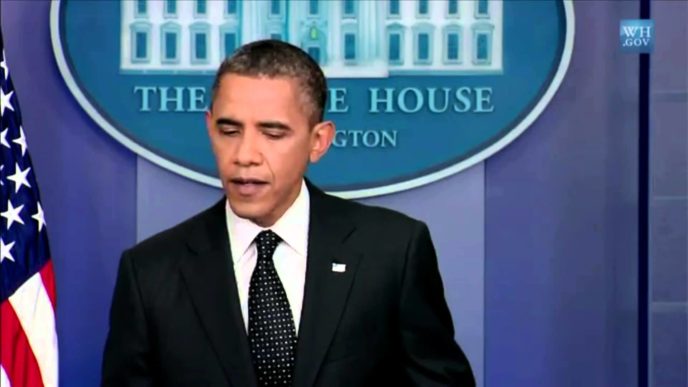
Obama and Clinton gave Trump a one-two punch on Sunday and Monday over Trump’s so-called “Muslim ban.”
“That’s not the America we want,” President Obama said Monday. “It doesn’t reflect our democratic ideals. It will make us less safe.” That followed remarks from Clinton, who said, “Inflammatory anti-Muslim rhetoric and threatening to ban the families and friends of Muslims Americans as well as millions of Muslim business people and tourists from entering our country hurts the vast majority of Muslims who love freedom and hate terror.“
Their attacks were not only hypocritical, but not entirely fair to Trump either.
Although some of Trump’s language is regrettable, he has recently recalibrated to echo language from his former presidential primary rival Ted Cruz to temporarily block refugees from nations where there are terror-related concerns. (More specifically, Cruz offered legislation to allow governors to decline to accept Syrian refugees until the State Department could provide adequate assurances that the refugees posed no security threat.)
But nuance has been largely cast aside in the name of politics. Meanwhile, un-vetted refugees continue to pose a threat to the United States and its allies.
The bare fact remains that both Obama and Clinton have supported a ban against refugees from a Muslim country in the name of protecting the homeland.
Surely they must have believed it made America more secure.
The question for both of them today is, with ISIS explicitly infiltrating refugee flows in 2016, why wouldn’t similar action continue keeping us safe? (For more from the author of “The Obama-Clinton Ban on Muslims” please click HERE)
https://joemiller.us/wp-content/uploads/maxresdefault-142.jpg10801920Joe Millerhttps://joemiller.us/wp-content/uploads/logotext.pngJoe Miller2016-06-15 22:29:472016-06-15 22:29:47The Obama-Clinton Ban on Muslims
Police in a U.S. town bordering Mexico have apprehended an undocumented, Middle Eastern woman in possession of the region’s gas pipeline plans, law enforcement sources tell Judicial Watch. Authorities describe the woman as an “Islamic refugee” pulled over during a traffic stop by a deputy sheriff in Luna County, New Mexico which shares a 54-mile border with Mexico. County authorities alerted the U.S. Border Patrol and the Federal Bureau of Investigation’s (FBI) Joint Terrorism Task Forces (JTTF) has been deployed to the area to investigate, sources with firsthand knowledge of the probe confirm.
The gas pipeline plans in the woman’s possession include the Deming region, law enforcement sources say. Deming is a Luna County city situated about 35 miles north of the Mexican border and 60 miles west of Las Cruces. It has a population of about 15,000. Last year one local publication listed Deming No. 1 on a list of the “ten worst places” to live in New Mexico due to high unemployment, poverty, crime and a horrible public education system. The entire region is a High Intensity Drug Trafficking Area (HIDTA), according to the Justice Department’s National Drug Intelligence Center due to the large amounts of methamphetamines, heroin, cocaine and marijuana smuggled through the state by Mexican traffickers. Specifically, the renowned Juárez and Sinaloa cartels operate in the area, the feds affirm in a report.
Judicial Watch has broken a number of stories in the last few years about Mexican drug traffickers smuggling Islamic terrorists into the United States through the porous southern border. Last summer high-level sources on both sides of the Mexico-U.S. border offered alarming details about an operation in which cartels smuggle foreigners from countries with terrorist links into a small Texas rural town near El Paso. Classified as Special Interest Aliens (SIA) by the U.S. government, the foreigners get transported to stash areas in Acala, a rural crossroads located around 54 miles from El Paso on a state road – Highway 20. Once in the U.S., the SIAs wait for pick-up in the area’s sand hills just across Highway 20.
A few months ago Judicial Watch reported that members of a cell of Islamic terrorists stationed in Mexico cross into the U.S. to explore targets for future attacks with the help of Mexican drug traffickers. Among the jihadists that travel back and forth through the porous southern border is a Kuwaiti named Shaykh Mahmood Omar Khabir, an ISIS operative who lives in the Mexican state of Chihuahua not far from El Paso, Texas. Khabir trained hundreds of Al Qaeda fighters in Pakistan, Afghanistan and Yemen and has lived in Mexico for more than a year, according to Judicial Watch’s high-level Homeland Security sources. Now Khabir trains thousands of men—mostly Syrians and Yemenis—to fight in an ISIS base situated in the Mexico-U.S. border region near Ciudad Juárez. Khabir actually brags in a European newspaper article about how easy it is to stake out American targets because the border region is wide open. In the same story Foreign Affairs Secretary Claudia Ruiz, Mexico’s top diplomat, says she doesn’t understand why the Obama administration and the U.S. media are “culpably neglecting this phenomenon,” adding that “this new wave of fundamentalism could have nasty surprises in store for the United States.”
This recent New Mexico incident brings to mind a story Judicial Watch broke less than a year ago involving five young Middle Eastern men apprehended by Border Patrol in an Arizona town (Amado) situated about 30 miles from the Mexican border. Two of the Middle Eastern men were carrying stainless steel cylinders in backpacks, alarming Border Patrol officials enough to call the Department of Homeland Security (DHS) for backup. A multitude of federal agents descended on the property and the two men carrying the cylinders were believed to be taken into custody by the FBI. Only three of the men’s names were entered in the Border Patrol’s E3 reporting system, which is used by the agency to track apprehensions, detention hearings and removals of illegal immigrants. E3 also collects and transmits biographic and biometric data including fingerprints for identification and verification of individuals encountered at the border. The other two men were listed as “unknown subjects,” which is unheard of. “In all my years I’ve never seen that before,” a veteran federal law enforcement agent told Judicial Watch. (For more from the author of “STUNNER: “Islamic Refugee” Arrested in New Mexico With Gas Pipeline Plans” please click HERE)
https://joemiller.us/wp-content/uploads/9294639633_41119647f0_b.jpg7681024Joe Millerhttps://joemiller.us/wp-content/uploads/logotext.pngJoe Miller2016-06-15 22:16:312016-06-19 01:59:00STUNNER: “Islamic Refugee” Arrested in New Mexico With Gas Pipeline Plans
Over the last two years, the shortfalls of the civil forfeiture system have garnered attention from both the media and state and federal lawmakers as more and more people who had property seized by police have come forward—the vast majority of whom were never charged with a crime.
In that time, state legislatures, in particular, have tackled the issue. This year alone, 22 states saw legislation addressing civil forfeiture, and at least eight states passed bills reforming their civil asset forfeiture laws to varying degrees.
In seven states, 11 bills are still pending, according to The Center for Public Integrity.
And in Washington, D.C., Congress took a step forward in reforming federal civil forfeiture laws when bipartisan groups of lawmakers in both chambers introduced the Due Process Act, which would make it more difficult for law enforcement to seize property from innocent Americans.
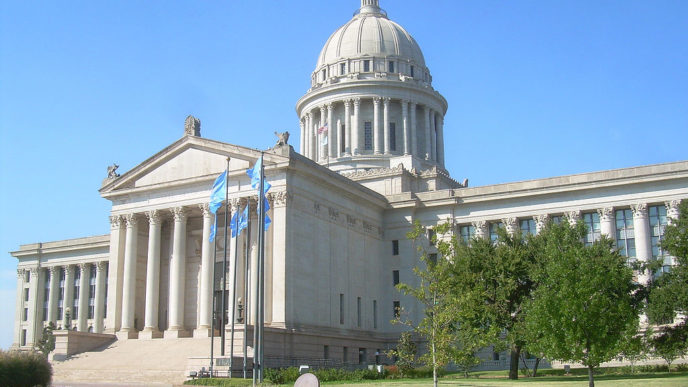
Despite the action in many state houses and the federal government, one state not only resisted efforts to reform its civil forfeiture laws, but recently made it easier for police to seize money by purchasing machines that allow officers to swipe prepaid debit cards and gift cards and seize the money stored on them.
And that state is Oklahoma.
“Every step of the way, [civil forfeiture] has been fraught with abuse, and the system is broken,” state Sen. Kyle Loveless, R-Oklahoma City, told The Daily Signal. “There hasn’t been any good coming out of this other than it’s raised the level of discussion around the issue.”
Civil forfeiture is a legal tool that gives law enforcement the power to seize property if they suspect it’s tied to a crime. Opponents of civil forfeiture have been calling for the system to be reformed, as innocent people have had cash or property seized, yet were never charged with any wrongdoing.
Furthermore, opponents say current civil forfeiture laws put the burden on the property owner instead of the government to prove their cash, cars, or property wasn’t tied to a crime at all.
In the last six months, Oklahoma has found itself at the center of controversy surrounding its use of civil forfeiture.
First, Oklahoma’s legislature rejected legislation spearheaded by Loveless overhauling its civil forfeiture system.
Then, just after Loveless’s bill was killed in committee, deputies with the Muskogee County Sheriff’s Department seized more than $53,000 from one of the most sympathetic forfeiture victims to emerge thus far: a Burmese Christian rock band raising money for an orphanage in Thailand and a nonprofit Christian college.
And most recently, it was discovered that the state Department of Public Safety had purchased Electronic Recovery and Access to Data (ERAD) card readers, which allow law enforcement to learn the balance of prepaid debit cards and gift cards, seize the money stored on the cards, or freeze the accounts if they believe it’s tied to criminal activity.
“I believe we have a good government, and law enforcement for the vast majority are doing a good job,” Loveless said. “But the system they’re working in is clearly broken. I think Oklahomans are getting past the tipping point.”
Resistance
Oklahoma kicked off 2016 with intense debate after Loveless introduced comprehensive legislation reforming the state’s civil forfeiture laws.
The Republican lawmaker’s legislation first required law enforcement to secure a conviction before forfeiting cash, cars, and property from people.
Such a provision has been included in multiple bills reforming civil forfeiture laws, including in legislation recently passed in Maryland, Nebraska, and New Hampshire.
However, in Oklahoma, law enforcement pushed back on the requirement.
“All these states have done that in the last year,” Loveless said of requiring a conviction before forfeiting property. “We’ve seen that law enforcement gets on board, but here in Oklahoma, they resist.”
Loveless’ bill also struck at the core issue opponents have with civil forfeiture: its profit incentive.
In the Sooner State, law enforcement agencies can keep up to 100 percent of the proceeds of forfeited property. But under Loveless’ plan, forfeiture proceeds would be directed to a fund controlled by a 15-member board.
That board, comprised of members of the law enforcement community and civilians, would be tasked with distributing money in the form of grants to fund drug treatment centers, drug courts, and drug interdiction efforts.
In addition to requiring a criminal conviction, other states like New Mexico, one of the first to reform its civil forfeiture laws, have eliminated the profit incentive civil forfeiture creates, since forfeiture proceeds go directly back to the law enforcement agencies forfeiting the property.
“They need to be subject to appropriation. Whether it’s the city council, the state legislature or the U.S. Congress, that money needs to go to the government, not directly to the law enforcement agency,” Hal Stratton, New Mexico’s former attorney general, told The Daily Signal. “That provides too much of an incentive to make good cops bad cops.”
Stratton originally was in favor of expanding civil forfeiture in New Mexico during the 1980s to address the crime wave, he said. But when the legislature’s civil forfeiture reform bill headed to Republican Gov. Susana Martinez’ desk last year, Stratton encouraged her to sign it.
The bill included the requirement that all civil forfeiture proceeds go directly into the state’s general fund instead of to law enforcement agencies.
“We need to structure the law to where there’s not an incentive to do bad things, and the asset forfeiture laws, the way it’s interpreted by the courts, was not in that category,” Stratton said. “It was structured for abuse.”
Back in Oklahoma, Loveless’ bill was praised by groups across the political spectrum, from the Institute for Justice, a public interest law firm that has represented many civil forfeiture victims, to the American Civil Liberties Union of Oklahoma.
But the law enforcement community mounted fierce opposition to it, arguing that reforming civil forfeiture will eliminate a vital tool officers have to combat drug trafficking and money launderers.
County sheriffs and prosecutors called Loveless a liar and a socialist, in the pocket of organized crime and a best friend to terror organizations for championing civil forfeiture reform.
Tulsa’s district attorney even warned that passing Loveless’ civil forfeiture bill would lead to headless bodies swinging from bridges.
Because of the steep opposition from law enforcement, Loveless’ bill died in the state Senate Judiciary Committee.
“If we have to balance public safety and constitutional protections, then I think law enforcement should err on the side of the Constitution instead of taking an innocent person’s stuff,” Loveless said. “The thing in my mind is the Constitution has worked for us for 200-plus years. We need to strengthen those provisions because the scale is being dramatically tipped.”
‘What Is So Special About Oklahoma?’
Following the end of Oklahoma’s legislative session in May, the debate over civil forfeiture in the state began to quiet, despite Loveless’ vows to continue his fight next year.
But earlier this month, Oklahoma Watch, a nonprofit in the state, discovered the Oklahoma Department of Public Safety purchased ERAD card readers—devices that make it easier for police to seize money stored on prepaid debit cards and gift cards during traffic stops.
Officers with the Oklahoma Highway Patrol, as well as those on a joint law enforcement drug interdiction team under the Oklahoma County District Attorney’s Office have the card readers. Oklahoma City police officers who are part of the drug interdiction team also use the ERAD machines.
The Oklahoma Highway Patrol did not return The Daily Signal’s request for comment.
The Oklahoma Department of Public Safety is paying a $5,000 implementation charge and a $1,500 training charge for the card readers to the ERAD Group, according to Oklahoma Watch.
ERAD Group, which manufactures the devices, is to receive 7.7 percent of all funds forfeited with the ERAD machines, according to its contract with the Department of Public Safety.
In addition to notifying law enforcement of the balance of prepaid debit and gift cards, ERAD card readers can also provide officers with information about any card that has a magnetic strip, which includes hotel keys, bank debit cards, and credit cards.
Lt. John Vincent, public information officer for the Oklahoma Highway Patrol, told Oklahoma Watch the machines are helping law enforcement catch up to drug traffickers, who have been loading money onto prepaid cards instead of carrying cash, and combat identity theft.
“If someone has 300 cards taped up and hidden inside the dash of a vehicle, we’re going to check that,” Vincent said. “But if the person has proof that it belongs to him for legitimate reasons, there’s nothing going to happen. We won’t seize it.”
The Oklahoma Highway Patrol obtained 16 ERAD card readers, and they were installed in May. Vincent stressed that the machines won’t be used to swipe people’s gift or prepaid cards unless the officer believes there is illegal activity going on.
Despite Vincent’s reassurances, news that the state purchased ERAD devices angered civil forfeiture opponents and has reignited debate in the Sooner State.
“This has nothing to do with public safety and has everything to do with policing for profit and making it easier to take people’s money,” Diane Goldstein, retired lieutenant with the Redondo Beach Police Department in California, told The Daily Signal. “The state of Oklahoma at this point cannot be trusted.”
Goldstein, a member of the group Law Enforcement Against Prohibition, said she wouldn’t be surprised to see college students wrongly caught in the forfeiture machine because of the devices, particularly those traveling back to school with gift cards and prepaid debit cards.
“Cases [where you find 300 prepaid cards] are the exception,” she said. “The rest of it is going to be the college student, people who can’t afford access to banks. Think about when you’re living at or below the poverty level. Prepaid cards are easier.”
Matt Miller, a senior attorney with the Institute for Justice, said more employers are moving toward paying workers on prepaid cards, which then effectively become that person’s bank account.
“When that happens, you can’t seize that cash because it’s in a bank account,” he told The Daily Signal. “Now you have this device that can access someone’s bank account with no warrant and no probable cause.”
Miller stressed that someone who had their money seized or frozen by these ERAD card readers now has to learn the complex civil forfeiture process, hire a lawyer, and mount a lengthy and expensive legal battle to prove their assets aren’t connected to criminal activity.
“As cash has become less common, police have to find new ways to get the money,” he continued. “It raises concerns because you have a private company working with the government and profiting off of it. It sounds like a red-light camera.”
Loveless, who attempted to overhaul the state’s forfeiture system earlier this year, called the use of the ERAD machines a “slap in the face” to Oklahomans.
“It’s even more troubling because we were told and they still say today that the presence of a large sum of cash is the thing that tips the scale—that no law-abiding citizen would have $50,000 in cash,” he said. “Here, they don’t have to have the cash. It’s basically taking the same law and putting it on steroids.”
Since it became public knowledge that the state had purchased and installed ERAD card readers, the Oklahoma Department of Public Safety temporarily suspended their use until its commissioner, Michael Thompson, can attend training on the devices.
Additionally, Loveless is asking Oklahoma Gov. Mary Fallin, a Republican, to intervene.
“They’re putting the burden on the individual versus the government proving it’s guilty before they take it,” he said. “Whether it’s cash or a card reader, the principle is the same. It’s the government should not be able to take your stuff without an arrest warrant, trial, and conviction.”
Though Loveless’ efforts to change his state’s civil forfeiture laws were defeated last year, he will continue pushing the state to make it more difficult for police to take property from innocent people. Loveless said he will be collaborating with law enforcement in the coming months in search of compromise and hopes to see Oklahoma joins the ranks of states who have further protected the rights of their residents.
“In Michigan, Florida, and other states, law enforcement is on board,” he said. “I want to use those models and say, ‘Why can’t we do what they’ve done? Why can’t we have that? What is so special about Oklahoma?’” (For more from the author of “One State Is Making It Easier for Government to Take Property” please click HERE)
https://joemiller.us/wp-content/uploads/1024px-Oklahoma_State_Capitol.jpg7681024Joe Millerhttps://joemiller.us/wp-content/uploads/logotext.pngJoe Miller2016-06-15 21:45:512016-06-16 17:58:49One State Is Making It Easier for Government to Take Property
Following the nation’s worst mass shooting incident and its worst terrorist attack since 9/11, President Obama has yet to contact Florida Gov. Rick Scott over the tragedy and coordinate on matters of security.
Instead, the administration opted to contact Scott via a White House staffer, which seems to be a break from traditional White House protocol in the wake of state disasters.
Gov. Scott confirmed this in a Fox News interview with Brian Kilmeade on Tuesday, followed by Florida Attorney General Pam Bondi, who expressed her frustration.
“This isn’t about politics right now. This is about Americans,” said Bondi. “I believe he should have reached out to the governor of the state of Florida, and he hasn’t.”
Asked whether she was disappointed in Obama’s decision not to contact state officials, Bondi replied, “Of course we are.”
Both Bondi and Scott have endorsed Donald Trump for president, which may, in part, explain why the president has opted not to reach out.
Whatever the reason, the governor said he was “fed up” with the administration’s attitude, citing federal failure to share intelligence information, specifically as it pertains to terrorism suspects.
“I’m responsible for the security of the people in my state,” said Scott. “I’m fed up with the fact that we’re not destroying ISIS, we’re not vetting these people, and we’re not taking care of our own citizens.”
“What about our security, right?” asked Scott.
Picking up the slack, former president George W. Bush decided to contact Scott directly over the tragedy and offer his condolences.
“He said he and Laura are praying for us and anything he could do, he would love to be helpful,” Scott said.
Trump also reached out to Scott asking how he was doing and offering the governor his prayers. (For more from the author of “Obama yet to Contact Florida Governor in Wake of Orlando Terrorist Attack” please click HERE)
https://joemiller.us/wp-content/uploads/maxresdefault-139.jpg10801920Joe Millerhttps://joemiller.us/wp-content/uploads/logotext.pngJoe Miller2016-06-15 21:38:102016-06-15 21:38:10Obama yet to Contact Florida Governor in Wake of Orlando Terrorist Attack
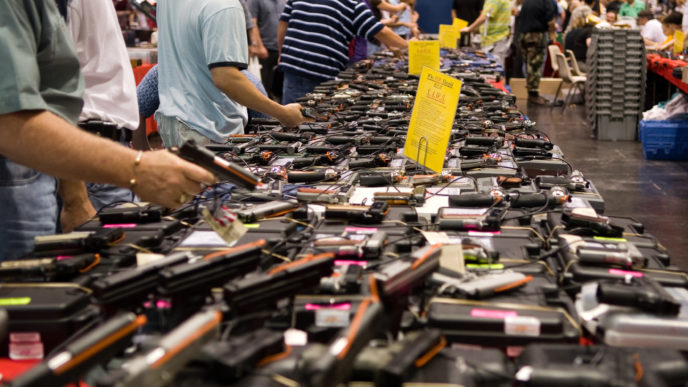
CNN is reporting a possible new deal on gun control legislation may be in the works between members of GOP leadership and Democrats.
Specifically, Senators Dianne Feinstein and John Cornyn may be the driving force behind the legislation, which would seek to suspend Second Amendment rights for those on government watch lists.
“According to the bill’s sponsor, Sen. Dianne Feinstein, D-Calif., the legislation would allow the attorney general to block individuals suspected of having terrorist ties from buying a gun. The legislation also includes an appeals process for those individuals who may argue they were wrongly targeted,” read a report from Talking Points Memo.
“Our priority this week should be this terrorist gap measure because it is linked so directly to the issue of terrorism and extremist violence in this nation and abroad,” said Sen. Richard Blumenthal, D-Conn.
The renewed call to suspend the rights of those on government watch lists comes after it was revealed that Orlando shooter Omar Mateen, who carried out the deadliest terrorist attack since 9/11, was on such a list.
Ironically, Mateen was interviewed twice by the FBI and subsequently removed from the list after he was cleared of suspicion.
Opponents of this sort of legislation point out it would be a violation of the Constitution to suspend rights without due process and a fair trail, adding that the real issue is a politically correct culture, which prevents intelligence officers from doing their jobs properly.
Furthermore, there are concerns that such lists could be used to target and punish political rivals, specifically veterans and conservatives, as the administration has expressed contempt for these groups in the past.
According to a widely criticized security assessment by the Department of Homeland Security, conservatives, and even returning veterans, are susceptible to extremism and therefore should be watched.
“Let me be very clear — we monitor the risks of violent extremism taking root here in the United States,” said Secretary of Homeland Security Janet Napolitano. “We don’t have the luxury of focusing our efforts on one group; we must protect the country from terrorism whether foreign or homegrown, and regardless of the ideology that motivates its violence.” (For more from the author of “In the Wake of Orlando, New Gun Control Legislation May Be on the Horizon” please click HERE)
https://joemiller.us/wp-content/uploads/Houston_Gun_Show_at_the_George_R._Brown_Convention_Center-2.jpg22473356Joe Millerhttps://joemiller.us/wp-content/uploads/logotext.pngJoe Miller2016-06-15 21:33:132016-06-15 21:33:13In the Wake of Orlando, New Gun Control Legislation May Be on the Horizon
Standing in former Speaker John Boehner’s empty and cavernous Longworth office, Ohio’s newest congressman seems out of place. Maybe that’s because Warren Davidson is more of a business and military man than a politician.
Before being sworn in last week, Davidson made a career parachuting from airplanes as an Army Ranger, then filing patents as a manufacturing entrepreneur. Other than a short stint as a township trustee, he’s never held elected office until now.
But what Davidson lacks in political acumen, he’s confident he can replace with leadership experience. His operating doctrine is simple, he tells The Daily Signal: “Fight the war you’re in, not the one you wish you were in. Pay attention to the situation and read it.”
So far, it’s worked out for the rookie legislator.
National Battlelines
Normally, special congressional elections don’t drive national headlines. But the fight for Ohio’s 8th District carried special significance, pitting establishment and conservative groups in a proxy battle for Boehner’s old seat.
Though it’s just one seat out of 435 in the House, Davidson’s subsequent June 7 victory represents an expansion of the conservative congressional beachhead.
“It’s huge,” Ken Cuccinelli, former Virginia attorney general and president of the Senate Conservative Fund, says of Davidson’s win.“It was historic for [Rep.] Mark Meadows, R-N.C., to courageously knock John Boehner out,” Cuccinelli tells The Daily Signal, “but it is a true sea change to replace him with a true conservative.”
The Freedom Caucus first came to prominence when it unseated Boehner. Meadows spearheaded that offensive when he presented a motion to vacate the chair, a parliamentary procedure that hadn’t been used in over a century.
To take the seat that Boehner left, Davidson first won the Republican primary in March by beating out 14 more established candidates, including a state senator, a state representative, and a wealthy businessman.
He focused his early efforts on the ground game, rallying grassroots organizers to knock on doors, pass out fliers, and get out the vote. And for expert advice, Davidson looked outside Washington’s traditional consulting sphere, signing Jamestown Associates—the conservative firm blacklisted by party brass and the National Republican Congressional Committee.
“Warren worked hard, really hard,” Barney Keller, executive vice president of Jamestown Associates, tells The Daily Signal. “He had a very energized volunteer base, and he had a compelling message—that he was going to change Washington.”
The local race quickly became a national contest with dueling political organizations flying into the 8th District’s airspace and blitzing the market with millions of dollars worth of television, radio, and digital ads.
Ultimately, a combination of grassroots energy, outside spending, and timing handed Davidson the win. In less than six months, the political amateur would go from last to first, winning both the March primary by eight points and the June special election by 77 points.
Humble in Victory
“The big schism was between the establishment politicians versus outsiders,” explains Mack Mariani, chairman of the Political Science Department of Xavier University. “And this is an outsider year. Had Boehner left four, six, or eight years ago, we probably would be looking at a sitting state legislator who would’ve stepped into the seat.”
That energy was on full display Wednesday night. More than a hundred supporters made the eight-hour drive from the eastern side of Ohio to Washington, crowding into Davidson’s new office to cheer him on before he took the official oath of office the next day.
Groups that cheered when Boehner stepped down from office in October were ecstatic that a conservative captured his seat this year.
But Davidson didn’t take any shots at the outgoing speaker during the campaign and he wouldn’t take any the day after he took office. In fact, the man who held the seat for almost 25 years doesn’t seem to weigh on Davidson’s mind much at all.
A Boehner aide tells The Daily Signal that the pair traded phone calls but not much else.
Turns out, the pair doesn’t have much to talk about. “I’m a nonsmoker,” Davidson quips when asked how he compares with his predecessor. “I was on a golf team once but I don’t golf much… And yeah, I’m definitely less tan.”
Between sips of coffee in his empty office, Davidson confirms that he last spoke to his predecessor when Boehner congratulated him after his primary win. But after just a day in his position, Davidson already seems to bristle at repeated questions about Boehner.
During the campaign, Boehner was helpful “in the sense that he wasn’t working hard to get someone else elected,” Davidson tells The Daily Signal. “I’ll say, too, he was very gracious despite the national narrative—people seem incredibly interested in what lunch table I’ll sit at. It’s a little bit like junior high, frankly.”
Little Patience for Drama
Still, Davidson’s first week in the nation’s capital already has been marked with palace intrigue.
Davidson made headlines when he accepted an invitation to join the House Freedom Caucus, the group of hard-liners who drove Boehner from Congress. But the freshman’s decision wasn’t surprising. Chairman Jim Jordan, R-Ohio, endorsed Davidson in January, and the fundraising arm of the caucus spent nearly $43,000 to get him elected.
In less than two years, Freedom Caucus members have toppled Speaker Boehner and his longtime second, Majority Leader Eric Cantor, R-Va. With Davidson’s addition, their ranks swell to around 40 members.
Rep. Dave Brat, R-Va., sees the Davidson victory as evidence “the Republican brand has to move in our direction.” Brat, who canned Cantor in the 2014 primary, said the caucus expects another “four or five new recruits” after the November election.
Connection to the Freedom Caucus so far hasn’t affected Davidson’s relationship with Boehner’s successor, Speaker Paul Ryan, R-Wis. Ryan praised the newest Ohio representative as “a strong conservative leader” shortly after his victory, adding that he “looks forward to working with you to get our country back on track.”
Direct and to the point, though, Davidson doesn’t make much of the political drama that punctuates Capitol Hill. “I started out life as a grunt, I was an infantry guy,” he explains, “and I just figure things out along the way.”
From Bootcamp to Capitol Hill
After graduating from high school in 1990, Davidson went straight into the Army. And after basic training, he went to Germany as a member of a mechanized infantry unit. There, he witnessed the fall of the Berlin Wall, excelled in his unit, and earned a commission to West Point—a rare opportunity for enlisted soldiers.
As an officer, Davidson would serve in some of the Army’s most elite and prestigious units, including the Old Guard, the 75th Ranger Regiment, and the 101st Airborne Division.
During that time, Davidson didn’t pay close attention to politics, except when congressional inaction directly interfered with his military mission. When preparing an airborne unit to deploy to Kosovo, Davidson says, a fight over the budget left his soldiers unprepared.
“We wanted to train the machine gunners on live fire to get them ready to deploy,” Davidson remembers. But because of a lack of funding, “we had 18 rounds of ammo per machine gun, which is nothing.”
Instead, the officers “just trained fewer people,” he says, shaking his head, “we weren’t as combat ready as we should’ve been.”
Growing frustration with Washington’s lack of leadership eventually prompted Davidson to end his career in the Army after almost a decade of service.“That’s the real reason I got out,” he says. “I felt like we didn’t know who we wanted to be after we won the Cold War.”
Davidson returned to Ohio to help run his father’s business, a small manufacturing company in Troy. He modernized the firm, grew the workforce from 20 to about 200, and didn’t think much about national politics.
The staunch conservative credits former Secretary of State Hillary Clinton for sparking his interest in politics. Davidson remembers watching the congressional investigation of the September 2012 Benghazi attacks, which left four Americans dead.
“You don’t have to be a former Army Ranger to hear the words ‘what difference does it make’ and have your blood boil,” Davidson says, referring to Clinton’s January 2013 remark before the Senate Foreign Relations Committee.
‘Active Duty’ Again
When Boehner’s seat came open, he decided to run after reaching out to “the person who pinned Clinton to the wall best” during the House side of the investigation: Jordan, a member of the Oversight and Government Reform Committee, which questioned Clinton.
As a soldier, Davidson has endured some of the most intense training the U.S. military provides. But in Washington, the new statesman didn’t receive any orientation, just half-a-dozen thick binders on parliamentary procedure.
“It’s like drinking from a firehouse,” Davidson tells The Daily Signal. But even though he’s a political novice, the Army veteran says he’s undaunted. He tells supporters that the new job feels “like going back to active duty.”
Davidson says he plans on linking his military experience to his new political duties. While the tactics differ, the mission remains the same. “It’s a different sort of animal but it’s essentially the same oath,” he explains, before reciting the civilian version of the military oath of office:
To solemnly swear to support and defend the Constitution of the United States against all enemies, foreign and domestic … well and faithfully discharge the duties of the office on which I am about to enter. So help me God.
Davidson will have a short deployment in Washington to make good on that oath. He’s up for reelection this November.
In the long run, Davidson is gunning for a spot on the Armed Services Committee. But he’s not waiting around for one to open up. He says he already has his first piece of legislation ready to go, a bill requiring Congress to use the same health care given to veterans.
It’s not a punishment for Congress, he explains, but “an alignment of interests” between politicians and members of the military.
“It says to every veteran, ‘We’re willing to be in it with you. We’ll have the same quality of care. We’re not going to ask you to do something we wouldn’t do.’ That’s an important thing for leadership.
Expanding Conservative Beachhead
While Davidson settles down to his new legislative post, conservatives have started recounting their political laurels.
For David McIntosh, president of the Club for Growth, Davidson’s victory serves as a shot across leadership’s bow.“It should mainly serve as a warning to the broad Republican conference and the current leadership,” McIntosh, himself a former Indiana congressman, tells The Daily Signal.
“If you return to the days of Boehner and Cantor,” he says, then GOP brass is entering “politically dangerous waters.”
For now, that’s not on Davidson’s radar.
Instead, the Ohio freshman remains focused on recruiting staff to fill his empty office and learning the legislative process. “I’m still getting my feet wet,” he explains, adding that he’s anxious “to just do the work.” (For more from the author of “Meet Warren Davidson, the Man Who Took John Boehner’s Seat” please click HERE)
https://joemiller.us/wp-content/uploads/6236359150_d3129621ab_b.jpg6831024Joe Millerhttps://joemiller.us/wp-content/uploads/logotext.pngJoe Miller2016-06-14 23:08:112016-06-14 23:08:11Meet Warren Davidson, the Man Who Took John Boehner’s Seat
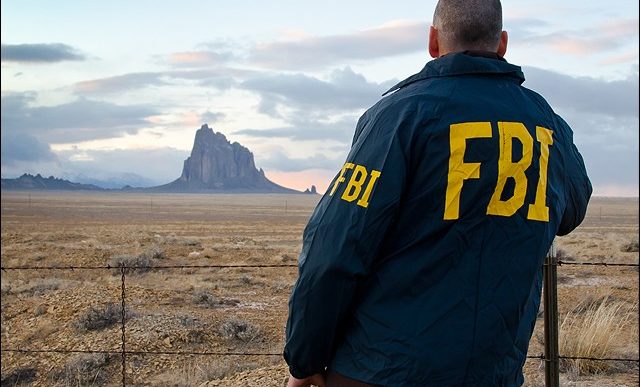
Being on the FBI’s terror watch list doesn’t necessarily have a direct impact on an individual, experts say. This is why the Islamist-inspired gunman who murdered 49 people in Orlando was still able to purchase a firearm and work for one of the nation’s largest security firms.
The FBI twice investigated Omar Mateen, the Orlando mass murderer who pledged allegiance to the Islamic State, but authorities say he doesn’t appear to have been directed by the Sunni militant group. The FBI won’t confirm whether Mateen was on the list.
If he was on a list, it likely would have been the Terrorist Screening Database, or TSDB, which is for domestic and foreign individuals reasonably believed to be involved in terrorism. This is typically referred to as the terrorist watch list. Broadly, being on the list may have few consequences, but being on a subset of the list could have significant ramifications.
“The Terrorist Screening Center does not publicly confirm nor deny whether any individual may be included in the U.S. Government’s Terrorist Screening Database (TSDB) or a subset list,” FBI Terrorist Screening Center spokesman Dave Joly said in an email to The Daily Signal. “Disclosure of an individual’s inclusion or non-inclusion in the TSDB or on the No-Fly List would significantly impair the government’s ability to investigate and counteract terrorism, and protect transportation security.”
Mateen was previously on the terror watch list, but was later taken off the list, the Los Angeles Times reported. The newspaper reported that remaining on the list would not have stopped him from buying a gun.
Joly sent a later message explaining, “an individual’s presence in the Terrorist Screening Database, in and of itself, is not a disqualifying factor pursuant to the Brady Act.”
An example of these subsets is the “Known and Suspected Terrorist,” also know as the KST file. Someone on this file would be flagged on the National Instant Criminal Background Check system when trying to purchase a firearm, said David Inserra, a policy analyst for homeland security and cyber policy for The Heritage Foundation. If a name were flagged, it would trigger an investigation, as anyone on the “known or suspected terrorist” file would be prohibited from buying a gun or explosives.
A widely known subset of the terror watch list is the “No-Fly List.”
“The criteria for the list is there has to be enough evidence for intelligence to raise a red flag,” Inserra told The Daily Signal. “An individual has to be nominated to the terrorist watch list. The No-Fly List has substantial criteria, above and beyond the TSDB.”
The specific criteria are confidential. According to the FBI, the “reasonable suspicion” standard must be based on credible information and intelligence by law enforcement, homeland security, and intelligence community agencies, as well as U.S. embassies and consulates, that an individual “knowingly engaged in conduct constituting, in preparation for, in aid of, or related to terrorism or terrorist activities.” The National Counterterrorism Center reviews the information gathered.
The State Department, the Defense Department, the Transportation and Security Administration, the FBI’s National Crime Information Center, and the U.S. Customs and Border Protection are the five federal agencies that screen the terror watch list.
Mateen reportedly purchased a gun in the last two weeks. He also worked as a security officer at G4S Secure Solutions since 2007.
“It is a fairly high bar for restricting constitutional rights and rightly so,” said Jim Hanson, executive vice president of the Center for Security Policy, a national security think tank. “When you query a database, it’s more about connecting the dots than about stopping people.”
The watch list can seem ineffective, said Bill Roggio, senior fellow at the Foundation for Defense of Democracies, an organization that conducts research on terrorism, noting that the culprits in the Boston Marathon bombing were also reportedly on the list.
“We don’t know all of what has been averted, but in this case the list clearly failed,” Roggio told The Daily Signal. “These lists can only do so much without trampling on constitutional rights. But at some point, as this happens more, people are going to ask what good are these lists if we are not protected?” (For more from the author of “FBI Terror Watch List Can Have Little Impact, Experts Say” please click HERE)
https://joemiller.us/wp-content/uploads/FBI_agent_overlooking_the_Shiprock_land_formation_on_the_Navajo_Nation.jpg429640Joe Millerhttps://joemiller.us/wp-content/uploads/logotext.pngJoe Miller2016-06-14 22:52:172016-06-14 22:52:17FBI Terror Watch List Can Have Little Impact, Experts Say