President Trump Should Set the Refugee Cap for 2020 at ZERO

If over one million people are coming straight to our border this year, much of it fueled by quasi-asylum policies, why should we willingly bring in more people through a separate refugee program? The president should pose that question to the American people and then should announce a cap of zero for annual refugee intake in fiscal year 2020.

The Refugee Act of 1980 [8 U.S.C. §1157(a)(2)] grants the president the sole authority to set the annual cap for refugee intake. He only needs to “consult” with the Senate and House Judiciary committees, but they have no veto power over his decision without changing the law. Thus, there is nothing stopping the president from setting the cap at zero when the State Department sends the annual written report to Congress roughly two months from now.

To his credit, the president did reduce the cap to 45,000 in FY 2018 and 30,000 in FY 2019. So far, for the first three quarters of this fiscal year, 21,604 refugees have been processed. That is a sharp drop from the standard 70,000 cap for most of the past few decades and from the 110,000 cap Obama set in his final year in office. However, with everything going on at the border, it is simply indefensible to bring in more refugees when our system can’t handle the quasi-asylum invasion at our border. Dropping the number of refugees by 80,000 or so is nothing when we have one million people coming to our border.

Whether you believe in holding the line at the border or in processing more catch-and-release for amnesty at the border, either way, we need every resource we have among immigration officers trained in asylum adjudication and processing to deal with the border. Every employee of USCIS needs to be working on clearing the existing backlog in the system being driven by the border invasion. While 30,000 refugees doesn’t sound like a lot based on historical trends, all those employees who would be diverted to that process next year should be marshalled to combat the border crisis.

The refugee program is broken beyond repair anyway, and any sane government official would admit that it should be suspended while we deal with our broken border. We spend 12 times as much money resettling migrants in America as it would cost to resettle them in their own regions. Moreover, as Christians and Jews in the Middle East are becoming extinct, much of the resettlement program has become a fundamental transformation of America by bringing in thousands of non-assimilating Muslims engaged in protracted sectarian civil wars. The cost to Americans in terms of welfare, security, and culture is staggering — and it all enriches self-promoting and parasitic refugee contractors.

Moreover, it’s important to remember that much of the border crisis is already straining the refugee resettlement program under the Office of Refugee Resettlement. The thousands of Central American children smuggled in by illegal alien families are all being processed and resettled just like the refugees we choose to admit from other parts of the world. It’s unfair for the agency and its advocates to double-dip. If we are experiencing record resettlement of Central American kids, which is bankrupting the agency, then there is no reason to electively add more to the program.

Finally, there is also another refugee program not subject to the annual caps, the Special Immigrant Visa (SIV) program, which has continued to grow under the Trump administration. It seems like the only purpose of our military remaining in Afghanistan is to bring in families of those who supposedly helped us in the dubious mission, which runs completely counter to the entire purpose of the War on Terror and the impetus for 9/11 (protecting America from dangerous immigrants). Since Trump took office, the State Department has admitted over 30,000 SIVs from Afghanistan and close to 10,000 from Iraq.

Bottom line? There’s no reason to have a separate refugee program when our entire border and immigration system has become one mass fraudulent refugee system. (For more from the author of “President Trump Should Set the Refugee Cap for 2020 at Zero” please click HERE)

Follow Joe Miller on Twitter HERE and Facebook HERE

From the Redcoats to the Black Robes

King George couldn’t hold a candle to the judicial despotism we are governed by some 12 score and three years after the colonists rebelled against what they thought were “intolerable acts.” Sure, there was some taxation without representation going on in the 1770s, but I think the colonists would have taken that any day if they were to see in their crystal ball the severity of today’s social transformation without representation.

We celebrate so much more than the founding of a new nation on July 4. After all, the day the Continental Congress actually declared independence was July 2. What we celebrate on Independence Day is the philosophy of self-governance that the Founders adopted in our Declaration of Independence, for without self-governance, what would have been the point of declaring independence from one king, only to condemn themselves to despotism under their “own” rulers?

Packed into the 201 words of the preamble of the document crafted by Thomas Jefferson with the help of John Adams, Benjamin Franklin, Robert Livingston, and Roger Sherman were six foundational principles on the morality of a just governing system.

That individuals are born with natural rights that come from God, not a human institution.

That chief among those natural rights given by God are life, liberty, and pursuitof happiness. Implicit in this are the natural rights to self-defense, to make a living, and to own property. As Sam Adams, the Founding Father of the American revolution, said, “Among the natural rights of the colonists are these: First a right to life, secondly to liberty, and thirdly to property; together with the right to defend them in the best manner they can.”

That individuals form a government as a social compact to protect those inalienable rights from threats.

That on issues not affecting inalienable rights, government may exercise other just powers, primarily for the safety and stability of the society, but only by the consent of the people as expressed through a legitimate form of republican representation. Inherent in the principle of consent of the governed is that no outside forces not controlled by the members of that society itself may determine the destiny of the society.

That all human beings are created equal in access to and defense of those inalienable rights, not in societal outcomes, privileges, or other human pursuits, an ideal that would run counter to natural law. Also, implicit in the preamble is that all members of a given society are equal in the right to self-governance.

That when a long train of abuses and usurpations of these principles continues without any other recourse, the people have the right, indeed a duty, to rebel against the existing system.

Perhaps the most important principle established at the time was the right of the people who created the society to self-govern. As immortalized in the words of the Declaration itself, “Governments are instituted among Men, deriving their just powers from the consent of the governed.”

The most important decision a society will ever make is whom they will accept as another member of that society, who in turn has a stake in determining the outcome of all the other major decisions.

This is why James Madison, in his 1835 essay on sovereignty, used the example of citizenship to explain how, in a republican society, decisions must flow with the consent of the people through their elected representatives. And there’s no greater decision for society than the future makeup of the society itself. Madison wrote, “In the case of naturalization a new member is added to the Social compact … by a majority of the governing body deriving its powers from a majority of the individual parties to the social compact.”

No foreigner or foreign entity can control the destiny of our nation and force upon us an outcome for citizenship, judicial standing, or any other benefit against the will of the president or Congress. It’s obvious that a country can never be forced to issue citizenship against its will, for if that were the case, it would cease to be a sovereign country “free from external control,” as the term is defined by Webster’s dictionary.

Yet here we are, fully one year into a crisis of one million aliens invading our border, all resulting from a single district judge, Dana Sabraw, erroneously ceded power by the other branches of government to throw out our immigration laws. Just last weekend, another district judge in California ruled that a president of the United States can’t even build a wall to keep some of them out.

Again, King George couldn’t hold a candle to the despotism we’ve allowed to flow from a few unelected California judges. This is worse than a constitutional violation. This is a violation of popular and territorial sovereignty, the most foundational principles established in the moral underpinning of the Declaration of Independence. Now, the judges are telling us that we can’t even conduct a census for the citizenry of this country and that, by default, hostile cartels can send millions of aliens into this country, force citizenship for their children upon us, and be counted in the census.

What we have today is the worst manifestation of Abraham Lincoln’s nightmare – the shredding of the right to self-govern as expressed by the Declaration of Independence he loved so much and sought to preserve. In his first inaugural address, Lincoln famously warned that “if the policy of the Government upon vital questions affecting the whole people is to be irrevocably fixed by decisions of the Supreme Court, the instant they are made in ordinary litigation between parties in personal actions the people will have ceased to be their own rulers, having to that extent practically resigned their Government into the hands of that eminent tribunal.”

Today, we have every vital question that affects the whole of the people absolutely, irrevocably fixed by judges. Raise your hand if you’d rather have the Stamp Act by King George than every social transformation imaginable by a California judge!

But even though the degree of despotism today emanating from the judicial tribunal is worse than that of King George, the path to our new independence is much easier. For the cause of taxation without representation and establishing for the first time a government built upon popular sovereignty, our Founders were willing to “mutually pledge to each other” their “Lives, Fortunes, and sacred Honor.” We, on the other hand, need not risk “hanging separately” on the gallows, as Benjamin Franklin quipped at the time. Our Founders created other branches of government for a reason. In this case, it is the weakest branch from which the most mischief is flowing. All we need to do is to simply say no and use the arm of the executive branch of government. The president and the attorney general have a constitutional duty – indeed, they have an even more foundational duty mandated by the Declaration of Independence – to do so. Were they to simply push back against the eminent tribunal one time, it will become self-evident that the black robes don’t have nearly the power the redcoats did in the 1770s – unless of course we subjugate ourselves and give it to them for free.

A revolution for self-governance can free a people from the yoke of despotism by a monarch, but not even a revolution can free a people from self-subjugation. (For more from the author of “From the Redcoats to the Black Robes” please click HERE)

Follow Joe Miller on Twitter HERE and Facebook HERE

Trump Is Still on Track to Win 2020

. . .I’m here to tell you that Trump is even closer to winning reelection now than he was at the end of last year. I am not alone in this observation. The Cook Political Report’s Amy Walter is seeing the playing field much the same way I am.

Heading into 2020, Trump’s primary strengths remain incumbency — since 1900, nearly 80 percent of incumbent presidents have been reelected — and the economy. Since FDR, every incumbent president, “who has avoided a recession in the lead-up to an election year was re-elected.” A trade truce or deal with China will most likely ensure a recession does not occur before next November.

Contrarians point to national polls and the slew of battleground state surveys, including Florida, and argue Trump is losing “bigly” to a handful of candidates and is therefore toast. The situation is certainly not ideal for Trump, but early polling from previous presidential tilts suggests the media and anti-Trump forces are getting way ahead of themselves. Who can forget that in June of 1983, eventual Democratic nominee Walter Mondale was leading President Ronald Regan by 10 points or that in June of 2011 a generic Republican presidential candidate was leading President Obama by 5 points? . . .

So what does Trump need to do to win reelection? His team can start by taking a page out of the 2012 Obama campaign playbook — and that is precisely what the Trump campaign is doing.

As Obama 2012 campaign aide Ben LaBolt points out, recent successful incumbent presidents prevailed “by executing a two-year campaign to exploit a contentious primary on the other side, reconnect with their base of supporters, and define the election as a choice, not a referendum.” After all, who can forget Mitt Romney being labeled a serial dog-abuser long before he received the 2012 Republican presidential nomination as a result of once taking a family trip with the dog riding in its crate on the car roof? (Read more from “Trump Is Still on Track to Win 2020” HERE)

Follow Joe Miller on Twitter HERE and Facebook HERE
Thomas Jefferson 50 Years After the Declaration: Never Forget What Independence Really Means

Every American should be aware of the famous words that Thomas Jefferson wrote for the Declaration of Independence in 1776. However, the lesser-known words that the elderly former president wrote for the document’s semicentennial celebration 50 years later still ring just as true for our grand experiment in human liberty today.

Jefferson had been invited to a special 50th anniversary celebration of the Declaration of Independence, but due to his poor health and age (he had just turned 83 a few months before), the document’s author wasn’t able to make the journey.

In his stead, he sent a meticulously written letter (his last public one) of thanks for the invitation to Washington, D.C., Mayor Roger Chew Weightman. In the now-famous letter, Jefferson says that being unable to attend makes his ailments even worse to bear, but also expresses his lasting hope that the American experiment will continue to be a beacon of liberty to people throughout the world, inspiring them “to assume the blessings & security of self government.”

“All eyes are opened, or opening, to the rights of man,” Jefferson continues. “For ourselves, let the annual return of this day for ever refresh our recollections of these rights, and an undiminished devotion to them.”

And that’s exactly what Independence Day should really be about, folks.

Here’s the text of the letter in full:

Respected Sir,

The kind invitation I receive from you on the part of the citizens of the city of Washington, to be present with them at their celebration of the 50th. anniversary of American independance; as one of the surviving signers of an instrument pregnant with our own, and the fate of the world, is most flattering to myself, and heightened by the honorable accompaniment proposed for the comfort of such a journey. it adds sensibly to the sufferings of sickness, to be deprived by it of a personal participation in the rejoicings of that day. but acquiescence is a duty, under circumstances not placed among those we are permitted to controul. I should, indeed, with peculiar delight, have met and exchanged there congratulations personally with the small band, the remnant of that host of worthies, who joined with us on that day, in the bold and doubtful election we were to make for our country, between submission or the sword; and to have enjoyed with them the consolatory fact, that our fellow citizens, after half a century of experience and prosperity, continue to approve the choice we made. may it be to the world, what I believe it will be, (to some parts sooner, to others later, but finally to all,) the Signal of arousing men to burst the chains, under which monkish ignorance and superstition had persuaded them to bind themselves, and to assume the blessings & security of self-government. that form which we have substituted, restores the free right to the unbounded exercise of reason and freedom of opinion. all eyes are opened, or opening, to the rights of man. the general spread of the light of science has already laid open to every view. the palpable truth, that the mass of mankind has not been born with saddles on their backs, nor a favored few booted and spurred, ready to ride them legitimately, by the grace of god. these are grounds of hope for others. for ourselves, let the annual return of this day forever refresh our recollections of these rights, and an undiminished devotion to them.

I will ask permission here to express the pleasure with which I should have met my ancient neighbors of the City of Washington and of it’s vicinities, with whom I passed so many years of a pleasing social intercourse; an intercourse which so much relieved the anxieties of the public cares, and left impressions so deeply engraved in my affections, as never to be forgotten. with my regret that ill health forbids me the gratification of an acceptance, be pleased to receive for yourself, and those for whom you write, the assurance of my highest respect and friendly attachments.

(For more from the author of “Thomas Jefferson 50 Years After the Declaration: Never Forget What Independence Really Means” please click HERE)

Follow Joe Miller on Twitter HERE and Facebook HERE

Well, Trump Just Won in 2020

I don’t know about you, but I’m feeling pretty good about the election after last week’s two-day Democratic clusterfark, and the president has got to be feeling pretty good too, since he just won it. Oh, we have 17 more months of media pimping of whichever commie candidate is currently the least embarrassing, but the debates made it very clear that Trump is going to be POTUS until Ric Grenell is on the victorious GOP ticket in 2024.

In the Dems’ defense, they do have an uphill battle. The economy is on fire, we’ve dodged all the new wars our garbage elite has proposed, Mueller (who went unmentioned) delivered only humiliation, and all 723 Democrats running are geebos. But say what you will, they are a diverse bunch in every way except thought – among the weirdos, losers and mutations onstage were a fake Indian, a furry, a guy so dumb he quotes Che in Miami, a raving weather cultist, America’s shrill first wife, a distinctly non-fabulous gay guy, T-Bone’s homie, whatever the hell Andrew Yang is, and Stevie Nicks.

But it was the thought part where they came together in a festival of insane acclamation. They agreed on everything, and it was all politically suicidal. Yeah, Americans are thrilled about the idea of subsidizing Marxist puppetry students and getting kicked off their health insurance so that they can put their lives in the hands of the people who brought you the DMV. . .

Currently, this minute, the Dems seem intent on nominating another strong, independent woman who would have been human wallpaper if she hadn’t hooked up with a potent Democrat male. Hillary had her Bill, at least once, and Kamala had her Willie Brown. Amusingly, after all their fussin’ and fumin’ about Trump’s lifestyle, the Demos are falling head over heels for a woman whose her career began as a mistress. But, of course. her situation was totally different. She’s a liberal. . .

Trump has to be ecstatic. These people are never going to beat him. Their entire platform consists of forcing Normal Americans to work so that the liberal elite can give free stuff to Democrat constituents and illegal aliens (of course, these categories form a single circle within the Venn diagram of who Democrats care about). They also want to ensure that the United States obeys the dictates of the transnational global elite when it comes to sucking up to those few foreigners who haven’t yet snuck in here for subsidized dental work. Yeah, Americans are totally going to applaud like the trained seals in the Colbert audience for reversing Trump’s policy of making the euroweenies pick up the tab for their own defense and for reinstating the Paris Accords, which means shipping cash to the Third World to somehow keep it from being a degree hotter in the year 2219. (Read more from “Well, Trump Just Won in 2020” HERE)

Follow Joe Miller on Twitter HERE and Facebook HERE

Will American Self-Government Fail?

The Fourth of July holiday celebrates the beginning of the American Revolution, not its successful conclusion. And yet we probably would never have heard of the Declaration of Independence or Thomas Jefferson if George Washington and his French allies had not defeated the British five years later.

There were fairweather patriots even then, opportunistic Americans with a wet finger always raised to the breeze. And so the British commander, Lord Cornwallis, picked up a lot of American volunteers in the Carolinas after he had some battlefield success against the patriots.

Cornwallis at Yorktown

But the British and their Loyalists were cornered and outnumbered at Yorktown, and the French fleet blocked any potential British naval attempt to break the siege.

Even in defeat, the haughty Royalists tried to dictate terms. At the ceremony of capitulation, the British general resisted any act of submission to Washington and attempted instead to surrender his sword to the French commander, Rochambeau.

But Rochambeau understood the political importance of the moment, shook his head, and refused the sword. He gestured toward Washington, whose right it was to accept the British surrender.

Washington, in turn, refused to take the British sword. Lord Cornwallis had sent a subordinate in his place, which compounded the insult. And so Washington called Gen. Benjamin Lincoln forward to receive the sword.

It was an amazing turnabout for Lincoln who, the previous year, had been forced to surrender Charleston and its 5,500 defenders to the British commander Henry Clinton. It reminds me of when Gen. Douglas MacArthur summoned an emaciated Gen. Jonathan Wainwright to the deck of the U.S.S. Missouri to take Japan’s surrender in 1945.

High and Mighty in Defeat

It’s not unprecedented for defeated generals to cling to grandiosity even in abject defeat. As the Civil War siege of Vicksburg dragged on, starving residents slaughtered their milk cows, then their horses and mules, then their dogs. Finally they were reduced to trapping and boiling rats. Confederate Gen. John Pemberton wrote his Union counterpart Ulysses Grant that he was prepared to hold out “indefinitely” against Grant’s siege.

But Grant had learned from captured soldiers and local civilians that Vicksburg was starving. It was here that he cemented his nickname “Unconditional Surrender” Grant, and he squeezed Vicksburg like a python until Pemberton surrendered the city and its garrison on Fourth of July.

Whether you’re a general or a monarch, you get accustomed to deference, to having your own way. You cease to think of your privileges and prestige as the outcome of negotiation. You certainly don’t think it’s up for a vote. But that’s true of all hyper-entitled people. They rarely respect the process enough to concede defeat in a fair fight. The only legitimate outcome, for them, is to win.

Respecting the People

America has, until recently, been an exception to that pattern. There is a lovely American political tradition of high-minded concession speeches. I still remember Jimmy Carter’s wise observation after Ronald Reagan defeated him in 1980 that “in a democracy, the people always win.”

Even Al Gore, not my favorite person, gave an honorable (if overdue) concession speech after the Supreme Court ruled against him in 2000. He joked that “it’s time for me to go,” which was funny because it’s the line he and Bill Clinton used against Republicans eight years earlier.

But America has changed. Many of our neighbors don’t respect election results anymore. When Donald Trump won in 2016, Democrats wanted to surrender their sword to John McCain, Jeb Bush, anybody but the guy who won the election.

Like the ragtag frontier militiamen who tamed the British infantry, we Deplorables are considered undeserving of sovereignty, unfit for self-government. American elites are frantically importing new Tories from the Third World to denounce us, to outvote us, to help them put down our rebellion. Now it’s we who are under siege.

Decency and Patriotism Under Siege

We may have to boil a few rats, but it’s our duty to outlast the siege. We do not have a right to surrender to these people who have malignant intentions for our grandchildren. It’s time to dig deep and call on the Spirit of ’76.

As Ben Franklin reportedly said that summer in Philadelphia, “we must, indeed, all hang together or, most assuredly, we shall all hang separately.”

Follow Joe Miller on Twitter HERE and Facebook HERE
America’s One Big Mistake in Afghanistan – Fighting the Wrong War

In his June 23, 2019 Military Times opinion article “America’s three big mistakes in Afghanistan,” Brig. Gen. Donald C. Bolduc (Ret) correctly noted three factors, which contributed to the pending U.S. defeat in Afghanistan:

“Misstep No. 1: The expansion of US forces and the introduction of large conventional units into the vast expanse of Afghanistan;

Misstep No. 2: Allowing the Taliban resurgence to occur in Afghanistan-2003-2009 and 2014-2019;

Misstep No. 3: Our inability to manage, let alone solve, Afghanistan’s illicit narcotics trade.”

Yet, none of those three could have been corrected or decisive while ignoring the geopolitical realities upon which an effective strategy is based.

That geopolitical reality is Pakistan, which has never shared the same objectives for Afghanistan as the U.S. and from which American strategic “mistakes” originated, those beyond the self-inflicted wounds of poor management and accountability, well-documented by the Special Inspector General for Afghanistan Reconstruction.

American military leaders consistently violated the most fundamental of strategic principles, ones taught at every U.S. war college, know your enemy and do not mistake a war for something that is alien to its nature.

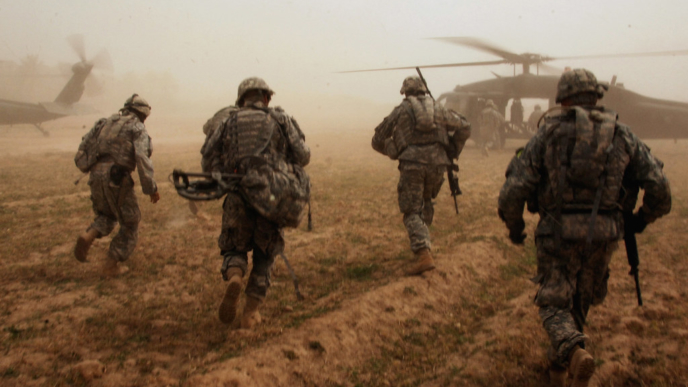
The war in Afghanistan is not an insurgency. It is a proxy war being waged by Pakistan against the U.S. and Afghanistan.

Both the Pentagon and multiple U.S. political administrations have known from nearly the beginning of the conflict that an American victory in landlocked Afghanistan was impossible as long as Pakistan regulated the operational tempo by providing safe haven and support to its Taliban proxies and controlled the supply of our troops, critical factors which have never been adequately addressed.

Under such conditions, the application of counterinsurgency, which, I hasten to add, is a doctrine or collection of tactics, not a strategy, would ultimately be ineffective, whether executed by conventional or special forces. The same is true for counter-narcotics operations, where the trafficking of Afghan opium is largely occurring unimpeded through Pakistan.

Over nearly the entire course of the conflict, the U.S. supplied Pakistan with generous aid packages to bribe them from pursuing a course of action opposed to our own, but one Pakistan considered in its national interest. In essence, our leaders, through a combination of incompetence and indifference, allowed the United States to be defeated by Pakistan and paid them to do it.

Pakistanis now openly brag about it.

Shortly before his death in 2015, Lieutenant General Hamid Gul, the former head of Pakistan’s ISI, a committed Islamist and known as the “godfather of the Taliban,” said in an Urdu language television interview:

“One day, history will say that the ISI drove the Soviet Union out of Afghanistan with the help of USA and another sentence will be recorded that says the ISI drove the USA out of Afghanistan with the help of the USA.”

The Pakistani audience roared with laughter and applauded in approval.

The same pattern of duplicitous behavior by Pakistan has continued for seventeen years.

Late last year, during a Taliban attack on the Afghan provincial capital of Ghazni, large numbers of Pakistani nationals were found among the dead, presumably fighting with the Taliban. The bodies were subsequently returned to Pakistan.

In a recently released video, al Qaeda emphasizes its unity with Taliban and its role within the Taliban insurgency, as the jihadists, including Pakistanis, fight together to resurrect the Taliban’s Islamic Emirate of Afghanistan.

And yet American political leaders and senior military officers have done nothing, preferring to remain puzzled or cynical as to why we have not won in Afghanistan.

Despite Pakistani duplicity, Taliban safe havens in Pakistan remained largely untouched.

Pressure was never applied to Pakistan’s pain points, its moribund economy and financial insolvency and the existential threat of ethnic separatism, in particular among Pakistan’s Baloch and Pashtun populations.

An American withdrawal from Afghanistan will only be a humiliating defeat, if the U.S. is forced into strategic retreat from South Asia because we do not have a plan in place to address the changing regional conditions in a post-U.S. Afghanistan.

Fortunately, you can find such a new strategic plan here.

(Published in full with the permission of the author, find the original posting HERE)
_________________________________________

Lawrence Sellin, Ph.D. is a retired US Army Reserve colonel, an international IT businessman and a veteran of Afghanistan, Iraq and a humanitarian mission to West Africa. He receives email at [email protected] and can be found on Twitter @LawrenceSellin.

Follow Joe Miller on Twitter HERE and Facebook HERE
Lincoln’s Legacy: Nothing Can Stop President Trump from Asking Citizenship Question on 2020 Census

Judges do not have the power to veto abstract political policies or laws; they merely render judgment to individuals with proper standing before the courts where individualized rights were implicated. That is why they have as much power to dictate the drafting of U.S. Census questions as I do or as the president of Afghanistan does. Thursday’s decision presents President Trump with the perfect opportunity to “remind” the courts of their “impotence,” as Justice Antonin Scalia predicted would happen before he died.

I’m often asked if the president should pull ‘an Andrew Jackson’ on the courts and put them in their place. My response is that it is the courts who are pulling an Andrew Jackson, except, unlike a president, they lack the power to enforce their usurpations.

Drafting a census, much like giving out visas and work permits to illegal aliens or controlling the border, is an executive function. Unlike convicting individuals charged with crimes who face the loss of life and liberty, which is eminently within the province of judicial power, courts don’t have power over abstract political questions dealing with broad executive powers affecting the whole of the people. As such, when a president applies these policies in concert with the Constitution and the law, he is not “defying a court” the same way he would if, say, he directed the Justice Department to incarcerate or execute John Doe for a crime after a court vacated his conviction.

The census ruling is the superlative opportunity for Trump to begin reclaiming inherent executive authority from rogue court opinions designed to create broad political rules outside of their jurisdiction. This case has all of the key elements for doing so: the Constitution, statute, history and tradition, are all on his side and there is no tangible, individualized harm to specific plaintiff that would result from Trump continuing to ask the citizenship question on the census. Moreover, Trump is merely overturning a policy from the previous administrations and reverting back to our long-standing history. No new ground is broken.

Once the president does it this time, he will then have an easy avenue to do so every time a district judge mandates he continue a discretionary policy of his predecessor.

To begin with, each branch of government has the responsibility to use its powers in accordance with their oath to the Constitution, irrespective of what other branches are doing. That is literally what is meant by separation of powers. The same way a judge can grant relief to an individual plaintiff when he believes the Constitution compels such a result, irrespective of the laws of Congress or the policies of the executive branch, the president must also execute policies in concert with the law, irrespective of what a court rules for an individual plaintiff.

But even if we were to accede to the dangerous notion that the courts are the sole and final arbiter of the Constitution, there were at least five justices (including Chief Justice John Roberts) who conceded the following points [contrary to some lower court judges]: The Constitution grants the president authority to ask the citizenship question, statute grants the president such authority, the question has been the very essence of the census for most of our history, including our founding, and the president fulfilled the dictates of the Administrative Procedure Act by not implementing the new policy in an arbitrary and capricious manner. In fact, Roberts acknowledged that the decision “was reasonable and reasonably explained, particularly in light of the long history of the citizenship question on the census.”

It’s just that Roberts joined four other justices in concocting a rationale that something just doesn’t smell right with the stated rationale of the Trump administration for making the change, even though the insinuated alternative rationale, even in Roberts’ own mind, would not inhibit Trump’s ability to execute the most foundational power of drafting the census.

Statute [13 U. S. C. §141(a)] says very clearly that the secretary of commerce “shall, in the year 1980 and every 10 years thereafter, take a decennial census of population. . . in such form and content as he may determine, including the use of sampling procedures and special surveys” [emphasis added]. Statute [13 U. S. C. §221] also compels everyone to respond to any of those questions he may determine with the exception of questions about religious affiliation.

It’s an open and shut case. The president must proceed with his plans. Courts don’t draft census surveys the same way Roberts himself admitted they don’t draw election maps, which themselves are determined by such census information. That is inherently one of the most political questions by nature in our system.

The only thing the president would be advised not to do is encroach upon the core judicial power, even when they are wrong, to punish individuals who receive a favorable court ruling. For example, if people decide they don’t want to respond to the census, under current law, the executive branch can fine them $100. Those individuals have the right to go to court and have them apply this Supreme Court ruling to grant relief to their property ($100) for not filling out that particular question. That is the check the judiciary has on the executive branch. But likewise, the president can absolutely mail out forms with the question on it because the drafting of such documents is inherent executive authority.

Trump has the opportunity to follow in the legacy of Abraham Lincoln on this exact point. The Supreme Court in Dred Scott v. Sandford (1857) ruled that the Missouri Compromise of 1820, which barred slavery in most of the new territories, violated the constitutional property rights of Mr. John F. A. Sanford.

During the sixth debate with Stephen Douglas during the 1858 race for Senate in Illinois, Lincoln asserted: “Judge Douglas understands the Constitution according to the Dred Scott decision, and he is bound to support it as he understands it. I understand it another way, and therefore I am bound to support it in the way in which I understand it.”

What does that mean? Does it mean “defying” the court in the way Andrew Jackson did actively chasing out the Cherokee Indians from Georgia following the Worcester v. Georgia opinion? That certainly would have been justified since Chief Justice Roger Taney declared black citizens to be property and not worthy of citizenship. But that’s not what Lincoln was even driving at.

Lincoln observed that courts can adjudicate individual cases, but if they seek to use those rulings as a way of setting political policy across the nation, it should never be regarded as a “political rule” to be “binding on the members of Congress or the President to favor no measure that does not actually concur with the principles of that decision.”

Thus, while Lincoln said during the debate that he would not take away Mr. Sanford’s “slave” because he got a court order, he would not treat it as a political rule for executive and legislative powers governing the nation.

Despite the Dred Scott decision, Lincoln as president signed laws prohibiting slavery in the territories, and, as head of the executive branch, he not only declined to treat black people as property, he treated them as citizens and issued them official government documents, such as passports. Those issues are within the province of the other branches of government, who must interpret the Constitution as they understand it.

How rich it must have been for Roger Taney to be reminded of his own impotence when he was compelled to administer the presidential oath of office to Abraham Lincoln on March 4, 1861. He was forced to listen to Lincoln’s inaugural address when he rejected the notion that “the policy of the Government upon vital questions affecting the whole people is to be irrevocably fixed by decisions of the Supreme Court the instant they are made in ordinary litigation between parties in personal actions.”

The man who wrote his slavery opinion based on “the state of public opinion in relation to that unfortunate race” was forced to eat crow before his very eyes by giving the Bible to the Great Emancipator.

The only point about which Justice Scalia was wrong in the gay marriage case when he predicted his fellow judges would one day be “reminded of our impotence,” is that there are no longer any men like Lincoln left to issue that reminder. (For more from the author of “Lincoln’s Legacy: Nothing Can Stop President Trump from Asking Citizenship Question on 2020 Census” please click HERE)

Follow Joe Miller on Twitter HERE and Facebook HERE

Upshot of Today’s SCOTUS Rulings: Courts Are God Except for One ‘Rare Circumstance’

Today’s Supreme Court ruling in the gerrymandering cases was a victory for those who believe in the proper role of courts, irrespective of political outcome. It’s a refreshing change of pace from judicial supremacy. Unfortunately, what the chief justice giveth in the redistricting case, he taketh in the census citizenship case where he reaffirmed the power of the courts to get involved in every other political question and litigate it to death. His opinion in the census case will reverberate much deeper than the one in the redistricting case.

I am a conservative living in Maryland’s 3rd Congressional District, the most gerrymandered district in the country. As the entire squiggly line scheme was designed to place conservative voters at a disadvantage, I’m on the losing side of the gerrymander. Yet, I’m celebrating today’s Supreme Court ruling declining to get involved in gerrymanders from either party. Let’s leave political questions to the political branches and individualized legal questions to the courts.

As Chief Justice John Roberts rightfully wrote for the 5-4 majority in the combined redistricting cases in Rucho v. Common Cause:

Chief Justice Marshall famously wrote that it is “the province and duty of the judicial department to say what the law is.” Marbury v. Madison, 1 Cranch 137, 177 (1803). Sometimes, however, “the law is that the judicial department has no business entertaining the claim of unlawfulness—because the question is entrusted to one of the political branches or involves no judicially enforceable rights.” Vieth v. Jubelirer, 541 U. S. 267, 277 (2004) (plurality opinion).

After reading this opinion, some of us who take the originalist approach to judicial power seriously were dancing on tables. That is … until the census case – Department of Commerce v. New York et al. – was released to the public 15 minutes later. The notion that a state can sue the federal government for asking the most important question of a census, whether one is a citizen – a question that has been asked for most of our history – is absurd. The same way Roberts ruled that deciding redistricting disputes should be nonjusticiable, he should have understood that this is just as much of a political question with no avenue for courts to get involved.

In the redistricting case, Roberts recognized the common sense that “history is not irrelevant” and that “[T]he Framers were aware of electoral districting problems and considered what to do about them,” and settled on leaving it to political bodies. Then, in the census case, while recognizing that “our interpretation of the Constitution is guided by a Government practice [asking a citizenship question] that “has been open, widespread, and un-challenged since the early days of the Republic,” he refuses to reverse the lower court’s interference with its enactment.

In a complex and defragmented plurality ruling that morphed into a unanimous order, Chief Justice Roberts helped give liberals a majority in keeping the litigation against the census question alive by remanding the case back to the courts. Meanwhile, rather than rebuking the lower courts for getting involved in a political dispute in such an unprecedented way, he legitimized much of their ruling. Moreover, with this ruling, he gave them endless ammo to shut down any common sense and lawful executive actions governing the enforcement of many critical laws, which will reverberate in other spheres of policy such as border security.

The 2010 Census under the Obama administration was the first time since 1840 that the citizenship question was not asked in any form. The same way Obama decided to extirpate it from the Census without question, Trump had the power to reinstate it, absent no formal dictates from Congress. Moreover, just like with redistricting questions, states or third-party organizations should never have standing to sue an abstract political debate about census questions. That should have been the end of the inquiry. And for the most part, it appears that this would have been the general view of Justices Clarence Thomas, Samuel Alito, Neil Gorsuch, and Brett Kavanaugh, possibly with slight shades of variation.

In comes Roberts and admits that nothing in the Constitution or statute could possibly preclude the secretary of commerce from adding the citizenship question. But in what has become a pernicious pattern of the courts over the past few years, Roberts decided that he didn’t like the administration’s motivation behind it and feels it requires further litigation in the district court. He didn’t even agree with the plaintiffs that the administration violated the Administrative Procedure Act (APA) by promulgating a regulation that is “arbitrary and capricious,” another favorite of the lower courts.

So, what was the beef?

According to Roberts: the decision by Secretary Wilbur Ross was “pretextual — that is, that the real reason for his decision was something other than the sole reason he put forward in his memorandum, namely enhancement of DOJ’s VRA enforcement efforts.”

As Justice Thomas said mockingly of Roberts in his partial dissent, “According to the Court, something just ‘seems’ wrong.”

An indignant Thomas wrote:

“This conclusion is extraordinary. The Court engages in an unauthorized inquiry into evidence not properly before us to reach an unsupported conclusion. Moreover, each step of the inquiry offends the presumption of regularity we owe the Executive. The judgment of the District Court should be reversed.”

Justice Alito, in a separate partial dissent, quite bluntly pointed out that the courts have no power to butt in to political decisions. Absent any constitutional violations, “To put the point bluntly, the Federal Judiciary has no authority to stick its nose into the question whether it is good policy to include a citizenship question on the census or whether the reasons given by Secretary Ross for that decision were his only reasons or his real reasons.”

In reality, 13 U.S.C. §221 states very clearly that every resident is required to answer any question under penalty of fine unless it’s a question about religion. That is the only question walled off by Congress.

While many commentators will focus on the fallout of the census issue and how the citizenship question is on hold as we get closer to the deadline, the bigger issue is much broader and will resound in every area of politics. What Roberts himself sought to do in the redistricting case, which is to get the lower courts out of the political business, he countermanded by a factor of 1,000 by allowing the courts to now question political motivations of facially lawful executive actions taken pursuant to constitutional powers.

“With today’s decision, the court has opened a Pandora’s box of pretext-based challenges in administrative law,” predicted Thomas.

Indeed, the lower courts have already mandated that Trump continue dozens of Obama policies that never existed from George Washington until Obama’s second term simply because they didn’t like his motivation. Conservatives have been frustrated with the slow pace to which the Supreme Court has been rolling back these novel and officious lower court breaches of separation of powers. Yet, this is the first time the Supreme Court itself has invalidated an administrative act as pretextual.

Where is this headed?

“Now that the court has opened up this avenue of attack, opponents of executive actions have strong incentives to craft narratives that would derail them,” bemoaned Thomas. “Moreover, even if the effort to invalidate the action is ultimately unsuccessful, the court’s decision enables partisans to use the courts to harangue executive officers through depositions, discovery, delay, and distraction. The court’s decision could even implicate separation-of-powers concerns insofar as it enables judicial interference with the enforcement of the laws.”

Boy does that ring true for enforcement of our border and immigration laws!

As Alito predicted:

If this case is taken as a model, then any one of the approximately 1,000 district court judges in this country, upon receiving information that a controversial agency decision might have been motivated by some unstated consideration, may order the questioning of Cabinet officers and other high-ranking Executive Branch officials, and the judge may then pass judgment on whether the decision was pretextual. What Bismarck is reputed to have said about laws and sausages comes to mind. And that goes for decision making by all three branches.

Viewing this entire Supreme Court term in totality, not only were the lower courts not rebuked for their unprecedented expansion of power, they are now emboldened. Every last thing this president does – no matter the common-sense rationale, no matter how lawful, not matter how rooted in law and tradition – will be permanently placed on hold. Remember, much of what the president is doing is merely reinstating base law from past lawless deviations of previous administrations.

Case in point: Obama unilaterally vetoed immigration law and gave amnesty to illegal aliens. To this day, that amnesty is still in place and the Supreme Court refuses to police the lower courts on telling Trump to keep it. Now we know why.

Just take a look at our border. We are suffering from an invasion of illegal immigration, drugs, gangs, criminals, cartels, and health concerns all because of a single California judge violating 130 years of case law on sovereignty. This is the moral hazard of judicial supremacy – the notion that, at any moment, any judge can shut down a policy as if he had a presidential veto pen and have that opinion be self-executing against legitimate powers of other branches of government.

What is clear is that on the redistricting case, Roberts felt he had nowhere to run or hide because there simply is no standard for the courts to apply to map drawing, even if they were to take over the process. Yet, in almost every other fundamental political question, he will allow the liberal judges to get involved.

When looking into the crystal ball of the future of this court, conservatives should pessimistically expect the census citizenship case to be more predictive of future outcomes than the redistricting case. As Roberts conceded at the end of the redistricting case, “In this rare circumstance, that means our duty is to say “this is not law” and not get involved. Emphasis added for “rare,” indeed!

The Trump administration lawyers are going to have to come to terms with defending the prerogatives of the executive branch of government or risking the implementation of Obama’s third, and perhaps, fourth term in office. (For more from the author of “Upshot of Today’s SCOTUS Rulings: Courts Are God Except for One ‘Rare Circumstance’” please click HERE)

Follow Joe Miller on Twitter HERE and Facebook HERE

We Cannot Ignore the Horror of the Border Crisis, but We Shouldn’t Ignore Its Real Causes, Either

A picture of a drowned father and daughter at the southern border has brought a great deal of left-wing attention to the border crisis.

The tragic photo shows a migrant from El Salvador and his 2-year-old daughter washed up on the shore of the Rio Grande River after trying to cross the border into the United States.

A Vox writer called the image “the true face of the Trump administration’s approach to immigration, the physical embodiment of the nativism that animates it.”

“Trump is responsible for these deaths,” tweeted presidential candidate Robert “Beto” O’Rourke.

On Wednesday, Senate Minority Leader Chuck Schumer, D-N.Y., took the photo to the Senate floor and blamed President Trump for the pair’s deaths, calling his actions on the crisis a “whirlwind of incompetence leading to pictures like this.”

Democratic presidential candidate Bernie Sanders, Vt., said that the image is “one painful example of so many that demonstrate the reckless disregard for basic humanity that have come from Trump’s policies.”

Sanders, of course, also called the border crisis “artificial” in January when calling for an end to the federal government partial shutdown over the border crisis.

In reality, since Schumer and Sanders’ January allegations, the administration has been dealing with month after month after month of record numbers of border apprehensions and changing demographics driven by a combination of what National Review editor Rich Lowry describes as “bizarre asylum rules” and inadequate security at the U.S.-Mexico border. These have left enforcement agencies grossly overburdened.

Meanwhile, it has been almost two months since the administration requested emergency border funding to address the ongoing crisis, and a supplemental measure addressing it only passed the House Tuesday evening (where funding bills have to begin, per the Constitution.) That spending package, however, contains no funding for additional border security measures.

It’s also important to keep in mind, congressional Republicans and the Trump administration started trying to address the asylum policies that created the current crisis over a year ago.

And, in case anyone forgot, this isn’t America’s first crisis of this nature. The journey north was still dangerous and the asylum incentives were similar five years ago, the swell of minors from Central America claiming refugee status as Unaccompanied Alien Children got so bad that then-President Barack Obama had to warn Central American parents to stop sending their kids here.

“Do not send your children to the borders,” Obama warned. “If they do make it, they’ll get sent back; more importantly, they might not make it.”

Look, it’s right to feel pangs of horror and sadness upon seeing a picture of a drowned father and daughter. It’s right to say it’s bad when kids don’t have soap and toothbrushes at detention facilities. These are objectively bad things, but we cannot pretend away the factors that actually created these conditions.

The humanitarian crisis at our southern border is indeed horrific. It was horrific before this picture was taken. It was horrific before the detention centers became as crowded as they currently are. That’s why it’s so important to fix this crisis the right way and prevent others of its kind from happening again.

You can’t fix a problem when you won’t admit what’s causing it, and as long as our current asylum and security problems persist, this crisis simply won’t go away. (For more from the author of “We Cannot Ignore the Horror of the Border Crisis, but We Shouldn’t Ignore Its Real Causes, Either” please click HERE)

Follow Joe Miller on Twitter HERE and Facebook HERE