Posts

Army Drops Grenade Throwing Requirement to Graduate

The United States Army will no longer require recruits to show they can throw hand grenades 25 meters because many of them can’t throw the explosive far enough, it revealed on Friday.

The Army says that starting next summer it will remove the requirement from its Basic Combat Training because it takes too much time to teach enlistees to throw grenades at an adequate distance . . .

‘What we have found is it is taking far, far too much time,’ said Maj. Gen. Malcolm Frost, the commanding general of the US Army Center of Initial Military Training.

‘It’s taking three to four times as much time … just to qualify folks on the hand grenade course than we had designated so what is happening is it is taking away from other aspects of training.’

‘We are finding that there are a large number of trainees that come in that quite frankly just physically don’t have the capacity to throw a hand grenade 20 to 25 to 30 meters,’ he said. (Read more from “Army Drops Grenade Throwing Requirement to Graduate” HERE)

Follow Joe Miller on Twitter HERE and Facebook HERE.

After Admitting to Secretly Experimenting on Troops, Army Refusing to Provide Them Medical Care

In a testament to how the US government views its military service men and women, for decades, troops were used as experimental test subjects and doused with chemicals, injected with drugs, and otherwise treated like human guinea pigs—leading to a slew of negative health effects. When these troops simply tried to get care for the onslaught of medical problems brought on by these experiments the government told them to kick rocks.

For decades, the military flat out denied medical care to those it injured through these unethical experiments. After being poked, prodded, and force-fed with everything from lethal nerve gases like VX and sarin to incapacitating agents like BZ, and given drugs like barbiturates, tranquilizers, narcotics and hallucinogens like LSD, soldiers were told that is what they signed up for and were offered no care after their end of active service.

After being told they were crazy for years, the Army finally declassified the details of these experiments. However, veterans were still denied care. In 2009, thousands of veterans—Vietnam Veterans of America and other plaintiffs who wanted to know which chemical agents they had been exposed to—filed a class action lawsuit against the Central Intelligence Agency, et al., for the experiments. It took seven years for a court to finally rule in the plaintiffs’ favor.

In early 2016, the Army began responding to the lawsuit and said it will pay for the medical care of those injured by its inhumane and disturbing experiments. However, their response is simply more of the same.

According to the group’s attorneys, the military is failing to meet its obligations and is withholding details veterans are seeking about what agents they were exposed to.

“They’re hoping we die off, so you apply [for benefits], you get turned down,” former soldier Tim Josephs said of the Army’s disgusting treatment of veterans. “And it just goes on for years and years, and they just want to wear us down. They want to use young men as guinea pigs and throw them away.”

In a disturbing interview with CNN, Josephs explained how he volunteered to test new military equipment but he was tricked into becoming a lab rat.

The idea was they would test new Army field jackets, clothing, weapons and things of that nature, but no mention of drugs or chemicals.

However, when Josephs got to the base at Edgewood, Maryland, it looked more like a hospital than a military establishment. When he questioned the men in white lab coats who wanted to test various deadly substances on him, he was told play along or go to jail.

“He said, ‘You volunteered for this. You’re going to do it. If you don’t, you’re going to jail. You’re going to Vietnam either way — before or after,’” Josephs said to CNN.

Josephs is one of the thousands of veterans who have similar stories. And, Edgewood is one of many places where these thousands of veterans were used as human subjects to test anything the military could think up.

To get any help at all has been a difficult uphill battle.

“The Army still has not provided notice to test subject veterans regarding the specific chemical and biological tests to which they were subjected — and their possible health effects,” says attorney Ben Patterson of the law firm Morrison and Foerster, which represents veterans in the case. Patterson says a court ordered the Army to disclose detailed information to the former soldiers four years ago, in an injunction from November 2013, according to a recent report from NPR.

Patterson said the Army is imposing unnecessary hurdles in the process, “in an apparent attempt to discourage and prevent veterans from applying to the program and receiving the medical care to which they are entitled under the Army’s own regulation.”

Like Josephs, another veteran, Frank Rochelle, was injected in 1968 with a drug that made him hallucinate for nearly two days. As NPR reported, he knows its identity only by its code name — CAR 302668.

“We were assured that everything that went on inside the clinic, we were going to be under 100 percent observation; they were going to do nothing to harm us,” Rochelle told NPR in 2015. “And also we were sure that we would be taken care of afterwards if anything happened. Instead we were left to hang out to dry.”

According to NPR, as part of the class action lawsuit’s resolution, the Army is required to use a variety of means to contact former test subjects, from notification letters and a “publicly accessible website” to public notifications and social media accounts. The service has posted its plan to uphold its obligation on the Army Medicine military website. But there’s no mention of the plan on several social media accounts, including the official Army Medicine Twitter feed.

As for who’s eligible for coverage, the Army lists these requirements, however, they are denying people left and right:

A DD Form 214 or War Department (WD) discharge/separation form(s) or functional equivalent.
Served as a research subject in a U.S. Army chemical or biological substance testing program, including the receipt of medications or vaccines under the U.S. Army investigational drug review.
Have a diagnosed medical condition that you believe to be a direct result of your participation in U.S. Army chemical or biological substance testing.

In its FAQ about the treatment program, the Army explains that only those who were injured by the specific U.S. Army chemical or biological substance testing program may be eligible. If you were injured in more recent experiments, however, you’ll apparently need to file another class action lawsuit and wait decades before being railroaded once more.

To the following question:

I believe I have a disease or medical condition as a result of Army chemical or biological substance testing at FT McClellan (or other Army installations) during the 1980s (or 1990s), can I apply for medical care benefits under this medical care injunction?

No. This program is only available to former members of the Armed Forces who have an injury or disease resulting from their participation in a U.S. Army chemical or biological substance testing program.

(For more from the author of “After Admitting to Secretly Experimenting on Troops, Army Refusing to Provide Them Medical Care” please click HERE)

Follow Joe Miller on Twitter HERE and Facebook HERE.

These Afghan Army Uniforms Cost American Taxpayers $28 Million ‘in the Name of Fashion’

The Pentagon is under fire for spending nearly $28 million procuring camouflage uniforms for the Afghan army, gear suited for environments so rare they account for just 2 percent of Afghanistan’s countryside, according to a new watchdog report.

The Defense Department organization overseeing efforts to train and equip Afghan forces supervised selection and design of the new proprietary woodland camouflage pattern without proper testing and assessment, according to the report published Wednesday by the Special Inspector General for Afghanistan Reconstruction.

For years, Afghan conventional forces and elite commandos have fielded the U.S. Army’s woodland pattern utility uniforms. In 2007, the Afghan Defense Ministry embarked on a quest to design new uniforms to counter efforts by the Taliban and militants battling government forces to counterfeit the clothing.

The new uniform was designed in similar fashion to the current uniform worn by the U.S. Army, called the Army Combat Uniform, but at a much higher cost, the inspector general determined.

According to the report, the HyperStealth’s Spec4ce Forest camouflage pattern was chosen by the then-Afghan Defense Minister Abdul Rahim Wardak — because he liked what he saw while browsing a website. (Read more from “These Afghan Army Uniforms Cost American Taxpayers $28 Million ‘in the Name of Fashion'” HERE)

Follow Joe Miller on Twitter HERE and Facebook HERE.

Trump Considers Expansion of America’s Longest War. What That Means.

In an early test of his foreign policy, President Donald Trump is facing a decision on whether to contribute thousands of additional U.S. troops to America’s longest-running—and often overlooked—war.

As first reported by The Washington Post, Trump’s senior military and foreign policy advisers recommend that the president send 3,000 to 5,000 more troops to bolster an existing U.S. force of 8,400 in Afghanistan and help that country’s government gain momentum in a 15-year war against the Taliban, the Islamist insurgent group.

Experts who study the Afghanistan War say the plan is designed to break a stalemate in the fighting, and to pressure the resurgent Taliban to negotiate a peace agreement with the Afghan government.

These experts, in interviews with The Daily Signal, say the proposed strategy does not represent a dramatic U.S. escalation to a war in which America once committed 100,000 troops.

But they say if Trump were to approve the plan—he’s expected to make a decision before a May 25 NATO meeting in Brussels—it would challenge the president’s evolving foreign policy doctrine. That doctrine has trended toward a narrow counterterrorism-first approach rather than deep commitments to overseas conflicts.

“My best guess is [Trump’s advisers] are looking to at least stop the bleeding in Afghanistan at the moment,” Bill Roggio, who edits the Foundation for Defense of Democracies’ Long War Journal, said in an interview with The Daily Signal. “They are also doing what they think they can get away with and what is politically acceptable. There is not a lot of support in the American public, and among members of Congress, for a significantly deeper U.S. commitment to the Afghanistan War.”

Roggio said he did not think the additional troops would fundamentally change the situation in Afghanistan, where more than 2,000 U.S. troops have died and another 20,000 have been wounded.

“The Taliban have had momentum for several years now,” Roggio said. “They have weathered a full surge of U.S. forces. The Afghan security forces have not been able to hold the gains. So I don’t think an incremental increase in troops will affect the situation all that much.”

‘Rise From the Dead’

Yet Roggio and others say an extra U.S. presence could reverse declines in the security situation in Afghanistan.

President Barack Obama, who had pledged to end U.S. military involvement in Afghanistan, steadily reduced the American role, but did not completely pull out troops due to a number of security challenges.

The Taliban is gaining territory. Reuters reports the Islamist group controls 40 percent of the country, and that casualties for government forces reached record levels last year. In addition, the terrorist group al-Qaeda has established new footholds in Afghanistan, the country it used to plan the 9/11 attacks. And ISIS also has established a small presence in Afghanistan.

“Afghanistan is not the only place, and even the most important place at any given time [for U.S. interests],” Michael O’Hanlon, director of the foreign policy program at the Brookings Institution, said in an interview with The Daily Signal. “But as we have seen with the Taliban surge, and ISIS gaining a foothold there, it’s pretty clear this area has an ability to allow bad guys to rise from the dead. You want a sustained presence in Southeast Asia as the easternmost pillar in the counterterrorism capacity of the United States.”

‘Not a Surge’

Currently, American forces in Afghanistan have two primary missions: advising and training Afghan forces and conducting counterterrorism missions, including a recent raid that killed the leader of ISIS’ affiliate there, Abdul Hasib.

According to The New York Times, the new Trump administration plan would allow American advisers to assist a larger number of Afghan forces, and work closer to the front lines. Under the proposal, the U.S. would also not set a firm deadline for withdrawing troops, as Obama did.

“This is not a surge,” said James Jay Carafano, vice president for foreign and defense policy at The Heritage Foundation, who advised Trump’s transition team. “This is still going to be an Afghan-led thing.”

Carafano, a retired Army officer, added:

It’s not a dramatic expansion of the conflict where we go in there and say we will win once and for all. It’s about how we get to conditions on the ground that keep Afghanistan on a path to stability. That’s what’s driving the troop numbers.

Others say the Trump administration risks being stuck in a middle-ground position, with little realistic chance for new peace talks unless both sides make concessions.

The challenges for peace are exacerbated at a time when Afghanistan’s security leadership faces allegations of corruption, and the Taliban has shown little inclination to make concessions.

The Taliban also has been buffered by support from Iran and Russia, while Afghanistan’s neighbor, Pakistan, continues to provide a safe haven for militant groups.

Testifying before Congress in February, Army Gen. John W. Nicholson Jr., the top American commander in Afghanistan, called for a “holistic review” of policy toward and financial aid for Pakistan.

“It’s always been a close call on its merits, on whether it’s worth waging war in Afghanistan or not,” Stephen Biddle, a senior fellow for defense policy at the Council on Foreign Relations, said in an interview with The Daily Signal, adding:

You can still make a reasonable case for it and against it. I don’t think this is a hopeless situation. It’s not crazy to suppose we can get a compromise settlement. But that requires we get serious about this, which includes the Trump administration owning this process and expending political capital to build a constituency to support it.

Guarding Against ‘Catastrophic Events’

Rebecca Zimmerman, a policy researcher at RAND Corporation who focuses on Afghanistan, sought to downplay expectations for what an enhanced U.S. presence in the country could do.

She says U.S. support is most needed to prevent collapse of the Afghan government, which would make the country an ungoverned space to be exploited by extremist groups.

“The biggest threat to the U.S. is government collapse in Afghanistan,” Zimmerman told The Daily Signal. “If that happens, there is a likelihood of a multiparty civil war, and the countryside will be open to anyone who wants to plant a terrorist flag there. If we can support the Afghan forces to guard against catastrophic events that can fell the government, we would be using those troops effectively.”

With no near-term endgame, Roggio of the Foundation for Defense of Democracies says it’s fair to question whether the U.S. should continue to supply troops and funding — about $23 billion annually — to the Afghanistan War.

But he says walking away from Afghanistan would present immeasurable costs.

“It’s never wrong to question why we are still at war 15 years later,” Roggio said. “We should be asking hard questions about why we are sending service members to die. But it would be massive victory for jihadist groups across the world if the U.S. decided to pull out of Afghanistan.” (For more from the author of “Trump Considers Expansion of America’s Longest War. What That Means.” please click HERE)

Follow Joe Miller on Twitter HERE and Facebook HERE.

Chaplains Tell Army to Stop Training That Targets Religious Beliefs

The Chaplain Alliance for Religious Liberty sent a letter last month to the Secretary of the Army about his predecessor. Former Secretary of the Army Eric K. Fanning signed an order that targeted Christian beliefs hours before he resigned.

Army Directive 2017-06 required the Army to train against “implicit or unconscious bias.”The directive threatens Army personnel who hold Christian beliefs, said the chaplains. They wrote to acting Secretary of the Army Robert M. Speer. While Fanning did not spell out what the bias is, the chaplains claim it is a way to target Army persons who have Biblical beliefs about sexuality.

Fanning held the title of the first openly gay service secretary.

Chaplain Ron Crews is the executive director for the Chaplain Alliance. Crews told CBN News that Fanning was very proud that he was the first homosexual to serve as a Secretary of the Army. Crews added that Fanning has been pushing his own agenda in the Army at the expense of war training.

“Everybody in the Army should believe there is a path forward for them. Readiness is getting the most out of the force,” Fanning told The Washington Times on Wednesday. “I don’t think opportunity and equality are political agendas. I think they’re important American values.”

The order does not increase military readiness, said Crews. It wastes valuable training time to push a political agenda.

The chaplains urged Speer to consider the threats the military faced daily. They added that “such training mandates … cannot … help our soldiers be better prepared for combat readiness.” Crews told CBN News he hopes Speer will repeal the order.

The Chaplain Alliance provides over 2,700 chaplains to the U.S. military and other agencies. Their website states that the group exists to make sure that chaplains can defend the freedom of religion and conscience that the Constitution guarantees. (For more from the author of “Chaplains Tell Army to Stop Training That Targets Religious Beliefs” please click HERE)

Follow Joe Miller on Twitter HERE and Facebook HERE.

U.S. Army Creates World’s First 3D Printed Grenade Launcher

The last thing you would expect is for the US military to create a 3D printed gun. After all, you’d think that an organization as large and well funded as our military wouldn’t need plastic guns. 3D printers are for people who don’t have massive factories at their disposal, but the Army has the military-industrial complex.

Nonetheless, the US Army recently revealed that they have created a 3D printed grenade launcher, which they have appropriately dubbed RAMBO or Rapid Additively Manufactured Ballistics Ordnance. It was designed by the Army Research, Development, and Engineering Command and the U.S. Army Manufacturing Technology Program.

RAMBO contains only 50 parts, and with the exception of a few springs and fasteners, is all 3D printed. However, not all of these pieces are plastic. The barrel and receiver are aluminum, and were printed by a metal sintering machine. The Army is also working on printing the 40mm ammunition that goes with the weapon. Early tests show that the weapon functions, and now the Army is testing its reliability under long-term use.

So why does the army want to build 3D printed weapons in the first place? They don’t explicitly say, but RAMBO and its ammo was designed and produced in 6 months, which is far shorter than what it would take to create a new weapon from scratch using traditional channels in the arms industry.

The Army probably doesn’t intend to actually deploy this prototype weapon. One could only guess, but it’s more likely that they are prototyping the concept of designing their own weapons. The research and development phase of any weapon is notoriously long and expensive, so by doing that part themselves they could skirt around the arms industry and save a ton of money.

The only question is, will the military-industrial complex abide this money saving measure? (For more from the author of “U.S. Army Creates World’s First 3D Printed Grenade Launcher” please click HERE)

Follow Joe Miller on Twitter HERE and Facebook HERE.
Robots Poised to Take Over Wide Range of Military Jobs

The wave of automation that swept away tens of thousands of American manufacturing and office jobs during the past two decades is now washing over the armed forces, putting both rear-echelon and front-line positions in jeopardy.

“Just as in the civilian economy, automation will likely have a big impact on military organizations in logistics and manufacturing,” said Michael Horowitz, a University of Pennsylvania professor and one of the globe’s foremost experts on weaponized robots.

“The U.S. military is very likely to pursue forms of automation that reduce ‘back-office’ costs over time, as well as remove soldiers from non-combat deployments where they might face risk from adversaries on fluid battlefields, such as in transportation.”

Driver-less vehicles poised to take taxi, train and truck driver jobs in the civilian sector also could nab many combat-support slots in the Army. (Read more from “Robots Poised to Take Over Wide Range of Military Jobs” HERE)

Follow Joe Miller on Twitter HERE and Facebook HERE.
Army Shrinks to Smallest Level Since Before World War II

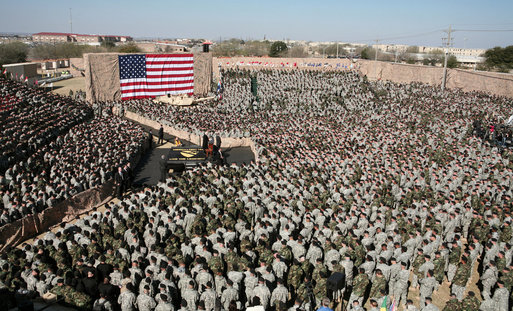
The Army’s latest headcount shows that nearly 2,600 soldiers departed active service in March without being replaced, an action that plunges manning to its lowest level since before World War II.

During the past year the size of the active force has been reduced by 16,548 soldiers, the rough equivalent of three brigades.

Endstrength for March was 479,172 soldiers, which is 154 fewer troopers than were on active duty when the Army halted the post-Cold War drawdown in 1999 with 479,424 soldiers, the smallest force since 1940, when the active component numbered 269,023 soldiers . . .

Without congressional or Defense Department intervention, the drawdown will continue for two more years, with endstrength hitting 460,000 soldiers in 2017, and 450,000 in 2018.

The latest official demographics from the Defense Manpower Data Center shows that in addition to the 479,172 soldiers who were on active duty April 1, the Army’s reserve forces totaled 548,024 soldiers, for a total force of 1,027,196 soldiers. (Read more from “Army Shrinks to Smallest Level Since Before World War II” HERE)

Follow Joe Miller on Twitter HERE and Facebook HERE.
What the Military Is Doing to the Green Beret Who Confronted a Afghan Child Rapist Will Disgust You

Army Human Resources Command has recommended that the Green Beret who confronted an Afghan police commander for raping a young boy be kicked out of the service.

Rep. Duncan Hunter (R., Calif.), who has pushed back against the Army’s decision to punish Sgt. 1st Class Charles Martland, revealed the development in a letter to Sen. Pat Roberts (R., Kansas) Wednesday.

“Recently, a decision within Army Human Resources Command recommended that the Army uphold the judgment that Martland be removed from service, although a final decision has yet to be made about his future,” Hunter wrote.

While serving in Afghanistan in 2011, Martland and another soldier confronted an Afghan Local police commander at an outpost for kidnapping and repeatedly raping a young boy, reportedly throwing the man to the ground and physically ejecting him from the base.

“For this action, Martland was removed from the outpost and faced reprimand. He later was allowed to reenlist, only to face a Qualitative Management Program review board in February 2015,” Hunter, a veteran Marine officer who served in Iraq and Afghanistan, wrote in the letter. (Read more from “What the Military Is Doing to the Green Beret Who Confronted a Afghan Child Rapist Will Disgust You” HERE)

Follow Joe Miller on Twitter HERE and Facebook HERE.
Obama to Nominate First Openly Gay Service Secretary to Lead the Army

635781877270472421-DFN-Eric-FanningBy Michelle Tan. Eric Fanning, formerly one of Defense Secretary Ash Carter’s closest advisers, has been nominated to be the next Army secretary, the White House announced Friday.

Fanning has been serving as the acting under secretary of the Army since June. Before that, he served as Carter’s chief of staff. If confirmed by the Senate, Fanning will succeed Army Secretary John McHugh, who has said he will leave the post by Nov. 1 after six years on the job.

“Eric brings many years of proven experience and exceptional leadership to this new role,” President Barack Obama said in a statement. “I am grateful for his commitment to our men and women in uniform, and I am confident he will help lead America’s Soldiers with distinction. I look forward to working with Eric to keep our Army the very best in the world.”

Widely viewed as one of the most capable leaders in the Pentagon, Fanning became Air Force undersecretary in April 2013. He served several months as acting secretary while the confirmation of now-Secretary Deborah Lee James was stuck in Congress . . .

Fanning’s nomination comes during a critical transition period for the Army, which has not only seen key leadership changes at the top but also continues to struggle with increasingly tight budgets and growing demands for troops all around the world. (Read more from “Obama to Nominate First Openly Gay Service Secretary to Lead the Army” HERE)

________________________________________

Obama Nominates First Gay Service Secretary to Lead the Army

By Greg Jaffe. President Obama, in a historic first for the Pentagon, has chosen to nominate Eric Fanning to lead the Army, a move that would make him the first openly gay civilian secretary of one of the military services.

Fanning, 47, has been a specialist on national security issues for more than two decades and has played a key role overseeing some of the Pentagon’s biggest shipbuilding and fighter jet programs. Now he will oversee an Army that has been battered by the longest stretch of continuous combat in U.S. history and is facing potentially severe budget cuts. It’s also an Army that after a long stretch of patrolling Iraqi and Afghan villages is searching for its postwar role in protecting the nation.

Fanning’s nomination, which must go to the Senate for confirmation, reflects a major shift for the Pentagon, which only four years ago prevented openly gay troops from serving in the military. The policy didn’t extend to civilian leaders, such as Fanning.

His long tenure in the Pentagon and his breadth of experience in shepherding some of the department’s most complex and sensitive weapons programs was a key factor in his nomination for the Army’s top job, administration officials said. (Read more from this story HERE)

Follow Joe Miller on Twitter HERE and Facebook HERE.