Posts

‘Shape-Shifting’ Bacteria Spotted on International Space Station

Bacterial cells treated with a common antibiotic have been spotted changing shape to survive while aboard the International Space Station (ISS).

The way bacteria act in near-zero gravity environments could pose a serious problem for treating astronauts with infections.

The “clever shape-shifting” was detected in bacteria being experimented on in the near-weightlessness of space, and is believed to help the bacteria survive.

An experiment on the common E coli bacteria subjected it to different concentrations of the antibiotic gentamicin sulfate, a drug which kills the bug on Earth.

However, in comparison to a control group on Earth, the space bacteria showed a 13-fold increase in cell numbers and a 73% reduction in cell column size. (Read more from “‘Shape-Shifting’ Bacteria Spotted on International Space Station” HERE)

Follow Joe Miller on Twitter HERE and Facebook HERE.

U.S. Sees First Case of Bacteria Resistant to All Antibiotics

U.S. health officials on Thursday reported the first case in the country of a patient with an infection resistant to all known antibiotics, and expressed grave concern that the superbug could pose serious danger for routine infections if it spreads.

“We risk being in a post-antibiotic world,” said Thomas Frieden, director of the U.S. Centers for Disease Control and Prevention, referring to the urinary tract infection of a 49-year-old Pennsylvania woman who had not travelled within the prior five months.

Frieden, speaking at a National Press Club luncheon in Washington, D.C., said the infection was not controlled even by colistin, an antibiotic that is reserved for use against “nightmare bacteria.”

The infection was reported Thursday in a study appearing in Antimicrobial Agents and Chemotherapy, a publication of the American Society for Microbiology. It said the superbug itself had first been infected with a tiny piece of DNA called a plasmid, which passed along a gene called mcr-1 that confers resistance to colistin.

“(This) heralds the emergence of truly pan-drug resistant bacteria,” said the study, which was conducted by the Walter Reed National Military Medical Center. “To the best of our knowledge, this is the first report of mcr-1 in the USA.” (Read more from “U.S. Sees First Case of Bacteria Resistant to All Antibiotics” HERE)

Follow Joe Miller on Twitter HERE and Facebook HERE.

Scientists Create Ultra-Simplified Bacteria but Discover Life Is Still Mind-Boggling Complex

By Malcolm Ritter. Scientists have deleted nearly half the genes of a microbe, creating a . . . bacterium [that] has a smaller genetic code than does any natural free-living counterpart, with 531,000 DNA building blocks containing 473 genes. (Humans have more than 3 billion building blocks and more than 20,000 genes).

But even this stripped-down organism is full of mystery. Scientists say they have little to no idea what a third of its genes actually do.

“We’re showing how complex life is, even in the simplest of organisms,” researcher J. Craig Venter told reporters. “These findings are very humbling.” (Read more from “Scientists Create Ultra-Simplified Bacteria but Discover Life Is Still Mind-Boggling Complex” HERE)

_______________________________________

Scientists Create Tiniest Life Form yet, Not Sure What It Is

By Eric Roston. For years, DNA and computer operating systems served as cliches for each other: DNA is the “operating software” of living cells in the same way that system software is the “DNA” of a computer.

The problem with the comparison, as shown by research two decades in the making, is how much biologists still don’t know about DNA, or genomes. That’s an especially problematic development, given the industry sprouting up around genetic manipulation.

Genomics pioneer Craig Venter and more than 20 colleagues engineered a living microbe with a genome simpler than any seen in nature. In other words, they created a life form whose relative simplicity and modular design make it a platform that one day may be as easily manipulated as, say, software. Setting aside fears of Blade Runner replicants running amok, the breakthrough revealed on Thursday in the journal Science may hold promise for a new era in medicine, industry, and energy. (Read more from “Scientists Create Tiniest Life Form yet, Not Sure What It Is” HERE)

Follow Joe Miller on Twitter HERE and Facebook HERE.

Scientists Have Found a New Strain of Bacteria That Is Resistant to All Antibiotics

FOR years experts have warned there would come a day when antibiotics would cease being effective.

And it seems that day could be sooner than first thought after scientists discovered a new superbug that is not just impervious to the last line of defence medication, but has the ability to infect other bacteria.

But instead of destroying its virulent cousins this new strain of e.coli actually strengthens them by giving them the same antibiotic shield . . .

Experts, while worried about the potential effect this discovery would have, hoped it would remain in China . . .

But this week those hopes were dashed when researchers in Denmark revealed they had found a similar strain in poultry from Germany as well as in a Danish man who had never travelled outside the country. (Read more from “Scientists Have Found a New Strain of Bacteria That Is Resistant to All Antibiotics” HERE)

Follow Joe Miller on Twitter HERE and Facebook HERE.
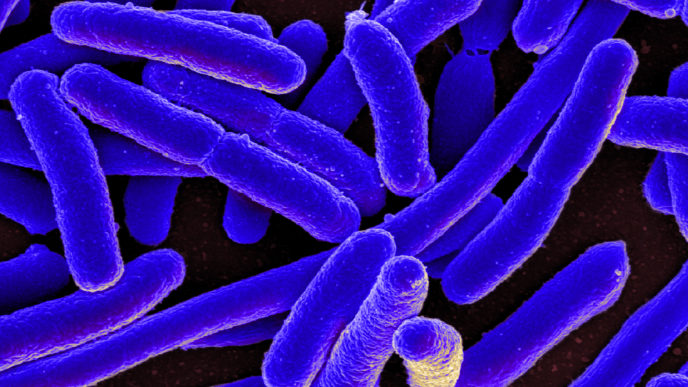
Bacteria Resistant to All Known Forms of Antibiotics Has Now Spread from China to Europe

Just weeks after the discovery in China of bacteria resistant to all known forms of treatment, the same strain has been found in Denmark. Worse: It’s been there since 2012.

Late last week researchers at the Technical University of Denmark announced they had found the feared ‘invulnerability’ gene among E. coli bacteria samples taken from humans and food. . .

Five more examples of bacteria containing the mcr-1 gene were found among samples taken from food imported between 2012 and 2014.

Danish researchers fear the untreatable superbug is now firmly embedded in Europe. The man suffering the blood infection had not traveled outside the country and the infected imports were German poultry products. . .

What makes mcr-1 such a threat, other than its immunity to all known antibiotics, is that it can spread fast. It has been found to reside in plasmids, mobile ‘packets’ of DNA which can be copied and transferred between different bacteria. (Read more from “Bacteria Resistant to All Known Forms of Antibiotics Has Now Spread from China to Europe” HERE)

Follow Joe Miller on Twitter HERE and Facebook HERE.

Latest Military Lab Concerns Involve Plague Bacteria, Deadly Viruses

081228-bacteria-art-02The Pentagon’s most secure laboratories may have mislabeled, improperly stored and shipped samples of potentially infectious plague bacteria, which can cause several deadly forms of disease, USA TODAY has learned.

The Centers for Disease Control and Prevention flagged the practices after inspections last month at an Army lab in Maryland, one of the Pentagon’s most secure labs. That helped prompt an emergency ban on research on all bioterror pathogens at nine laboratories run by the Pentagon, which was already reeling from revelations that another Army lab in Utah had mishandled anthrax samples for 10 years . . .

Moreover, officials point out that continuing testing has shown the suspect samples of plague contain a weakened version, and not the fully virulent form that was of concern to lab regulators at the CDC.

There is no danger to the public from the plague and encephalitis specimens found in the labs, said Army spokesman Dov Schwartz. After extensive testing, no danger has been found to scientists and researchers who have worked with the vials, he said. Final test results are expected by the end of the month.

However, for the first time since the scandal broke in May about an Army lab’s botched handling of anthrax, the Pentagon is now acknowledging that worries now extend to other lethal agents that it studies. In addition to the plague samples and some additional anthrax specimens, the CDC has raised concerns about military labs’ handling of specimens created from two potentially deadly viruses that are also classified as bioterror pathogens: Venezuelan equine encephalitis virus and Eastern equine encephalitis virus, which can cause rare but serious illnesses in people, including deadly inflammation of the brain. (Read more from “Latest Military Lab Concerns Involve Plague Bacteria, Deadly Viruses” HERE)

Follow Joe Miller on Twitter HERE and Facebook HERE.

Cambridge Company Says Live Bacteria Spray Will Keep You Clean

spray-bottle-while-sprayingYou’ve heard of taking probiotics for a healthy gut, but what about literally spraying live bacteria on your skin? As Dr. Mallika Marshall reports, a local company thinks it’s a good idea for overall health, and plans to prove it.

“I have not taken a shower in over 12 years,” says Dave Whitlock, a chemical engineer and MIT grad who says he doesn’t miss bathing at all. “No one did clinical trials on people taking showers every day. So what’s the basis for assuming that that is a healthy practice.”

In fact, what Whitlock does believe is healthy is restoring good bacteria to our skin that our ancestors enjoyed long ago and that has slowly been stripped away by excessive cleaning. To prove his theory, he helped found AOBiome, a company based in Cambridge, MA.

“We’ve confused clean with sterile,” says Jasmina Aganovic, the General Manager of Consumer Products at AOBiome. She says as humans, we need to reconnect with our environment. “We’ve taken the dirt out of our lives. We don’t spend as much time outdoors as we used to, even little children,” she explains.

To add a little dirt back into our lives, AOBiome has created Mother Dirt, specifically the AO+ Mist containing live bacteria that is sprayed directly on the skin twice a day. It has no odor and feels like water. (Read more from “Cambridge Company Says Live Bacteria Spray Will Keep You Clean” HERE)

Follow Joe Miller on Twitter HERE and Facebook HERE.

Antibiotic-Resistant Bacteria from American Cattle Become Airborne, but Is It Life-Threatening?

cattle-yardAirborne particulate matter wafting off American cattle yards contains antibiotics, bacteria, and antibiotic-resistant DNA, a new study finds. Environmental tests on the spread of antibiotics have been performed in the past, but this is the first time researchers have examined aerial dispersion. The work suggests airborne transmission may be contributing to an emerging global health problem, where doctors find it increasingly difficult to treat life-threatening infections.

For some time now, scientists have worried that we may be entering a “post-antibiotic era,” when the drugs that once defeated potentially fatal infections are no longer effective. Simply put, the bacteria causing infections in many cases are now immune to (or “resisting”) the drugs. Since antibiotic-resistant bacterial DNA, if imbibed in water or consumed in meat, can be transferred to humans, many researchers say misuse and overuse of veterinary pharmaceuticals may be responsible, in part, for this global health threat. Large, commercial food operations rely on veterinary drugs, including antibiotics, to promote bigger growth of the animals. However, after the animals excrete the drugs, these antibiotics enter the environment via runoff, leaching, and the spread of manure.

For this new study, then, environmental toxicology researchers at Texas Tech University decided to look at whether these drugs become airborne. Over a period of six months, they gathered airborne particulate matter from 10 commercial cattle yards each with a capacity of 20,000 to 50,000 head of cattle, within 200 miles of Lubbock, Texas.

“Mass of [particulate matter] collected immediately downwind of feedyards was significantly different than that collected immediately upwind of each feedyard,” the authors wrote in the study. (Read more from “Antibiotic-Resistant Bacteria from American Cattle Become Airborne, but Is It Life-Threatening?” HERE)

Follow Joe Miller on Twitter HERE and Facebook HERE.

Tulane Worker May Have Been Exposed to Bacteria on Bioweapons List

A veterinary clinic worker at Tulane University might have been exposed to bacteria that can be used for bioterrorism and that a nearby research laboratory failed to contain, a federal official confirmed Wednesday night.

An initial test showed that the worker at the Tulane National Primate Research Center in Louisiana had antibodies to Burkholderia pseudomallei, said Jason McDonald, a spokesman for the national Centers for Disease Control and Prevention.

But the worker is not ill, McDonald said, and the presence of antibodies just means the immune system has built up a defense against the bacteria. Furthermore, the test result may be a false positive, he said, and even if antibodies are confirmed, the worker’s exposure to the bacteria might have occurred long ago and elsewhere.

Nor is there any evidence that the public is in danger. “There’s nothing to indicate to us that the general public is at any significant risk,” McDonald cautioned.

Regardless of whether this worker was exposed, the bacteria did get out of a lab at the primate research center, the CDC said. (Read more from “Tulane Worker May Have Been Exposed to Bacteria on Bioweapons List” HERE)

Follow Joe Miller on Twitter HERE and Facebook HERE.