Posts

Concerning Rise in Colon Cancer Deaths is Almost Entirely Among Key Demographic

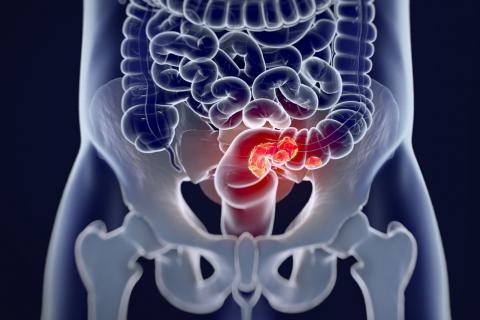
. . .Once considered a disease of older adults, colorectal cancer has now overtaken breast and brain cancers to become the leading cause of cancer deaths among Americans under 50.

But a new study suggests that the burden isn’t spread evenly, finding that deaths among younger adults are overwhelmingly concentrated in one group.

Researchers at the American Cancer Society analyzed government data on more than 101,000 adults ages 25 to 49 who died from colon and rectal cancers between 1994 and 2023. . .

The increase was driven almost entirely by people without a four-year college degree.

In this group, death rates climbed from about 4 to 5.2 per 100,000, while rates for those with at least a bachelor’s degree held steady at around 2.7 per 100,000.

Overall, the gap in death rates between people with a high school education or less and college graduates has nearly doubled since the mid-1990s. (Read more from “Concerning Rise in Colon Cancer Deaths is Almost Entirely Among Key Demographic” HERE)

Sexual Act Overtakes Smoking as the Leading Cause of Throat Cancer

We’re told to be more vigilant than ever about how we look after our bodies, and while we all know the dangers of smoking and can’t believe it was once marketed as ‘healthy’ decades ago, it turns out that an unexpected sex act could be even more deadly when it comes to contracting throat cancer.

With cancer being the second-leading cause of death in the USA, we’re told to look out for key warning signs and try to limit potential triggers. Whether that be from smoking, alcohol, or even carcinogenic foods like lunch meats, cancer contributors are everywhere.

You might not think that a bit of ‘how’s your father’ could cause throat cancer, but like we previously reported on the man who contracted it via oral sex, there’s been a spike in oropharyngeal cancer diagnoses.

In 2023, cases of oropharyngeal cancer in the USA and UK were more common than cervical cancer, with the human papillomavirus (HPV) being the leading cause. It’s now said that oral sex is the main cause of throat cancer, overtaking smoking. . .

The CDC adds that HPV is attributed to between 60% and 70% of oropharyngeal cancers in the USA. (Read more from “Sexual Act Overtakes Smoking as the Leading Cause of Throat Cancer” HERE)

CIA faces furious backlash after hidden document with potential cure for cancer is declassified after 60 years

A newly surfaced CIA document suggests US intelligence once reviewed research that hinted at a possible cancer treatment more than 60 years ago.

The document, produced in February 1951 and declassified in 2014, summarizes a Soviet scientific paper that examined striking similarities between parasitic worms and cancerous tumors.

The report describes how researchers believed both organisms thrived under nearly identical metabolic conditions and accumulated large reserves of glycogen, a form of stored energy.

The research also highlighted experiments showing that certain chemical compounds were capable of targeting both parasitic infections and malignant tumors.

Although the document was declassified more than a decade ago, it has recently resurfaced online, fueling outrage among some Americans who say it raises troubling questions about why Cold War research hinting at possible cancer treatments sat in intelligence archives for decades.

‘The Americans knew. They read it, classified it CONFIDENTIAL, and locked it in a vault for 60 years,’ one person shared on X, including the CIA documents in the post. (Read more from “CIA faces furious backlash after hidden document with potential cure for cancer is declassified after 60 years” HERE)

Nightly Bathroom Habit Was Missed Sign of Common Men’s Cancer: ‘I Didn’t Know’

A father was diagnosed with prostate cancer after chalking his nightly bathroom trips up to drinking too much fluid before bed, as reported by SWNS.

“I would wake up in the middle of the night and go to the loo a couple of times, but I never thought too much of it,” Ed Matthews, who lives in London, told the news outlet.

Matthews wrote off the early warning signs — until he received a shocking diagnosis in April 2025.

The avid golfer and skier said he felt “fit and healthy” when he went in for a routine health check provided by his employer last April. . .

When an MRI scan produced inconclusive results, Matthews underwent a biopsy. Less than three weeks after he went for the original check-up, he was diagnosed with prostate cancer. . .

Early-stage prostate cancer rarely causes symptoms. However, as the disease progresses, changes include a frequent, sometimes urgent, need to urinate, especially at night. Other signs include weak urine flow, flow that starts and stops, and blood when using the restroom, according to the Cleveland Clinic. (Read more from “Nightly Bathroom Habit Was Missed Sign of Common Men’s Cancer: ‘I Didn’t Know’” HERE)

This Common Condition Could Hide an Early Cancer Warning

. . .A new study suggests a common eye condition could be quietly masking one of the only early warning signs of bladder cancer — the 10th leading cause of cancer deaths in the US.

Researchers found people with the visual impairment were more likely to be diagnosed at later stages, when the disease is harder to treat and survival odds nosedive.

“I’m hopeful that this study raises some awareness, not only for patients with color blindness, but for our colleagues who see these patients,” Dr. Ehsan Rahimy, adjunct clinical associate professor of ophthalmology at Stanford Medicine and senior author of the study, said in a news release. . .

It can be caused by several factors, but it’s most often the result of inherited genetic mutations that affect the retina’s light-sensitive cones. . .

The most common form of color blindness makes it difficult to distinguish between red and green — which past research shows can make it harder to detect blood in the urine. (Read more from “This Common Condition Could Hide an Early Cancer Warning” HERE)

No. 1 Cancer Killer for People Under 50 Has Gotten Worse Since 1990 — Here’s Your ‘Best Tool’ for Beating It

Cancer deaths are falling among young Americans — except for one terrifying outlier.

Over the past 30 years, it has surged to become the top cancer killer of people under 50, overtaking breast, lung and brain cancers, as well as leukemia, a new analysis found.

“It is clear that this can no longer be called an old person’s disease,” Dr. Ahmedin Jemal, a senior author of the study and a top official at the American Cancer Society, said in a statement.

In the study, researchers analyzed more than 1.2 million deaths and found that overall cancer mortality in Americans under 50 dropped 44% between 1990 and 2023.

The decline was driven by sharp drops in four of the five leading cancer killers, which fell by as much as 6% annually.

Only one increased: colorectal cancer, which rose 1.1% each year over the past three decades, climbing from the fifth most common cancer death to first place. (Read more from “No. 1 Cancer Killer for People Under 50 Has Gotten Worse Since 1990 — Here’s Your ‘Best Tool’ for Beating It” HERE)

Photo credit: Flickr

Cancer-Stricken Kids Beg Bernie Sanders to Pass Life-Saving Bill — After the Senator Was Branded ‘Evil’ for Blocking It

Jacob Knudsen would give anything to be an ordinary college freshman. . .

“There is something currently in my lung, and there’s a 50-50 chance that it’s cancer,” the “panicked” 18-year-old California native told The Post ahead of diagnostic scans. “I’m willing to bleed, I’m willing to lose limbs, I’m willing to lose organs, I’m willing to do anything just to survive.”

Knudsen was diagnosed with osteosarcoma when he was 12, and has since endured 21 surgeries and countless, grueling rounds of chemotherapy and radiation after tumors were subsequently discovered in his lungs, on a kidney and a lymph node. . .

Amid the anxiety over whether illness remains lurking in his body, Knudsen is pushing for the passage of the Mikaela Naylon Give Kids a Chance Act — a bipartisan bill named after his friend, a fellow osteosarcoma patient and advocate who died late last year at 16. . .

Last month, the bill — designed to allow pediatric cancer patients to participate in clinical trials and to ensure them access to key treatments — passed unanimously in the House.

Shockingly, when the bill moved to the Senate, it was opposed by Sen. Bernie Sanders, who demanded a quid pro quo be attached for the funding of other efforts, such as community health centers. (Read more from “Cancer-Stricken Kids Beg Bernie Sanders to Pass Life-Saving Bill — After the Senator Was Branded ‘Evil’ for Blocking It” HERE)

Journal Posting Peer-Reviewed Study Proving COVID Vax Caused Explosion of Cancer Rates Internationally Shutdown with Cyberattacks

For several years now, clinicians, pathologists, and independent researchers have been documenting turbo cancers following COVID-19 vaccination: sudden relapses, explosive disease acceleration, rare malignancies appearing out of nowhere, and tumors localizing to injection sites or draining lymph nodes. These signals have been visible for some time — but deliberately fragmented, dismissed as coincidence, or buried under claims that “case reports don’t count.”

That excuse has now completely collapsed.

A newly published peer-reviewed systematic review in Oncotarget — authored by Charlotte Kuperwasser, PhD, and Wafik S. El-Deiry, MD, PhD — is the first to formally assemble and analyze the entire published literature on cancer temporally associated with COVID-19 vaccination and SARS-CoV-2 infection.

Importantly, while this article has been accepted, published, and assigned a publication date, the journal has disclosed that it is currently unable to add the paper to its live journal index due to an ongoing malicious cyberattack on its servers. According to a statement now posted on Oncotarget’s website — and relayed directly to us by Dr. El-Deiry — the journal experienced sustained cyber intrusions in December 2025 and January 2026, which were reported to the FBI, with attacks continuing into the present. In the meantime, Dr. El-Deiry has provided a link to access this important paper. You can read it here.

The journal further states that it is investigating whether individuals associated with PubPeer (PubSmear Mob) may have engaged in or facilitated cybercriminal activity, including server hacking, taking journal websites offline, and manipulating Google search results to suppress journals and scientists. Oncotarget reports that it is currently in contact with federal law-enforcement agencies regarding identified suspects. (Read more from “Journal Posting Peer-Reviewed Study Proving COVID Vax Caused Explosion of Cancer Rates Internationally Shutdown with Cyberattacks” HERE)

Over 100 Common Medications Found to Disrupt Gut Health and Raise Risk of Colon Cancer, Researchers Warn

A stunning new study out of Stanford University has identified more than 140 widely used medications that can severely disrupt the gut microbiome and may significantly raise the risk of colorectal cancer, now one of the fastest-growing cancers among younger adults.

Researchers found that a wide range of drugs—including 51 antibiotics, antifungals, chemotherapies, and even some antipsychotic medications used to treat bipolar disorder and schizophrenia—can trigger a dangerous chain reaction in the gut. These medications not only kill bacteria directly but also reshape the nutrient landscape inside the intestines, forcing bacteria to fight for survival in ways that may dramatically and permanently shift the body’s microbial balance.

How Medications Create a Cancer-Promoting Gut Environment

The microbiome—trillions of bacteria that help regulate digestion, immune response, metabolism, and protection against disease—relies on a delicate balance. When drugs wipe out weaker or more beneficial bacteria, the nutrients they once consumed are suddenly left available for other, often harmful, strains to feast on.

This allows inflammatory and drug-resistant bacteria to surge in population, creating a gut environment known to trigger:

Chronic intestinal inflammation

Damage to the intestinal lining

Cell mutations linked to colon cancer growth

A permanent shift in gut microbial composition

“In other words, drugs don’t just kill bacteria; they also reshuffle the ‘buffet’ in our gut, and that reshuffling shapes which bacteria win,” said lead researcher Dr. Handuo Shi.

Chronic Inflammation is the Key Link to Cancer

When harmful bacteria dominate, they produce toxins and enzymes that:

Damage DNA in colon cells

Erode the gut’s mucosal barrier

Allow inflammatory molecules and toxins to leak into surrounding tissues

Promote tumor formation and growth

Such persistent inflammation is now widely recognized as a major driver of early-onset colorectal cancer, which has sharply increased in adults under 50.

Study Warns: America’s Favorite Ready-to-Eat Foods May Be Fueling Early Colon Cancer

A sharp rise in colorectal cancer among adults under 50 may be tied to the foods millions of Americans eat every day, according to a major new study from Mass General Brigham. Researchers say diets high in ultraprocessed foods—a category that includes many ready-to-eat and ready-to-heat items loaded with sugar, salt, saturated fats, and additives—are strongly associated with precursors to early-onset colon cancer.

The study, published in JAMA Oncology, analyzed more than 20 years of dietary and medical data from nearly 30,000 women in the long-running Nurses’ Health Study II. All participants, born between 1947 and 1964, underwent at least two lower endoscopies before age 50 and completed detailed dietary questionnaires every four years.

Researchers found a striking trend:

Women who consumed the highest levels of ultraprocessed foods—about 10 servings per day—had a 45% higher risk of developing adenomas compared to those who consumed the least (around three servings). Adenomas are benign but precancerous polyps that often serve as early warning signs for colorectal cancer.

“The increased risk seems to be fairly linear,” said senior author Dr. Andrew Chan, chief of the Clinical and Translational Epidemiology Unit and gastroenterologist at Mass General Brigham Cancer Institute. “The more ultraprocessed foods you eat, the more potential that it could lead to colon polyps.”

While previous research has connected ultraprocessed diets to colorectal cancer overall, this is the first study to specifically link them to early-onset colorectal cancer, a form of the disease that has been rising rapidly in younger adults.

Researchers also emphasized that the link held true even after accounting for other risk factors such as low fiber intake, Type 2 diabetes, and higher BMI.

The study is observational, meaning it shows a connection but can’t prove direct causation. Still, experts say the findings align with other research pointing to potential inflammation, metabolic dysfunction, and chemical additives in ultraprocessed foods as contributors to disease.

Dr. Marc Siegel, a Fox News senior medical analyst not involved in the research, called the study “very exciting,” noting it adds to a growing body of evidence about the metabolic and inflammatory dangers of ultraprocessed diets.

Researchers caution that not all ultraprocessed foods carry the same level of risk, and more work is needed to identify which specific ingredients or manufacturing processes are most harmful.

But one conclusion, they say, is clear:

Reducing ultraprocessed food intake may be an important strategy for lowering early-onset colorectal cancer risk—a disease that is increasingly striking people decades before routine screening begins.

Facebook is no longer censoring us! Please “like” us at Facebook [here]

YouTube is still censoring, but you can help us defeat that by subscribing [here]