Posts

Self-Driving Cars Programmed to Decide Who Dies in Crash

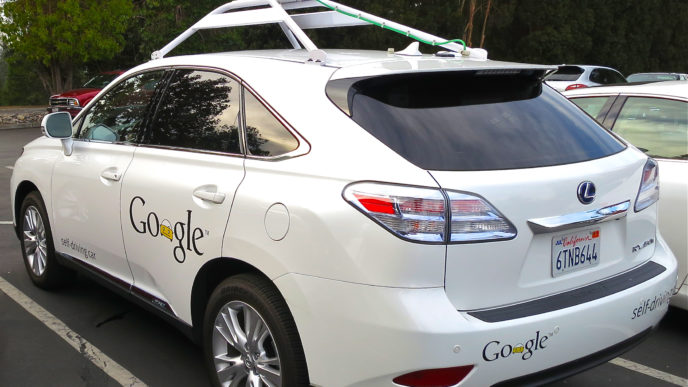
. . .It’s not just a theoretical question anymore, with predictions that in a few years, tens of thousands of semi-autonomous vehicles may be on the roads. About $80 billion has been invested in the field. Tech companies are working feverishly on them, with Google-affiliated Waymo among those testing cars in Michigan, and mobility companies like Uber and Tesla racing to beat them. Automakers are placing a big bet on them. A testing facility to hurry along research is being built at Willow Run in Ypsilanti.

There’s every reason for excitement: Self-driving vehicles will ease commutes, returning lost time to workers; enhance mobility for seniors and those with physical challenges, and sharply reduce the more than 35,000 deaths on U.S. highways each year.

But there are also a host of nagging questions to be sorted out as well, from what happens to cab drivers to whether such vehicles will create sprawl . . .

Who dies when the car is forced into a no-win situation?

“There will be crashes,” said Van Lindberg, an attorney in the Dykema law firm’s San Antonio office who specializes in autonomous vehicle issues. “Unusual things will happen. Trees will fall. Animals, kids will dart out.” Even as self-driving cars save thousands of lives, he said, “anyone who gets the short end of that stick is going to be pretty unhappy about it.” (Read more from “Self-Driving Cars Programmed to Decide Who Dies in Crash” HERE)

Follow Joe Miller on Twitter HERE and Facebook HERE.

Illinois Man Jumps Into Moving Car to Save a Stranger’s Life: See the Video

An Illinois man risked his own safety to help a complete stranger suffering a seizure, and it’s all caught on dash cam.

Video from the Dixon Police department shows a car running a red light at low speed, heading into oncoming traffic.

The driver was suffering a seizure. That’s when Randy Tompkins jumpedout of his pickup truck and dove through the passenger window. Tompkins stopped the car in its tracks.

(Read more from “Illinois Man Jumps Into Moving Car to Save a Stranger’s Life: See the Video” HERE)

Follow Joe Miller on Twitter HERE and Facebook HERE.

Parking Your Car by Backing It Into Your Driveway Could Soon Be Illegal in This State

The city council in Jacksonville, Florida, has taken up a proposal that, if approved, would make it illegal for residents to park their cars in any manner that prevents law enforcement from seeing their rear license plates from the street.

For those who live in single-family homes with off-street parking, such a law would make backing into the driveway to park an illegal act. Florida is among a handful of states that don’t require car owners to display license plates at the front of their cars.

The proposed local bill would also require people who use car covers to figure out a way to make the license plates of covered cars similarly visible.

According to The Florida Times-Union, local officials attribute the need for such a law to code enforcers’ inability to cite owners of abandoned vehicles . . .

The bill doesn’t refer to other law enforcement endeavors that might require an unobstructed street view of parked cars — such as the use of license plate scanners. The American Civil Liberties Union asked the Jacksonville Sheriff’s Office in 2012 whether it uses such devices — and what it does with any data it collects — but has not indicated any response. (Read more from “Parking Your Car by Backing It Into Your Driveway Could Soon Be Illegal in This State” HERE)

Follow Joe Miller on Twitter HERE and Facebook HERE.

Largest Automobile Recall in History Just Announced – “1 of 7 U.S. Vehicles” – Brands Named

Photo Credit: ShutterstockDepartment of Transportation Secretary Anthony Foxx announced today the largest and “most complex” auto recall in United States history.

The recall involves the Takata Corporation, which is the manufacturer of air bags for Honda and Toyota automobiles. The number affected by the recall has nearly doubled from 18 million to 34 million vehicles . . .

The defect that has been identified by the National Highway Traffic Safety Administration (NHTSA) involves the propellant canister used to inflate front and side airbags. Rather than simply releasing gas into the airbags, in some instances the canister has exploded, sending metal shrapnel into the passenger compartment.

Police responding to accident scenes have described those who have sustained injuries as appearing to have been shot or stabbed. At least five fatalities and 100 injuries have been tied to the faulty airbags, according to CNN Money and Fox News.

“From the very beginning, our goal has been simple: a safe air bag in every vehicle,” said NHTSA Administrator Mark Rosekind. “The steps we’re taking today represent significant progress toward that goal. We all know that there is more work to do, for NHTSA, for the auto makers, for parts suppliers, and for consumers. But we are determined to get to our goal as rapidly as possible.” (Read more from “Largest Automobile Recall in History Just Announced, Brands Named” HERE)

Editor’s note: Click HERE to check whether your vehicle is covered in the airbag recall.

Follow Joe Miller on Twitter HERE and Facebook HERE.

Emerging Privacy Threat: Automated Vehicle Occupancy Detection

watchersJournalists and transparency activists across the country have done a phenomenal job of shining light on how local law enforcement agencies use emerging technologies to surveil everyday people on a massive scale. It’s often like playing Whac-A-Mole and Go Fish at the same time. One day, the question may be whether police are using drones. The next, automatic license plate readers. After that, facial recognition or IMSI catchers (i.e. Stingrays) or Rapid DNA analyzers.

So many technical terms, so many acronyms. Unfortunately, we need to put yet another one your radar: Automated Vehicle Occupancy Detection, also known as Automated Vehicle Passenger Detection or Automated Vehicle Occupancy Verification.

For years, government agencies have chased technologies that would make it easier to ensure that vehicles in carpool lanes are actually carrying multiple passengers. Perhaps the only reason these systems haven’t garnered much attention is that they haven’t been particularly effective or accurate, as UC Berkeley researchers noted in a 2011 report.

Now, an agency in San Diego, Calif. believes it may have found the answer: the Automated Vehicle Passenger Detection system developed by Xerox. . .

Documents obtained by CBS 8 reporter David Gotfredson show that Xerox’s system uses two cameras to capture the front and side views of a car’s interior. Then “video analytics” and “geometric algorithms” are used to detect whether the seats are occupied. (Read more from “Emerging Privacy Threat: Automated Vehicle Occupancy Detection” HERE)

Follow Joe Miller on Twitter HERE and Facebook HERE.

Rental Car Company Installing Cameras in Their Vehicles

This week I got an angry email from a friend who had just rented a car from Hertz: “Did you know Hertz is putting cameras in rental cars!? This is bullsh*t. I wonder if it says they can tape me in my Hertz contract.” He sent along this photo of a camera peeping at him from out of his “NeverLost,” a navigational device that the company has started putting in many of its cars.

“I even felt weird about singing in the car by myself,” he said. A Googling expedition revealed that my friend was not the first person driven to disturbance by the in-car surveillance system. A Yelp user was revved up about it. Disgruntled renters on travel forums like MilePoint and FlyerTalk want Hertz to put the brakes on “spy cams.” A loyal Hertz customer who rented a car in Chicago said it might make them never want to rent with Hertz again:

The system can’t be turned off from what I could tell. Further investigation revealed that the camera can see the entire inside of the car. I know rental car companies have been tracking the speed and movements of their vehicles for years but putting a camera inside the cabin of the vehicle is taking their need for information a little TOO FAR. I find this to be completely UNACCEPTABLE. In fact, if I get another car from Hertz with a camera in it, I will move our business from Hertz completely.

Hertz has offered the NeverLost navigational device for years, but it only added the built-in camera feature (which includes audio and video) to its latest version of the device — NeverLost 6 — in mid-2014. “Approximately a quarter of our vehicles across the country have a NeverLost unit and slightly more than half of those vehicles have the NeverLost 6 model installed,” Hertz spokesperson Evelin Imperatrice said by email. In other words, one in 8 Hertz cars has a camera inside — but Imperatrice says that, for now, they are inactive. “We do not have adequate bandwidth capabilities to the car to support streaming video at this time,” she said.

So why is Hertz creeping out customers with cameras it’s not using? “Hertz added the camera as a feature of the NeverLost 6 in the event it was decided, in the future, to activate live agent connectivity to customers by video. In that plan the customer would have needed to turn on the camera by pushing a button (while stationary),” Imperatrice explained. “The camera feature has not been launched, cannot be operated and we have no current plans to do so.” (Read more from “Rental Car Company Installing Cameras in Their Vehicles” HERE)

Follow Joe Miller on Twitter HERE and Facebook HERE.