Posts

China Acknowledges Its Role in Years of Cyberattacks Against U.S. Over Support of Taiwan: Report

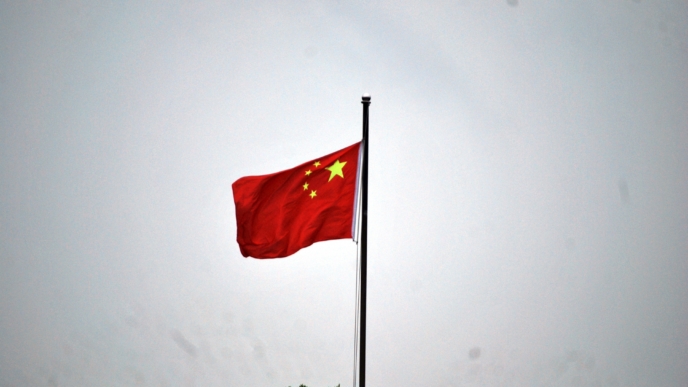
Chinese officials shocked their American counterparts during a secret meeting where they allegedly revealed Beijing was behind a series of cyberattacks against the US due to Washington’s support of Taiwan, according to a new report.

Officials from China and the former Biden administration met in secret last December in Geneva, Switzerland amid growing tensions over threats to Taiwan’s sovereignty — with Beijing dropping all pretenses and revealing that they played a role in hacking attacks on US ports, water utilities, airports, and other targets dating back years, the Wall Street Journal reported.

The extent of Beijing’s role was left ambiguous, but US officials interpreted it as a clear threat regarding America’s support of Taiwan as an independent nation, officials familiar with the meeting told the outlet.

The secret meeting was held with top officials from both nations and led by Nate Fick, the then-US ambassador-at-large for cyberspace and digital policy, along with Wang Lei, a top cyber official with China’s Ministry of Foreign Affairs, officials said.

While China had previously blamed all claims of cyberattacks and espionage on rogue hackers, such as the Volt Typhoon group, Wang made it clear that the hacks were a direct result of the situation in Taiwan, which Beijing insists will be annexed in the coming years. (Read more from “China Acknowledges Its Role in Years of Cyberattacks Against U.S. Over Support of Taiwan: Report” HERE)

Napolitano Warns Large-Scale Cyberattack on US is Inevitable (+video)

janet5 (1)Outgoing Homeland Security Secretary Janet Napolitano warned her successor on Tuesday to move quickly to prepare for an inevitable large-scale cyberattack against the United States.

Napolitano, delivering her farewell address at the National Press Club, said her successor should move fast to strengthen the nation’s cyber defenses.

“Our country will, at some point, face a major cyber event that will have a serious effect on our lives, our economy and the everyday functioning of our society,” said Napolitano.

“While we have built systems, protections and a framework to identify attacks and intrusions, share information with the private sector and across government, and develop plans and capabilities to mitigate the damage, more must be done, and quickly.”

Napolitano said that while the terrorist threat to the country has not been eliminated, the ability for the U.S. to thwart attacks rapidly increases with each uncovered plot.

Read more from this story HERE.

U.S. Directly Blames China’s Military for Cyberattacks, Espionage

Photo Credit: Gary LerudeThe Obama administration on Monday explicitly accused China’s military of mounting attacks on American government computer systems and defense contractors, saying one motive could be to map “military capabilities that could be exploited during a crisis.”

While some recent estimates have more than 90 percent of cyberespionage in the United States originating in China, the accusations relayed in the Pentagon’s annual report to Congress on Chinese military capabilities were remarkable in their directness. Until now the administration avoided directly accusing both the Chinese government and the People’s Liberation Army of using cyberweapons against the United States in a deliberate, government-developed strategy to steal intellectual property and gain strategic advantage.

“In 2012, numerous computer systems around the world, including those owned by the U.S. government, continued to be targeted for intrusions, some of which appear to be attributable directly to the Chinese government and military,” the nearly 100-page report said.

The report, released Monday, described China’s primary goal as stealing industrial technology, but said many intrusions also seemed aimed at obtaining insights into American policy makers’ thinking. It warned that the same information-gathering could easily be used for “building a picture of U.S. network defense networks, logistics, and related military capabilities that could be exploited during a crisis.”

Read more from this story HERE.

House Intel Chair: The Iranians, Russians and Chinese are Already on Your PC

Photo Credit: AP

The House Intelligence Committee is warning that “time is running out” before the next major cyberattack: The Russians, Iranians, Chinese and others are likely already on your computer.

“You have criminal organizations trying to get into your personal computer and steal your personal stuff. And by the way, the Chinese are probably on your computer, the Russians are probably on your personal computer, the Iranians are already there,” House Intelligence Committee chairman Mike Rogers (R.-MI). told Fox News.

“They’re trying to steal things that they think are valuable or use your computer to help them steal from someone else,” he said. “That’s a real problem.”

Experts say Rogers may be stretching the truth: most people’s computers likely aren’t infected by agents of foreign governments.

“The Iranians, the Chinese, and the Russians are probably already on my computer? Sheesh … I guess it must be getting pretty crowded in there,” joked Graham Cluley, a consultant with U.K. Web security company Sophos. But the threat Rogers describes is certainly real, he pointed out.

Read more from this story HERE.

On the Eve of Holocaust Remembrance Day, Anonymous Conducts Massive Cyberattack on Israel

Photo Credit: AP

Hackers launched a coordinated cyberattack on Israel over the weekend in an attempt to “wipe Israel off the map of the Internet,” defacing some 20,000 Israeli Facebook accounts and nearly 2,000 Israeli websites.

The anarchist hacking collective known as Anonymous formally launched “Operation Israel” on Sunday, the eve of Holocaust Remembrance Day. The stated goal of the attack was to wreak havoc on Israeli servers, government websites, and Internet users.

The hackers penetrated and defaced multiple Israeli websites including government, schools, banks, and a website for children with cancer, according to regional media reports.

Among the government websites breached were the Central Bureau of Statistics, the Government Publications Office, the Haifa Sewage Treatment Plant, and the National Insurance Institute, which provides social security benefits to Israelis, according to a list of hacked websites posted on Hackers News Bulletin.

The hackers brought Israel-based web traffic to a crawl on Saturday and leaked the personal information of more than 1,700 Israeli credit card users, according to Hackers News Bulletin, which reported the Jewish state had lost some $2 billion as a result of the attack.

Read more from this story HERE.

Obama Rejected Tough Options For Countering Chinese Cyber Attacks Two Years Ago

Photo Credit: Charles Dharapak

President Obama two years ago rejected a series of tough actions against China, including counter-cyber attacks and economic sanctions, for Beijing’s aggressive campaign of cyber espionage against the U.S. government and private businesses networks, according to administration officials.

Meanwhile, China recently issued a veiled threat to the United States about U.S. accusations of Chinese military cyber espionage. China told U.S. officials that continued U.S. public accusations of cyber espionage would render future bilateral discussions unproductive during recent U.S.-China talks following the release of a security firm’s report linking the Chinese military to cyber spying.

On plans to deter Chinese cyber attacks, senior administration officials turned down a series of tough options designed to dissuade China from further attacks that were developed over a three-month period beginning in August 2011.
According to administration officials familiar with internal discussions, the options were dismissed as too disruptive of U.S.-China relations.

The president’s closest advisers feared that taking action would potentially undermine U.S. relations with China, a major economic trading partner that currently has holdings of $1.2 trillion in Treasury debt, the officials told the Free Beacon. Government security and military officials under the White House Interagency Policy Committee, a working group directly supporting the National Security Council, developed the options.

The committee is made up of representatives from the Pentagon, intelligence community, law enforcement, homeland security, and foreign affairs agencies.

Read more from this story HERE.

Chinese Hackers Hit U.S. Media

photo credit: Philip JägenstedtWASHINGTON—Chinese hackers believed to have government links have been conducting wide-ranging electronic surveillance of media companies including The Wall Street Journal, apparently to spy on reporters covering China and other issues, people familiar with the incidents said.

Journal publisher Dow Jones & Co. said Thursday that the paper’s computer systems had been infiltrated by Chinese hackers, apparently to monitor its China coverage. New York Times Co. NYT +2.19% disclosed Wednesday night that its flagship newspaper also had been the victim of cyberspying.

Chinese hackers for years have targeted major U.S. media companies with hacking that has penetrated inside newsgathering systems, several people familiar with the response to the cyberattacks said. Tapping reporters’ computers could allow Beijing to identify sources on articles and information about pending stories. Chinese authorities in the past have penalized Chinese nationals who have passed information to foreign reporters.

Journal sources on occasion have become hard to reach after information identifying them was included in emails. However, Western reporters in China long have assumed that authorities are monitoring their communications and act accordingly in sensitive cases.

Chinese Embassy spokesman Geng Shuang condemned allegations of Chinese cyberspying. “It is irresponsible to make such an allegation without solid proof and evidence,” he said. “The Chinese government prohibits cyberattacks and has done what it can to combat such activities in accordance with Chinese laws.” He said China has been a victim of cyberattacks but didn’t say from where.

Read more on this story HERE.

Threat of Mass Cyberattacks on U.S. Banks Is Real, McAfee Warns

The wave of distributed denial of service attacks that hit U.S. banks in October was next-to-nothing compared to what could happen if cybercriminals actually carry through with their plans for next year.

According to a report (PDF) released today by McAfee Labs, an impending attack on U.S. financial institutions — dubbed Project Blitzkrieg — isn’t only a possibility, it’s a “credible threat.”

“McAfee Labs believes that Project Blitzkrieg is a credible threat to the financial industry and appears to be moving forward as planned,” the report reads. “Although Project Blitzkrieg hasn’t yet infected thousands of victims and we cannot directly confirm any cases of fraud, the attackers have managed to run an operation undetected for several months while infecting a few hundred.”

Project Blitzkrieg is believed to be headed by an individual known as vorVzakone, according to McAfee. In September, vorVzakone announced a massive fraud campaign to be launched against 30 U.S. banks in spring 2013.

Read more from this story HERE.

Cyberattacks: Major Iranian Threat

NEW YORK (CNNMoney) — Iran’s quest for a nuclear weapon has been the subject of much debate this election season, but the presidential candidates rarely discuss the most imminent danger Iran poses to the United States: cyberwarfare.

Iran is believed to be behind a slew of massive attacks in September that took down a string of U.S. banks’ websites. The country is also thought to have launched a devastating cyber time bomb on Saudi Oil company Aramco in August and to have coordinated a similar attack on Qatar’s RasGas, an Exxon Mobil (XOM, Fortune 500) subsidiary.

The bank attacks were 10 to 20 times bigger than a typical denial of service attack, and doubled the previous record for traffic maliciously directed at a particular site, according to CrowdStrike, a security firm that investigated the attacks. The Aramco attack, set to go off on an Islamic holy night, unleashed a virus that destroyed about 30,000 corporate computers — three-quarters of the company’s PCs.

It’s a show of muscle the United States and its allies are unaccustomed to seeing from Iran. Cyberespionage and online identity theft are common tactics of Russian mafiosos and Chinese hackers, but Iran is relatively new to this playing field. After a series of painful economic sanctions levied on the country by the United States and Europe, cybersecurity experts say they’re not surprised that Iran is fighting back.

“Iran is trying to demonstrate that it has a capability to disrupt life in the West,” said Roger Cressey, senior vice president at security consultancy Booz Allen Hamilton. “Its argument is: ‘Whatever you in the West may do to us, know that it will not be a pain-free operation.'”

Read more from this story HERE.