Posts

‘Should Be Disqualified’: Conservatives Come Out Against Trump’s DEA Pick Over What He Did During COVID

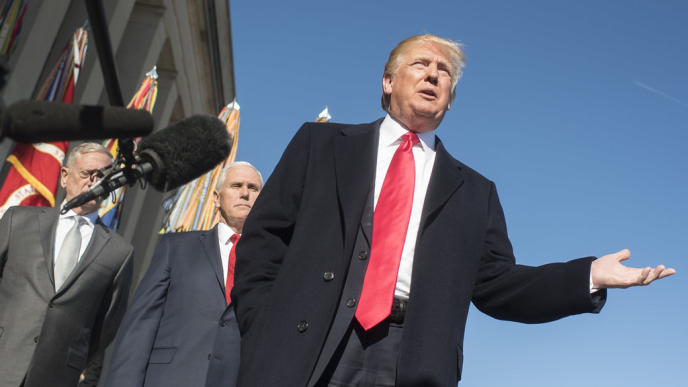
Several conservatives expressed concerns Sunday over President-elect Donald Trump’s announcement of Republican Florida sheriff Chad Chronister to be administrator of the Drug Enforcement Administration (DEA).

Trump revealed Saturday in a statement that he will nominate Chronister to lead the DEA in his second administration, stating that the Florida sheriff will work with his attorney general pick, Pam Bondi, “to secure the Border, stop the flow of Fentanyl, and other Illegal Drugs, across the Southern Border.” While Chronister received praise from colleagues and others after the initial announcement, some Republicans have begun to fire back due to his actions during the COVID-19 lockdown.

In March 2020, the Hillsborough County Sheriff’s Office released a press statement revealing that they had arrested local Tampa Bay church pastor Dr. Rodney Howard-Browne on two second-degree misdemeanors for unlawful assembly and violation of public health emergency rules. In a post on X from the Libertarian Party of Mississippi, the group called out Chronister’s decision to arrest Howard-Browne, leading Republican Kentucky Rep. Thomas Massie to respond as well.

“I’m going to call ‘em like I see ‘em. Trump’s nominee for head of DEA should be disqualified for ordering the arrest a pastor who defied COVID lockdowns,” Massie wrote on X.

(Read more from “‘Should Be Disqualified’: Conservatives Come Out Against Trump’s DEA Pick Over What He Did During COVID” HERE)

Photo credit: Flickr
Former DEA Spokesman Admits To Posing As ‘Deep-Cover’ CIA Agent In Elaborate Fraud Scheme

A former Drug Enforcement Administration (DEA) public affairs officer pleaded guilty today to defrauding at least a dozen companies of over $4.4 million by posing falsely as a covert officer of the Central Intelligence Agency (CIA).

Assistant Attorney General Brian A. Benczkowski of the Justice Department’s Criminal Division, U.S. Attorney G. Zachary Terwilliger for the Eastern District of Virginia, and Special Agent in Charge James A. Dawson of the FBI’s Washington Field Office Criminal Division made the announcement

Garrison Kenneth Courtney, 44, of Tampa, Florida, pleaded guilty before Senior U.S. District Judge Liam O’Grady. Sentencing has been scheduled for Oct. 23, 2020.

According to court documents, Courtney falsely claimed to be a covert officer of the CIA involved in a highly-classified program or “task force” involving various components of the United States Intelligence Community and the Department of Defense. According to the false story told by Courtney, this supposed classified program sought to enhance the intelligence gathering capabilities of the United States government. In truth, Courtney had never been employed by the CIA, and the task force that he described did not exist.

To accomplish the fraud, Courtney approached numerous private companies with some variation of this false story, and claimed that the companies needed to hire and pay him to create what Courtney described as “commercial cover,” i.e., to mask his supposed affiliation with the CIA. Courtney also fraudulently claimed that the companies would be reimbursed in the future for these salary payments, sometimes by the award of lucrative contracts from the United States government in connection with the supposedly classified program. (Read more from “Former DEA Spokesman Admits To Posing As ‘Deep-Cover’ CIA Agent In Elaborate Fraud Scheme” HERE)

Follow Joe Miller on Twitter HERE and Facebook HERE

Former DEA Agent Reveals Where the Profits From This Deadly Drug Go

. . .Derek Maltz [a former DEA special agent], who worked with Project Synergy, which tracked the synthetic drug distribution network and arrested over 225 people in 2012, claims that much of the money from the sale of K2 or Spice gets sent to Yemen to fund AQAP, a division of Al Qaeda.

As LiveScience reported in 2017 when covering a review of studies regarding synthetic marijuana, “Some of the reported side effects of synthetic marijuana compounds include convulsions, kidney injury, toxicity to the heart, strokes and anxiety. So far, 20 deaths have been linked to the use of synthetic marijuana compounds, the researchers said.”

Maltz told WTOP, “We saw mass amounts, in the millions of dollars, going through U.S. banks, back to Yemen, We started identifying some very, very suspicious people in Yemen, who were receiving the money and involved in ATM withdrawals in Yemen.”

Maltz added, “You don’t see a million dollars a week, or 30 million dollars a month leaving the United States to go to Yemen. It’s just very abnormal behavior — Yemen is a very poor country. There’s a lot of recruiting of jihadists in that country, and we also seized videos — martyrdom-style, radical terrorist-style videos that are being pushed out on the internet.” (Read more from “Former DEA Agent Reveals Where the Profits From This Deadly Drug Go” HERE)

Follow Joe Miller on Twitter HERE and Facebook HERE.

DEA Knowingly Let Admitted Addicts, Dealers Prescribe Drugs

Admitted drug addicts and dealers were among the hundreds of thousands of people and businesses the Drug Enforcement Administration (DEA) licensed to manufacture, distribute or prescribe pharmaceuticals over the past 12 years, a Daily Caller News Foundation investigation has found. The agency stripped only 240 licenses for wrong-doing over the same period.

The DEA’s Office of Diversion Control, which is responsible for issuing and revoking the permits, is, by law, fully funded by the licenses’ application fees. More than 1.7 million individuals and organizations held licenses as of March 2018 — an increase of more than 510,000 since August 2006, the earliest publicly available data, TheDCNF’s review found.

“The office … has not been very aggressive in hunting down doctors [who] are prescribing in inappropriate ways,” said Carnegie Mellon University Professor Jonathan Caulkins, who’s worked extensively in drug policy. “The DEA does not aggressively try to find corrupt or incompetent health care providers in the health care system.”Effective enforcement is especially important given the growing opioid epidemic, Caulkins added. More than 200,000 Americans died from prescription drug overdoses between 1999 and 2016, according to the Centers for Disease Control and Prevention. Most heroin users begin their addiction with such prescriptions, studies have shown.

The DEA ruled on 430 investigations into licensed individuals and groups since March 2006. The agency only revoked 240 licenses and denied applications for another 106, according to a DCNF review of the investigations. (Read more from “DEA Knowingly Let Admitted Addicts, Dealers Prescribe Drugs” HERE)

Follow Joe Miller on Twitter HERE and Facebook HERE.

Watchdog: Feds Paid Amtrak Worker to Spy on Passengers

The U.S. Drug Enforcement Administration inappropriately paid an Amtrak employee more than $850,000 over 20 years to provide information on passengers who may be smuggling drugs, according a report from the Justice Department’s Office of Inspector General.

The OIG also released a separate report saying the DEA arranged to pay a government airport screener to act as a confidential source. The screener, however, never provided information of any value to the DEA.

But the OIG’s problem with these arrangements wasn’t that transportation officials were reporting people’s actions to the DEA. Instead, OIG said it made no sense for the DEA to pay these people for information, as they are already required by law to offer it up for free.

“The OIG determined that over a period of 20 years, the DEA paid the Amtrak employee $854,460 as of January 2014 for information that was available at no cost to the government in violation of federal regulations relating to the use of government property, thereby wasting substantial government funds,” the OIG wrote.

The report did find, however, that the DEA went too far at one point by asking the Amtrak employee to gather “specific information.” (Read more from “Watchdog: Feds Paid Amtrak Worker to Spy on Passengers” HERE)

Follow Joe Miller on Twitter HERE and Facebook HERE.

DEA Agents Received Thousands of Dollars in Bonuses While Under Investigation for ‘Prostitute Sex Parties’ Scandal

U.S. agents who allegedly had ‘sex parties’ with prostitutes hired by Colombian drug cartels were rewarded with bonuses of up to $32,000 dollars, according to a new report.

Half of the Drug Enforcement Administration agents who were investigated in connection with hiring prostitutes while overseas still received their bonuses, an expose by the Department of Justice revealed.

A regional director who failed to report that his staff were throwing the ‘prostitute sex parties received a bonus of nearly $68,600 in May 2013.

DEA policy prevents employees from receiving bonuses for three years following discipline actions for ‘significant misconduct’ or while an investigation is ongoing . . .

‘Today’s Inspector General report raises serious concerns about the disciplinary process at the Drug Enforcement Administration,’ [Bob] Goodlatte said. ‘Not only did the agents involved in sexual misconduct outlined in a previous report escape appropriate punishment, the majority of them received bonuses or other work perks.’ (Read more from “DEA Agents Received Thousands of Dollars in Bonuses While Under Investigation for ‘Prostitute Sex Parties’ Scandal” HERE)

Follow Joe Miller on Twitter HERE and Facebook HERE.

DEA Eavesdropping Tripled, Bypassed Federal Courts [+video]

By Brad Heath. The U.S. Drug Enforcement Administration more than tripled its use of wiretaps and other types of electronic eavesdropping over the past decade, largely bypassing federal courts and Justice Department lawyers in the process, newly obtained records show.

The DEA conducted 11,681 electronic intercepts in the fiscal year that ended in September. Ten years earlier, the drug agency conducted 3,394.

Most of that ramped-up surveillance was never reviewed by federal judges or Justice Department lawyers, who typically are responsible for examining federal agents’ eavesdropping requests. Instead, DEA agents now take 60% of those requests directly to local prosecutors and judges from New York to California, who current and former officials say often approve them more quickly and easily.

Drug investigations account for the vast majority of U.S. wiretaps, and much of that surveillance is carried out by the DEA. Privacy advocates expressed concern that the drug agency had expanded its surveillance without going through internal Justice Department reviews, which often are more demanding than federal law requires.

Wiretaps — which allow the police to listen in on phone calls and other electronic communications — are considered so sensitive that federal law requires approval from a senior Justice Department official before agents can even ask a federal court for permission to conduct one. The law imposes no such restriction on state court wiretaps, even when they are sought by federal agents. (Read more from “DEA Eavesdropping Tripled, Bypassed Federal Courts” HERE)

___________________________________________________________

Judge Probes Destruction of Evidence in NSA Leak Prosecution

By Marisa Taylor. A federal judge is investigating allegations that the government may have improperly destroyed documents during the high-profile media leak investigation of National Security Agency whistleblower Thomas Drake.

U.S. Magistrate Judge Stephanie Gallagher’s inquiry was launched after Drake’s lawyers in April accused the Pentagon inspector general’s office of destroying possible evidence during Drake’s criminal prosecution, which ended almost four years ago, McClatchy has learned.

In a May 13 letter, Gallagher told Justice Department lawyers that the judge who had presided over the case asked her to evaluate the allegations from Drake’s lawyers “for further investigation and to make recommendations as to whether any action by the court is warranted or appropriate.”

The allegations raise new questions about a prosecution that had been excoriated by the presiding judge after the Justice Department’s case against Drake unraveled and resulted in the former senior NSA official pleading guilty to a misdemeanor charge.

As a result of the controversial prosecution, Drake became a symbol of the dangers whistleblowers can face when they help the media, Congress and government watchdogs investigate wrongdoing at intelligence agencies. (Read more from this story HERE)

Follow Joe Miller on Twitter HERE and Facebook HERE.

You’ll Never Guess How Much Money the DEA Stole From a Black Man, Assuming He Was a Drug Dealer

Photo Credit: The Grio

Photo Credit: The Grio

Last month Joseph Rivers set out on a train trip from Michigan to Los Angeles, armed with his life savings and dreams of making it big in Hollywood. Unfortunately, before he made it to California, he fell victim to a legal form of government highway robbery.

On April 15th, 22 year old Rivers changed trains at the Amtrak station in Albuquerque, New Mexico, with bags containing his clothes, a few other possessions and an envelope that contained $16,000 in cash that he had raised with the help of his family.

The Albuquerque Journal reports that’s when agents with the Drug Enforcement Administration got on and began looking for people who might be trafficking drugs. It is routine for agents to randomly stop passengers and ask them what their destination is and their reason for travel.

However, Rivers was the only black person on the train, and according to witnesses – his interrogation went much further than anyone else’s. The agent on board requested to go through Rivers’ bag – and when the young man complied his money was seized under suspicion of being linked to the sale of narcotics . . .

“These officers took everything that I had worked so hard to save and even money that was given to me by family that believed in me,” Rivers told the Journal. “I told (the DEA agents) I had no money and no means to survive in Los Angeles if they took my money. They informed me that it was my responsibility to figure out how I was going to do that.” (Read more from “You’ll Never Guess How Much Money the DEA Stole From a Black Man, Assuming He Was a Drug Dealer” HERE)

Follow Joe Miller on Twitter HERE and Facebook HERE.

Want to See Domestic Spying’s Future? Follow the Drug War

DEA Agents at Murder Scene for a ColleagueThe NSA isn’t the only three-letter agency that’s been quietly collecting Americans’ data on a mind-boggling scale. The country learned this week that the Drug Enforcement Agency spied on all of us first, and with even fewer privacy protections by some measures. But if anyone is surprised that the DEA’s mass surveillance programs have been just as aggressive as the NSA’s, they shouldn’t be. The early targets that signal shifts in America’s domestic surveillance techniques aren’t activists and political dissidents, as some privacy advocates argue—or terrorists, as national security hawks would claim. They’re drug dealers.

The DEA’s newly revealed bulk collection of billions of American phone records on calls to 116 countries preceded the NSA’s similar program by years and may have even helped to inspire it, as reported in USA Today’s story Wednesday. And the program serves as a reminder that most of the legal battles between government surveillance efforts and the Fourth Amendment’s privacy protections over the last decades have played out first on the front lines of America’s War on Drugs. Every surveillance test case in recent history, from beepers to cell phones to GPS tracking to drones—and now the feds’ attempts to puncture the bubble of cryptographic anonymity around Dark Web sites like the Silk Road—began with a narcotics investigation.

“If you asked me last week who was doing this [kind of mass surveillance] other than the NSA, the DEA would be my first guess,” says Chris Soghoian, the lead technologist with the American Civil Liberties Union. “The War on Drugs and the surveillance state are joined at the hip.”

It’s no secret that drug cases overwhelmingly dominate American law enforcement’s use of surveillance techniques. The Department of Justice annually reports to the judiciary how many wiretaps it seeks warrants for, broken down by the type of crime being investigated. In 2013, the last such report, a staggering 88 percent of the 3,576 reported wiretaps were for narcotics. That’s compared to just 132 wiretaps for homicide and assault combined, for instance, and a mere eight for corruption cases. (Read more from “Want to See Domestic Spying’s Future? Follow the Drug War” HERE)

Follow Joe Miller on Twitter HERE and Facebook HERE.

Report: DEA Thoroughly Corrupted, Federal Agents Had ‘Sex Parties’ with Prostitutes Hired by Drug Cartels

DEADrug Enforcement Administration agents allegedly had “sex parties” with prostitutes hired by local drug cartels overseas over a period of several years, according to a report released Thursday by the Justice Department’s watchdog.

The report did not specify the country where the parties occurred, but a law enforcement official familiar with the matter identified it as Colombia.

Seven of the 10 DEA agents alleged to have participated in the gatherings — most of which took place at an agent’s “quarters” leased by the U.S. government — admitted to having attended the parties, the report found. The agents, some of whom had top-secret security clearances, received suspensions of two to 10 days.

Former police officers in Colombia also alleged that three DEA supervisory special agents were provided with money, expensive gifts and weapons from drug cartel members, according to the report.

“Although some of the DEA agents participating in these parties denied it, the information in the case file suggested they should have known the prostitutes in attendance were paid with cartel funds,” according to the 131-page report by Justice Department Inspector General Michael E. Horowitz. (Read more from “Report: DEA Agents Had ‘Sex Parties’ with Prostitutes Hired by Drug Cartels” HERE)

C

Follow Joe Miller on Twitter HERE and Facebook HERE.