Posts

First Human Embryos Edited in U.S.

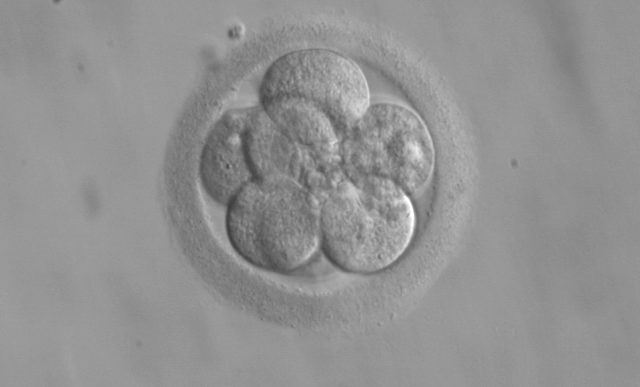
The first known attempt at creating genetically modified human embryos in the United States has been carried out by a team of researchers in Portland, Oregon, Technology Review has learned.

The effort, led by Shoukhrat Mitalipov of Oregon Health and Science University, involved changing the DNA of a large number of one-cell embryos with the gene-editing technique CRISPR, according to people familiar with the scientific results.

Until now, American scientists have watched with a combination of awe, envy, and some alarm as scientists elsewhere were first to explore the controversial practice. To date, three previous reports of editing human embryos were all published by scientists in China . . .

The U.S. intelligence community last year called CRISPR a potential “weapon of mass destruction.” (Read more from “First Human Embryos Edited in U.S.” HERE)

Follow Joe Miller on Twitter HERE and Facebook HERE.

The Most Controversial DNA Test You’ve Never Heard Of

A vote on whether to approve a proposal that would allow familial DNA searching in certain criminal cases has been delayed by New York state’s Forensic Science Committee. The controversial proposal has been sent back to a special subcommittee to “tighten up the language.” If approved, the new policy would allow police to investigate family members of New Yorkers whose DNA closely matches DNA found at crime scenes.

Because familial searching has gotten little to no coverage in mainstream media, many people have no idea what it is — or that it’s already being used in California, Colorado, Florida, Michigan, Texas, Utah, Virginia, Wisconsin, Wyoming, and Ohio.

The FBI describes the investigatory process as follows:

Familial searching is an additional search of a law enforcement DNA database conducted after a routine search has been completed and no profile matches are identified during the process. Unlike a routine database search which may spontaneously yield partial match profiles, familial searching is a deliberate search of a DNA database conducted for the intended purpose of potentially identifying close biological relatives to the unknown forensic profile obtained from crime scene evidence. Familial searching is based on the concept that first-order relatives, such as siblings or parent/child relationships, will have more genetic data in common than unrelated individuals. Practically speaking, familial searching would only be performed if the comparison of the forensic DNA profile with the known offender/arrestee DNA profiles has not identified any matches to any of the offenders/arrestees.

Though familial searching is already being used in ten states and has led to the arrests of numerous violent criminals, it is not always accurate.

“Anyone who knows the science understands that there’s a high rate of false positives,” Erin Murphy, a New York University law professor and the author of Inside the Cell: The Dark Side of Forensic DNA told Wired magazine.

Further, civil liberties experts have expressed concern that the method violates personal privacy. According to comments from the New York Civil Liberties Union, “criminal suspicion will attach to innocent persons merely because of their biological relation to a person whose DNA is in the state’s databank.”

David Loftist, the attorney in charge of post-conviction and forensic litigation at the Legal Aid Society, told Gothamist:

You are creating a ‘suspect class’ of citizens. If you have a family member that has been convicted of fare beating, his DNA is in the database. Now all of his family members would be subject to searching in perpetuity.

He also pointed out that the state DNA bank is disproportionately black and Latino, adding, “This creates a dragnet for the entire community now…all of their relatives are possible suspects. It’s a genetic stop and frisk.”

Queens District Attorney Richard Brown, however, is a huge advocate for familial DNA searching. “This technology has proven effective at generating important DNA investigative leads in cold cases,” he said. “We have an obligation to use every means at our disposal to identify the murderer.”

The Forensic Committee decided last week that the requirements for initiating a familial search are too broad at this point. It has postponed the vote until a new draft can be completed. The next official meeting is set for June 16th. (For more from the author of “The Most Controversial DNA Test You’ve Never Heard Of” please click HERE)

Follow Joe Miller on Twitter HERE and Facebook HERE.

UK Grants 1st License to Make Babies Using DNA From 3 People

Britain’s Newcastle University says its scientists have received a license to create babies using DNA from three people to prevent women from passing on potentially fatal genetic diseases to their children — the first time such approval has been granted.

The license was granted Thursday by the country’s fertility regulator, according to the university.

In December, British officials approved the “cautious use” of the techniques, which aim to fix problems linked to mitochondria, the energy-producing structures outside a cell’s nucleus. Faulty mitochondria can result in conditions including muscular dystrophy and major organ failure. (Read more from “UK Grants 1st License to Make Babies Using DNA From 3 People” HERE)

Follow Joe Miller on Twitter HERE and Facebook HERE.

Brave New World: Terrifying Pro-Life Consequences of UK’s 3-Parent Decision

It’s official. We are living in a brave new world.

This week, the British government’s Human Fertilisation and Embryology Authority approved new reproductive procedures that will allow doctors to “create babies” by combining the DNA of three “parents.” HFEA Chair Sally Cheshire called it a “life-changing” decision that could prevent a small group of at-risk children from inheriting life-threatening mitochondrial diseases (like muscular dystrophy and major organ failure) from their mothers.

Proponents of the methods have assured that the decision will not activate a new age of genetically modified babies, as the procedures will be implemented on a case-by-case basis. British pro-lifers responded with a collective, “Yeah, we’ll see about that.”

Each of the new techniques involves manipulating a mother’s egg, a father’s sperm, and a donor egg to ensure that the mother’s mitochondrial DNA is not passed on. The DNA from the donor amounts to an estimated one percent of the child’s genes (hence the three “parents” claim).

“The fact that there are now calls in Newcastle for egg donors — in practice, to produce healthy embryos solely for spare parts — tells us much about attitudes to women used to produce embryos this way, and harms and endangers us all,” bioethicist Anthony McCarthy, education director at Britain’s Society for the Protection of Unborn Children, told the Catholic Herald.

Per Dr. McCarthy, only one of the two approved procedures, pronuclear transfer, destroys two viable human embryos in order to create what doctors hope will be a healthy, disease-free child. And while the alternative procedure, maternal spindle transfer, doesn’t require that an embryo be destroyed, Dr. McCarthy noted that “the new life has come to be through a production process which fragments maternity and will in practice be subject to quality-control.”

The doctors and scientists who advocated for the approval of these procedures undoubtedly believe, in their quest to give all children healthy bodies free of any deformity, that the procedures are humane. But in order to achieve their desired end, these individuals are willing to discard countless lives. If that sounds like eugenics, it’s because it is. These procedures approved by the British government aim to rid society of “undesirables.” Not very humane when you put it that way, right?

Even when the embryos are spared, as in the case of maternal spindle transfer, these procedures raise concerns regarding the purpose of procreation and parenting.

If mitochondrial DNA manipulation is permissible, why couldn’t this lead to other forms of selective DNA manipulation? For example, what if the donor has a higher IQ than the mother? Better hair? A nicer voice?

Is it fair to subject a child, who has rights of his own, to such a procedure? Shouldn’t he at least be given the choice of having a full 50 percent of his DNA come from his mother, and his mother alone?

Pro-life advocate and chairman of Oxford’s Conservative Policy Forum, Mark Bhagwandin, called the new procedures “very uncertain and potentially dangerous.”

“Whilst we are deeply sympathetic to the plight of people with mitochondrial related diseases, the ends [do] not always justify the means,” Bhagwandin told Catholic Herald. “We would encourage and support greater investigation and research into ethical remedies which do not seek to genetically modify human beings.”

At the core of the pro-life movement is the belief that children who are physically, mentally, and economically “disadvantaged” are still better off alive, with two (not three) parents who love and care for them. The pro-life community is rightfully troubled by progressive efforts that attempt to defy this belief. (For more from the author of “Brave New World: Terrifying Pro-Life Consequences of UK’s 3-Parent Decision” please click HERE)

Follow Joe Miller on Twitter HERE and Facebook HERE.

Chinese Scientists Plan First Human Test With Gene Editing Tool

Chinese scientists are embarking on what appear to be the first human trials with the Crispr gene editing tool, the latest effort by the country’s researchers to master a technology that might someday be a potent tool in developing therapies worldwide.

The group led by Lu You, an oncologist at the south-western Sichuan University West China Hospital, has recruited the first patient for a ten-people clinical trial, which will activate immune cells using Crispr and infuse them back into patients to fight lung cancer. Due to potential risks in using the pioneering treatment for humans, the team has decided to treat the first group of three patients one at a time, Lu said in a phone interview.

Formally called Crispr-Cas9, the genetic editing tool acts like a pair of precise molecular scissors that can cut out unwanted sections of DNA and insert desired ones. The team is using it to remove a gene that encodes a protein named PD-1, which normally keeps the immune cells in check but is also used by cancer cells to hide from the immune system.

The engineering is intended to switch on the immune response to attack cancer. In the pharmaceutical industry, antibody drugs directly blocking the PD-1 protein including Merck & Co.’s Keytruda and Opdivo sold by Bristol-Myers Squibb Co. have become new growth engines for the companies.

“If this technology has good safety and shows certain efficacy, it has wide applications,” said Lu. If successful, it has the potential to become an alternative biotechnology treatment to replace or complement the existing single antibody drugs, Lu said. Lu’s group received approval from the ethics board of the West China Hospital, one of the top facilities in the country. (Read more from “Chinese Scientists Plan First Human Test With Gene Editing Tool” HERE)

Follow Joe Miller on Twitter HERE and Facebook HERE.
House Committee OKs Bill Letting the FBI Use Rapid DNA Profiling

A DNA evidence bill that would let police in the field, not just technicians in an accredited lab, quickly test the genetic material of suspects has advanced to the House floor.

The measure centers around a relatively new screening instrument the size of a printer, called Rapid DNA.

The idea behind the technology is to swiftly clear innocents, detain criminals and free up technicians to clear rape kit backlogs, among other things, say Judiciary Committee members who advanced the bill.

Currently, only DNA swabs analyzed in a crime lab, a process that can take many weeks, are permitted to be run against the FBI’s central DNA database for matches.

The bipartisan House Rapid DNA Act, which the Senate unanimously approved in June, would authorize a cheek swab processed by the automated tool to be uploaded into the database, named CODIS. (Read more from “House Committee OKs Bill Letting the FBI Use Rapid DNA Profiling” HERE)

Follow Joe Miller on Twitter HERE and Facebook HERE.
Sickening: U.S. Frankenstein Laboratories Messing With the Stuff of Life, Creating Animal-Human Chimeras

Research centers in the United States are now beginning the initial stages of combining human cells with animal embryos with the aim of eventually creating viable organs for transplant recipients. Thus far, all pregnancies achieved with such chimera embryos have not been brought to term.

For the time being, the federal government has declined funding for these grotesque experiments. The National Institutes of Health (NIH) recently announced that, until it can further review policies on embryonic animal and human combinations, federal grants will not be issued.

According to Carrie D. Wolinetz the Associate Director for Science Policy at the NIH, part of the reason the feds have decided to forgo such funding is because of “ethical and animal welfare considerations.” Other scientists, such as Dr. Sean Wu from Stanford University School of Medicine, are concerned about public opinion that putting human brain cells into animals might give them human cognition.

While current research may not show direct evidence of this, there have been at least two studies that show an increase in mouse intelligence after having human cells implanted into rodent brains. Incredibly, under current NIH policy, experiments intending to enhance animal intelligence with human brain cell implants would still be eligible for funding because they do not involve embryos.

Of course, the controversial research centers engaged in the creation of human-animal chimeras are still able to receive financial support through private sources. Although creating human organs for transplant may be an admirable goal, mixing animal species with humans is not. Left to their own devices, some U.S. researchers are certain to violate fundamental moral boundaries.

Follow Joe Miller on Twitter HERE and Facebook HERE.

Will Genome Editing Allow Scientists to Create the Perfect Baby?

Jennifer Doudna and her research partner Emmanuelle Charpentier both won the Breakthrough Prize in Life Sciences, Massry Prize. You’d see that and decide these were a couple scientific eggheads, winning some special award. Then you’d forget about it. Unless you see the film clip of Cameron Diaz handing them an award that, at quick glance, could be an Emmy or an Oscar. Then the average person’s attention perks up. This must be some big deal to have a movie star give them the award. And it is. They won for a breakthrough study in genome editing.

Genome editing. It sounds maybe innocent, maybe a little techie. Most people aren’t science oriented enough to know what a genome is without looking it up. And the word “editing” certainly sounds innocent enough. Dictionary.com defines genome as “a full set of chromosomes; all the inheritable traits of an organism.” The first entry in a Google search for “genome” says, “A genome is an organism’s complete set of DNA, including all of its genes. Each genome contains all of the information needed to build and maintain that organism. In humans, a copy of the entire genome—more than 3 billion DNA base pairs—is contained in all cells that have a nucleus.”

Suddenly, “genome editing” becomes more interesting. What these women won the award for is genetic manipulation. In a story by Norah O’Donnell on CBS This Morning, Mrs. Doudna said, among other things, that she was interested in the science not the monetary possibilities. And she seemed honest enough to believe that. But we don’t normally think of scientists “going for the big bucks.” Until you think about what this is.

As we gain more experience and knowledge in the field, there’s the possibility of editing out genetic diseases. Tendencies toward cancer could disappear, family genetics toward certain health issues could be eliminated. Perhaps, as we get better at it, we could develop corrective surgery at the genetic level. That’s all good. (Read more from “Will Genome Editing Allow Scientists to Create the Perfect Baby?” HERE)

Follow Joe Miller on Twitter HERE and Facebook HERE.

The First Genetically Modified Humans Could Exist Within…

Humans who have had their DNA genetically modified could exist within two years after a private biotech company announced plans to start the first trials into a ground-breaking new technique.

Editas Medicine, which is based in the US, said it plans to become the first lab in the world to ‘genetically edit’ the DNA of patients suffering from a genetic condition – in this case the blinding disorder ‘leber congenital amaurosis’.

The disorder prevents normal function of the retina; the light-sensitive layer of cells at the back of the eye. It appears at birth or in the first months of life and eventually sufferers can go completely blind.

The rare inherited disease is caused by defects in a gene which instructs the creation of a protein that is essential to vision.

But scientists at Editas Medicine in the US believe they can fix the mutated DNA using the ground-breaking gene-editing technology Crispr. (Read more from “The First Genetically Modified Humans Could Exist Within…” HERE)

Follow Joe Miller on Twitter HERE and Facebook HERE.
Cops Are Asking Ancestry.com and 23andMe for Their Customers’ DNA

When companies like Ancestry.com and 23andMe first invited people to send in their DNA for genealogy tracing and medical diagnostic tests, privacy advocates warned about the creation of giant genetic databases that might one day be used against participants by law enforcement. DNA, after all, can be a key to solving crimes. It “has serious information about you and your family,” genetic privacy advocate Jeremy Gruber told me back in 2010 when such services were just getting popular.

Now, five years later, when 23andMe and Ancestry both have over a million customers, those warnings are looking prescient. “Your relative’s DNA could turn you into a suspect,” warns Wired, writing about a case from earlier this year, in which New Orleans filmmaker Michael Usry became a suspect in an unsolved murder case after cops did a familial genetic search using semen collected in 1996. The cops searched an Ancestry.com database and got a familial match to a saliva sample Usry’s father had given years earlier. Usry was ultimately determined to be innocent and the Electronic Frontier Foundation called it a “wild goose chase” that demonstrated “the very real threats to privacy and civil liberties posed by law enforcement access to private genetic databases.”

The FBI maintains a national genetic database with samples from convicts and arrestees, but this was the most public example of cops turning to private genetic databases to find a suspect. But it’s not the only time it’s happened, and it means that people who submitted genetic samples for reasons of health, curiosity, or to advance science could now end up in a genetic line-up of criminal suspects. (Read more from “Cops Are Asking Ancestry.com and 23andMe for Their Customers’ DNA” HERE)

Follow Joe Miller on Twitter HERE and Facebook HERE.