Posts

FBI Randomly Releases Trump Real Estate Investigation Records From the 1970s

The FBI on Wednesday released nearly 400 pages of records from an investigation it conducted on Donald Trump’s family real estate company in the early 1970s.

The documents consist of interview notes, handwritten statements and FBI reports compiled during the bureau’s investigation, which occurred between 1972 and 1974.

The FBI’s investigation centered on allegations that the Trump Management Company, which was owned by Trump’s father, Fred, discriminated against applicants for apartment rentals based on their race.

The federal lawsuit was widely reported during the presidential campaign with Democrats using the case to argue that Trump, an executive with the company at the time, is racist. The Justice Department settled with Trump Management in 1975 with the company admitting no wrongdoing but agreeing to provide more rentals to minority applicants.

The timing of the document dump is sure to raise questions given an ongoing battle between federal agencies and the Trump administration over leaks of classified information to the media.

(Read more from “FBI Randomly Releases Trump Real Estate Investigation Records From the 1970s” HERE)

Follow Joe Miller on Twitter HERE and Facebook HERE.

UNBELIEVABLE: Far Left Trump Haters Calling for Genocide Against White People, Press Totally Silent

As Americans who recognize the equal place under God of every person, and under law of every citizen, whatever his background, would we find it acceptable if conservative organizations started cooperating with white nationalists?

What if Republicans organized protests against left-wing campus speakers employing violent gangs of whites who wanted to stop non-whites from having children, because they regard other races as a plague on our species?

What if a conservative newspaper employed a spokesman for a radical white racist group, and he wrote on social media that all black men are a threat to public safety? Or if the co-founder of that organization described non-whites as genetically defective, the result of destructive mutations? Imagine if groups with racist agendas like these had instigated riots after the election of President Obama.

No one would need to wait for the social justice left to be outraged at such uncivil, hateful, and destructive abuse of free speech. People from all across the spectrum, including every Christian conservative leader in the country, would step forth to distance themselves from these ideas, and demand that the relevant GOP officials and conservative leaders who’d cooperated with those racists be removed from their positions.

So why are we hearing crickets from Democratic and liberal leaders about the thuggish tactics of the “Antifa” (supposedly anti-fascist) demonstrators who rioted at UC Berkeley when Milo Yiannopolis tried to speak by invitation? Since these groups’ attack on Constitutionally protected free political speech at a college campus doesn’t seem to bother anyone on the high-minded left, maybe this news will: The “Antifa” group in Seattle appears to have posted fliers warning white people not to have children:

Just an isolated incident that might have been a fake? Wouldn’t it be pretty to think so. But there’s evidence that such attitudes go far beyond Seattle. The Toronto Sun reports that Yusra Khogali, a co-founder of Black Lives Matter, revealed the same racist agenda, aimed at eliminating white people:

Yusra-Tweet

Even professional journalists feel emboldened to engage in such dangerous talk. Shaun King, a highly visible activist in Black Lives Matter who works for a mainstream liberal tabloid, The New York Daily News, responded to the appalling news that former Penn State athletic coach Jerry Sandusky’s son has been arrested for sexually abusing children (as his father did) with this uplifting reflection:

We have already seen that colleges are removing writers like Shakespeare and Milton from reading lists, solely because they are white men. MTV published a public service announcement in which non-whites and women told white men how to rectify their misbehavior in public. (You might enjoy The Stream‘s tongue-in-cheek response: “My 2017 Resolutions for Minorities and Women.)

But really, there’s nothing funny at all about this kind of divisive rhetoric, or the dangerous undercurrents of group hatred that underlie it. What we’re seeing is the tip of the iceberg, the statements and actions of those who feel bold and secure enough to vent their secret feelings in public. Such open expression of ethnic hatred, unrebuked and virtually unanswered, is profoundly destructive. It’s the kind of talk we saw in Yugoslavia and Rwanda in the 1990s, as the prelude to organized violence.

The whole point of the Civil Rights Movement was to remove the question of race from issues of citizenship, to exorcise at last the demon of tribalism from American public life. Those claiming to speak on behalf of minority groups, who lapse into language that would have made racists like Margaret Sanger proud, are betraying everything that Civil Rights demonstrators worked, fought, and died for. (For more from the author of “Far Left Trump Haters Calling for Genocide Against White People” please click HERE)

Follow Joe Miller on Twitter HERE and Facebook HERE.

Trump, Netanyahu to Reset US-Israeli Relations After Strained 8 Years

Israeli Prime Minister Benjamin Netanyahu’s visit to the White House on Wednesday will mark a chance for the United States and Israel to renew a relationship that had turned tumultuous in the eight years under President Barack Obama’s administration, experts say.

“It probably won’t take long to return to the warm relationship that has characterized the U.S.-Israeli relationship before,” said Jonathan Schanzer, vice president of research at the Foundation for Defense of Democracies, in a phone interview with The Daily Signal.

Israel strongly opposed the Obama administration-led Iran nuclear deal, which President Donald Trump is against. Also, the Obama administration abstained from a vote on the United Nations Security Council condemning Israel for its settlements.

Schanzer believes both the Iran deal and the settlements issue can be addressed without too much controversy.

“With the settlements, there was common ground reached by Bush and Ariel Sharon, which allowed Israelis to continue to build in areas that already have significant Israeli population,” Schanzer said, referring to former President George W. Bush and Sharon, a former Israeli prime minister.

Schanzer added it might be difficult to undo the entire Iran nuclear deal, which relieved sanctions on the country, and was agreed upon by the United States and five other countries. However, it’s likely Trump will enforce the agreement in a way Obama would not.

“It will be about rigorous enforcement of the deal and not allowing Iran to cheat even in minor ways,” Schanzer said. “The Obama administration wouldn’t enforce this out of fear the deal would unravel. Trump doesn’t care about Obama’s foreign policy legacy.”

If the deal is enforced, Iran might be the country that walks away, said Jim Phillips, senior research fellow for Middle Eastern affairs at The Heritage Foundation.

“It’s difficult to walk away from the deal now without putting Iran in a better place [than before the deal was made],” Phillips told The Daily Signal. “If the U.S. is out, it’s very unlikely that Russia or China would reimpose international sanctions on Iran.”

Phillips said with vigorous enforcement, Iran is likely to violate the deal, which will mean sanctions should be imposed again.

Though Obama and Netanyahu had a rocky relationship, Trump called Netanyahu during his first week in office.

Trump reportedly said settlements might not help the peace process. Israel’s parliament voted in favor of continuing settlements.

Another major issue could be moving the U.S. Embassy from Tel Aviv to Jerusalem.

“Israel supports the move and the U.S. wants to do it in a way that respects security for all in the region,” Schanzer said. “For the U.S., it’s not as complicated as it might seem. It is a very achievable goal if the administration remains committed to it.”

Phillips believes the administration should move slowly on this matter.

“The administration has signaled it will move very cautiously, as they should, because this has the potential to be an explosive issue and could ignite a firestorm even with some allies in the Middle East,” Phillips said. “I would think they will do that this year, but maybe not in the next few months.” (For more from the author of “Trump, Netanyahu to Reset US-Israeli Relations After Strained 8 Years” please click HERE)

Follow Joe Miller on Twitter HERE and Facebook HERE.
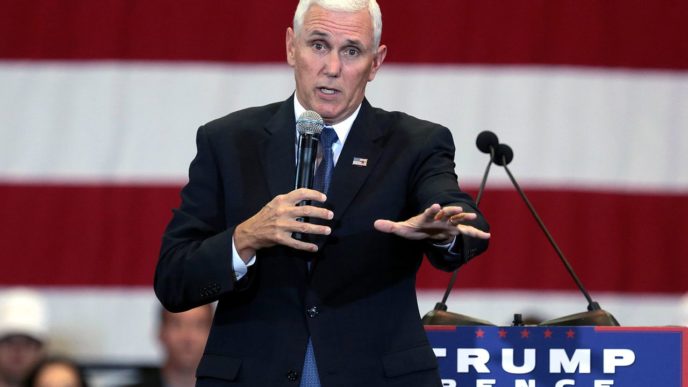
Trump’s Progress So Far on 2016 Promises

President Donald Trump hasn’t yet repealed and replaced Obamacare, or achieved 4 percent economic growth just shy of one month in office. But the new president has begun to deliver on several other campaign promises.

Trump issued executive orders to begin constructing the border wall and curb burdensome Obamacare regulations until the law is replaced. He also issued executive orders and took other actions to try to boost the economy by reducing regulation and promoting manufacturing.

Here’s a look at progress and achievements in three broad categories for action that Trump routinely talked about during the campaign, including a total of 13 promises:

Make America Work Again

Promise 1: More American Jobs

Trump, on Jan. 27, announced the Manufacturing Jobs Initiative to gather “some of the world’s most successful and creative business leaders to share their experience and gain their insights.”

Trump hosted Intel CEO Brian Krzanich on Feb. 8 at the White House. Krzanich announced the company will build a factory in Chandler, Arizona, that will create 3,000 jobs and another 10,000 “indirect” jobs for area residents.

Promise 2: Energy Independence

Just four days after taking office, Trump issued presidential memorandums on two major oil pipelines. He signed one to expedite building the Dakota Access pipeline, which the Obama administration had stalled, and another to encourage construction of the TransCanada Keystone XL pipeline, which the Obama administration had halted.

Promise 3: Economic Growth

This promise centers on tax reform, regulatory reform, and what the administration calls sensible infrastructure.

Trump signed a bill into law Feb. 14, voiding a Securities and Exchange Commission rule requiring fossil fuel companies and mining companies to disclose production-related payments to foreign governments. The bill was sponsored by Rep. Bill Huizenga, R-Mich.

Trump issued a presidential memorandum for a regulatory freeze until the agency head appointed by the president has reviewed the regulation.

Trump made building or repairing infrastructure and boosting manufacturing central to his campaign.

On the same day as the two pipeline memorandums, Trump also issued an executive order “expediting environmental reviews and approvals for high priority infrastructure projects.”

In another presidential memorandum, Trump directed departments and agencies to support expanded manufacturing through streamlining permitting reviews and reducing regulations.

On Jan. 30, just 10 days into his presidency, Trump issued an executive order requiring that for every new regulation the government imposes, it must rescind two.

A few days later, Feb. 3, Trump issued an executive order creating “core principles for regulating the United States financial system.”

Promise 4: Help the Inner Cities

This category includes law enforcement, jobs, and school choice. On Feb. 9, Trump issued an executive order directing the attorney general to establish a task force on reducing crime and increasing public safety.

The same day, he issued an executive order to “strengthen enforcement of federal law to thwart transnational criminal organizations” such as gangs, cartels, and racketeers.

Make America Safe Again

Promise 5: Border Security, ‘Extreme Vetting’

Trump has indicated he will ask Congress for an initial payment to build a wall at the border with Mexico—a project already authorized under the 2006 Secure Fence Act. After that, he said, he will seek reimbursement from the Mexican government.

On Jan. 25, Trump signed a series of executive orders regarding immigration, his signature issue during the campaign. One order called for “immediate construction of a physical wall on the southern border, monitored and supported by adequate personnel so as to prevent illegal immigration, drug and human trafficking, and acts of terrorism.”

Trump also issued an order scaling back funding for “sanctuary cities,” the term for municipalities that refuse to cooperate with federal officials in enforcing immigration law.

Two days later, Trump signed an executive order restricting immigration from seven terrorism-prone Middle Eastern countries, probably the most controversial action of his presidency thus far.

The administration calls this approach “extreme vetting,” but critics charge it is a “Muslim ban.” The 9th U.S. Circuit Court of Appeals in San Francisco last week upheld a temporary restraining order blocking enforcement of the measure.

Promise 6: Strengthen America’s Role in the World

Trump signed a memorandum Jan. 27 calling for “rebuilding of the U.S. armed forces.”

On Jan. 28, Trump signed a memorandum requiring a comprehensive plan to defeat the Islamic State, the terrorist army also known as ISIS, by the end of February. He directed that it include new defense strategies and any needed changes in public diplomacy efforts.

Since his inauguration Jan. 20, Trump has hosted British Prime Minister Theresa May, Japanese Prime Minister Shinzo Abe, and Canadian Prime Minister Justin Trudeau at the White House. On Wednesday, Israeli Prime Minister Benjamin Netanyahu was scheduled to visit.

Promise 7: End the Iran Nuclear Deal

Though it wasn’t related directly to the Iran nuclear deal negotiated by the Obama administration, the Trump White House signaled a strong shift in attitude toward Iran.

The Trump administration, through the Treasury Department, on Feb. 4 imposed 25 sanctions on individuals and companies with ties to Iran in retaliation for the Islamic regime’s ballistic missile tests.

Make America Great Again

Promise 8: Repeal Obamacare

Hours after being sworn in, Trump issued an executive order directing agencies to act to minimize the burdens of the Affordable Care Act as much as possible by law, until Congress votes to repeal and replace the health care law.

Promise 9: ‘Drain the Swamp’

On Jan. 28, Trump issued an executive order requiring federal agencies to demand “ethics commitments” from employees hired on or after Jan. 20. This means these employees are committed contractually not to become lobbyists within five years of leaving government, and never to work as a lobbyist for a foreign entity after leaving government service.

In a rarity this early in his presidency, Trump on Feb. 4 signed a bill passed by Congress to allow the Government Accountability Office to gather more records from federal agencies during investigations.

Promise 10: Reverse Executive Overreach, Reduce Size of Government

Three days after his inauguration, Trump signed a memorandum to freeze federal hiring except for reasons of national security and public safety.

Promise 11: Put America First

This includes promoting American exceptionalism and founding principles. Three days after taking office, Trump signed a memorandum ordering withdrawal of the United States from the Trans-Pacific Partnership, a trade deal with 11 other countries. The Obama administration entered into the pact but the Senate had not ratified it. Many Republicans supported the trade deal and many Democrats opposed it, but lawmakers’ positions did not fall along party lines.

When Trump issued executive orders on the Keystone and Dakota oil pipelines, he issued another order requiring new pipelines to be constructed with steel and other raw materials made in the United States.

Promise 12: Nominate a Supreme Court Justice in the Scalia Mold

Trump vowed to name a like-minded successor to Justice Antonin Scalia, who died a year ago Monday. On Jan. 31, Trump announced his nomination of 10th U.S. Circuit Court of Appeals Judge Neil Gorsuch to the Supreme Court to fill the vacancy left by Scalia’s unexpected death. Trump pledged during the campaign to nominate someone with a judicial philosophy similar to Scalia’s originalism.

Promise 13: End Common Core, Restore Local Control of Education

Trump has yet to take action on this front, but the Senate confirmed his nominee for education secretary, Betsy DeVos, and she started work Feb. 7.

DeVos was the head of the Foundation for Excellence in Education, founded by former Florida Gov. Jeb Bush, a strong proponent of Common Core. DeVos has primarily advocated school choice programs to compete with failing public schools.

After Trump nominated her for the position, DeVos explained that she had not actively supported Common Core.

“Have organizations that I have been a part of supported Common Core? Of course. But that’s not my position. Sometimes it’s not just students who need to do their homework,” DeVos wrote. (For more from the author of “Trump’s Progress So Far on 2016 Promises” please click HERE)

Follow Joe Miller on Twitter HERE and Facebook HERE.

House Dems Troll Trump With Valentine’s Day Card

The Democratic Congressional Campaign Committee (DCCC) on Tuesday mocked President Trump with a Valentine’s Day card featuring Russian President Vladimir Putin.

“Trump’s having a tough day,” the DCCC said Tuesday in a tweet. “We thought a Valentine’s Day card could cheer him up!”

The tweet included an image of a card, which featured a picture of Putin wearing red heart-shaped glasses.

The image included a poem that read: “Roses are red. Violets are blue. We’re sorry that Putin is the only one who loves you.” . . .

“We can’t let Trump off the hook just because it’s Valentine’s Day,” the page said. “Sign our tongue-in-cheek card to remind him the resistance will never let up.” (Read more from “House Dems Troll Trump With Valentine’s Day Card” HERE)

Follow Joe Miller on Twitter HERE and Facebook HERE.

Will Trump’s Plan to Drain the Swamp Leave DC High and Dry?

People in Washington, D.C. are worried. Officials in the seat of the federal government have begun to express concern that President Trump’s promise to “drain the swamp” by reducing the federal workforce. There are fears Trump’s plans to cut government spending will harm the city’s economy, increase unemployment, and generally puncture what has historically been a recession-proof bubble of economic activity.

Are they right to be worried? Well, yes and no. Assuming that Trump actually does follow through on his plans to reduce the federal workforce, some people will lose their jobs. Some will move out of the District, and others may even go on public assistance while they look for new sources of income. It will be a rocky road for some government employees, and this disruption will ripple over, at least temporarily, into other industries.

But that does not mean that draining the swamp will be a bad thing, or that it will have a net negative effect on the economy. In fact, we should expect just the opposite. The reason is that government jobs differ from private sector jobs in a fundamental way. In order for a job to exist in the private sector, it must produce something that people value. If a worker is not earning his employer more in revenue than he is costing in wages, the employer can boost profits by firing him. There are undoubtedly some bad businessmen who employ unproductive employees by mistake, but ultimately they will suffer for their ineptitude, and poorly managed businesses will perish as better ones take their place.

Not so with the government. The government worker collects a salary that is forcibly seized from the taxpayers. He needs not generate a profit, satisfy consumer demand, or produce anything of value at all. All he has to do is remain unnoticed by his superiors and he gets to keep collecting a paycheck at the public’s expense.

If these people lose their jobs, their labor will be freed up to engage in more productive pursuits that can actually contribute to society instead of leeching off of it. To understand this, imagine a whole city where everyone is employed digging holes and filling them back in again. If we eliminated all of those jobs, the temporary unemployment would be a hardship for the workers themselves. The resources devoted to the useless activity of hole-digging, however, could be put towards something useful instead, and the workers could devote their talents towards helping their fellow man. It would be indisputable that such a reallocation would be beneficial, in the long run at least. The reallocation that comes from draining the swamp would be comparably desirable.

The great French economist Frederic Bastiat illustrated this phenomenon with what is known as the “Broken Window Fallacy.” The fallacy holds that breaking windows is good for the economy because it provides work for glassmakers. What Bastiat realized was that a society not forced to constantly repair broken windows is free to exert its efforts in other directions. That way we can enjoy the benefit of functioning windows, but also of everything else that extra labor can produce. While bureaucrats in Washington, D.C. aren’t actively breaking windows, they might as well be, for all the harm they cause with overregulation, excessive taxation, and general interference with American economic activity. Ultimately, their loss, in the words of W.S. Gilbert, will be a distinct gain to society at large. (For more from the author of “Will Trump’s Plan to Drain the Swamp Leave DC High and Dry?” please click HERE)

Follow Joe Miller on Twitter HERE and Facebook HERE.

What Trump Can and Can’t Do to Make Changes to Civil Forfeiture

President Donald Trump’s comments on a procedure that allows law enforcement to seize property sparked much debate in the media and on the internet.

But for stakeholders who oppose the practice, called civil asset forfeiture, the president’s statements presented a learning experience for the country’s chief executive.

Trump’s comments came during a roundtable discussion with county sheriffs last week, where Jefferson County, Kentucky, Sheriff John Aubrey asked the president about efforts to curb law enforcement’s use of civil asset forfeiture.

The question sparked a brief discussion about the tool, which allows law enforcement to seize property and cash if they suspect it’s connected to criminal activity.

In the back-and-forth, Trump questioned why anyone would want to limit the police’s ability to take “a huge stash of drugs,” and ultimately told the sheriffs in attendance they were “encouraged” to take property through civil forfeiture.

The comments satisfied the law enforcement community, who believe that civil forfeiture is a critical tool to curb drug trafficking and money laundering.

“For over 30 years, the asset forfeiture program has allowed law enforcement to deprive criminals of both the proceeds and tools of crime,” Chuck Canterbury, national president of the Fraternal Order of Police, wrote in a December op-ed in The Daily Caller.

“The resources provided by the Equitable Sharing Program have allowed agencies to participate in joint task forces to thwart and deter serious criminal activity and terrorism, purchase equipment, provide training upgrade technology, engage their communities, and better protect their officers,” he continued. “It has been remarkably successful.”

But for civil forfeiture opponents who have been working with policymakers at the federal and state level, Trump’s comments demonstrated a “profound misunderstanding” of the issue, one that left open the door for some explanation from those who want reforms.

“We think if the president knew about the extent of forfeiture abuse across the country, his remarks would’ve been very different,” Darpana Sheth, a senior attorney at the Institute for Justice, told The Daily Signal.

The Institute for Justice, a public interest law firm, is part of a broad coalition of civil forfeiture opponents who believe the tool allows police to seize cash, cars, and property from people who are unaware of any wrongdoing and were never charged with a crime.

At the heart of the issue is the profit incentive opponents say civil forfeiture creates, since laws in half of the states and the federal government let police keep 100 percent of the proceeds from forfeited property.

And while some in law enforcement believe that efforts to reform civil forfeiture laws in the halls of Congress and in state legislatures are rooted in opposition to law enforcement, Sheth said that’s a misconception.

“Civil forfeiture warps law enforcement’s incentives and puts police officers in this untenable position of having to choose going after money rather than criminals,” she said. “They have to be revenue generators rather than fight crime. Once we have adequate reforms, it would free them to focus on fighting crime.”

Still, Trump’s comments left many unanswered questions, and the White House did not return requests for clarification on the president’s stance on the issue.

If Trump did want to put civil forfeiture “back in business,” as he told sheriffs last week, there are some changes he could make.

Movement in Congress

Each state and the federal government have different laws that dictate how local, state, and federal law enforcement agencies can seize and forfeit property using civil forfeiture.

At the federal level, there’s little Trump can do to change civil forfeiture laws without an act of Congress.

Even if lawmakers decided to move forward with reforms, the momentum is for tightening, not loosening, the statutes governing law enforcement’s ability to seize property, said Jason Snead, a policy analyst at The Heritage Foundation who has written extensively about civil forfeiture.

Last year, a bipartisan group of lawmakers in the House and Senate introduced the Due Process Act, which aimed to make it harder for law enforcement to take property from innocent Americans.

The bill stalled in Congress, but Snead said there’s still broad interest from Republicans and Democrats to pass civil forfeiture reform as part of a broader criminal justice reform package.

While President Barack Obama made criminal justice reform a priority of his administration, Trump’s comments injected uncertainty into the debate.

“We might see some movement in the upcoming Congress,” Snead told The Daily Signal. “But the question becomes, ‘What is the administration’s position and would they sign anything?’”

Aside from congressional action, the president and his Justice Department, led by Attorney General Jeff Sessions, do have latitude in the agency’s Equitable Sharing Program.

Under Equitable Sharing, local and state agencies participating in a joint investigation with the federal government can forfeit property under federal forfeiture laws, which are less stringent than those in some states.

The program also allows local and state agencies to keep up to 80 percent of the proceeds from forfeited property.

In 2015, the Justice Department, then led by Attorney General Eric Holder, made a significant change to Equitable Sharing.

The program allowed local and state law enforcement to seize property, which would then be “adopted” by federal agencies. Once the adoption occurred, the property was forfeited under federal law.

But Holder decided to implement a new policy prohibiting the federal government from “adopting” seizures, and today, local and state law enforcement agencies participating in Equitable Sharing have to be working alongside federal agencies to forfeit property under federal law.

That could all change, though, with Sessions in charge at the Justice Department, particularly if he decided to roll back Holder’s changes.

“We would be taking a step back to where we were in 2015,” Snead said.

While a senator from Alabama, Sessions opposed recent attempts to reform federal civil forfeiture laws.

And he said in the past that he was “very unhappy” with criticisms of how civil forfeiture is being used.

But Snead is holding out hope that both Sessions and Trump change their tune on the issue.

“We need to get in front of the president the actual facts on the ground, the extremely limited protections that are in place for property owners, and the fact that there is a financial incentive that can skew the policies and priorities,” he said.

Galvanized

While there is momentum for federal civil forfeiture reform coming from members of Congress, much of the action on the issue is taking place in the states.

Last year, a handful of states—including Florida, California, and Ohio—passed bills to tighten their civil forfeiture laws.

In total, 20 states and the District of Columbia have passed laws reforming civil forfeiture. In more than 12 states, the government must secure a conviction before forfeiting property.

“A lot of the power is in state legislator’s hands,” Snead said. “If they use that power wisely, they can make some dramatic steps.”

Already, state legislators in more than a dozen states like Illinois, Indiana, and Texas are considering legislation to require a criminal conviction before assets can be forfeited.

And Sheth said Trump’s comments likely provided state lawmakers with more motivation to push bills reforming state civil forfeiture laws across the finish line.

“People are galvanized by this,” she said. “These claims that you get that are unrebutted, that these are made up stories, the people who have experienced [civil forfeiture] or know about it know this clearly isn’t true. I think it sparks a kind of outrage.” (For more from the author of “What Trump Can and Can’t Do to Make Changes to Civil Forfeiture” please click HERE)

Follow Joe Miller on Twitter HERE and Facebook HERE.

Trump Terrorism Adviser Says War on ISIS About Ideology

One of the key figures driving President Donald Trump’s national security policy outlined a counterterrorism vision on Monday squarely focused on defeating ISIS beyond the battlefield.

Sebastian Gorka’s view of the ISIS threat melds with many in the White House who believe that the U.S. is engaged in a nontraditional war against radical Islam.

Gorka, and others in Trump’s orbit, allege that previous administrations have not properly combatted the ideology they say fuels terrorism, and that the U.S. government has struggled to define the war it is fighting.

“In this current warfare environment, body bags are not a good metric for winning,” said Gorka, a deputy assistant to the president, during an event at The Heritage Foundation. “You can kill a jihadi high-value target. But what happens if the next day, 20 people volunteer to replace that jihadi? The last 16 years we have become preeminent in exquisite whack-a-mole. Oh, and we are good at it.”

“We look at physical battlefield actions as the metric for success,” Gorka continued. “We have to understand 80 percent of this war will be fought in the mind, and 80 percent of our conflict will be fought in the media domain.”

Early Actions

Gorka, a former Breitbart News national security editor who has held positions at various military educational institutions, did not outline specific policies that transfer his ideas into action.

But some early actions by the Trump administration, and others reportedly being considered for roles in it, reflect a different approach to counterterrorism explicitly focused on “radical Islamic terrorism.”

At the Heritage event, Gorka defended Trump’s controversial executive order temporarily halting refugee admissions, and travel from seven countries the Obama administration and Congress had designated as posing risks of terrorism.

Politico reported Monday that Gorka was one of the few White House staffers consulted ahead of Trump’s order, which has been blocked by the courts.

Lawsuits around the country have alleged that Trump’s order violates the Constitution by intentionally punishing Muslims, and many trial courts blocked aspects of the president’s order.

Gorka, and others in the Trump administration, reject charges of religious intent, and say the chosen countries are sources of terrorism.

“One of the reasons the president signed his executive order [is that] those [targeted] nations are where ISIS and al-Qaeda exist, plus Iran,” Gorka said. “We won’t capture or kill all jihadis. What will happen is they will move. They may go to your neck of the woods. We want to make sure that events like Berlin, like Nice, like Paris, don’t happen in America. We have to understand that ISIS’ battlefront begins when you leave your house in the morning.”

Gorka’s calls for a tougher response against Islamist radicalism are reflected in other moves being considered by the White House.

The Trump administration is reportedly considering re-engineering a Department of Homeland Security domestic counterterrorism program—known as Countering Violent Extremism—to concentrate on Islamic extremism only. Some counterterrorism experts say this singular focus ignores other forms of extremism, and may harm relations between Muslim community groups and the government.

In addition, the Trump administration, according to The New York Times and others, is debating an order to designate the Muslim Brotherhood, an influential Islamist group in the Middle East, as a foreign terrorist organization.

‘Help Muslims Win the War’

Together, these actions and ideas represent an about-face to traditional U.S. strategy embraced by both Republican and Democrat administrations.

Former Presidents George W. Bush and Barack Obama defined the terror threat in narrower terms as they tried to avoid making it seem the U.S. was at war with Islam.

They argued that a more direct focus on radical Islam would feed into ISIS’ narrative that Muslims are not welcome in the West, and encourage more extremism.

Gorka on Monday defended himself against others in the national security establishment who’ve criticized his rhetoric as inflammatory.

“We are not at war with Islam,” Gorka said. “Let me be explicit here. It’s very easy for our detractors to paint us as Islamophobes. It is absolutely wrong. This is a war inside Islam—war for the heart of Islam. Which version will be preeminent? We have to help Muslims win the war for the heart of their own religion.”

Whereas Obama tried to not legitimize ISIS by overstating its power, and said he believed they did not constitute an existential threat to America, Gorka argues the U.S. government needs to take the claims of the terrorist group literally.

“ISIS is different because it succeeds where every jihadi group failed, and it has captured transnational, transregional territory, which by itself means it is a tier one threat to all people who believe in freedom of religion, freedom of expression, democracy, and representative government,” Gorka said. “ISIS has not just rehashed al-Qaeda’s message of jihad. They have really executed an ideological and theological coup.”

“Every time it [ISIS] tweets or goes on Telegram [a messaging service] and says, ‘We are the Islamic State of Iraq and al-Sham [translation of Syria in Arabic],’ they are a sending very powerful message to that man in his mom’s basement, to that Pakistani immigrant on a fiancé visa in San Bernardino,” Gorka added.

‘Deligitimze Ideology’

Gorka, and others in the Trump administration, have so far not outlined specific differences on how to fight ISIS and take back territory it controls in Iraq and Syria.

Late last month, Trump issued a directive ordering his new defense secretary, retired Marine Gen. James Mattis, to submit a strategy within 30 days to defeat ISIS.

But Gorka did signal a pullback from one component of the Obama administration’s counterterrorism strategy: relying on elite special operations forces to conduct raids and kill missions. Obama described this approach as less costly and more efficient than traditional combat operations.

Trump’s first counterterrorism operation using special operations forces, a raid against al-Qaeda’s Yemen affiliate last month, resulted in the death of a Navy SEAL, and civilian casualties.

“In the last eight years, we have tended as a government to look at our special operations capabilities as the easy button,” Gorka said. “That is a wholly fallacious understanding of special operations. The whole point of our bravest of the brave is that they are a tactical level deployment meant to effect strategic results—not a tactical level asset for tactical results. We should go back primarily to do what they were created to do. We should be helping others fight their own fights, not fight their fights for them.”

If Trump follows Gorka’s approach to counterterrorism, he envisions a dramatic result.

“What is victory in this war?” Gorka said. “Sebastian Gorka’s definition of victory is very simple. We will have won when the black flag of jihad, when the black flag of ISIS, is as repugnant across the world as the white peaked hood of the Ku Klux Klan and the black, white, and red swastika of Hitler’s Third Reich.”

“Don’t get me wrong, killing terrorists is great,” Gorka continued. “I am down with killing terrorists. But the ultimate victory will have accrued when we delegitimize the ideology of groups like the Islamic State.” (For more from the author of “Trump Terrorism Adviser Says War on ISIS About Ideology” please click HERE)

Follow Joe Miller on Twitter HERE and Facebook HERE.

Trump Has Fewest Cabinet Secretaries Confirmed Since George Washington

It took nearly a month, but President Donald Trump is finally operating with at least half of his Cabinet in place. Not since George Washington in 1789 has a newly elected president waited so long.

Twenty-five days after Trump took the oath of office, the Senate on Monday night voted to confirm the eighth and ninth members of his Cabinet: Treasury Secretary Steven Mnuchin and Veterans Affairs Secretary David Shulkin. The six remaining Cabinet nominees will have to wait a while longer.

Why? Unprecedented delays and obstructionism on the part of Democrats have resulted in the most contentious confirmation process in U.S. history, according to a Washington Post analysis. No other president’s nominees have collectively faced similar opposition.

And that’s just the 15 members of Trump’s Cabinet. Other top nominees, such as Rep. Mick Mulvaney to lead the Office of Management and Budget and Scott Pruitt to head the Environmental Protection Agency, continue to wait as well. And then there’s Supreme Court nominee Neil Gorsuch, who could face the biggest battle of anyone.

It’s the consequence of a polarized Washington, where Democrats are in no rush to rubber-stamp Trump’s picks, even though past presidents have been afforded such a courtesy.

“President Trump has the fewest Cabinet secretaries confirmed at this point than any other incoming president since George Washington,” lamented Senate Majority Leader Mitch McConnell last week. “The president deserves to have his Cabinet in place. The American people deserve that, too.”

The Kentucky Republican, a scholar of Senate history, reviewed the records and discovered that prior to the 1950s, most Cabinet nominees faced no opposition at all. (McConnell’s analysis included first-term elected presidents, not those who assumed office after a vacancy.)

In fact, many presidents had their Cabinet nominees in place on Day One. Such was the case beginning in 1881 with President James Garfield and spanning 52 years until President Franklin D. Roosevelt.

Washington, of course, was establishing the office for the first time when he was inaugurated on April 30, 1789. His Cabinet wasn’t confirmed until September 1789.

In recent history, Trump’s predecessors have enjoyed a much faster pace of Cabinet confirmations. At this point in their presidencies, here’s how they compared to Trump:

Barack Obama had 12 of 15 confirmed.

George W. Bush had 14 of 14 confirmed.

Bill Clinton had 13 of 14 confirmed.

George H.W. Bush had 10 of 14 confirmed.

Ronald Reagan had 12 of 13 confirmed.

Jimmy Carter had 11 of 11 confirmed.

Richard Nixon had 12 of 12 confirmed.

John F. Kennedy had 10 of 10 confirmed.

Dwight D. Eisenhower had nine of 10 confirmed.

Monday’s confirmation of Mnuchin and Shulkin gives Trump nine of his 15 Cabinet secretaries. Two of Trump’s nominees—Sonny Perdue for agriculture secretary and Andrew Puzder for labor secretary—haven’t had a committee hearing yet. Puzder’s is scheduled for Thursday, while Perdue, picked Jan. 18, is still awaiting a date.

The confirmation delays have left many agencies without a leader, a situation Democrats know is impeding Trump’s ability to implement his policies.

“This is a president who wants change, and he has got to get his nominees confirmed as soon as possible if he is going to get that change,” Don Devine, director of the Office of Personnel Management under Reagan, told The Daily Signal last month.

Under the leadership of Senate Minority Leader Chuck Schumer, Democrats have kept their promise to delay Trump’s nominees, even if they lack the votes ultimately to defeat them.

Schumer, D-N.Y., specifically targeted eight of Trump’s picks. Five now have been confirmed: Education Secretary Betsy DeVos, Health and Human Services Secretary Tom Price, Attorney General Jeff Sessions, Secretary of State Rex Tillerson, and Mnuchin. The other three targeted are Mulvaney, Pruitt, and Puzder.

Trump has also voiced frustration with the slow progress.

And while the Senate slowly confirms his Cabinet, the time it spends to do so prevents lawmakers from addressing the president’s legislative priorities. Last week, for instance, senators had to wait 30 hours between votes because of Democrat delaying tactics. The Senate confirmed three nominees—DeVos, Sessions, and Price—over the span of a week.

Even those who won Senate confirmation faced “record-setting opposition,” according to The New York Times.

Another delaying tactic Democrats have employed is boycotting the nominees’ committee votes to deny a quorum. Three of Trump’s nominees have faced this treatment—unprecedented for a newly elected president. Obama and Bush nominees faced similar boycotts, but not until later in their presidencies.

In 2009, Obama had 10 Cabinet secretaries confirmed after his first week in office. Nine of those nominees won Senate confirmation by voice vote, where an official tally isn’t recorded.

The Obama nominee who faced the greatest GOP opposition—Timothy Geithner for treasury secretary—was approved 60-34 on Jan. 26, 2009, less than a week after Obama took office.

Like Trump, Obama enjoyed a Senate controlled by his own party. Democrats had 57 senators on Jan. 20, 2009, when Obama took office. Today, Republicans have 52 senators. (For more from the author of “Trump Has Fewest Cabinet Secretaries Confirmed Since George Washington” please click HERE)

Follow Joe Miller on Twitter HERE and Facebook HERE.
Was Menachem Begin the Donald Trump of Israel?

George Orwell ‘s 1984 and Sinclair Lewis’s It Can’t Happen Here have returned to the bestseller lists, as readers prepare for totalitarian rule in America. Many liberals are filled with fear, and some grieve as though a close relative has died.

Lena Dunham, star of the HBO TV show, Girls, has returned with a slimmer figure. She told Howard Stern why on his radio show:

Donald Trump became president and I stopped being able to eat food. Everyone’s been asking like, ‘What have you been doing?’ And I’m like, ‘Try soul-crushing pain and devastation and hopelessness and you, too, will lose weight.’

Filled with despair, some liberals have convinced themselves that Donald Trump’s election is likely to lead to the end of American democracy.

This is odd.

After all, Trump’s first Supreme Court nominee, Neal Gorsuch, is a strict Constitutionalist. That choice is consistent with the seriousness Trump has shown in his first days in office about keeping his campaign promises, and foremost among these is appointing judges who want to hold back the government’s power and reach.

Nobody Panicked When Obama Abused His Power

Ironically, the recent administration which showed the least regard for the Constitution and the principle of limited government was that of Barack Obama. It was Obama, after all, who proposed a health care law that appeared to be a first step towards nationalization of medicine. Moreover, set within that plan were regulations, later overturned by the courts, which required religious organizations to provide their employees with free abortifacients. Even convents were to be compelled to give their novices stocks of drugs for killing fetuses.

The Obama administration further showed its disregard for the Constitution in its unwillingness to act against IRS agents who had targeted grassroots conservative organizations.

In addition, under Obama there was a broad expansion of domestic wiretapping, a wholesale growth of the national security state and increased use of targeted killings of foreigners — and even Americans abroad — who were suspected of involvement with terror cells.

Why, then, are liberals behaving so hysterically now?

All the “Best People” Think He’s a Thug

Perhaps a clue can be found in the Israel of 1977. In that year, Menachem Begin‘s conservative Likud party defeated Israel’s Labor party, making Begin the country’s prime minister. The response of most Israeli intellectuals was much like that of liberals in the United States today: a national media and upper-class meltdown.

Left-wing and center-left parties had dominated Israeli politics since the country’s founding in 1948. Although its management of the country’s economy was often ineffectual, the leftist “Alignment” had the backing of the nation’s powerful labor unions and nearly all of its leading intellectuals. Its popularity was particularly great among secular Jews and among European-descended Jews, the “Ashkenazim.” These groups also comprised most of the leaders of the country’s military.

Your Voters are Deplorable, with Tacky Accents

When it was declared on television in May 1977 that Begin’s Likud party had won the election, the announcer promptly termed it a “revolution,” and it is still often referred to in Israel as The Revolution (HaMahapakh). Intellectuals were shocked and repelled. This was embodied during a campaign event that proved pivotal to the election’s outcome. During a major Labor Party rally, a comedian named Dudu Topaz mocked Begin’s supporters for their accents. Since many were refugees expelled from North African countries like Morocco, they spoke with an accent that caused them to be called “chach chach.” The term referred to their difficulty pronouncing the Hebrew letter “ch.” It was a put-down meant to suggest that they were low-class and uneducated.

Begin responded by arranging a counter-rally just before the country went to the polls. Weakened by a recent heart attack, Begin arose before his followers as best he could and pointedly noted that Jews were one people, no matter if they were from Europe or the Middle East, poor or rich, and that they had to stand together as one in a world filled with enemies. The “chach chach” cheered him wildly and then went to vote. It was these working-class and less educated voters who decided the election for Begin. They liked his unabashed nationalism and his undoubted religious faith.

It was a shock to the Westernized, mostly agnostic intellectuals who had run the country for almost thirty years. They found Begin’s win almost incredible, and they regarded the man with open contempt. This hostility was so great that the country’s first prime minister, David Ben-Gurion, had reportedly refused to even speak Begin’s name.

A Mad Right-Winger has Seized Control of Our Country!

Begin was mocked for his belief in free-market economics, and he was accused of being a terrorist. The basis of the charge of terrorism was a bombing that men loyal to Begin had carried out against the King David Hotel in Jerusalem in 1946. Begin’s agents had called the hotel to warn all inside to leave the building before the bomb was to go off, and they had planned the attack at the request of men loyal to Begin’s rival, Ben-Gurion. Nonetheless, the attack led to 91 deaths, and blame had long been pinned on Begin for the lives lost.

Thus, with Begin’s election in 1977, it was easy for intellectuals to persuade themselves that they had been defeated in the election by a mad right-winger backed by uncouth people who took all their ideas from the Bible. Surely, they declared, Israel’s economy would be ruined, and war with Israel’s neighbors was likely.

What actually happened, however, was that Begin led Israel towards a formal peace treaty with Egypt, and, with lower taxes and less regulation, the nation started on its trek to its current status: a rich nation, that is among the world leaders in technology.

What’s Really at Stake: Loss of Status

In retrospect, it’s apparent that what the “smart” Israelis were really suffering from was a loss of social standing. They had always been the ones in charge. They were both literally and figuratively the authorities. Then, quite abruptly, they had been tossed aside and ignored by the little people. But those Bible-thumpers turned out to be the wise ones.

Is something similar happening in the U.S. forty years later? Time will tell. (For more from the author of “Was Menachem Begin the Donald Trump of Israel?” please click HERE)

Follow Joe Miller on Twitter HERE and Facebook HERE.