Posts

With Trump Returning To Power, Europe Chief Weighs Idea Of Buying More Natural Gas From U.S. Instead Of Russia

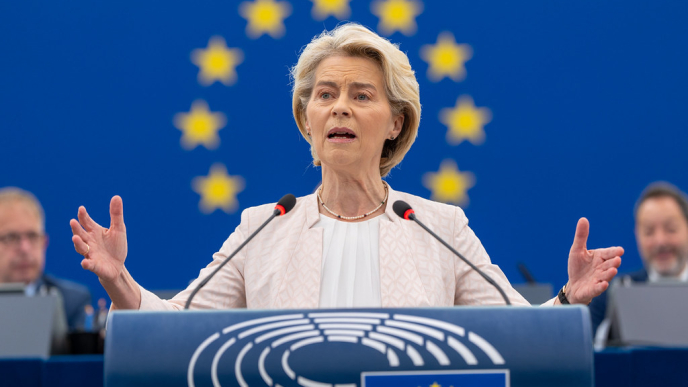
President of the European Commission Ursula von der Leyen said Friday that she proposed to President-elect Donald Trump the idea that the U.S. could supply more natural gas to Europe to decrease the bloc’s reliance on Russia, according to Barron’s.

The EU chief said the topic of tapping U.S. liquefied natural gas (LNG) could also be discussed in relation to the EU’s trade deficit with the U.S., Barron’s reported, citing AFP News. Von der Leyen also said it was “very important” that Brussels engaged around “common interests” with the president-elect.

The Biden-Harris administration has faced criticism for halting LNG exports after the Department of Energy (DOE) announced it was halting new and pending approvals for certain LNG export terminals in January. Some federal agencies are looking to interfere with Trump’s agenda to unfreeze approvals for LNG exports, according to various reports.

“Common interests are, for example — this is one topic that we touched upon, I would not say discuss — it’s the whole topic of LNG,” she told reporters in Budapest, Barron’s reported.

“We still get a lot of LNG from Russia and why not replace it [with] American LNG, which is cheaper for us and brings down our energy prices,” said von der Leyen, Reuters reported. (Read more from “With Trump Returning To Power, Europe Chief Weighs Idea Of Buying More Natural Gas From U.S. Instead Of Russia” HERE)

Photo credit: Flickr

German Army ‘Plans Break up of E.U.’ in War Game

The German army has war-gamed the break up of the European Union in study of security crises that could face the country by 2040.

Military planners in Berlin played out a scenario in which a growing number of countries follow Britain in leaving the EU, resulting in an “increasingly disorderly” world, Der Spiegel reported.

“The EU enlargement has been largely abandoned, more states have left the bloc,” strategists wrote in a study cited by the magazine.

“The increasingly disorderly, sometimes chaotic and conflictual world has dramatically changed the security policy environment for Germany and Europe.”

Der Speigel said the study could inform German armaments programs in the next several years. (Read more from “German Army ‘Plans Break up of E.U.’ in War Game” HERE)

Follow Joe Miller on Twitter HERE and Facebook HERE.

WATCH: Brexit Architect Gives SCATHING Free Trade Defense Speech at EU

Brexit architect and UK Independence Party leader Nigel Farage was enjoying the spotlight at European Parliament Tuesday, as a he told a jeering crowd that he now has had the last laugh. Farage took the moment to preach the benefits of free trade, and to warn the EU of the cost of cutting off trade partnerships with the UK.

“We – between your countries and my country – do an enormous amount of business in goods and services. That trade is mutually beneficial to both of us. That trade matters.”

“If you were to decide to cut off your noses, to spite your faces, and to reject any idea of a sensible trade deal, the consequences would be far worse for you than it would be for us,” Farage told a scoffing crowd of MEPs.

Farage prefaced his argument by getting a rise out of the Parliament: “Now I know that virtually none of you have ever done a proper job in your lives, or worked in business, or worked in trade, or indeed created a job … but let us listen to some simple pragmatic economics.”

Earlier in the floor speech Farage jovially reflected: “Isn’t it funny? You know, when I came here 17 years ago and I said I wanted to lead a campaign to get Britain to leave the EU, you all laughed at me … but I have to say, you’re not laughing now.”

The key question at hand now, according to the Associated Press, is when UK Prime Minister David Cameron will invoke article 50 of the Lisbon Treaty to trigger exit negotiations. In light of this, Farage called for sensibility in the exit proceedings. (For more from the author of “WATCH: Brexit Architect Gives SCATHING Free Trade Defense Speech at EU” please click HERE)

Follow Joe Miller on Twitter HERE and Facebook HERE.

What Brexit Means for the European Union’s Future

Britain’s decision to leave the European Union could inspire other disaffected nations to consider a way out unless the bloc responds to anxiety across the continent over jobs, immigration, and globalization.

While experts say an all-out breakup of the European Union is far-fetched, countries both successful (like Sweden) and struggling (such as Greece) may view the British experience as a model to change their own lots in life.

“There is a serious risk that Britain’s decision to withdraw from the European Union could set off similar demands on other member states,” said Michael Leigh, a senior fellow at The German Marshall Fund of the United States, adding:

It was clear even before the British referendum that the EU is facing a number of problems, and if the EU wishes to regain credibility in the eyes of the citizens of European countries, it must find a way to tackle its own disorders effectively, and demonstrate it can function properly.

Last week, Britain, the European Union’s second-largest economy after Germany, became the first to decide to leave the 28-member bloc.

Leigh, in an interview with The Daily Signal, said the European Union must not view Britain’s exit as a unique case, but rather, a consequence of populist anger that exists throughout the continent. That anger, he said, is fueled by unease that the global economy has created winners and losers, and that integration and bureaucracy may be making that gap harder to close.

According to experts, other member countries with large populations of people skeptical of the European Union—and also may demand a similar referendum—include France, Denmark, Italy, the Netherlands, Hungary, Poland, and Austria.

The European Union also faces other challenges, such as the refugee crisis sparked by refugees fleeing war and poverty in the Middle East and North Africa; Russian aggression in Ukraine; and Greece’s faltering economy.

“We shouldn’t really expect the British referendum to be followed by this sudden surge of integration,” Leigh said:

That’s not realistic because there’s serious differences of views concerning the way forward. The main lesson EU leaders will have learned about the rise of populism is there is no expectation or demand for more Europe. As a result of the British experience, the people will be looking for pragmatic solutions and concrete projects to get out of this problem rather than some new commitment to a more united Europe.

The first big hint of how member governments view the British decision to exit the EU, known as Brexit, will come as they negotiate the terms of Britain’s position outside the union. Also not clear is whether they’ve learned lessons from the result of Britons’ vote.

In an emergency meeting over the weekend of foreign ministers from the European Union’s six founding states—Belgium, France, Germany, Italy, Luxembourg, and the Netherlands—leaders expressed a desire for Britain to quickly invoke Article 50, which would allow the process for severing ties to begin and set a two-year timeline for doing so.

Leigh, and other experts, say those favoring a fast resolution may try to impose harsh conditions on Britain, and limit its interaction with the bloc, in order to make an example of the British.

But other leaders, especially German Chancellor Angela Merkel, considered a key figure in rebuilding the EU, prefer a more patient approach so as to preserve the bloc’s integrity.

“The EU is liable to just bully Britain in order to discourage others from leaving,” said James Jeffrey, a former U.S. ambassador to Iraq who specializes in European security and political issues, adding:

That would be the wrong path to take because instead of discouraging the political class, they would really be discouraging the general population, which is fed up with business as usual inside the EU. So the EU could draw the wrong lessons from Britain’s exit.

Jeffrey, in an interview with The Daily Signal, cautioned European leaders to acknowledge the divide between the elite and masses, and seek to do something about it.

“This is a struggle between the cosmopolitan elite—not just bureaucrats but people who are successful in a modernized globalized economy in Europe and happy with the idea of an ever closer union—and others who want to stay a part of their own countries who have a patriotic feeling and don’t buy the EU’s goals,” Jeffrey said. “We have to reform the EU and water down this idea of a union and take effective action on immigration and address how to loosen the inevitable mountain of regulations that the EU puts on everybody, which just drives some people crazy.”

Ted Bromund, a Heritage Foundation expert on U.S. and British relations with the European Union, argues that though member countries have different conditions, their collective anxiety is animated by the European debt crisis that began at the end of 2009.

“Some nations, like Greece, feel that the EU is bossing them around politically and economically in a particularly brutal way,” Bromund wrote to The Daily Signal in an email:

In others, the slow growth—which a result partly of their own economic policies—is also reflected on the EU. So there is no one single answer [driving the unrest]. If I had to pick one, it would probably be the economic factors around the Euro, and the EU’s low growth; but they are all wrapped up together, and you can’t pull them apart.

Despite these ongoing challenges, the European Union is likely to limit decisive action as the two most powerful nations in the bloc, Germany and France, grapple with national elections in 2017. Leaders of those countries cannot afford to alienate the populist strands of the electorate.

So, as one expert predicts, the European Union—the world’s biggest single economic market—may trudge on for now, until something dramatic happens again.

“There is a deep taboo among member states leaving the EU,” said Tim Oliver, a professor who is the Dahrendorf fellow on Europe-North America relations at the London School of Economics and Political Science.

“The European institution is about moving forward, not backward,” Oliver told The Daily Signal. “Finding a united position is never easy for the EU on a good day, let alone when it is facing something like this. The EU has so far muddled through these challenges. They never solve them. They cope.” (For more from the author of “What Brexit Means for the European Union’s Future” please click HERE)

Follow Joe Miller on Twitter HERE and Facebook HERE.

UN: Brexit Means We Have to ‘Recalibrate’ Our Global Warming Plans

The U.K.’s Thursday referendum on European Union membership means that the United Nation’s global warming plans need to be rewritten, according to the executive secretary of the Paris global warming deal.

The referendum, often called Brexit, significantly changes the agreement, which assumed Britain would remain part of the EU.

“From the point of view of the Paris Agreement, the UK is part of the EU and has put in its effort as part of the EU so anything that would change that would require a recalibration,” Christiana Figueres, one of the architects of the Paris global warming deal, said the day before the Brexit vote. “In principle, it is actually, historically, we say, as humankind, we are moving towards larger and larger tents of collaboration […] rather than in the opposite way.”

Progressive outlets like The Guardian are already claiming that Brexit will reduce environmental protections and create more carbon dioxide (CO2) emissions.

The U.N.’s Paris global warming agreement will cost a minimum $12.1 trillion over the next 25 years, according to calculations performed by environmental activists. However, these estimates are likely low, as they exclude energy efficiency measures which will bring the total to $16.5 trillion, according to projections from the International Energy Agency.

That’s almost as much money as the U.S. federal government spent on defense in 2015, according to 2015 spending numbers from the bipartisan Committee For Responsible Federal Budget. The required annual spending is almost 3.7 times more than the $131.57 billion China spent on its military in 2014.

The deal, which was heavily encouraged by the Obama administration, encourages nearly 200 countries to reduce carbon dioxide emissions, slowing global warming. Secretary of State John Kerry however admitted that reducing carbon dioxide emissions in the U.S. and the developed world will not help the environment or even slow down global warming. (For more from the author of “UN: Brexit Means We Have to ‘Recalibrate’ Our Global Warming Plans” please click HERE)

Follow Joe Miller on Twitter HERE and Facebook HERE.

BREXIT: Just What the Doctor Ordered

Janet Yellen should send a note of congratulations to Nigel Farage and Boris Johnson, the British politicians most responsible for pushing the Brexit campaign to a successful conclusion. While she’s at it she should also send them some fruit baskets, flowers, Christmas cards, and a heartfelt “thank you.“ That’s because the successful Brexit vote, and the uncertainty and volatility it has introduced into the global markets, will provide the Federal Reserve with all the cover it could possibly want to hold off on rate increases in the United States without having to make the painful admission that domestic economic weakness remains the primary reason that it will continue to leave rates near zero.

For months the corner that the Fed has painted itself into has gotten smaller and smaller. It continues to say that rate hikes will be appropriate if the data suggests the economy is strong. Then its representatives continually cite (arguably bogus) statistics that suggest a strengthening economy, which cause many to speculate that rate hikes are indeed on the horizon. But then at the last minute the Fed conjures a temporary reason why it can’t raise rates “right now,” but stresses that they remain committed to doing so in the near future. But each time they conduct this pantomime, they lose credibility. Sadly, Fed officials are discovering that their supply of credibility is not infinite, even among those who would like to cut them a great deal of slack.

But the Brexit vote saves them from all this unpleasantness. Now when critics question the Fed’s unwillingness to deliver on the suggested rate hikes, given what they believe to be a strong economy, all the Fed needs to do is point to the “uncertainty” that will be in play now that the world’s fifth largest economy is disengaging from the European Union. And since this process is bound to be long, messy, and fraught with uncertainties (as there is no precedent for a country leaving the EU), this will be a handy excuse that the Fed will be able to rely on for years.

Brexit could also place severe strains and uncertainties on the global currency markets. The fear of financial losses could encourage investors to seek safe haven assets like gold and, at least for now, the U.S. dollar. Given that there is already much concern that the dollar is valued too highly against most currencies, and that this has created imbalances in the global economy, any surge in the dollar that results from Brexit may have to be fought by the Federal Reserve through lower interest rates and quantitative easing. This would rule out the potentially dollar-strengthening interest rate hikes that they supposedly planned on delivering. So as far as Janet Yellen is concerned, the British have given her the gift that keeps on giving.

On another level, the vote in the UK illustrates the fundamental inefficacy of the monetary and financial policies that have been implemented by the world’s dominant central banks and central bureaucracies. For years, global elites have been telling us that deficit spending, government regulation, and central bank stimulus is the best way to cure the global economy in the wake of the 2008 Financial Crisis. To prove these points, elite economists associated with the government, academia, and the financial sector have pointed to all kinds of metrics to show how their policies have been successful. But the man on the street perceives a very different reality. They know that their living standards have fallen, their cost of living has risen, and that their job prospects have deteriorated. They see a loss in confidence and economic stagnation when they are being assured the opposite.

This disconnect has fueled anti-establishment sentiment on both sides of the Atlantic. In the United States, it has given rise to the insurgent candidacies of both Donald Trump and Bernie Sanders. The unexpected successes of both reflect a deep distrust of the establishment. Such discontent would not be in play if the positive stories being told by the elites had made any resonance with rank and file voters.

The same holds true with the unexpected strength of the anti-EU voters in Britain. The “Remain” camp had the support of virtually all the elite members of the major UK political parties, the media, and the cultural world. In addition, foreign leaders, including President Obama in a state trip to England, harangued British voters with warnings of economic catastrophe if the British were to make the grave error of defying the advice of their “best” economists.

Given all this, poll numbers that suggested the vote could be close had been dismissed. The elites, as evidenced by recent drifts in currency and financial markets, had all but assumed that British voters would fall into line and vote to remain. Instead, the people revolted. After having been misled for so many years by the very elites who urged them to remain, the rank and file finally asserted themselves and voted with their feet.

British voters may not know what they will get with an independent Britain, but they knew that something was rotten, not just in Denmark, but all over the European Union. The same holds true in the United States. Until our leaders can paint more realistic pictures of where we are and where we are going, we should expect more “surprises” like the one we got [last week]. (For more from the author of “BREXIT: Just What the Doctor Ordered” please click HERE)

Follow Joe Miller on Twitter HERE and Facebook HERE.
Obama Changes His Stance on US-UK Relationship After Brexit Vote

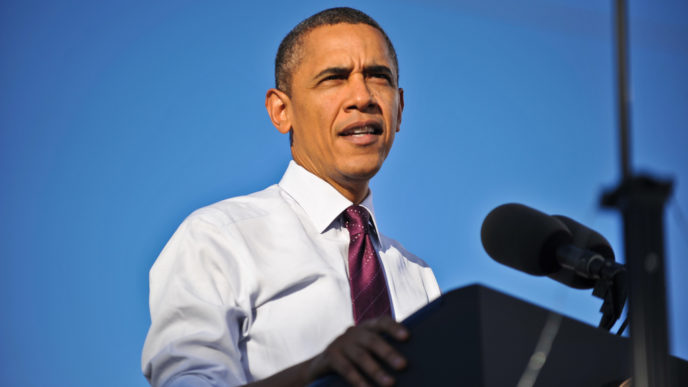
After telling the people of Britain in April that everything might change if Britain left the European Union, President Barack Obama said Friday that the United Kingdom’s vote to leave the EU will not impact the “special relationship” between the United States and Britain.

“The people of the United Kingdom have spoken, and we respect their decision,” Obama said in a statement. “The special relationship between the United States and the United Kingdom is enduring, and the United Kingdom’s membership in NATO remains a vital cornerstone of U.S. foreign, security and economic policy.”

Friday’s conciliatory words were a far cry from those Obama delivered in April during a visit to Britain he urged voters there to remain in the EU.

“I think it’s fair to say that maybe some point down the line there might be a U.K.-U.S. trade agreement, but it’s not going to happen any time soon because our focus is in negotiating with a big bloc, the European Union, to get a trade agreement done,” Obama said then.

“The UK is going to be in the back of the queue,” he said.

On Friday, Republican presidential candidate Donald Trump suggested that Obama’s support of the EU might have contributed to the voters’ decision to leave the EU. Democratic president candidate Hillary Clinton had also supported Britain remaining in the EU.

On Friday, Obama said that the United States will maintain good working relationships with Britain and the EU.

“The United Kingdom and the European Union will remain indispensable partners of the United States even as they begin negotiating their ongoing relationship to ensure continued stability, security and prosperity for Europe, Great Britain and Northern Ireland, and the world,” he said. (For more from the author of “Obama Changes His Stance on US-UK Relationship After Brexit Vote” please click HERE)

Follow Joe Miller on Twitter HERE and Facebook HERE.
How Immigration Fueled the Brexit Result

The vote by Britons on Thursday to leave the European Union doubled as a referendum on how the country views the issue of immigration.

With immigration at an all-time high in Britain, voters concerned about related issues such as economic uncertainty and sovereignty decided to shed their national identity by voting to upend 43 years of life inside the European Union.

The tension over immigration is similar to what’s playing out in the United States, but different in an important way, in that Britain, as a European Union member, has no control of its borders.

That’s because as long as Britain is in the European Union, it has to allow anyone from the 28-member bloc to live and work there.

According to experts, Britain has experienced the changing face of immigration over the years.

Stephen Booth, the co-director of Open Europe, a nonpartisan think tank based in London and Brussels, said that of the roughly 5 million net immigrants to the United Kingdom between 1990 and 2014, over three-quarters came from outside Europe.

But immigration from the European Union now makes up nearly half of the United Kingdom’s net inflow, Booth said. The combination of European Union expansion in 2004 and 2007—which brought in poorer countries like Bulgaria, Romania, and Poland—and the Eurozone economic crisis has influenced substantial internal immigration to Britain and its relatively strong economy.

Proponents of immigration say it has grown the British economy, increased tax revenue, and attracted skilled workers. But critics say immigration has overwhelmed Britain’s public resources, and changed Britain’s culture and values.

“The evidence is that immigration does not have huge economic effects either way,” Booth said in a response to emailed questions from The Daily Signal. “There has been major changes to some areas of the country which are not used to immigration—new shops, languages, etc. Some people view this positively, others feel threatened by the change.”

“EU migrants make a fiscal contribution to the U.K., but the public is concerned that investment in public services, housing, and infrastructure has not kept pace and in some local areas integration is a challenge,” Booth added. “There is a particular concern about low-skilled migration, which can hold down wages for the lowest paid and increase competition for low-paid jobs.”

Yet Booth said policy changes such as the relaxation of restrictions on non-European migration in the late 1990s, and European Union expansion, were not preceded by appropriate public debate and that it is “not unreasonable” for Britons to clamor for greater control over who enters the country.

“[This is] particularly true when the government has promised to reduce numbers,” Booth said. “There is a feeling that politicians have promised something but are not delivering.”

Booth and other experts predict that Britain, split from the European Union and its ethos of free movement, will pursue a more selective immigration policy geared toward attracting skilled migration, based on the needs of the country.

“A ‘Brexit’ will result in a more global-based immigration policy attracting the best talent from around the world,” said Nile Gardiner, the director of The Heritage Foundation’s Margaret Thatcher Center for Freedom.

“This is not about isolation,” Gardiner told The Daily Signal. “It’s about creating a better system for the British economy.”

Booth and Gardiner recommend Britain adopt a policy emulating the point-based systems used in Canada and Australia.

Under this model, an immigrant is “scored” or valued based on skills and qualifications to contribute to the economy. Those who reach a certain threshold would be eligible for a visa.

The government would prioritize industries and employers with skills shortages.

Booth argues this method is more nuanced than it seems, though.

“There is likely to be a continued need for migrant labour to fill low-skilled jobs,” Booth said. “Therefore, the U.K. would also need a mechanism to fill low-skilled jobs or meet labour shortages where employers have recently relied on EU migrants.”

In addition, the result of Thursday’s referendum won’t bring instant change—on immigration or anything else.

The process of breaking apart begins when the government acts on a provision known as Article 50, which sets a two-year deadline for negotiating the departure.

Gardiner contends that Britain will struggle even more to contain immigration during the two-year negotiating period, since people will seek to cross its borders while they still can. Britain cannot legally deny migrants entry before the withdrawal formally takes place.

“There is a big fear factor here,” Gardiner said. “You will see a lot of Europeans moving to Britain in that period. I’m not sure there’s anything you can do to stop that.”

Both experts note that whether Britain is separate from the European Union or a part of it, the country will continue to feel the impact of immigration.

“Despite public pressure to reduce migration, there are several reasons why net immigration is unlikely to reduce much,” Booth said.

“[That’s because] of the effects of globalization on migration flows, which the U.K. is not alone in experiencing, and the likelihood of some constraints on U.K. immigration policy under a new arrangement with the EU.” (For more from the author of “How Immigration Fueled the Brexit Result” please click HERE)

Follow Joe Miller on Twitter HERE and Facebook HERE.

LET (BRITISH) FREEDOM RING: UK Gives Middle Finger to the Elites, Exits European Union

By BBC. Prime Minister David Cameron is to step down by October after the UK voted to leave the European Union.

Speaking outside 10 Downing Street, he said he would attempt to “steady the ship” over the coming weeks and months but that “fresh leadership” was needed.

The PM had urged the country to vote Remain but was defeated by 52% to 48% despite London, Scotland and Northern Ireland backing staying in.

UKIP leader Nigel Farage hailed it as the UK’s “independence day”.

The pound fell to its lowest level against the dollar since 1985 as the markets reacted to the results. (Read more from “Let (British) Freedom Ring: UK Gives Middle Finger to the Elites, Exits European Union” HERE)

___________________________________

Brexit Upends Global Markets as Stocks, Pound Plunge; Yen Soars

By James Regan and Stephen Kirkland. Global markets buckled as Britain’s vote to leave the European Union drove the pound to the lowest in more than 30 years and European banks to their steepest losses on record.

“It’s scary, and I’ve never seen anything like it,” said James Butterfill, 41, head of research and investments at ETF Securities in London. “A lot of people were caught out, and many investors will lose a lot of money.”

Sterling slid by the most on record and European stocks headed for the biggest drop since 2008 as trading soared. The yen strengthened past 100 per dollar for the first time since 2013, gold rose the most in more than seven years and benchmark Treasury yields had their biggest drop since 2009.

The victory for the “Leave” campaign prompted Prime Minister David Cameron to resign. The outcome stunned many investors who’d put wagers on riskier assets over the past week as bookmakers’ odds suggested the chance of a so-called Brexit was less than one in four. (Read more from “Brexit Upends Global Markets as Stocks, Pound Plunge; Yen Soars” HERE)

___________________________________

Britain Has Voted to Leave the EU – What Happens Next?

By Patrick Wintour. The UK’s historic decision to end its 43-year love-hate relationship with the European Union represents a turning point in British history to rank alongside the two world wars of the 20th century.

On the assumption there is no turning back, or collective buyer’s remorse, Britain will live with the political, constitutional, diplomatic and economic consequences for a decade or more . . .

So what happens next? . . .

The scale of the destruction wrought by independence day is such that one of the last redoubts of the establishment left standing – the civil service led by the cabinet secretary Sir Jeremy Heywood – will now take centre stage.

It will be his task, in conjunction with the governor of the Bank of England, Mark Carney, and David Cameron acting as a caretaker prime minister to bring a semblance of shape to the chaos that is likely to ensue. (Read more from “Britain Has Voted to Leave the EU – What Happens Next?” please click HERE)

Follow Joe Miller on Twitter HERE and Facebook HERE.
EU to Google: Improve Antitrust Settlement or Face Charges

Photo Credit: GettyThe European Union on Tuesday told Google it must strengthen its proposal to settle antitrust concerns or it will face formal charges from the commission.

In February, Google reached a tentative settlement with European regulators after a now 4-year-old investigation into allegedly favoring its own products and services over those of competitors in search results. As part of the settlement, Google agreed to display search results for its own services in the same way as those for rival companies, but did not have to pay a fine.

But Google’s settlement proposal has come under fire after widespread criticism and complaints, including from European politicians, competitors like Microsoft, and French and German publishers. On Tuesday, EU Competition Commissioner Joaquin Almunia said the commission was swayed by “fresh evidence” and “solid arguments” from twenty formal complaints.

Read more from this story HERE.