Posts

America’s Leading Cold Medicine Doesn’t Actually Work, FDA Advisers Say

Officials with the Food and Drug Administration (FDA) announced Tuesday that one of America’s leading cold medicines doesn’t actually work, following a review of the latest research on the subject.

Advisers to the FDA unanimously determined that phenylephrine, a decongestant found in most cold and allergy medicines such as Sudafed PE, Allegra and Dayquil was essentially no better in providing relief than a dummy pill, the Associated Press (AP) reported.

“Modern studies, when well conducted, are not showing any improvement in congestion with phenylephrine,” Dr. Mark Dykewicz, an allergy specialist at the Saint Louis University School of Medicine, told the outlet.

Advisory committee member Susan Blalock added that the evidence is “pretty compelling that this medication is not effective,” adding that she didn’t believe additional data was needed to support the conclusion, according to NBC News.

(Read more from “America’s Leading Cold Medicine Doesn’t Actually Work, FDA Advisers Say” HERE)

Delete Facebook, Delete Twitter, Follow Restoring Liberty and Joe Miller at gab HERE.

FDA Approved 65 Percent of New Drugs in 2022 Based on a Single Study

The 21st Century Cures Act (Cures Act), signed into law in December 2016, was created to help accelerate medical product development and “bring new innovations and advances” to patients quicker and more efficiently. Yet some researchers suggest the law is being used to bypass the once rigorous and evidenced-based standards for new drug approvals, allowing novel drugs to flood the market without adequate data and public transparency.

According to a research letter published on August 8 in the Journal of the American Medical Association Network Open (JAMA), 24 of the 37 drugs approved in 2022 by the U.S. Food and Drug Administration (FDA) were based on a single study, with only four drugs having more than three studies to support their approval. . .

According to the research letter, most of the 413 studies evaluating the 37 drugs approved in 2022 were sponsored by the industry—meaning they were manufactured, funded, and analyzed by the company producing the product, seeking FDA approval, and standing to benefit financially from the drug.

Of the studies available for analysis, only 25 percent of study results have been made publicly available, with the results of six percent of those studies published after the FDA had already approved the drug for use.

Furthermore, researchers found that only 55 percent of studies evaluating drugs in 2022 consisted of randomized clinical trials—the “gold standard” of evidence-based medicine—despite the FDA justifying most approvals based on randomized clinical trial data. (Read more from “FDA Approved 65 Percent of New Drugs in 2022 Based on a Single Study” HERE)

Delete Facebook, Delete Twitter, Follow Restoring Liberty and Joe Miller at gab HERE.

Medicare Requirements for New FDA-Approved Alzheimer’s Drug Raise Alarms for Seniors

Alzheimer’s advocacy organizations have praised the Food and Drug Administration’s approval of the new treatment for the debilitating disease, but they have equally condemned the Centers for Medicare and Medicaid Services for attaching significant burdens to access the care.

The Centers for Medicare and Medicaid Services announced on Thursday that, for Medicare to cover these expensive treatments, Medicare patients must be diagnosed with amyloid plaques on the brain and be treated by a physician who would be required to upload patient information into a federal database to monitor the real-world efficacy of the treatments.

After granting accelerated pathway approval for Biogen and Eisai’s drug, Leqembi, in January, the FDA announced full approval of the infusion treatment that clinical trials demonstrate slows cognitive decline caused by Alzheimer’s disease progression in mild, early onset patients by 27%. Leqembi, which is called lecanemab-irmb generically, works by reducing amyloid plaques in the brain, which is a key feature of the disease.

As with many new drugs in high demand, the commercial cost of Leqembi is a staggering $26,500 annually for the drug itself. Added to this cost is the amount of time and travel costs to receive the treatment at licensed infusion centers. CMS promised earlier this year that it would explore coverage options upon the FDA granting full approval. (Read more from “Medicare Requirements for New FDA-Approved Alzheimer’s Drug Raise Alarms for Seniors” HERE)

Delete Facebook, Delete Twitter, Follow Restoring Liberty and Joe Miller at gab HERE.

Elon Musk’s Neuralink Startup Receives FDA Approval for First In-Human Brain Chip Implant Clinical Study

Elon Musk’s Neuralink neurotechnology startup company received approval from the U.S. Food and Drug Administration (FDA) on Thursday to launch its first in-human clinical study.

“This is the result of incredible work by the Neuralink team in close collaboration with the FDA and represents an important first step that will one day allow our technology to help many people,” the company said on Twitter.

Musk has touted that over the years, the experimental brain-chip implant could treat neurological disorders such as paralysis and blindness by bridging signals between existing neurons, and would allow humans to save and replay memories, saying that “the future is going to be weird.”

Neuralink received FDA breakthrough designation for its technology three years ago, and Musk repeatedly claimed that human trials would begin immediately. However, the company had its application rejected in early 2022 by the FDA over safety concerns.

Seven current and former FDA employees told Reuters earlier this year that the agency’s major safety concerns involved “the device’s lithium battery; the potential for the implant’s tiny wires to migrate to other areas of the brain; and questions over whether and how the device can be removed without damaging brain tissue.” (Read more from “Elon Musk’s Neuralink Startup Receives FDA Approval for First In-Human Brain Chip Implant Clinical Study” HERE)

Delete Facebook, Delete Twitter, Follow Restoring Liberty and Joe Miller at gab HERE.

State Assembly Passes Bill Banning Chemicals Found in Skittles

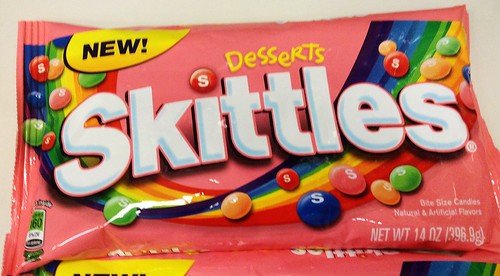
The California Assembly passed a bill last week which would ban five allegedly toxic chemicals commonly found in candies like PEZ, Skittles, and Hot Tamales.

This is the first bill in the nation which would ban red dye No. 3, titanium dioxide, potassium bromate, brominated vegetable oil, and propyl paraben, California Globe reported. Assemblyman Jesse Gabriel (D) introduced Assembly Bill 418 in February, and he modeled the restrictions after the European Union’s ban on the five chemicals.

Gabriel said in a press release:

Today’s strong vote is a major step forward in our effort to protect children and families in California from dangerous and toxic chemicals in our food supply. It’s unacceptable that the U.S. is so far behind the rest of the world when it comes to banning these dangerous additives. We don’t love our children any less than they do in Europe, and it’s not too much to ask food and beverage manufacturers to switch to the safer alternative ingredients that they already use in Europe and so many other nations around the globe.

(Read more from “State Assembly Passes Bill Banning Chemicals Found in Skittles” HERE)

Photo credit: Flickr

Delete Facebook, Delete Twitter, Follow Restoring Liberty and Joe Miller at gab HERE.

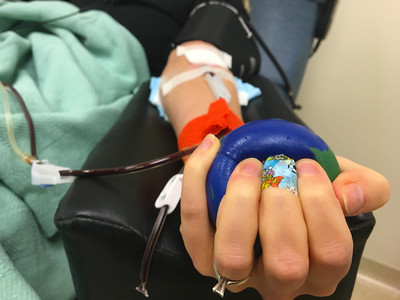
FDA Drops Special Blood Donor Assessments for Gay People

The Food and Drug Administration (FDA) ended special requirements for gay blood donors Thursday and will now use the same eligibility questionnaire for all donors regardless of sexual orientation, according to a press release.

Under the new rules, every blood donor will be asked the same questions about recent sexual history and time-based deferrals for men who have sex with men and women who have sex with women will be eliminated, according to the FDA. The agency predicts this will result in a larger pool of blood donors.

Every donor, regardless of sexual orientation, will be asked whether they have had sex with a new sexual partner or multiple partners in the past three months, and those who have will then be asked if they have had anal sex in the last three months; those who say yes to both prompts will be deferred from donating, according to the FDA. Prospective blood donors will be able to give blood regardless of sexual orientation so long as they say no to both prompts.

(Read more from “FDA Drops Special Blood Donor Assessments for Gay People” HERE)

Photo credit: Flickr

Delete Facebook, Delete Twitter, Follow Restoring Liberty and Joe Miller at gab HERE.

Here’s How Pro-Life Advocates Plan to Win in Court and Pull the Abortion Pill off the Market for Good

An Alliance Defending Freedom (ADF) lawyer handling a closely watched case on the abortion pill, which heads to the Fifth Circuit for oral arguments on May 17, told the Daily Caller News Foundation that it’s time to hold the U.S. Food and Drug Administration (FDA) accountable for decades of “stonewalling judicial review” on its decision to approve the pill.

The case, Alliance Hippocratic Medicine v. FDA, was subject to fast-tracked litigation after the government appealed a district court’s April 7 ruling that suspended access to the pill, a decision the Supreme Court temporarily blocked on April 21 pending the Fifth Circuit’s coming review. ADF Legal Counsel Erica Steinmiller-Perdomo said coming oral arguments in the Fifth Circuit provide an opportunity to argue why the district court’s ruling suspending the pill “should be upheld in its entirety.”

“Our doctors are on the front lines treating women in emergency rooms across America,” she told the DCNF. “We have four plaintiff medical associations who have doctors in all 50 states who are dealing with the fallout from the FDA’s unlawful actions and cleaning up after these abortionists, who are recklessly dispensing drugs to women without diagnosing ectopic pregnancies, without making sure they are near a hospital at the time they are doing the chemical abortion procedure, and not ensuring that they get follow up treatment.”

Steinmiller-Perdomo said the FDA “misused” its approval authority when it approved mifepristone, the first of two drugs used in a chemical abortion, under accelerated approval regulations that forced them to categorize pregnancy as a “serious or life threatening illness.”

The government argues in its brief filed April 26 that plaintiffs “lack standing,” noting that they have “not shown that they will be injured at all, much less irreparably, by maintaining the status quo that they left unchallenged for years and that the Supreme Court has now preserved during these proceedings.” (Read more from “Here’s How Pro-Life Advocates Plan to Win in Court and Pull the Abortion Pill off the Market for Good” HERE)

Delete Facebook, Delete Twitter, Follow Restoring Liberty and Joe Miller at gab HERE.

With New Alzheimer’s Drug, Biden FDA Is Not Following the Science

. . .That is why the recently released results of an investigation by two House of Representatives committees into the Food and Drug Administration’s approval of Aduhelm, a drug to treat Alzheimer’s disease, are perplexing. It found that despite significant uncertainty about whether the expensive drug worked to slow or reverse patients’ symptoms, the FDA’s process for approving it was “rife with irregularities.” It concluded that the agency’s actions “raise serious concerns about FDA’s lapses in protocol.”

The report illustrates that the FDA is having problems threading the needle between Type I and Type II errors. As a longtime veteran of the agency and the author of a favorably received book about it, I can bring some insight into the issue. Here’s the bottom line: The FDA is not following the science.

I spent 15 years as the FDA’s “biotechnology czar” at a time when many of the biopharmaceutical companies were small startups needing guidance as they negotiated the regulatory maze. However, the agency’s recent involvement with biotechnology company Biogen, the manufacturer of Aduhelm, went far beyond “guidance” and was highly unusual in many ways.

At the FDA’s urging, the drug was resurrected three months after the company had canceled clinical trials because the drug appeared not to work. Subsequent developments over the next year were marked by at least 115 meetings, calls, and email exchanges between the company and the FDA, according to the report from the Oversight and Reform and Energy and Commerce committees.

Regulators assumed a major role in rebooting the company’s narrative and the effort to get the drug approved, even though there were substantial reservations about the effectiveness of the drug among several factions within the FDA, especially its statisticians, and even within Biogen. (Read more from “With New Alzheimer’s Drug, Biden FDA Is Not Following the Science” HERE)

Delete Facebook, Delete Twitter, Follow Restoring Liberty and Joe Miller at gab HERE.

FDA Authorizes Bivalent COVID-19 Boosters for Children Under Age 5

On Thursday, the U.S. Food and Drug Administration announced that it expanded emergency use authorization for the bivalent COVID-19 booster for children between the ages of six months to 5 years old.

Now, children who have received the primary two-dose COVID-19 vaccine from Pfizer or Moderna could be eligible for the third shot (via CNBC):

The eligibility rules vary depending on whether children received Moderna’s or Pfizer’s original vaccines as their primary series.

Here are the eligibility criteria:

Children 6 months through 5 years old who received Moderna’s two-dose primary series are now eligible for an omicron booster two months after their second shot.

(Read more from “FDA Authorizes Bivalent COVID-19 Boosters for Children Under Age 5” HERE)

Delete Facebook, Delete Twitter, Follow Restoring Liberty and Joe Miller at gab HERE.

FDA Approves Most Expensive Drug in the World

The Food and Drug Administration (FDA) approved a $3.5 million drug treatment Tuesday, the most expensive drug in the world.

Hemgenix, manufactured by CSL Behring, is the first gene therapy that treats adults with hemophilia B, a genetic bleeding disorder resulting in insufficient levels of a protein called Factor IX that is needed to stop bleeding. Those with severe hemophilia B are required to have regular infusions, but the new multi-million dollar gene therapy is a single-dose IV infusion, carrying a gene for blood clotting Factor IX.

“Today’s approval provides a new treatment option for patients with Hemophilia B and represents important progress in the development of innovative therapies for those experiencing a high burden of disease associated with this form of hemophilia,” said Peter Marks, M.D., Ph.D., director of the FDA’s Center for Biologics Evaluation and Research.

Around one in 40,000 people, mostly men, have the bleeding disorder. Those with hemophilia B can experience heavy or prolonged bleeding after injuries, surgeries, and dental procedures. Some with the hemophilia B even bleed for no apparent reason, and the disease can cause bleeding into joints, muscles, internal organs, and the brain. (Read more from “FDA Approves Most Expensive Drug in the World” HERE)

Delete Facebook, Delete Twitter, Follow Restoring Liberty and Joe Miller at gab HERE.